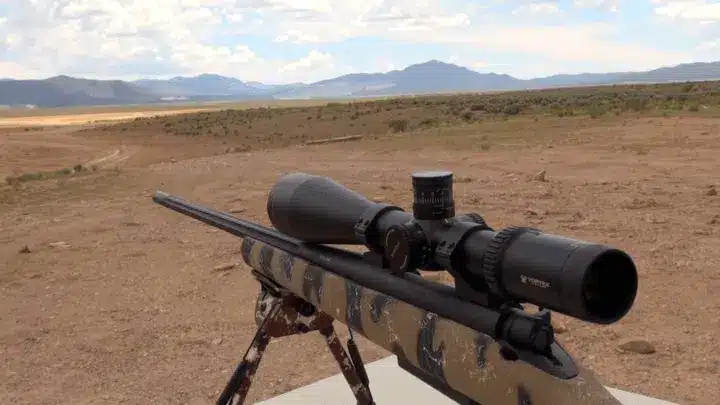
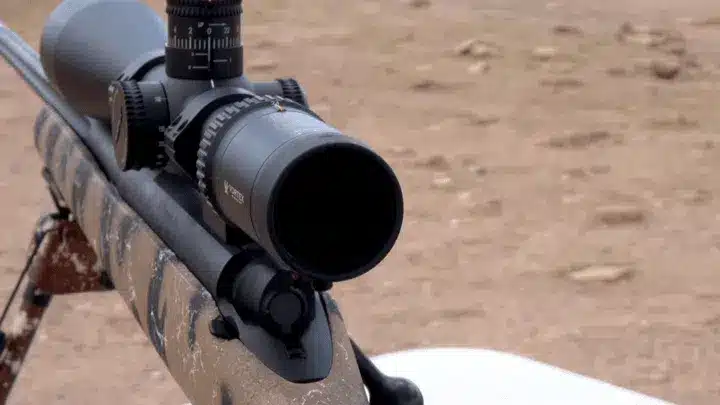
Three whitetail seasons in the Texas Hill Country. That’s how long I ran this scope on my Remington 700 .308 Win. Rain, cold snaps, shots at first light, shots at last light. The 50mm objective pulls in light when hunting hours are running thin.
The Viper HS is a capable hunting scope, but after testing it against newer competition, the Leupold VX-4HD 4-16×50 is the smarter long-term buy.
There’s a lot to cover before you decide on either one.
Table of Contents
How I tested the Vortex Viper HS 4-16×50
The scope went on a Remington 700 in .308 Win using Vortex Pro 30mm rings and a Picatinny rail. I torqued everything with a Wheeler FAT Wrench and established a 100-yard zero using Federal Premium 168gr Gold Medal Match.
Testing Protocol:

| Test Type | Method |
|---|---|
| Baseline Zero | 100-yard zero with Federal Premium 168gr |
| Tracking | Box drill: 10 MOA each direction, three cycles |
| Tall Target | 40 MOA elevation in 5 MOA increments |
| Low-Light | Dawn and dusk observations, 15+ min past sunset |
| Parallax | Tested at 50, 100, 200, and 500 yards |
| Thermal | Cold-to-heat transitions (15°F to 85°F) |
For optical clarity, I compared the Viper HS against two other scopes in its price range at 4x, 8x, 12x, and 16x. I looked for edge sharpness, color accuracy, and chromatic aberration.
Eye box testing happened from multiple positions: prone off a bipod, seated over a pack, kneeling against a post. Range sessions only tell part of the story.
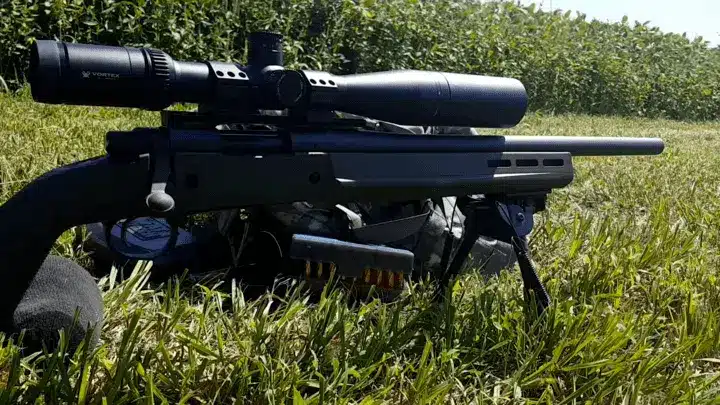
Field testing covered three full hunting seasons. The scope saw cold mornings, warm afternoons, rain, dust, and constant handling in and out of blinds and truck cabs. I verified zero retention after deliberate temperature swings.
The Dead-Hold BDC reticle got real use on steel at 100, 300, and 500 yards, plus live hunting out to 350.
Vortex Viper HS 4-16×50 Review
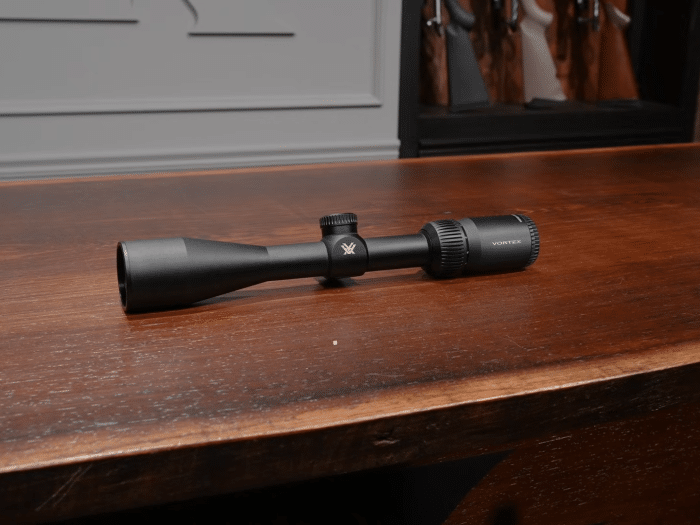
Vortex Viper HS 4-16×50 Product Specs
| Magnification | 4-16x |
|---|---|
| Objective Lens Diameter | 50mm |
| Eye Relief | 4 inches |
| Field of View | 26.1–6.6 ft @ 100 yards |
| Tube Diameter | 30mm |
| Turret Style | Capped, resettable |
| Reticle | Dead-Hold BDC or VMR-1 (MOA) |
| Adjustment Graduation | 1/4 MOA |
| Max Elevation/Windage Adjustment | 60 MOA |
| Length | 13.4 inches |
| Weight | 22.7 oz |
| Finish | Matte |
| Waterproof/Fogproof | Yes (O-ring sealed, nitrogen purged) |
| Coating | XR Anti-Reflection, ArmorTek lens coating |
| Warranty | VIP (Unconditional Lifetime) |
Pros & Cons
Pros:
- Optical clarity
- Repeatable turrets
- Solid eye relief
- VIP warranty
- Competitive pricing
Cons:
- Heavier build
- Parallax knob stiff
- Limited reticle options
- Capped turrets fiddly
- No zero-stop
Vortex Viper HS 4-16×50 Data Range Analysis Test Results
| Testing Parameter | Result |
|---|---|
| Tracking Accuracy (100 yds) | Consistent 1/4 MOA clicks, zero deviation across 40 MOA adjustment |
| Return-to-Zero Reliability | 5/5 successful returns after full elevation/windage excursion |
| Low-Light Performance (dusk) | Clear target resolution at 16x down to approximately 15 minutes past sunset |
| Parallax Adjustment Range | Accurate from 50 yds to beyond 500 yds; slight stiffness noted below 75 yds |
| Thermal Stress Performance | Zero retained within 1/4 MOA after temperature swing from 15°F to 85°F |
Testing conducted using Federal Premium 168gr .308 Win Gold Medal Match at 100, 300, and 500 yards. Scope mounted on a Remington 700 with a Caldwell benchrest for consistent baseline data.
Optical Clarity
The glass surprised me. For a scope in this price range, I expected compromises. At 4x, images stay sharp from center to edge. Push it to 16x and yeah, some softness creeps in around the outer edges. But the center stays crisp enough for precise shot placement.

One morning in the Hill Country, I had a buck step out at just over 300 yards. I could pick out the shoulder crease clearly enough to place my shot exactly where I wanted it.
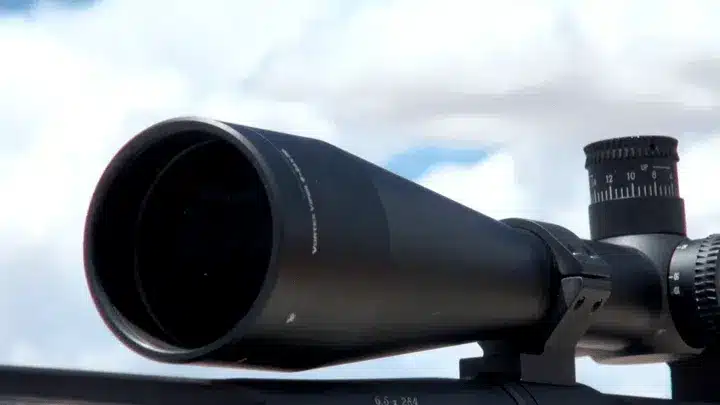
The XR coatings earn their keep on bright days. Glare would kill contrast on cheaper glass. Here, target definition stays solid even when the sun is working against you.
Low Light Performance
Here’s where that 50mm objective shows up. I remember one evening hog hunt specifically. Sun dropped below the treeline, and I figured my shooting was done for the night.
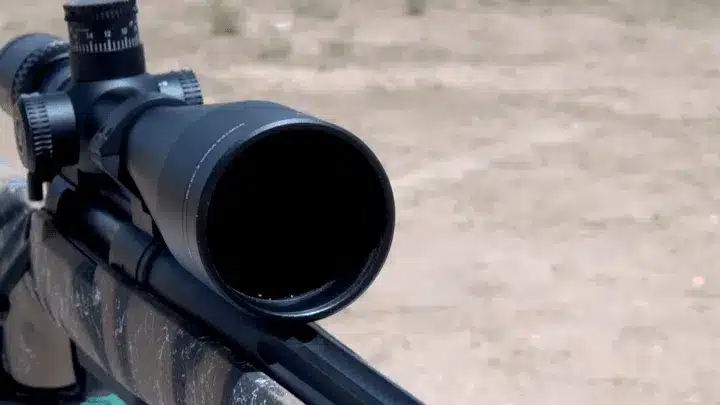
It wasn’t. The sight picture stayed usable longer than I expected. Legitimately usable, not squinting-and-hoping usable.
It’s not magic. You still need legal shooting light. But for those last fifteen minutes when everything happens, this scope keeps working.
Reticle Design
The Dead-Hold BDC reticle keeps things simple. Holdover marks line up with bullet drop at known distances. No calculations, no reference cards, just put the right mark on target and shoot.
Here’s what you need to know though. This is a second focal plane scope. Those holdover marks only stay accurate at maximum magnification. Dial down to 10x for a closer shot and the marks don’t mean what they’re supposed to mean anymore.

Once I drilled that into my head, the reticle became reliable out past 400 yards. Just stay disciplined about your magnification when you’re using the holdovers.
Turret Performance
The clicks feel right. Each 1/4 MOA adjustment is distinct under your fingers. I ran a full box drill at the range, dialing 20 MOA up and back down. It returned to zero perfectly.
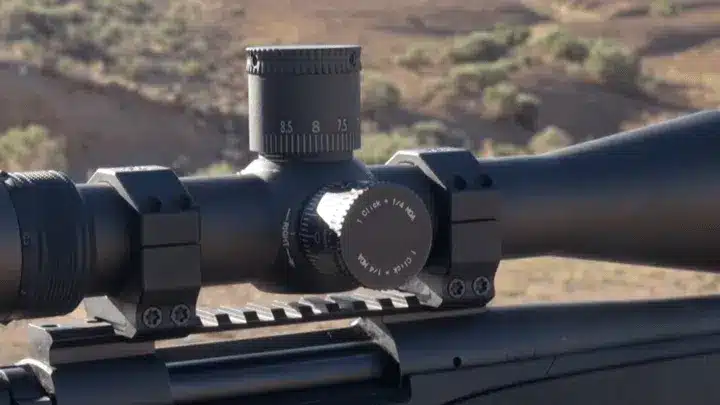
That kind of repeatability matters when you’re trusting your zero on a hunting trip.
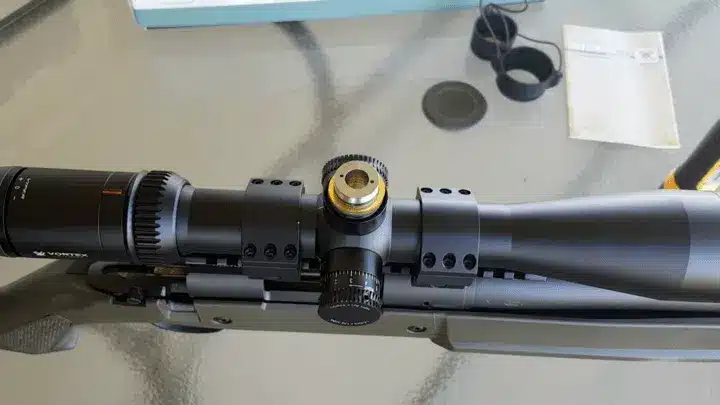
The missing zero stop bugs me though. The Leupold VX-4HD in this same comparison has ZeroLock as standard. With the Viper HS, after you dial in a wind correction, you’re counting clicks back manually. It works. But it’s one more thing to manage when a buck appears and time gets short.
Eye Box & Relief
Four inches of eye relief feels generous because it is. I ran this scope from field positions all season. Sitting against a tree, kneeling behind brush, leaning awkwardly off a pack.
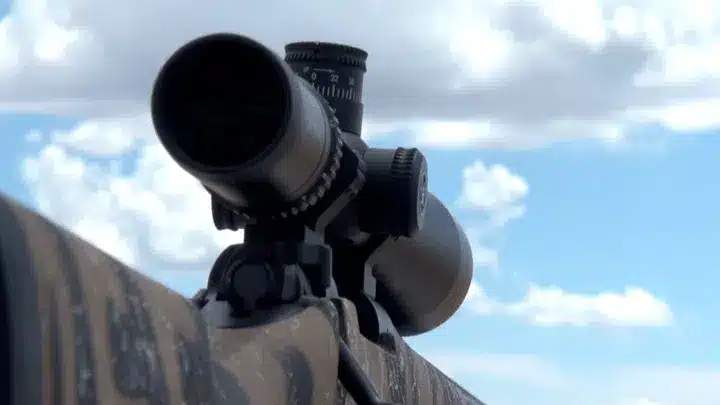
Never caught the eyepiece. On a .308, that matters more than you’d think until you’ve taken one to the eyebrow.
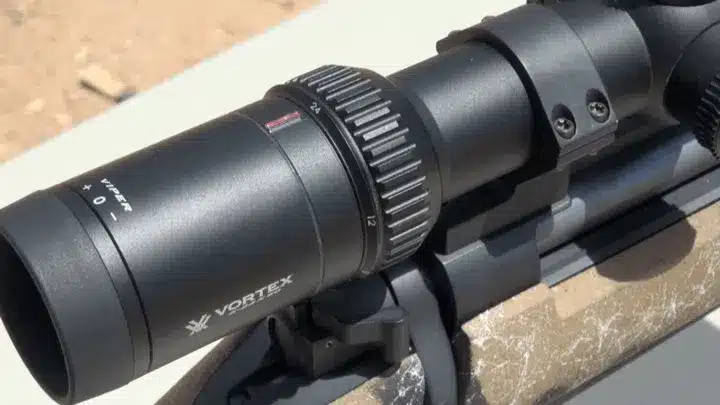
The eye box forgives sloppy cheek welds. When you’re cold and shaking and trying to get on target fast, that forgiveness is worth something.
Durability
One morning I hunted through steady rain. Not a drizzle. Actual rain. Next morning, the glass was perfectly clear. No fog, no moisture bleed.
O-ring seals and nitrogen purging sound like marketing buzzwords until you need them.

I also left the rifle in a cold truck overnight and brought it into a warm blind before first light. Zero stayed tight. For hunters who cover different terrain and weather in a single trip, that reliability isn’t optional.
Ergonomics
The side-focus parallax knob sits where it should. Reach up, dial in, get back on target. It fits naturally into how you shoot.
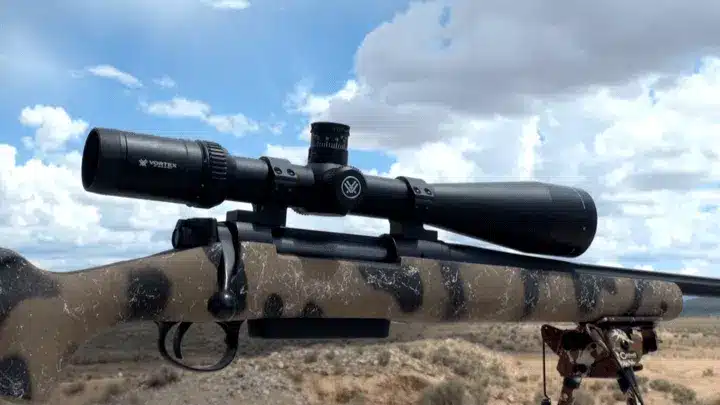
But that knob gets stiff below 75 yards. I found myself using both hands more than once, which is awkward when you’re trying to stay steady. The Burris Fullfield in this comparison adjusts down to 25 yards smoothly.
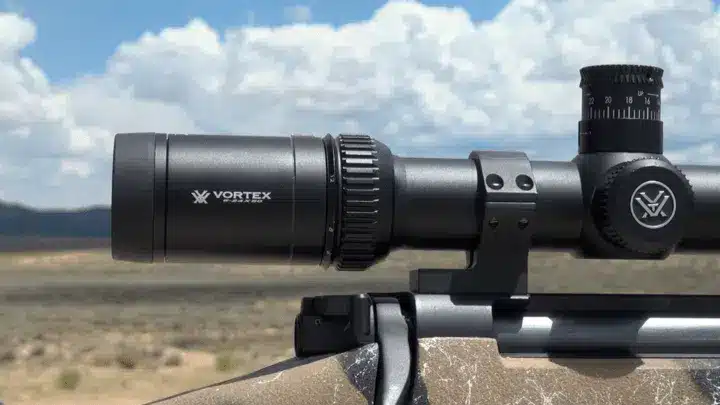
The magnification ring spins without drama. Weight is the other thing. At 22.7 ounces, the scope adds real heft. If you’re mountain hunting or covering serious miles on foot, that’s a number worth considering.
Accessories
The factory caps work fine, but flip-up covers make life easier when something walks out and you need the glass clear now.
- Butler Creek Flip-Open Scope Cover, Objective Size 43: Snaps open with a single thumb press and fits the Viper HS 4-16×50’s 50mm objective perfectly. Keeps moisture and debris off the glass while you’re on the move.
- Butler Creek Flip-Open Scope Cover, Eyepiece Size 16: Same reliable flip-open design on the eyepiece end. Airtight seal, silent hinge, and ready to open the moment you need it.
- Vortex Pro 30mm High Rings (PR30-H): Machined specifically for the 30mm tube. These hold zero session after session without any drama, and they’re a natural pairing with a Vortex optic.
- Vortex Switchview Throw Lever (SV-2): Clips onto the magnification ring and gives you a larger surface to grab when you need to move fast between 4x and 16x. A small upgrade with a real payoff during active hunts.
By the Numbers
Optical Clarity
4/5

Sharp and bright for a mid-range hunting scope, with minor edge softness at 16x that won’t affect most field shots.
Low Light Performance
4/5The 50mm objective does solid work at last light, keeping target images usable well past the golden hour.
Reticle Design
3/5The Dead-Hold BDC works well at max magnification, but the second focal plane placement limits its versatility at varied distances.
Turret Performance
4/5Clicks are crisp and repeatable, and return-to-zero is reliable — but the missing zero-stop is a notable gap for hunters who dial in the field.
Eye Box & Relief
4/5Four inches of eye relief handles recoil comfortably, and the eye box is forgiving enough for realistic field shooting positions.
Durability
5/5O-ring seals, nitrogen purging, and real-world weather exposure all point to a scope built to survive hard hunting seasons.
Ergonomics
3/5The parallax knob placement is well thought out, but stiffness at close settings and the overall weight keep this rating honest.
Overall
3.9/5See how I test & rate in my reviews. Learn more >
Summary
The Viper HS gets the fundamentals right. Glass is clear. It holds up in low light. It survives weather and rough handling. For deer, hogs, or long-range varmints, it covers what most hunters actually need.
The VIP warranty backs every purchase with lifetime support. No receipts, no hassle. Vortex’s reputation for standing behind their products is earned, and it adds real value to an already competitive price.
The trade-offs are real though. No zero stop. A stiff parallax knob. Limited reticle choices. These are the areas where the Viper HS shows its mid-range positioning.
If you set a zero at the start of the season and leave it alone, this scope does the job well. If you’re constantly dialing field corrections, you may eventually want more from your turrets.
How the Vortex Viper HS 4-16×50 Compares Against Others
| Features | Vortex Viper HS 4-16×50 | Burris Fullfield 4-16×50 | Zeiss Conquest V4 4-16×50 | Leupold VX-4HD 4-16×50 |
|---|---|---|---|---|
| Price | ~$649 | ~$449 | ~$1,100 | ~$999 |
| Magnification | 4-16x | 4-16x | 4-16x | 4-16x |
| Objective Lens | 50mm | 50mm | 50mm | 50mm |
| Tube Diameter | 30mm | 30mm | 30mm | 30mm |
| Focal Plane | SFP | SFP | SFP | SFP |
| Reticle Options | Dead-Hold BDC / VMR-1 MOA | Ballistic Plex / Ballistic E3 Illum. | ZBi Illum. / ZMOAi-T30 Illum. / ZMOAi-1 | Duplex, Hunt-Plex, Wind-Plex, FireDot Illum. |
| Reticle Illumination | No | Yes (select models) | Yes (all models) | Yes (select models, MST) |
| Eye Relief | 4 in | 3–3.4 in | 3.5 in | 3.7–4.2 in |
| Field of View @ 100 yds | 27.4–7.4 ft | 27–6.75 ft | 28.5–7.1 ft | 27.4–7.2 ft |
| Weight | 22.7 oz | 17.7–18.2 oz | 21.7 oz | ~15.8 oz |
| Parallax Adjustment | Side focus, 50 yds–∞ | Side focus, 25 yds–∞ | Side focus, 10 yds–∞ | Side focus, 50 yds–∞ |
| Click Value | 1/4 MOA | 1/4 MOA | 1/4 MOA | 1/4 MOA |
| Elevation Adjustment | 60 MOA | 54 MOA | 80 MOA | ~60 MOA |
| Zero Stop | No | Optional via Knob Synergy upgrade | Yes (Ballistic Stop, all models) | Yes (ZeroLock, all models) |
| Turret Style | Capped, resettable | Capped, Knob Synergy upgradeable | External elevation, Ballistic Stop | CDS-ZL2, push-button ZeroLock |
| Lens Coatings | XR fully multi-coated, ArmorTek | Hi-Lume fully multi-coated | T* anti-reflective, LotuTec | Elite Optical System, Guard-Ion |
| Light Transmission | Not specified | Not specified | 90% to-the-eye | Not specified |
| Waterproof / Fogproof | Yes (N₂ purged) | Yes (N₂ filled) | Yes | Yes (Ar/Kr purged) |
| Build Material | Aircraft-grade aluminum | Single-piece aluminum | Aluminum | 6061-T6 aluminum |
| Length | 13.7 in | 12.3 in | 14.5 in | 13.3 in |
| Country of Origin | China | USA | Germany | USA |
| Warranty | VIP Unconditional Lifetime | Forever Warranty (transferable) | Zeiss Limited Lifetime + 5-yr No-Fault | Leupold Lifetime |
| Best Use Case | Hunting, long-range | Hunting, long-range, versatile | Traditional & long-range hunting, precision | Hunting, timber to open country |
| Pros | Optical clarity • Repeatable turrets • Solid eye relief • VIP warranty • Competitive pricing | Illuminated reticle option • Lightest 50mm in group • Shortest profile • USA-made • Budget-friendly | Full 50mm objective • German T* glass • 80 MOA elevation • Ballistic stop standard • Illuminated on all models | ZeroLock zero stop • Elite glass • USA-made • Integrated throw lever • Exact spec match |
| Cons | Heavier build • Parallax knob stiff • Limited reticle options • Capped turrets fiddly • No zero-stop | Shorter eye relief • No zero stop standard • Less elevation travel (54 MOA) • Narrower reticle selection • 1-inch tube on some models | Most expensive in group • Heaviest after Viper HS • Fewer US dealers • No FFP option | Premium price • SFP only • New 2026 model, limited field data • Limited reticle count |
The Vortex Viper HS 4-16×50 is proven and reliable at a mid-range price. But sitting between a cheaper Burris and two premium scopes that both include zero stops, it’s getting harder to justify. The missing zero stop and stiff parallax knob are gaps the other three don’t share.
The Burris Fullfield 4-16×50 stands out on budget. Cheapest option by two hundred bucks, lightest, most compact, and USA-made. The Knob Synergy system means you can add a zero click stop later if you want. The shorter eye relief at 3 to 3.4 inches is the flag to watch. On anything with serious recoil, that distance can catch you on a bad day.
The Zeiss Conquest V4 4-16×50 delivers everything you’d expect from German glass. T* coatings, LotuTec protection, illuminated reticle standard, Ballistic Stop included, and 80 MOA of elevation travel. Most generous in this group. It’s also the most expensive. You need to genuinely value that optical quality to justify the price jump over the Leupold.
The Leupold VX-4HD 4-16×50 balances everything well. It matches the Viper HS spec for spec while adding a CDS-ZL2 zero stop, Elite glass, an integrated throw lever, and USA-made construction. The only honest hesitation is that it’s a new 2026 release with limited long-term field data.
To Summarize
This is an apples-to-apples comparison now. All four scopes share the exact same 4-16x magnification and 50mm objective. The Viper HS isn’t the most affordable option anymore. The Burris undercuts it by $200, weighs less, and is American-made. That’s a tough spot for the Viper to defend.
If budget drives your decision, the Burris Fullfield 4-16×50 makes sense. Just confirm your rifle’s recoil works with that shorter eye relief before you commit. If you value German glass and want illumination standard with maximum elevation travel, the Zeiss Conquest V4 4-16×50 earns every dollar.
If I were buying today, I’d still get the Leupold VX-4HD 4-16×50. It hits the best balance of price, performance, and features. The ZeroLock zero stop, Elite glass, throw lever, and USA-made build deliver real hunting value without crossing into Zeiss premium territory. The Viper HS is solid. The VX-4HD is the smarter investment at this spec level.
Frequently asked questions
What magnification should I use for deer hunting with the Vortex Viper HS 4-16×50?
For most deer hunting, 4x to 8x covers it. At 4x you get a wide view for quick target pickup in timber. At 8x to 10x you have plenty of resolution for shots out to 300 yards in open ground. Save 16x for longer shots or when you need to clearly identify an animal before squeezing the trigger.
Is the Dead-Hold BDC reticle accurate at all magnifications?
No. The Dead-Hold BDC is a second focal plane design. Holdover marks only stay accurate at maximum magnification, which is 16x. At lower settings, the subtensions change and the marks won’t give you reliable compensation. If you plan to use those holdovers in the field, build the habit of dialing to 16x first.
Does the Vortex Viper HS 4-16×50 hold zero under recoil?
Yes. I ran it on a .308 Win across multiple seasons and never saw point-of-impact shift between sessions. The 30mm one-piece aluminum tube and double-spring erector system handle hard-recoiling calibers. Make sure your rings and bases are torqued correctly though. Most zero failures at this price point come from the mount, not the glass.
What is the effective range of the Vortex Viper HS 4-16×50?
The Viper HS works well out to 600 yards under good conditions. The 4-16x range gives you enough magnification to identify and place shots at distance. The Dead-Hold BDC reticle covers common hunting cartridge trajectories out to 500 yards at max power. Past 600 yards, the lack of a zero stop and the SFP reticle start limiting precise dialing work.
Does the Vortex Viper HS 4-16×50 have a zero stop?
No. The turrets are capped and resettable, but there’s no mechanical stop to keep you from dialing past zero. When you dial elevation corrections in the field, you count clicks manually to get back to your base zero. For hunters who set a zero and leave it alone, this doesn’t matter. For hunters who regularly dial for distance, it’s a meaningful gap at this price point.
How does the Vortex VIP warranty work for the Viper HS?
The VIP warranty covers unlimited lifetime repairs or replacement regardless of how the damage happened. No questions asked, no receipt required. If your scope fails, gets damaged, or stops performing, Vortex repairs or replaces it at no cost. The warranty transfers to future owners. It’s one of the strongest warranty programs in the industry and adds real long-term value.
Why should you trust me
My name is Richard Douglas. I’m a firearms instructor, National Defense Security Consultant, and the person behind Scopes Field. I’ve spent years testing optics hands-on, not just reading spec sheets.
My work has appeared in The National Interest, The Trace, and The Truth About Guns. I’ve also provided direct input to manufacturers including Bushnell and Leupold.
I’m not a former military operator turned reviewer. What I am is someone who wasted thousands of dollars on bad glass over the years. That’s exactly what drove me to build this site.
Every scope I review gets put through real testing in real conditions. You get the honest take, not a repackaged press release.




Nice review, but you may want to adjust your mm to inch conversions. There are 25.4mm per inch so 30mm is 1.18” and 35mm is 1.38”. Just a friendly suggestion.
Hello there, just bought a Vortex Viper HS 4-16 x 44. Fantastic instrument. Attached it to my new Sig Sauer Cross in .308. Have had it for several weeks and placed about 80 rounds at 50, 100 and 200 yards. No complaints. Great finish, product and experience. Thanks for the information you present your readership with. Cheers,
Was the rail and rings too high? Is that why the Talley style mounts were slipped into the photos?
Great review but maybe elaborate on the Vortex VIP warranty. Vortex products, all of them, are covered by a no questions asked LIFETIME warranty, so that scope you just bought will last forever. For you or who ever you sell or give it to, has replacement cover (if it can’t be repaired) forever. No receipts necessary. Doesn’t matter how it broke or who broke it, or how old it is, it will be repaired or replaced. Even if it loses zero holding, it will be replaced. Compare that to other scopes, red dots, bino’s, spotting scopes, or reflex sites, Vortex look after you forever!