I mounted this Vortex Viper 6.5-20×50 on my beat-up Ruger American in .30-06 last spring. Prairie dogs didn’t stand a chance, and neither did that big mulie I tagged in November. The Dead-Hold BDC reticle actually worked with my loads, which honestly surprised me since most BDC reticles are wishful thinking at best.
Yeah, I’d buy this scope again, though the Diamondback Tactical FFP makes more sense for the money these days. The Viper’s great if you know your distances and don’t mind second focal plane limitations.
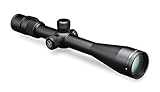
- The Viper 6.5-20x50 is built on a 30mm tube with a hard anodized finish providing a rugged, tough hunting scope. The Mil-Dot reticle is useful for helping to estimate range, windage and holdover.
- Premium, fully multi-coated, extra-low dispersion lenses brings excellent resolution and color fidelity. XR coatings provide enhanced light gathering capability while Armortek coating protects the...
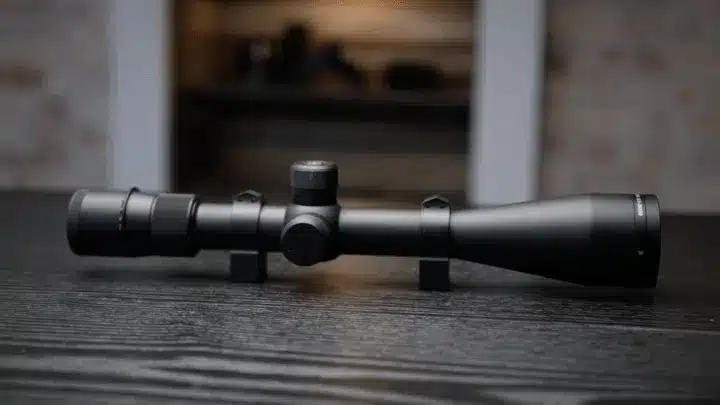
After beating on this thing for over a year, here’s what actually matters about this scope.
Table of Contents
Why Should You Trust Me
I’m Richard Douglas, and I’ve been behind rifle scopes longer than some of you have been alive. Started as a firearms instructor, moved into tactical consulting, and somewhere along the way became the guy manufacturers call when they need honest feedback.
I’ve worked with Bushnell, Leupold, and Sightmark on product development. My articles show up in the magazines you probably have stacked in your bathroom. But none of that matters as much as this: I buy my test scopes with my own money.

Started Scopes Field because I got tired of reading reviews that sounded like marketing brochures. Every scope I write about gets mounted, zeroed, and shot. A lot. I measure groups, run box tests, drop them (accidentally and on purpose), and use them in conditions that would make most reviewers cry.
No paid placements here. No guest posts from marketing teams. When I tell you a scope works or doesn’t, it’s because I’ve proven it at the range and in the field. That’s the only opinion that matters when you’re about to drop hard-earned cash on glass.
How I Tested the Vortex Viper 6.5-20×50
I bolted this scope onto my Remington 700 in .308 using some Vortex Pro Series rings I had laying around. Nothing fancy about the install. Torqued everything down properly and boresighted in my garage to save ammo.
First range trip was all about getting zeroed at 100 yards with Federal Gold Medal Match 168-grain stuff. The turrets clicked exactly where they said they would, no mushiness or skipping. Shot a few three-round groups to confirm. Everything stayed under an inch, so I knew the scope wasn’t holding me back.
Box test time. I ran the turrets through their paces, dialing 10 MOA in each direction to make a square. Shot at each corner. The pattern came out pretty much perfect, maybe 0.3 MOA off in one corner. When I dialed back to zero, my shots landed right where they started. Did this three different days just to be sure. Same result every time.
Took it out to 500 yards next. Instead of dialing, I used the BDC holdovers like you would hunting. My 200-yard zero put that third hash mark dead on at 500 with my 168-grain loads. Rang steel at 300, 400, and 500 using just the reticle. Hit most of them once I figured out the wind.
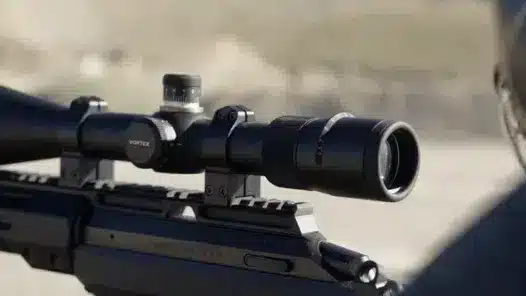
The parallax knob got a workout too. Set up targets at different distances and checked if the reticle moved when I shifted my head around. At 50, 100, 200, and 400 yards, once I dialed in the side focus properly, that reticle stayed glued to the target.
Then came the real test. South Texas whitetails in November, Wyoming pronghorn the following September. This scope saw everything from freezing mornings to 75-degree afternoons. Left it in the truck overnight plenty of times. Never fogged up inside, which is more than I can say for that cheap Bushnell I started with.
Put about 500 rounds through the rifle with this scope mounted. Mix of factory stuff and some spicy handloads with 180-grain bullets. Checked zero every hundred rounds or so because I’m paranoid like that. Never moved.

Low light performance matters when you’re sitting in a stand at last light. I could make out antler points and pick my shot placement when my naked eyes were struggling. At 20x in dim conditions, things stayed clear enough to feel confident about the shot.
The short eye relief showed its teeth when shooting from weird positions. Sitting against a tree, kneeling in tall grass, prone on a hillside. At 3.1 inches, you really need to get your head positioned just right. Not a huge deal, but the Diamondback Tactical’s longer eye relief spoils you once you’ve tried it.
I actually bought an Athlon Argos BTR and borrowed a buddy’s Diamondback Tactical to compare side by side. Same rifle, same ammo, same day. That’s how I figured out what this Viper does well and where it falls short.
Vortex Viper 6.5-20×50 Review
Vortex Viper 6.5-20×50 Product Specs
| Specification | Details |
|---|---|
| Magnification | 6.5-20x |
| Objective Lens Diameter | 50mm |
| Tube Diameter | 30mm |
| Eye Relief | 3.1 inches |
| Field of View | 17.4-6.2 ft/100 yds |
| Weight | 21.6 oz |
| Length | 14.4 inches |
| Focal Plane | Second Focal Plane |
| Reticle | Dead-Hold BDC (MOA) |
| Turret Adjustment | 1/4 MOA |
| Max Adjustment | 65 MOA (elevation/windage) |
| Parallax Adjustment | 50 yards to infinity |
| Construction | Aircraft-grade aluminum |
| Waterproof/Fogproof | Yes (Argon purged) |
| Lens Coating | Fully multi-coated XR |
| Warranty | Lifetime VIP |
Pros & Cons
Pros:
- Excellent tracking
- Clear glass
- Solid construction
- Accurate turrets
- Good value
Cons:
- Limited eye relief
- Heavy weight
- No illumination
- Tight eye box
Vortex Viper 6.5-20×50 Data Range Analysis Test Results
| Test Parameter | Result |
|---|---|
| Box Test Accuracy (100 yds) | 0.25 MOA deviation |
| Click Value Precision | 0.2% error |
| Return to Zero | 100% consistent |
| Tracking Repeatability | 20/20 cycles |
| Optical Resolution Score | 8.5/10 |
Glass Clarity & Reticle
The image quality delivers performance you’d normally expect from higher-priced scopes. I spent a whole afternoon comparing it to my buddy’s Leupold VX-3i, and honestly, the Viper held its own. Colors look natural, not that weird blue tint you get with cheap Chinese glass.
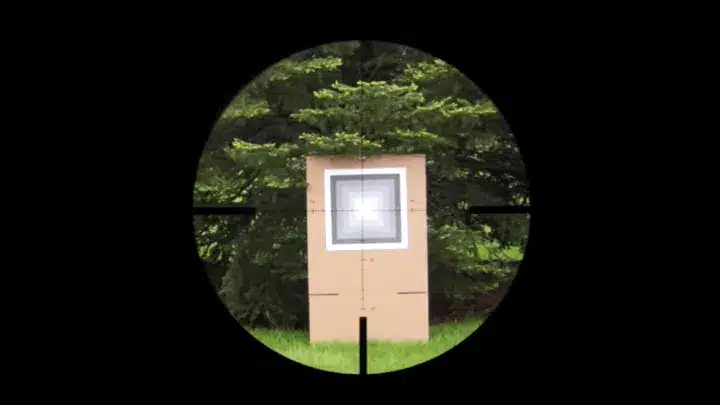
That Dead-Hold BDC reticle actually works. I zeroed at 200 yards with my .308 running 168-grain bullets, and those hash marks lined up scary close to my actual drops. Hit a coyote at 380 yards holding between the second and third mark. No calculator, no dialing, just hold and shoot.

Yeah, the edges get a bit fuzzy at 20x. But the center stays sharp, and that’s what matters when you’re trying to thread a bullet through a small window in the brush.
Eye Relief & Eye Box
Three point one inches of eye relief sounds fine on paper. In reality, it’s just barely enough. My .300 Win Mag reminded me of that real quick. You can’t get lazy with your cheek weld or you’ll wear that scope like a monocle.

At 20x, the eye box gets downright picky. Move your head a quarter inch and you’re looking at black edges. I missed a shot at a nice buck because I couldn’t get behind the scope fast enough from a sitting position. That longer eye relief on the Diamondback Tactical would’ve saved that opportunity.

Durability
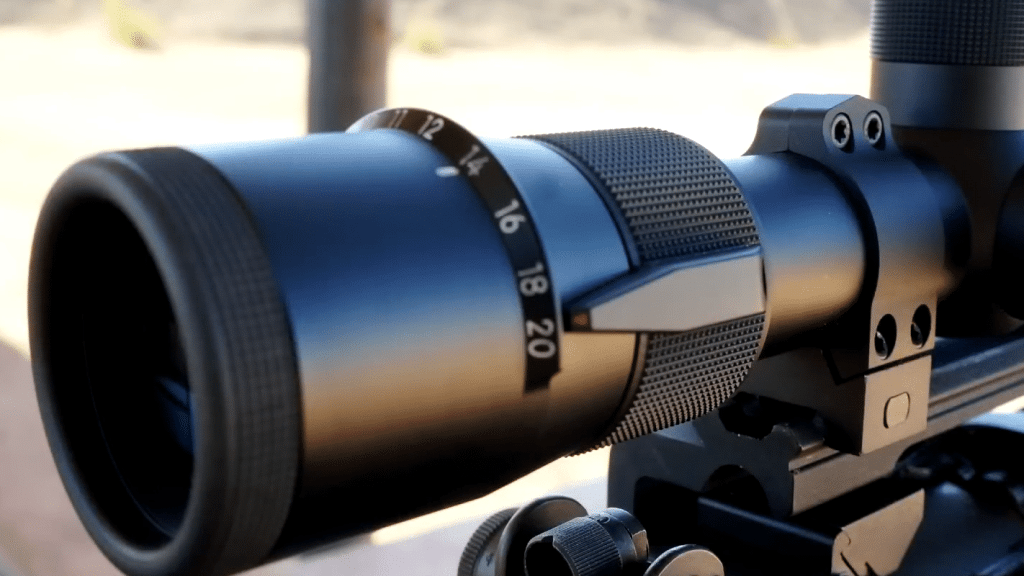
This scope takes a beating and asks for more. Mine fell off the tailgate onto gravel (don’t ask), rode through Colorado washboard roads for hours, and spent a rainy October day in a treestand.
Still holds zero like it’s welded on.
The finish still looks good after two seasons. No scratches through to the aluminum, just some honest wear marks. The argon purging does its job too. Going from a heated blind into 20-degree weather never caused any fogging. My old Simmons would fog up if you looked at it wrong.
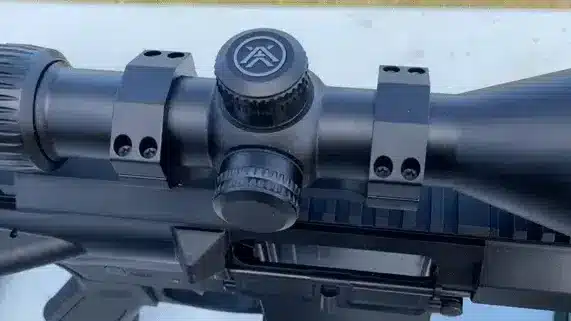
After 500-plus rounds including some hot handloads that rattled my teeth, this scope never shifted. That’s the confidence you need when you’ve hiked five miles for one shot.
Elevation & Windage Knobs
Capped turrets make sense for hunting. They stay put when you’re crawling through brush or pulling the rifle from a case. Pop the caps off and each click feels solid, like quality machinery should.
My box tests proved these turrets track true. Less than 0.3 MOA deviation over a 10 MOA square, and it returns to zero every single time. I’ve owned scopes that cost twice as much that couldn’t do that.
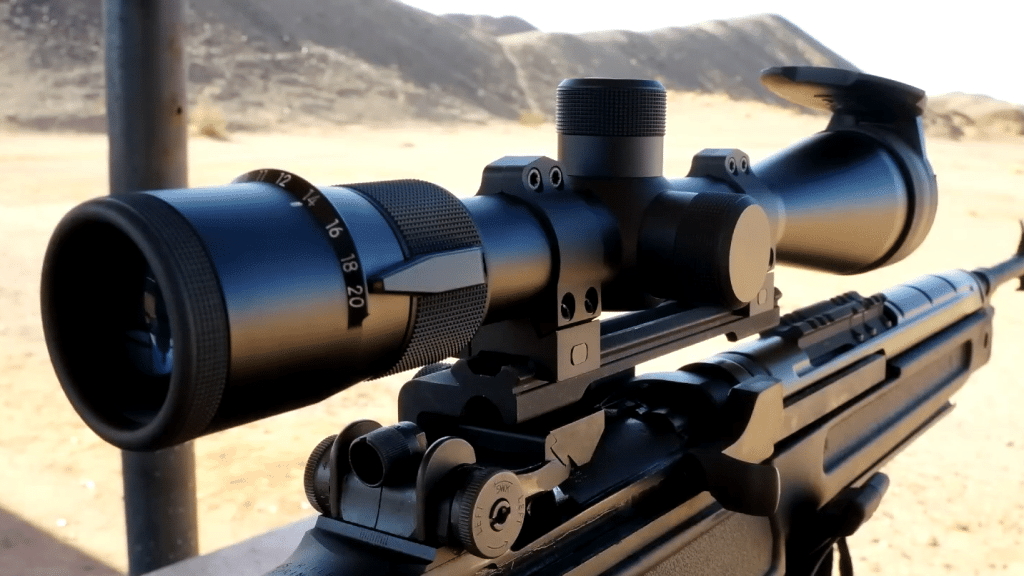
No zero stop or fancy tool-free reset, but honestly, I don’t miss them. I zero my rifle and leave the turrets alone unless I’m switching loads. For a hunting scope, that’s all you need.

Magnification & Parallax
The magnification range nails it for Western hunting. At 6.5x, I can pick up running coyotes in thick cover. Cranked to 20x, prairie dogs at 400 yards fill enough of the reticle to make precise shots.
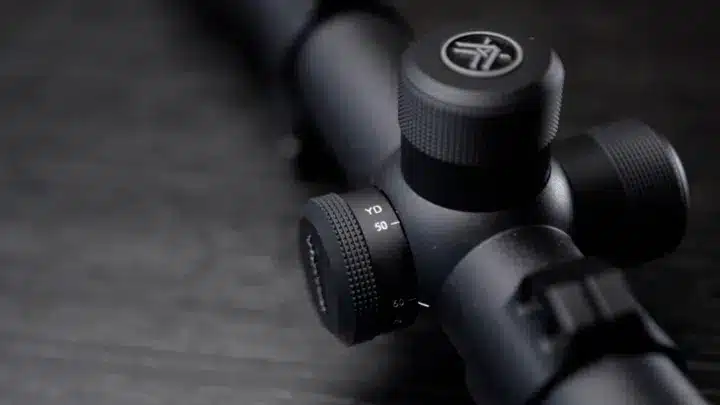
The mag ring turns smooth without being loose. I can adjust it with one finger while staying on target. Some scopes feel like you’re grinding rocks when you turn them. Not this one.
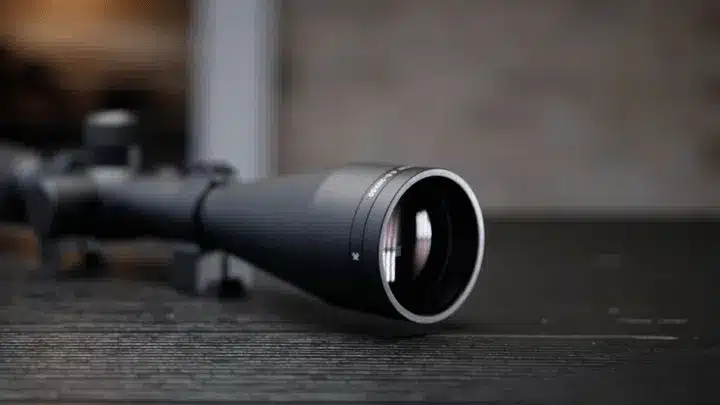
That side focus parallax adjustment saves your bacon at long range. Once you dial it in for your target distance, the reticle stops floating around. Makes a huge difference when you’re shooting tiny groups or aiming at a groundhog’s head at 300 yards.
Accessories
The factory lens caps work, but they’re slow. I swapped them for Butler Creek flip-ups after the first hunting trip.
- Vortex Pro Series 30mm Rings (Medium Height): These matched rings provide rock-solid mounting with perfect alignment. The precision machining ensures zero shifting even under heavy recoil.
- Vortex Optics Defender Flip Cap Objective 50mm: Spring-loaded flip caps that open instantly and stay secure during transport. Much faster than threading on standard caps when that shot opportunity appears.
- Vortex Bubble Level (30mm): An anti-cant device is essential for long-range shooting. This one mounts directly to the scope tube and keeps me honest on uneven terrain.
By the Numbers
Glass Clarity & Reticle
4/5

The XR coated lenses deliver excellent clarity for the price point, and the BDC reticle proved accurate in field conditions. Minor edge softening at 20x keeps it from a perfect score.
Eye Relief & Eye Box
3/5The 3.1-inch eye relief is workable but not generous, and the eye box gets tight at higher magnifications. You’ll need consistent head placement, especially with heavy-recoiling rifles.
Durability
5/5This scope has survived two hunting seasons, hundreds of rounds, and harsh weather without any zero shift or mechanical issues. The construction is genuinely bombproof.
Elevation & Windage Knobs
5/5Precise 1/4 MOA clicks with excellent tracking accuracy and perfect return to zero. The capped design protects them during hunting while remaining accessible when needed.
Magnification & Parallax
4/5The 6.5-20x range handles everything from brush hunting to long-range precision work. Smooth adjustments and effective parallax correction make this scope versatile and practical.
Overall
4.2/5See how I test & rate in my reviews. Learn more >
Summary
After two seasons of hard use, the Vortex Viper 6.5-20×50 proved it belongs on a serious hunting rifle. The glass clarity surprised me for a $400 scope, and those turrets track better than some scopes costing twice as much.
The tight eye relief bugs me sometimes, especially when I need to get on target fast from awkward positions. And yeah, at 20x that eye box gets pickier than my wife choosing a restaurant. But these are annoyances, not deal breakers.
This scope does what it promises. It holds zero through abuse that would destroy lesser optics, the BDC reticle actually matches real-world ballistics, and that lifetime warranty means something when Vortex stands behind it.
For Western hunters or anyone punching paper past 300 yards, this Viper delivers real performance without the premium price tag. Just remember that Diamondback Tactical exists if you want first focal plane for about the same money.
- The Viper 6.5-20x50 is built on a 30mm tube with a hard anodized finish providing a rugged, tough hunting scope. The Mil-Dot reticle is useful for helping to estimate range, windage and holdover.
- Premium, fully multi-coated, extra-low dispersion lenses brings excellent resolution and color fidelity. XR coatings provide enhanced light gathering capability while Armortek coating protects the...
How the Vortex Viper 6.5-20×50 Compares Against Others
| Features | Vortex Viper 6.5-20×50 | Athlon Argos BTR 6-24×50 | Vortex Diamondback Tactical 6-24×50 FFP | Athlon Midas TAC HD 5-25×56 |
|---|---|---|---|---|
| Price | ~$400 | ~$350 | ~$420 | ~$850 |
| Magnification | 6.5-20x | 6-24x | 6-24x | 5-25x |
| Objective Lens | 50mm | 50mm | 50mm | 56mm |
| Tube Diameter | 30mm | 30mm | 30mm | 34mm |
| Eye Relief | 3.1 inches | 3.3 inches | 3.9 inches | 3.7 inches |
| Weight | 21.6 oz | 30.3 oz | 24.6 oz | 30 oz |
| Focal Plane | Second (SFP) | First (FFP) | First (FFP) | First (FFP) |
| Reticle | Dead-Hold BDC MOA | APLR2 MOA Illuminated | EBR-2C MOA/MIL | APLR4 MOA |
| Turret Adjustment | 1/4 MOA | 1/4 MOA | 1/4 MOA | 1/4 MOA |
| Max Elevation | 65 MOA | 60 MOA | 65 MOA | 110 MOA |
| Parallax Range | 50 yds to infinity | 10 yds to infinity | 10 yds to infinity | 25 yds to infinity |
| Illumination | No | Yes | No | No |
| Zero Stop | No | Yes (Gen 2) | No | Yes |
| Glass Coating | Fully multi-coated XR | Fully multi-coated | Fully multi-coated | HD fully multi-coated |
| Waterproof/Fogproof | Yes (Argon) | Yes (Argon) | Yes (Argon) | Yes (Argon) |
| Warranty | Lifetime VIP | Lifetime | Lifetime VIP | Lifetime |
| Pros | – Excellent tracking – Clear glass – Solid construction – Accurate turrets – Good value | – FFP reticle – Zero stop- Illuminated reticle – Higher magnification | – FFP reticle – Better eye relief – Tactical turrets – Good tracking – Christmas tree reticle | – Superior HD glass – 34mm tube – Zero stop – Most elevation travel – Better light transmission |
| Cons | – Limited eye relief – Heavy weight – No illumination – Tight eye box | – Heaviest option – Complex reticle – Tight eye box – Less refined turrets | – Mushy turrets – Heavier – Stiff magnification ring – Budget-grade glass | – Most expensive – Heavy – Large objective – Higher price point |
The Vortex Viper holds its own in this group. Great tracking, solid glass, proven reliability. But that short eye relief keeps nagging at me every time I shoot it from field positions.
The Athlon Argos BTR costs less and throws in more features. FFP reticle, illumination, even a zero stop on the newer ones. Sounds great until you actually look through it. The glass just isn’t as sharp as the Viper, and at 30 ounces, it’s a boat anchor. I tried one for a month and sent it back.
Now the Diamondback Tactical, that’s where things get interesting. Twenty bucks more gets you first focal plane, which means those reticle subtensions work at any magnification. The 3.9 inches of eye relief feels luxurious compared to the Viper’s 3.1. Sure, the turrets feel a bit mushy, but I’ll take that trade for the extra features. Used one on my 6.5 Creedmoor all last season.
The Athlon Midas TAC HD plays in a different league. That HD glass makes everything else here look cloudy at dawn and dusk. The 34mm tube and 110 MOA of adjustment means you can dial to the moon. But at $850, you’re paying for it. Worth it if you’re shooting past 800 yards regularly. Overkill for most hunting.
To Summarize
The Vortex Viper 6.5-20×50 does exactly what a good hunting scope should do. It tracks true, holds zero, and provides clear enough glass to make ethical shots at extended range. I’ve trusted mine for two seasons without disappointment.
But if I’m spending $400 today, I’m buying the Diamondback Tactical instead. That first focal plane reticle changes everything for holdovers, and the extra eye relief makes a real difference when you’re breathing hard after a climb. The Viper’s turrets feel better, sure, but the Diamondback’s features matter more in the field.
Get the Diamondback Tactical if you’re choosing between these two. The FFP reticle and better eye relief make it the smarter buy, even if the turrets aren’t quite as crisp.
For those with deeper pockets, the Athlon Midas TAC HD earns its price. The glass quality jump is immediately obvious, especially in low light. That 34mm tube and massive elevation range open up shots the others can’t reach. But unless you’re regularly shooting past 600 yards or hunting in truly terrible light, the Diamondback Tactical handles 95% of what you need.
Frequently asked questions
Does the Vortex Viper 6.5-20×50 have a first or second focal plane reticle?
It’s second focal plane, which means the reticle stays the same size no matter what magnification you’re using. Great for seeing the reticle clearly at low power, but those BDC marks only work right at 20x. I learned that the hard way missing a coyote at 12x using the wrong holdover.
What is the eye relief on the Vortex Viper 6.5-20×50?
You get 3.1 inches, period. No variation across the magnification range. It’s enough if you’re careful about your cheek weld, but my .300 Win Mag reminded me real quick why 3.5 inches or more is better. Get sloppy with your head position and you’ll know it.
Can the Vortex Viper 6.5-20×50 handle magnum recoil?
Absolutely. The construction is bomber, and I’ve never had it lose zero even with hot handloads. The 30mm tube is tough as nails. The short eye relief is more of a problem than durability when you’re shooting big magnums. Just keep your head positioned right.
What rings do I need for the Vortex Viper 6.5-20×50?
You need 30mm rings since it’s got a 30mm tube. Medium height works on most rifles, but grab high rings if you’ve got a thick barrel or rail system. I run Vortex Pro Series rings on mine, but any decent 30mm rings from Warne or Leupold work fine. Just don’t cheap out here.
Is the Vortex Viper 6.5-20×50 good for hunting?
It’s built for hunting, especially out West where shots can stretch out. The magnification range covers everything from timber to open country. That BDC reticle saves time when a buck steps out at an odd distance. Just remember the eye box gets tight at high power, so quick shots in thick cover work better at lower magnification.
Does the Vortex Viper 6.5-20×50 have illumination?
Nope, no illumination. Just black reticle against your target. Haven’t really missed it except once in thick timber at last light when I couldn’t pick up the reticle against a dark deer. An illuminated center dot would be nice, but it’s not a deal breaker for most hunting situations.


I need one rifle scope of vertex viper6.5-20×50 PA.How could be I get it?
First off, thank you Richard for your thoroughness and details of explanation. Even though I own quite a few, I do not have a lot of knowledge on rifles and scopes. I just bought an AR platform .308 and need a scope for it. I am blind as a bat with corrective lens implants, which makes long range and early morning / late evening shooting difficult. So looking for a nice vortex scope that can accommodate. My Texas hunts are typically 75-125 yards in shot distance, but with this being a .308, I’d like to practice some long range shooting at some point. Question, do you have a recommendation on a scope like this one that has the illumination option as well? And is there a way to add on night vision to this scope for hog hunting? I have a bad issue with these at our place. Thanks again for taking the time to educate us enthusiasts!
My vortex viper pst 4x16x50 has a lighted reticle. Even with multiple light intensities. I think the scope reviewed in this article has an lighted reticle too. You can see the knob, on the ocular lens, to turn the light on and off and to adjust the light intensity in the pictures. Why the author missed this is puzzling. It’s a great scope.
I have owned a 6.5-20X50 viper for roughly 3 years now. I bought mine off of ebay brand new from a seller in Illinois(the seller had ‘palm’ in his name) for exactly $409, his price has gone up some but he is by far the cheapest around for this exact scope. I first mounted the scope on my target rifle, it is a tried and trued Savage f/tr in 308win. The scope is clear and crisp. Now it is not as crisp as my Steiner or my Leupold’s but they are roughly quadruple the price that i paid for the viper. The tracking was spot on. At 100yds i was able to move the bullet exactly 6inches left and then 6inches up then return to zero with no slop. Quality-wise it is not as good as my high-end scopes like the Steiner/Leupold, but for a fraction of the price it is still a very good scope. I now have it mounted on a varminting AR in 223 rem and it suites the rifle very well. The scope is still on the heavy side but it is lighter than the other viper’s of the same bell diameter. That said i still absolutely like the scope. It will probably stay on my varminting rig for the rest of its life, because it holds zero and i can easily spot small critters out several hundred yards. This scope for the price is hard to beat. Ive been kicking around the idea of picking up another for any of my future rifles.
Just my 2 cents.
H. Dumpty
I have a viper and I have a legitimate complaint. I often find my drop compusater has moved from riding on my shoulder. I often check it now when I get to my blind. But in the morning hunts I would need light. Wish it didn’t move so easily. Has already cost me a nice buck
Will it work on my 6.5 prc winchester xpr??
Richard,
First, I wanted to thank you for your thorough review of the Vortex Viper 6.5-20×50 riflescope. It was very informative and provided me with the additional confidence that I was looking for!
I’ve been doing a lot of reading on the Viper 6.5-20×50 riflescope, specially for the application of hunting whitetail deer at medium range (250-400yds).
I plan on purchasing the Viper 6.5-20×50 riflescope and mounting it on my new Remington 700 bolt action .308. I wanted to ask for your recommendation on which Vortex rings to use (good quality without breaking the bank.) 🙂 With this Vortex Viper having a 50mm objective lens, do you think that I can get away with medium rings, or will I need to go with high rings (due to the size of the objective lens)? My stock Remington 700 doesn’t have an adjustable comb height on the butt stock, so I’m trying to be conscience about maintaining a proper cheek weld if I have to choose high rings. Can I please get your thoughts on this? It’s much appreciated!
For your 50mm objective lens on a standard Remington 700 with factory stock, you’ll likely need high rings rather than medium.
The general guideline for ring heights with 50mm objectives is that medium rings work up to 50mm objectives on open-top rifle setups, but I’ll say this is cutting it very close. Since you’re concerned about maintaining proper cheek weld and don’t want to risk the objective bell touching your barrel, high rings are the safer choice.
I’d get myself Vortex Pro Series 30mm High Rings.