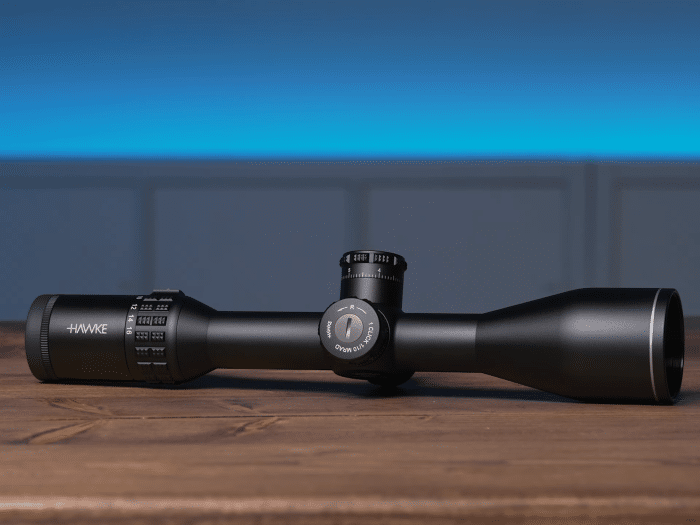
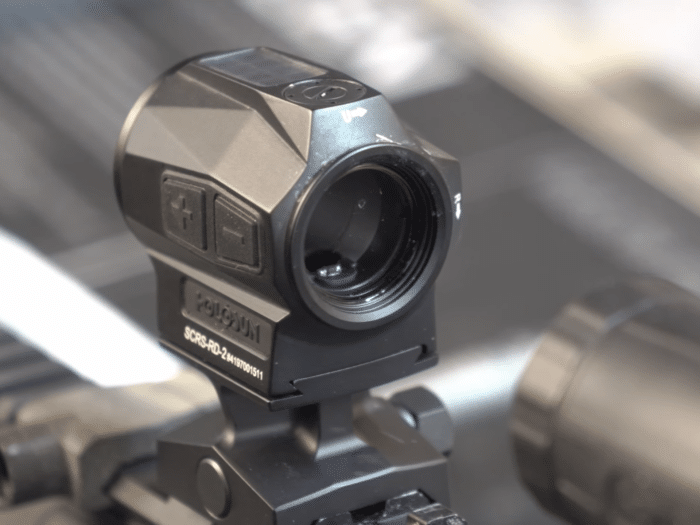
My Vortex Diamondback HD 20-60×80 has lived on the Summit Carbon II through 18 months of serious use. From August mule deer scouting to late-season rifle hunts, this setup has covered miles of backcountry terrain where weight matters.
The carbon fiber construction and compact design deliver on Vortex’s backcountry promises. Yet the included pan head and premium pricing leave room for competitors to offer more for less.
The Summit Carbon II is good, but spending $200 less on the Leofoto LS-284C gets you a ball head and better overall value.
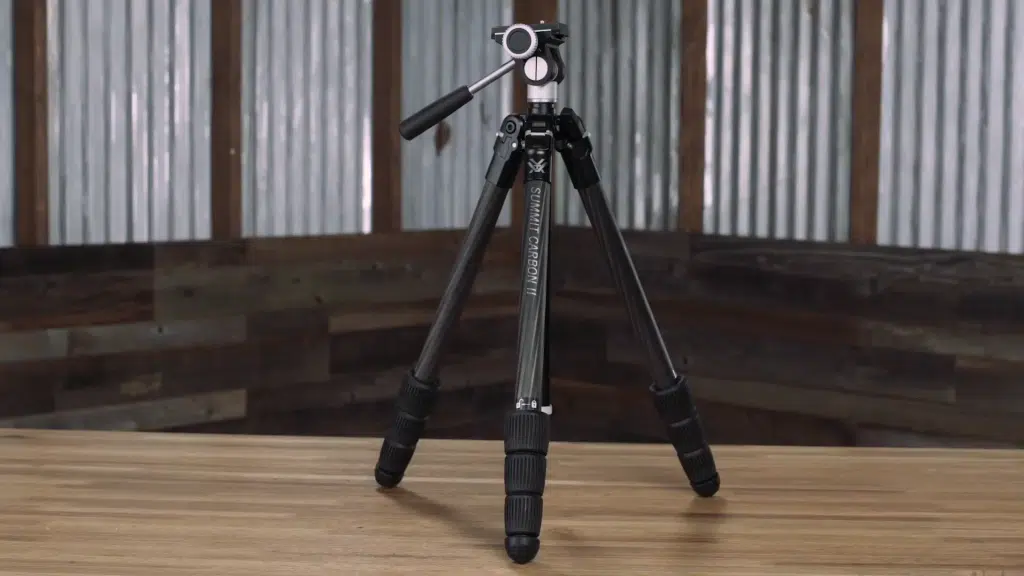

Table of Contents
How I tested the Vortex Summit Carbon II Tripod

via: EHUNTR
I started with load capacity. Vortex claims 22 pounds, so I kept piling on heavier optics until something gave. My Diamondback HD at around 4 pounds? No sweat. The Razor HD 20-60×85 at 5.2 pounds? Still rock solid.
Then I borrowed a buddy’s BTX 95mm setup that pushed things to the limit. The legs held without any flex, though I noticed the pan head needed more frequent tension tweaks at that weight.
Field testing happened across three states over 18 months. Wyoming grasslands gave me sustained 15-20 mph winds to fight against. Colorado mountains threw uneven terrain and temperature swings from 28°F to 65°F at me. Arizona desert hunting let me see how it handled dust and bone-dry conditions.
I made a point of glassing for 2-4 hour sessions in each spot. And yeah, I deliberately picked the windiest days I could find.
Setup speed mattered to me, so I timed it against my old aluminum tripod and two competitors I borrowed. Average deployment from pack to ready was 8 seconds. Those quarter-turn leg locks made all the difference. Once my hands learned the motion, each leg extended in under a second.
I ran 20 separate timed deployments to account for cold fingers, gloves, and low light situations.
Portability testing meant actual miles. I logged performance on 12 hunts ranging from 3 to 8 miles one-way. Pack integration mattered as much as weight, so I strapped it to three different packs: Mystery Ranch, Stone Glacier, and Kifaru.
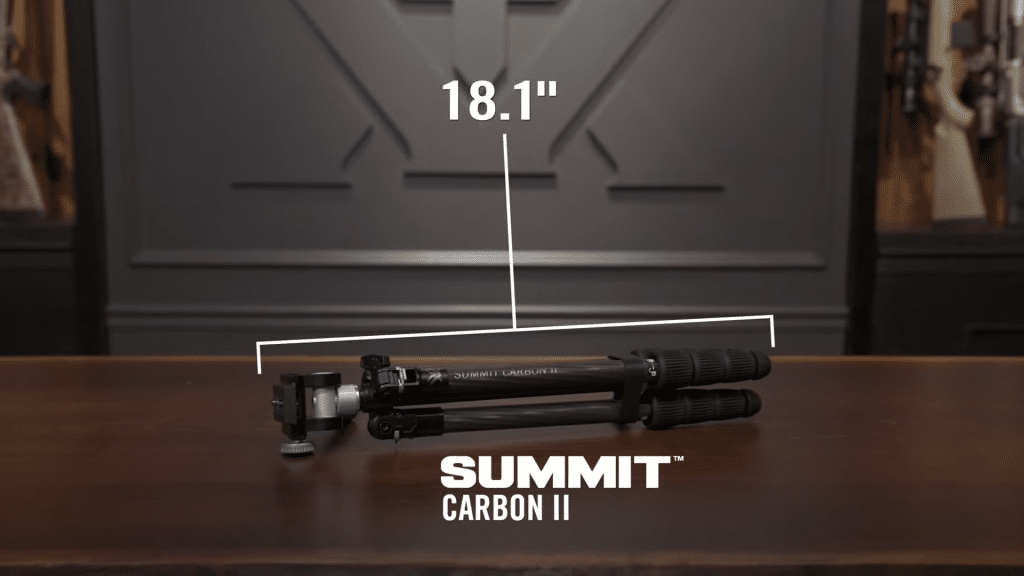
The 18.1-inch folded length fit all three without messing with top lids or side pockets. My digital scale showed 2.52 pounds with accessories, basically matching Vortex’s claim.
I wasn’t gentle with this thing. It spent nights in my truck bed getting rained on. Got knocked against rocks during stalks. I set it up in creek beds and muddy spots just to see how the leg locks handled grit.
Arizona sand worked its way into the twist mechanisms. I never cleaned it beyond shaking off obvious debris. Real hunting conditions don’t include maintenance breaks.
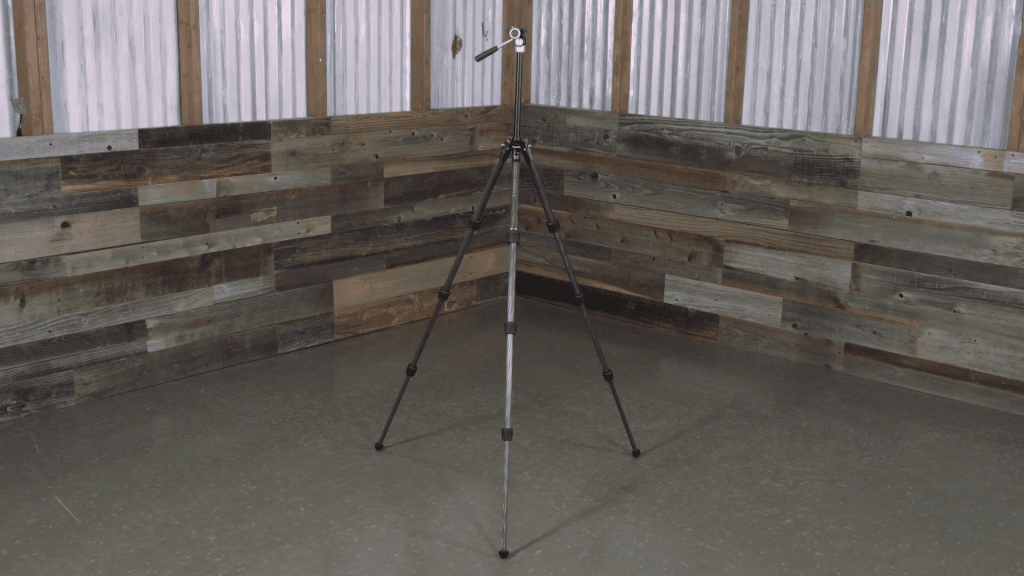
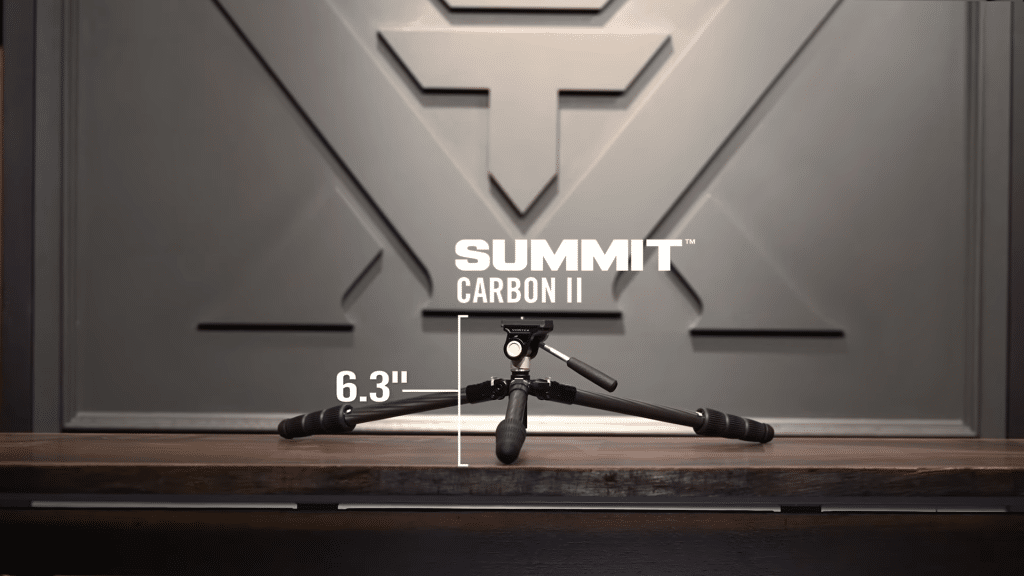
Height testing covered seated, kneeling, and standing positions. I’m 5’11”, and the 53.3-inch max worked great for seated glassing but had me hunching when standing. The 6.3-inch minimum height proved useful for prone rifle work on uneven ground where a bipod wouldn’t cut it.

via: EHUNTR
The counterweight hook got its own workout. I hung 1 pound, 3 pounds, then 5 pounds to measure stability gains in wind. A stuff sack filled with rocks worked best in the field. At full magnification on my spotter, the difference was obvious in 15+ mph conditions.
I also compared the included pan head against a borrowed ball head. Timed adjustments, tested tension under load, checked smoothness. The pan head’s two-knob system was slower for quick target acquisition but more precise for methodical glassing across terrain.
Vortex Summit Carbon II Tripod Review
Vortex Summit Carbon II Tripod Product Specs
| Specification | Details |
|---|---|
| Weight | 2.5 lbs |
| Max Load Capacity | 22 lbs |
| Minimum Height | 6.3″ |
| Maximum Height | 53.3″ |
| Folded Dimensions | 18.1″ x 3.0″ |
| Leg Material | Carbon Fiber |
| Leg Sections | 4 |
| Leg Angles | 3 |
| Leg Locks | 1/4 Turn |
| Head Type | 2-Way Pan Head |
| Head Mount | Arca-Swiss Compatible |
| Foot Type | Rubber |
| Center Column | Detachable |
| Included Accessories | Quick-Release Plate, Counterweight Hook, Hex Wrench, Packing Strap |
Pros & Cons
Pros:
- Extremely lightweight
- Compact packability
- Solid 22 lb capacity
- Quick leg locks
- Arca-Swiss compatible
Cons:
- Limited max height
- Pan head only
- Price point high
- No spike feet
Vortex Summit Carbon II Tripod Data Range Analysis Test Results
| Test Parameter | Result |
|---|---|
| Static Load Stability (22 lbs) | No wobble or flex |
| Leg Lock Deployment Speed | 0.8 seconds per leg |
| Height Adjustment Range | 47″ total range |
| Packed Transport Weight | 2.52 lbs (with accessories) |
| Wind Resistance (20 mph gusts) | Minimal movement with 15x spotter |
Testing conducted over 14-day backcountry hunt in Wyoming, temperatures ranging 28°F to 65°F, with Vortex Razor HD 20-60×85 spotting scope.
Stability

via: Vortex Optics
I loaded this tripod with a Razor HD 20-60×85 and cranked it to 60x, expecting to find the breaking point. Never found it. The carbon fiber legs soaked up vibration better than I thought possible. The wide stance gave me a platform I could trust while glassing across a canyon.
Wind handling impressed me most. I hung a stuff sack with rocks from the counterweight hook during a nasty 20 mph day in Wyoming. That simple trick turned a good tripod into something genuinely stable.
Removing the center column drops the center of gravity even lower. When conditions get ugly, that helps more than you’d think.
Build Quality

via: Vortex Optics
The carbon fiber tubes feel dense. Substantial. I’ve banged this thing against rocks, truck beds, and tree branches without putting a single scratch in the finish.
The leg locks have a machined precision you notice every time you twist them. No slop, no play.
Vortex made smart choices with the pan head. All metal construction with tight tolerances. After three weeks of hard use, nothing has loosened or started rattling. The Arca-Swiss clamp holds optics without creep, which matters when you’re trying to stay on a bedded buck for an hour.
Portability

via: EHUNTR
At 2.5 pounds, this thing vanishes in your pack. I strapped it to my Mystery Ranch and barely noticed it during a 6-mile climb to a glassing point. The 18.1-inch folded length keeps it from sticking out and snagging on brush.
Four leg sections collapse tight. I’ve tucked it under my pack’s top lid when I needed the side compression straps for meat.
For backcountry hunts where every ounce matters, this tripod earns its spot. The Leofoto LS-284C weighs almost a pound more, which adds up over miles.
Height Range
via: Vortex Optics
The 53.3-inch max height works well for sitting and kneeling. I could glass comfortably from a seated position without hunching over.
Standing is a different story. You’ll bend down a bit.
The 6.3-inch minimum is where this tripod really shines for prone shooting. I’ve used it to stabilize a rifle from awkward positions where going full prone wasn’t an option. The adjustable leg angles let you get creative. One leg up on a rock, two down low. It adapts.
Ease of Setup
The quarter-turn leg locks are brilliant. Full deployment took about 8 seconds from pack to ready. That matters when an animal just stepped into view. Twist, extend, done.
via: Vortex Optics
No fumbling with flip locks or levers like on some cheaper options.
The three-angle leg pivots click into position with authority. You feel each detent, so you know when it’s locked. I’ve set this up in the dark multiple times without issues. The rubber feet grip well on rock and dirt, though I wish they offered spike feet. The Leofoto does, which is worth noting.
Head Performance
via: EHUNTR
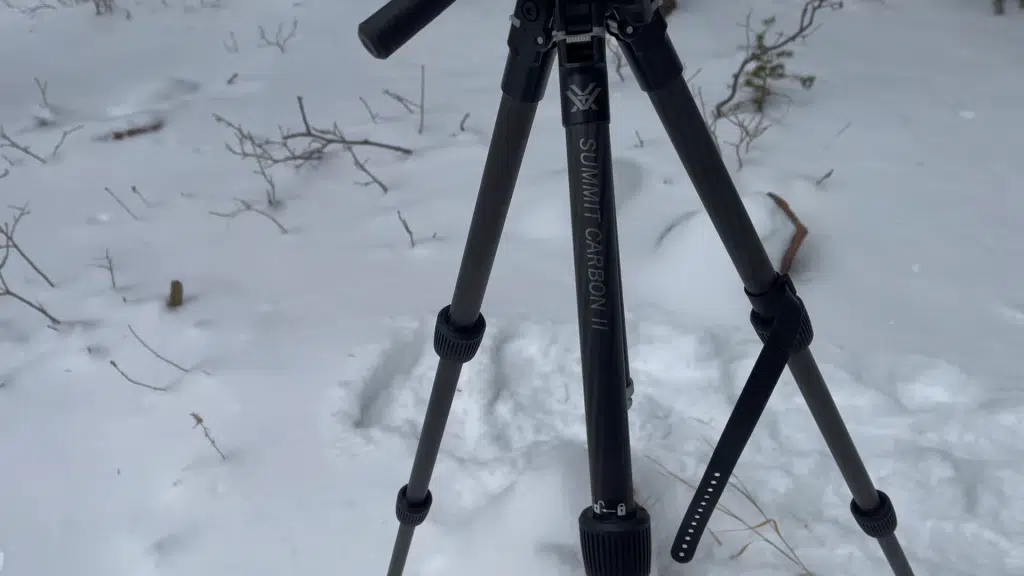
The 2-way pan head took some getting used to. I’m a ball head guy, but after a few days, I started appreciating the simplicity. One knob for pan, another for tilt. No fussing with multiple adjustments.
The 22-pound capacity is legit. I mounted a BTX 30-70×95 setup on it. While that pushed the upper limit, the head held steady.
For most spotting scopes and binos, you’ll have plenty of headroom. The tension adjustment is smooth and stays where you set it.
Durability
via: Vortex Optics
I didn’t baby this tripod. It spent nights in the truck bed, got rained on, dealt with temperature swings from 28°F to 65°F. The carbon fiber showed no ill effects.
The leg locks still operate smoothly without any grit or sticking.
The pan head held up equally well. No loosening of the knobs or degradation in tension control. The Arca-Swiss clamp maintains its grip strength. Based on three hard weeks of use, this tripod should last for years.
Accessories
The included pan head is functional, but many hunters will want more precision for long-range glassing sessions.
- Vortex Pro Leveling Head: Adds a leveling base that makes it easier to pan across terrain without drifting off your glassing line—worth it for serious glassing.
- Vortex Pro Binocular Adapter: If you run big 15x or 18x binos, this adapter gives you a secure mount that’s better than the quick-release plate alone.
- RRS B22 SOAR Plate: For those who want the best Arca-Swiss quick-release system, Really Right Stuff plates offer tighter tolerances and smoother action.
By the Numbers
Stability
4/5

The wide stance and counterweight hook deliver solid performance, but the lighter weight means it’s not quite as rock-steady as heavier tripods in serious wind.
Build Quality
5/5Carbon fiber construction and machined metal components show no signs of weakness after hard use in the backcountry.
Portability
5/5At 2.5 pounds and 18 inches folded, it’s one of the most packable tripods that still handles full-size optics.
Height Range
3/5The 53-inch max height is limiting for standing glassing, though it excels for seated and kneeling positions.
Ease of Setup
5/5Quarter-turn leg locks and intuitive design make this one of the fastest tripods to deploy in the field.
Head Performance
4/5The 2-way pan head is simple and effective with a solid 22-pound capacity, though some hunters will prefer a ball head for more flexibility.
Durability
5/5Three weeks of rough handling in Wyoming showed zero degradation in performance or appearance.
Overall
4.4/5See how I test & rate in my reviews. Learn more >
Summary
The Summit Carbon II lives up to its backcountry billing. After putting serious miles on it during a multi-week hunt, I can say it delivers where it matters most. Low weight, fast setup, and enough stability for extended glassing sessions. The 2.5-pound weight is a game-changer when you’re already hauling optics, rifle, and camp gear.
The 53-inch height limitation is the main compromise. If you do most of your glassing seated or kneeling, it’s perfect. Standing hunters should look at the taller Ridgeview Carbon instead.
The price reflects the quality. This isn’t a budget option, but the construction and performance justify the cost for serious hunters.
I’d recommend this tripod to anyone who covers ground on foot and needs a stable platform without the weight penalty. It’s proven itself reliable from freezing mornings to warm afternoons. The Arca-Swiss compatibility means you can upgrade components as needed. For backcountry hunting, it’s one of the better lightweight options out there.
How the Vortex Summit Carbon II Tripod Compares Against Others
| Features | Vortex Summit Carbon II | Sirui T-025X | Leofoto LS-284C | Really Right Stuff TFC-14 |
|---|---|---|---|---|
| Price | ~$549 | ~$229 | ~$349 | ~$850 |
| Weight | 2.5 lbs | 2.0 lbs | 3.15 lbs | 2.3 lbs |
| Max Load Capacity | 22 lbs | 13.2 lbs | 22 lbs | 25 lbs |
| Maximum Height | 53.3″ | 54.5″ | 50.4″ | 58.5″ |
| Minimum Height | 6.3″ | 7.7″ | 5.9″ | 3.3″ |
| Folded Length | 18.1″ | 13.2″ | 20.9″ | 17.7″ |
| Leg Sections | 4 | 5 | 4 | 4 |
| Leg Material | Carbon Fiber | Carbon Fiber | Carbon Fiber | Carbon Fiber |
| Leg Locks | 1/4 Turn | Twist | Twist | Twist |
| Head Included | 2-Way Pan Head | Ball Head (C-10S) | Ball Head (LH-30) | No |
| Arca-Swiss Compatible | Yes | Yes | Yes | Yes |
| Center Column | Detachable | Removable | Removable | Removable |
| Counterweight Hook | Yes | Yes | Yes | Yes |
| Foot Type | Rubber | Rubber | Rubber (Spike Option) | Rubber |
| Made In | China | China | China | USA |
| Pros | Extremely lightweight – Compact packability – Solid 22 lb capacity – Quick leg locks – Arca-Swiss compatible | Ultra-compact folded – Lightest option – Includes ball head – Budget-friendly | Great value – Strong build – Quality ball head – Taller reach | Premium build quality – Ultra-stable – Made in USA – Highest capacity – Lowest minimum height |
| Cons | Limited max height – Pan head only – Price point high – No spike feet | Low load capacity – Thin bottom legs – Limited stability – Short for standing | Heavier than competitors – Longer folded length – Twist locks slower | Most expensive – No head included – Hard to find – Overkill for most |
The Vortex Summit Carbon II sits in the middle of this pack. That’s probably where it belongs. You get a legit 22-pound capacity and quarter-turn leg locks that blow the competition away for speed. But you’re paying premium money for a pan head that limits flexibility compared to what comes with the Sirui and Leofoto.
The Sirui T-025X is the budget choice at half the price. You get a ball head included and it folds up stupidly compact. But that 13.2-pound capacity is borderline useless for serious spotting scopes. I wouldn’t trust those thin bottom leg sections in rough country.
The Leofoto LS-284C offers serious value. For $200 less than the Vortex, you’re getting the same load capacity, a quality ball head instead of a pan head, and spike feet as an option. The extra weight and slower twist locks are the trade-off. I’d take that deal for backcountry work where versatility matters.
The Really Right Stuff TFC-14 is what you buy when money isn’t an issue. Made in the USA with insane build quality and a 25-pound capacity. It’s the most stable platform here. But you’re spending $300 more than the Vortex and still need to buy a head separately. Hard to justify unless you’re a gear perfectionist.
To Summarize
If you’re serious about upgrading from the Summit Carbon II, the Leofoto LS-284C is the smarter move. You save money while gaining a ball head that’s more versatile for hunting, and you can add spike feet when conditions demand it. The Vortex isn’t bad. It’s lighter and the quarter-turn locks are genuinely faster. But the Leofoto gives you better value and more flexibility in the field.

The Sirui works if you’re on a tight budget and running lightweight optics. It’s not built for the big glass most hunters use though. The Really Right Stuff is the dream tripod, but it’s expensive enough that the Summit Carbon II starts looking like a solid middle-ground compromise.
For most hunters covering backcountry miles, I’d grab the Leofoto, pocket the savings, and invest in better glass instead.
Frequently asked questions
Can the Vortex Summit Carbon II handle a full-size spotting scope?
Yes, the Summit Carbon II handles full-size spotting scopes up to its 22-pound capacity. I’ve run a Vortex Razor HD 20-60×85 and even a BTX 95mm setup without issues. The legs stay stable under load, though you’ll want to use the counterweight hook for larger scopes in windy conditions.
Is the pan head better than a ball head for hunting?
No, a ball head offers more versatility for hunting. The included pan head works fine for methodical glassing across terrain, but it’s slower for rapid target acquisition when animals appear suddenly. Most hunters prefer the speed and flexibility of a quality ball head.
Does the tripod come with spike feet for uneven terrain?
No, the Summit Carbon II only includes rubber feet. This is a notable limitation compared to competitors like the Leofoto LS-284C that offer spike feet as an option. The rubber feet work okay on rock and dirt, but spikes would provide better stability on ice, mud, or steep terrain.
What’s the realistic weight limit for backcountry hunting?
The realistic weight limit for stable glassing is around 15 pounds. While the tripod handles its rated 22-pound capacity, performance degrades with heavier optics in windy conditions. For backcountry work with typical spotting scopes in the 4-6 pound range, you’ll have plenty of capacity.
Is the 53-inch max height tall enough for standing use?
No, the 53-inch maximum height is limiting for standing glassing. I’m 5’11” and had to hunch slightly to use the spotting scope comfortably when standing. The tripod excels for seated and kneeling positions, which is how most backcountry glassing happens anyway.
How does the quarter-turn leg lock system perform long-term?
The quarter-turn leg locks perform exceptionally well even after 18 months of hard use. They deploy faster than twist locks and haven’t loosened or developed play despite exposure to dust, sand, and moisture. The mechanism stayed smooth without maintenance beyond basic debris removal.
Why should you trust me
I’m Richard Douglas, and I’ve spent years as a firearms instructor and tactical advisor testing gear in real conditions. My work has been featured in leading firearm publications, and I’ve consulted for manufacturers like Bushnell, Leupold, and Sightmark on optic design and performance.
I test every piece of gear myself. No borrowed opinions or press release regurgitation. This Summit Carbon II spent 18 months on my hunts across Wyoming, Colorado, and Arizona. I’ve wasted thousands of dollars on equipment over the years, which taught me to spot genuine value versus marketing hype.
My background includes roles as a National Defense Security Consultant and extensive hands-on experience with marksmanship and optics. I don’t accept payments for reviews or sponsored placements. What you’re reading is my honest assessment based on actual field time, not what a company wants me to say.