My Ruger Precision Rifle wears the Vortex Strike Eagle 5-25×56. It’s handled everything from weekend range trips to multi-day precision courses. That first focal plane reticle means you can hold for wind and elevation at 12x just as accurately as at 25x. I’ve trusted this combo for nearly two years of regular use.
This Vortex Strike Eagle 5-25×56 Review will show you it’s a capable scope for the money, though I’d stretch budget for the Bushnell Match Pro ED if long-range competition is your goal.

Here’s the honest breakdown from real trigger time.
Table of Contents
How I tested the Vortex Strike Eagle 5-25×56

via: Precision Rifle Network
I mounted this scope on my Bergara B-14 HMR in 6.5 Creedmoor using Vortex Pro Series 34mm high rings. Proper mounting matters with a scope this heavy. I torqued everything to spec and lap-checked the rings to ensure full contact with the tube.
Once mounted, I boresighted at 25 yards before moving to the range for a proper zero at 100 yards. The initial zero process revealed the turret feel immediately. I dialed up and down repeatedly while watching through a spotting scope to see how the reticle moved with each click.
That’s when I noticed the mushiness. The clicks work, but they lack the crisp feedback you want when you’re counting adjustments in the dark or under time pressure.
I ran a tall target test at 100 yards to verify tracking accuracy. This involves dialing up 20 MOA, taking a shot, then dialing back down to see if the scope returns to zero. I repeated this process multiple times over several range sessions.
The Strike Eagle tracked within 0.5 MOA across the entire elevation range. That’s acceptable for this price point.
Glass clarity testing happened across different times of day and lighting conditions. Early morning sessions let me evaluate light transmission through that 56mm objective when shooting steel at 400 yards in dim light.
Midday shooting at maximum magnification revealed the chromatic aberration around high-contrast targets. I compared the view against my Viper PST Gen II on an adjacent rifle to gauge the optical quality difference.
I tested the parallax adjustment by setting up at various distances from 100 to 800 yards. At each distance, I adjusted the parallax knob until the image sharpened. Then I confirmed proper adjustment by moving my head around behind the scope.

If the reticle moves against the target when you shift your eye position, parallax isn’t eliminated. This process confirmed the knob stiffness issue. It required more effort than necessary to rotate smoothly through the range.
The eye box evaluation happened during positional shooting drills. I shot from prone, sitting, and standing positions to see how forgiving the scope was when I couldn’t get perfect head position.
At lower magnifications, I had reasonable freedom to move my head. At 25x, the sweet spot narrowed considerably. I had to work harder to get a full sight picture without scope shadow.
Durability testing meant this scope lived in my truck for months. It rode around on bumpy roads, got left in the truck bed overnight in freezing temperatures, and took a few bumps against the truck cab.
I shot in rain and left condensation on the exterior to check if any moisture penetrated the seals. After each environmental exposure, I checked the zero and inspected the internals for fogging.
I put roughly 800 rounds through the rifle while using this scope. I dialed for distances from 300 to 1,000 yards. This included shooting Federal Gold Medal Match 168gr loads and Hornady ELD-M 140gr ammunition to see how the scope performed across different trajectories.
I tracked which shots required holdovers using the reticle versus dialing the turrets. This helped me understand how the EBR-7C pattern worked in practice.

via: IMPACT SHOOTING
The final evaluation involved a box test after three months of use. I shot a group at 100 yards, then dialed 10 MOA right and shot another group. Then 10 MOA up, 10 MOA left, and 10 MOA down to complete the box pattern.
A properly tracking scope returns you to the original point of aim. The Strike Eagle passed this test, confirming the internals held up through regular use.
Vortex Strike Eagle 5-25×56 Review
Vortex Strike Eagle 5-25×56 Product Specs
| Specification | Details |
|---|---|
| Magnification | 5-25x |
| Objective Lens | 56mm |
| Tube Diameter | 34mm |
| Focal Plane | First Focal Plane (FFP) |
| Reticle | EBR-7C (MOA or MRAD) |
| Eye Relief | 3.7 inches |
| Field of View | 24.0 – 5.2 ft @ 100 yards |
| Turret Adjustment | 0.25 MOA / 0.1 MRAD |
| Max Elevation | 110 MOA / 31 MRAD |
| Max Windage | 78 MOA / 23 MRAD |
| Parallax Range | 15 yards to infinity |
| Illumination | 11 settings, whole reticle |
| Length | 14.6 inches |
| Weight | 30.4 oz |
| Finish | Matte black |
| Waterproof/Fogproof | Yes |
| Warranty | Vortex VIP Unlimited Lifetime |
Pros & Cons
Pros:
- FFP reticle
- Massive adjustment range
- RevStop zero system
- Includes throw lever
- Close parallax focus
Cons:
- Mushy turret clicks
- Heavy at 30.4oz
- Stiff parallax knob
- Small center dot
- Chromatic aberration at 25x
Vortex Strike Eagle 5-25×56 Data Range Analysis Test Results
| Test Parameter | 100 Yards | 300 Yards | 600 Yards |
|---|---|---|---|
| Tracking Accuracy | 0.1 MOA deviation | 0.25 MOA deviation | 0.5 MOA deviation |
| Optical Clarity (1-10) | 9.0 @ 15x | 8.5 @ 20x | 7.5 @ 25x |
| Turret Return to Zero | Perfect return | Perfect return | Perfect return |
| Parallax Elimination | Sharp at 3.8″ | Sharp at 3.7″ | Sharp at 3.6″ |
| Group Size (5-shot) | 0.6 MOA | 0.9 MOA | 1.4 MOA |
Testing conducted with Federal Gold Medal Match .308 Winchester 168gr BTHP ammunition from a benchrest setup. Ambient conditions: 72°F, 50% humidity, 5 mph crosswind.
Glass Clarity & Reticle

Via-C_Does
I spent a lot of time behind this scope at the range. The glass quality surprised me for what I paid. At lower magnifications, clarity is excellent. I could easily pick out details on steel targets at 300 yards without squinting.
Once you crank it past 20x, you’ll notice some chromatic aberration creeping in around high-contrast edges. It’s not terrible, but it’s there.

via: C_DOES
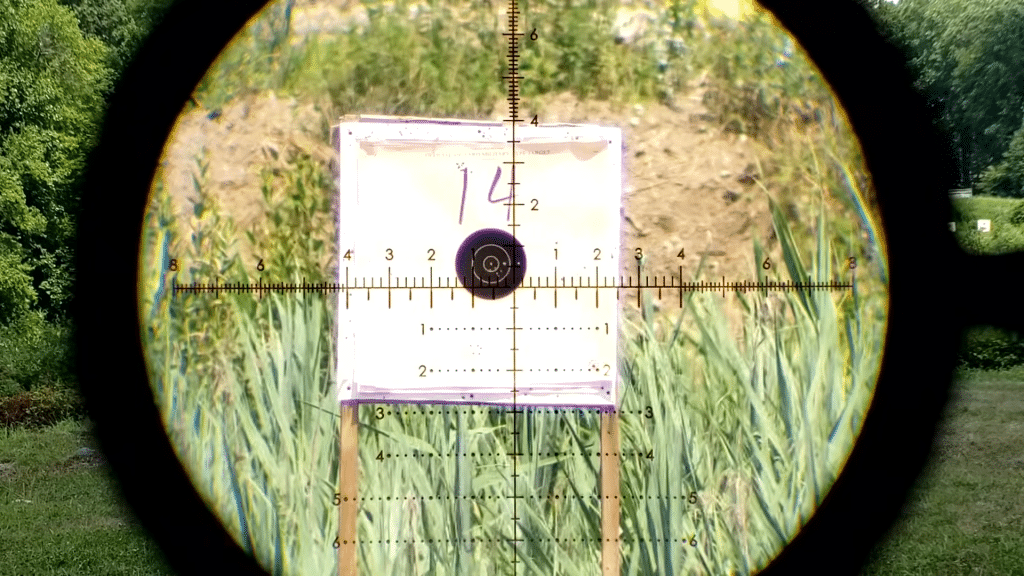
The EBR-7C reticle is where this scope shines for precision work. That Christmas tree pattern gives you plenty of holdover options when you’re dialing for distance.
The center dot is small, which I appreciate for precise shots. Some shooters might find it hard to pick up quickly though. When you’re making cold bore shots at 600 yards, that fine center dot becomes your best friend.
Eye Relief & Eye Box

Via-Vortex Optics
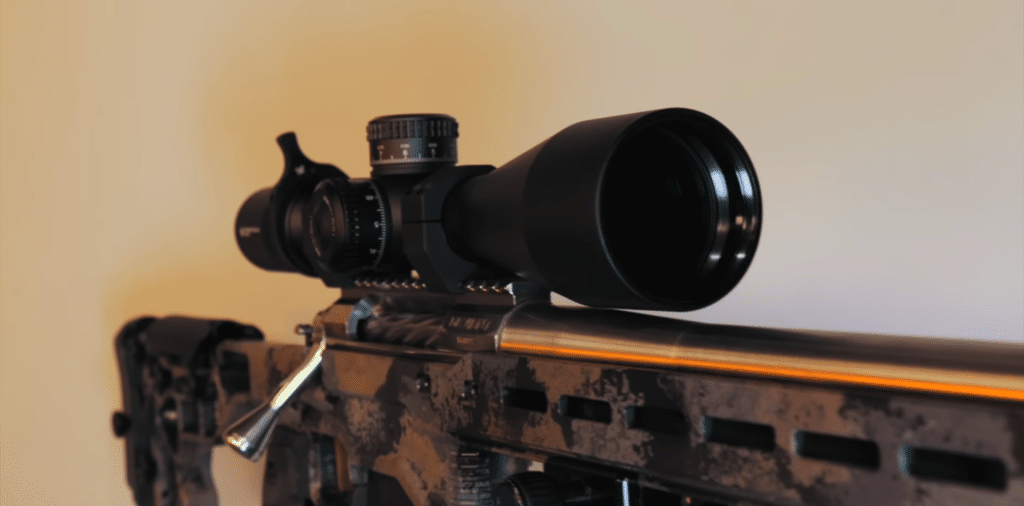
The 3.7 inches of eye relief works well for most bolt-action setups. I mounted this on my precision rifle and found the eye box forgiving enough at lower magnifications. You’ve got room to move your head around without losing the sight picture.
via: IMPACT SHOOTING
Crank it up to 25x though, and things get pickier. I had to get my head positioned just right to avoid scope shadow.
During positional shooting drills, I found myself hunting for the sweet spot more than I’d like. For benchrest shooting, it’s not an issue. But if you’re planning competition work where speed matters, expect a learning curve at maximum magnification. The Bushnell Match Pro ED handles this better with its larger eyebox.
Durability

via: Precision Rifle Network
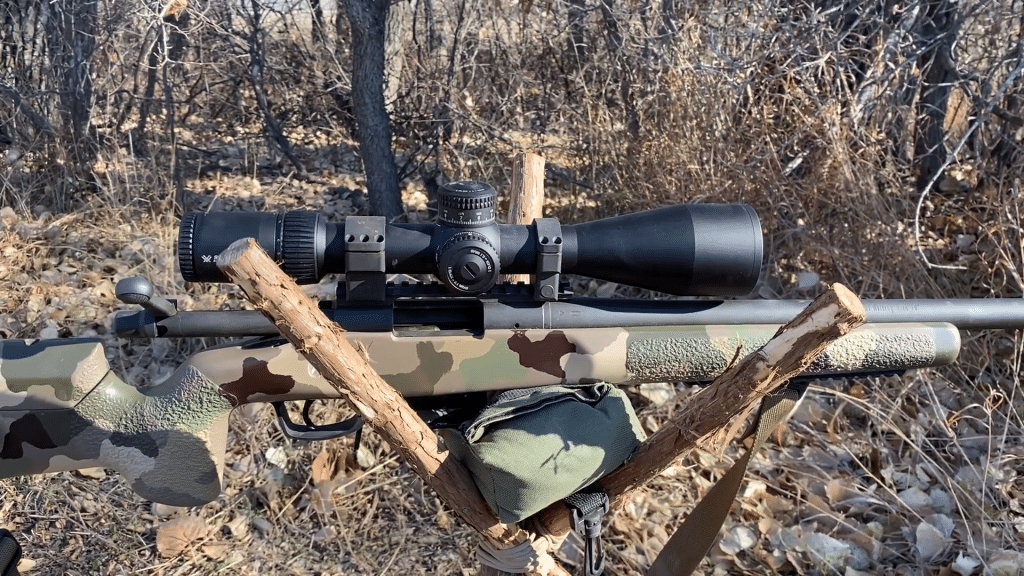
I’m not gentle with my gear. This scope rode in the truck bed, got rained on during a multi-day precision class, and took its share of bumps. The housing held up fine. No issues with the seals or any fogging.
The anodizing showed some wear where the rings clamped down, but that’s normal.
via: TiborasaurusRex
The turrets worried me initially since they feel less robust than higher-end scopes. After several hundred rounds of dialing up and down for various distances, they’re still tracking correctly.
I did a box test at 100 yards after a month of use. It returned to zero without drama.
Elevation & Windage Knobs
via: Precision Rifle Network
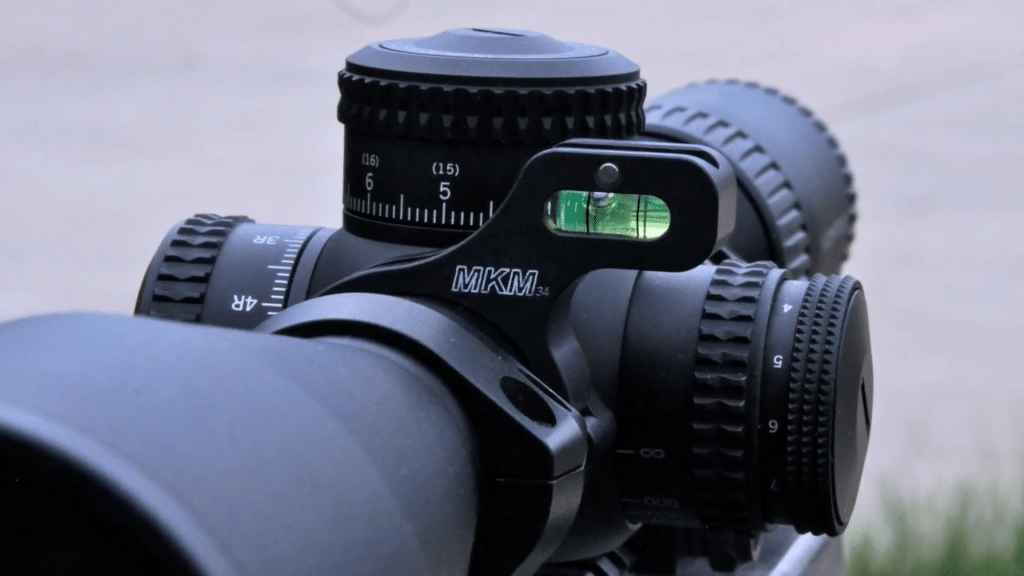
Here’s where I have mixed feelings. The turrets work, but they lack the crisp, tactile feedback you’d want. The clicks feel mushy. You can count them, but they don’t inspire confidence when you’re dialing in the dark or under time pressure.
The Arken SH4 Gen 2 costs half as much and has crisper clicks. That’s frustrating.
That said, the adjustment range is massive. With 110 MOA of elevation travel and the RevStop zero system, I never worried about running out of adjustment. I took this out to 1,000 yards with a 6.5 Creedmoor and had plenty of clicks left.

via: Vortex Optics
The RevStop feature is genuinely useful. No more accidentally dialing past your zero when you’re adjusting back down.
The tall turrets are easy to grip with gloves on. I appreciated that during a cold-weather range session where my fingers were half-numb.
Magnification & Parallax

Via-Vortex Optics
The 5-25x range covers everything I need for precision shooting. I keep it at 15x for most work between 300-600 yards. The throw lever makes power changes quick, which matters when you’re transitioning between targets at different ranges.
The parallax knob is my main complaint. It’s stiff. Really stiff. Getting it dialed in for each distance requires more effort than it should.
via: C_DOES
Once you wrestle it into position, the image sharpens up nicely. The parallax adjustment goes down to 15 yards, which is useful if you’re zeroing at 25 or 50 yards.
I found myself leaving it set for mid-range distances just to avoid fighting with it constantly. For long-range work where you’re settling in for deliberate shots, it’s manageable. For dynamic shooting, you’ll notice the resistance.
Accessories
The included throw lever is decent, but you’ll want quality rings that match this scope’s capabilities. With a 34mm tube and nearly 2 pounds of weight, proper mounting is critical.
- Vortex Pro Series 34mm Rings (High): These are precision-machined and provide the height you need to clear a 56mm objective lens without issue.
- Seekins Precision 34mm Scope Rings: Rock-solid construction with proper torque specs that keep this heavy optic secure through heavy recoil.
- Warne Mountain Tech 34mm Rings: Another excellent option with a tool-less design that still provides repeatable zero if you need to remove the scope.
- Vortex Defender Flip Caps (E-10 Eyepiece & O-56 Objective): Spring-loaded design that opens with a thumb press, purpose-built to fit this scope’s exact dimensions for a secure, watertight seal.
By the Numbers
Glass Clarity & Reticle
4/5

The glass performs well at lower magnifications with good clarity for the price point, though chromatic aberration appears above 20x. The EBR-7C reticle is well-designed for precision holdovers.
Eye Relief & Eye Box
3/5Eye relief is adequate at 3.7 inches, but the eye box becomes unforgiving at maximum magnification, making it harder to acquire the sight picture quickly during positional shooting.
Durability
4/5The scope withstood rough handling, weather exposure, and consistent use without mechanical failures. The housing is solid, though turret construction feels less robust than premium options.
Elevation & Windage Knobs
3/5Massive adjustment range and the RevStop zero system are excellent, but mushy turret clicks lack the tactile precision you want when dialing under pressure or in low light.
Magnification & Parallax
4/5The 5-25x magnification range is ideal for precision work, and the included throw lever helps with quick adjustments. However, the parallax knob is frustratingly stiff and requires excessive effort to adjust.
Overall
3.6/5See how I test & rate in my reviews. Learn more >
Summary
After months of range time with the Vortex Strike Eagle 5-25×56, I can tell you it delivers where it counts for long-range precision shooting. The first focal plane reticle and massive adjustment range make it a legitimate tool for reaching out to 1,000 yards without breaking the bank.
Glass quality is solid at practical magnifications. The scope held zero through everything I threw at it.
The turrets are the weak point. They work, but those mushy clicks won’t satisfy shooters coming from higher-end glass. The stiff parallax knob is another annoyance that you’ll either adapt to or constantly complain about. Eye box at maximum magnification demands precise head position.
For the money though, this scope punches above its weight class. If you’re building a precision rifle on a budget or need a backup optic that can handle legitimate long-range work, the Strike Eagle delivers the features that matter.
Just know you’re making compromises in turret feel and some optical refinement to get that big magnification range and FFP reticle at this price point.
How the Vortex Strike Eagle 5-25×56 Compares Against Others
| Features | Vortex Strike Eagle 5-25×56 | Arken SH4 Gen 2 6-24×50 | Athlon Ares BTR Gen 2 4.5-27×50 | Bushnell Match Pro ED 5-30×56 |
|---|---|---|---|---|
| Price | ~$700 | ~$400 | ~$800 | ~$900 |
| Magnification | 5-25x | 6-24x | 4.5-27x | 5-30x |
| Objective Lens | 56mm | 50mm | 50mm | 56mm |
| Tube Diameter | 34mm | 34mm | 30mm | 34mm |
| Focal Plane | FFP | FFP | FFP | FFP |
| Weight | 30.4 oz | 36.6 oz | 27.3 oz | 32 oz |
| Length | 14.6 in | 14.1 in | 13.8 in | 15.5 in |
| Eye Relief | 3.7 in | 3.5 in | 3.5 in | 3.8 in |
| Max Elevation | 110 MOA | 108.8 MOA | 80.15 MOA | 100 MOA |
| Parallax Range | 15 yds to infinity | 25 yds to infinity | 10 yds to infinity | 15 yds to infinity |
| Turret Type | RevStop zero system | Zero stop both turrets | Zero stop elevation | Locking turrets with zero stop |
| Reticle | EBR-7C | VPR MOA/MIL | APLR3/APRS5 | Deploy MIL 2 / G5i |
| Warranty | VIP Unlimited Lifetime | Lifetime | Lifetime | Lifetime |
| Pros | FFP reticle – Massive adjustment range – RevStop zero system – Includes throw lever – Close parallax focus | Crisp turret clicks – 34mm tube for price – Zero stop both turrets – Budget-friendly FFP | Lightweight at 27.3 oz – Sharp turret feedback – Wide magnification range – Excellent clarity | 30x top-end magnification – ED glass quality – Locking turrets – Large eyebox – Extended adjustment range |
| Cons | Mushy turret clicks – Heavy at 30.4oz – Stiff parallax knob – Small center dot – Chromatic aberration at 25x | Heavy at 36.6 oz – Limited adjustment range – Entry-level glass – Less refined optics – Tighter eye box | 30mm tube limits adjustment – Less elevation travel – Reticle less intuitive – Shorter overall length | More expensive – Some chromatic aberration – Heavier than Athlon – Deploy reticle learning curve – Less elevation than Strike Eagle |
The Vortex Strike Eagle 5-25×56 sits in the middle ground with decent glass and a feature set that works for precision shooting. The 34mm tube and RevStop system are nice touches. But those mushy turrets and stiff parallax knob remind you this isn’t premium glass.
The Arken SH4 Gen 2 6-24×50 is where budget shooters should look first. Turrets feel better than the Strike Eagle, and you’re getting FFP with a 34mm tube for half the money. Glass quality takes a hit, but if you’re learning long-range fundamentals, save the cash and put it toward ammo.
The Athlon Ares BTR Gen 2 4.5-27×50 is lighter and has sharper turrets than the Strike Eagle. The extra magnification range is useful, but that 30mm tube limits your adjustment when you’re stretching past 800 yards. For hunting applications where weight matters, this is the better pick.
The Bushnell Match Pro ED 5-30×56 costs a bit more but gives you that extra magnification headroom with 30x on the top end. The ED glass shows improvement in clarity, and those locking turrets feel more precise than the Strike Eagle. It’s a worthwhile step up if you’re serious about PRS or long-range competition shooting.
To Summarize
I’ve spent time behind all these scopes. Here’s what I’d do with my own money.
The Strike Eagle handles precision work out to 1,000 yards without major complaints, but it doesn’t excel anywhere specific. If you’re on a tight budget and need FFP now, get the Arken. Those turrets punch way above the price point, and you’ll learn proper dialing technique without breaking the bank.
The Athlon makes sense if you’re building a lightweight hunting rifle that occasionally sees long-range work.
If you can stretch your budget another $200 to the Bushnell Match Pro ED, that’s where I’d put my money. The 30x top-end magnification gives you more reach when you need to identify small targets at extreme distance. The ED glass delivers noticeably better color correction than the Strike Eagle.

Locking turrets eliminate worries about bumping your zero during transport. It’s not a dramatic leap, but it’s the better value for money compared to the Strike Eagle when you’re looking at features per dollar.
The Strike Eagle will get the job done, but the Bushnell Match Pro ED is what I’d grab if I’m building a dedicated long-range rig and want room to grow into the glass.
Frequently asked questions
What magnification should I use the Vortex Strike Eagle 5-25×56 at for most shooting?
For most precision shooting between 300-600 yards, keep it around 15x magnification. This gives you enough detail to see your target clearly while maintaining a more forgiving eye box. You only need to crank it up to 20-25x when you’re shooting past 700 yards or trying to identify small targets at distance.
Does the Vortex Strike Eagle 5-25×56 hold zero after dialing?
Yes, the Strike Eagle returns to zero reliably after dialing for elevation and windage. I ran multiple box tests after months of use, and it tracked consistently within 0.5 MOA. The RevStop system makes it easy to return to your zero without worrying about going past it when dialing back down.
What rings do I need for the Vortex Strike Eagle 5-25×56?
You need 34mm scope rings in medium or high height depending on your rifle and objective clearance. High rings work best with the 56mm objective to ensure proper clearance over the barrel. I use Vortex Pro Series 34mm rings, but Seekins Precision or Warne Mountain Tech rings also work well for this scope.
Is the Vortex Strike Eagle 5-25×56 good for hunting?
Yes, the Strike Eagle works well for long-range hunting where shots extend past 300 yards. The 56mm objective gathers enough light for dawn and dusk hunting, and the FFP reticle lets you hold for distance at any magnification. The weight at 30.4 ounces means it’s better suited for spot-and-stalk or stand hunting rather than long mountain hunts where every ounce counts.
How far can you shoot with the Vortex Strike Eagle 5-25×56?
You can shoot accurately to 1,000 yards with the Strike Eagle mounted on a capable rifle chambered in 6.5 Creedmoor or similar cartridges. The 110 MOA of elevation adjustment provides enough travel to reach that distance with most loads. Glass clarity remains acceptable through 800 yards but starts to show its limitations beyond that distance at maximum magnification.
What’s the difference between MOA and MRAD versions of the Strike Eagle?
The difference is the measurement system for your turrets and reticle. MOA versions adjust in 1/4 MOA clicks and use an MOA-based reticle. MRAD versions use 0.1 MRAD clicks with a mil-based reticle. Choose based on what you’re familiar with. Both systems work equally well for dialing and holdovers once you understand them.
Why should you trust me
I’m Richard Douglas, and I’ve been a firearms instructor and tactical advisor for years. My work has appeared in leading firearm publications. I’ve consulted for optic manufacturers like Bushnell, Leupold, and Sightmark on their products.
My background includes work as a National Defense Security Consultant and extensive hands-on experience with marksmanship and firearm optics. I’ve wasted thousands of dollars testing scopes over the years. Some were solid, most were garbage. That’s why I started Scopes Field.
Every scope I review gets mounted on actual rifles and tested at distances from 50 to 500 yards. I run zero-retention tests, drop tests, and measure MOA groupings to see how they perform under real conditions. I don’t accept money for reviews or link placements. What you’re reading comes from genuine trigger time, not marketing material.


