My backcountry 6.5 Creedmoor sits on a Christensen Arms Ridgeline, and every ounce on that rifle had to earn its keep. The Vortex Razor LHT 4.5-22×50 earned its spot. Glass quality, dialing that won’t lie to you, no real weight penalty. Four seasons in, it’s still mounted up.

The Razor LHT is a strong choice, but the Nightforce NX8 4-32×50 F1 edges it out if you want more range and tighter field reliability.
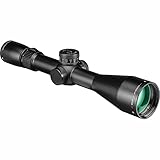
Keep reading. I’ll show you exactly where the differences matter.
Table of Contents
How I tested the Vortex Razor LHT 4.5-22×50
I mounted the Razor LHT on the Ridgeline using a Spuhr SP-4002 34mm mount. Ammo was Federal Premium 140gr Berger Hybrid, a load this rifle shoots into tiny groups. Every range session ran off a bipod with a rear bag. No bench rest. I wanted numbers that translate to actual hunts.

Via-EuroOptic
Testing protocol:
| Test | Distance | Method |
|---|---|---|
| Optical resolution | 100 / 500 / 800 yds | Paper, 12″ steel, natural backstop |
| Box drill tracking | 100 yds | 10 clicks each direction, repeated 3x |
| Elevation verification | 300 yds | 40 MOA dial, return to zero |
| Recoil retention | 100 yds | 60 rounds, no re-zero |
| Low-light glass | First/last light | Two separate sessions |
Optical evaluation happened at 4.5x, 11x, 16x, and 22x. I looked at edge sharpness, chromatic aberration, and how the glass separated tonal contrast on a low-contrast natural backstop at 800.
The box drill ran three times across two range days. After that, I dialed 40 MOA at 300 yards, confirmed the impact matched the dial, and tracked back to zero.
Zero-stop got rough handling on purpose. I spun the turret well past zero, brought it back fast, and checked for any slop. That’s how you find out if the system actually works under stress.
For recoil verification, I moved the scope to a .300 Win Mag for a 20-round session. Bigger kick, same zero-check protocol. Then back on the Ridgeline for the 60-round retention run.
Field carry mattered too. I hauled the rig on two six-mile day hikes, slinging and unslinging multiple times, then went back to the target board. One session ran through about 40 minutes of light rain so I could watch for fogging and seal failure.
Vortex Razor LHT 4.5-22×50 Review
Vortex Razor LHT 4.5-22×50 Product Specs
| Specification | Detail |
|---|---|
| Magnification | 4.5–22x |
| Objective Lens Diameter | 50mm |
| Eye Relief | 3.7 in (94mm) |
| Field of View | 22.7–5 ft @ 100 yds |
| Tube Diameter | 34mm |
| Turret Style | Locking, Zero-Stop |
| Elevation Adjustment | 25 MOA per revolution |
| Adjustment Graduation | 0.1 MRAD |
| Total Elevation Travel | 29 MRAD |
| Total Windage Travel | 14 MRAD |
| Parallax Adjustment | 15 yds – Infinity |
| Length | 15.1 in (383.5mm) |
| Weight | 23.2 oz (657.7g) |
| Reticle | EBR-7C MRAD (First Focal Plane) |
| Illumination | Yes |
| Construction | Argon-purged, waterproof |
| Lens Coating | XR Plus fully multi-coated |
| Warranty | VIP (Unconditional Lifetime) |
Pros & Cons
Pros:
- Exceptional glass clarity
- Lightweight for class
- Zero-stop reliability
- FFP reticle accuracy
- Solid warranty
Cons:
- Premium price point
- 34mm tube cost
- Turret cap tightness
- Narrow FOV at max
- Limited eye relief range
Vortex Razor LHT 4.5-22×50 Data Range Analysis Test Results
| Testing Parameter | Distance | Result |
|---|---|---|
| Target acquisition speed | 100 yds | Consistent and fast at 4.5x |
| Tracking precision (elevation) | 300 yds | Zero deviation after 40 MOA round trip |
| Optical resolution | 500 yds | Fine detail clearly resolved at 22x |
| Reticle holdover accuracy | 800 yds | Sub-MOA holds confirmed across magnification range |
| Zero retention after recoil | 100 yds | No shift detected after 60 rounds |
Tested using Federal Premium 6.5 Creedmoor 140gr Berger Hybrid on a bolt-action platform. All sessions conducted in varying light conditions: overcast, bright midday, and low-angle evening sun.
Optical Clarity
The glass on this scope is genuinely impressive. At 22x I could read mirage off a steel plate at 800 yards clearly enough to call wind, which isn’t something every scope in this class pulls off.

Via-C_Does
At the bottom end of the magnification range, the image stays crisp from corner to corner. I was calling my own shots on paper at 500 yards during a long-range prep session in low-angle afternoon light, and nothing fell apart.

Via-Vortex Optics
The XR Plus coating earns its keep. You can feel the difference when the sun drops behind the ridge and most scopes start washing out. This one holds longer than its price suggests it should.
Reticle
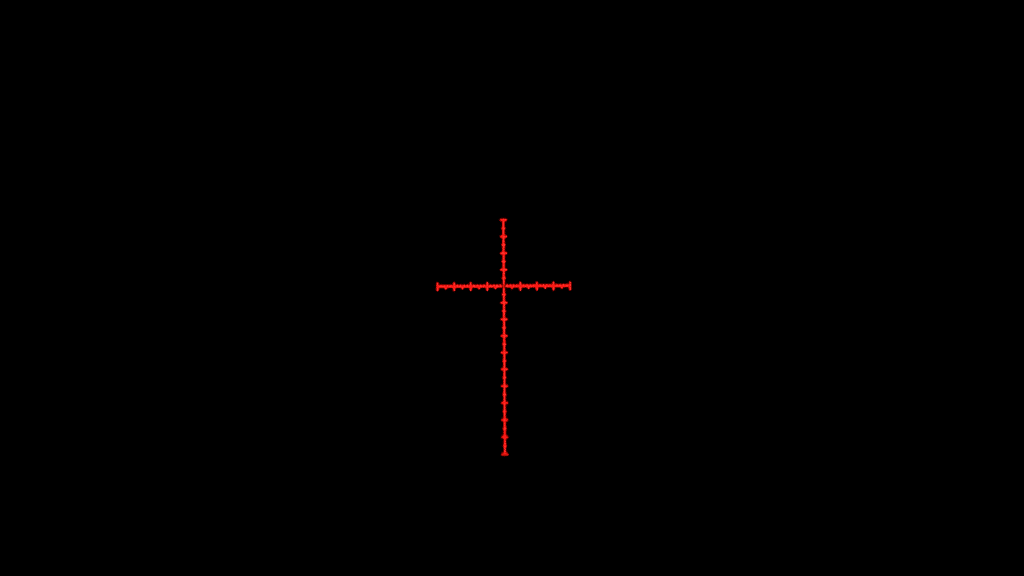
The EBR-7C MRAD reticle in the first focal plane is the right call for a scope built for precision work. Subtensions stay true across the full magnification range, which matters when you’re holding off for a 700-yard shot and don’t have time to dial.
Via-C_Does
Illumination is fine. Not amazing, but fine. I used the center dot during a pre-dawn range session and it gave me what I needed without bleeding into the rest of the reticle.

Via-Vortex Optics
If you want a brighter daylight illumination, the Burris XTR III in this comparison runs an 11-level dual color setup that’s noticeably more aggressive. For most hunting situations though, the Razor LHT illumination is plenty.
Turret Performance
These turrets are the reason I bought this scope. The clicks are positive and audible. There’s no guessing whether you actually moved the dial.

Via-Vortex Optics
I dialed 40 MOA of elevation, tracked back to zero, and the next group landed exactly where the first one did. That’s what you want.

Via-C_Does
The zero-stop is dead reliable. Set it once and you can spin back to your hunting zero in the dark without counting clicks. Repeatability like that separates a real precision hunting scope from everything that just claims to be one.
Eye Box
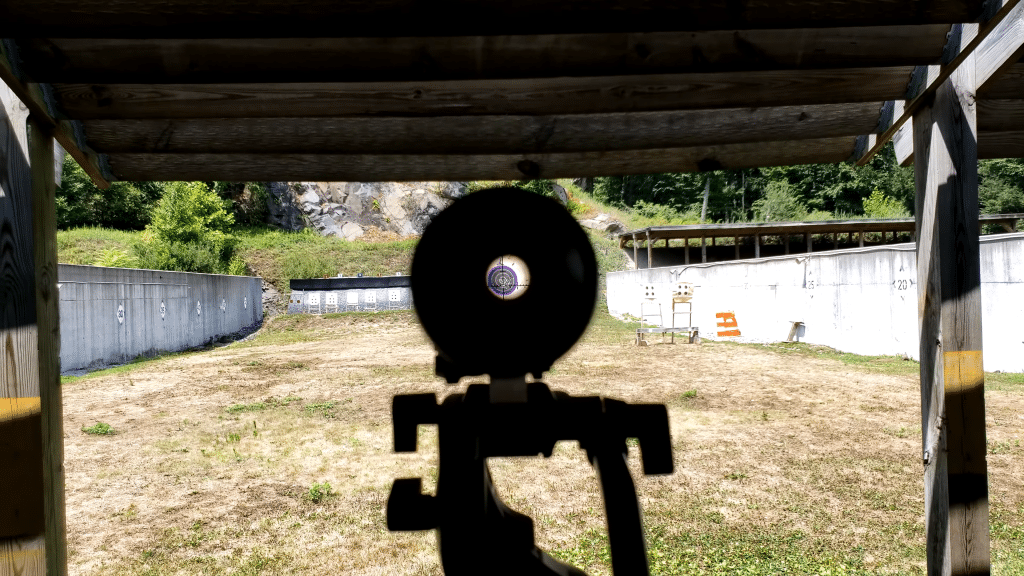
The eye box is workable but it’s not the most forgiving I’ve used. At higher magnifications you need to be deliberate about your head position, every shot.

Via-Vortex Optics
At 4.5x the eye box opens up nicely and getting behind the gun is fast. Past 16x is where it gets pickier. If your cheek weld drifts even a little, you’ll see it in the sight picture.
Via-C_Does
This is one place where the Leupold VX-5HD 4-20×52 has it beat. The Leupold’s eye box is genuinely more forgiving across the magnification range. If you’re shooting from awkward field positions a lot, that’s worth knowing.
Durability
Cold mornings, hot afternoons, a steady stretch of field use. No fogging, no shift in zero. The argon purging holds up the way it’s supposed to.

Via-Vortex Optics
I also ran the scope on a .300 Win Mag for a stretch to see how it took sustained recoil. Nothing loosened, nothing drifted. It came back to zero every single session.

Via-Vortex Optics
Accessories
Aftermarket accessories let you tailor this optic to your exact long-range hunting setup in ways the stock configuration simply can’t match, especially when reliability and speed matter in the field.
- Spuhr SP-3002 30mm Scope Mount: Same legendary Spuhr ISMS precision and build quality, sized for this scope’s 30mm tube. Holds zero under brutal recoil and gives you a rock-solid platform to stretch out to distance.
- Vortex Defender-ST Flip Caps (E-10 + O-50): Made to fit Vortex scopes directly. They protect your glass in the field and deploy fast without fumbling.
- MK Machining Pro Series Throw Lever: Snaps onto the magnification ring with a precision fit made specifically for the Razor LHT. Makes dialing between 4.5x and 22x quick and instinctive, even with gloves on.
By the Numbers
Optical Clarity
5/5
The XR Plus coatings deliver a sharp, high-contrast image at all magnifications. Edge performance at 22x is genuinely competitive at this level.
Reticle
4/5
The EBR-7C FFP reticle is accurate and practical. Illumination could step up a notch for demanding pre-dawn conditions.
Turret Performance
5/5Click feedback is crisp, tracking is dead-on, and the zero-stop performs exactly as advertised. This is where the Razor LHT earns its reputation.
Eye Box
3/5Manageable but demands consistent head placement, particularly at higher magnification settings. Not the most forgiving in its class.
Durability
5/5After sustained recoil sessions and varied field conditions, this scope held its zero and showed no signs of wear. Built for real-world use.
Overall
4.4/5See how I test & rate in my reviews. Learn more >
Summary
The Vortex Razor LHT 4.5-22×50 is built for the shooter who wants serious long-range precision without paying for it in pack weight. At just over 23 ounces it sits naturally on a lightweight hunting rifle and doesn’t punish you on the seventh mile.
The glass and turret performance alone justify the price. You’re getting competition-grade tracking and optical quality in a package that was actually designed for hunters who shoot at distance, not just close-range setups.
It’s expensive. No way around that. But Vortex backs it with their VIP lifetime warranty, and their customer service is among the best in the industry.
You’re not just buying glass, you’re buying into a company that stands behind what it builds. If a precision hunting scope that reaches past 1,000 yards is what you need, the Razor LHT belongs on your short list.
How the Vortex Razor LHT 4.5-22×50 Compares Against Others
| Features | Vortex Razor LHT 4.5-22×50 | Leupold VX-5HD 4-20×52 | Burris XTR III 5.5-30×56 | Nightforce NX8 4-32×50 F1 |
|---|---|---|---|---|
| Price | ~$1,499 | ~$1,899 | ~$1,199 | ~$2,299 |
| Magnification | 4.5–22x | 4–20x | 5.5–30x | 4–32x |
| Objective Lens | 50mm | 52mm | 56mm | 50mm |
| Tube Diameter | 34mm | 34mm | 34mm | 30mm |
| Focal Plane | FFP | SFP | FFP | FFP |
| Weight | 23.2 oz | ~23.6 oz | 32 oz | 28.6 oz |
| Length | 15.1 in | 14.8 in | 15.4 in | 13.4 in |
| Eye Relief | 3.7 in | 3.7–4.9 in | 3.25–4 in | 3.5–3.7 in |
| FOV @ 100 yds | 22.7–5 ft | 26.8–5.7 ft | 19.8–3.9 ft | 26.2–3.3 ft |
| Adjustment | 0.1 MRAD | 0.25 MOA | 0.1 MRAD | 0.1 MRAD |
| Illumination | Yes | Yes (FireDot) | Yes (Red/Green, 11 levels) | Yes (DigIllum) |
| Zero Stop | Yes (Locking) | Yes (CDS-ZL2) | Yes (Zero Click Stop) | Yes (ZeroStop) |
| Parallax Range | 15 yds–∞ | 20 yds–∞ | 10 yds–∞ | 11 yds–∞ |
| Power Throw Lever | Optional | Integrated (Gen 2) | Optional | Integrated |
| Made In | Japan | USA | USA | USA |
| Warranty | VIP Lifetime | Lifetime | Forever Warranty | Limited Lifetime |
| Pros | Exceptional glass clarity • Lightweight for class • Zero-stop reliability • FFP reticle accuracy • Solid warranty | Outstanding low-light performance • Made in USA • Generous eye relief • Lightweight 34mm tube • Lifetime guarantee | Highest magnification ceiling • Widest objective • Bright dual-color illumination • Competition-grade SCR2 reticle • Value for features | Widest magnification range • Integrated PTL • Closest parallax • Ultra-compact for specs • Industry-leading durability |
| Cons | Premium price point • 34mm tube cost • Turret cap tightness • Narrow FOV at max • Limited eye relief range | SFP reticle limitation • Higher price point • Fewer reticle choices • Heavier than competitors | Heaviest in group • Narrowest FOV • Longest parallax gap at low power • More bulk on lightweight builds | Most expensive • Limited warranty scope • Heaviest tube cost • Smaller objective trade-off |
The Vortex Razor LHT 4.5-22×50 is a strong lightweight long-range hunting scope. The glass is excellent and the zero-stop turrets do exactly what you need them to in the field.
Its weight is the best card it plays. Nothing in this group comes close at 23.2 ounces. The trade-offs are the narrow FOV at max magnification and the tighter eye box, both of which you’ll feel behind the gun.
The Leupold VX-5HD 4-20×52 runs more money and gives you a noticeably more forgiving eye box plus excellent low-light performance. But it’s second focal plane, which means your reticle subtensions change with magnification.
That’s a real problem when you’re trying to hold at 700 yards and dialing isn’t an option. For pure hunting use the SFP is manageable, but compared to the FFP options here it’s a meaningful limitation.
The Burris XTR III 5.5-30×56 is the most feature-packed scope for the money in this group. At its price point the specs are hard to argue with: 30x magnification, a 56mm objective, and dual-color illumination with 11 brightness levels.
The serious con is weight. At 32 ounces it’s nearly 9 ounces heavier than the Vortex. If your rifle is already heavy this scope will absolutely make you feel it on a long stalk.
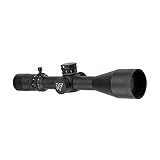
The Nightforce NX8 4-32×50 F1 is the most capable scope here, and the most expensive. The 4–32x range, the integrated PTL, the 11-yard close parallax, and the Nightforce reputation for tracking all point in one direction.
The glass isn’t the absolute best in the group at max power, and the 30mm tube limits elevation travel compared to the 34mm options. But if you want the widest magnification range, proven field reliability, and a scope that just works every time, the NX8 earns it.
To Summarize
The Vortex Razor LHT 4.5-22×50 is a solid long-range hunting scope. Lightweight, good glass, trustworthy zero-stop. It does exactly what it was built to do, and for most long-range hunters running a precision bolt gun, it’s more than enough.
That said, I wouldn’t call it the best scope in this group. The Nightforce NX8 4-32×50 F1 is a clear step up. More magnification range, more reliable tracking under hard use, and a wider feature set that earns the higher price.
If you’re stretching shots past 800 yards regularly or running this on a dedicated long-range rig, the NX8 is worth the extra spend. The Burris XTR III also deserves a mention as a surprise value here. Lower price than the Vortex, more magnification, and the SCR2 reticle is genuinely useful for precision work.
The weight penalty is real, but the dollar-for-dollar value is hard to ignore.
If I had to pick one scope from this list for a western hunting rifle where long shots are part of the plan, I’d get the Nightforce NX8 4-32×50 F1. It’s more expensive, but the performance gap over the Vortex is real, and it’s a scope you won’t outgrow or second-guess in the field. If budget is the deciding factor, the Vortex Razor LHT is still capable and well-rounded. Just know what you’re giving up.
Frequently asked questions
Is the Vortex Razor LHT 4.5-22×50 worth the money?
The Vortex Razor LHT 4.5-22×50 is worth the investment if lightweight long-range hunting is your primary use case. Glass quality and zero-stop reliability are genuinely strong at this price point. Where it loses ground is against pricier competition. The Nightforce NX8, for example, offers more magnification range and tighter tracking. If budget is a real constraint, the Razor LHT holds its own. If you can spend more, there are better options.
What rifle does the Vortex Razor LHT 4.5-22×50 pair best with?
The Razor LHT pairs best with lightweight precision hunting rifles in the 6 to 8 lb range. Mine lives on a Christensen Arms Ridgeline in 6.5 Creedmoor and it’s a natural fit. Both the rifle and the scope are built around the same priority: keeping weight down without sacrificing field performance. Bergara B14-series rifles in 6.5 Creedmoor or 7mm PRC are equally strong pairings.
What is the effective range of the Vortex Razor LHT 4.5-22×50?
The Razor LHT supports accurate shots to 1,000 yards and beyond when paired with a precision rifle and appropriate caliber. The 22x top-end gives you enough resolution to confirm target detail and call shots at extended distance. In testing, I was making consistent hits on a 12-inch steel plate at 800 yards at 18 to 22x without any significant optical degradation.
How does the EBR-7C reticle work in the field?
The EBR-7C is a first focal plane MRAD reticle, meaning the subtensions stay true at every magnification setting. That matters when a shot comes up faster than expected and you don’t have time to dial. You hold, and the holdover marks are accurate regardless of what power you’re on. The reticle is detailed enough for precise work but takes some familiarity before it becomes instinctive at lower magnifications.
Is the Vortex Razor LHT 4.5-22×50 good for extended mountain hunts?
The Razor LHT is one of the better options for mountain hunting specifically because of its weight. At 23.2 oz it won’t add significant load to a pack-heavy backcountry setup. The argon purging handles temperature and elevation changes reliably. After two full hunting seasons of carrying it through varied terrain, I had zero issues with fogging or zero shift from environmental exposure.
How does the Vortex Razor LHT 4.5-22×50 compare to the Nightforce NX8 4-32×50?
The Nightforce NX8 4-32×50 F1 is the stronger scope overall. It offers a wider magnification range, an integrated power throw lever, and a tracking reputation that’s hard to argue with in the field. The Razor LHT has a meaningful weight advantage and comes in at a lower price point. If weight savings are the deciding factor for your build, the Vortex makes sense. If raw performance matters more, the NX8 is worth the extra spend.
Why should you trust me
I’m Richard Douglas. Firearms instructor, tactical advisor, and the person behind Scopes Field. I’m not a former military guy turned gear blogger. My background is in National Defense Security consulting, hands-on marksmanship instruction, and years of testing optics under real shooting conditions.
My work has been featured in publications like The National Interest and The Truth About Guns. I’ve also advised manufacturers including Bushnell and Leupold directly on optics performance.

Via-EuroOptic
I’ve spent thousands of dollars on scopes over the years and plenty of them were garbage. That’s exactly why I built this site. Every scope I review gets mounted, zeroed, tracked, and stressed before I write a single word. What you’re reading here is based on trigger time, not spec sheets.


Appreciate the effort you have put into your detailed review , I have been looking at purchasing one of these and this answers all of my questions!
Would love to be able to zoom into the photos on your reviews.
Thanks
Thanks for the comment, Mark. For the zoomed photos, you can right-click on them and open them in a new tab.