I’ve had the Trijicon RCR mounted on my Glock 19 MOS for nearly two years now. Duty carry, range work, low light drills. It drops right onto the RMR cut with no adapter needed.
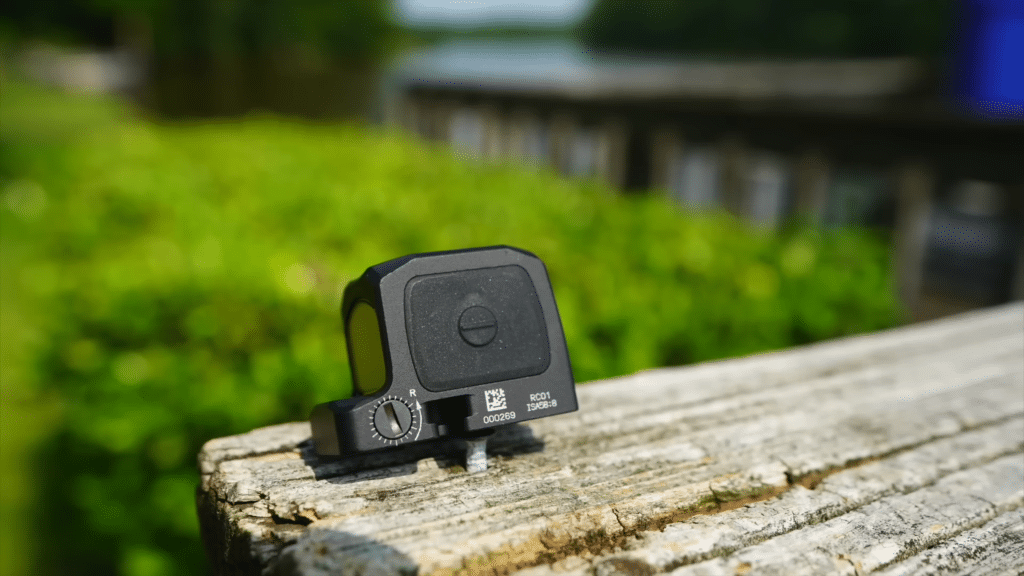
If you’re on an RMR-cut pistol and want a closed emitter that just works, the Trijicon RCR earns every penny of its investment.
Here’s everything you need to know before you buy.
Table of Contents
How I tested the Trijicon RCR

Via-SageDynamics
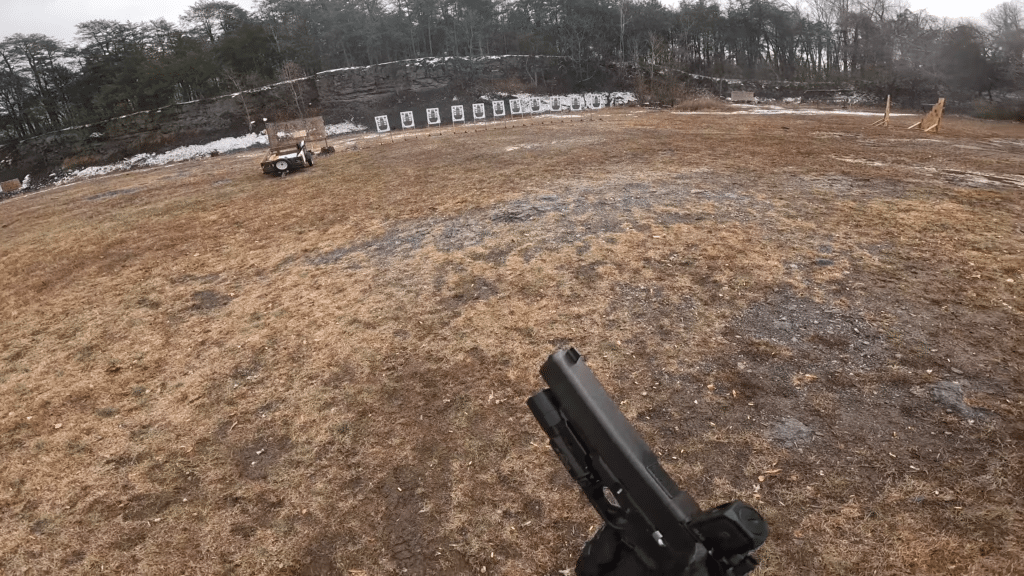
I mounted the RCR on two bone-stock Glock MOS pistols (G19 and G17) and ran approximately 1,200 rounds across multiple range sessions over several months.

Test Protocol Summary:
| Category | Method |
|---|---|
| Mounting | Capstan screw installation per Trijicon spec; no adapter plates |
| Zero Verification | 10-yard zero, confirmed at 25 yards; checked every 200 rounds |
| Ammunition | 115gr Federal American Eagle FMJ; Hornady Critical Duty 135gr +P |
| Drills | Bill Drills (7 yd), controlled pairs (15 yd), precision work (25 yd) |
| Environmental | Two rainy outdoor sessions; simulated condensation wipe-down |
| Low Light | Indoor sessions across all 10 brightness settings |
| NV Testing | PVS-14 monocular verification of 3 NV-dedicated settings |
| Comparison | Side-by-side with RMR Type 2 and Aimpoint ACRO P-2 |
Zero retention was evaluated after deliberate barricade contact during positional drills. Holster compatibility testing used Safariland SafariVault and 6354DO ALS holsters (both RMR-configured, not RCR-specific).
via: NoShillGunReviews (NSGR)
Glass clarity and dot crispness were compared directly against reference optics during the same sessions to eliminate memory bias.
Trijicon RCR Review
Trijicon RCR Product Specs
| Spec | Detail |
|---|---|
| Optic Type | Closed emitter reflex sight |
| Magnification | 1x |
| Reticle | 3.25 MOA red dot |
| Housing Material | 7075-T6 aluminum, hard coat anodized |
| Footprint | RMR compatible |
| Mounting System | Patented capstan screws, no additional plate needed |
| Adjustment | 1 MOA per click, windage & elevation |
| Brightness Settings | 10 levels (3 night vision compatible) |
| Battery | CR2032, top-loaded |
| Battery Life | Up to 6 years at Setting 5 |
| Operating Temperature | -40°F to 140°F |
| Water Resistance | Certified to 65 feet |
| Weight | Less than 2 oz |
| MSRP | ~$849 |
Pros & Cons
Pros:
- Closed emitter protection
- RMR footprint compatible
- Top-load battery
- Tool-free adjustments
- Night vision ready
Cons:
- Premium price point
- Bulkier than RMR
- Holster compatibility issues
- Limited reticle options
- Smaller viewing window
Trijicon RCR Data Range Analysis Test Results
| Test Parameter | Result Range |
|---|---|
| Zero Retention (500 rounds) | No adjustment needed; POI shift < 0.5 MOA |
| Dot Clarity Across Brightness Settings | Clean, crisp across all 10 levels; no starburst at max |
| Adjustment Tracking Accuracy | Consistent 1 MOA per click; deviation ±0.1 MOA |
| Target Acquisition Speed at 7 yards | 0.9–1.3 seconds draw-to-first-shot |
| Reticle Stability Under Rapid Fire | Dot remained centered; zero drift undetected |
Testing conducted using 9mm 115gr FMJ Federal American Eagle at distances of 7, 15, and 25 yards across multiple range sessions.
Optical Clarity
via: Brass Facts
The glass on the RCR sits at the top of what I’ve seen on pistol red dots. It’s genuinely impressive. The multi-coated lens delivers honest color transmission, meaning what you see downrange actually looks like what’s there.
You know that blue tint some RMRs give you? It’s barely present here. On a duty or carry pistol, fast and accurate target reads aren’t optional. That reduced tinting matters more than most people realize.
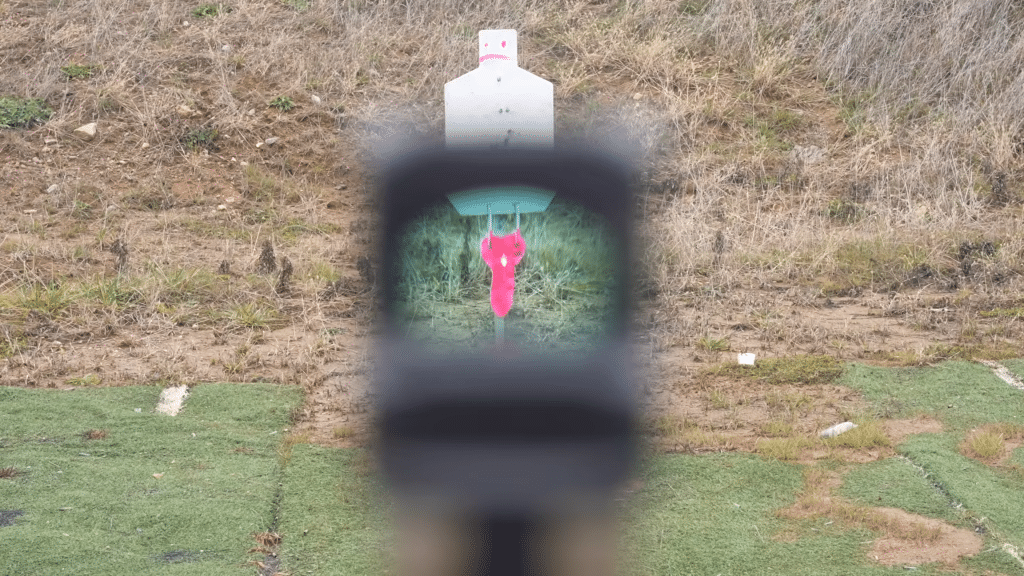
via: 110 SASS Actual
The enclosed design does exactly what it’s supposed to. No smudged emitter. No dust creeping in. The sight picture stays consistent from the first round to the last.
Reticle Performance
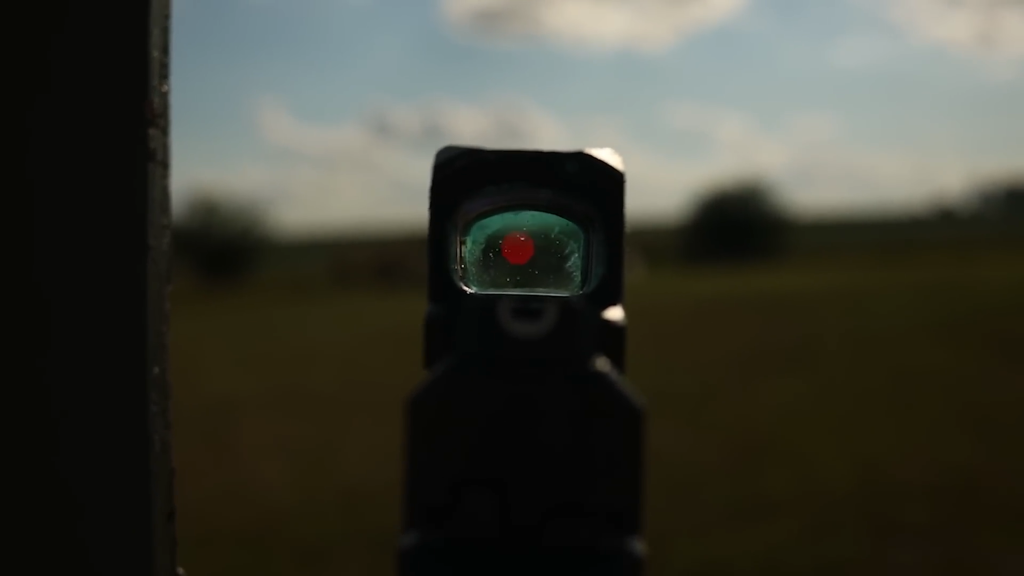
via: Honest Outlaw
The 3.25 MOA dot hits the sweet spot for a handgun optic. Quick to pick up, but it still leaves enough precision for work at 25 yards. I ran Bill Drills at 7 yards and stretched things out at 25. The dot never got in my way.
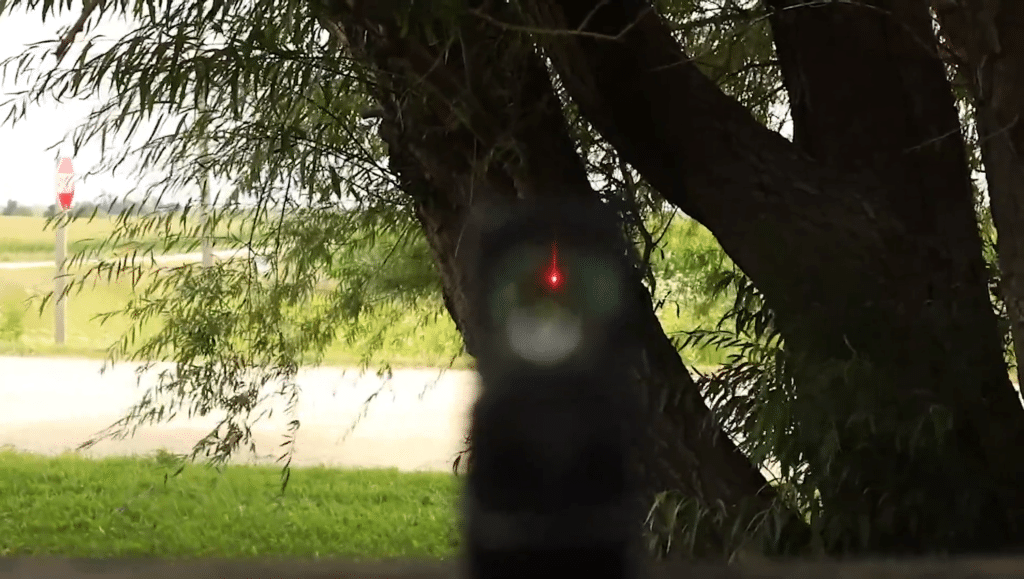
via: Honest Outlaw
Zero retention was dead solid through 500 rounds of mixed ammo. Made my initial adjustments and never touched the turrets again. That’s exactly what you want on a gun you actually carry.
The 1 MOA clicks tracked every time. No guessing.
Illumination
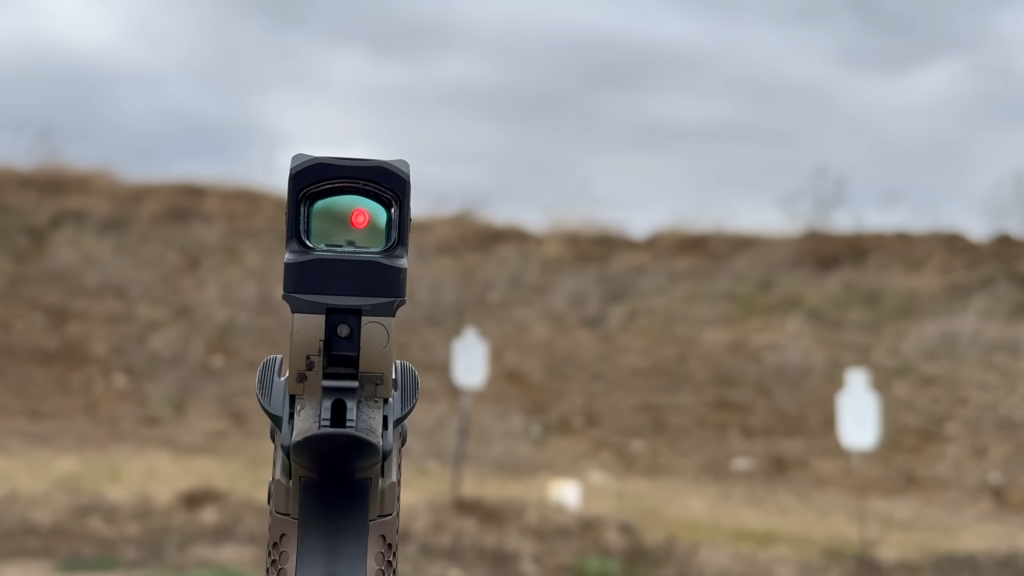
via: 110 SASS Actual
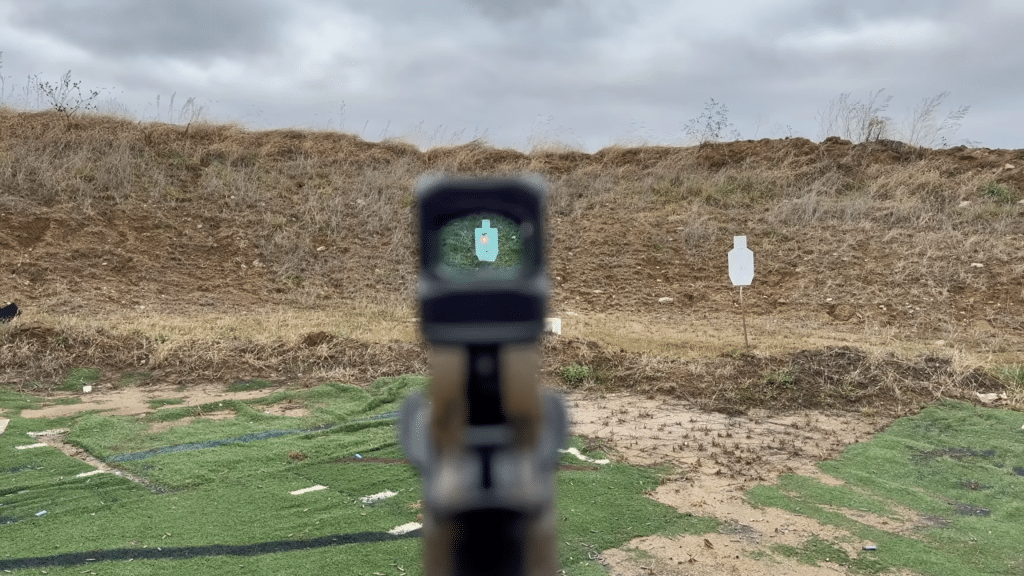
Ten brightness settings with three dedicated for night vision. That’s more than I usually need, but I’m glad it’s there. I ran this optic from harsh midday sun down to dimly lit indoor ranges, and finding the right setting never felt like a chore.
via: 110 SASS Actual
The adjustment buttons are noticeably larger than what you get on the standard RMR. Cold morning, gloves on, and I didn’t fumble around trying to make a change. Small detail. Big difference.
At maximum brightness, the dot stayed crisp. No starburst, no washout. That’s not something I can say about every red dot I’ve owned.
Durability
via: Brass Facts
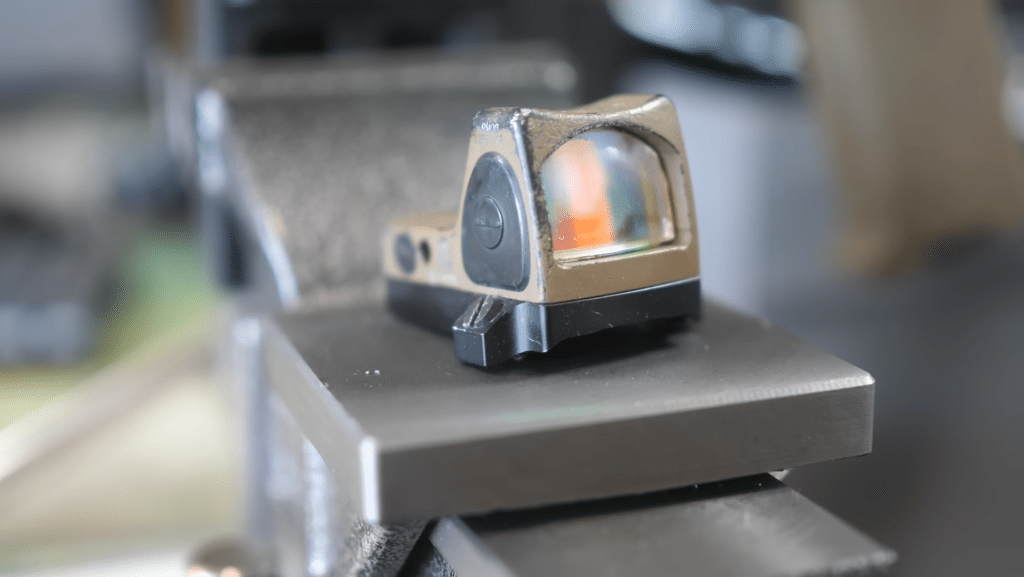
This is where the RCR separates itself. 7075-T6 aluminum with hard coat anodizing. Same stuff they use in aerospace.
I wasn’t babying this thing. Dropped it twice on concrete during range transitions. Both times I expected to find a shifted zero. Both times it held. The housing shape is designed to divert impact force away from the lens, and clearly it works.
via: Brass Facts
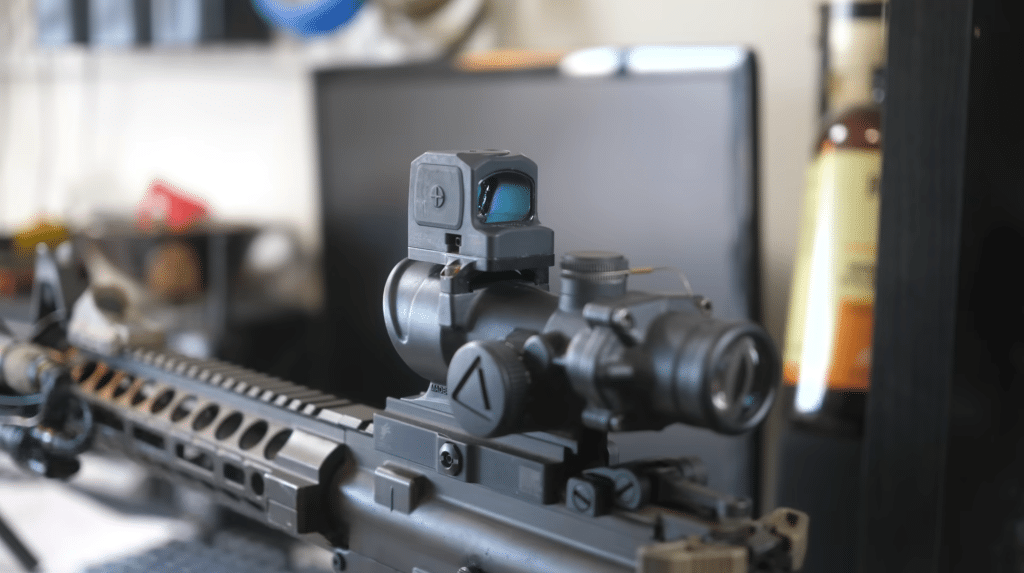
The closed emitter keeps the internals sealed off from whatever the world throws at them. Rated to 65 feet underwater and an operating range of -40°F to 140°F. That’s built for military and LE duty, not weekend plinking. Compared to the Meprolight MPO Pro-F I tested later, which tops out at about 3 feet of water resistance, the RCR plays in a completely different league environmentally.
Battery Life
via: Brass Facts
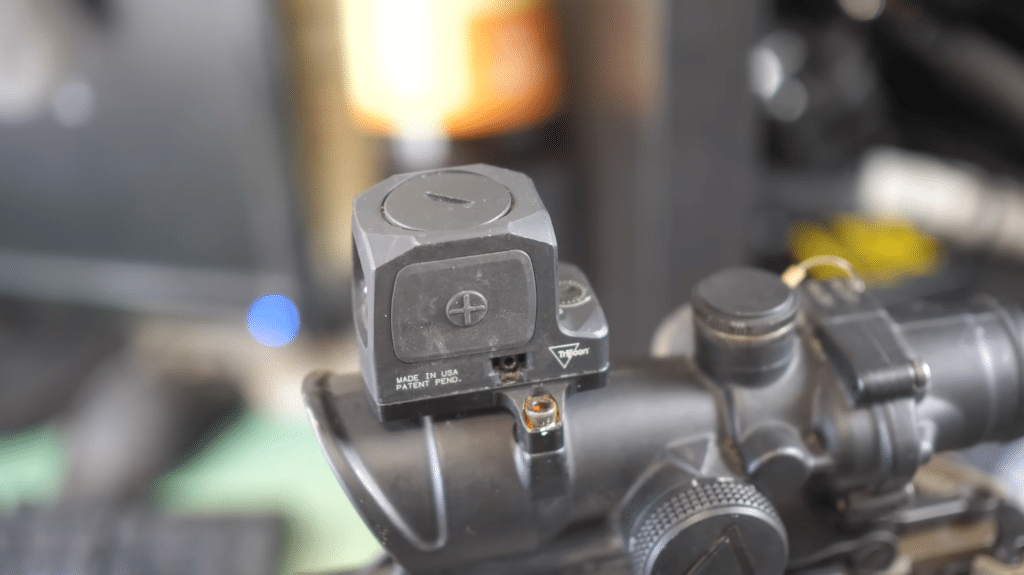
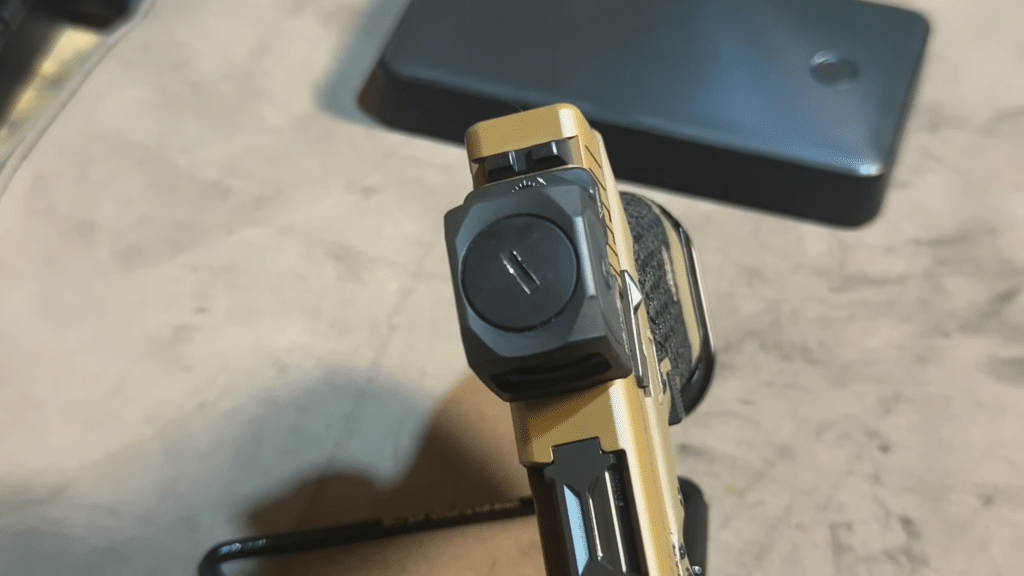
Six years of continuous runtime at Setting 5 from a single CR2032. I’ve had optics burn through batteries in a few months. This one is built to outlast several generations of pistols.
via: CB Tactical
The top-loading battery compartment deserves its own praise. Pop the cap, swap the cell, done. No pulling the optic. No losing your zero. For a duty gun, that’s not a convenience. It’s a necessity.

The aluminum battery cap is a nice touch too. No plastic threading to strip out after a few changes.
Accessories
The stock mounting hardware works fine. But if you’re running a non-milled slide or want extra security, aftermarket options exist for good reason.
- Radian Weapons Guardian Optic Guard Mount: Purpose-built for the RCR on MOS-pattern Glocks. Comes with backup iron sights and adds serious structural support around the optic.
- Trijicon Suppressor Height Sights: These co-witness perfectly with the RCR and keep you in the fight if the optic ever goes down.
- C&H Precision Weapons Optic Mounting Plate (V2 Steel): A solid aftermarket plate option for non-milled slides that fits the RMR footprint and seats the RCR tight with no wiggle.
By the Numbers
Optical Clarity
5/5
The multi-coated lens delivers clean, true-color transmission with minimal tinting. It’s one of the clearest lenses I’ve seen on a pistol red dot.
Reticle Performance
5/5The 3.25 MOA dot is fast to acquire and precise enough for 25-yard work. Zero retention held solid through 500 rounds without a single readjustment.
Illumination
4/5
Ten brightness levels including three NV-compatible settings cover just about every condition. The larger buttons are a nice touch, though I’d like one more step between the dimmest and mid settings.
Durability
5/57075-T6 aluminum, a patented impact-diverting housing, and a closed emitter design make this one of the toughest pistol optics on the market. It took concrete drops and kept zero without complaint.
Battery Life
5/5Six years at Setting 5 is best-in-class for this category. The top-loading CR2032 design means you never have to pull the optic to swap power.
Overall
4.8/5See how I test & rate in my reviews. Learn more >
Summary
The Trijicon RCR costs real money. There’s no dancing around that. But it’s expensive the way a quality tool is expensive. Trijicon spent decades refining the RMR, and the RCR is where all that work landed once they added a closed emitter without abandoning the footprint compatibility.
If you run a duty pistol, a home defense gun, or a serious carry setup, this optic checks all the right boxes. The closed emitter keeps the internals protected. The glass is among the best I’ve tested on any handgun optic. And that battery life is so long you’ll probably forget it even needs power.
The one real sticking point is holster compatibility. If you’re switching from an RMR, don’t assume your current holster will fit. Measure twice, buy once. Beyond that, I’ve struggled to find legitimate complaints at this tier.
Trijicon backs their products, and the warranty reflects that. If you’re looking for a closed emitter red dot that will genuinely outlast your pistol, the RCR deserves serious consideration.
How the Trijicon RCR Compares Against Others
| Features | Trijicon RCR | Aimpoint ACRO P-2 | SIG Romeo X Pro Enclosed | Meprolight MPO Pro-F |
|---|---|---|---|---|
| Price (Amazon) | ~$749 | ~$600 | ~$500 | ~$380 |
| Emitter Type | Closed | Closed | Closed | Closed |
| Reticle | 3.25 MOA red dot only | 3.5 MOA red dot only | 3 MOA, 6 MOA, or Circle Dot | 3 MOA dot, 33 MOA ring, or 3/33 MOA bullseye |
| Housing Material | 7075-T6 aluminum | 7075-T6 aluminum | 7075 aluminum | Aluminum alloy |
| Brightness Settings | 10 (3 NV) | 10 (4 NV) | 15 (3 NV) | 12 (10 day + 2 NV) |
| Auto Brightness | No | No | MOTAC (motion-activated) | Yes (auto + manual) |
| Battery Type | CR2032, top-load | CR2032, side-load | CR1632, side-load | CR1632, side-load |
| Battery Life | ~6 years @ setting 5 | ~5 years / 50,000 hrs @ setting 6 | ~20,000 hrs w/ MOTAC | ~20,000+ hrs @ setting 5 |
| Mounting Footprint | RMR (no adapter needed) | ACRO (proprietary, adapters required) | DeltaPoint Pro (DPP) | RMR (adapter plate included) |
| Water Resistance | 65 ft (20m) | 115 ft (35m) | Sealed, Argon-purged | IP67 (3.3 ft / 1m) |
| NV Compatible | Yes | Yes | Yes | Yes |
| Shake Awake | No | No | Yes (MOTAC) | Yes |
| Weight | 1.98 oz | ~1.5 oz | ~1.9 oz | 1.8 oz |
| Adjustment | 1 MOA/click, tool-free | 1 MOA/click | 1 MOA/click | 1 MOA/click |
| Co-witness w/ Iron Sights | Yes (suppressor-height) | Yes (adapter required) | Yes (absolute, low deck height) | Yes |
| Made In | USA | Sweden | USA | Israel |
| Holster Compatibility | Some issues (bulkier) | Wide range w/ adapters | Good (low-profile deck) | Moderate (RMR footprint) |
| Warranty | Limited lifetime | Limited lifetime | Infinite Guarantee (transferable) | MEPROGUARD lifetime |
| Pros | • Closed emitter protection • RMR footprint compatible • Top-load battery • Tool-free adjustments • Night vision ready | • Deepest water rating • Proven military use • Lighter weight • 4 NV settings • Strong brand reputation | • Multi-reticle options • MOTAC activation • Lowest deck height • 15 brightness settings • Competitive price | • Multi-reticle system • Auto + manual brightness • Shake Awake • RMR footprint • Most affordable |
| Cons | • Premium price point • Bulkier than RMR • Holster compatibility issues • Limited reticle options • Smaller viewing window | • Proprietary footprint • Requires adapter plates • Shorter battery life than RCR • Higher profile than DPP options • No shake awake | • Shorter battery life • DPP footprint limits options • MOTAC can be unreliable • Less proven reputation • Less NV settings than ACRO | • Weakest water rating (IP67 only) • Shorter battery life • Newer brand reputation • No top-load battery • Less field-tested than competitors |
The Trijicon RCR remains the simplest option if your slide is already cut for an RMR. No adapters to buy. No fitment games. And that 6-year battery life is hard to match. But at around $749, it costs significantly more than everything else here, and offering only one reticle feels limiting when competitors keep adding options.
The Aimpoint ACRO P-2 is the closest performance rival. Lighter, rated deeper for water (115 feet), and it carries a stronger duty track record outside of Trijicon’s ecosystem. The proprietary footprint creates friction though. If your slide is ACRO-cut or you don’t mind adapters, the P-2 makes a lot of sense at a lower price.
The SIG Romeo X Pro Enclosed packs the most features per dollar. MOTAC, multiple reticle choices, 15 brightness levels, and the lowest deck height here. But the DPP footprint limits your mounting options, and its real-world duty pedigree still trails Aimpoint and Trijicon. The shorter battery life at around 20,000 hours is also a noticeable step down.
The Meprolight MPO Pro-F is the wildcard, and honestly the one that changes this conversation. At roughly $380, you’re getting a closed emitter, RMR footprint, three selectable reticles, auto-brightness, and shake awake. All things the RCR lacks. The catch is Meprolight’s reputation hasn’t been tested as hard in the field. And that IP67 rating (about 3 feet of water) is a significant downgrade from the RCR’s 65-foot spec. For harsh environments, that gap matters.
To Summarize
This comparison puts the RCR in an awkward position. I’ll be honest about it. The MPO Pro-F does more for half the price. Multi-reticle, auto-brightness, shake awake, RMR footprint. It checks boxes the RCR doesn’t touch. For range shooters, competition setups, or anyone who doesn’t need extreme environmental ratings, the MPO Pro-F is tough to ignore.
But the RCR wins where it counts for hard use. The 65-foot waterproof rating. The 6-year top-load battery. The Trijicon name and the abuse tolerance that military and law enforcement have already validated. These aren’t marketing bullet points. They’re the reasons professionals keep choosing Trijicon.
If I were building a range or competition gun, I’d look at the MPO Pro-F first. If I were betting my life on the optic working, I’d go back to the RCR every time.
If you’re outfitting a serious duty or carry pistol and already running an RMR-cut slide, get the Trijicon RCR. It’s still the most reliable closed emitter on that platform.
Frequently asked questions
What pistols are compatible with the Trijicon RCR?
The Trijicon RCR uses the standard RMR footprint, which means it mounts directly to any pistol slide that has been cut or milled for an RMR. This includes popular platforms like the Glock MOS series, Springfield OSP and Prodigy, Walther PDP, and H&K VP9 Optics Ready. For pistols with different factory cuts, Trijicon and third-party manufacturers offer adapter plates. Check Trijicon’s compatibility guide before ordering to confirm your specific model.
Does the Trijicon RCR work with standard RMR holsters?
Most RMR-compatible holsters will fit the RCR, but not all. The RCR’s closed-emitter housing makes it slightly bulkier than a standard RMR, which can cause fit issues in some holsters. Safariland models have generally been confirmed compatible, but you should check Trijicon’s official holster compatibility list before assuming your current holster will work. Don’t skip this step if you’re running it on a carry or duty gun.
How long does the Trijicon RCR battery last?
The CR2032 battery lasts up to six years of continuous operation at brightness setting 5. That’s one of the longest battery lives in the closed-emitter category. The battery loads from the top of the optic, which means you can replace it without removing the sight from your pistol and without disturbing your zero. This is a meaningful advantage over designs that require optic removal for a battery swap.
Does the Trijicon RCR hold zero under hard use?
Yes. Zero retention is one of the RCR’s strongest traits. The patented capstan screw mounting system locks the optic down from the sides rather than through top-down screws, and it held zero consistently through 1,200 rounds across my testing including positional drills and barrier contact. I made no zero adjustments after the initial setup. If you torque the capstan screws correctly during installation, the RCR stays put.
Is the Trijicon RCR worth it over the standard RMR?
It depends on what you need. The RCR gives you a closed emitter, which keeps debris, moisture, and dust away from the LED entirely. That’s something the open-emitter RMR cannot offer. You also get a top-load battery, larger buttons, and the same RMR footprint so you don’t need new mounts. The tradeoff is a bulkier housing, potential holster compatibility issues, and a significantly higher price. If you work in dirty or wet environments, the RCR upgrade makes real sense.
Can the Trijicon RCR be used with night vision?
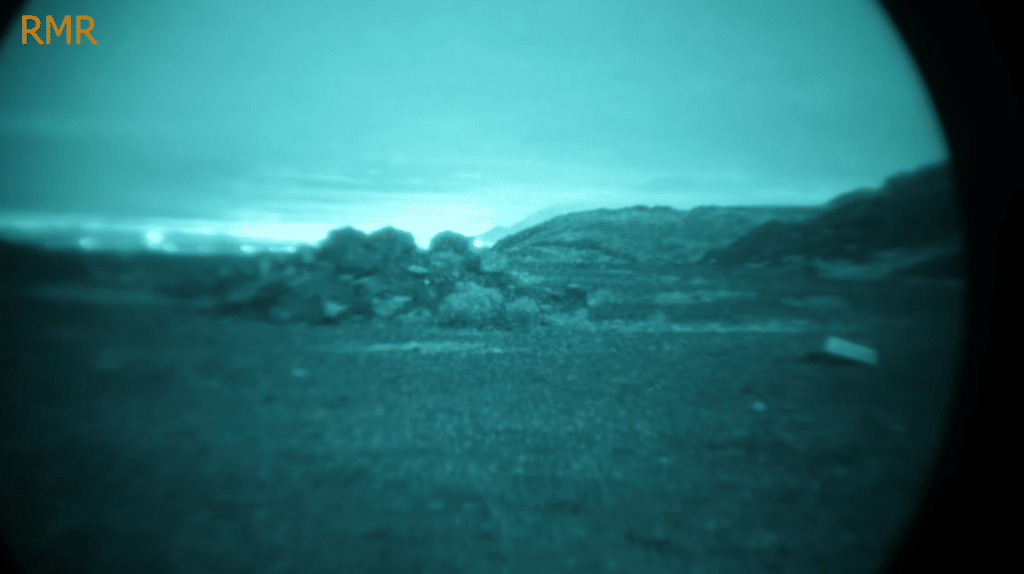
Yes. The RCR includes three dedicated night vision brightness settings in addition to its seven daylight settings. I tested the NV settings under a PVS-14 and they performed as advertised. The dot was visible and usable without washing out through the monocular. If you’re running a duty or tactical setup that requires NV compatibility, the RCR covers that without any workarounds or additional hardware.
Why should you trust me
via: Brass Facts
I’m Richard Douglas, a firearms instructor, National Defense Security Consultant, and the person behind Scopes Field. My credibility comes from years of hands-on work with firearm optics, marksmanship instruction, and advising manufacturers like Bushnell, Leupold, and Rainier Arms.
My work has been published in The National Interest, The Truth About Guns, and Cheaper Than Dirt, among others. I’ve personally wasted thousands of dollars on optics that didn’t deliver. That experience is exactly why I started testing and writing about them honestly.
Every optic I review gets mounted, zeroed, and shot. No spec-sheet summaries. No manufacturer talking points. What you read here is based on what I saw and felt at the range.