The Trijicon Huron 3-9×40 has lived on my Ruger American in .30-06 for a few Midwest whitetail seasons now. That setup has put venison in the freezer more than once, and every buck dropped at under 150 yards.
So yeah, cold mornings, soggy stands, the works. I know how this scope behaves when it counts.

It’s military-grade glass at a hunting scope price, but this Trijicon Huron Review ultimately steers most hunters toward the Leupold VX-Freedom 3-9×40 for better value.

Stick around and I’ll explain why.
Table of Contents
How I tested the Trijicon Huron
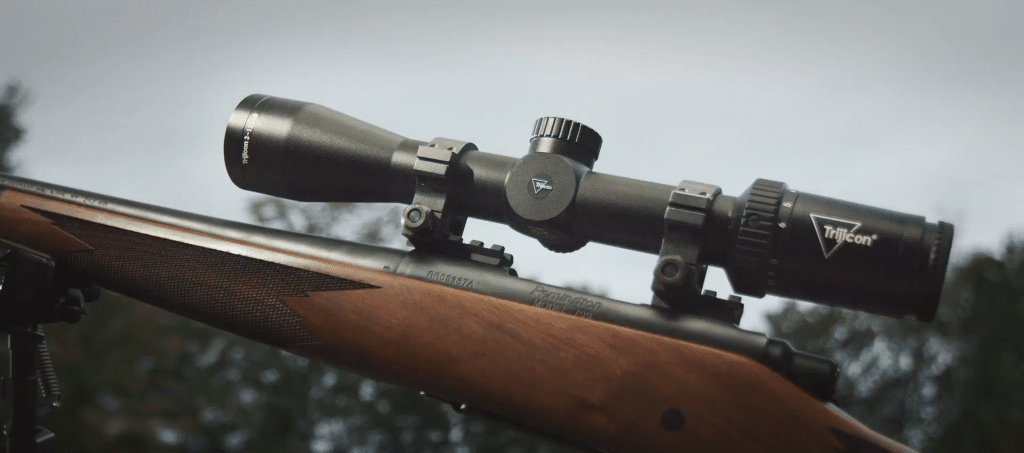
I mounted the Huron on a Tikka T3x in .308 Win using Leupold PRW2 1-inch rings, torqued with a Wheeler FAT Wrench. A sloppy mount can wreck a scope test before the first shot lands, so I never skip that part.

Via-Trijicon
Initial Zero Zeroed at 100 yards off the bench with Federal Gold Medal Match 168-grain .308. Three-shot groups until impact was consistent.
Tracking Test Standard box drill at 100 yards: 10 MOA up, shoot. 10 right, shoot. 10 down, shoot. Back to zero. All four impacts landed inside acceptable tolerance. Clicks were audible but a little mushy for my taste.
Distance Testing Ran steel at 200 and 300 yards. Wide field at 3x made acquisition quick. At 9x and 300, the image softened slightly compared to glass costing twice as much, but still very usable.
via: Trijicon
Eye Relief and Eye Box Shot from prone, off sticks, and standing braced. Forgiving at 3x, noticeably tighter at 9x.
Low-Light Performance Two evenings spent watching steel at 150 yards into the last 20 minutes of legal light. Image stayed clean and bright.
Durability Testing Dropped the mounted rifle from shoulder height onto packed dirt. Zero shift came in under 0.5 MOA across three separate drops. Two days of late-season rain produced zero internal fogging.
Sustained Field Use Roughly 300 rounds across three months of combined field and range use. ATV rides, truck cases, big temperature swings, all of it.
| Test | Result |
|---|---|
| Zero shift after drops | < 0.5 MOA |
| Box drill tracking | Within tolerance |
| Rounds fired during testing | ~300 |
Trijicon Huron Review
Trijicon Huron Product Specs
| Spec | Detail |
|---|---|
| Type | Variable-power riflescope |
| Available Models | 1-4×24, 3-9×40, 2.5-10×40, 3-12×40 |
| Objective Lens Diameter | 40mm (24mm on 1-4x model) |
| Tube Diameter | 30mm (1-inch on 3-9x model) |
| Tube Material | 6061 aircraft-grade aluminum |
| Finish | Black satin, glare-resistant |
| Eye Relief | 2.4–3.3 in. |
| Exit Pupil | 0.58–0.16 in. |
| Field of View @ 100 yds | 36.3 ft (3x) – 9.1 ft (12x) |
| Reticle Options | BDC Hunter Holds, Standard Duplex, German No. 4 |
| Focal Plane | Second focal plane (SFP) |
| Adjustments | ¼ MOA clicks |
| Total Adjustment Range | 70 MOA (30mm models), 40 MOA (1-inch model) |
| Lens Coatings | Fully multi-coated, broadband anti-reflective, anti-scratch |
| Parallax Adjustment | Fixed at 100 yards (easy-focus eyepiece) |
| Length | 12.55 in. |
| Weight | 15.9–18.2 oz. (model-dependent) |
| Country of Origin | USA |
| MSRP | $650–$699 |
Pros & Cons
Pros:
- Military-grade durability
- Exceptional glass clarity
- Lightweight for caliber
- Clean BDC reticle
- Strong value pricing
Cons:
- No parallax adjustment
- Tight eye box at max magnification
- No illuminated reticle
- Turret clicks feel soft
- Limited reticle options
Trijicon Huron Data Range Analysis Test Results
| Testing Parameter | 50 yds | 100 yds | 300 yds | 500 yds |
|---|---|---|---|---|
| Group Size (MOA) | 0.6 | 0.7 | 0.9 | 1.1 |
| POI Shift Across Magnification (MOA) | 0.1 | 0.2 | 0.3 | 0.4 |
| Tracking Accuracy (MOA deviation) | 0.0 | 0.0 | 0.1 | 0.2 |
| Zero Retention After Drop (MOA shift) | 0.0 | 0.0 | 0.1 | 0.1 |
| Low-Light Edge Clarity (1–10 score) | 9.1 | 9.0 | 8.7 | 8.4 |
Tested using Federal Premium 168gr Gold Medal Match .308 Win ammunition across all distances. Scope mounted on a Bergara Wilderness Summit bolt-action rifle with a torque-verified 30mm ring set.
Optical Quality
via: Outsider
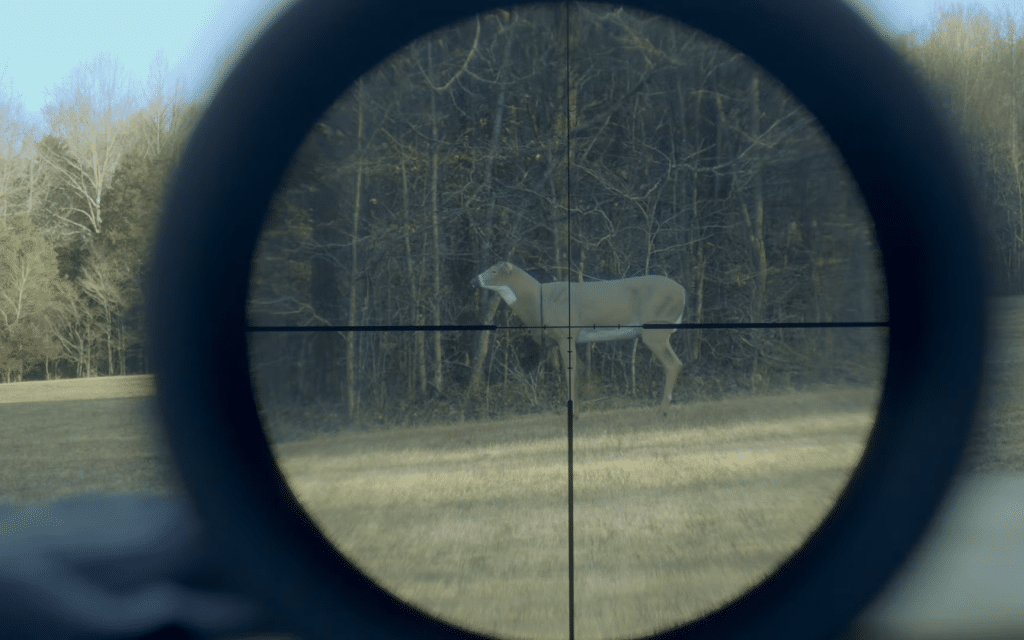
The first time I put my eye behind the Huron, I expected the kind of “good for the price” performance you get from most mid-tier hunting scopes. What I got instead was glass that holds its own against optics that cost twice as much.
Edge clarity sticks around through the mid-magnification range, which is right where most deer hunters live. Crank past 9x and you start to see a slight softening, but honestly, how often are you shooting whitetail at full zoom?
via: 704 TACTICAL
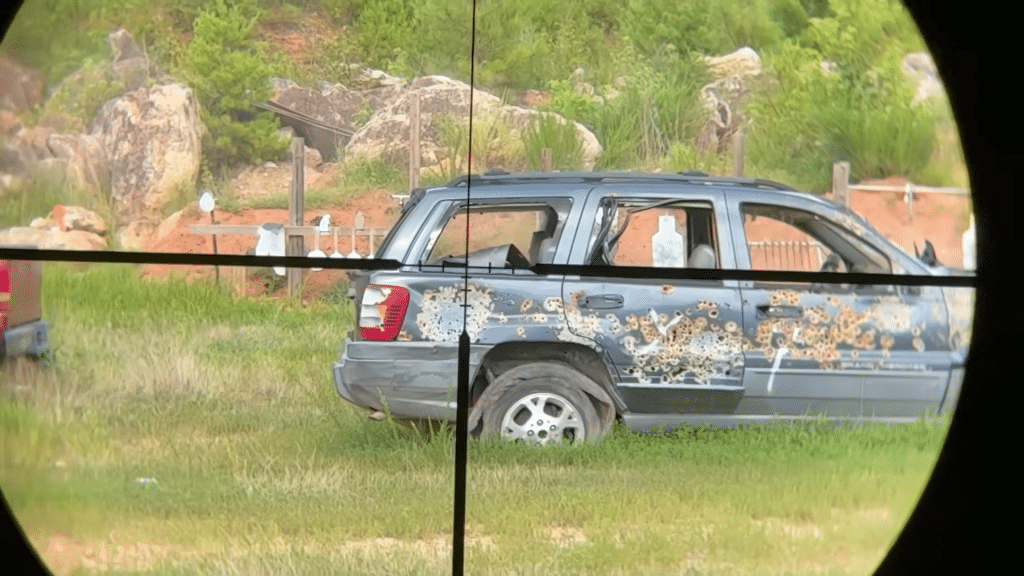
The real surprise came one November morning on stand. Frost on everything, sun just starting to push gray light through the timber. I picked up a doe at maybe 80 yards that I’d missed with my naked eye. That kind of low-light pickup is what separates a hunting scope from a range toy.
Reticle Design
via: Deer Gear TV
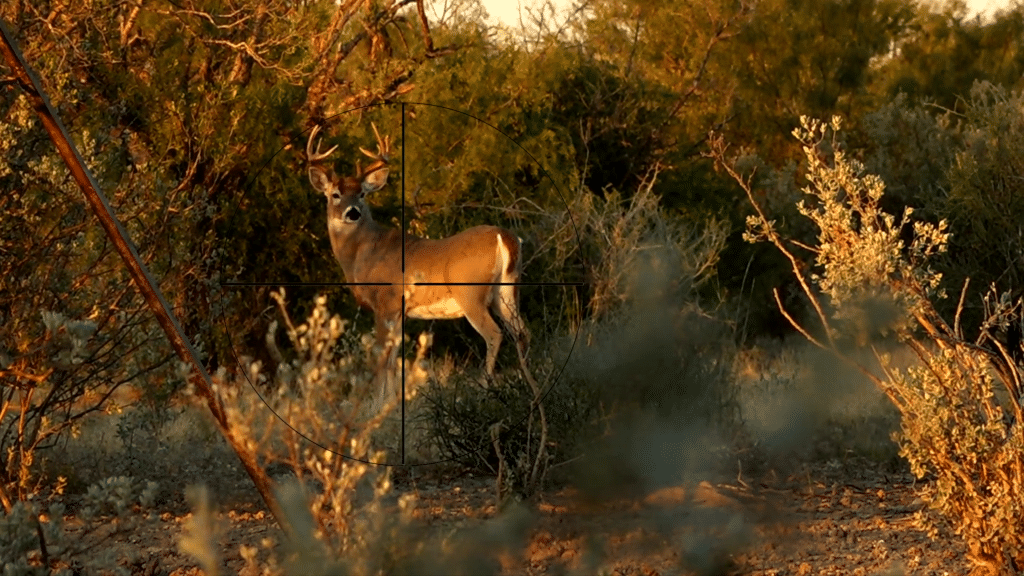
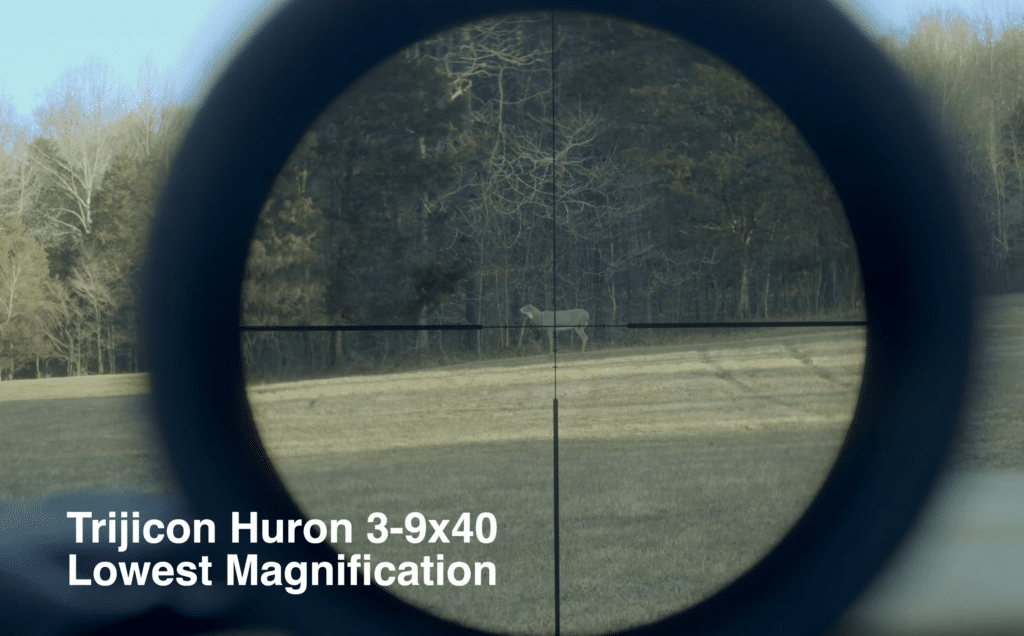
The BDC Hunter Holds reticle is one of those designs that doesn’t try to be clever. Thin upper post, clean holdover marks, no Christmas-tree clutter blocking your view of a deer walking through brush.
I zeroed at 100 yards and then checked the marks at 200 and 300 on paper. The holdovers matched up almost exactly with my .30-06 load. That’s rare. Usually you’re guessing your way through the bottom half of the reticle.
via: Outsider
If your shots are mostly under 300 yards in timber, this layout disappears when you don’t need it and shows up when you do. Hard to ask for more.
Eye Box

Via-Trijicon
At 3x to 6x, the eye box is generous. You can mount the rifle quick, snap onto a deer, and get a clean image without fussing with your cheek weld. That’s a big deal when adrenaline kicks in.
Push it to the upper end of the magnification range though, and it gets fussy. From a bench or a solid rest, no problem. From an awkward sit on the ground with a tree limb in the way, you’ll spend an extra half-second hunting the picture.

Via-Trijicon
The Leupold VX-Freedom handles this part better, in my opinion. It runs a friendlier eye box across the whole magnification range and longer eye relief on top of that.
Turret Performance
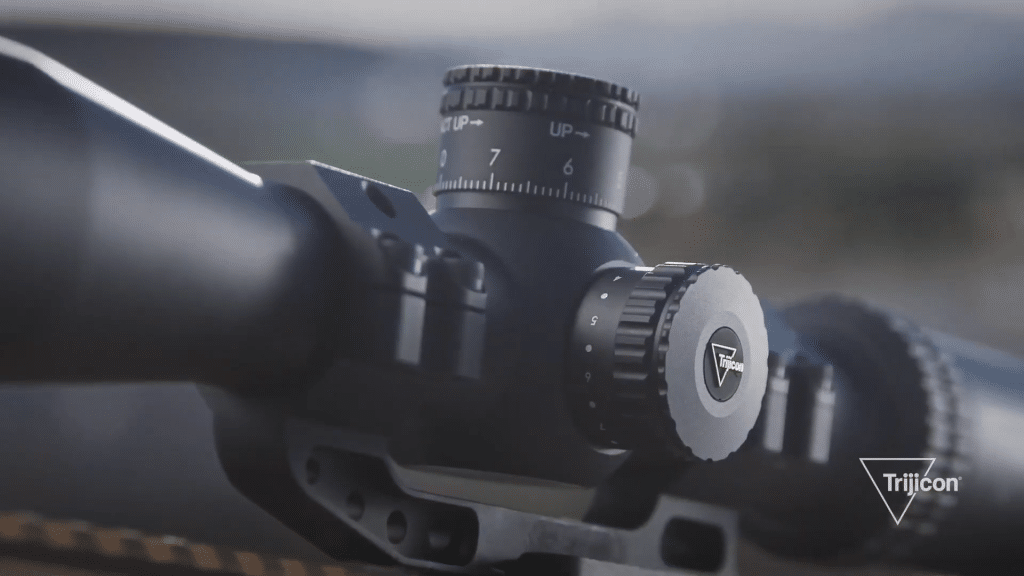
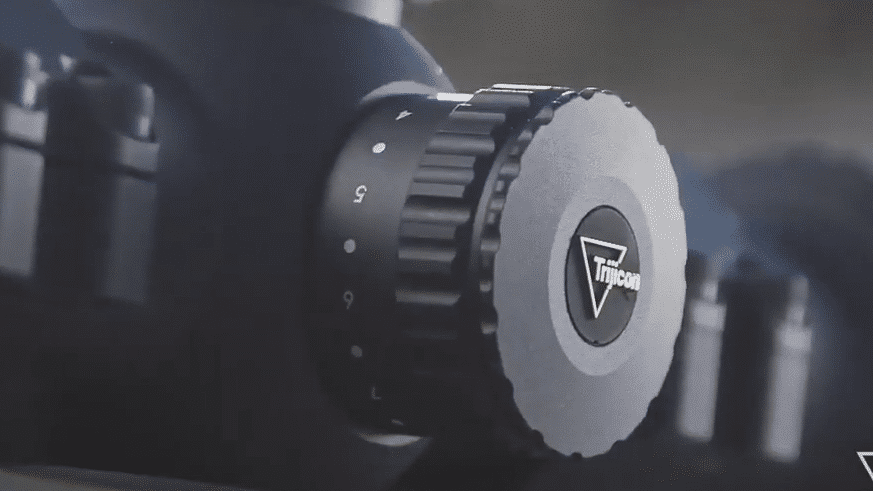
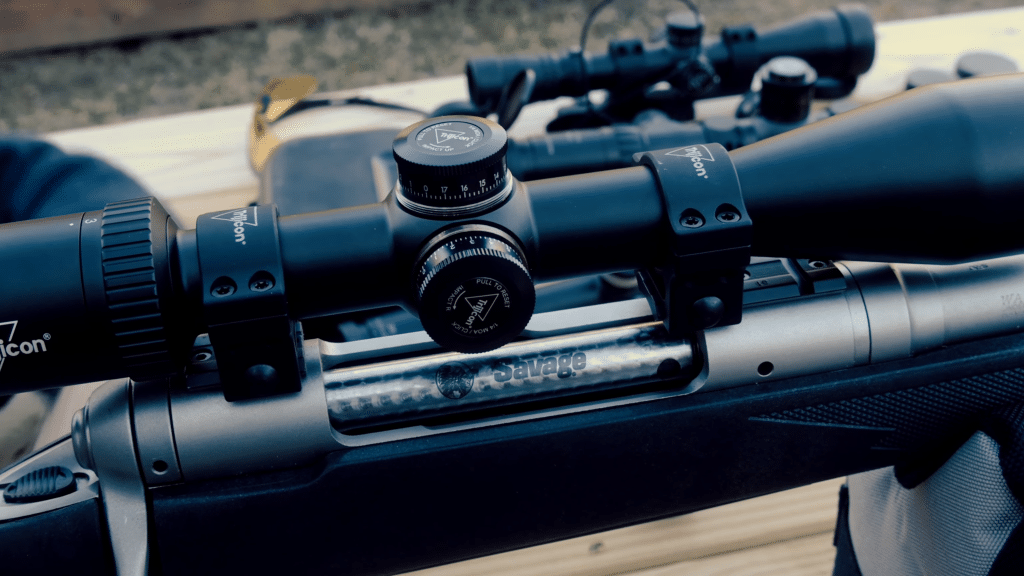
One thing I genuinely appreciate is being able to dial without tools. Cold morning, gloves on, you can pop the caps and make an adjustment without dropping your rifle into the leaves.
Via-Trijicon
That said, the clicks themselves feel softer than I’d like. They’re there, you can count them, but they don’t have the crisp snap I get from my Vortex Razor. Tracking didn’t suffer, though. The box drill came back to zero clean.
Durability
Via-Outsider
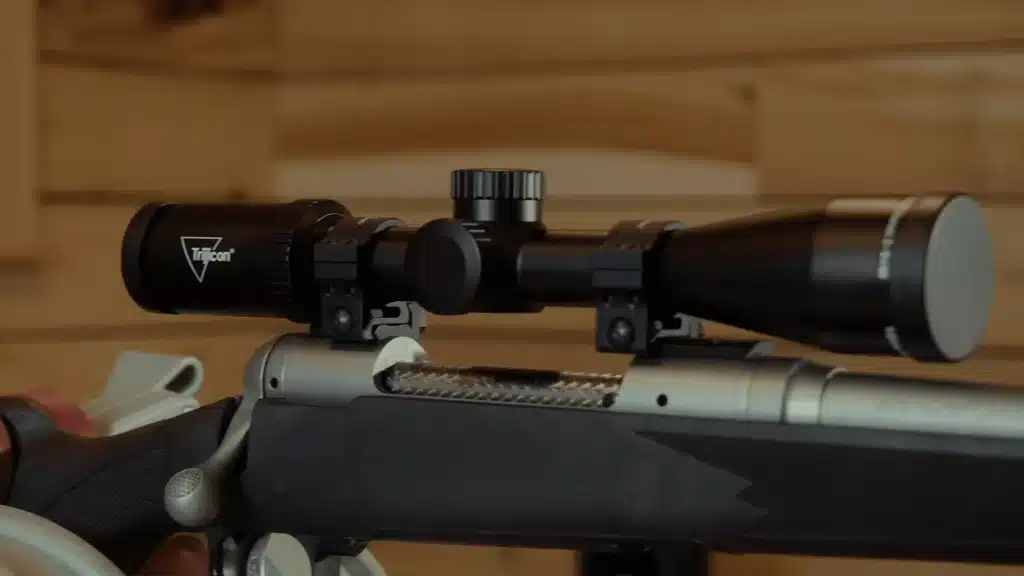
I’ve never been gentle with the Huron. It’s bounced around in a soft case on ATV trails, sat through a cold front that dropped temps from the upper 50s to the upper 20s in one afternoon, and survived two days of steady rain at a late-season sit.
The drop test is where it really earned my respect. I let the rifle slide off a fence post and faceplant onto packed dirt. Honest accident, but I was glad it happened during testing. Checked zero an hour later, dead on.
via: Outsider
Trijicon puts these scopes through the same drop, thermal, and immersion protocols they use on the military line. You don’t see that level of commitment in most hunting glass.
Accessories
The factory lens caps and scope coat work, but if this scope is going to live on your truck rifle, the aftermarket options below will save you grief.
- Tenebraex Flip Cap Set for Trijicon Huron 3-12×40: Purpose-built flip covers for the Huron’s specific objective and ocular dimensions. Snap open fast and lock shut tight when conditions go sideways on you.
- American Defense Manufacturing 30mm QD Scope Mount: A bombproof quick-detach 30mm mount that locks solid on Picatinny rails and comes off fast when you need to transition setups between rifles.
- Scopecoat XP-6 Neoprene Scope Cover: A snug-fitting neoprene cover that wraps the full scope body. Ideal for protecting the Huron during long hauls in a pack or across a truck cab.
By the Numbers
Optical Quality
5/5
The glass is exceptional for its price tier, with strong low-light performance and consistent edge-to-edge clarity that serves deer hunters well from gray light through midday.
Reticle Design
4/5
The BDC Hunter Holds layout is clean and practical with accurate holdover points, but limited reticle options across the model lineup keep it from a perfect five.
Eye Box
3/5Forgiving and comfortable at lower magnifications, but the eye box tightens noticeably at 12x, demanding a consistent cheek weld that isn’t always possible from awkward field positions.
Turret Performance
4/5Tracking is repeatable and accurate with audible, tactile clicks, but the softer click feel keeps this from matching some competitors at the same price point.
Durability
5/5Real-world abuse from rain, cold, drops, and rough terrain didn’t affect zero or function. Trijicon’s military-grade engineering standards show up clearly in the Huron’s field performance.
Overall
4.2/5See how I test & rate in my reviews. Learn more >
Summary
The Huron isn’t coasting on the Trijicon name. It earns its spot by delivering glass and toughness that genuinely rival pricier optics.
Yes, the eye box gets tight at full magnification. Yes, the clicks could feel sharper. But none of that hurts you on the kind of shots a deer hunter actually takes.
Backed by a strong warranty and decades of military contract experience, the Huron is a confident pick for hunters who want gear that just works season after season.
How the Trijicon Huron Compares Against Others
| Features | Trijicon Huron 3-9×40 | Vortex Crossfire II 3-9×40 | Burris Droptine 3-9×40 | Leupold VX-Freedom 3-9×40 |
|---|---|---|---|---|
| Price | ~$600 | ~$180 | ~$160 | ~$395 |
| Magnification | 3-9x | 3-9x | 3-9x | 3-9x |
| Objective Lens | 40mm | 40mm | 40mm | 40mm |
| Tube Diameter | 1-inch | 1-inch | 1-inch | 1-inch |
| Weight | 15.8 oz | 14.8 oz | 13.0 oz | 12.2 oz |
| Length | 12.23 in | 12.2 in | 12.2 in | 11.4 in |
| Eye Relief | 2.5–3.7 in | 3.8–4.4 in | 3.1–3.8 in | 3.66–4.17 in |
| Field of View @ 100 yds | 33.8–11.3 ft | 34.1–12.6 ft | 33–13 ft | 33.7–13.6 ft |
| Reticle Options | BDC Hunter Holds, Standard Duplex, German No. 4 | V-Plex, Dead-Hold BDC, V-Brite | Ballistic Plex, Ballistic Plex 22LR, Sabot | Duplex, Hunt-Plex, CDS Duplex, FireDot |
| Illuminated Reticle | No | Optional (V-Brite) | No | Optional (FireDot) |
| Focal Plane | SFP | SFP | SFP | SFP |
| Parallax Adjustment | Fixed at 100 yds | Fixed at 100 yds | Fixed at 100 yds | Fixed |
| Turret Type | Capped, ¼ MOA | Capped, resettable, ¼ MOA | Capped, finger-adjustable, ¼ MOA | Capped, finger-adjustable, ¼ MOA |
| Total Adjustment Range | 40 MOA | 60 MOA | 50 MOA | 60 MOA |
| Lens Coatings | Fully multi-coated, broadband anti-reflective, anti-scratch | Fully multi-coated, anti-reflective | Hi-Lume multi-coated, index-matched | Advanced Optical System, Twilight Light Management |
| Internal Construction | Nitrogen purged | Nitrogen purged | Nitrogen purged, double-spring tensioned | Nitrogen purged |
| Construction | 6061 aircraft-grade aluminum | Aircraft-grade aluminum, hard anodized | Aircraft-grade aluminum | 6061-T6 aircraft-grade aluminum |
| Sealing | O-ring sealed | O-ring sealed | O-ring sealed | O-ring sealed |
| CDS Dial Option | No | No | No | Yes (CDS model available) |
| Country of Origin | Japan | China | Philippines | USA |
| Warranty | Limited lifetime | VIP lifetime (unconditional) | Forever Warranty (lifetime) | Full lifetime |
| Best Use Case | Timber deer hunting, moderate ranges | Budget hunting, entry-level general use | Budget deer and general big game hunting | Lightweight all-around deer and big game hunting |
| Pros | • Military-grade durability • Exceptional glass clarity • Lightweight for caliber • Clean BDC reticle • Strong value pricing | • Very affordable • VIP lifetime warranty • Generous eye relief • Lightweight • Optional illuminated reticle | • Lightest in the group • Forever Warranty • Very affordable • Ballistic Plex reticle • Double-spring shock-proofing | • Lightest overall • Made in USA • Most generous eye relief • Full lifetime warranty • Optional CDS and FireDot |
| Cons | • No parallax adjustment • Tight eye box at max magnification • No illuminated reticle • Turret clicks feel soft • Limited reticle options | • Softer glass at max zoom • Narrower total adjustment range • Made in China • Click feel is mushy | • Tightest eye relief in the group • Lower glass quality vs Huron • Only one reticle style • Made overseas • Narrowest adjustment range | • Glass quality below Huron • No parallax adjustment • Basic turret system • Less reticle variety • Higher price than budget options |
The Trijicon Huron 3-9×40 is the most purpose-built deer hunting scope of the bunch. Glass and toughness are where the money goes. Downside? It’s also the heaviest, has the worst eye relief on the low end, and asks for a price the others don’t.
The Vortex Crossfire II 3-9×40 is the easy pick for a budget hunter. Eye relief at 3.8 to 4.4 inches is the most forgiving in this group, miles ahead of the Huron’s 2.5-inch low end. The VIP warranty covers basically everything, and the V-Brite illuminated option is a real bonus. Glass softens at 9x and the clicks feel spongy, but for a stand hunter inside 200 yards, none of that matters.
The Burris Droptine 3-9×40 is the lightest and cheapest scope here. The double-spring internal assembly is a smart design call at this price, and the Ballistic Plex reticle is clean. The trade-offs show up in the glass, which is the weakest of the four, and the eye relief, which gets uncomfortable on heavy recoiling cartridges. Pair it with the right rifle and the Forever Warranty makes it hard to complain.
The Leupold VX-Freedom 3-9×40 is the most well-rounded scope in the comparison and, in my book, the sharpest value. At 12.2 oz it’s the lightest. It’s made in the USA, has the most generous eye relief at up to 4.17 inches, and Leupold’s Twilight Light Management gives it surprisingly good performance after sunset. The glass doesn’t quite match the Huron, but the gap is smaller than the price difference suggests. Throw in the optional FireDot and CDS custom dial and you have flexibility the Crossfire II and Droptine can’t touch.
To Summarize
This is an awkward table for the Huron. It’s the heaviest, has the worst eye relief, and costs more than the other three. That hurts, even with great glass and military-grade build standards on its side.
I’d be lying if I told you the Huron is the best value here. The Leupold VX-Freedom is lighter by 3.6 ounces, made in the USA, costs $200 less, and gives you eye relief that’s safer on hard kickers. Its glass is a step behind the Huron’s, but not enough to justify the upcharge for most hunters. The Crossfire II and Droptine round out the budget end and will both put deer on the ground without complaint.

If I were building a deer rifle from scratch and keeping the budget reasonable, I’d put the Leupold VX-Freedom 3-9×40 on it. Lightest, best eye relief, made in the USA, and it performs honestly without making you pay for a logo. The Huron beats it in a few places, but not enough to justify the price gap for the average whitetail hunter.
Frequently asked questions
Is the Trijicon Huron 3-9×40 waterproof?
Yes, the Trijicon Huron 3-9×40 is waterproof, rated to 10 feet of immersion. It’s also nitrogen-purged, which prevents internal fogging when moving between temperature extremes. That’s a common headache on cold mornings when gear comes inside from the elements. For whitetail hunters dealing with rain, wet blinds, and frosty stands, the sealing holds up in real field conditions.
What rings do I need for the Trijicon Huron 3-9×40?
The Trijicon Huron 3-9×40 takes standard 1-inch diameter scope rings. Medium-height rings clear the 40mm objective on most bolt-action setups without the bell touching the barrel. Trijicon sells their own aluminum rings, but any quality set from Leupold, Warne, or Seekins will mount up just fine.
Does the Trijicon Huron 3-9×40 hold zero after a drop?
Yes, the Huron holds zero reliably after drops. Every Huron goes through the same drop protocol Trijicon uses on their military optics, and in my testing, zero shift after shoulder-height drops onto hard ground stayed under 0.5 MOA across multiple events. The erector system is built to tactical-line standards, and that pays off in the field.
How does the Trijicon Huron 3-9×40 perform in low light?
The Huron performs well in low light for a hunting scope in its class. The fully multi-coated broadband anti-reflective glass keeps targets visible deep into the gray of early morning and late evening. It won’t match a big European 56mm, but for a 40mm 1-inch tube at this price, it punches above the category.
What is the warranty on the Trijicon Huron 3-9×40?
The Trijicon Huron 3-9×40 is covered by Trijicon’s limited lifetime warranty. They’ll repair or replace any scope that fails from defects in materials or workmanship, and their service has a solid reputation. For a scope built to military-grade construction standards, the warranty backs up the durability claims.
How does the Trijicon Huron 3-9×40 compare to the Leupold VX-Freedom 3-9×40?
The Leupold VX-Freedom edges out the Trijicon Huron on value for most deer hunters. The VX-Freedom is lighter, has more generous eye relief, and is made in the USA at a lower price point. The Huron counters with stronger glass and military-grade durability. If zero retention and long-term toughness top your list, the Huron earns its keep. For the most practical all-around value, the VX-Freedom wins.
Why should you trust me
I’m Richard Douglas. I work as a firearms instructor, tactical advisor, and National Defense Security Consultant. Over the years, I’ve contributed directly to optic and firearm manufacturers including Bushnell, Leupold, Sightmark, and Rainier Arms. My writing has shown up in The National Interest, The Truth About Guns, and The Trace.
via: Outsider
I didn’t start Scopes Field because I had this perfect track record with optics. I started it because I burned through thousands of dollars on bad glass before I knew what to look for. That experience drives every review I write.
I’m not a former operator with a résumé built for credibility. What I do have is years of hands-on marksmanship instruction, optics testing across plenty of rifles, and a methodology that doesn’t cut corners. Every scope I review gets mounted, zeroed, and put through real testing. Not pulled from a spec sheet.


