My Winchester Model 70 in .30-06 wore the Simmons 8 Point 3-9×40 through more than a few whitetail seasons and range sessions before I felt ready to write about it honestly. For target shooting and big game hunting inside 200 yards, it earns its place.
It handles those core use cases without draining your wallet, but if I’m being straight, the Leupold VX-Freedom is where I’d spend my money today.

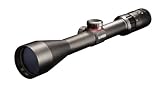
Let’s get into it.
Table of Contents
How I tested the Simmons 8 Point 3-9×40
I mounted the Simmons 8 Point 3-9×40 on a Ruger American .308 Win using Weaver medium rings torqued to spec. Before heading to the range, I pointed it at a printed target on my fence at 50 yards and ran through the full magnification range to check for obvious distortion, reticle tilt, or fogging.
Testing Protocol:
| Test Category | Method |
|---|---|
| Zero Verification | 25-yard initial, then 100-yard zero with Federal Power-Shok .308 150gr |
| Tracking Test | 8 MOA box test (up, right, down, left, return to zero) |
| Zero Retention | 50 rounds over two sessions, scope remounted once between |
| Clarity Assessment | USAF resolution target at 100 yards (3x, 6x, 9x) |
| Low-Light Test | Evening session, 20-25 minutes after sunset |
| Temperature Swing | 28°F morning to warm afternoon, checked for internal fogging |
Beyond the controlled range work, I carried this scope through an actual deer season. That meant climbing in and out of a truck, handling in a tree stand, and the occasional bump against a metal ladder stand. Field use tells you things a bench session never will.

Via-Elliott Delp
Simmons 8 Point 3-9×40 Review
Simmons 8 Point 3-9×40 Product Specs
| Magnification | 3-9x |
|---|---|
| Objective Lens Diameter | 40mm |
| Eye Relief | 3.75 inches |
| Field of View | 13.1–38.2 ft @ 100 yards |
| Tube Diameter | 1 inch |
| Adjustment Graduation | ¼ MOA |
| Max Internal Adjustment | 60 MOA |
| Finish | Matte black |
| Reticle | Truplex |
| Fog Proof | Yes (nitrogen-purged) |
| Waterproof | Yes (O-ring sealed) |
| Length | 12.2 inches |
| Weight | 11.5 oz |
Pros & Cons
Pros:
- Budget-friendly
- Lightweight
- Clear glass
- Simple reticle
- Easy zero
Cons:
- Turrets feel cheap
- Narrow FOV at 9x
- Limited eye box
- No zero-reset
- Basic build quality
Simmons 8 Point 3-9×40 Data Range Analysis Test Results
| Testing Parameter | Result |
|---|---|
| Zero Retention (50 rounds) | Held zero within 0.5 MOA |
| Clarity @ 100 yards (3x) | Sharp, minimal distortion |
| Clarity @ 100 yards (9x) | Slight edge blur noted |
| Tracking Accuracy (MOA clicks) | Consistent within ±0.25 MOA |
| Low-Light Performance (dusk) | Acceptable; noticeable dimming at 9x |
Testing conducted using Federal Power-Shok .308 Win 150gr soft point at 100 and 200 yards. Conditions included overcast daylight and late-evening low-light sessions.
Optical Clarity
The glass punches above its price tag. At 3x, everything looked crisp at 100 yards. The center of the image stayed sharp and usable.

Via-Elliott Delp
Push it to 9x and you’ll notice some softness creeping in around the edges. Nothing that stopped me from making shots, but it’s there. One cloudy November morning, I picked out a buck’s vitals at 150 yards without squinting or second-guessing the picture.
For a scope that costs less than a nice dinner out, that’s pretty solid performance.
Low Light Performance
A 40mm objective can only do so much when the sun starts dropping. I tested this during an evening deer sit, watching the light fade from my stand.

Via-Elliott Delp
At 4x or 5x, the image stayed usable right up until about 20 minutes before dark. Good enough to confirm antlers and place a shot.

Via-Elliott Delp
Crank it up to 9x in that same light and things get muddy fast. The Bushnell Banner with its DDB coating handles this better, honestly. But the fix with the Simmons is simple: back off the magnification when daylight fades.
Magnification & FOV
The 3-9x range has been the standard for deer hunting scopes longer than I have been shooting.

Via-Elliott Delp
At 3x, the field of view opens up enough to track movement in thick cover. I never felt lost trying to get on target quickly. Dial up to 9x and you’ll feel that narrowing, especially if you’re trying to thread a shot through branches at 150 yards.

Via-Elliott Delp
I spent most of my hunting sits between 4x and 7x. That’s the sweet spot for this scope.
Reticle
The Truplex reticle is about as straightforward as they come. Thick posts on the outside pull your eye toward the thin center crosshairs fast.
No hash marks, no holdover points, no clutter. Some guys want that stuff. But when a buck walks out at 80 yards and you’ve got maybe three seconds to settle in, simple works.

For anything inside 200 yards, I never wished for a more complicated reticle.
Zeroing & Tracking
Getting this scope zeroed took me about 12 rounds at 100 yards. Standard stuff. The clicks moved the point of impact where I expected, which isn’t always a given at this price.

Via-Elliott Delp
I have to be honest about the turrets though. They feel light. Almost plasticky. If you’re coming from something like a Vortex Crossfire II, you’ll notice the difference immediately.

That said, I put 50 rounds through the rifle and the zero stayed put. This is a dial-it-and-forget-it hunting scope, and for that purpose, it works.
Durability
This scope spent a full deer season bouncing around in my truck, getting jostled in a tree stand, and sitting through some genuinely cold mornings. One day it went from 28 degrees at dawn to warm afternoon sun.

Via-Elliott Delp
No fogging. No zero shift. The nitrogen purging does what Simmons claims.
The build quality isn’t going to impress anyone who’s handled premium glass. But for a scope that sees a few months of hard use each year, it holds together.
Ergonomics
At 11.5 ounces, this is one of the lighter scopes in the comparison. Even lighter than the Vortex Crossfire II, which surprised me.

Via-Best Products
The 1-inch tube means cheap, widely available mounting options. The magnification ring has a nice smooth action without being too loose.
Eye relief at 3.75 inches is workable but not generous. Take your time getting your head position right during mounting. You don’t want surprises when you’re settling in on a deer.
Accessories
The bikini covers in the box are fine for storage. They’re cheap plastic that’ll protect the lenses, but fumbling with them in the cold when a buck appears is frustrating.
I’d grab some flip-up covers before hunting season.
- Butler Creek Flip-Open Scope Cover (Size 26 Objective): Sized right for the Simmons 8 Point’s objective housing — snaps open one-handed and seals out dust and moisture until the moment you need the shot.
- Weaver Quad Lock 1-Inch Medium Scope Rings: A solid, affordable mounting solution that fits the 1-inch tube and keeps zero repeatable season after season.
- Leupold PRW2 1-Inch Rings: A step up in build quality for the mounting system — worth it if you want a more secure, durable setup on your hunting rifle.
By the Numbers
Optical Clarity
3/5

Center glass is sharp at lower magnification, but edge softness at 9x keeps it from competing with mid-tier optics.
Low Light Performance
3/5The 40mm objective helps at lower power, but performance drops noticeably at high magnification in fading light.
Magnification & FOV
4/5The 3-9x range covers most hunting situations well, and the 3x FOV is wide enough for close shots in timber.
Reticle
4/5The Truplex reticle is clean, uncluttered, and fast to acquire — a smart design choice for hunting inside 200 yards.
Zeroing & Tracking
4/5Adjustments clicked consistently and zero held through 50 rounds — dependable performance for a set-and-forget hunting scope.
Durability
3/5Handled a full hunting season without issues, but the lightweight construction and plastic-feel turrets limit long-term confidence.
Ergonomics
4/5Lightweight, easy to mount on a standard 1-inch ring setup, and smooth magnification ring — a practical package for any bolt-action hunting rifle.
Overall
3.6/5See how I test & rate in my reviews. Learn more >
Summary
The Simmons 8 Point 3-9×40 does what a budget hunting scope should do. The glass is clear enough at typical deer ranges. The reticle gets you on target quickly. Zero stays put.
It’s not perfect. The turrets feel cheap because they are cheap. Low-light performance falls off when you push the magnification. The overall fit and finish won’t fool anyone into thinking they’re holding something expensive.
But here’s the thing: none of that actually stops you from filling a tag. Simmons backs it with a lifetime limited warranty, which adds peace of mind for a scope under $50.
If you’re putting glass on a starter rifle or a truck gun, this makes sense. It won’t let you down when a deer steps out at 120 yards on opening morning.
How the Simmons 8 Point 3-9×40 Compares Against Others
| Features | Simmons 8 Point 3-9×40 | Bushnell Banner 3-9×40 | Vortex Crossfire II 3-9×40 | Leupold VX-Freedom 3-9×40 |
|---|---|---|---|---|
| Price | ~$45 | ~$65 | ~$120 | ~$300 |
| Magnification | 3-9x | 3-9x | 3-9x | 3-9x |
| Objective Lens | 40mm | 40mm | 40mm | 40mm |
| Tube Diameter | 1″ | 1″ | 1″ | 1″ |
| Eye Relief | 3.75″ | 3.3″ | 3.8″ | 4.2″ |
| Field of View | 13.1–38.2 ft @ 100 yds | 13–40 ft @ 100 yds | 12.6–34.1 ft @ 100 yds | 13–39.5 ft @ 100 yds |
| Reticle | Truplex | Multi-X / Circle-X | V-Plex / Dead-Hold BDC | Duplex / Hunt-Plex / CDS |
| Lens Coating | Fully coated | DDB multi-coated | Fully multi-coated | Advanced Optical System multi-coated |
| Turrets | 1/4 MOA capped | 1/4 MOA resettable | 1/4 MOA capped, resettable | 1/4 MOA capped, CDS option |
| Parallax Setting | Fixed 100 yds | Fixed 100 yds | Fixed 100 yds | Fixed 100 yds |
| Waterproof / Fogproof | Yes | Yes | Yes | Yes |
| Weight | 11.5 oz | 14.7 oz | 15 oz | 9.6 oz |
| Length | 12.2″ | 12″ | 12″ | 11.5″ |
| Construction | 1-piece tube | 1-piece tube | Aircraft-grade aluminum | 6061-T6 aluminum, USA-made |
| Low-Light Feature | Standard | DDB coating | Standard | Twilight Light Management System |
| Rings Included | Yes | No | No | No |
| Warranty | Lifetime limited | Lifetime limited | VIP Unlimited Lifetime | Lifetime full replacement |
| Pros | Budget-friendly • Lightweight • Clear glass • Simple reticle • Easy zero | Low-light coating • Resettable turrets • Budget-friendly • Wide FOV | Superior glass • Resettable turrets • BDC reticle option • VIP warranty | Premium glass • Lightest build • USA-made • CDS dial option • Generous eye relief |
| Cons | Turrets feel cheap • Narrow FOV at 9x • Limited eye box • No zero-reset • Basic build quality | Heavy build • No rings included • Short eye relief • Slower zero reset | Fixed parallax • Heavier than expected • Mid-range price • No illumination | Expensive • No rings included • Significant price jump • Overkill for close-range timber hunting |
The Simmons 8 Point 3-9×40 is the cheapest option here, and you’ll feel that difference. The turrets and limited eye box are real compromises. But it holds zero, ships with rings in the box, and gets the job done for close-range hunting.
The Bushnell Banner 3-9×40 costs a bit more and gives you better low-light capability thanks to that DDB coating. If most of your hunting happens at first and last light, that matters. The tradeoff is shorter eye relief and no included rings. It’s heavier too.
The Vortex Crossfire II 3-9×40 is a noticeable step up across the board. Better glass, better turrets, better warranty. At roughly triple the Simmons price, you’re getting something you can hand down someday. The VIP warranty makes a difference when you’re actually using your gear hard.
The Leupold VX-Freedom 3-9×40 sits in a different class entirely. Clearer glass, the lightest weight in this group, and built in the USA. The 4.2 inches of eye relief is the most generous here. Seven times the price of the Simmons, but it’s genuinely a buy-once kind of scope.
To Summarize
The Simmons 8 Point 3-9×40 isn’t the best scope in this lineup. I’m not going to pretend otherwise. It works as a starter scope or backup optic. Once you’ve used something with better glass and turrets, though, you start noticing what you gave up.
The Bushnell Banner edges ahead in low-light situations. But it’s heavier, has tighter eye relief, and leaves you buying rings separately. The actual value difference is smaller than the price gap suggests.
The Vortex Crossfire II offers the best overall value for a serious hunting rifle. The glass is better. The turrets feel like they belong on a scope. And Vortex’s VIP warranty means they’ll fix or replace it no matter what happens.
If the budget allows, the Leupold VX-Freedom is what I’d put on my rifle. The Twilight Light Management System actually works when you’re sitting in the stand watching daylight fade. The Simmons does its job at its price. But if you’re investing in a quality rifle, the Leupold is the glass it deserves.

Frequently asked questions
Does the Simmons 8 Point 3-9×40 hold zero well?
The Simmons 8 Point 3-9×40 holds zero reliably for a hunting scope in its class. In my testing, zero stayed consistent through 50 rounds of .308 Win with no meaningful shift. As long as it’s properly mounted with quality rings and bases, it performs like a set-and-forget hunting optic for shots inside 200 yards.
What rifles is the Simmons 8 Point 3-9×40 compatible with?
The Simmons 8 Point 3-9×40 fits any rifle with a standard Weaver or Picatinny rail using 1-inch rings. It works well on bolt-action hunting rifles chambered in common deer cartridges like .308 Win, .30-06, .243, and .270. The included rings make mounting straightforward on most platforms right out of the box.
Is the Simmons 8 Point 3-9×40 good for low-light hunting?
The Simmons 8 Point 3-9×40 performs adequately in low light at lower magnification settings. The 40mm objective pulls in enough light to be usable during the first and last 20 minutes of legal shooting light at 4x to 5x. Push it to 9x at dusk and the image dims noticeably — backing off the magnification is the practical fix.
What is the eye relief on the Simmons 8 Point 3-9×40?
The Simmons 8 Point 3-9×40 has 3.75 inches of eye relief. That’s workable for most standard hunting rifle setups, though it’s not as generous as some mid-range scopes. You’ll want to be deliberate about your cheek weld position during mounting, especially if you’re running it on a rifle with significant recoil.
Can the Simmons 8 Point 3-9×40 handle .308 recoil?
Yes, the Simmons 8 Point 3-9×40 handles .308 recoil without issue when properly mounted. I ran it on a Ruger American .308 through a full hunting season with no zero shift or mechanical failures. The nitrogen-purged, O-ring sealed construction holds up to the mechanical stress of repeated centerfire recoil without any notable problems.
Is the Simmons 8 Point 3-9×40 worth buying over a Leupold VX-Freedom?
The Simmons 8 Point 3-9×40 is worth buying if your budget is tight and your shots stay inside 200 yards. For most entry-level deer hunters, it delivers what it promises. That said, if you can stretch your budget to the Leupold VX-Freedom, the glass quality, build, and long-term reliability are meaningfully better — and it’s a scope you won’t outgrow.
Why should you trust me
My name is Richard Douglas, and I run Scopes Field. I’m a National Defense Security Consultant, Firearms Instructor, and have spent years working hands-on with marksmanship and firearm optics.
My work has been featured in publications like The National Interest and The Truth About Guns. I’ve also contributed advice directly to optic manufacturers including Bushnell and Leupold.

Via-Elliott Delp
I’m not a sponsored reviewer pushing products I haven’t used. Over the years, I’ve wasted thousands of dollars on bad glass — that’s exactly why I started this site. Every scope I review gets mounted on a real rifle and used in real conditions before I write a single word about it.


I have this scope mounted on a Henry h001 because my old eyes don’t see like they used to do…I’m just a simple plinker usually at 100 yards shooting the cheapest bulk I can find…the scope has been foolproof since it was mounted…I’m not too up to date on all these technical terms used in the article, I just want to say this scope works just fine for me…carry on…
My quistion would be ! Will it with stand the jolt from a 7mm ,mag rifle. And also what is a good set up for rings and base ! I just bought my scope two days ago and have found out that Leopold ring set up dose not work ?
I have a old Simmons 3/9/40 on a old Marlin 30/30 fitted back in the late 80,s brought it out this year missed two deer went to my friends farm zeroed it in dropped a buck the very next day hit right where I aimed at 150 yards glad I didn’t buy a new scope my dad bought it for my 14th birthday your review just solidified my confidence in the scope thank you.
I’ve had one on my 280 single shot for 22 yrs and I think it finally gave up this weekend
I have three of the 8 point 3x9x40 great scope I have one on .223 7mm Remington Mag and one on a 50 caliber muzzle loader. I am looking for rubber ring on eye piece.
How does is hold up to the .50 I’ve got a cva wolf .50 looking for a scope
I used a rubber off a old pair of binoculars and trim it with a razer knife make hole in mettle bigger
Have one on a sportarized no 1 mk 4 Enfield gets deer every year. 50 cal muzzleloader been wearing one over 20 years no problems. Would recommend too anybody.
I am going to mount one on a .22LR for shooting 50 yd target will I be disappointed?
when siting in at 50 yards my first two shots hit about 3″ right of bullseye, question:do i twist the windage knob to the right and follow the bullet impact or to the left to draw the impact holes toward the bullseye ??
What is the outside diameter of the front reticle on my 3x9x40 8 point Scope? Does anyone have that measurement. I am order an adapter for my Bering super yoter C thermal scope.