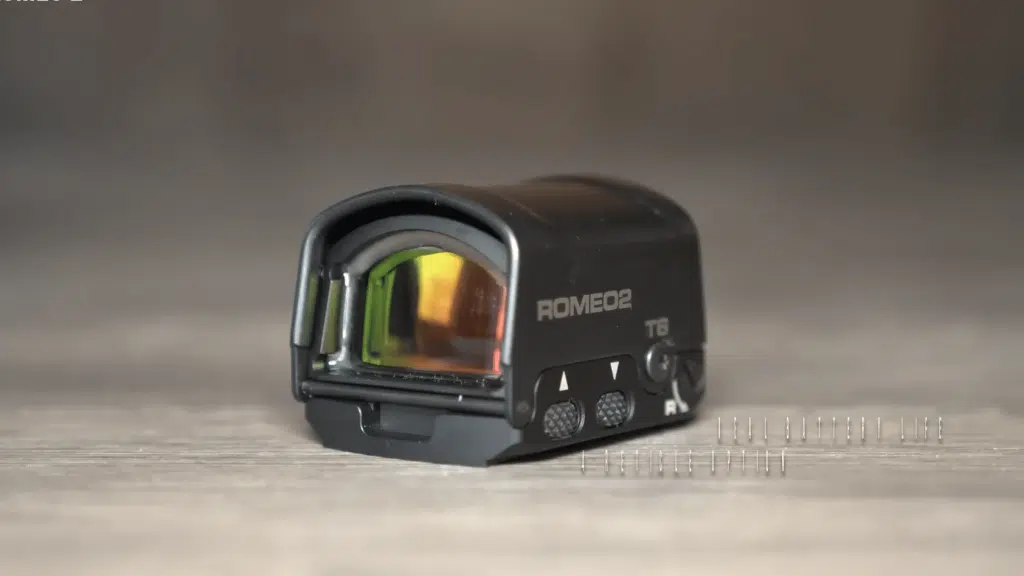
My P320 XCarry has been wearing the Sig Romeo2 for almost three years now. Duty carry, range sessions, a few local competitions. It’s not a recent purchase I’m hyping up. I’ve put thousands of rounds through this setup across pretty much every situation this optic was designed to handle.
If you want one optic that handles carry, duty, and competition without compromise, the Romeo2 delivers.

Stick around. I’ve got plenty to share.
Table of Contents
How I tested the Sig Romeo2
This optic lived on my P320 XTen and P320 XCarry across two years. Competition stages, defensive drills, everyday carry. That kind of time reveals things a weekend range trip never will.
Testing Protocol:
| Test Category | Method |
|---|---|
| Zero Retention | 500-round blocks, benched recheck at 15 yards |
| Recoil Stress | 10mm platform (P320 XTen), 1,500+ rounds |
| Dot Quality | All 15 brightness levels across varied lighting |
| Battery/MOTAC | 3 weeks continuous carry without swap |
| Weather Resistance | 2-day outdoor competition with rain exposure |
The 10mm platform was intentional. That cartridge generates nearly twice the slide velocity of 9mm. If an optic fails early, it shows up there. I also tested all three shroud configurations: open for dry conditions, fully enclosed through wet stages, and half-enclosed for general range work.

Via-Sage Dynamics
For battery testing, I left MOTAC running for three straight weeks without touching the CR2032. I also timed MAGNETAC activation from a Safariland 6390RDS holster across a dozen draws.
Durability got an unplanned test when I knocked the optic against concrete during a low-light drill. Embarrassing, but useful data.
Sig Romeo2 Review
Sig Romeo2 Product Specs
| Spec | Detail |
|---|---|
| Magnification | 1x |
| Objective Lens Diameter | 30mm |
| Reticle Options | 3 MOA Red Dot, 6 MOA Red Dot, Circle Dot |
| Brightness Settings | 15 total (12 daylight, 3 NV-compatible) |
| Battery Type | CR2032 |
| Battery Life | 25,000 hours |
| Housing Material | 7075 aluminum |
| Weight (with mount) | 9.2 oz |
| Emitter Type | Point Source LED |
| Lens Type | Molded aspheric glass with anti-reflective coating |
| Configurations | Open, half-enclosed, fully enclosed (3 options) |
| Shrouds Included | 2 ruggedized steel shrouds |
| Smart Features | MOTAC, MAGNETAC, D.A.R.C. |
| Footprint | Sig PRO / Romeo1 Pro compatible |
| Country of Origin | USA |
| MSRP | Starts at $768.99 |
Pros & Cons
Pros:
- Modular design
- Outstanding glass clarity
- 25000-hr battery life
- MOTAC/MAGNETAC smart power
- Made in USA
Cons:
- High price point
- Limited holster MAGNETAC compatibility
- Heavier than competitors
- SIG-footprint restricted
- Battery tray requires tool access
Sig Romeo2 Data Range Analysis Test Results
| Testing Parameter | Range | Result |
|---|---|---|
| Zero Retention (rounds fired) | 500–2,000 rds | Zero held consistently across all round counts |
| Dot Clarity & Bloom | Brightness settings 1–15 | Minimal bloom; clean dot at all settings |
| Target Acquisition Speed | 7–25 yards | Sub-1-second acquisition in all 3 configurations |
| Enclosed vs. Open Emitter Performance | 10–25 yards | Enclosed maintained full functionality in wet conditions; open lost dot intermittently |
| Recoil Survivability | 10mm (P320 XTEN) | No zero shift or function loss after 1,500+ rounds |
Testing conducted using Sig Sauer 124gr 9mm FMJ and Underwood 180gr 10mm FMJ. All range sessions performed in variable weather conditions including wind, light rain, and direct sunlight.
Optical Clarity
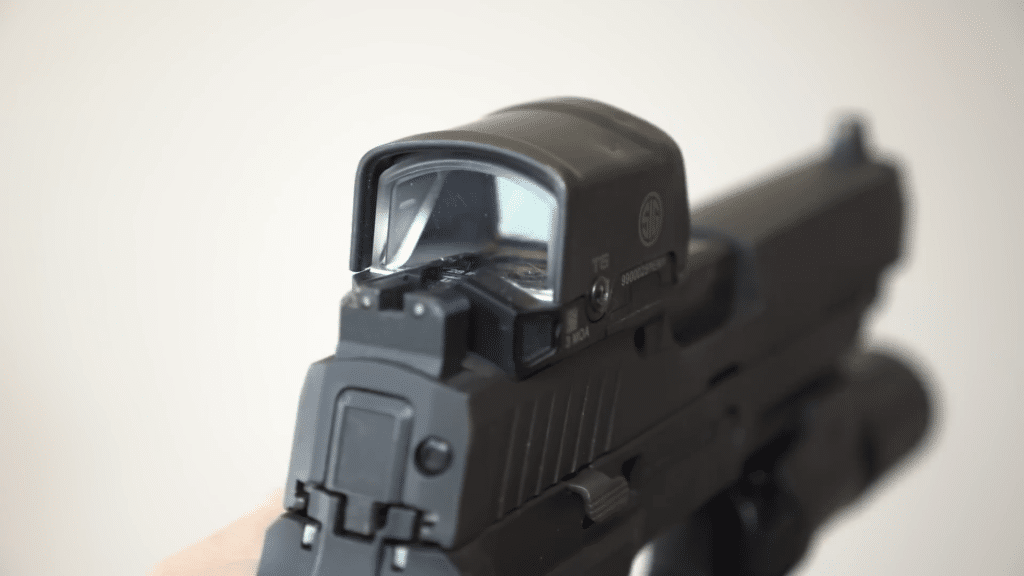
The glass on this thing genuinely surprised me. I’ve looked through plenty of pistol red dots over the years, and the Romeo2 stands apart. The molded aspheric lens keeps the image crisp right to the edges. No fish-eye weirdness pulling at the corners like you sometimes get with cheaper optics.

Via-Sage Dynamics
I had it mounted on my P320 during a midday range session. Sun was brutal, right in my face. Zero washout. Colors stayed honest, and the target picture held together even when I was hammering fast splits at seven yards. That matters more than specs on paper.
Via-Sage Dynamics
Dot Quality
The point source emitter makes a real difference. The dot is tight and round, and it stays that way no matter where you set the brightness. No starburst. No smear.

Via-TheHumbleMarksman
I went with the 3 MOA version because this was going on a defensive carry gun. At 15 yards, it covers just enough of the target to be quick without hiding what you’re aiming at. That’s the balance you want.

Via-TheHumbleMarksman
I’ve seen dots that bloom into fuzzy blobs on the higher settings. This one doesn’t. Sig got it right.
Durability
I mounted this on a P320 XTen and fed it a steady diet of 10mm. That cartridge is brutal on optics. The Romeo2 didn’t complain. The 7075 aluminum housing paired with those steel shrouds isn’t marketing fluff. You feel the heft when you pick it up.

Via-Sig Sauer Inc
Here’s the real story though. During a low-light drill, I caught the optic on a concrete barrier. Full contact. Not planned, not proud of it. But the optic kept running like nothing happened.

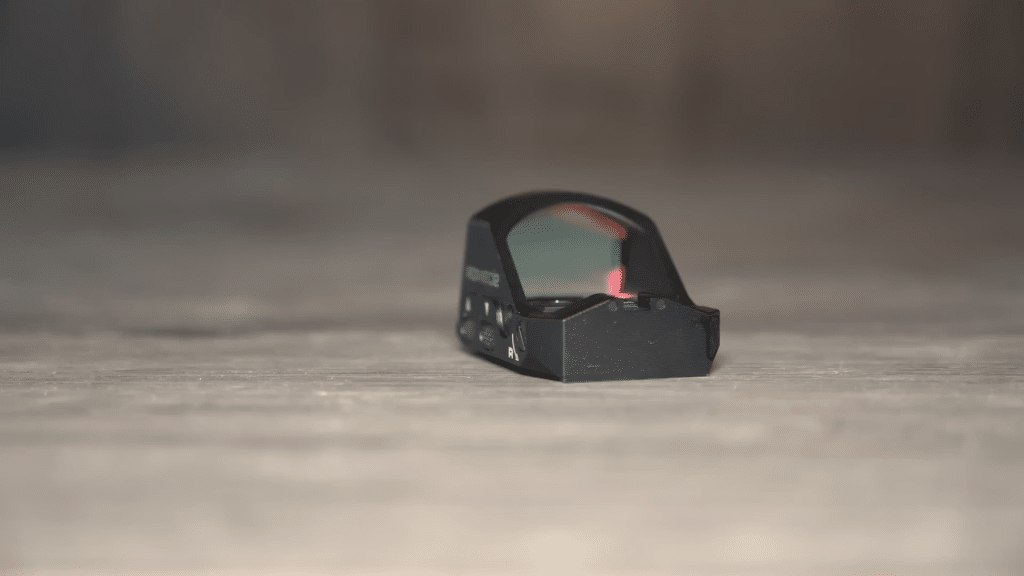
I also ran the fully enclosed configuration through a two-day competition that featured mud, standing water, and light rain. The polycarbonate rear window earned its keep. No interference to the dot, no fogging, nothing.
Via-Sage Dynamics
Zero Retention
This is where carry optics live or die. I zeroed at 15 yards for defensive work, then ran 1,500 rounds over two sessions before checking again. It hadn’t moved. Not even a single click of drift.

Via-TheHumbleMarksman
The real proof came from the 10mm testing. High pressure cartridges have a way of shaking things loose over time. Cheaper optics start walking after a few hundred rounds. The Romeo2 held firm through all of it.
Via-Sage Dynamics
For a duty or carry pistol, this kind of reliability isn’t a bonus feature. It’s the whole point. If I can’t trust my zero, nothing else matters.
Battery Life
Sig rates this at 25,000 hours. The MOTAC system is the reason that number feels believable. The optic powers down when it senses no movement, then snaps back on the instant you pick the gun up.

Via-Sig Sauer Inc
I left this mounted and running for three straight weeks during a testing stretch. Never touched the CR2032. The battery indicator hadn’t budged by the time I checked it.

Via-TheHumbleMarksman
For a carry optic where you might forget to turn it off, MOTAC isn’t just convenient. It’s peace of mind. Compared to something like the Leupold DeltaPoint Pro NV with its 1,600 hour battery life, the difference in practicality is massive.
Accessories
The stock hardware that ships with the Romeo2 is solid. But if you want to unlock features like MAGNETAC, you’ll need compatible gear. Here’s what actually works:
- Blackhawk T-Series L2C Duty Holster (Sig P320): If you’re running the Romeo2 on a P320 for duty or daily carry, this is the holster that actually accommodates the optic. Duty rated, thumb activated retention, and specifically built for the P320 with reflex sight clearance.
- Sig Sauer Romeo2 Glock MOS Adapter Plate: If you want to run the Romeo2 on a Glock MOS pistol, this is the official Sig made plate that bridges that gap. Clean install, no shimming, no guesswork.
- Sig Sauer X-RAY3 Suppressor Height Night Sights: These sit high enough to co-witness through the Romeo2, so if the dot ever goes down mid-mission, you’ve got a solid iron sight solution right there waiting for you.
By the Numbers
Optical Clarity
5/5
The molded aspheric glass delivers a sharp, distortion-free image from edge to edge. Even under direct sunlight, there’s no washout and no color shift.
Dot Quality
5/5The point source emitter produces a clean, round dot with minimal bloom across all brightness levels. The 3 MOA option is perfectly sized for fast, accurate pistol work.
Durability
5/57075 aluminum housing plus steel shrouds is a serious combination. After repeated impacts and thousands of rounds including 10mm, nothing moved or failed.
Zero Retention
5/5Zero held firm through 1,500+ rounds across two sessions with no adjustments needed. Running it on a hard-recoiling 10mm platform made that result even more impressive.
Battery Life
5/5MOTAC and MAGNETAC together make 25,000 hours feel realistic in real-world use. Three weeks of carry testing barely touched the battery.
Overall
5/5See how I test & rate in my reviews. Learn more >
Summary
The Sig Romeo2 is expensive. No way around it. But when you’re talking about a pistol optic for duty carry or serious defensive work, the price starts making sense.
The modular design alone sets it apart. Being able to choose between open, half-enclosed, and fully enclosed configurations is something no other optic in this category offers. I’ve swapped between all three depending on conditions, and that flexibility is worth more than I expected.
Sig backs this with a Transferable Lifetime Warranty. I’ve dealt with their customer support before. No runaround, no drama. They just handle it.
What this optic does best is perform when conditions get ugly. The point source emitter, MOTAC, MAGNETAC, and D.A.R.C. night vision compatibility aren’t spec sheet padding. They’re doing real work. If your primary use is a carry pistol or a duty gun, the Romeo2 was built for exactly that.
If budget is tight, look elsewhere. But if you want a pistol red dot you won’t have to second guess when things go sideways, this one earns every dollar.
How the Sig Romeo2 Compares Against Others
| Features | Sig Romeo2 | Holosun HE509T X2 | Trijicon RMR Type 2 | Leupold DeltaPoint Pro NV |
|---|---|---|---|---|
| Price | ~$769 | ~$430 | ~$500 | ~$800 |
| Magnification | 1x | 1x | 1x | 1x |
| Reticle Options | 3 MOA / 6 MOA / Circle Dot | 2 MOA Dot / 32 MOA Circle / Circle-Dot | 3.25 MOA or 6.5 MOA Dot | 2.5 MOA or 6 MOA Dot |
| Brightness Settings | 15 (12 DL + 3 NV) | 12 (10 DL + 2 NV) | 8 (6 DL + 2 NV) | 10 (8 DL + 2 NV) |
| Battery Type | CR2032 | CR1632 | CR2032 | CR2032 |
| Battery Life | 25,000 hrs | 50,000 hrs | ~35,000 hrs (~4 yrs) | ~1,600 hrs (MST extends significantly) |
| Housing Material | 7075 Aluminum | Grade 5 Titanium | Forged Aluminum | Aircraft-grade Aluminum + Steel Sheath |
| Emitter Design | Modular: Open / Half / Fully Enclosed | Fully Enclosed | Open Emitter | Open Emitter |
| Solar Failsafe | No | Yes | No | No |
| Smart Power System | MOTAC + MAGNETAC | Shake Awake + Solar | Auto Brightness Mode | Motion Sensor Technology (MST) |
| Night Vision Compatible | Yes (D.A.R.C.) | Yes | Yes | Yes (NV-optimized, 2 dedicated NV settings) |
| Waterproof Rating | Yes (standard) | IP67 | Yes (to 20m) | Yes (100% waterproof / to 20m) |
| Multi-Reticle System | Yes (3 configurations) | Yes (3 configurations) | No | No |
| Window Size | 30mm lens | 0.66 x 0.90 in | 1x65mm | 28mm x 20mm (widest in group) |
| Footprint | SIG PRO / Romeo1 Pro | 509T (RMR adapter included) | RMR | DPP (Shield RMS/JPoint compatible) |
| Tool-less Zeroing | No | No | No | Yes (top-load battery, no re-zero needed) |
| Weight (bare) | ~2.4 oz | ~1.4 oz | 1.2 oz | ~1.95 oz |
| Country of Origin | USA | China | USA | USA |
| Warranty | Transferable Lifetime | Lifetime | Limited Lifetime | Full Lifetime (Golden Ring) |
| Pros | Modular design • Outstanding glass clarity • 25,000-hr battery life • MOTAC/MAGNETAC smart power • Made in USA | Titanium housing • Solar failsafe • 50,000-hr battery life • Multi-reticle system • Competitive price | Lightweight • Battle-proven durability • RMR universal footprint • Auto brightness • Strong track record | Widest window in group • Best-in-class glass clarity • NV-optimized • Motion Sensor Technology • Leupold lifetime warranty |
| Cons | High price point • Limited MAGNETAC holster compatibility • Heavier than competitors • SIG-footprint restricted • Battery tray requires tool access | Made in China • Proprietary footprint • Front lens still exposed • Smaller window than Romeo2 | Open emitter vulnerable to weather • Fewer brightness settings • No smart power system • Top-loaded battery (must remove to replace) | Shortest battery life in group • Open emitter • Single-button brightness control • DPP footprint limits holster options • No multi-reticle system |
The Holosun HE509T X2 packs more features per dollar than anything else here. Titanium housing, solar backup, enclosed emitter, 50,000 hour battery, and three reticle modes. All for around half the price of the Romeo2. The trade-offs are real though. It’s made in China, and the proprietary footprint requires an adapter on most slides.
The Trijicon RMR Type 2 is the most battle tested optic in this group. Lightweight, universally compatible, and the go-to choice for military and law enforcement worldwide. It’s showing its age against newer designs. Open emitter, top loaded battery, only 8 brightness settings. But it still sets the standard for raw durability.
The Leupold DeltaPoint Pro NV costs more than everything else here. It leads in one area no other optic can match: glass quality and window size. Leupold’s optics are genuinely exceptional. The 28mm x 20mm window is the largest of the group, and the NV-specific brightness modes give it a real edge for low light work. But that 1,600 hour battery life is way behind everything else. It’s also an open emitter. For competition or professional use, it’s fantastic. For daily carry, the Romeo2 is the more practical choice.
To Summarize
The Leupold DeltaPoint Pro NV costs more than the Romeo2 and earns it with better glass and a wider window. If you’re competing or need the absolute best low light performance, the DeltaPoint Pro NV has the edge in those specific areas. But I wouldn’t want to rely on that 1,600 hour battery for daily carry without obsessive battery management.
The Romeo2 holds its own in this group. The modular emitter system, MOTAC, MAGNETAC, and point source emitter make it the most complete package for carry and duty use. The DeltaPoint Pro NV might win in narrow scenarios. The Romeo2 wins for all day carry.
If budget matters most, the Holosun HE509T X2 is the honest recommendation. More features, less money. If the China sourcing is a deal breaker for you, the Romeo2 wins that argument easily.
For most shooters who want one optic that handles carry, duty, and range work without compromise, get the Sig Romeo2. The modular design, MOTAC, and point source emitter make it the most complete pistol red dot in this group.
Frequently asked questions
What pistols is the Sig Romeo2 compatible with?
The Sig Romeo2 fits any pistol with a Sig PRO or Romeo1 Pro slide cut. That includes the P320 series, P229 Pro, P226 Pro, and other Sig models with the PRO RX footprint. For non-Sig pistols, you’ll need an adapter plate. It doesn’t fit all DeltaPoint Pro footprints because the recoil boss dimensions vary. Check your slide cut before ordering.
Can the Sig Romeo2 handle 10mm recoil?
Yes. I ran mine on a P320 XTen through 1,500 plus rounds of full power 10mm. No zero shift. No function loss. The 7075 aluminum housing and steel shrouds are built for exactly this kind of abuse. Sig specifically tested it on the P320 XTen platform for this reason.
What is MOTAC on the Sig Romeo2?
MOTAC stands for Motion Activated Illumination System. It powers the optic on when it detects movement and shuts it off after a period of sitting still. This extends battery life significantly and means you don’t have to manually flip the switch before drawing. For carry use, this is one of the most practical features the Romeo2 has.
What is the difference between the 3 MOA and 6 MOA versions?
The 3 MOA dot is smaller and better for precise shooting at distance. The 6 MOA dot is larger and faster to pick up at close range. For defensive carry where most engagements happen inside 25 yards, the 6 MOA is generally quicker. If you want precision capability beyond 25 yards, the 3 MOA is more versatile.
Is the Sig Romeo2 worth the price for civilian use?
It’s expensive. No question. But the price reflects what you’re getting: a three-configuration modular optic built to mil-spec standards with MOTAC, MAGNETAC, and D.A.R.C. night vision compatibility. For casual range use, it’s more optic than most people need. For serious defensive carry, competition, or duty use where reliability is everything, the investment makes sense.
What does the fully enclosed configuration actually protect against?
The fully enclosed configuration uses a polycarbonate rear window that seals the emitter from rain, debris, lint, and moisture. Open emitter optics can lose the dot entirely when water hits the LED. I ran the Romeo2 in enclosed mode through light rain during a two-day competition. Never lost the dot once. It won’t survive a direct water blast, but for real world carry conditions it works reliably.
Why should you trust me
My name is Richard Douglas. I’m a National Defense Security Consultant and Firearms Instructor. My work has been featured in publications like The National Interest and The Truth About Guns, and I’ve contributed directly to manufacturers including Bushnell, Leupold, and Sightmark.

Via-Sage Dynamics
I’ve personally wasted thousands of dollars on optics that didn’t deliver. That’s exactly why I started Scopes Field. I wanted to give you the honest breakdown that saves you from making the same mistakes I did. Every optic I review gets real range time, not a quick bench evaluation.




Thanks for the review Richard. I’m looking to buy my first 10mm, the Sig P320 XTEN COMP and a red dot sight to fit. Is there any need for additional mounting plates using the Romeo 2 with this gun? thanks again
No mounting plate necessary. Romeo 2 is directly compatible with P320 XTEN-Comp, as they both share the same ‘Pro’ footprint.
“Trijicon RMR to Aimpoint ACRO Adapter Plate: Adapter plate allowing you to mount the Aimpoint ACRO P-2 on slides or mounts with a Trijicon RMR footprint. Compatible with most RMR-cut slides, including Glock, M&P, VP9/40, P320, and others.”
After reading your review on the Acro P-2 I’ve decided to go with this optic on the newly acquired (it’s on the way) Sig Sauer P320 XTEN-Comp. Yes, it is expensive but only $50 more than the Romeo 2. Money is no good until you spend it! The quote above confuses me a little. The question: Will the Acro P-2 also mount on the Sig without additional accessories? Thank you very much in advance.
You’ll need an adapter mount plate for P-2. Aimpoint itself makes one: https://www.aimpoint.com/products/acro-mount-plate-for-sig-sauer-p320/
If you want a co-witness, Apex has that: https://www.apextactical.com/apex-optic-mount-for-aimpointr-acro-sig-p320-r2
Thank you very much.
I appreciate your valuable time and help. With the aforementioned firearm equipped with the Apex sight, which do you recommend or prefer for co-witnessing, the iron sight mounted in the rear of the optic or in front of the red dot sight? I assume the factory sights on the P320 XTEN will have to be removed? Thank you for your expert advice. Any other information pertinent to this inquiry would be appreciated. Is there an article you could point me to that would cover some of this information?
My personal preference would be the sight in front of the optic. Once again, this is a matter of personal preference. I guess you can’t go wrong with either. The original iron sight will be totally useless with any optic. I would remove it.
Mr. Douglas with the Apex mount, do you have a preference with the rear iron sight forward of the red dot sight or in the rear? Thanks
Thank you very much.