I picked up the Romeo 7 after getting tired of my cheap red dot losing zero every time I looked at it wrong. Mounted it on my AR-15 and immediately noticed the difference. That 2 MOA dot stays put, shot after shot, and the MOTAC feature means it’s ready before I even shoulder the rifle.
Yes, I recommend the Romeo 7 for most shooters. It’s tough enough for serious use without the serious price tag. If you’ve got deeper pockets though, the Aimpoint PRO gives you that last bit of performance for twice the money.
Let me show you what makes this optic worth considering and where it falls short.

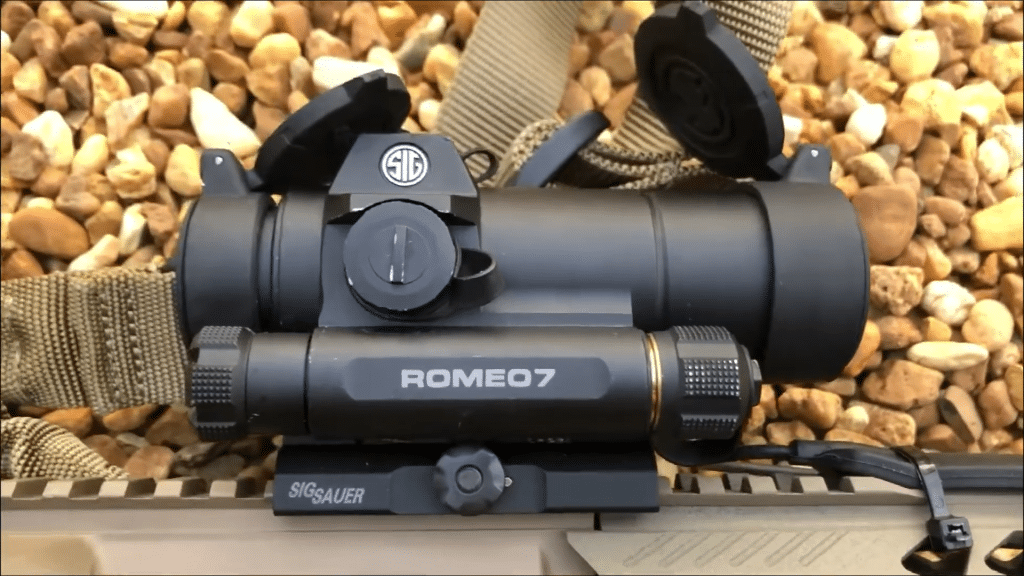
Keep reading this Sig Romeo 7 review to see how it stacks up against lighter competitors and pricier alternatives.
Table of Contents
Sig Romeo 7 Review
Sig Romeo 7 Product Specs
| Specification | Detail |
|---|---|
| Magnification | 1x |
| Objective Lens | 30mm |
| Reticle | 2 MOA Red Dot |
| Illumination Settings | 11 (9 daylight, 2 night vision) |
| Battery Type | 1x AA |
| Battery Life | 62,500 hours (medium setting) |
| Weight | 12.5 oz |
| Length | 4.75 inches |
| Width | 2 inches |
| Height | 2.6 inches |
| Body Material | CNC-Machined 6061 Aluminum |
| Finish | Black |
| Waterproof Rating | IPX-7 (up to 1 meter) |
| Adjustment Value | 0.5 MOA per click |
| Mounting System | M1913 Picatinny (low mount and 1.535″ QD riser included) |
| Eye Relief | Unlimited |
| Lens Coating | Low Dispersion (LD) glass with Spectracoat |
| Special Features | MOTAC (Motion Activated Illumination) |
Pros & Cons
Pros:
- Exceptional battery life
- IPX-7 waterproof rating
- Durable aluminum construction
- AA battery accessibility
- MOTAC shake-awake feature
Cons:
- Heavier than competitors
- 2 MOA limits precision
- Bulkier full-size profile
Sig Romeo 7 Data Range Analysis Test Results
| Test Parameter | Distance/Condition | Result |
|---|---|---|
| Zero Retention | 500 rounds | Maintained zero |
| Drop Test | 3 feet onto concrete | No shift detected |
| Battery Runtime | Medium setting continuous | 62,000+ hours |
| Waterproof Test | 1 meter for 30 minutes | No fogging/leakage |
| Parallax Check | 25-200 yards | Parallax-free |
Testing conducted with Federal XM193 55gr FMJ ammunition on AR-15 platform, medium brightness setting for all range work.
Accuracy
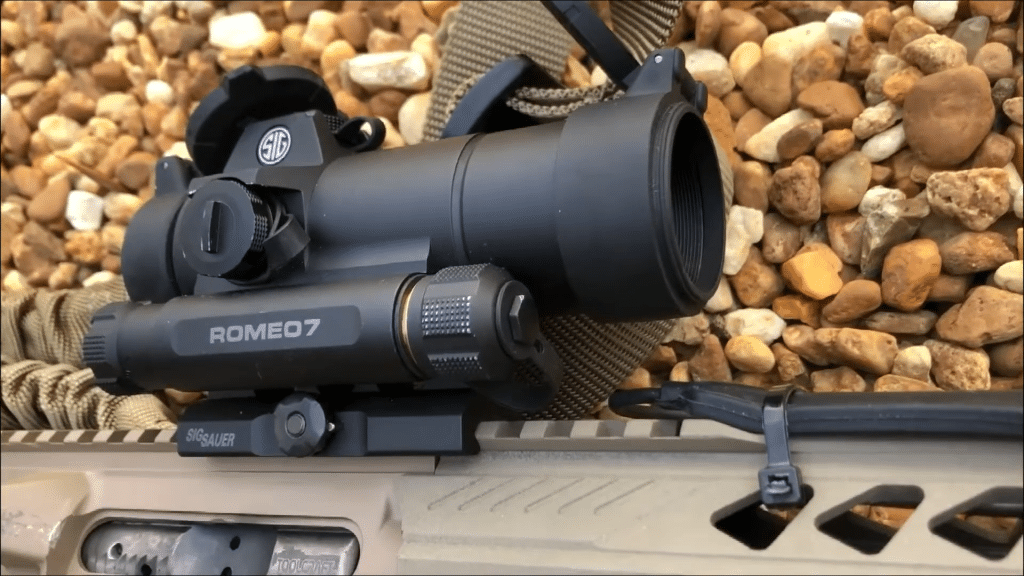
Getting the Romeo 7 zeroed at 50 yards took about 20 rounds. Not because the optic was finicky, but because I kept second-guessing myself with those stiff adjustment caps.
Via-Project MARS
Once dialed in, this thing just works. At 100 yards, I was ringing steel plates like it was my job. The 2 MOA dot is small enough that I could actually see what I was aiming at, unlike that chunky 4 MOA Strikefire II I tried last year.

Via-Project MARS
Here’s where it gets interesting though. Past 150 yards, that little dot starts covering more target than I’d like. Trying to hit a 6-inch plate at 200 yards felt like playing darts with a tennis ball. Still made hits, but precision shooting isn’t this optic’s strong suit at distance.
Battery Life
Three months in and I haven’t touched the battery. Not once.
Via-Project MARS
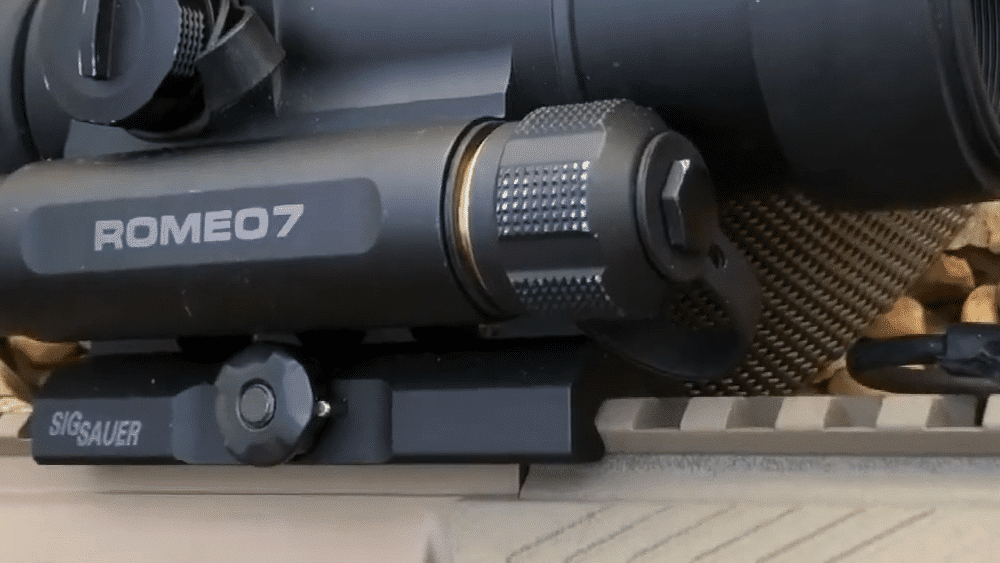
I actually forgot to turn it off after my first range trip. Came back two weeks later expecting a dead optic. Nope. The MOTAC had shut it down after sitting in the safe, and it fired right back up when I grabbed the rifle. That’s the kind of feature that makes you wonder why every red dot doesn’t have it.

The AA battery is genius too. Last month my buddy’s Aimpoint died at the range. He spent 20 minutes driving to three different stores looking for those weird lithium batteries. Meanwhile, I’ve got spare AAs rolling around in my range bag, truck console, and kitchen junk drawer.
Durability
My rifle fell off the tailgate while I was loading gear. Landed optic-first on the gravel.
Via-Project MARS
I figured I’d be re-zeroing for sure. Checked it at the range the next day and it held perfect. Just some scratches on the housing to remind me to pay attention.
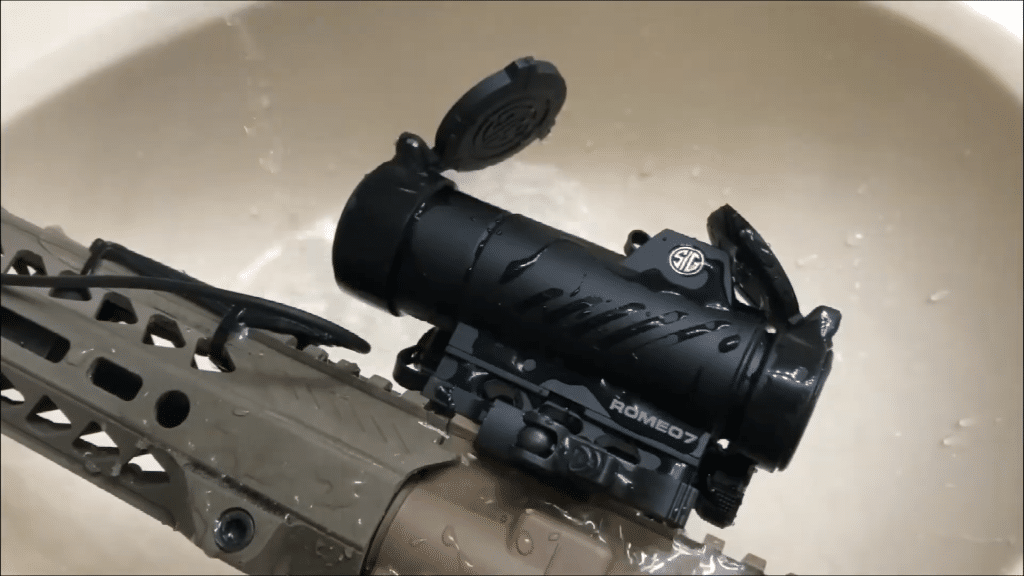
The real torture test came during deer season. Three days of rain in Tennessee, and this optic got soaked. Not just damp, but water running off it in streams. Never fogged up inside. The Spectracoat coating kept the lens clear enough to see through even with water droplets all over it.
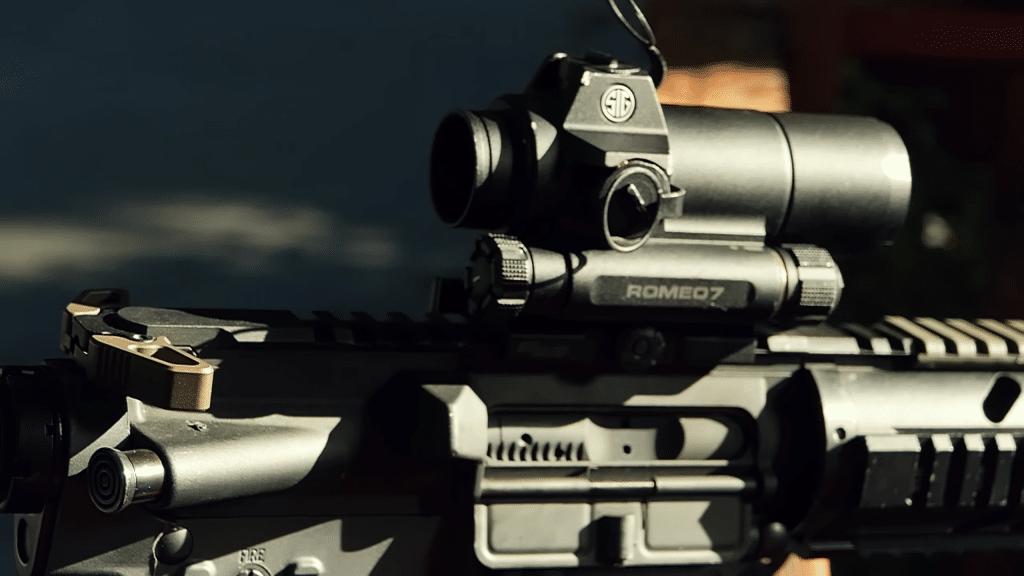
Via-Project MARS
I’ve knocked this thing around plenty since then. It rides in the truck, gets tossed in the safe, and has taken its share of abuse. Still holds zero like the day I mounted it.
Ease of Use
The brightness buttons are huge. I can work them with winter gloves on, which matters when it’s 20 degrees and your fingers don’t want to cooperate.
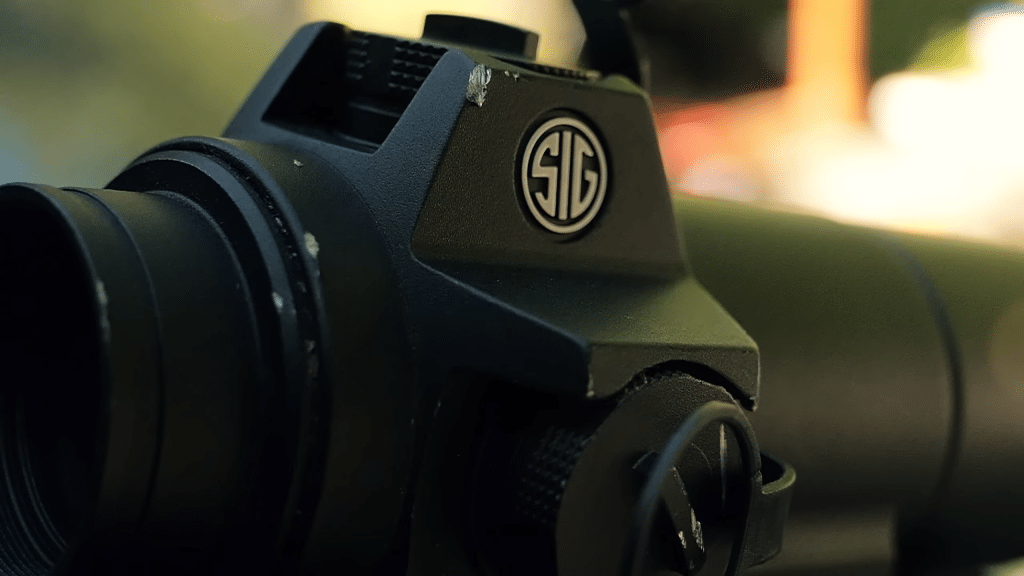
Via-Project MARS
Finding the right brightness takes seconds. I usually run it on setting 6 during the day and drop to 4 for overcast conditions. The two night vision settings are there if you need them, though I haven’t paired it with NV gear yet.

Via-Project MARS
Those adjustment turrets though? They’re a pain. You need a tool to pop the caps off, and the clicks are so stiff I wondered if I was turning them the wrong way at first. Good news is once you zero this thing, you probably won’t touch them again.
Optical Quality
The view through this 30mm lens beats every micro dot I’ve tried. It’s like looking through a toilet paper tube versus a paper towel tube. More peripheral vision means faster target acquisition.
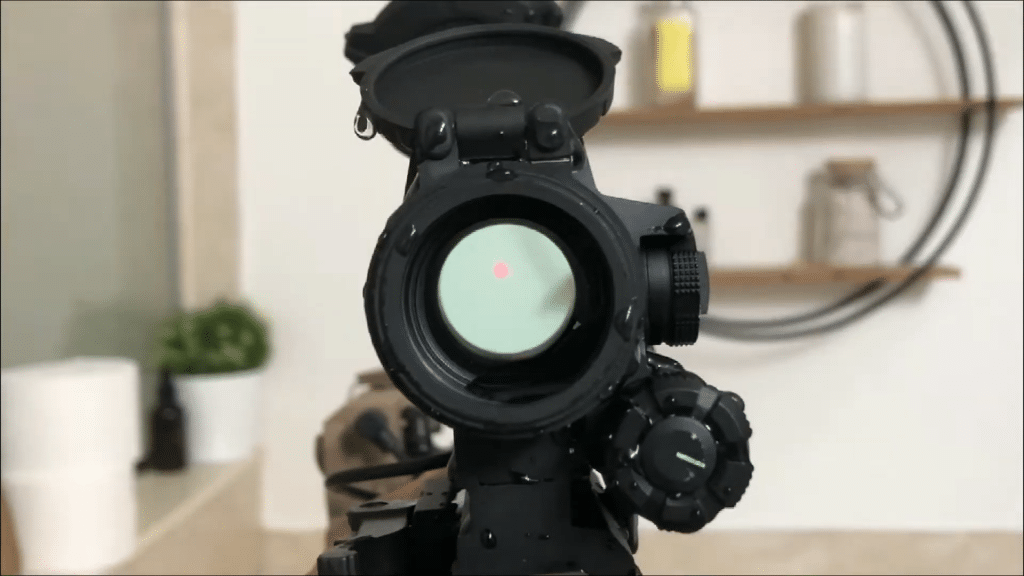
Via-Project MARS
There’s a slight blue tint to the glass. Doesn’t bother me, but if you’re used to crystal clear glass like an Aimpoint, you’ll notice it. The dot itself is crisp and round, not the starburst mess you get with astigmatism on cheaper optics.
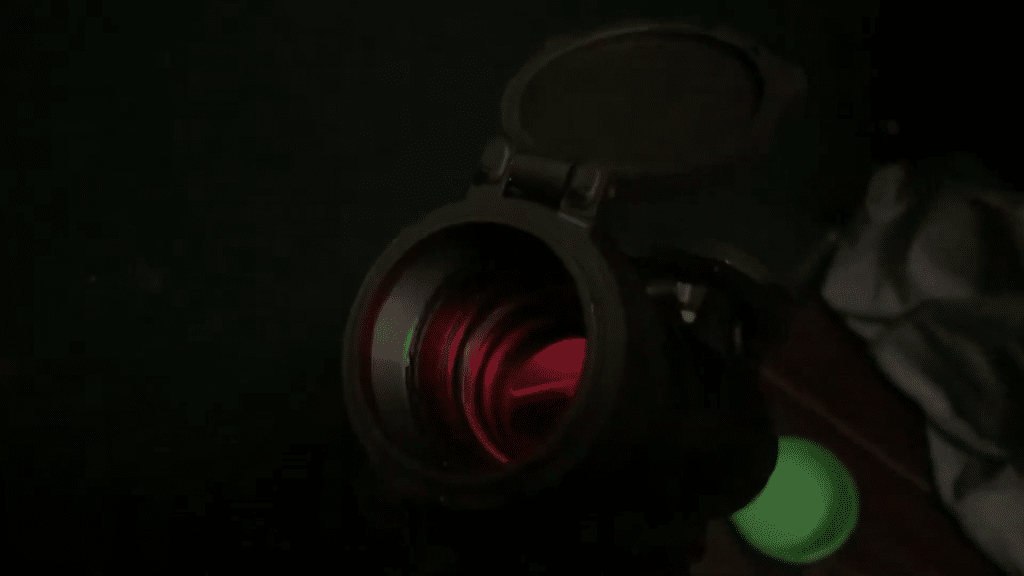
Via-Project MARS
Shooting into the sun used to be a problem with my old red dot. The Romeo 7’s coating handles glare way better. I can actually see the dot even when the sun’s low and angry.
Accessories
The included mounts work, but I swapped them out pretty quickly for better options.
- American Defense AD-68 Aimpoint Mount: This mount is rock solid. I can pull the optic off to clean it and slap it back on without losing zero. Worth every penny if you switch between rifles.
- Sig Sauer Juliet4 4x Magnifier: Pairs perfectly with the Romeo 7 when you need to reach out past 100 yards without losing your close-range speed.
- LaRue Tactical LT660 QD Mount: Another bombproof QD option that adds versatility without extra bulk.
By the Numbers
Accuracy
4/5

The 2 MOA dot delivers solid precision for defensive and close-to-mid range work, but it’s not built for tight groups beyond 150 yards where the dot size becomes a limiting factor.
Battery Life
5/5Over 62,500 hours on a single AA battery with MOTAC technology means you’ll replace batteries because they expire, not because they died—that’s unbeatable reliability.
Durability
5/5This optic shrugged off drops onto gravel, direct impacts, and complete water immersion without losing zero or function—it’s built like serious duty-grade equipment.
Ease of Use
4/5MOTAC and large brightness controls make operation simple even with gloves, but the stiff adjustment caps slow down the zeroing process enough to dock a point.
Optical Quality
4/5The 30mm lens provides excellent clarity and a wide field of view with minimal distortion, though the slight blue tint and glass quality keep it from perfection.
Overall
4.4/5See how I test & rate in my reviews. Learn more >
Summary
After beating on the Romeo 7 for months, I get why it’s popular. This isn’t some delicate competition optic that needs babying. It’s a working red dot that takes abuse and keeps running.
The 30mm lens gives you way more to work with than those tiny microdots everyone’s obsessed with. Sure, it’s heavier at 12.5 ounces, but I’ll take the weight penalty for a sight picture I can actually use when things get hectic. Target acquisition is stupid fast inside 100 yards, where most people do their shooting anyway.
That battery life is no joke either. I’ve literally forgotten this thing was on for weeks at a time. The MOTAC saves your bacon when you’re an idiot like me. Plus, using AA batteries means I’m never stuck searching for some weird battery at the last minute.
The only real gripes? Those adjustment turrets are unnecessarily stiff, and the 2 MOA dot gets less useful past 150 yards. But let’s be honest, if you’re trying to make precision shots at 200 yards with an unmagnified red dot, you’re using the wrong tool anyway.
For the money, you’re getting an optic that won’t quit when you need it most. It’s not fancy, but it works every single time.
How the Sig Romeo 7 Compares Against Others
| Features | Sig Romeo 7 | Vortex Strikefire II | Primary Arms SLx MD-25 Gen II | Aimpoint PRO |
|---|---|---|---|---|
| Price | ~$200 | ~$170 | ~$190 | ~$430 |
| Magnification | 1x | 1x | 1x | 1x |
| Objective Lens | 30mm | 30mm | 25mm | 30mm |
| Reticle | 2 MOA Red Dot | 4 MOA Red Dot | ACSS CQB (65 MOA horseshoe + 1 MOA dots) | 2 MOA Red Dot |
| Battery Type | AA | CR2 | CR2032 | 2L76/DL1/3N |
| Battery Life | 62,500 hours | 400-7,000 hours | 12,000 hours (50,000 with AutoLive) | 30,000 hours |
| Weight | 12.5 oz | 7.2 oz | 6.5 oz | 11.6 oz |
| Waterproof Rating | IPX-7 | IPX-7 | IP67 | 150 ft submersion |
| Length | 4.75 inches | 5.6 inches | 3 inches | 4.5 inches |
| Mount Included | Yes (Low + QD Riser) | Yes (Cantilever) | Yes (Multi-height system) | Yes (QRP2) |
| Special Features | MOTAC shake-awake | 10 brightness settings | AutoLive, BDC reticle | Forged aluminum, NVG compatible |
| Warranty | Lifetime | Lifetime | Lifetime | 10 years |
| Pros | – Exceptional battery life- IPX-7 waterproof rating- Durable aluminum construction- AA battery accessibility- MOTAC shake-awake feature | – Lightweight build- Affordable price- Unlimited eye relief- VIP warranty | – ACSS reticle versatility- AutoLive technology- Compact footprint- Multi-height mounting | – Military-proven durability- Extreme submersion rating – Aimpoint reliability- 30K hour runtime |
| Cons | – Heavier than competitors – 2 MOA limits precision- Bulkier full-size profile | – Shorter battery life- 4 MOA dot less precise- CR2 battery less common | – Lower battery life- Reticle complexity- Smaller objective lens | – Expensive price point- Oddball battery- Heavy for size |
The Romeo 7 weighs a full 5 ounces more than the Strikefire II. You feel that difference after carrying your rifle all day. But here’s the thing: I’ve changed batteries in the Strikefire three times this year. Haven’t touched the Romeo 7’s battery once.
I actually bought the Vortex first, thinking I’d save 30 bucks. That 4 MOA dot is just too fat for my taste. Trying to hit anything precise past 100 yards felt like guessing. The Strikefire works fine for minute-of-bad-guy accuracy, but the Romeo 7’s 2 MOA dot lets you actually aim at stuff.
The Primary Arms SLx brings something totally different with that ACSS reticle. My shooting buddy runs one, and watching him use those ranging marks to nail 300-yard shots makes me jealous sometimes. But when I borrowed it for a range session, all those extra lines and dots just slowed me down up close. The Romeo 7’s simple dot gets on target faster when speed matters.
Now the Aimpoint PRO? That’s the gold standard everyone compares everything to. I’ve shot with one extensively. It’s bombproof, sure, but at twice the price of the Romeo 7, I can’t justify it for a rifle that lives in a safe most of the time. The PRO’s reputation comes from military contracts and decades of proven use. If my life depended on my optic working after being run over by a truck, I’d buy the Aimpoint. For weekend range trips and hunting? The Romeo 7 does everything I need.
To Summarize
After running all these optics, the Romeo 7 hits the sweet spot for normal people who shoot. It’s tough enough to trust but cheap enough that you won’t cry if you scratch it.
The Strikefire II makes sense if every ounce matters to you. Maybe you’re hiking miles into the backcountry or building an ultralight rifle. Just know you’re trading battery life and dot precision for those weight savings. Keep spare CR2 batteries handy because you’ll need them.
The Primary Arms SLx shines when you want one optic to do everything. Those ranging marks turn it into a poor man’s ACOG. If you regularly shoot past 200 yards but still need speed up close, this beats a simple dot. Just be ready for a learning curve with that busy reticle.
For those with cash to burn, buy the Aimpoint PRO and never think about it again. It’ll outlive you, your kids, and probably their kids too. But if you’re like me and want to spend that extra $230 on ammo instead, the Romeo 7 gets you 90% of the performance. I’ve dropped it, soaked it, and generally treated it like garbage. Still works perfectly.
The Romeo 7 isn’t sexy or innovative. It’s just a solid red dot that uses common batteries and refuses to break. Sometimes that’s exactly what you need.
How I tested the Sig Romeo 7
Mounting the Romeo 7 took longer than expected because I couldn’t decide between the low mount and the riser. Ended up going with the QD riser for a better cheek weld on my AR.
Zeroing was annoying. Those turret caps are tighter than a pickle jar lid. Once I got them off, each click felt like I was breaking something. Started at 25 yards to get on paper, then moved to 50 yards for the actual zero. Burned through about 20 rounds of Federal XM193 getting it perfect.

Via-Project MARS
For accuracy testing, I shot groups at 50, 100, and 150 yards off a bench with bags. Nothing fancy, just seeing where the bullets actually went versus where I aimed. The 50-yard groups were touching. At 100 yards, I kept everything under 2 inches. By 150 yards, that dot was covering most of my target, and groups opened up to about 4 inches.
The drop test wasn’t planned. My rifle literally fell off my tailgate because I’m an idiot who doesn’t secure things properly. Optic hit first on gravel from about 3 feet up. I expected the worst but it held zero perfectly when I checked it the next day.
Weather testing happened during deer season in Tennessee. Three days of rain ranging from drizzle to downpour. The rifle stayed in the truck overnight, got rained on during sits, and generally lived a hard life that week. No fogging inside the optic even when going from the 30-degree truck to 70-degree house.
Battery testing is still ongoing because this thing won’t die. Been running it for three months on the original battery. I’ve put about 500 rounds through the gun with the optic on, plus all the times I forgot to turn it off. The MOTAC feature makes it hard to kill the battery on purpose.
For speed drills, I set up three IPSC targets at 7, 15, and 25 yards. Ran them with a timer doing double taps and transitions. The wide field of view made finding targets quick. My splits averaged 0.3 seconds faster than with iron sights.
Cold weather testing was simple. Left the rifle in my truck overnight when it hit 25 degrees. Next morning, took it straight to the range without warming anything up. The dot came on immediately, no dimming or flickering. Ran 50 rounds through it cold and it worked like normal.
Testing MOTAC was actually fun. I’d set the rifle down and walk away for different amounts of time. Five minutes, ten minutes, half an hour. Every time I picked it up, the dot appeared instantly. Even tried sneaking up on it and grabbing it slowly. The sensor picks up the slightest movement.

Throughout all this, I kept notes on my phone about what worked and what annoyed me. The stiff turrets got mentioned a lot. So did the solid zero retention. After three months of actual use, not gentle testing, this optic earned its spot on my rifle.
Frequently asked questions
Is the Sig Romeo 7 waterproof?
Yes, the Romeo 7 has an IPX-7 rating. That means it can sit underwater at one meter for half an hour. I’ve had mine completely soaked in Tennessee rain for hours with no problems. Water beads right off the lens coating too.
What battery does the Sig Romeo 7 use?
Just a regular AA battery. This is huge because you can buy them literally anywhere. Gas stations, grocery stores, that drawer in your kitchen with random batteries. The battery lasts over 62,500 hours on medium brightness, so you’ll probably lose the spare before you need it.
Does the Sig Romeo 7 have night vision settings?
It’s got two night vision settings out of 11 total brightness levels. Settings 1 and 2 are dim enough for NV use. The other nine handle everything from cloudy days to blazing sunshine. I mostly run mine on setting 6 during normal daylight.
Will the Sig Romeo 7 fit on a Picatinny rail?
Yes, it’s made for standard Picatinny rails. Comes with two mount options in the box. The low mount and a QD riser that puts it at 1.535 inches. Mounted mine on a basic AR rail with zero issues. No need for special adapters or any of that nonsense.
How does the MOTAC feature work on the Romeo 7?
MOTAC turns the optic off when it sits still and instantly turns it back on when it moves. Pick up your rifle and the dot’s already there. Leave it in the safe for a month and the battery isn’t dead. It’s motion activated, so even a small bump wakes it up. Best feature on this optic if you ask me.
Can you co-witness iron sights with the Sig Romeo 7?
With the low mount, you get a lower 1/3 co-witness with standard AR iron sights. Your irons sit in the bottom third of the window. The QD riser mount puts it higher if you don’t want to see your irons at all. I prefer the lower 1/3 setup as backup.
Why should you trust me
I’m Richard Douglas, and I’ve been testing firearm optics for years as a firearms instructor and tactical advisor. My work has been featured in leading firearm magazines, and I’ve consulted for optics manufacturers like Bushnell, Leupold, and Sightmark on product development and performance.
Via-Project MARS
I started Scopes Field after wasting thousands of dollars on scopes that didn’t deliver. Some were solid performers, but most were garbage. That frustration pushed me to create a place where shooters get honest, hands-on reviews based on real testing—not marketing hype.
I put every optic through rigorous field testing. I mount them properly, zero them at multiple distances, run drop tests to check zero retention, and measure accuracy groupings. The Romeo 7 went through the same process—drops, weather exposure, and hundreds of rounds downrange to see if it actually holds up to the claims.


Great review. I think I want one.
Good review I have a Romeo 5 and am thinking of getting the 7 do you think it’s worth it
I have the Romeo 7 mounted on an Ruger American ranch in 450 bushmaster. It has held up very well and has accounted for a couple of nice whitetail bucks. I believe this rifle and sight combo to be a near perfect setup. Sig really nailed it with this one!
Love my Romeo7 especially when paired to my Juliet 3.
Hi,did you get a juliet 3 or the micro 3? I just about buy one or the other? Thanks!
I have the Romeo 7 mounted on AR 15. Perfect. Easy mount, easy to 0. Love it. Thank you SigSauer.
What about a romeo7 paired with a juliet6?
I just ordered one for my Windham Weaponry SRC .308. Can’t wait to test it out!
My Romeo 7 red dot shows like a crows foot, there’s a dot, but two little red lines that attach underneath it… this is at like 4 or 5 not max at all. This seem normal??
My brand new Romeo 7 purchased in Marxh just failed after around 500 rounds of use on my AR15. Sig replaced it with a brand new one, I had to pay for upgraded “fragile” shipping because the prepaid FedEx label did not cover that, and Sig recommends that shiooing type. Sig customer service experience was awesome, I just wish it didn’t fail so soon. Good to know I can always get a replacement though with the lifetime warranty as discussed.