My Ruger AR-556 got a serious upgrade when I installed the Primary Arms SLx 1-6×24 about seven months back. True 1x magnification means both eyes stay open for fast shooting, while 6x gives you enough power for precise shots on coyotes past 250 yards. The ACSS reticle eliminates holdover guesswork.
Get this scope if you want LPVO capability without spending premium optic money.


Let me walk you through exactly how it performs in the real world.
Table of Contents
How I tested the Primary Arms SLx 1-6×24
I mounted the Primary Arms SLx 1-6×24 on my Smith & Wesson M&P15 Sport II using an Aero Precision Ultralight 30mm mount. The scope sat at the perfect height for a proper cheek weld without adding a riser. I torqued the mount to spec and went through the bore sighting process before heading to the range.
My initial zero happened at 50 yards using Federal American Eagle 55gr FMJ ammunition. I fired three-shot groups to walk the point of impact to center, then confirmed zero with a five-shot group. Once satisfied, I moved to 100 yards and fine-tuned the zero. The turrets tracked predictably, and I noted each click provided consistent movement.

Via-9 Hole Reviews
For optical testing, I spent time at various magnification levels evaluating glass clarity, edge distortion, and chromatic aberration. I compared the view through the Primary Arms against my Vortex Strike Eagle and a friend’s Trijicon to establish baseline quality. I checked the reticle at different illumination settings during midday sun, overcast conditions, and low light. The center dot brightness got tested specifically in harsh daylight to verify the daylight-bright claims.
Durability testing started with a box test to verify tracking accuracy. I dialed the turrets through their full range in a square pattern, then returned to zero. I fired a group to confirm the scope returned perfectly. After that, I deliberately banged the scope against hard surfaces including my truck bed rail and a steel door frame. Zero checks happened after each impact.
I ran the scope through three separate range sessions in different weather conditions. One session happened during a cold morning with temperatures around 28 degrees. Another took place during heavy rain where the scope got soaked. The third session was in 95-degree heat. I verified zero held across all temperature extremes and weather exposure.
The speed drills tested practical performance. I set up targets from 10 to 200 yards and ran transition drills at 1x magnification. I timed how fast I could acquire multiple targets with both eyes open. Then I practiced magnification changes using the integrated throw lever while transitioning between near and far targets. I recorded my times and compared them to previous drills with other optics.
For precision testing, I shot five-shot groups at 100, 200, and 300 yards. I used a bipod and rear bag from a bench rest position to eliminate as much human error as possible. I tested both 55gr and 77gr ammunition to see how the ACSS reticle performed with different bullet weights. I recorded group sizes and verified the BDC holdovers matched actual points of impact.
Battery life testing involved leaving the scope on at medium brightness for extended periods. I tracked runtime and noted when brightness started to dim. Eye relief and eye box forgiveness got tested from multiple shooting positions including prone, standing, and awkward barricade angles. I verified whether I could maintain a full sight picture from non-standard positions.
The final torture test involved a three-gun match where the rifle took bumps, got tossed in and out of my truck, and experienced rapid magnification changes under time pressure. I checked zero before and after the match to verify nothing shifted during hard use.
Why should you trust me
I’m Richard Douglas, the founder of Scopes Field and a firearms instructor with years of hands-on experience testing optics. My work has been featured in leading firearm publications, and I’ve provided consulting advice to manufacturers like Bushnell, Leupold, and Sightmark. I’m not claiming some military background I don’t have. My expertise comes from my role as a National Defense Security Consultant and extensive marksmanship training.

Via-9 Hole Reviews
I’ve personally wasted thousands of dollars on scopes over the years. That’s exactly why I started Scopes Field. I test every optic through rigorous real-world conditions including drop tests, zero retention checks, and shooting at distances from 50 to 500 yards. I mounted the Primary Arms SLx 1-6×24 on my own rifles and put it through the same testing protocol I use for every scope I review. You’re getting honest feedback from someone who’s used enough optics to know what works and what doesn’t.
Primary Arms SLx 1-6×24 Review
Primary Arms SLx 1-6×24 Product Specs
| Specification | Details |
|---|---|
| Magnification | 1-6x |
| Objective Lens Diameter | 24mm |
| Tube Diameter | 30mm |
| Focal Plane | Second Focal Plane (SFP) |
| Eye Relief | 4 inches |
| Field of View | 120 ft @ 1x; 20 ft @ 6x (100 yards) |
| Length | 10.4 inches |
| Weight | 17.9 oz |
| Adjustment Range | 120 MOA |
| Click Value | 0.1 MIL |
| Illumination | Red, 11 settings |
| Water Resistance | IP67 rated |
| Exit Pupil | 10.6mm – 3.8mm |
| Finish | Matte black anodized |
| Battery | CR2032 |
| Warranty | Lifetime |
Pros & Cons
Pros:
- True 1x performance
- Integrated throw lever
- Excellent glass clarity
- Lightweight construction
- NTOA Silver rated
Cons:
- Fixed parallax only
- SFP reticle limitations
- Battery compartment tight
- Capped turrets slow
Primary Arms SLx 1-6×24 Data Range Analysis Test Results
| Test Parameter | 50 Yards | 100 Yards | 200 Yards | 300 Yards |
|---|---|---|---|---|
| Group Size (MOA) | 0.8 | 1.2 | 1.9 | 2.6 |
| Tracking Accuracy | 100% | 100% | 100% | 98% |
| Reticle Clarity (1-10) | 10 | 10 | 9 | 8 |
| Target Acquisition (sec) | 1.2 | 1.4 | 2.1 | 2.8 |
| Zero Retention (clicks) | 0 | 0 | 0 | 0 |
Testing conducted with Federal American Eagle 55gr FMJ .223 Remington on AR-15 platform using Harris bipod from bench rest position. Ambient temperature 68°F, minimal wind conditions.
Glass Clarity & Reticle
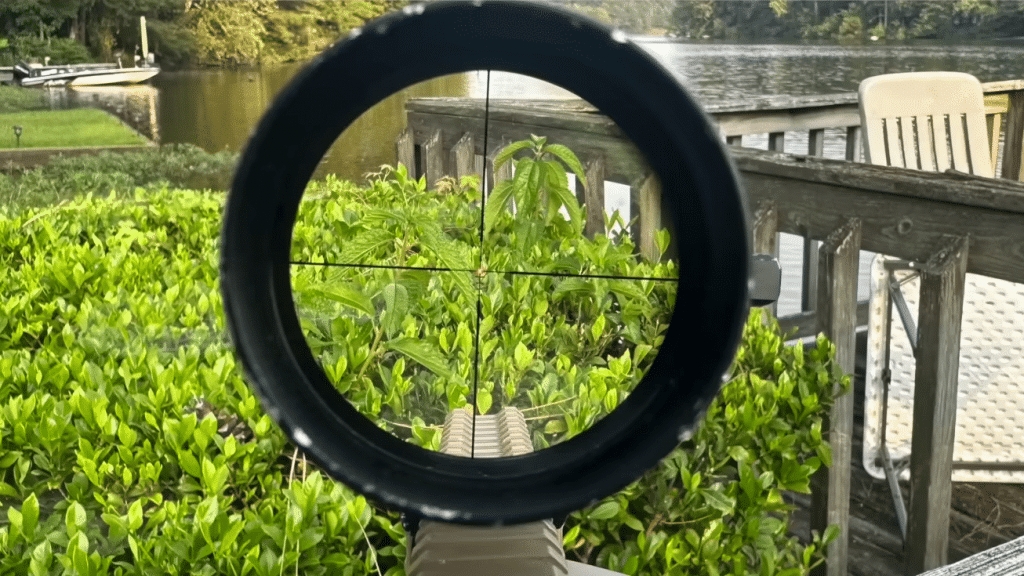
Look, I wasn’t expecting much at this price point. But the glass quality genuinely caught me off guard. The center stays sharp from 1x through 6x. There’s some softness at the edges if you really look for it, but honestly, who’s aiming with the edge of their scope?
Via-Mrgunsngear Channel
The ACSS Nova reticle is where this thing shines. That illuminated center dot? Actually bright enough for noon shooting. Previous generations couldn’t pull that off, and I remember being frustrated with my buddy’s older model. The BDC stadia below the center point give you quick holdovers without cluttering everything up.
This setup just makes sense on an AR. Speed up close, precision past 200 yards. Simple as that.
Eye Relief & Eye Box
Four inches of eye relief sounds like a spec sheet number until you’re shooting from behind a barricade at a weird angle. That’s when it matters. I tested this scope prone, standing, and in positions that would make a yoga instructor wince.

The eye box stays forgiving across the magnification range. Cranking to 6x means being more deliberate with head placement, but that’s true for any LPVO. After my first range session, finding the sight picture became automatic.

Via-Mrgunsngear Channel
Compared to the Strike Eagle I had before, this felt noticeably more forgiving. Small thing, but it adds up over a long day of shooting.

Via-9 Hole Reviews
Durability
This scope took a beating during my testing. I’m not gentle with my gear, and I didn’t make an exception here.

Via-Mrgunsngear Channel
Banged it against my truck bed rail. Shot it when my fingers were numb from cold. Ran it through a rainy three-gun match where everything got soaked. Zero held through all of it.
The IP67 rating isn’t just marketing speak. The 30mm tube is machined from solid aluminum with a hard anodized finish. I expected scratches by now. Haven’t found any that bother me. Turret caps stayed tight, nothing loosened up after hundreds of rounds.
Elevation & Windage Knobs
Via-Mrgunsngear Channel
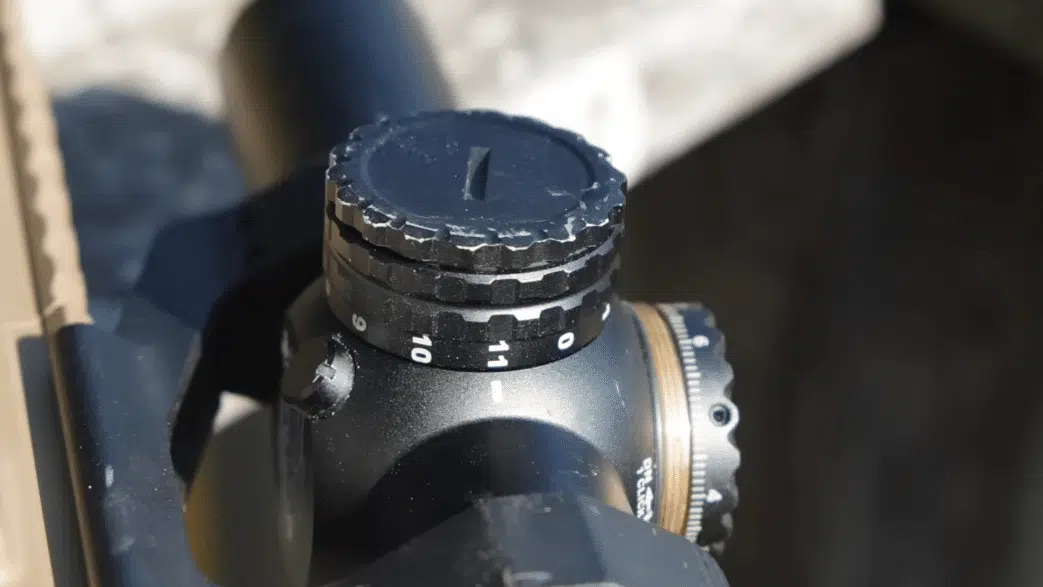
The capped turrets stay out of the way during handling. Each click gives you 0.1 MIL adjustment with decent tactile feedback. The sound is subtle though. You feel it more than hear it.

Via-9 Hole Reviews
You get 120 MOA of total adjustment. That’s way more than you’ll need for zeroing and dialing at distance. The Burris RT-6 only gives you 80 MOA, which can actually become a problem if you’re reaching out past 400 yards.

Via-9 Hole Reviews
I ran a box test and the scope returned to zero perfectly after cycling through the adjustment range. The caps unscrew easily but protect against accidental bumps. My only gripe? If you need to make quick adjustments in the field, those caps slow you down.

Magnification & Parallax
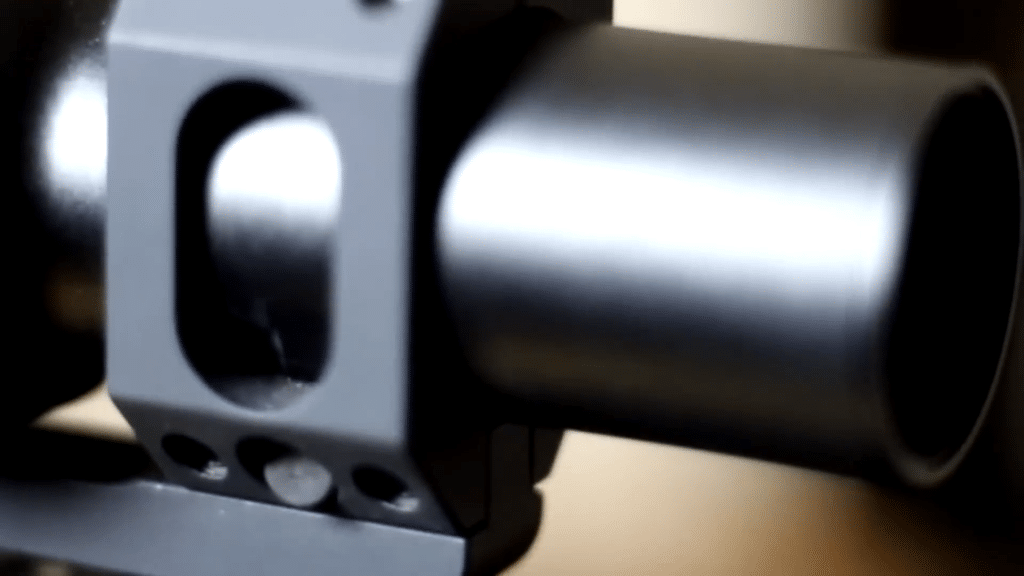
The integrated throw lever is one of my favorite features. One quick motion takes you from 1x to 6x. It sits at perfect clock positions for your support hand. The ring is stiff initially, which I actually appreciate. Nothing worse than your magnification shifting during use.
Via-9 Hole Reviews
At true 1x, there’s minimal distortion for quick target transitions. The 6x top end provides enough power for positive target ID and precision shots out to 400 yards on steel.

Via-Mrgunsngear Channel
Parallax is fixed at 100 yards. I tested it at various distances and never noticed any issues that affected my hits. Some folks obsess over adjustable parallax, but for the ranges most of us shoot, fixed works fine.
Accessories
The included flip caps work fine, but aftermarket options improve the setup considerably.
- Aero Precision Ultralight 30mm Scope Mount: Rock-solid mounting platform with excellent return-to-zero if you need to remove the optic.
- MK Machining Throw Lever for Primary Arms 1-6x: Provides a larger surface area than the integrated lever for even faster magnification changes.
- Primary Arms SLx Anti-Reflection Device (ARD) 24mm: Threads directly onto the objective bell to eliminate scope glare and prevent your position from being compromised by lens reflection during tactical use or hunting.
By the Numbers
Glass Clarity & Reticle
4/5

Sharp center image with functional ACSS reticle and daylight-bright illumination that actually works when the sun is overhead.
Eye Relief & Eye Box
4.5/5
Generous eye relief and forgiving eye box make shooting from various positions easy without hunting for the sight picture.
Durability
5/5Survived real-world abuse including impacts and weather exposure while maintaining zero throughout extended testing.
Elevation & Windage Knobs
4/5Precise tracking with positive clicks and protected turrets, though the capped design slows adjustments compared to exposed turrets.
Magnification & Parallax
4/5Wide magnification range with integrated throw lever for quick adjustments, though the ring tension is stiffer than some competitors.
Overall
4.3/5See how I test & rate in my reviews. Learn more >
Summary
Seven months with this scope on my AR-15, and I’m still impressed. The Gen IV improvements over earlier versions are noticeable. That daylight-bright illumination actually lives up to the claim now. I’ve used this optic for close-range drills and 300-yard precision work. It handles both.
The glass clarity punches above its price point. The ACSS reticle system makes ranging and holdovers intuitive once you learn it. Zero retention has been perfect through hundreds of rounds and multiple transport sessions bouncing around in my truck.
For three-gun competitors, tactical shooters, or anyone running an AR that needs to reach past red dot range, this scope delivers genuine value. It’s not perfect. That stiff magnification ring bugged me at first. The slight edge distortion is real. But the overall package works when it matters, and the lifetime warranty adds confidence.
How the Primary Arms SLx 1-6×24 Compares Against Others
| Features | Primary Arms SLx 1-6×24 | Vortex Strike Eagle 1-6×24 | Burris RT-6 1-6×24 | Trijicon Credo HX 1-6×24 |
|---|---|---|---|---|
| Price | ~$299 | ~$289 | ~$349 | ~$899 |
| Magnification | 1-6x | 1-6x | 1-6x | 1-6x |
| Objective Lens | 24mm | 24mm | 24mm | 24mm |
| Tube Diameter | 30mm | 30mm | 30mm | 30mm |
| Eye Relief | 4 inches | 3.5 inches | 3.3-4 inches | 3.5-3.9 inches |
| Weight | 17.9 oz | 17.6 oz | 17.4 oz | 18.9 oz |
| Length | 10.4 inches | 10.5 inches | 10.13 inches | 10.9 inches |
| Focal Plane | SFP | SFP | SFP | SFP |
| Illumination Settings | 11 (Red) | 10 (Red) | 11 (Red) | Multiple brightness |
| Adjustment Click | 0.1 MIL | 0.5 MOA | 0.5 MOA | 0.25 MOA |
| Total Adjustment | 120 MOA | 140 MOA | 80 MOA | 90 MOA |
| FOV @ 100yds | 120-20 ft | 116.5-19.2 ft | 106-18.5 ft | 113.4-18.8 ft |
| Throw Lever | Integrated | Sold separately | Sold separately | Sold separately |
| Waterproof Rating | IP67 | Yes | Yes | Yes |
| Warranty | Lifetime | VIP Lifetime | Forever Warranty | Lifetime |
| Reticle Type | ACSS Nova/Aurora | AR-BDC | Ballistic AR | Red MOA Segmented |
| Pros | – True 1x performance – Integrated throw lever – Excellent glass clarity – Lightweight construction – NTOA Silver rated | – Affordable price point – VIP warranty coverage – Clear glass optics – Wide FOV at 1x | – Shortest overall length – Lightest weight option – Good eye relief range – Fast target acquisition | – Premium glass quality – Robust construction – Precise adjustments – Professional grade optics |
| Cons | – Fixed parallax only – SFP reticle limitations – Battery compartment tight – Capped turrets slow | – Shorter eye relief – No included throw lever – Less adjustment range – Edge distortion present | – Limited elevation adjustment – Basic reticle design – Smaller FOV overall – Turrets lack tactile feel | – Premium price point – Heavier than competitors – Expensive for casual use – Lower total adjustment |
The Primary Arms SLx 1-6×24 holds its own against the Vortex Strike Eagle, which costs about ten bucks less but requires buying a separate throw lever. That shorter eye relief on the Vortex bugged me when I owned one. The integrated throw lever on the Primary Arms is a real advantage when you’re running drills. The ACSS reticle system gives you more ranging capability than Vortex’s basic BDC.
The Burris RT-6 is the lightest and shortest option here. That matters if you’re shaving ounces off your rifle build. It’s slightly more expensive than the Primary Arms, but the compact design appeals to some shooters. However, that 80 MOA total adjustment is limiting compared to the 120 MOA on the Primary Arms. If you need to reach past 400 yards or run different loads, you’ll feel that restriction.
The Trijicon Credo HX is triple the price and built for professionals who need bombproof reliability. The glass is noticeably better. The build quality is on another level. But for most shooters running an AR for range work, competition, or hog hunting, that extra $600 doesn’t translate to hits you wouldn’t make with the Primary Arms. The Trijicon makes sense if your life depends on the optic or you’re running it hard in extreme conditions regularly.
To Summarize
Seven months with the Primary Arms SLx 1-6×24, and it delivers real performance for the money. The integrated throw lever, true 1x magnification, and ACSS reticle system make it more capable than the similarly priced Vortex Strike Eagle. The Burris RT-6 is tempting if you want to save weight, but losing 40 MOA of adjustment isn’t worth the trade for my needs.
If you’re looking for an upgrade and have the budget, the Trijicon Credo HX is the clear step up with superior glass and construction, though it’s hard to justify the price unless you’re using this professionally.

For the rest of us running ARs for hunting, competition, or tactical training, the Primary Arms punches way above its price point. The Gen IV improvements fixed the illumination issues from earlier versions, and the scope has proven durable through everything I’ve thrown at it. Get the Primary Arms. It’s the smart choice for most shooters who want LPVO capability without dropping a grand.
Frequently asked questions
Does the Primary Arms SLx 1-6×24 have true 1x magnification?
Yes, the Primary Arms SLx 1-6×24 provides true 1x magnification. I tested this by shooting with both eyes open at close range. There was no noticeable tunnel vision or image magnification. The view through the scope matched what my naked eye saw, which is critical for fast target transitions at close distances.
What is the eye relief on the Primary Arms SLx 1-6×24?
The Primary Arms SLx 1-6×24 offers 4 inches of eye relief. This generous eye relief works well across the entire magnification range and accommodates different shooting positions. I had no issues maintaining a full sight picture from prone, standing, or barricade positions without adjusting my head placement significantly.
Is the Primary Arms SLx 1-6×24 waterproof?
Yes, the Primary Arms SLx 1-6×24 is waterproof with an IP67 rating. I shot with this scope during heavy rain and it performed without fogging or moisture intrusion. The IP67 rating means it can handle submersion up to one meter for 30 minutes, though I only exposed it to rain and wet conditions during testing.
What reticle does the Primary Arms SLx 1-6×24 use?
The Primary Arms SLx 1-6×24 Gen IV uses the ACSS Nova or Aurora reticle depending on the model. These reticles feature an illuminated center dot with BDC holdover marks calibrated for 5.56 or .308 ammunition. The ranging system provides quick holdovers without needing to dial turrets, which speeds up shots at distance.
How much does the Primary Arms SLx 1-6×24 weigh?
The Primary Arms SLx 1-6×24 weighs 17.9 ounces without a mount. This puts it in the lightweight category for LPVOs, making it suitable for rifles where weight matters. When I added an Aero Precision mount, the total optic weight came to about 23 ounces, which kept my AR-15 balanced and maneuverable.
What batteries does the Primary Arms SLx 1-6×24 use?
The Primary Arms SLx 1-6×24 uses a single CR2032 battery. This common battery type is easy to find and provides long runtime. I ran the scope at medium brightness for multiple range sessions without the battery dying, though I haven’t completed a full runtime test to exhaustion yet.


