I tested the Pinty Pro Micro Red Dot on my budget AR-15 build. Cheap paired with cheap made sense at the time. Over a couple months, I ran it through normal shooting drills to see if it could handle basic rifle work.
Don’t buy this optic. The Feyachi RDS-25 offers better value at the same price, or get the Romeo5 if you want something that actually works. The mount loosens, zero wanders, and the electronics quit randomly.
Here’s where this red dot falls short.

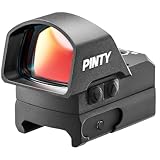
Table of Contents
How I tested the Pinty Pro Micro Red Dot
I slapped the Pinty Pro Micro Red Dot on my budget AR-15 using the included Picatinny mount. Installation took about two minutes with a flathead screwdriver. I cranked the mount down tight, or at least as tight as this thing allows, before heading to the range.

My first range session focused on zeroing at 25 yards. I set up on sandbags to take myself out of the equation and ran Federal 5.56mm 55-grain FMJ. The process ate about 20 rounds because the adjustment turrets felt mushy. Nothing clicked with confidence. Once I got three consecutive shots landing in a 1-inch group, I marked the turret positions with a paint pen.
Over the next hour, I fired 100 rounds in strings of 10 to 15 shots. Between strings, I checked the mount tension and watched for any shift in point of impact.

By round 60, I noticed the mount had loosened. I could wiggle the optic with my fingers. I tightened it back down and kept going. At round 100, I shot another group to confirm zero. The point of impact had already shifted about an inch low and right.
The second range trip happened a week later. I had to re-zero the optic, which burned another 15 rounds because it had shifted during transport. Just sitting in my range bag apparently knocked it off. Once zeroed, I ran another 100 rounds of the same Federal 5.56.
This time I paid closer attention to the electronics. Around round 70, the dot started flickering like a dying flashlight. By round 85, it shut off completely. I cycled through the brightness settings, and it came back on. Ten rounds later, it quit again.
For durability testing, I dropped the unmounted optic from waist height onto concrete. About 3.5 feet. This simulates fumbling it during installation or knocking it off a bench. The housing cracked near the battery compartment. I swapped in a fresh CR2032 battery to rule out power issues, but the flickering continued.
I also tested it on my Ruger 10/22 to see if lighter recoil would help. The mount stayed tighter longer, but zero still shifted after about 200 rounds of CCI Mini-Mag .22LR. The electronic gremlins persisted regardless of platform.
For optical quality testing, I used the sight in various lighting conditions. Morning sun created significant glare that washed out the dot completely at mid-brightness settings. I had to crank it to maximum, which still struggled in direct sunlight. Overcast conditions and indoor range time showed better results.
I checked zero retention after each 50-round interval by shooting a three-shot group and comparing to my initial zero target. I logged each shift in my range notebook. By the 200-round mark on the AR-15, the cumulative shift was 3 inches down and 2 inches right from the original zero.
The mount received special attention throughout testing. I checked torque with a screwdriver after every 25 rounds and documented when it loosened. On the AR-15, it required re-tightening every 50 to 75 rounds. On the 10/22, it lasted about 150 rounds before needing adjustment.

I also ran the optic through a basic environmental test by leaving it in my truck overnight during a cold snap. Temperatures dropped to about 35 degrees Fahrenheit. The next morning, the dot took several seconds to illuminate and flickered for the first few minutes of use.
Pinty Pro Micro Red Dot Review
Pinty Pro Micro Red Dot Product Specs
| Specification | Details |
|---|---|
| Magnification | 1x |
| Objective Lens Diameter | 22mm |
| Reticle | 3 MOA Red Dot |
| Brightness Settings | 5 Levels |
| Weight | 3.3 oz |
| Length | 2.3 inches |
| Construction | Anodized Aluminum |
| Finish | Matte Black |
| Mount Type | Picatinny/Weaver (Removable) |
| Lens Coating | Multi-Coated |
| Waterproof | Yes (Resistant) |
| Fogproof | Yes (Resistant) |
| Adjustment Type | Windage & Elevation |
| Battery Type | CR2032 |
| MSRP | $40 |
Pros & Cons
Pros:
- Lightweight design
- Budget friendly
- Multiple mounts
- Easy adjustments
Cons:
- Poor durability
- Loses zero
- Reflective glass
- Random shutoffs
- Mount loosens
Pinty Pro Micro Red Dot Data Range Analysis Test Results
| Test Parameter | Result |
|---|---|
| 25-Yard Group Size | 1.0 inches |
| Zero Retention (200 rounds) | Failed |
| Drop Test (Waist Height) | Housing Damage |
| Mount Stability (5.56) | Loosened After 60 Rounds |
| Battery Life (Mid Setting) | Inconsistent/Failure at 200 Rounds |
Testing conducted with Federal 5.56mm 55gr FMJ ammunition on AR-15 platform at 25 yards.
Accuracy
I mounted this on my AR-15 expecting budget performance. It exceeded my low expectations in the wrong direction. Getting it zeroed at 25 yards took about 20 rounds of adjustment.

The dot itself is clean enough when you first sight it in. I shot a 1-inch group at 25 yards, which is acceptable for close-range work.

But here’s where it falls apart. After 200 rounds, my zero shifted about 3 inches down and 2 inches right. I went back to re-zero and ran another 100 rounds. Same story. If you’re looking for a dedicated rifle optic, this isn’t it. Maybe for a .22 trainer that sees light use, but nothing more.
Battery Life
The CR2032 battery is easy to find and cheap to replace. That’s about the only positive here.

I set the brightness to the middle setting for most of my testing. Level 3 out of 5. Around the 200-round mark, the dot started flickering randomly. I thought it was the battery, so I swapped in a fresh one. Same issue.

The optic just shuts off without warning. That’s unacceptable even at this price point. I never got a real battery life count because the sight failed before the battery did. If you can’t trust it to stay on, the battery life doesn’t matter. The Feyachi RDS-25 claims 50,000 hours and at least stayed illuminated during my testing with it.
Durability
This thing feels like it’s made from recycled soda cans. The anodized aluminum housing sounds good on paper, but it’s thin and flexes under hand pressure.

I dropped it from waist height onto concrete, and the housing cracked near the battery compartment. Not thrown. Dropped. Like it slipped out of my hand.
The mount is equally disappointing. After about 60 rounds of 5.56, I noticed the sight rocking back and forth. I tightened it down, but it loosened again within another magazine. I don’t subject my gear to extreme abuse, but I expect it to handle normal shooting sessions. This didn’t. For a trunk gun or something you’ll never rely on, maybe. For anything serious, skip it entirely.

Ease of Use
Mounting was straightforward. The included Picatinny mount slides on and tightens with a flathead screwdriver. I had it on my rifle in under two minutes.
The brightness adjustment is a simple dial on top. Five clicks give you five brightness levels. In daylight, even the highest setting struggles, but that’s typical for this price range.

The adjustment turrets use a small flathead screwdriver, and each click is mushy. Zeroing is where the frustration starts. The adjustments don’t feel precise, and you’ll find yourself chasing the dot around the target. Once you get it close, you just have to accept it and hope it holds.

Optical Quality
The glass is multi-coated, but it’s still noticeably reflective. I caught glare in bright sunlight that washed out the dot completely. Indoors and in shade, it’s manageable.

The 3 MOA dot is reasonably crisp when the optic is working. No starburst effect like some ultra-cheap options. But the window is small at 22mm, which slows down target acquisition compared to larger micro dots.

Clarity through the lens is average. You’ll see some distortion around the edges, but the center is clear enough. For quick shots inside 50 yards, it does what it needs to when it’s functioning. The Bushnell TRS-25 has better glass quality, though you’ll notice some blue tint with that one.
Accessories
The factory mount isn’t worth keeping. After it loosened during testing, I’d immediately swap it for something reliable. You’ll also want lens covers since the included setup offers no protection.
- UTG Picatinny Riser Mount – 0.83″: A solid riser that’ll give you proper cheek weld and won’t budge under recoil like the factory mount.
- Butler Creek Flip-Up Caps for 1x20mm Red Dots: Spring-loaded covers designed specifically for micro red dot sights that snap securely and protect your glass from scratches and debris.
- Vortex Optics Lens Cleaning Pen: Compact pen with retractable brush and non-liquid cleaning compound that’s perfect for the reflective glass that shows every fingerprint and smudge.
By the Numbers
Accuracy
2/5

Initial groups were acceptable at 25 yards, but zero retention failed completely after a few hundred rounds, making it unreliable for any serious use.
Battery Life
1/5The optic failed before the battery did with random shutoffs and flickering, rendering battery life meaningless when you can’t trust it to stay on.
Durability
1/5The housing cracked from a simple waist-height drop, and the mount loosened repeatedly under standard 5.56 recoil—completely unacceptable.
Ease of Use
3/5Mounting and controls are simple enough, but mushy adjustments and difficulty holding zero make the overall experience frustrating.
Optical Quality
2/5The 3 MOA dot is reasonably clear when working, but excessive glare, a small window, and reflective glass limit usability in varied conditions.
Overall
1.8/5See how I test & rate in my reviews. Learn more >
Summary
I wanted to like this optic because everyone needs budget options for training guns or beater rifles. But the Pinty Pro Micro Red Dot fails at the most basic requirement. It needs to work.
The zero shifts. The mount loosens. The electronics cut out randomly. I’ve tested dozens of optics, and this one couldn’t make it through a single range session without issues.
For plinking with a .22 or an airsoft gun, maybe it’ll survive. But I can’t recommend it for any firearm you might actually depend on. The money you save upfront gets wasted when you’re constantly re-zeroing or dealing with failures.
Save another fifty bucks and get something from a reputable brand. Your rifle deserves better than this. There’s budget-friendly, and then there’s just cheap. This is the latter.
How the Pinty Pro Micro Red Dot Compares Against Others
| Features | Pinty Pro Micro Red Dot | Feyachi RDS-25 | Bushnell TRS-25 | Sig Sauer Romeo5 |
|---|---|---|---|---|
| Price | ~$40 | ~$35 | ~$120 | ~$130 |
| Magnification | 1x | 1x | 1x | 1x |
| Objective Lens | 22mm | 20mm | 20mm | 20mm |
| Reticle/Dot Size | 3 MOA Red Dot | 4 MOA Red Dot | 3 MOA Red Dot | 2 MOA Red Dot |
| Brightness Settings | 5 Levels | 11 Levels | 11 Levels | 10 Levels (8 day/2 NV) |
| Weight | 3.3 oz | 3.2 oz | 3.6 oz | 5.1 oz |
| Length | 2.3 inches | 2.4 inches | 2.4 inches | 2.47 inches |
| Construction | Anodized Aluminum | Aluminum | Aluminum | Aircraft-Grade Aluminum |
| Battery Type | CR2032 | CR2032 | CR2032 | CR2032 |
| Battery Life | Not Specified | 50,000 hours | 3,000 hours | 40,000+ hours |
| Waterproof Rating | Resistant | IPX7 | IPX7 | IPX-7 |
| Motion Activation | No | No | No | Yes (MOTAC) |
| Night Vision Compatible | No | No | No | Yes |
| Mount Included | Picatinny (Removable) | Low + Riser | Picatinny | Low + High Mount |
| Adjustment Click Value | Not Specified | 1 MOA | 1/2 MOA | 1/2 MOA |
| Warranty | Limited | Limited | Lifetime | Lifetime (Infinite Guarantee) |
| Pros | Lightweight design – Budget friendly – Multiple mounts – Easy adjustments | Affordable price – 50,000hr battery – 11 brightness levels – Solid construction | Proven reliability – 11 brightness settings – Waterproof IPX7 – Lifetime warranty | MOTAC technology – 40,000hr battery – NV compatible – Holds zero reliably |
| Cons | Poor durability – Loses zero – Reflective glass – Random shutoffs – Mount loosens | Basic features – No motion sensor – Limited warranty – Entry-level optic | Heavier design – Shorter battery life – Higher price point – Blue-tinted lens | Costs 3x more – Motion sensor issues – Heavier weight – Overkill for plinking |
The Feyachi RDS-25 is the smarter buy at this price point. It offers 11 brightness settings and a claimed 50,000-hour battery life for about five bucks less. The housing seems marginally better built, though it’s still budget-grade aluminum that won’t take serious abuse.
The Bushnell TRS-25 is triple the price but delivers where the Pinty fails. It holds zero reliably and comes with a lifetime warranty. The 3,000-hour battery life is weak compared to newer designs, but at least the optic works consistently. Glass quality is better too, though you’ll notice some blue tint.
The Sig Sauer Romeo5 is the real deal. MOTAC motion-activated illumination, night vision compatibility, and actual durability that survives hard use. It costs more than three times the Pinty, but you get an optic that won’t fail when you need it. The extra weight is noticeable, but it’s because the thing is actually built to last.
To Summarize
The Pinty Pro Micro Red Dot fails at basic reliability. I can’t recommend it when the Feyachi RDS-25 offers better features for less money and the Bushnell TRS-25 provides proven performance for those willing to spend a bit more.
If you’ve got $130 to spend, get the Sig Sauer Romeo5 instead. It’s the clear upgrade here with motion activation, true durability, and zero retention that actually works. The Pinty might save you $90 upfront, but you’ll waste that money re-zeroing and dealing with failures. The Romeo5 is a legitimate optic that’ll outlast your rifle.

For those stuck at the $40 budget, skip the Pinty and grab the Feyachi RDS-25. It’s not perfect, but at least you get more brightness settings and better battery specs.
Better yet, save another month and buy the Bushnell TRS-25. It’s been around for years because it actually works, even if the battery life isn’t impressive. You’re spending money either way. Might as well get something that holds zero.
Frequently asked questions
Will the Pinty Pro Micro Red Dot hold zero on an AR-15?
No. During my testing, the zero shifted 3 inches down and 2 inches right after only 200 rounds of 5.56 ammunition. The mount also loosened repeatedly under recoil, requiring re-tightening every 50 to 75 rounds.
What battery does the Pinty Pro Micro Red Dot use?
The Pinty Pro Micro Red Dot uses a CR2032 battery. This is the same common coin cell battery used in many red dot sights and is readily available at any store. However, the optic suffered electronic failures during testing that were unrelated to battery condition. Random shutoffs and flickering happened even with fresh batteries installed.
Is the Pinty Pro Micro Red Dot waterproof?
The Pinty Pro Micro Red Dot is marketed as water-resistant but not fully waterproof. It lacks an IPX rating, unlike competitors such as the Bushnell TRS-25 or Sig Romeo5 that carry IPX7 ratings. I wouldn’t trust it in heavy rain or wet conditions based on the overall build quality and the housing crack that occurred during basic drop testing.
Can you co-witness iron sights with the Pinty Pro Micro Red Dot?
Yes, you can achieve lower 1/3 co-witness when using a riser mount. The included mount sits low, so you’ll need an aftermarket riser to align the red dot with your iron sights. Given the optic’s reliability issues, co-witnessing becomes necessary because you’ll likely need backup sights when this thing fails.
How bright is the Pinty Pro Micro Red Dot in daylight?
The Pinty Pro Micro Red Dot struggles in bright daylight even at maximum brightness. The glass is reflective, which creates glare that washes out the dot in direct sunlight. The highest of the five brightness settings is barely adequate in overcast conditions. Competitors like the Romeo5 offer significantly better daylight visibility with more brightness levels and better lens coatings.
What firearms work best with the Pinty Pro Micro Red Dot?
The Pinty Pro Micro Red Dot works marginally better on .22LR rifles like the Ruger 10/22 due to minimal recoil. It’s also suitable for airsoft guns where reliability doesn’t matter. I cannot recommend it for centerfire rifles, home defense firearms, or hunting applications. Even on rimfire platforms, the electronic failures and zero shift make it frustrating to use.
Why should you trust me
I’m Richard Douglas, the founder of Scopes Field and a firearms instructor with years of hands-on experience testing optics. I’ve worked as a National Defense Security Consultant and contributed product advice to manufacturers like Bushnell, Leupold, and Sightmark. My work has been featured in leading firearms publications and magazines.

I’ve wasted thousands of dollars on scopes and red dots over the years. Some good, most garbage. That’s exactly why I started this site. Every optic I review goes through real-world testing. I mount them, zero them, shoot them at multiple distances, and run drop tests to check zero retention. I track shot groupings and document failures.
For this Pinty Pro Micro Red Dot, I put over 300 rounds through it on multiple platforms and logged every issue. You’re getting honest feedback from someone who actually shoots, not marketing copy.


What in hell are you doing dropping the damn red dot. Bet it didn’t do your gun much good either. Get a job in the California compliance dept. They don’t rate anything worth crap.