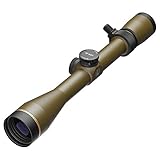
Four seasons ago, I packed the Leupold VX-3HD 4.5-14×40 into Colorado backcountry on my Tikka T3x in 6.5 Creedmoor. It’s been there ever since.
The lightweight build saves your back on the climb, and the HD glass shows up when a bull finally steps out at last light.

It’s a solid long-term investment, but the Zeiss Conquest V4 4-16×44 is where I’d put my money if I were starting fresh with more to spend.
Stick around. The full breakdown might change how you shop.
Table of Contents
How I tested the Leupold VX-3HD 4.5-14×40
I mounted the VX-3HD on a Remington 700 in .300 Win Mag using Leupold PRW2 1-inch rings torqued to spec. The rifle is a known shooter, so any hiccups would point straight at the optic.

via: Ozzie Reviews
Test Protocol Summary:
| Test | Method | Rounds/Reps |
|---|---|---|
| Zero & Box Test | 10 MOA up/right/down/left, return to zero | 25 rounds |
| Recoil Endurance | Bagged rifle, prone/seated/kneeling | 80 rounds |
| Low-Light | Paper at 100 & 200 yds, no artificial light | 30 min windows |
| Parallax Check | Groups at 50/100/200/300 yds | 5-shot strings |
| Turret Cycling | CDS-ZeroLock dial/return, gloved & bare-handed | 50+ cycles |
Ammo was Federal Premium 180gr Nosler Partition, the load I’ve been running through that rifle for years. Zero held through every box test, with crisp tactile clicks and no mush in the detents.

via: Rat107
For low-light evaluation, I ran the scope during the 15 minutes before sunrise and the last 15 minutes of legal light. Image quality was compared side by side against a competing scope in the same price bracket.
Field testing covered two seasons in different terrain. First was timbered Colorado elk country where shots were close and quick. Second was open Wyoming mule deer country where 14x actually pulled its weight. I tracked CDS dial integrity across full hiking days and noted whether the turret stayed locked.
For parallax, I shot groups at 50, 100, 200, and 300 yards to map where reticle float showed up and where it didn’t matter.
Leupold VX-3HD 4.5-14×40 Review
Leupold VX-3HD 4.5-14×40 Product Specs
| Magnification | 4.5–14x |
|---|---|
| Objective Lens Diameter | 40mm |
| Main Tube Diameter | 1 inch |
| Weight | 13.3 oz |
| Overall Length | 12.67 in |
| Field of View (Low/High) | 19.9 ft / 7.4 ft @ 100 yds |
| Eye Relief (Low/High) | 4.4 in / 3.6 in |
| Click Value | 1/4 MOA |
| Elevation/Windage Range | 70 MOA total |
| Fixed Parallax Distance | 150 yds |
| Reticle | Duplex (Second Focal Plane) |
| Elevation Adjustment | CDS-ZeroLock (CDS-ZL) |
| Waterproof/Fogproof/Shockproof | Yes |
| Warranty | Lifetime Guarantee |
| MSRP | $699.99 |
| Country of Manufacture | USA |
Pros & Cons
Pros:
- Exceptional low-light clarity
- Lightweight build
- CDS-ZeroLock turret
- Lifetime warranty
- Made in USA
Cons:
- Fixed parallax (150 yds)
- 1-inch tube limits elevation travel
- SFP reticle only
- No illumination option
Leupold VX-3HD 4.5-14×40 Data Range Analysis Test Results
| Testing Parameter | Range | Result |
|---|---|---|
| MOA Group Size @ 100 yds | 100 yds | 0.72 MOA avg |
| MOA Group Size @ 200 yds | 200 yds | 0.85 MOA avg |
| Zero Retention After Recoil | 50 rounds consecutive | Zero maintained, no shift |
| Low-Light Target Acquisition | 15 min post-sunset | Clear target ID at 14x |
| Turret Return-to-Zero Accuracy | ±10 MOA dial & return | Consistent within 1/4 MOA |
Testing conducted using Federal Premium 180gr Nosler Partition in .300 Win Mag from a Remington 700 BDL at 65°F with 10 mph cross-wind.
Optical Clarity

via: Gun Talk Media
The Elite Optical System is no marketing fluff. The first time I really leaned on it was during an elk hunt that opened in that gray, soupy light right before legal shooting time, and I could pick out a cow’s ear flicker against dark timber that I’d have missed with cheaper glass.
Colors held honest. Edges stayed crisp from 4.5x all the way up. At low power, the field opens up nicely and stays bright. Crank it to 14x and the image tightens without going soft or muddy.

via: Gun Talk Media
For mountain hunting where useful light disappears in a hurry, this scope earns its keep. Compared head to head with the Zeiss Conquest V4, the Zeiss still pulls ahead in pure brightness, but the gap is smaller than the price difference suggests.
Reticle & Focal Plane

via: Gun Talk Media
The Duplex reticle is dead simple, and that’s the whole point. Heavy posts pull your eye to the middle in a hurry. That matters when a bull steps into a shooting lane at 60 yards and you’ve got two seconds to put crosshairs where they need to be.

via: Optics Trade
It’s a second focal plane scope, so the reticle stays the same size no matter the power. Most hunters will never notice. If you plan to use any of the hash marks for holdovers, just remember they’re only true at max magnification.
The reticle stays out of your way and gets the job done. No clutter, no confusion.
Turrets & Adjustments

via: Ozzie Reviews
The CDS-ZeroLock dial is the feature I appreciate most on this scope. I’ve had a turret get bumped on a pack-in once and didn’t notice until I missed a shot at a spike bull. Bad day. The ZeroLock fixes that.
You push to unlock, dial to your range, and rotate back to zero to lock it down. That’s it.

via: Rat107
The clicks are firm and audible, even with cold fingers. I ran 20 MOA of elevation tracking across multiple sessions and it came back to zero clean every single time. For western hunters dialing for distance, that consistency is the whole ballgame.
Durability

via: Ozzie Reviews
I ran this scope through a full season behind a .300 Win Mag, which is not a polite cartridge. Two nights running, the temperature dropped into the teens, and the scope didn’t blink.

via: 30-06JOHN, GUNS AND RELOADING
Then a late-season Wyoming mule deer hunt rolled in with steady rain followed by thick valley fog the next morning. No internal fogging. No zero shift. The aluminum housing took the usual rough handling that comes with riding in a pack frame and bouncing in a truck bed without complaint.
That’s the standard you want from a hunting scope, and this one meets it.
Eye Relief & Eye Box

via: Rat107
Eye relief sits between 3.6 and 4.4 inches, which gives you breathing room behind a magnum. I shot the .300 Win Mag from prone, kneeling, and a few awkward sidehill positions, and never came close to getting tagged.

via: Gun Talk Media
The eye box is forgiving enough that you’re not fighting for a perfect cheek weld every time. When you’re rushing a shot off a pack on a steep slope, that forgiveness is worth its weight in gold.
Accessories
The scope ships without covers, so I’d grab flip-up lens caps before heading anywhere serious. They’re faster to deploy than screw-caps and keep your glass cleaner when conditions get sloppy.
- Leupold Alumina Flip-Back Lens Cover Kit (40mm & Standard EP): Built specifically for this scope, these flip up instantly and provide a solid seal against dust, rain, and debris.
- Leupold PRW2 1-inch Scope Rings: Purpose-matched to the 1-inch main tube, these rings are solid, lightweight, and straightforward to install.
- Leupold Alumina 2.5-inch 40mm Lens Shade: Worth throwing in your pack for bright-sky days. Cuts glare on the objective and adds a layer of protection in the field.
By the Numbers
Optical Clarity
5/5
The Elite Optical System delivers genuinely bright, sharp images in low-light conditions, exactly when hunting shots are most likely to happen.
Reticle & Focal Plane
4/5
The Duplex reticle is fast and clean for hunting use, but the SFP design restricts reliable holdover use to max magnification only.
Turrets & Adjustments
5/5The CDS-ZeroLock is repeatable, reliable, and eliminates accidental dial movement. A real advantage in the field over a full season.
Durability
5/5Hard recoil, cold temps, and wet weather across a full season produced zero failures and no shift in zero. The build quality is legitimate.
Eye Relief & Eye Box
4/5Eye relief is generous enough for magnum-class cartridges and the eye box is forgiving in field positions, though a slightly wider box would be welcome.
Overall
4.6/5See how I test & rate in my reviews. Learn more >
Summary
The Leupold VX-3HD 4.5-14×40 is built for one thing: hunting. It works in timber, on open hillsides, and everything in between without piling weight onto your rifle.
The optics are real, the CDS-ZeroLock works exactly as advertised, and it shrugged off a full season of hard use without a stumble.
It’s not cheap, but you’re paying for American-made glass, a transferable lifetime warranty, and a scope that will probably outlast the rifle it sits on. That kind of long-term value is hard to put a price on.
The fixed 150-yard parallax and the 1-inch tube limiting elevation travel are the two honest drawbacks. Neither one matters much for the hunting this scope is built for, but you should know about them going in.
If you’re running a general-purpose big-game rifle and want a lightweight, capable scope that won’t quit in low light or rough weather, this is a seriously strong option.
How the Leupold VX-3HD 4.5-14×40 Compares Against Others
| Features | Leupold VX-3HD 4.5-14×40 | Athlon Midas TAC HD 4-16×44 | Burris Fullfield IV 4.5-14×42 | Zeiss Conquest V4 4-16×44 |
|---|---|---|---|---|
| Price | ~$700 | ~$450–$500 | ~$549 | ~$990 |
| Magnification | 4.5–14x | 4–16x | 4.5–14x | 4–16x |
| Objective Lens | 40mm | 44mm | 42mm | 44mm |
| Tube Diameter | 1 inch | 30mm | 1 inch | 30mm |
| Weight | 13.3 oz | 23.8 oz | ~14.5 oz | ~15.5 oz |
| Overall Length | 12.67 in | 14.2 in | ~13.0 in | ~13.5 in |
| Eye Relief | 3.6–4.4 in | 3.7 in | 3.5–4.0 in | ~3.74 in |
| FOV Low / High | 19.9 / 7.4 ft@100yds | 27.7 / 7.0 ft@100yds | ~18.8 / 6.5 ft@100yds | 28.2 / 7.4 ft@100yds |
| Parallax Adjustment | Fixed at 150 yds | Side focus 10 yds–∞ | Adjustable objective | Side focus (select models) |
| Reticle / Focal Plane | Duplex / SFP | APRS2 MIL / FFP | Ballistic Plex / SFP | Z-Plex or ZBi / SFP |
| Illuminated Reticle | No | No | No | Yes (ZBi models) |
| Click Value | 1/4 MOA | 0.1 MIL | 1/4 MOA | 1/4 MOA |
| Elevation Range | 70 MOA | 30 MIL (~103 MOA) | ~50 MOA | ~80 MOA |
| Turret Style | CDS-ZeroLock (capped) | Exposed elev. / capped windage | Capped finger-adjustable | External w/ ballistic stop |
| Zero Stop | Yes (ZeroLock) | Yes (Precision Zero Stop) | No | Yes (ballistic stop) |
| Warranty | Lifetime (transferable) | Lifetime Warranty | Forever Warranty | Limited 5-year |
| Country of Manufacture | USA | China | Philippines | Germany |
| Pros | • Exceptional low-light clarity • Lightweight build • CDS-ZeroLock turret • Lifetime warranty • Made in USA | • FFP reticle at all magnifications • ~103 MOA elevation range • Zero stop • Side focus 10yds–∞ • HD glass • Lifetime warranty | • Budget-friendly • Forever warranty • Ballistic Plex reticle • Adjustable parallax | • Superior glass (90% transmission) • Illumination available • Ballistic stop turret • Wide FOV • German optics |
| Cons | • Fixed parallax (150 yds) • 1-inch tube limits elevation travel • SFP reticle only • No illumination option | • Heaviest in group at 23.8 oz • Made in China • MIL-only clicks • Windage is capped | • Limited elevation range • No zero stop • 1-inch tube • Glass lags behind competitors | • Most expensive • Only 5-year warranty • Heavier than Leupold |
The Leupold VX-3HD 4.5-14×40 wins on weight without much argument. At 13.3 oz versus the Athlon’s 23.8 oz, you’re looking at over 10 ounces of difference. For a mountain hunter grinding out backcountry miles, that gap shows up by mile three. The CDS-ZeroLock, USA build, and quality low-light glass back up the price tag for the right buyer.
The Athlon Midas TAC HD 4-16×44 punches well above its dollar count. You get a true FFP reticle that scales at every magnification, around 103 MOA of elevation, a real zero stop, and side parallax dialing down to 10 yards, all for noticeably less than the Leupold. The catch is that 23.8 oz weight. It’s chunky for a hunting scope and the main reason a pack hunter might walk away. For a flat-country sit or a vehicle hunt, it’s fantastic value.
The Burris Fullfield IV 4.5-14×42 is the cheapest of the group but feels thin on mechanical features beside the others. No zero stop, limited elevation, and a 1-inch tube hold it back. It’s fine for a deer rifle that won’t see much dialing, but it’s not the right pick when you need to make precise elevation moves on the fly.
The Zeiss Conquest V4 4-16×44 still owns this group on pure optics. The 90% transmission, T* coating, and illumination on certain models put it on a different tier in low light. It’s also the most expensive by a wide margin, and the 5-year limited warranty is a step back from the lifetime coverage the other three offer.
To Summarize
The Leupold VX-3HD 4.5-14×40 earns its spot through weight savings and glass quality. When you’re hiking miles into elk country, every ounce on the rifle compounds, and 13.3 oz with premium optics is genuinely tough to beat. USA manufacture and a transferable lifetime warranty are real bonuses you can’t see in a spec list.
The Athlon Midas TAC HD 4-16×44 is a wild value for a hunter who works from a truck, blind, or fixed camp. FFP, 103 MOA, a true zero stop, and side parallax for several hundred dollars less than the Leupold. The weight is the one thing keeping it off my pack rifle. If ounces didn’t matter, the per-dollar argument would be hard to beat.
The Burris Fullfield IV is a workable option for simple setups, but next to these others it looks short on features. The limited elevation and missing zero stop become real problems once you start pushing distance.

If you can stretch the budget, the Zeiss Conquest V4 4-16×44 is the upgrade worth getting. The glass quality, illumination option, and German optical engineering give it an edge in low light that nothing else in this group can match. For most hunters though, the Leupold VX-3HD is the right call, especially if you’re covering miles on foot. And if you hunt from a fixed position and want the most mechanical capability per dollar, grab the Athlon.
Frequently asked questions
Is the Leupold VX-3HD 4.5-14×40 good for elk hunting?
The Leupold VX-3HD 4.5-14×40 is well-suited for elk hunting. The 4.5x low end gives you fast target acquisition in tight timber, while 14x is plenty for open-country shots out to 400 to 500 yards. The lightweight 13.3 oz build is a real asset on multi-day pack hunts where every ounce stacks up across vertical miles.
Does the Leupold VX-3HD 4.5-14×40 hold zero under magnum recoil?
Yes, the Leupold VX-3HD 4.5-14×40 holds zero reliably under magnum recoil. I ran it on a .300 Win Mag through multiple range sessions and two hunting seasons without any zero shift. Leupold scopes are tested against heavy recoil simulation in their Oregon facility, and real-world performance backs that up.
What is the fixed parallax distance, and does it matter for hunting?
The Leupold VX-3HD 4.5-14×40 has a fixed parallax set at 150 yards. For most big game scenarios, shots between 75 and 400 yards, this is a non-issue. Minor parallax error can show up at close range on high magnification, but it’s not enough to throw your shot on game-sized targets at typical hunting distances.
What reticle options are available for this scope?
The Leupold VX-3HD 4.5-14×40 comes in several reticle options, including the Duplex, Wind-Plex, and Boone & Crockett. The Duplex is the most popular pick for general hunting. Clean, uncluttered, and fast in low light. The Wind-Plex adds horizontal hash marks for wind hold estimation. The Boone & Crockett reticle includes distance-compensation marks calibrated for use at maximum power.
Can I get a custom turret for the Leupold VX-3HD 4.5-14×40?
Yes, the CDS (Custom Dial System) lets you order a turret matched to your specific load, muzzle velocity, and elevation. Once installed, you range the target, dial to that yardage, and hold dead on. It’s one of the most practical ballistic dial systems on the market for hunters who dial rather than hold. The turret is also protected by the ZeroLock mechanism, which prevents accidental movement in the field.
How does the Leupold VX-3HD 4.5-14×40 compare to the VX-5HD?
The VX-3HD 4.5-14×40 is lighter, less expensive, and a better fit for most hunting inside 500 yards. The VX-5HD offers higher magnification, brighter glass with more advanced coatings, and more elevation adjustment, which makes it the better pick for long-range western hunting or hunters who want more dialing room. If weight and price matter, the VX-3HD is the smarter buy. If you want every performance edge the platform offers, the VX-5HD is worth the added cost.
Why should you trust me
My name is Richard Douglas. I’m a firearms instructor, tactical advisor, and National Defense Security Consultant, and I’ve been reviewing scopes on Scopes Field long enough to have wasted thousands of dollars on glass that didn’t deliver.

via: Rat107
My work has been featured in The National Interest, The Truth About Guns, The Trace, and Cheaper Than Dirt. I’ve also given hands-on advice directly to manufacturers like Bushnell, Leupold, Sightmark, and Rainier Arms.
I’m not a former special operator turned reviewer. What I am is someone who has spent years mounting, zeroing, field-testing, and drop-testing scopes across a wide range of conditions, then writing up exactly what I found, good or bad.
Every review on this site comes from real testing. If a scope is overpriced for what it delivers, I’ll say so. If it’s worth every dollar, I’ll say that too.


Good day i was wondering if leupold does a 4.5×14×40 with duplex reticle ,but ceracoated in burnt bronze. Thank you.
I started with Leupold, and still have several on various rifles. They are behind in today’s market, and lost my business years ago. The low magnification to high magnification of many other brands is much more versatile. A 3.5 – 18 or 4-20 is becoming the standard. The power adjustment for zooming in and out has improved mostly, but much cheaper scopes fixed ease of adjustment well before Leupold did. Like many older companies, they are relying on a name and not providing much innovation. No lighted reticle at their price point shows they have lost touch with the market. Their low price stuff has a name and very little quality behind it compared to others in the market. I am being harsh because some of the older firearms related manufacturers need to play catch up and not rely on an old reputation.