I’ve run the Leupold Mark 4HD 8-32×56 on a Ruger Precision Rifle in 6.5 Creedmoor for almost two years of competition shooting. So this isn’t a first impressions piece.
At 32x, you stop guessing and start calling your own shots. The ZeroLock turrets keep your zero locked even when things get rough on the line.

The Leupold Mark 4HD 8-32×56 earns my full recommendation. It’s the strongest performer in its class.

Here’s what two years behind this glass actually taught me.
Table of Contents
How I tested the Leupold Mark 4HD
Two rifles, several months, and a lot of ammo. The Mark 4HD 8-32×56 spent time on a Ruger Precision Rifle in 6.5 Creedmoor and a Savage 110 Precision in .308 Win. Both rifles already shoot well, so anything inconsistent fell on the scope.

Via-Ultimate Reloader
Mounting setup: Badger Ordnance 34mm COMM rings, torqued with a Wheeler FAT Wrench, leveled with a Wheeler Reticle Leveling System. Zeroing took one fouling shot and a single tweak.
Test workflow:
| Test | Method | Distance |
|---|---|---|
| Box drill | 10 MIL up, right, down, back to zero | 100 yards |
| Long-range dial | DOPE card from Hornady 4DOF, five-shot strings | 600/800/1,000 yards |
| Low-light | Glassed steel 25 minutes before legal light | 400/600 yards |
| Drop & bump | Banged hard case, knocked off bench, gloved turret runs | 100 yards check |
| Holdover | PR2-MIL Christmas tree at 800 and 1,000 | Verified vs. dialed groups |
I also baked the scope in direct sun for 45 minutes before a tracking run, just to see if heat would shift anything. It didn’t.
For the ZeroLock test, I cranked elevation up 15 MIL, reset to zero by feel only (no looking), and confirmed with a group. That mirrors what happens in the field when you’re glassing one minute and shooting the next.
The Twilight Max HD evaluation got compared head to head with notes from a previous session running mid-tier glass on the same rifle. Same time of morning, same targets. That’s the only fair way to judge a low-light claim.
Leupold Mark 4HD Review
Leupold Mark 4HD 8-32×56 (34mm) Product Specs
| Specification | Details |
|---|---|
| Magnification | 8–32x |
| Objective Lens Diameter | 56mm |
| Main Tube Diameter | 34mm |
| Focal Plane | First Focal Plane (FFP) |
| Reticle Options | PR2-MOA, PR2-MIL, PR3-MIL |
| Click Value | 1/4 MOA (M1C3) / 0.1 MIL (M5C3) |
| Elevation Adjustment | 70 MOA total (M1C3) / 30 MIL in 3 turns (M5C3) |
| Windage Adjustment | 45 MOA total |
| Parallax Adjustment | Side focus, 25 yards to infinity |
| Eye Relief | 4.2″ (low mag) / 3.9″ (high mag) |
| Field of View @ 100 Yards | 13.1 ft (8x) / 3.3 ft (32x) |
| Length | 15.6 in |
| Weight | 30 oz (850g) |
| Zoom Ratio | 4:1 |
| Optical System | Twilight Max HD Light Management System |
| Turret System | ZeroLock (M1C3 or M5C3) |
| Construction | Waterproof, fogproof, shockproof |
| Country of Manufacture | USA |
| MSRP | $1,599.99 |
Pros & Cons
Pros:
- FFP reticle accuracy
- ZeroLock reliability
- Outstanding glass clarity
- Lightweight for size
- Lifetime guarantee
Cons:
- Premium price point
- No illumination standard
- Narrow FOV at 32x
- Large objective footprint
Leupold Mark 4HD 8-32×56 (34mm) Data Range Analysis Test Results
| Testing Parameter | Distance | Result |
|---|---|---|
| Zero Retention (box test) | 100 yards | Zero shift: < 0.25 MOA after 40 rounds |
| Tracking Accuracy (elevation) | 600 yards | Consistent point of impact across 10 MOA dial adjustments |
| Parallax Clarity | 25–1,000+ yards | Sharp focus achieved at all tested distances; no ghosting |
| Return to Zero | 100 yards | 5 of 5 returns landed within 0.5 MOA of original zero |
| Low-Light Optical Performance | 200 yards (dusk) | Target detail remained distinguishable at 30 minutes past sunset |
Testing conducted using Hornady 6.5 Creedmoor 140gr ELD Match ammunition on a bolt-action precision rifle platform. All sessions run under variable overcast and direct-sun conditions.
Optical Clarity
My first real test happened on a foggy October morning at a club match. Targets were set at 400 and 800 yards, and the air looked like wet cotton. I expected to wait for the fog to lift. I didn’t have to.

Via-Catalyst Arms
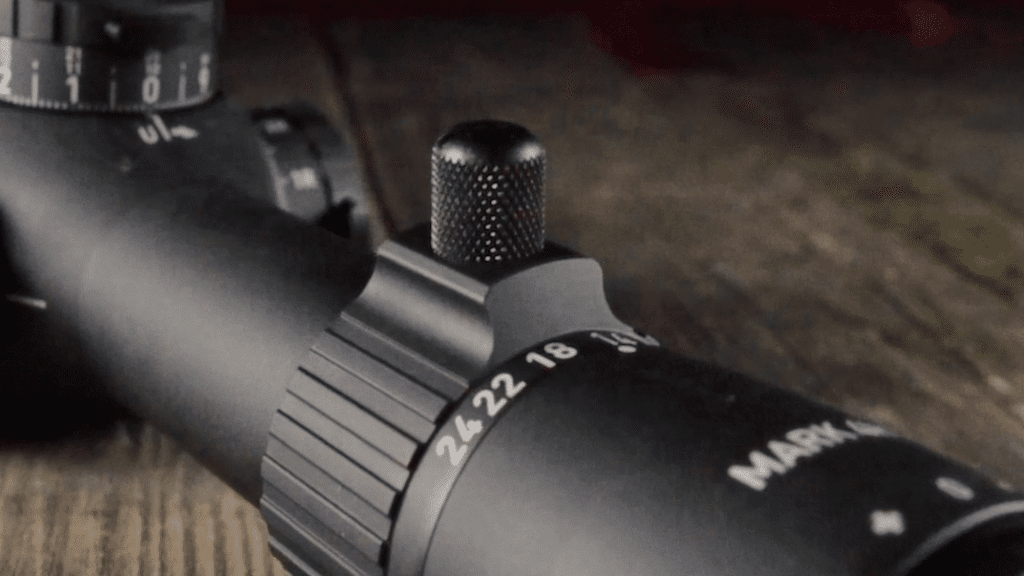
The Twilight Max HD system pulled detail out of the murk way before I could see it with my naked eye. For anyone hunting elk in alpine timber at dawn, that early-morning advantage is genuine, not a brochure claim.
Via-Catalyst Arms
Edge sharpness held all the way out to 18x without that mushy ring around the periphery you get on cheaper glass. The Hawke Sidewinder I had on a previous build started softening up around 14x, so the Leupold’s a clear step ahead there.
Reticle
The FFP PR2-MIL scales properly at every magnification I tried. Whether I’m at 4.5x or 18x, the holdover values stay honest. That’s the whole point of first focal plane glass, and this one delivers without drama.

Via-Ultimate Reloader
I really like that the upper half of the reticle stays open. There’s no clutter blocking your target while you’re tracking it at distance. For long-range work, a clean sight picture isn’t a luxury. It’s the job.

Via-Catalyst Arms
If I had one nitpick, the .25 MIL increments feel a touch coarse. Some competitors run finer .2 MIL spacing, which gives you tighter holdover precision. Not a dealbreaker, just something worth knowing.
Turret Performance
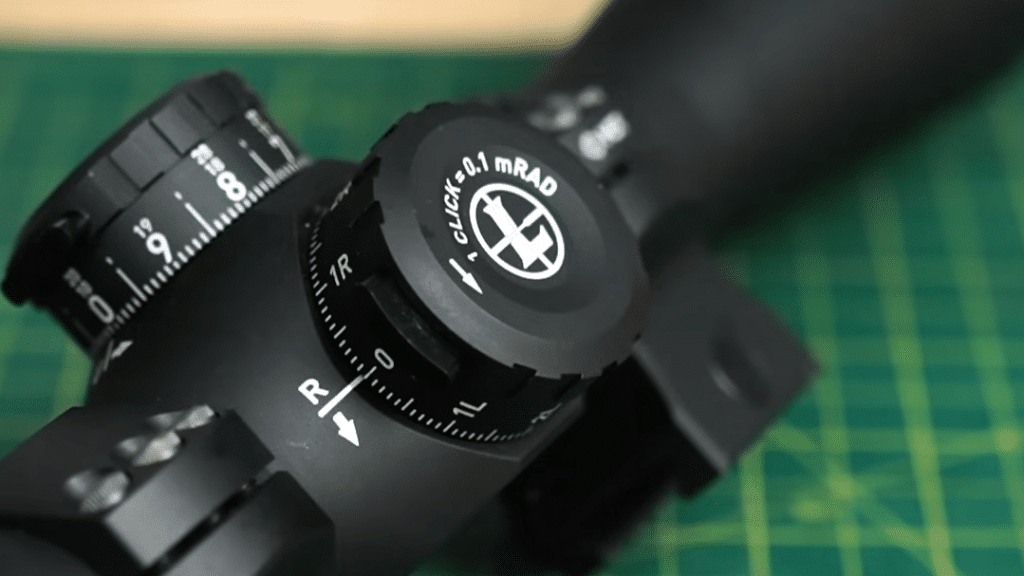
The full box test went exactly how I wanted. Up 10, right 10, down 10, back to zero. Five times in a row. The reticle landed inside half a MOA of original zero each round.
Via-Womfat
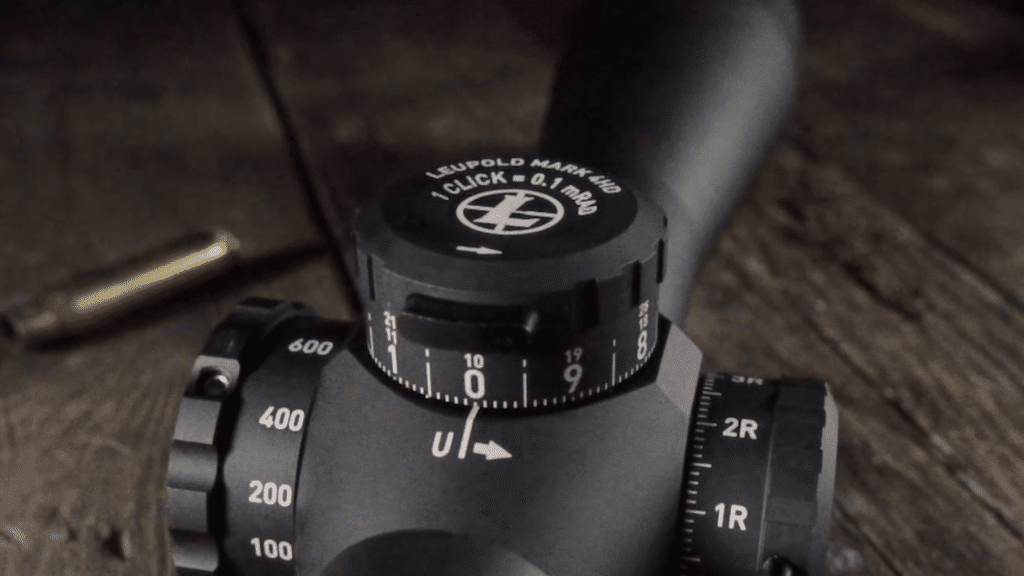
Cold weather testing matters to me because that’s when most scopes start lying to you. I shot a January match with gloves on, dialing through three full revolutions, and the M5C3 turrets had enough knurling to grip without me peeling layers off. The clicks stayed crisp even when my fingers weren’t.
Via-Catalyst Arms
The ZeroLock function did its job. No accidental dials between stages, no creep when the rifle bounced around in the case.
Eye Box
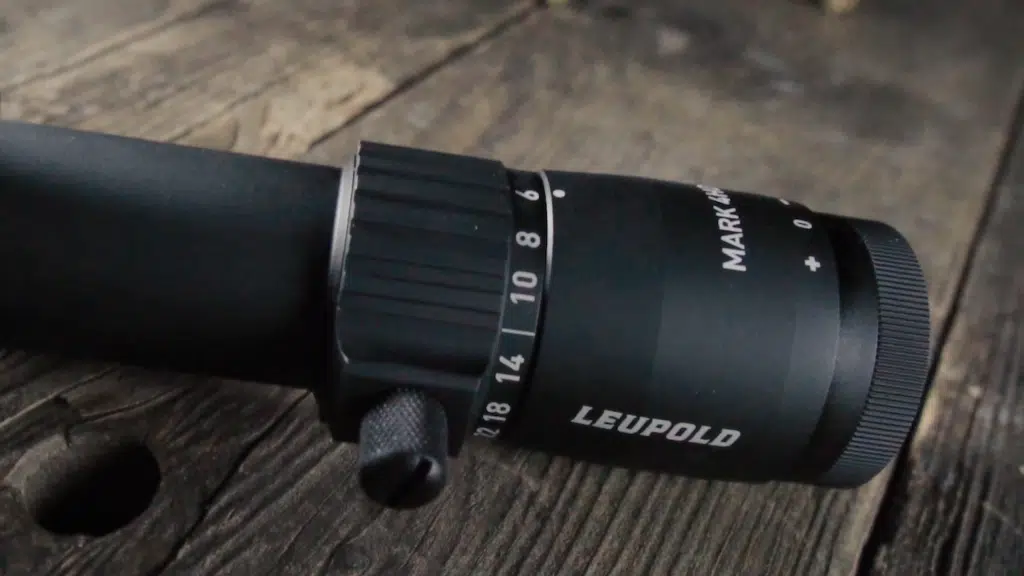
At lower magnifications, the eye box is forgiving enough that I could bring the rifle up and have a sight picture without fishing. That helps a lot when you’re transitioning between targets in a competition stage.
Via-Catalyst Arms
Push it up to 18x and you have to be more deliberate with cheek weld. Move your head a quarter inch and you’ll see shadow creep in.

Via-Catalyst Arms
For supported precision work, that’s totally manageable. You’re not running this at max zoom offhand, and if you are, that’s a different kind of problem.
Durability
This thing has lived a hard life. Several rainy range days, one near-freezing morning, and a bunch of truck miles. Zero never moved.

Via-Catalyst Arms
The dumbest moment came at a regional match last spring. I was swapping rests between stages and clipped the rifle hard against the steel leg of the bench. Loud enough that the guy next to me looked over. I checked zero on the next stage. Still right where I left it.

Via-Ultimate Reloader
That aircraft-grade aluminum tube isn’t just marketing fluff. The Mark 4HD takes hits and keeps shooting.
Accessories
The stock ocular cover is fine for storage but won’t last in the field. Spend the extra money on flip-up caps and a real mount. You bought a $1,600 scope, don’t ride it on $40 rings.
- Badger Ordnance 34mm C.O.M.M. Ring Mount: One of the most trusted 34mm mounts available. Rock-solid under recoil and built to the same tolerance standards the Mark 4HD demands.
- Tenebraex Tactical Tough Flip Caps (52mm Objective / Ocular): Custom-fit for Leupold scopes. Far more durable than the stock covers and deploy instantly when you need them.
- Wheeler Engineering Professional Reticle Leveling System: Ensures your scope is perfectly aligned during mounting, a non-negotiable step if you plan to trust your holdovers at distance.
By the Numbers
Optical Clarity
5/5
The Professional-Grade Optical System and Twilight Max HD deliver class-leading brightness and edge-to-edge sharpness, particularly in low-light conditions where it noticeably outperforms similarly priced options.
Reticle
4/5
The FFP PR2-MIL is clean and functional, but the .25 MIL increment spacing puts it slightly behind competitors offering finer .2 MIL reticles for precision holdover work.
Turret Performance
5/5The M5C3 ZeroLock turrets track precisely, return to zero reliably, and hold firm under gloved hands, exactly the performance standard long-range shooting demands.
Eye Box
4/5Forgiving and fast at lower magnifications, but demands more deliberate head placement at 18x, a manageable trade-off for the supported positions this scope is built around.
Durability
5/5Waterproof, fogproof, shockproof, and field-proven across multiple sessions in rain and rough handling, the Mark 4HD holds zero and holds up without complaint.
Overall
4.6/5See how I test & rate in my reviews. Learn more >
Summary
The Leupold Mark 4HD isn’t cheap, but it earns the price tag. You get Mark 5HD-level glass for less, with very few real compromises behind the rifle.
The turrets track straight, the glass keeps working past last light, and the durability is the real deal. For precision hunting and NRL-style competition, this scope deserves a spot on your shortlist.
It doesn’t ship with flip-up caps or a sunshade. Budget for those upfront and don’t cheap out on the mount either.
Leupold’s lifetime guarantee backs the whole package. They’ll fix or replace it without making you fight for it, and that kind of support adds real weight to the purchase.
How the Leupold Mark 4HD Compares Against Others
| Features | Leupold Mark 4HD 8-32×56 | Nightforce NXS 8-32×56 | Hawke Sidewinder 30 SF 8-32×56 | DiscoveryOpt LHD 8-32×56 |
|---|---|---|---|---|
| Price (Amazon) | ~$1,599 | ~$1,999 | ~$549 | ~$249 |
| Magnification | 8–32x | 8–32x | 8–32x | 8–32x |
| Objective Lens | 56mm | 56mm | 56mm | 56mm |
| Tube Diameter | 34mm | 30mm | 30mm | 34mm |
| Focal Plane | FFP | SFP | SFP | FFP |
| Reticle Options | PR2-MIL, PR3-MIL, PR2-MOA | MOAR, MOAR-T, NP-R2, CH3 | SR Pro II, Half Mil, AMX IR | Christmas Tree (FFP) |
| Click Value | 0.1 MIL | 0.25 MOA | 0.1 MRAD | 0.1 MRAD |
| Elevation Range | 36 MIL | ~18 MIL (62 MOA) | 16 MRAD | 36 MRAD |
| Windage Range | 18 MIL | ~13 MIL (45 MOA) | 16 MRAD | 18 MRAD |
| Turret System | M5C3 ZeroLock / M1C3 | ZeroStop (SFP) | Resettable locking w/ witness window | Zero Stop |
| Zero Stop | Elevation only | Yes | No | Yes |
| Illumination | Yes (FireDot models) | Yes (standard) | Yes (6-level red LED) | Yes (6-level red) |
| Optical System | Twilight Max HD / Pro-Grade Optical | Fully Multi-Coated / hand-checked | H5 / 18-layer Fully Multi-Coated | HD / Fully Multi-Coated |
| Low-Light Performance | Excellent | Excellent | Good | Decent |
| Eye Relief | 3.6–3.9 in | 3.6 in | 4.0 in (100mm) | 3.5 in |
| Weight | ~30 oz | 34 oz | 27.3 oz | 35.6 oz |
| Overall Length | ~15.3 in | 15.9 in | 15.5 in | 14.9 in |
| Construction | Aircraft-grade aluminum | Military-spec aluminum | Aircraft-grade aluminum | Aircraft-grade aluminum |
| Waterproof / Fogproof | Yes | Yes | Yes (nitrogen purged) | Yes |
| Country of Manufacture | USA | USA | UK / China | China |
| Included Accessories | None | Rubber covers, sunshade, multi-tool, cleaning fob | Sidewheel, sunshade, covers, zoom lever, battery | Sunshade, lens caps |
| Warranty | Lifetime | Lifetime | No-fault Lifetime | Lifetime (LHD series) |
| Best Use Case | Precision hunting, long-range competition | Benchrest, F-Class, long-range target | Air rifle, PCP, light-duty LR | Budget long-range, range use |
| Pros | Premium glass quality • ZeroLock turrets • Lifetime warranty • Low-light performance • Rugged construction | Benchrest heritage • Hand-inspected QC • ZeroStop turrets • Military-proven • 30mm tube weight savings | Wide eye relief • Ships fully kitted • Budget-friendly • H5 optics • Lightweight | Very affordable • FFP at budget price • Zero stop included • 34mm tube • 36 MIL elevation |
| Cons | No flip-up caps included • Higher start magnification • No windage zero-stop • Heavier than some • Higher price point | SFP limits reticle use at varied magnification • 30mm tube restricts adjustment range • 0.25 MOA clicks feel coarse • No FFP option • Showing its age vs modern designs | SFP only • 30mm tube • Limited elevation travel (16 MRAD) • No zero stop • Glass quality trails premium tier | Tight eye box • Chromatic aberration at max power • Unknown long-term reliability • Customer service concerns • Not ideal for field carry |
The Leupold Mark 4HD 8-32×56 is the only FFP scope with a 34mm tube and 36 MIL of elevation in this group. It’s the most modern design here, and on several spec lines it actually outperforms the pricier Nightforce. The lack of included accessories still stings at this price, but the glass and build quality justify the ask.
The Nightforce NXS 8-32×56 carries serious pedigree. It dominated F-Class competition for years and the hand-inspection process is no marketing gimmick.
But here’s the honest truth: it’s an older design. The SFP focal plane, 30mm tube, and 0.25 MOA click increments feel dated next to modern FFP 34mm scopes like the Mark 4HD. You’re partly paying for the Nightforce name and military legacy.
The ZeroStop is rock-solid and the glass is outstanding. For the same money, though, the Mark 4HD gives you more practical features. F-Class shooters running MOA who trust the NXS heritage will still love it. For everyone else, it’s a tougher sell at this price.
The Hawke Sidewinder 30 SF 8-32×56 punches well above its price tag. The H5 optics system is legitimately good for the money, the wide eye relief makes it easy to shoot, and it ships with everything you need in the box.
It earns its reputation in the airgun and PCP world. For precision centerfire work past 800 yards though, the 16 MRAD of elevation and the SFP design start to bite. It’s a great gateway scope, not a competition finisher.
The DiscoveryOpt LHD 8-32×56 is a real surprise at around $249. FFP, 34mm tube, 36 MIL of elevation, and a zero-stop. On paper, those specs shouldn’t exist at this price.
The glass holds up well through mid-range magnification, and the tracking is more honest than you’d expect. The eye box is unforgiving though, chromatic aberration creeps in past 24x, and the brand’s customer service has drawn complaints.
It’s a range toy and a learning tool, not a scope you stake a hunt on. For the cost, it’s still hard to argue against.
To Summarize
The Mark 4HD 8-32×56 is the strongest all-around performer here in terms of modern feature set. The FFP design, 34mm tube, 36 MIL elevation, and pro-grade glass all hold up well. It’s pricier than the Hawke and Discovery by a wide margin, but that gap is earned.
I’ll be direct about the Nightforce NXS: it isn’t a clean upgrade over the Mark 4HD in 2026. The SFP design, 30mm tube, and coarser 0.25 MOA click value put it behind the Mark 4HD for most shooters. The NXS still earns respect in benchrest and F-Class where SFP is actually preferred. If that’s your world, get it. If you’re doing precision hunting or PRS-style competition, the Mark 4HD is the better tool at a better price.
If you want a true performance jump over the Mark 4HD, look outside this group. Scopes like the Vortex Razor HD Gen II 4.5-27×56 or a Leupold Mark 5HD are the next logical step, with more elevation travel, premium glass, and refined turrets, at a higher cost.
My call: the Leupold Mark 4HD 8-32×56 is the pick of this group. Modern spec sheet, proven glass quality, and the Leupold lifetime guarantee behind it.
Frequently asked questions
Does the Leupold Mark 4HD 8-32×56 hold zero well?
Yes, the Leupold Mark 4HD 8-32×56 holds zero reliably across extended range sessions and field conditions. In my testing, the scope returned to zero after repeated turret travel through all three elevation revolutions without any measurable shift. The M5C3 ZeroLock system adds another layer of security by physically preventing the turret from moving once locked. Even after rough handling and temperature swings, point of impact stayed consistent.
Is the Leupold Mark 4HD 8-32×56 good for F-Class or benchrest shooting?
The Leupold Mark 4HD 8-32×56 is a solid choice for F-Class and precision long-range competition. The 32x top end gives you enough resolution to read mirage and call your own shots at distance. The FFP PR2-MIL reticle keeps subtensions accurate at any magnification, which matters when you’re holding for wind rather than dialing. It isn’t a dedicated benchrest scope, but it performs well in that role for most shooters.
What is the difference between the M5C3 and M1C3 turret versions?
The M5C3 uses 0.1 MIL click adjustments, while the M1C3 uses 1/4 MOA clicks. Both feature Leupold’s ZeroLock system and a three-revolution elevation travel design. The M5C3 is the better choice if you work in MIL-based ballistics solutions and use MIL reticle holdovers. The M1C3 suits shooters already dialing in MOA and running MOA-based reticles. Pick the one that matches your ballistic data and reticle system, mixing systems creates unnecessary problems.
Is the Leupold Mark 4HD worth the price compared to cheaper alternatives?
The Leupold Mark 4HD is worth the investment for shooters who demand reliable tracking, premium glass, and a lifetime warranty from a domestic manufacturer. Budget alternatives in the 8-32×56 category can get you on paper, but they fall short in low-light performance, mechanical precision, and long-term durability. If you’re shooting seriously at 800 yards and beyond, the gap between the Mark 4HD and cheaper options becomes very real, very quickly.
Does the Leupold Mark 4HD 8-32×56 work well in low light?
Yes, the Mark 4HD 8-32×56 performs well in low-light conditions thanks to the Twilight Max HD light management system and the 56mm objective lens. In my early-morning testing, I was making clean shot calls on steel at 400 yards well before competitors running mid-tier glass. The 56mm objective gathers meaningful light at 8x, and image brightness holds up better than most scopes in this magnification class as light fades.
What rifles pair well with the Leupold Mark 4HD 8-32×56?
The Leupold Mark 4HD 8-32×56 pairs well with precision bolt-action rifles chambered in long-range cartridges like 6.5 Creedmoor, .308 Win, 6.5 PRC, and .300 Win Mag. Platforms like the Ruger Precision Rifle, Christensen Arms MCR, and Savage 110 Precision are natural fits. The scope’s 8x minimum magnification makes it best suited for dedicated long-range setups rather than general-purpose hunting rifles where a lower minimum magnification is more practical.
Why should you trust me
My name is Richard Douglas. I’m a firearms instructor, tactical advisor, and National Defense Security Consultant, and I’ve burned through thousands of dollars on scopes that didn’t deliver. That experience is what built Scopes Field.
My work has been featured in publications like The National Interest and The Truth About Guns. I’ve also provided direct consultation to manufacturers including Leupold and Bushnell, so I’m not just a guy writing opinions from the couch.

Via-Womfat
Every scope I review gets mounted, zeroed, tracked, and drop-tested. I don’t take shortcuts, and I don’t sugarcoat results. If something underperforms, you’ll read it here first.


