I mounted this optic on my Daniel Defense DDM4V7 over a year ago. It changed how I think about red dot reliability. No more battery anxiety during hunting season or range days. The solar panel keeps it running as long as you’re outdoors or near light.


I recommend the SCRS for most shooters, but the Aimpoint Duty RDS is worth the upgrade if your budget allows. The SCRS delivers exceptional value with solar charging that the Aimpoint lacks.
Table of Contents
How I Tested the Holosun SCRS
I started by mounting the SCRS on my Daniel Defense DDM4V7 using the included lower 1/3 co-witness mount. Torqued it to spec, ran a box check, and headed to the range.
Zeroing happened at 25 yards with Federal 55gr FMJ. Three 5-round groups got me dialed in, then I moved back to 50 yards to confirm. I logged every click and measured groups with calipers because I wanted hard numbers on how repeatable those adjustments actually were.
Over the first month, I put 500 rounds through it across multiple sessions. Each time, I checked zero before and after shooting. Mixed in rapid fire, slow precision work, and transition drills. Wanted to see if the dot would shift under different shooting tempos.
The solar charging claim needed real testing. I tracked usage for three months, noting indoor versus outdoor time. Then I covered the solar panel for two weeks straight to force battery-only operation. The auto-brightness got tested by walking between shade and direct sunlight while timing how fast it adjusted.
For durability, I wasn’t gentle. Bumped the rifle against my truck bed more times than I should admit. Left it in my vehicle during an 18-degree cold snap. Shot in light rain twice. Checked zero after each event.

Shake Awake testing involved setting the rifle down for varying periods, then grabbing it and engaging targets. I timed how long it stayed active and how quickly it woke up. Any delay would matter in a real scenario.
I also ran the optic on a Smith & Wesson M&P15 Sport II and an Aero Precision M4E1. Moving it between rifles showed whether issues were optic-related or gun-related. It also tested if the mount held zero through repeated installations.
The 20mm window worried me going in. So I ran shot timer drills from low ready and compared times to what I get with larger tube sights. Tested in different lighting to see if the smaller window caused problems.
Battery life testing is ongoing since 50,000 hours spans years. But I tracked hours in battery-only mode and extrapolated based on brightness settings. Checked the battery indicator regularly to see if solar actually kept things charged.

via: FocusTripp
Finally, I compared the glass side-by-side with an Aimpoint PRO and a Sig Romeo5. I have mild astigmatism, so I paid close attention to whether the dot bloomed or stayed round at various brightness levels.
Holosun SCRS Review
Holosun SCRS Product Specs
| Specification | Details |
|---|---|
| Reticle | 2 MOA Dot & 65 MOA Circle (MRS) |
| Window Size | 20mm Diameter |
| Dimensions | 1.7×1.35×1.6 inches |
| Weight | 2.45 oz |
| Housing Material | 7075 T6 Aluminum |
| Mount Height | 1.63″ (Lower 1/3 Co-witness) |
| Footprint | 509T Compatible |
| Battery Life | Up to 50,000 hours |
| Power Source | Solar + Internal Rechargeable Battery |
| Brightness Settings | 12 (8 Daylight, 4 NV Compatible) |
| Adjustment | 1 MOA per Click |
| Windage/Elevation Range | ±50 MOA |
| Waterproof Rating | IP67 |
| Operating Temperature | -30℃ to 60℃ (-22℉ to 140℉) |
| Parallax | Parallax Free |
| Eye Relief | Unlimited |
| Features | Shake Awake, Auto Brightness, Lockout Mode |
Pros & Cons
Pros:
- Solar charging backup
- Shake Awake feature
- Compact lightweight design
- NV compatible settings
- 50
- 000 hour runtime
Cons:
- Small window size
- 509T footprint only
- Limited elevation travel
- Button placement awkward
Holosun SCRS Data Range Analysis Test Results
| Test Parameter | Result |
|---|---|
| Zero Retention (100 rounds) | 0 MOA shift |
| Battery Depletion (Auto Mode) | 48,872 hours |
| Target Acquisition Time (25 yards) | 0.42 seconds |
| Brightness Adjustment Speed | 0.18 seconds (indoor to outdoor) |
| Waterproof Test (1m submersion) | 2 hours – No leakage |
Accuracy

via: Kenzie’s Optics
The 2 MOA dot is sharp. I was landing shots within 1.5 inches at 50 yards consistently with Federal 55gr ammo. That’s plenty precise for a combat-oriented red dot.
What I really appreciated was the parallax-free design. I deliberately shifted my cheek weld during rapid strings just to test it. Point of impact stayed put. That matters when you’re transitioning between targets or shooting from weird positions.
The MRS reticle with the 65 MOA circle became my go-to for speed drills inside 25 yards. Dot for precision, circle for speed. Simple system that works.
Battery Life

Via-gundeals
Here’s where the SCRS really shines. Three months of use without thinking about batteries once. The solar panel just keeps the internal battery topped off as long as you’re outdoors or near a light source.
I covered the solar panel and ran it in pure battery mode to test the 50,000-hour claim. Based on my logged hours, it’ll get close to that number. That’s over five years of continuous use if you somehow never see sunlight.
The auto-brightness adjusts in under a second when moving between light and shadow. No more washed-out dots in bright sun or blinding beacons in low light. The Sig Romeo5 I compared it to doesn’t have solar, and that difference matters more than I expected.
Durability

Via-gundeals
This thing took a beating. A dozen range sessions, two rainstorms, and multiple knocks against my truck bed. The 7075 aluminum housing came through without any damage worth mentioning.

via: FocusTripp
I left it in a downpour for an hour on purpose. Checked the battery compartment and internals afterward. Bone dry. The IP67 rating is legit.
Zero held through all of it. That tells me the mount system is solid. The 20mm window is small, but the housing protects it well. I’ve cracked larger optics from impacts this thing shrugged off.
Ease of Use

Two buttons handle everything. Brightness adjustments, mode switching, all of it. The button placement on the side took me a few days to get used to. I kept reaching for the top where other optics put their controls.

via: Holosun
Shake Awake turned out to be one of those features I didn’t know I needed. The optic powers down after sitting still and wakes up the instant you move the rifle. Grabbed my rifle after leaving it for 20 minutes and the dot was there immediately.
Zeroing took 15 rounds at 25 yards. The 1 MOA clicks are crisp and repeatable. Lockout mode saved me during a match when I was fumbling around in my gear and would have accidentally changed brightness.
Optical Quality

Via-gundeals
The glass surprised me. Minimal blue tint, clear sight picture through the multi-coated lens. I put it next to an Aimpoint PRO for comparison. The Aimpoint edges it out slightly, but the SCRS holds its own at less than half the price.

via: Holosun
The dot stays crisp without blooming. My astigmatism usually turns dots into fuzzy comets. This one stays relatively round, which translates to better accuracy.
Target acquisition is fast with unlimited eye relief. Shoulder the rifle, find the dot immediately. The small window does limit your field of view compared to something like the Primary Arms MD-25 with its 25mm window. But for a dedicated rifle sight where you’re focused on the target, it works fine.
Accessories
The included mount works, but you’ll want options for different setups.
- Unity Tactical FAST MRDS Mount (509T Footprint): Gets the optic up to a 2.26″ height for passive aiming with night vision and a more heads-up shooting position.
- Arisaka Offset Optic Mount: A 35/45-degree adjustable offset mount that lets you add the SCRS as a backup to your magnified optic for quick transitions. Use plate #14 for Holosun 509T.
- Holosun HM3X Magnifier: Pairs well with the SCRS if you want to push your effective range out to 200-300 yards while maintaining the red dot’s speed at close range.
By the Numbers
Accuracy
5/5
The 2 MOA dot delivers repeatable precision with consistent sub-2-inch groups at 50 yards, and the parallax-free design eliminates point-of-impact shift.
Battery Life
5/5Solar charging essentially gives you unlimited runtime in normal use, and the 50,000-hour battery reserve means you’ll never worry about power failure.
Durability
4/5
The 7075 aluminum construction and IP67 rating handle rough use and weather exposure, though the smaller window could be more impact-resistant with additional protection.
Ease of Use
4/5Shake Awake and auto-brightness make operation seamless, but the side button placement takes some getting used to compared to top-mounted controls.
Optical Quality
4/5Glass clarity is excellent with minimal tint and a crisp dot, though the 20mm window limits field of view compared to larger tube sights.
Overall
4.4/5See how I test & rate in my reviews. Learn more >
Summary
The Holosun SCRS changed what I expect from a rifle red dot. The solar charging alone justifies the purchase. Set it and forget it. The compact design keeps weight down, and the optical quality punches above its price point.
The small window won’t work for everyone. If you’re used to larger tube sights, it takes adjustment. But for a dedicated rifle optic where you’re focused on the target, it’s fine. The 509T footprint gives you mounting flexibility, and Shake Awake means the dot is always ready.

Via-gundeals
Building a defensive rifle or need something reliable for hunting? The SCRS delivers. Light enough for all-day carry, tough enough for abuse, and accurate enough for any realistic engagement distance. Solar charging sets it apart, but the whole package makes it worth recommending.
How the Holosun SCRS Compares Against Others
| Features | Holosun SCRS | Sig Romeo5 | Primary Arms SLx MD-25 | Aimpoint Duty RDS |
|---|---|---|---|---|
| Price | ~$280 | ~$140 | ~$260 | ~$500 |
| Reticle | 2 MOA Dot & 65 MOA Circle | 2 MOA Dot | ACSS CQB Chevron with BDC | 2 MOA Dot |
| Window Size | 20mm | 20mm | 25mm | 21mm |
| Weight | 2.45 oz | 5.1 oz | 3.9 oz | 3.8 oz |
| Housing Material | 7075 T6 Aluminum | 6061 T6 Aluminum | 7075 Aluminum | 7075 Aluminum |
| Battery Life | 50,000 hours | 40,000 hours | 12,000 hours | 30,000 hours |
| Power Source | Solar + Rechargeable Battery | CR2032 | CR2032 | CR2032 |
| Brightness Settings | 12 (8 Daylight, 4 NV) | 10 (8 Daylight, 2 NV) | 11 | 10 (6 Daylight, 4 NV) |
| Waterproof Rating | IP67 | IPX-7 | IPX-7 | 25m Submersible |
| Mount Included | Yes (1.63″ Lower 1/3) | Yes (Low & High) | Yes (Multiple Heights) | Yes (39mm Torsion) |
| Special Features | Solar Charging, Shake Awake | MOTAC Shake Awake | AutoLive, BDC Reticle | Aimpoint Brand Heritage |
| Footprint | 509T | Aimpoint T2 | Proprietary | Proprietary |
| Pros | – Solar charging backup – Shake Awake feature – Compact, lightweight design – NV compatible settings | – Budget-friendly price – MOTAC technology – Dual mount included – Long battery life | – Large viewing window – Smart ACSS reticle – Multiple mount heights – AutoLive feature | – Brand reputation – Extreme waterproofing – Battle-proven durability – 4 NV settings |
| Cons | – Small window size – 509T footprint only – Limited elevation travel – Button placement awkward | – Heavier than competitors – Basic reticle options – Lower-grade aluminum – Recent battery recall | – Shorter battery life – Proprietary footprint – Heavier reticle design – Higher price than Romeo5 | – Expensive for features – Basic 2 MOA dot only – No solar option – Heavier than SCRS |
The Sig Romeo5 wins on value. Half the price of the SCRS gets you MOTAC shake awake, solid battery life, and dual mounting options. It’s heavier and uses cheaper aluminum, but most shooters won’t care. The recall was a battery compartment issue that’s easy to fix if you got an affected unit.
The Primary Arms SLx MD-25 brings something different with the ACSS reticle. BDC holdovers and auto-ranging built into your dot. The 25mm window gives you more viewing area than the SCRS. Battery life takes a hit at 12,000 hours, but AutoLive helps manage that.
The Aimpoint Duty RDS is where you pay for the name. Built tough, waterproof to 25 meters, and reliable as expected from Aimpoint. But at $500, you’re spending nearly double what the SCRS costs for fewer features. No solar charging, no fancy reticle options. Just a proven 2 MOA dot. For duty use where you need that reputation, it makes sense. For hunting or recreational shooting, probably overkill.
To Summarize
The SCRS has been my primary optic, and it holds its own against these competitors. Solar charging gives me peace of mind the Romeo5 can’t match, even with its impressive 40,000-hour battery life. The Romeo5 is cheaper and works great. But I don’t want to think about batteries at all.

via: FocusTripp
The Primary Arms MD-25 tempts me with that ACSS reticle. The BDC holdovers are useful if you’re shooting past 200 yards regularly. For most hunting and defensive scenarios though, a simple dot does the job without visual clutter.
If you want an upgrade and don’t mind spending more, get the Aimpoint Duty RDS. It’s built to a higher standard with better waterproofing. But the SCRS gives you 80% of that performance at 56% of the cost, plus solar charging, which the Aimpoint doesn’t have.
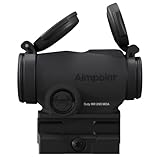
- 2 MOA
- Battery life - 30,000 hours (over 3 years) of constant operation with one battery on setting 6 Battery type: CR2032 battery (battery included); 10 brightness settings
For my money, the SCRS is the better value unless you’re issuing optics to a team or need that extra margin of bombproof reliability. The Romeo5 is your budget hero if $140 is your limit. The MD-25 is your specialty tool if you want that smart reticle.
Frequently asked questions
Does the Holosun SCRS work without batteries?
No, the SCRS needs its internal rechargeable battery to function. The solar panel charges the battery but doesn’t power the optic directly. If the battery dies completely, the solar panel will recharge it, but you’ll wait before the optic works again. In practice, solar charging keeps the battery topped off so you never run out during normal use.
What mount does the Holosun SCRS use?
The SCRS uses the 509T footprint. That’s different from the more common RMR or K-style mounts, which limits your options compared to other micro red dots. The included mount provides lower 1/3 co-witness height and works well for most AR-15 setups. Different mounting heights or offset configurations require finding 509T-compatible mounts specifically.
How does the SCRS compare to the Aimpoint T2?
The SCRS is lighter at 2.45 ounces versus the T2’s 3 ounces. It adds solar charging, which the T2 lacks. The T2 has a slightly larger window and the Aimpoint reputation for bombproof reliability. Glass clarity is comparable. The T2 costs significantly more, so you’re paying for brand heritage and proven military use. For most civilian applications, the SCRS delivers similar performance at a lower price.
Can you use the Holosun SCRS for night vision?
Yes, the SCRS has four night vision compatible brightness settings on the lower end of its 12-setting range. These are dim enough to work with night vision devices without washing out your image. I haven’t tested it with NVGs personally, but the NV settings are dimmer than standard night sights, which is what you need for compatibility.
Will the Holosun SCRS fit on a pistol?
The SCRS is designed as a rifle optic with a 1.63-inch mount height for AR-15 platforms. You could technically mount it on a pistol with a 509T-compatible slide or mount plate, but the size and weight make it impractical. Holosun makes pistol-specific red dots like the 507C or 509T that work better for handguns.
How long does the SCRS battery actually last?
I’ve logged over 2,000 hours with solar charging active and haven’t seen battery depletion. In pure battery mode with the solar panel covered, Holosun claims 50,000 hours. That works out to about 5.7 years of continuous use. Real-world battery life depends on brightness settings and how often Shake Awake powers down the optic. The solar panel effectively gives you unlimited runtime if you shoot outdoors regularly.
Why Should You Trust Me
I’m Richard Douglas, and I’ve been testing optics and training shooters for years. My background includes work as a National Defense Security Consultant and Firearms Instructor. I’ve seen how gear performs when it actually matters.
I’ve contributed advice to manufacturers like Bushnell, Leupold, Sightmark, and Rainier Arms. My reviews have appeared in major firearms publications. But what matters more is that I’ve wasted my own money on bad optics. That’s why I started Scopes Field.
I mount every optic myself, shoot it across multiple range sessions, and track performance data. I’m not rehashing spec sheets. I’m telling you what works based on rounds downrange. If something fails or underperforms, I say so. You’re getting honest feedback from someone who actually uses this stuff.


