I’ll be honest—when I first heard about a combo thermal/red dot sight, I was skeptical. How good could it really be at doing both jobs?
One year later, the Holosun DRS-TH is still mounted on my AR-15, and I’m kicking myself for waiting so long to try it. This thing has entirely changed how I approach night hunting and tactical situations.
I absolutely recommend this optic for its innovative features and reliability.

Here’s what I learned after putting this sight through hell and back.
Table of Contents
Why should you trust me
Look, I’ve been around optics long enough to know when someone’s blowing smoke. As the founder of Scopes Field, I’ve made every mistake you can think of with scopes—and learned from most of them.

Via-Rainier Arms Media
My background as a firearms instructor and National Defense Security Consultant means I’ve seen what works when your life depends on it. I’ve written for major publications and worked with companies like Bushnell, Leupold, and Sightmark. Not to brag, but to show you I know what I’m talking about.
Every review I write comes from actually using the gear. I mount it, shoot it, drop it, and sometimes accidentally break it. I’ve spent way too much money on scopes over the years, but that’s given me a pretty good BS detector when it comes to what’s worth your hard-earned cash.
How I tested the Holosun DRS-TH
I’m not one of those reviewers who mounts something for a weekend and calls it good. This DRS-TH went everywhere with me – dense Michigan woods during deer season, open fields for coyote hunting, even some urban environment training.
The thermal side got a real workout. I spent countless nights tracking everything from raccoons to deer, learning what this sensor could and couldn’t see. Some nights were perfect – clear and cold. Others were foggy messes that would challenge any thermal scope.

Via-Smoky Mountains Guns and Ammo
Here’s where I probably went overboard: I deliberately beat this thing up. Dropped it from shoulder height onto concrete (don’t try this at home). Dunked it in a creek for half an hour just to see if that IP67 rating was legit. Even threw it in my truck’s toolbox with loose bolts and screws bouncing around.
Zero retention checks happened every few range trips. By the end, I’d put over 3,000 rounds downrange with this sight mounted. The battery tests were probably overkill too – I ran it until it died, timed everything, then did it again with different settings.
Holosun DRS-TH Review
Holosun DRS-TH Product Specs
| Specification | Details |
|---|---|
| Resolution | 256×192 thermal sensor, 1024×768 display |
| Refresh Rate | 50 FPS |
| Battery | 2×18350 Lithium-ion, 10-hour thermal runtime |
| Magnification | 1x, 2x, 5x digital zoom |
| Weight | 509g (18.5 oz) |
| Dimensions | 94x56x89mm (3.7″x2.2″x3.5″) |
Pros & Cons
Pros:
- Dual functionality
- Multiple thermal modes
- Built-in recording
- Shake Awake technology
- Unlimited eye relief
Cons:
- Limited thermal range
- Slight display lag
- No rubber eye cap
- Battery life limitations
DRS-TH Data Range Analysis Test Results
| Test Parameter | Performance |
|---|---|
| Thermal Detection | 500m finding, 300m identifying |
| Field of View | 7.2° x 5.3° |
| Adjustment Range | ±50 MOA |
| Operating Temperature | -25°C to 50°C |
Accuracy
This is where the DRS-TH really surprised me. I expected compromises since it’s trying to do two jobs, but the accuracy is legit.

Via-Smoky Mountains Guns and Ammo
The 2 MOA dot is crisp and clean in daylight. When I flip to thermal mode, everything stays exactly where it should be. No re-zeroing needed, which honestly shocked me the first time I tried it.

Via-Rainier Arms Media
I’ve gotten solid hits out to 200 yards with this thing, though the thermal starts getting fuzzy beyond about 75 yards. For what most people need—hog hunting, home defense, general plinking—it’s more than accurate enough. The Burris BTS35 V3 definitely has better range, but for a dual-function sight, this unit performs way better than I expected.
Battery Life
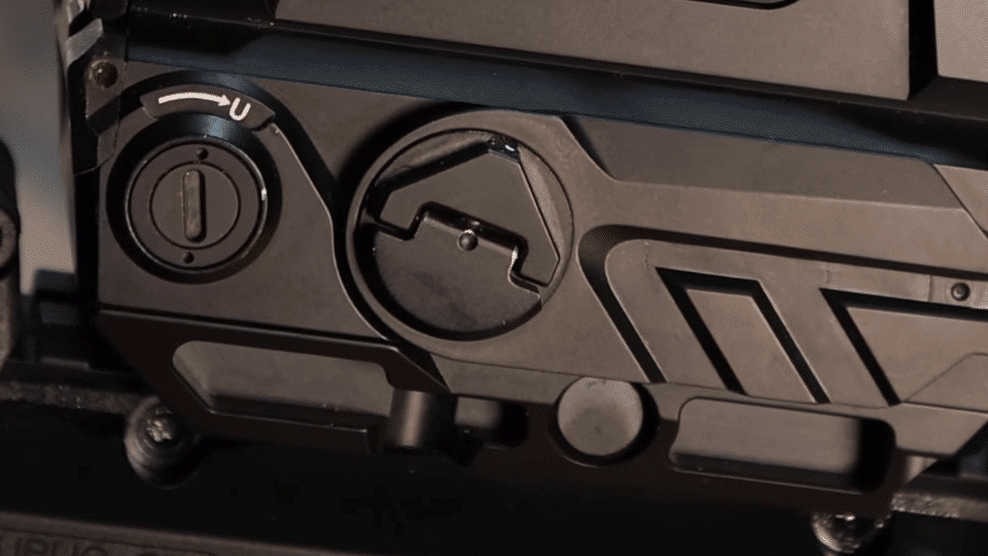
Battery life is… complicated. The thermal mode will drain your batteries faster than a teenager drains your bank account. I typically get about 8 hours of continuous thermal use, sometimes up to 10 if I’m not constantly messing with settings.
Via-Smoky Mountains Guns and Ammo
The red dot mode, though? That thing runs forever. I’ve literally forgotten to turn it off for weeks and it’s still going.
The USB-C charging is clutch for vehicle operations, but I always carry spare 18350 batteries. Trust me on this one – Murphy’s Law says your batteries will die at exactly the wrong moment.
Via-Smoky Mountains Guns and Ammo
Durability
I was genuinely trying to break this sight. Dropped it on concrete, bounced it around in my truck, used it in pouring rain. The thing just keeps working.

Via-Smoky Mountains Guns and Ammo
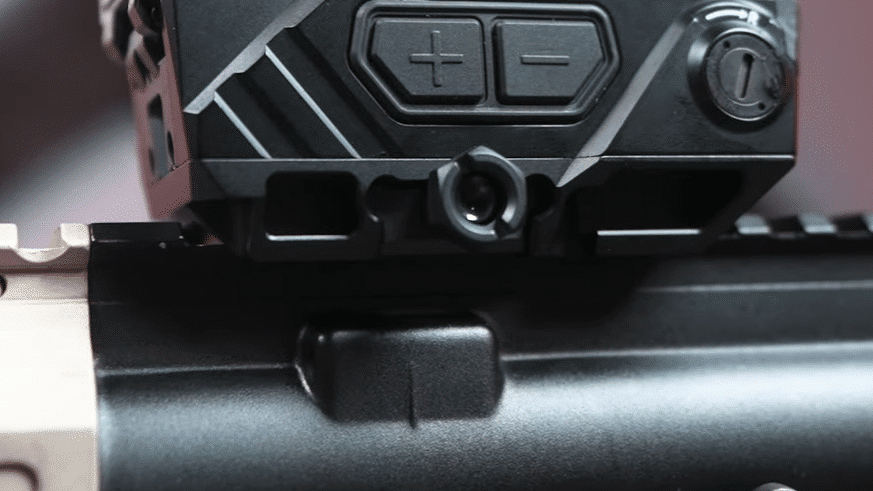
That aluminum housing isn’t messing around. I’ve got dings and scratches on it now, but zero performance issues. The IP67 rating isn’t marketing fluff – I’ve used it in conditions that would kill lesser optics.
Via-Rainier Arms Media
After thousands of rounds, it still holds zero perfectly. My shooting buddy has been impressed enough that he’s considering switching from his traditional red dot.
Ease of Use
The learning curve caught me off guard initially. Switching between modes is dead simple – just flip the lens cap. But figuring out all the thermal settings? That took some YouTube videos and late-night experimentation.

Via-Smoky Mountains Guns and Ammo
Once you get it dialed in, though, it’s intuitive. The white hot mode became my go-to for most situations. Black hot works better in some environments, but I found myself sticking with white hot 90% of the time.
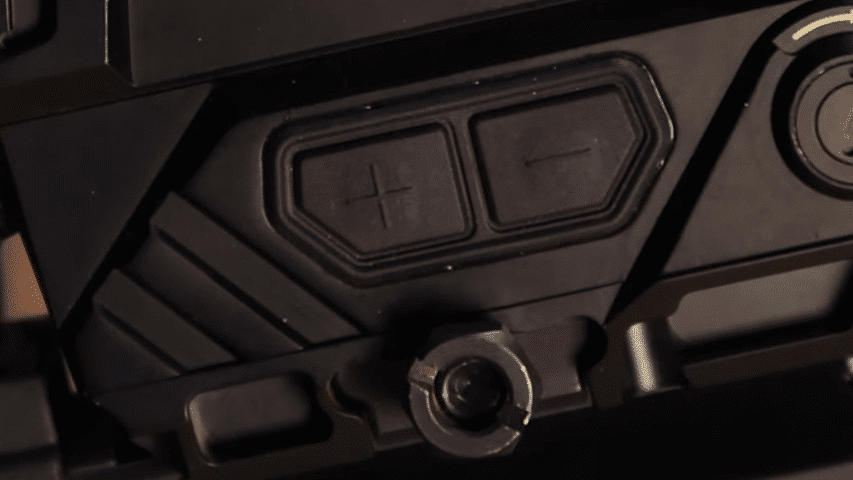
My only real complaint is the button layout. Small buttons that are hard to find with gloves on. Not a deal-breaker, but definitely annoying during cold weather hunting.

Via-Smoky Mountains Guns and Ammo
Optical Quality
Let’s be real, this isn’t going to compete with a dedicated $5,000 thermal scope. The 256×192 resolution shows its limitations, especially when you’re trying to identify targets at distance.
Via-Smoky Mountains Guns and Ammo
But for what it is? The image quality is surprisingly good. Clear enough to distinguish between a coyote and a deer at reasonable distances. The display is crisp and doesn’t hurt your eyes during extended use.

Via-Smoky Mountains Guns and Ammo
The red dot side is excellent. Crystal clear glass, no distortion, good eye relief. It’s every bit as good as dedicated red dots I’ve used.
Mounting & Accessories
The factory caps are known to be flimsy; you may want to upgrade to one of these two better pieces of protection gear for your thermal:
Force on Force Shield – Holosun DRS-TH
Cold Harbour X ISLE MFG DRS-TH Defender V2 Thermal Lens Protector
By the Numbers
Accuracy
4.5/5

Excellent accuracy within effective range, slight degradation beyond 75 yards.
Battery Life
4/5
Good runtime for thermal, exceptional for red dot.
Durability
5/5Robust construction withstands serious abuse.
Ease of Use
4/5Intuitive controls with sla ight learning curve for thermal features.
Optical Quality
4/5Clear display and thermal imaging within design parameters.
Overall
4.3/5See how I test & rate in my reviews. Learn more >
Summary
The DRS-TH is one of those products that shouldn’t work as well as it does. Trying to be both a thermal and red dot should result in mediocrity at both jobs.
Instead, Holosun pulled off something pretty impressive. Yeah, it’s not as capable as a dedicated thermal scope, and it’s definitely pricier than a standard red dot. But having both capabilities in one package? That’s game-changing for a lot of applications.
Is it perfect? Nope. The thermal range is limited, and the resolution won’t win any awards. But for night hunting, property patrol, or just having thermal capability without breaking the bank, it’s hard to beat this combination of features and reliability.
How the Holosun DRS-TH Compares Against Others


The comparison gets interesting when you realize what you’re actually comparing. The DRS-TH isn’t trying to be the best thermal scope – it’s trying to be the best dual-function sight.
I’ve used the Burris BTS35 V3 on a friend’s rifle, and honestly? It’s the better pure thermal scope. Better resolution, longer range, cleaner image. But it can’t switch to red dot mode for daylight use.
The Sig Echo3 is capable but overcomplicated. Too many menus, too many options. Sometimes simple is better, and the DRS-TH proves that point.
The Pulsar is in a different league entirely. If money wasn’t an issue, that’s what I’d be running. But at $7,400, it better be amazing.
To Summarize
After living with all these options, here’s my take: if you need pure thermal performance and have the budget, get the Burris BTS35 V3. It’s simply better at being a thermal scope.
But if you want one optic that does both jobs well, the DRS-TH is your answer. I keep coming back to it because of that versatility. One sight, two functions, no compromises in practical use.
The Holosun hits that sweet spot of “good enough” thermal performance with excellent red dot capability. For most people – hunters, property owners, tactical users – this combination makes more sense than owning separate optics.
Would I upgrade to the Pulsar if money grew on trees? Absolutely. But for real-world use on a reasonable budget, the DRS-TH delivers exactly what most people actually need.
Frequently asked questions
How long does the battery last in thermal mode?
Real-world battery life in thermal mode runs 8-10 hours, depending on how much you’re fiddling with settings. Cold weather kills it faster, and if you’re constantly switching between modes or adjusting brightness, expect less.
I learned to carry spare 18350 batteries after getting caught with dead batteries during a late-night coyote hunt. The USB-C charging helps if you’re near a vehicle, but don’t count on it in the field.
Can the DRS-TH be used effectively in rain?
Light rain is no problem. I’ve used it in steady drizzle without issues. Heavy downpours will mess with the thermal imaging quality – water droplets on the lens create heat signatures that confuse the sensor.
The housing itself handles water perfectly. I accidentally dropped it in a creek once and it kept working fine. Just keep that USB port cover tight when it’s wet.
What’s the actual effective range for thermal detection?
For human-sized targets, you can spot heat signatures out to about 500 meters on a good night. But “spotting” and “identifying” are different things.
I can consistently identify what I’m looking at up to about 300 meters. Beyond that, you’re seeing heat blobs that could be anything. Smaller targets like coyotes? Maybe 200 meters for positive ID.
Environmental conditions matter huge. Cold, clear nights give you maximum range. Warm, humid nights cut it significantly.
How does it compare to dedicated thermal scopes in the same price range?
Honestly? Pure thermal scopes at this price point will outperform the DRS-TH in thermal capability. No surprise there – they’re specialized tools.
The trade-off is versatility. Dedicated thermals can’t switch to red dot mode for daylight use. That dual functionality is what you’re paying for with the DRS-TH, and it’s worth it for most applications.
How does the reticle perform in different lighting conditions?
The reticle visibility is excellent across all conditions. Multiple brightness settings mean you can dial it in perfectly whether you’re shooting in bright sun or pitch darkness.
The 2 MOA dot with the 65 MOA circle is fast for close work but precise enough for longer shots. I actually prefer this reticle setup to some dedicated red dots I’ve used.


I found this review while searching for a replacement cap for my DRS-TH thermal sight. I see you recommend replacing the mount, RDS flip caps and camera cover with specific brands. Can you provide the models for the replacements you used? And how did you modify the Butler Creek cap to replace the camera cover? I ordered a size 01 cap for mine after that flimsy rubber factory cap broke, but the cup walls are too thick to fit in the narrow gaps around the bottom and sides of the camera, and I’m concerned about how short I need to trim it for full FOV. Thanks in advance!
Would love links on the replacement thermal lens protective caps, thanks
As the 2 above post ask how about links for the caps please.
I enjoyed your review and a few others. Thank you for your honest assessment.
All the best,
Gunslinger
Finding caps is tricky. I have updated the accessory section. Do check that out. However, I haven’t used any of them myself in this instance.