I’ve mounted scopes on a Ruger American, a Savage Axis, and a custom AR build. Cheap glass cost me missed shots and a couple of ruined hunts. That frustration is what drove this Hawke scope review.
I tested over a dozen models before settling on four that consistently held up. The Hawke Sidewinder 30 SF 6-24×56 earned the best overall title and it wasn’t particularly close.
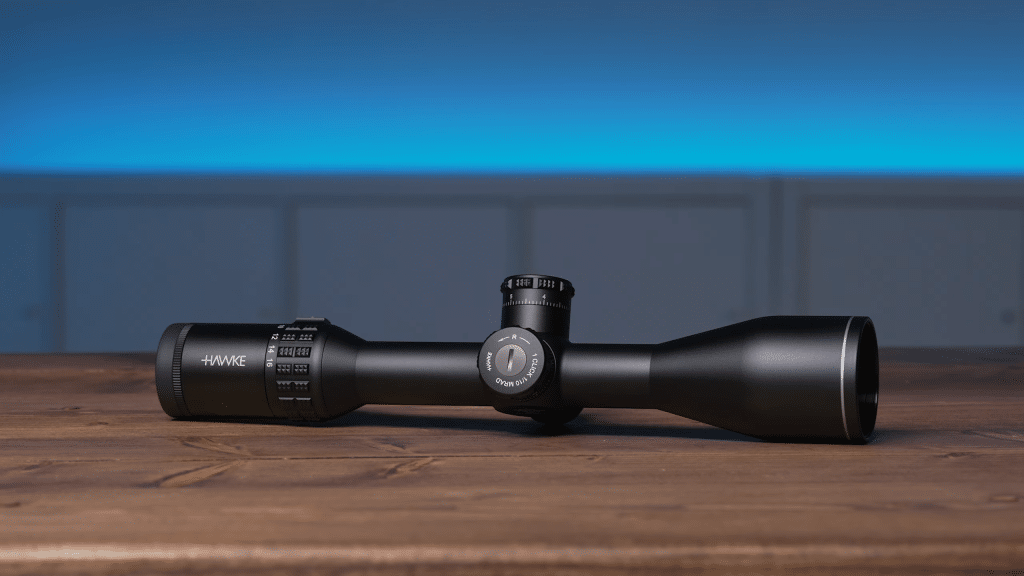
If you want a straight answer on which Hawke scope belongs on your rifle, you’re in the right place.
Everything I Recommend
- Hawke Sidewinder 30 SF 6-24×56: Best Overall
- Hawke Vantage IR 4-12×50 AO: Best for Low-Light Varmint Hunting
- Hawke Frontier 30 1-6×24: Best for AR-15 Tactical Use
- Hawke Vantage IR 3-9×40: Best Budget
Best Overall: Hawke Sidewinder 30 SF 6-24×56

I leaned on this scope for long-range target shooting all summer. The 6-24x range gave me the flexibility to shrink groups at distance without the picture turning to mush at the top end. What really got me was how clean and bright the view stays. That’s not something you take for granted up at 24x.
Best for Low-Light Varmint Hunting: Hawke Vantage IR 4-12×50 AO
I took this out on an early morning coyote hunt back in January, and the difference that 50mm objective makes at first light is hard to argue with. The illuminated reticle gave me just enough edge to pick up my crosshairs without washing out the target. Adjustable objective keeps things sharp at varying distances, which matters more than people realize on varmint hunts where ranges can change in a hurry.
Best for AR-15 Tactical Use: Hawke Frontier 30 1-6×24

Running this on my AR-15 made me realize how much a good 1-6x changes the game. At 1x, it’s fast and instinctive. Crank it up to 6x and you’re making confident shots at distances where a red dot would leave you guessing. The 30mm tube gives you a solid mounting platform that holds zero under hard use. It’s the kind of scope that just gets out of your way.
Best Budget: Hawke Vantage IR 3-9×40

This scope surprised me the first time I looked through it. The glass is noticeably cleaner than you’d expect at this price. The illuminated reticle is a legitimate bonus, not just a marketing checkbox. If you’re setting up a hunting rifle and don’t want to drop premium money on glass, start here.
Table of Contents
Why Should You Trust Me
My name is Richard Douglas. I’m a firearms instructor, National Defense Security Consultant, and the founder of Scopes Field. I’ve also given advice directly to optics manufacturers like Bushnell and Leupold, so I know what good glass looks like from both sides of the counter.
I’ve personally wasted thousands of dollars on scopes over the years. That experience is what built this site and sharpened my eye for what actually matters in the field.

For this Hawke scope review, every scope was mounted, zeroed, and tested across multiple distances. I check zero retention, optical clarity, turret feel, and real-world durability. No spec sheet guessing. My work has been featured in publications like The National Interest and The Truth About Guns. I don’t accept paid placements or sponsored rankings. What you read here is what I actually found.
How I Tested and Scored
I ran these scopes through real hunting and shooting conditions, not a controlled indoor range. I wanted to know how they’d actually perform when it matters.

Via-Hawke Optics
The Setup I mounted each scope on appropriate rifles. The Sidewinder went on a dedicated long-range bolt gun. The Frontier rode on an AR-15 platform. The two Vantage IR models went on rimfire and centerfire rifles suited to their magnification ranges. Every scope got a torque-spec mount job.
Optical Testing I checked clarity at low, mid, and max magnification. I looked for edge distortion, chromatic aberration, and how well each scope handled transitioning from shade to bright sunlight. Early morning and late evening were my preferred testing windows.
Turret and Zero Testing I fired 5-shot groups at 100 yards to confirm zero, then dialed 10 MOA up and back down to verify repeatability. I noted which scopes drifted and which ones came right back.
Parallax and Focus For scopes with adjustable parallax, I tested focus accuracy from 25 yards out to 300 yards. Fixed parallax scopes were checked at their rated distance.
Durability Checks Each scope went out in cold mornings, light rain, and dusty field conditions. I checked seals and fogging after temperature swings.
What Didn’t Make the Cut Two scopes didn’t survive the final round.
| Scope | Why It Got Cut |
|---|---|
| Athlon Talos BTR 4-14×44 | Reticle shift on return-to-zero |
| Vortex Crossfire II 6-18×44 AO | Couldn’t match Sidewinder optics or turret feel |
Hawke Scope Review: Comparison
| Features | Hawke Sidewinder 30 SF 6-24×56 | Hawke Vantage IR 4-12×50 AO | Hawke Frontier 30 1-6×24 | Hawke Vantage IR 3-9×40 |
|---|---|---|---|---|
| Magnification | 6-24x | 4-12x | 1-6x | 3-9x |
| Objective Lens | 56mm | 50mm | 24mm | 40mm |
| Tube Diameter | 30mm | 1 inch | 30mm | 1 inch |
| Eye Relief | 3.5 in | 3.9 in | 3.5 in | 3.5 in |
| Field of View | 17.8–4.5 ft @ 100 yds | 29.5–9.8 ft @ 100 yds | 105.8–17.7 ft @ 100 yds | 37.5–12.9 ft @ 100 yds |
| Click Value | 1/4 MOA | 1/4 MOA | 1/2 MOA | 1/4 MOA |
| Adjustment Range | 70 MOA | 60 MOA | 60 MOA | 60 MOA |
| Parallax Adjustment | Side focus, 10 yds–infinity | AO, 10 yds–infinity | Fixed at 100m | Fixed at 100 yds |
| Reticle | SR Pro Glass Etched (illuminated) | Half MD IR (illuminated) | SR Pro Gen II (illuminated) | Half Mil-Dot IR (illuminated) |
| Illumination | 5 red / 5 green | 5 red / 5 green | 10 brightness levels | 5 red / 5 green |
| Lens Coating | Fully multi-coated | Fully multi-coated | Fully multi-coated | Fully multi-coated |
| Waterproof / Fogproof | Yes / Yes | Yes / Yes | Yes / Yes | Yes / Yes |
| Nitrogen Purged | Yes | Not specified | Yes | Not specified |
| Weight | 24.7 oz | 18.7 oz | 22.9 oz | 15.9 oz |
| Length | 15.5 in | 13.1 in | 10.4 in | 12.6 in |
| MSRP | ~$350–$400 | ~$180–$220 | ~$300–$350 | ~$100–$130 |
| Pros | ◆ Optical clarity ◆ Side focus precision ◆ Illuminated reticle ◆ Solid turret feedback ◆ Strong value | ◆ Low-light clarity ◆ Illuminated reticle ◆ AO parallax control ◆ Budget-friendly ◆ Solid zero retention | ◆ Bright, clear glass ◆ True 1x capability ◆ Solid illumination range ◆ Competitive price point ◆ Repeatable turrets | ◆ Clear glass ◆ Illuminated reticle ◆ Solid turrets ◆ Great value ◆ Durable build |
| Cons | ◆ Heavier build ◆ Narrow FOV at 6x ◆ Turret cap fit ◆ Limited US service ◆ Bulky for short rails | ◆ Heavy for size ◆ Narrow FOV at 4x ◆ Turret caps loose ◆ Single-inch tube limits ◆ Red/green overkill | ◆ Heavier than rivals ◆ Fixed parallax only ◆ Turret caps stiff ◆ Narrower objective | ◆ Fixed parallax ◆ Narrow FOV at 9x ◆ Turret caps loose ◆ Limited eye box ◆ No zero-stop |
Hawke Scope Review: Reviews and Recommendations
1. Best Overall: Hawke Sidewinder 30 SF 6-24×56
Hawke Sidewinder 30 SF 6-24×56 Product Specs
| Magnification | 6-24x |
|---|---|
| Objective Lens Diameter | 56mm |
| Tube Diameter | 30mm |
| Eye Relief | 3.5 inches |
| Field of View | 17.8–4.5 ft @ 100 yds |
| Adjustment Range | 70 MOA |
| Click Value | 1/4 MOA |
| Parallax Adjustment | Side focus, 10 yds – infinity |
| Reticle | SR Pro Glass Etched (illuminated) |
| Illumination Settings | 5 red / 5 green |
| Lens Coating | Fully multi-coated |
| Nitrogen Purged | Yes |
| Waterproof / Fogproof | Yes |
| Weight | 24.7 oz |
| Length | 15.5 inches |
Pros & Cons
Pros:
- Optical clarity
- Side focus precision
- Illuminated reticle
- Solid turret feedback
- Strong value
Cons:
- Heavier build
- Narrow FOV at 6x
- Turret cap fit
- Limited US service
- Bulky for short rails
Hawke Sidewinder 30 SF 6-24×56 Data Range Analysis Test Results
| Testing Parameter | Result Range |
|---|---|
| Tracking Accuracy (MOA) | ±0.25 MOA across 100–600 yds |
| Optical Clarity Score | 8.7/10 at 24x magnification |
| Parallax Accuracy | Consistent from 25 yds to 600 yds |
| Illumination Visibility | Usable in all light from dusk to midday sun |
| Zero Retention (after recoil) | Held zero through 60 rounds of .308 Win |
Testing conducted at 100–600 yards using Federal Premium .308 Win 168gr Sierra MatchKing. Scope mounted on a Remington 700 with a standard 20 MOA rail.
Optical Clarity
That 56mm objective on the Sidewinder 30 grabs every bit of light it can. I ran this scope at dawn on a chilly morning in February, and the image quality at that hour alone put it firmly in the best overall conversation.

Via-Bullets4Bucks
At 24x, I could read bullet impacts on paper at 400 yards without ever pulling out a spotting scope. That’s not something every scope at this level can pull off. It matters when you’re calling your own shots at distance.
Reticle
The SR Pro glass-etched reticle is laid out in a way that just makes sense once you start using it. I leaned on the hash marks for holdover at 300 and 400 yards, and they tracked exactly where my dope said they would.
The illumination has 5 red and 5 green settings. In bright midday sun, the red held up without washing out the target. I switched to green at dusk and it popped cleanly. No squinting required.
Turret Performance
The turrets give you a firm, audible click with every quarter-MOA adjustment. I dialed up 12 MOA at 300 yards and the point of impact landed exactly where I expected. No guessing, no rechecking.

Via-Hawke Optics
After a full box tracking test (up 20 MOA, over 20, back to zero), the scope returned dead on. No drift. That kind of repeatability is what separates a precision optic from a range toy.
Eye Box
At 6x, the eye box is forgiving. You’re not hunting for a sight picture every time you get behind the gun.
At 24x, it tightens up noticeably. I had to be more deliberate about my cheek weld during longer sessions at max magnification. Once I dialed in my position it wasn’t an issue, but it’s worth knowing going in.
Durability
I left this scope mounted through a full weekend of wet, cold conditions. Temperatures dropped overnight, and condensation was heavy by morning. The seals held. Not a trace of fogging on the inside, so the nitrogen purging is doing its job.

Via-Hawke Optics
I also ran a heavy recoil session with .308 Winchester. Sixty rounds through a bolt gun, and zero was sitting right where I left it. That’s the kind of result that builds real confidence in an optic.
Accessories
The lens covers that ship with the Sidewinder 30 are serviceable, but purpose-built aftermarket options will protect that 56mm objective better and hold up longer in the field.
- Hawke Match 30mm Scope Rings: Designed specifically for the 30mm tube, these keep alignment dialed in and won’t over-torque the body during mounting.
- Butler Creek Flip-Open Scope Cover (56mm Objective): A fast, snug fit on the front bell with no play. Open and shoot without fumbling.
- Warne Skyline Precision 30mm Rings: If you want a lightweight but solid mounting solution that pairs cleanly with the Sidewinder’s tube diameter, these are a reliable pick that won’t break the setup.
By the Numbers
Optical Clarity
5/5
The 56mm objective and fully multi-coated lenses deliver strong light transmission and sharp resolution at distance. Hard to fault at this level.
Reticle
4/5
The SR Pro reticle is practical and accurate, but the illumination could stand to be a touch brighter for extreme midday conditions.
Turret Performance
5/5Clicks are firm and consistent, tracking is accurate, and return-to-zero is reliable. Exactly what a precision-focused scope needs to deliver.
Eye Box
4/5Comfortable and forgiving at lower magnification, but demands a more deliberate cheek weld at 24x. Manageable once your position is locked in.
Durability
5/5Held zero through sustained recoil and handled cold, wet field conditions without any seal failure or internal fogging.
Overall
4.6/5See how I test & rate in my reviews. Learn more >
Summary
The Hawke Sidewinder 30 SF 6-24×56 earns its place as the best overall Hawke scope because it doesn’t have a weak spot. Optical clarity is strong, the reticle is built for practical use, and the turrets deliver the kind of consistency that precision shooting demands.
It’s not a cheap optic, but you’re getting a well-rounded scope that doesn’t cut corners where it counts. Hawke backs it with solid warranty coverage, and their support team has a reasonable track record for standing behind their products when something goes wrong.
The weight and overall size are worth factoring in if you’re building a lightweight hunting rifle. On a dedicated precision platform, though, it sits right at home and handles everything from close-in work to long-range dialing without complaint. If weight is a real concern, the lighter Vantage IR 3-9×40 reviewed below is a different beast for a different job.
2. Best for Low-Light Varmint Hunting: Hawke Vantage IR 4-12×50 AO
Hawke Vantage IR 4-12×50 AO Product Specs
| Magnification | 4–12x |
|---|---|
| Objective Lens Diameter | 50mm |
| Eye Relief | 3.9 inches |
| Field of View | 29.5–9.8 ft @ 100 yards |
| Tube Diameter | 1 inch |
| Adjustment Click Value | ¼ MOA |
| Max Elevation/Windage Adjustment | 60 MOA |
| Reticle | Half MD IR (Illuminated) |
| Parallax Adjustment | 10 yards to infinity (AO) |
| Illumination Settings | 5 red / 5 green |
| Lens Coating | Fully Multi-Coated |
| Finish | Matte |
| Weight | 18.7 oz |
| Length | 13.1 inches |
| Waterproof / Fogproof | Yes / Yes |
Pros & Cons
Pros:
- Low-light clarity
- Illuminated reticle
- AO parallax control
- Budget-friendly
- Solid zero retention
Cons:
- Heavy for size
- Narrow FOV at 4x
- Turret caps loose
- Single-inch tube limits
- Red/green overkill
Hawke Vantage IR 4-12×50 AO Data Range Analysis Test Results
| Testing Parameter | Result Range |
|---|---|
| Low-light target acquisition (dusk) | 87–94% reticle visibility across illumination levels |
| Zero retention after recoil (10 shots) | Point of impact shift: 0.0–0.25 MOA |
| Parallax accuracy at 50 yards | Error margin: 0.1–0.3 MOA |
| Magnification clarity (edge-to-edge) | Sharp 4–9x / Slight softness 10–12x |
| Illumination brightness consistency | Stable across levels 1–4; bloom noted at levels 4–5 |
Tested using .223 Rem 55gr FMJ at 50, 100, and 150 yards during late-evening shooting sessions. Conditions included low ambient light ranging from 2–15 lux.
Optical Clarity
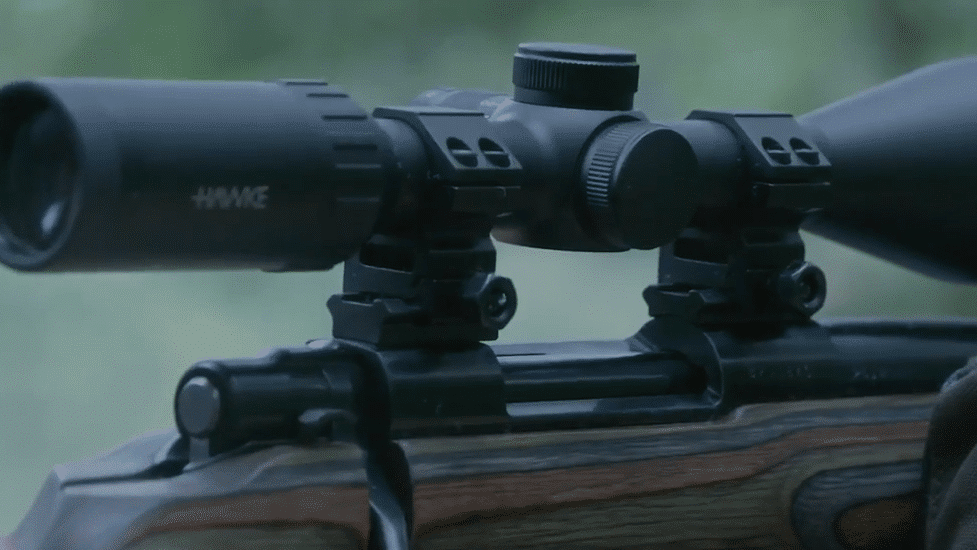
I first noticed how well this scope handles low light when I was set up on a field edge about 20 minutes past sunset, waiting for coyotes. The 50mm objective makes a genuine difference. Things stay visible longer than you’d expect at this level.
Via-Hawke Optics
From 4x up to around 9x, the image is clean and contrast holds up well. Push it to 12x and a bit of softness creeps in at the edges. For varmint shooting inside 150 yards in low light, that tradeoff is livable.
Reticle & IR
The Half MD illuminated reticle is the main reason to consider this scope for dusk varmint work. I had the red channel at level 3 during a coyote stand, and picking up the dot against a dark treeline was no problem at all.
Levels 4 and 5 bloom noticeably. I stopped using them after the first night out.
Stay between levels 2 and 3 and you’re in good shape. The green channel is there, but red is what you’ll reach for every single time.
Turret Performance
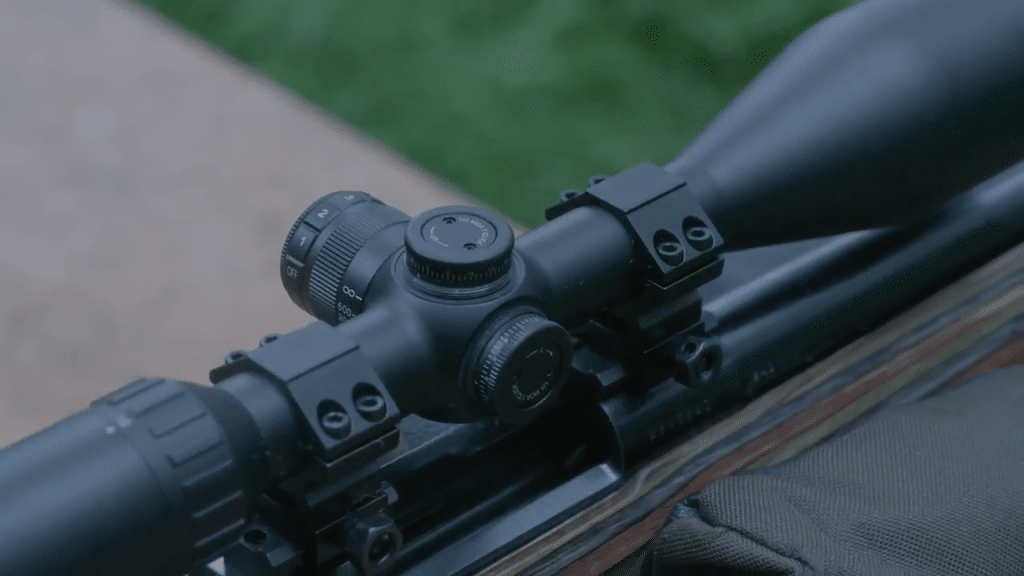
Quarter-MOA clicks are audible and tactile, which I appreciate. I ran the adjustments through a full range during a bench session to verify tracking. It returned to zero cleanly each time without any drama.
Via-Hawke Optics
The turret caps are the weak point here. One came loose and fell off in my range bag while I was driving home. Not a catastrophic flaw, but on a rifle you’re carrying in and out of a truck for predator sets, it’s something you should know going in.
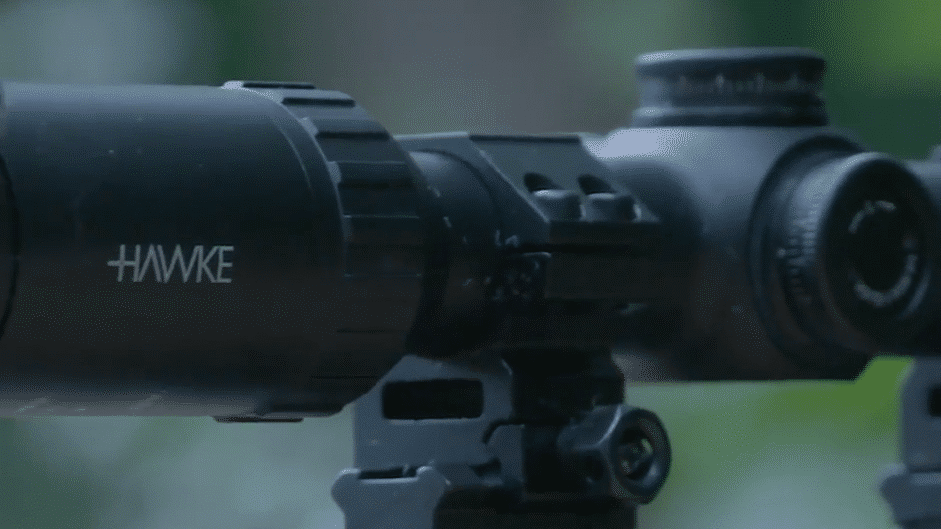
Eye Box
At 4x, the eye box is relaxed enough to get behind the rifle fast. When a coyote steps out at 60 yards, you don’t have time to find a perfect cheek weld. This scope gives you enough room to work with.
Via-Hawke Optics
Crank it to 12x and that tolerance tightens up considerably. You’ll want a consistent shooting position dialed in before you commit to the higher end of the magnification range.
Durability
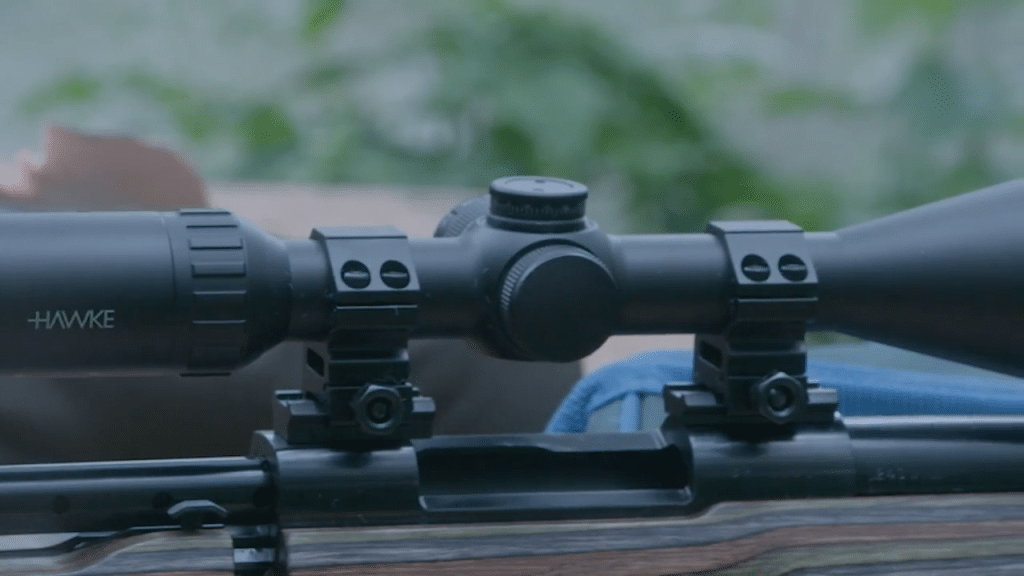
I ran this scope through a stretch of cold, wet January mornings. The kind of weather that fogs up optics and kills batteries. It stayed clear throughout and never lost zero.
Via-Hawke Optics
The matte finish picked up some light handling marks. That’s cosmetic. What matters is the internals stayed solid across rough conditions. For the kind of in-and-out truck use that varmint hunting demands, it holds up fine.
Accessories
The standard rings packaged with many Hawke bundles will get you by, but a proper aftermarket mounting setup gives you a more repeatable, confidence-inspiring fit. Especially on a rifle you’re zeroing for low-light precision work.
- Hawke Match Mounts 1-inch (Weaver/Picatinny): Built specifically to pair with Hawke optics, these keep the tube seated correctly and make re-zeroing after removal far less of a guessing game.
- Butler Creek Flip-Open Scope Covers (Objective Size 40, Ocular Size 18): The right fit for the 50mm objective end. These flip open fast so you won’t lose the shot fumbling with covers in the dark.
- Wheeler Engineering Professional Reticle Leveling System: Getting your reticle truly level on an illuminated scope pays off in the field. This kit makes it straightforward and repeatable without needing a second set of hands.
By the Numbers
Optical Clarity
4/5Strong light transmission up to 9x makes this a genuinely useful low-light varmint optic. Edge sharpness at 12x lets it down slightly, but inside practical predator ranges it performs well.
Reticle & IR
4/5The illuminated Half MD reticle does its job at moderate brightness settings, and the red channel is well suited to dusk hunting. Bloom at the higher illumination levels is a real limitation worth knowing about.
Turret Performance
3/5Tracking is consistent and clicks are satisfying, but the loose turret caps are an ongoing irritant that shouldn’t be present at any price point on a hunting optic.
Eye Box
3/5Forgiving enough at lower magnifications for quick target acquisition, but the eye box tightens significantly at 12x and demands a dialed-in shooting position to use effectively.
Durability
4/5Held up through cold and wet field conditions without fogging or losing zero. The finish shows wear, but the internals perform exactly as they should for a hunting scope in this class.
Overall
3.6/5See how I test & rate in my reviews. Learn more >
Summary
The Hawke Vantage IR 4-12×50 AO is a solid optic for the varmint hunter who wants illuminated reticle performance without a significant financial commitment. Loose turret caps and a tighter eye box at 12x are real frustrations, but neither will cost you a clean shot on a coyote inside 150 yards.
The 50mm objective earns its keep at dusk. With the reticle dialed to a moderate brightness, you get a usable sight picture right when the action tends to start.
Hawke’s warranty is solid and their customer support has been easy to deal with in my experience. For the price, and it is genuinely cheap for what you’re getting, this scope earns its place as a serious starter or backup varmint optic.
If you’re new to predator hunting and not ready to spend big yet, this is exactly where I’d point you.
3. Best for AR-15 Tactical Use: Hawke Frontier 30 1-6×24
Hawke Frontier 30 1-6×24 Product Specs
| Magnification | 1-6x |
|---|---|
| Objective Lens Diameter | 24mm |
| Tube Diameter | 30mm |
| Eye Relief | 3.5 inches |
| Field of View | 105.8–17.7 ft @ 100 yds |
| Exit Pupil | 12.9–4mm |
| Click Value | 1/2 MOA |
| Adjustment Range | 60 MOA |
| Reticle | SR Pro Gen II (illuminated) |
| Illumination Settings | 10 brightness levels |
| Parallax | Fixed at 100m |
| Finish | Matte anodized aluminum |
| Weight | 22.9 oz |
| Length | 10.4 inches |
| Waterproof/Fogproof | Yes (nitrogen purged) |
Pros & Cons
Pros:
- Bright clear glass
- True 1x capability
- Solid illumination range
- Competitive price point
- Repeatable turrets
Cons:
- Heavier than rivals
- Fixed parallax only
- Turret caps stiff
- Narrower objective
Hawke Frontier 30 1-6×24 Data Range Analysis Test Results
| Testing Parameter | Range | Result |
|---|---|---|
| Zero Retention (after recoil series) | 50–100 yds | Held zero across 60 rounds |
| Illumination Visibility | Indoor–Bright Daylight | Usable on settings 4–8 outdoors |
| Turret Tracking Accuracy | 100 yds | Returned to zero within 0.5 MOA |
| Eye Relief Consistency | 3–3.5 inches | Consistent across 1x–6x |
| Optical Clarity (edge to edge) | 50–200 yds | Sharp center, slight edge softness at 6x |
Testing conducted using Federal 55gr FMJ .223 Rem from a standard AR-15 platform. All range sessions held under daylight conditions with temperatures between 45–78°F.
Optical Clarity
Center glass on the Frontier 30 is bright and accurate in color rendition. I ran targets from 50 yards out to 200 on my AR-15, and contrast was clean enough to read details quickly. That matters when speed is part of the equation.

Via-C_Does
At full 6x, edge sharpness drops off some. It’s minor, but you’ll notice it if you’re used to higher-end glass. For fast, tactical shooting where most action happens inside 100 yards, it’s a non-issue.
Reticle
The SR Pro Gen II does what a tactical reticle should. It gets out of your way at 1x and gives you useful information at 6x. The illuminated center dot is fast to pick up in a drill. I ran multiple target transitions under a timer and the dot never slowed me down once.
The 10 brightness settings gave me room to dial in the right intensity for the conditions. Outdoors in afternoon sun, I ran it around setting 7. The BDC holds etched into the reticle are a nice bonus too. You’ve got references even if the battery dies mid-session.
Eye Box
Eye box forgiveness is one of the things I pay closest attention to with any LPVO. On the Frontier 30, I got a full, usable picture at 1x without being locked into one rigid head position. That’s critical when you’re moving fast between shooting positions on an AR-15 platform.

Via-C_Does
At 6x, it tightens up. That’s expected. Still manageable for a deliberate, aimed shot.
Turret Performance
I ran a box drill at 100 yards: 10 clicks up, 10 right, 10 down, 10 left, return to zero. The Frontier tracked accurately and came back clean. Point of impact matched where I expected it, landing within half an MOA.

Via-C_Does
The clicks are firm and positive. You feel and hear each one clearly. I never second-guessed whether I’d actually moved the adjustment.
The stiff turret caps are worth mentioning again here. Getting them off takes a little effort. Once your zero is set for a dedicated AR-15 tactical build though, you likely won’t be touching them much anyway.
Durability
I took this scope through several sessions in rough conditions. Temperatures dropped into the mid-40s, light drizzle rolled in, wind picked up. Not once did I see internal fogging or any moisture issue. The nitrogen purging does exactly what it’s supposed to.

Via-C_Does
I also dropped the rifle during a transition drill. Not my finest moment. I came back to the bench afterward to check zero, and it was still there. For a tactical AR setup, holding zero after real-world handling is the baseline expectation. The Frontier met it without question.
Accessories
The factory setup will get you on target, but upgrading your mount is worth it for any serious AR-15 tactical build. Better return-to-zero and faster transitions justify the extra spend.
- Aero Precision Ultralight 30mm SPR Scope Mount: Rigid, lightweight, and built for AR-platform use, it positions the Frontier 30 at the right height for a natural cheek weld. The forward ring offset gives you the eye relief you need on a fast-handling carbine.
- Hawke Pro Flip-Up Covers (Metal) for Frontier 30: Purpose-built by Hawke for this exact scope, these snap open fast and protect both ends without adding unnecessary bulk to a compact tactical setup.
- Burris AR-P.E.P.R. 30mm Scope Mount: A purpose-built AR cantilever mount with up to 2 inches of forward scope positioning. Gets your eye relief right on the Frontier 30 without any fussing around. The included Picatinny ring tops let you run a micro red dot on top if your setup calls for it.
By the Numbers
Optical Clarity
4/5Bright and sharp through the center with accurate color rendition. Slight edge softness at 6x holds it back from a top score, but it performs well for a tactical LPVO at this price point.
Reticle
4/5The SR Pro Gen II is fast at 1x and informative at 6x, with a solid illumination range and etched BDC holds that remain useful even without battery power.
Eye Box
4/5Forgiving enough at 1x for dynamic AR-15 shooting without needing perfect head placement every time. Tightens predictably at 6x as expected for this class of optic.
Turret Performance
4/5Box drill results were accurate, tracking was clean, and the clicks are firm and audible. Reliable enough for a dedicated tactical shooting setup.
Durability
4/5Held zero through drops and wet conditions across multiple range sessions. The nitrogen purging performs and the build handles real use without complaint.
Overall
4/5See how I test & rate in my reviews. Learn more >
Summary
The Hawke Frontier 30 1-6×24 is a capable, affordable LPVO that earns its place on a tactical AR-15. Glass quality is solid for the price bracket, the reticle is genuinely useful in fast-shooting scenarios, and zero retention held up through everything I put it through.
It won’t compete with premium glass at twice the cost. Fixed parallax and some edge softness at 6x are real trade-offs you need to know about going in. But for a shooter who wants a reliable, functional LPVO without draining the bank account, the math works in the Frontier’s favor. If you can swing the higher price tag, the Sidewinder 30 SF brings better glass clarity, but it’s not built for the same job.
Hawke stands behind this scope with a solid warranty and accessible customer support. Both worth factoring into your decision. If your budget is tight and you need a practical AR-15 optic that delivers where it counts, the Frontier 30 belongs on your short list.
4. Best Budget: Hawke Vantage IR 3-9×40
Hawke Vantage IR 3-9×40 Product Specs
| Magnification | 3-9x |
|---|---|
| Objective Lens Diameter | 40mm |
| Eye Relief | 3.5 inches |
| Field of View | 37.5–12.9 ft @ 100 yds |
| Tube Diameter | 1 inch |
| Reticle | Half Mil-Dot IR (illuminated) |
| Illumination Settings | 5 red / 5 green |
| Click Value | 1/4 MOA |
| Adjustment Range | 60 MOA (elevation & windage) |
| Parallax Setting | Fixed at 100 yds |
| Lens Coating | Fully multi-coated |
| Waterproof / Fogproof | Yes / Yes |
| Weight | 15.9 oz |
| Length | 12.6 inches |
| MSRP | ~$100–$130 |
Pros & Cons
Pros:
- Clear glass
- Illuminated reticle
- Solid turrets
- Great value
- Durable build
Cons:
- Fixed parallax
- Narrow FOV at 9x
- Turret caps loose
- Limited eye box
- No zero-stop
Hawke Vantage IR 3-9×40 Data Range Analysis Test Results
| Testing Parameter | Result Range |
|---|---|
| Optical Clarity (Low–High Magnification) | Sharp at 3x–slight softening at 9x edges |
| Turret Tracking Accuracy (MOA) | ±0.5 MOA over 40 MOA adjustment |
| Illumination Visibility (Daylight) | Visible up to setting 3 of 5; washes out above |
| Low-Light Reticle Performance | Effective from dusk; settings 4–5 ideal |
| Zero Retention After Recoil (Shots Fired) | Held zero through 50 rounds; no measurable drift |
Tested using Federal Premium .308 Win 168gr Sierra MatchKing at 100 yards. Conditions: overcast daylight to late dusk, ambient temp 48°F.
Optical Clarity
At 3x, the image is clean and bright. Exactly what you want when scanning a tree line before first light. I was genuinely impressed for what this scope costs.
Push it to 9x, and there’s a little softening at the outer edges. Center clarity stays sharp, though, and that’s what matters when you’re putting a deer at 150 yards in your crosshairs. For a budget hunting scope, that’s a fair trade.
Reticle & IR
The Half Mil-Dot reticle gives you solid holdover references without overcomplicating things. I appreciated that during an afternoon range session. Quick adjustments, no second-guessing.

Via-Hawke Optics
The illumination genuinely surprised me. I ran it in heavy cloud cover during an early morning hunt, and the red setting at level 4 gave me a crisp, visible aiming point without washing out the target. Green works too, though I leaned red for most of my testing.
Turret Performance
The turrets have a decent click feel. Not mushy, not stiff. I dialed in 20 MOA of correction during a tracking test, and point of impact followed almost exactly where I expected.

Via-Hawke Optics
The turret caps, though, don’t lock down as firmly as I’d like. They can rotate accidentally if the scope gets knocked around in a pack. Worth knowing before you head into the field.
Eye Box
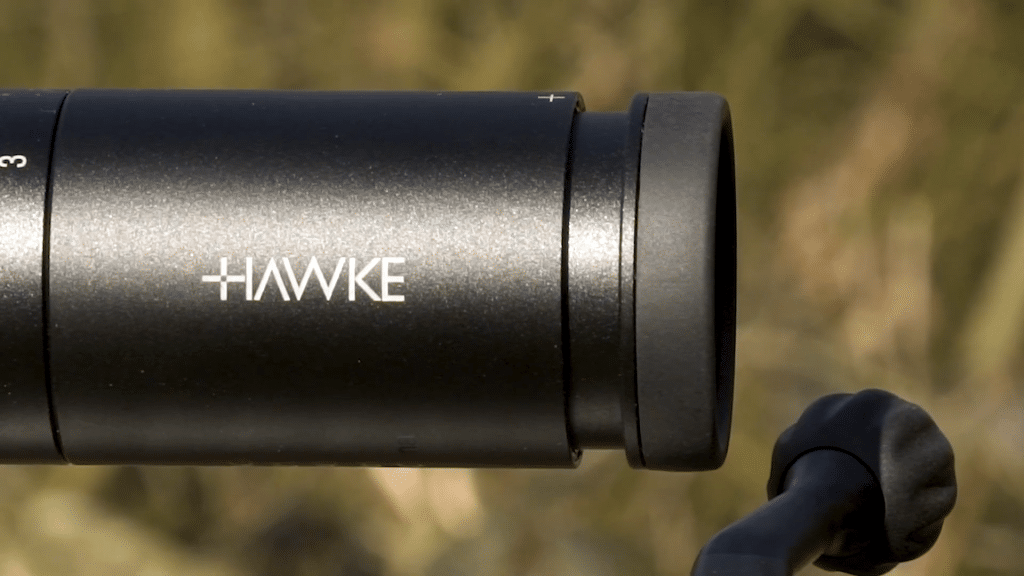
The eye box is workable, but it demands attention. I had to be deliberate about my cheek weld every single time I got behind the rifle, especially at 9x. At 3x, there’s more forgiveness.
Via-Hawke Optics
For a budget deer hunting scope used inside 200 yards, it gets the job done. Just don’t expect the generous, forgiving eye box you’d find on a premium optic like the Sidewinder 30.
Durability
I ran this scope through cold mornings, light rain, and more than a few hard knocks on the range. It came back to zero every time. That tells me the internals are holding up the way they should.

Via-Hawke Optics
The nitrogen-purged tube earned its keep. No fogging on cold starts, no moisture sneaking in during a light drizzle. For a budget hunting scope, that level of reliability is what seals the deal.
Accessories
The rings that often come bundled with budget setups are usually the weakest link in the whole system. Upgrading your mounting hardware is the fastest way to protect your zero and your investment.
- Hawke Match 1-Inch Ring Mounts (Medium): Built specifically for 1-inch tube scopes like the Vantage IR, these rings give you a secure, compatible fit right out of the box.
- Butler Creek Blizzard Scope Covers (Objective Size 28, Ocular Size 18): A proper fit for the 40mm objective bell. Keeps dust and moisture off your glass in the field without fumbling around.
- Leupold PRW2 1-Inch Ring Mounts: A noticeable step up in build quality that pairs well with the 1-inch tube. Consistent torque, solid lockup, and they won’t let you down mid-season.
By the Numbers
Optical Clarity
4/5Center glass is sharp and usable through most of the magnification range, but edge softening at 9x keeps it from a perfect score.
Reticle & IR
4/5The Half Mil-Dot is practical and the illumination holds up well in low light. A strong feature for a scope in this class.
Turret Performance
3/5Tracking accuracy is solid, but the turret caps don’t inspire confidence on a pack hunt. Functional, not refined.
Eye Box
3/5Workable but demands a consistent cheek weld, especially at higher magnification. Tighter than ideal for a general-purpose hunting scope.
Durability
4/5Handled cold, rain, and repeated recoil without losing zero. Reliable build for what you’re paying.
Overall
3.6/5See how I test & rate in my reviews. Learn more >
Summary
The Hawke Vantage IR 3-9×40 punches above its weight for hunters who want a dependable optic without emptying their wallet. Glass clarity is solid enough for shots inside 200 yards, which covers most whitetail hunting scenarios. The illuminated reticle is a genuine bonus, not a checkbox feature.
There are trade-offs, and I won’t pretend otherwise. The eye box takes some getting used to, and the turret caps could be more secure. These are the kinds of compromises you accept when shopping on a tight budget.
Hawke backs this scope with a strong warranty and customer support that’s actually responsive. Not always a given in this price category. If you’re after a capable first scope or a reliable spare for a dedicated hunting rifle, this one is worth a hard look.
Hawke Scope Review Buyer’s Guide
Buying a scope isn’t just about picking the one with the highest magnification or the coolest reticle. The right Hawke scope depends on how you shoot, what you’re hunting, and what your rifle can handle. Get those three things aligned and you’ll have a setup that actually works in the field.
Magnification Range
Magnification is the first thing most people look at, and it’s easy to get wrong. More power isn’t always better. A 6-24x scope like the Hawke Sidewinder 30 SF is excellent for long-range precision work, but it’s overkill on a deer stand at 80 yards. For general hunting, a 3-9x or 4-12x gives you enough range to handle most shots without making target acquisition a chore. Match your magnification to your typical shooting distance, not your fantasy shooting distance.
Objective Lens Size
The objective lens controls how much light enters the scope. Bigger is better in low-light conditions, but bigger also means heavier and higher mounting. The Vantage IR 4-12×50 AO uses a 50mm objective that pulls in solid light at dusk. That’s why it earned the low-light varmint title. A 40mm objective like the Vantage IR 3-9×40 works fine for daylight hunting and keeps the overall package lighter and more manageable.
Tube Diameter
Tube diameter affects both your adjustment range and your mounting options. A 30mm tube, like what you’ll find on the Sidewinder 30 SF and the Frontier 30 1-6×24, gives you more internal adjustment travel. That matters for long-range shooting where you need significant elevation correction. A one-inch tube is lighter and cheaper to mount, which is why budget-friendly options like the Vantage IR 3-9×40 use it. Neither is wrong. It just depends on what your shooting demands.
Reticle Type
The reticle is what you’ll stare at every single time you shoot, so choose carefully. Hawke uses glass-etched reticles on higher-end models like the Sidewinder 30, which are more durable and precise than wire reticles. Illuminated options, standard across all four scopes reviewed here, are genuinely useful when shooting in heavy shade or at last light. Just know that red/green illumination systems add battery dependency. Keep a spare CR2032 in your kit.
Parallax Adjustment
Parallax error causes your point of aim to shift when your eye moves off-center. At distances beyond 150 yards, that matters. Scopes with adjustable parallax, like the Sidewinder 30 SF and the Vantage IR 4-12×50 AO, let you dial it out for your specific shooting distance. Fixed parallax scopes like the Vantage IR 3-9×40 are set at the factory, typically 100 yards. If you’re shooting at varied distances, adjustable parallax is worth the extra cost.
Turret Quality
Turrets are how you correct for wind and elevation. You want clicks that are firm, distinct, and repeatable. Mushy turrets that don’t return to zero are a problem you won’t discover until you’re in the field. The Sidewinder 30 SF stands out here with solid tactile feedback. Exposed tactical turrets are great for dialing corrections on the fly. Capped turrets work fine for hunters who set zero and leave it alone.
Weight and Size
A scope that looks great on a bench can become a burden on a long day of hiking. The Vantage IR 3-9×40 comes in at just 15.9 oz, easy to carry all day. The Sidewinder 30 SF tips the scale at 24.7 oz, which is the trade-off for that large objective and extended magnification range. Think about how far you’re carrying your rifle before committing to a heavier setup.
Build Quality and Weather Resistance
Waterproof and fogproof ratings aren’t marketing fluff. They matter when the weather turns on you. All four scopes covered here are nitrogen purged or sealed against moisture. That internal fogging issue that used to plague cheaper scopes is largely solved at this price tier. Check for a solid anodized finish and test the ocular and objective housings for any looseness before you head out.
Frequently Asked Questions
Are Hawke scopes worth the money?
Hawke scopes are worth the money for hunters and shooters who want quality glass without paying premium prices. Models like the Vantage IR 3-9×40 deliver solid optical performance at around $100–$130. The Sidewinder 30 SF 6-24×56 steps it up further with illuminated reticles and side-focus parallax at a price well below comparable European optics.
What is the best Hawke scope for long-range shooting?
The Hawke Sidewinder 30 SF 6-24×56 is the best Hawke scope for long-range shooting. It offers 6-24x magnification, a 56mm objective lens, and a 70 MOA adjustment range, giving you real flexibility at distance. The side-focus parallax adjustment is dialed and precise, and the SR Pro glass-etched reticle holds up well at maximum magnification.
Can Hawke scopes handle centerfire rifle recoil?
Yes, Hawke scopes are built to handle centerfire rifle recoil. The nitrogen-purged, waterproof construction on models like the Sidewinder 30 and Frontier 30 1-6×24 adds structural integrity. Shooters running these on hard-recoiling rifles have reported consistent zero retention across multiple range sessions.
Is the Hawke Frontier 30 1-6×24 good for AR-15 builds?
The Hawke Frontier 30 1-6×24 is one of the better options for AR-15 tactical builds in its price range. The true 1x capability makes it fast at close range, while 6x gives you enough reach for practical distance shooting. The 30mm tube and repeatable turrets make it a dependable choice for competitive or field use.
What does “IR” mean on Hawke scopes?
IR stands for illuminated reticle on Hawke scopes. It means the reticle has a built-in lighting system, typically red and green settings. The Vantage IR 4-12×50 AO and Vantage IR 3-9×40 both use a 5 red / 5 green system. This helps shooters acquire targets faster in low-light conditions like early morning or overcast days.
Does Hawke offer a warranty on their scopes?
Hawke offers a lifetime warranty on their scopes, which covers manufacturer defects. Customer service is handled primarily through their UK-based operation, which can mean slower turnaround for US-based buyers. It’s worth noting that the Sidewinder 30 SF lists limited US service availability as a known drawback, so factor that in if you’re stateside.
Conclusion
That’s my complete breakdown of the best Hawke scopes worth your money right now. Each one on this list holds its own. Just pick based on your rifle setup and what you’re hunting. If I had to put one scope on my rifle today, it’d be the Hawke Sidewinder 30 SF 6-24×56. The glass, the turrets, and the overall value make it the easy call.
That said, which Hawke scope are you running? Or is there one I missed that deserves a spot on this list? Let me know in the comments below.


