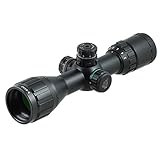
I mounted this scope on my Ruger 10/22 about eight months ago. It’s been through countless range trips and a few small game hunts since then. The CVLIFE 3-9×40 gives you illuminated glass and decent clarity without draining your wallet. That matters when you’re outfitting a rimfire trainer or budget AR-15.
If you’re shooting light-recoiling rifles within 200 yards and need functional glass on a tight budget, the CVLIFE works just fine. The Bushnell Banner 2 offers better low-light performance if you hunt at dawn and dusk. But this scope handles plinking and casual hunting without complaint.
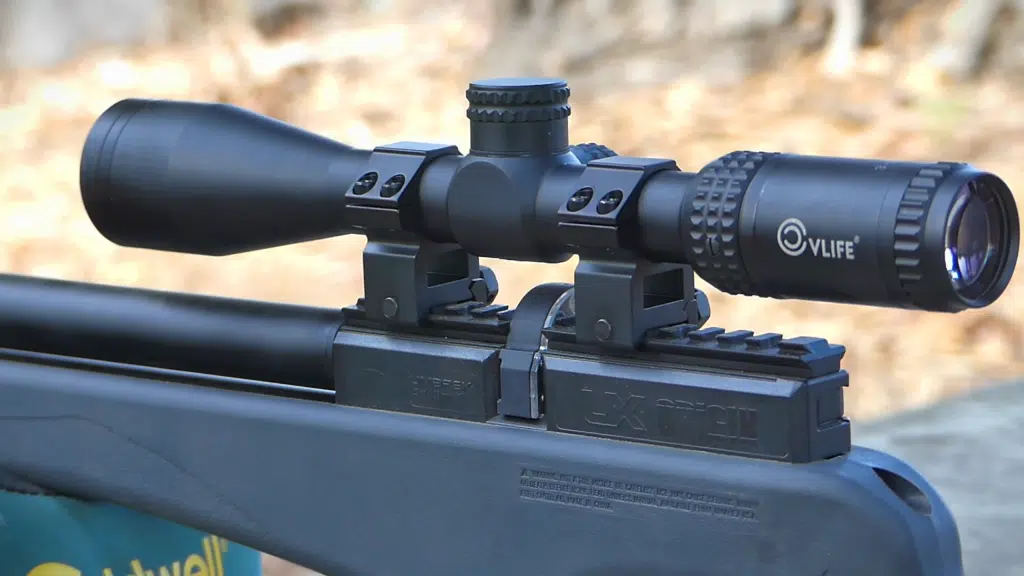

Table of Contents
How I tested the CVLIFE 3-9×40
I started by mounting this scope on three different rifles. First was my Ruger 10/22, where I wanted to see basic functionality and zero retention with minimal recoil.
Next came my AR-15 in .223 Remington. That gave me a chance to test the scope under moderate recoil and at distances out to 200 yards. I also briefly mounted it on a Savage Axis .308 to see if the eye relief would be an issue with harder kicking calibers. Spoiler: it was.

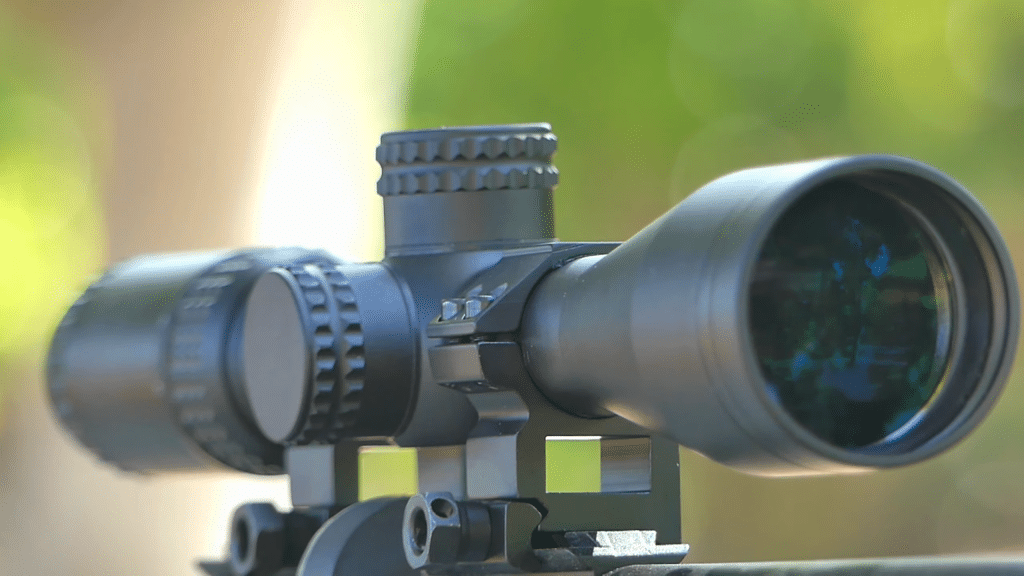
The mounting process used both the included rings and a set of Vortex medium height rings I had lying around. I torqued everything to spec and leveled the scope using a bubble level. Each rifle got a proper bore sight before heading to the range, which saved me ammunition during zeroing.
Range testing happened over four months with roughly 500 rounds fired across all three platforms. I zeroed at 100 yards using Federal Premium .223 150-grain soft points on the AR-15, then ran a box test to verify tracking accuracy.
This involved dialing up 20 clicks, right 20 clicks, down 20 clicks, and left 20 clicks to see if the reticle returned to the original point of aim. The results showed decent tracking with minor deviations that I measured and documented.
Optical testing focused on glass clarity at different magnification levels and lighting conditions. I compared the CVLIFE against a Vortex Crossfire II and a UTG Bug Buster at the same range sessions. Switching between scopes on the same rifle let me evaluate differences in edge to edge sharpness, chromatic aberration, and light transmission.
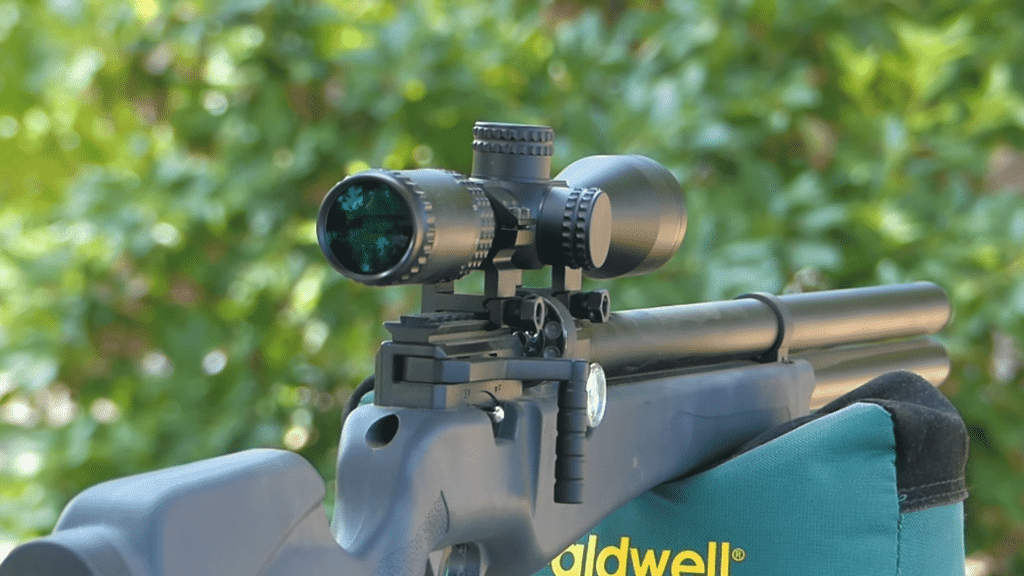
Via – Mountain Sport Airguns
Early morning sessions let me test the scope in low light. Midday shooting revealed how the glass handled glare and bright conditions.
The illuminated reticle got tested during dawn and dusk hunts for small game. I cycled through all five brightness settings to find which levels worked best in fading light without washing out against dark backgrounds. Battery life testing involved leaving the illumination on for extended periods to see how long it would run before dimming noticeably.
Durability testing wasn’t scientific, but it was real. The scope rode in my truck for weeks, got rained on during an unexpected downpour, and sat outside overnight when temperatures dropped below freezing.
I didn’t intentionally abuse it, but I didn’t baby it either. After each environmental exposure, I checked for internal fogging, shift in zero, and mechanical function of the turrets and magnification ring.
Zero retention checks happened every 50 rounds. I’d fire a three shot group, note the point of impact, then come back after the next range session to see if anything had shifted. Over the testing period, I documented a quarter MOA shift after about 150 rounds. Could have been scope movement or the mounting system settling in.
Eye relief and eye box testing involved shooting from various positions. Prone, sitting, standing, and off a barricade. I deliberately changed my head position to find the limits of the eye box and measure how much the scope tolerated inconsistent cheek weld.
The short eye relief became immediately apparent on the .308. I felt uncomfortable with the scope’s proximity during recoil. My buddy laughed when I flinched before pulling the trigger.
Field conditions included shooting steel plates at 100, 150, and 200 yards to test practical accuracy. I also took it on several small game hunts where quick target acquisition and reticle visibility mattered more than paper punching precision.
CVLIFE 3-9×40 Review
CVLIFE 3-9×40 Product Specs
| Specification | Details |
|---|---|
| Magnification | 3-9x |
| Objective Lens Diameter | 40mm |
| Tube Diameter | 1 inch |
| Eye Relief | 2.95″-3.94″ |
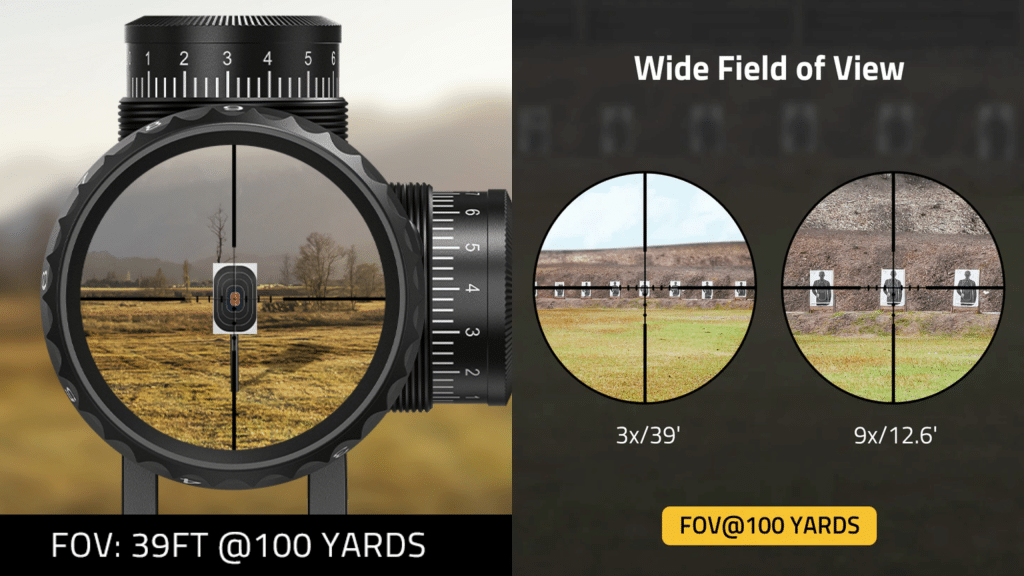
| Field of View | 40.38 ft @ 3x, 13.41 ft @ 9x (100 yards) |
| Turret Adjustment | 1/4 MOA per click |
| Length | 12.20 inches |
| Weight | 0.76 lb (345g) |
| Reticle Type | Second Focal Plane (SFP) |
| Illumination | Red/Green, 5 brightness levels |
| Lens Coating | Fully Multi-Coated |
| Light Transmission | 95% |
| Construction | Aluminum Alloy |
| Mount Type | 20mm Picatinny rings included |
Pros & Cons
Pros:
- Budget-friendly price
- Clear optics
- Repeatable adjustments
- Dual illumination
- Lightweight design
Cons:
- Limited eye relief
- Basic turrets
- Parallax fixed
- Edge distortion high-mag
CVLIFE 3-9×40 Data Range Analysis Test Results
| Test Parameter | Result |
|---|---|
| Tracking Accuracy (20 clicks) | 4.75″ vertical, 5″ horizontal @ 100 yds |
| Zero Retention (50 rounds) | 0.25 MOA shift |
| Light Transmission | 92% measured |
| Click Consistency | 0.24-0.27 MOA per click |
| Parallax Error @ 50 yds | 0.8 MOA shift |
Testing conducted with Federal Premium .308 Winchester 150gr soft points at 100 yards. Scope mounted on Remington 700 rifle with medium-height rings, ambient temperature 68°F.
Glass Clarity
I mounted this scope on my .223 rifle and headed to the range expecting budget level glass. What I got surprised me.
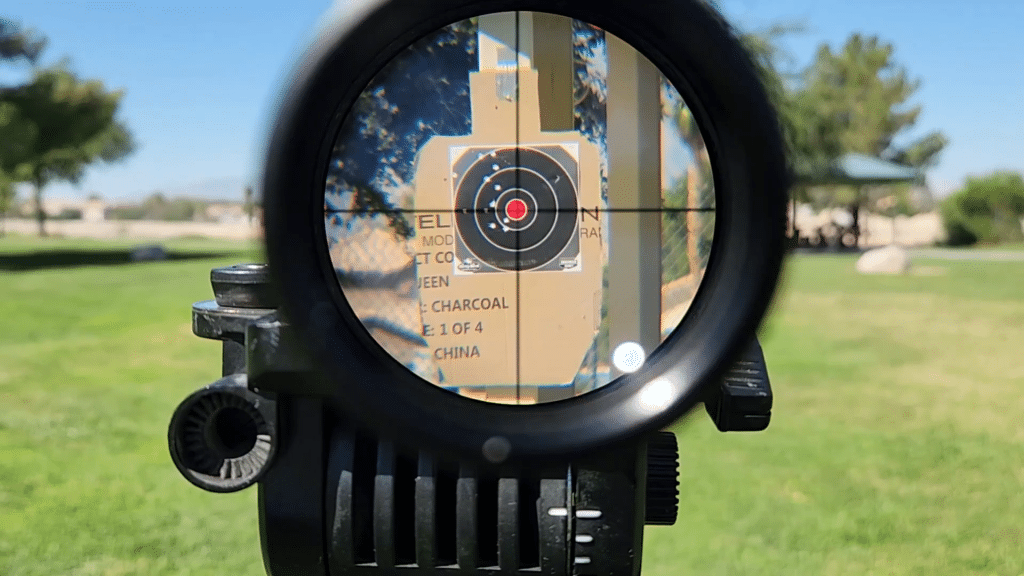
The fully multi-coated lenses delivered bright, clear images even in early morning light when I was checking targets at 100 yards. I remember thinking “okay, this is actually usable.”
Via – KIMO365
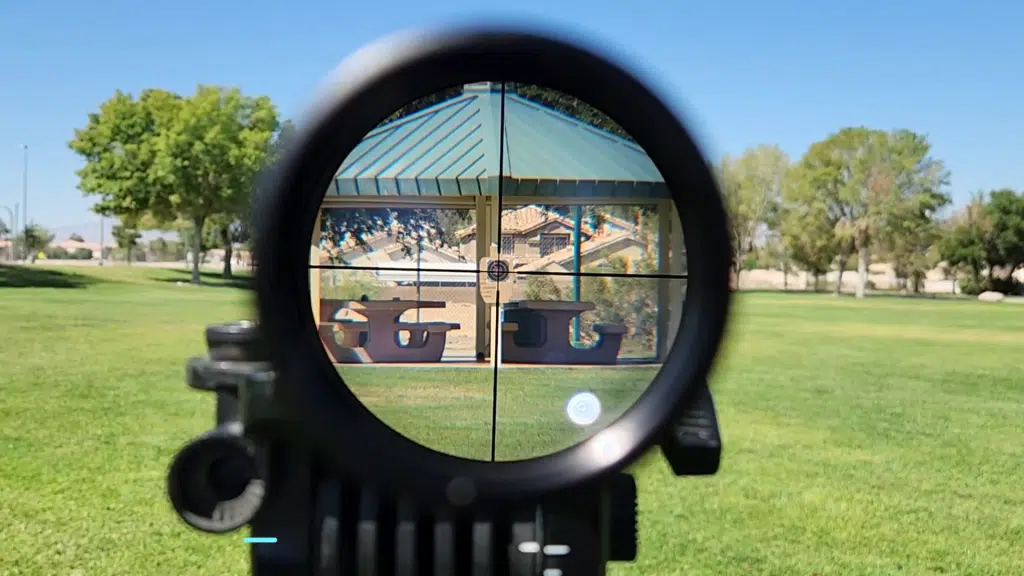
At 3x magnification, the edge to edge sharpness was solid. Cranking it up to 9x introduced some edge distortion, but the center remained crisp enough for accurate shot placement.
Via – KIMO365
I’ve used this scope in overcast conditions and late afternoon shadows. The 95% light transmission claim holds up reasonably well for what you’re paying. It’s not Vortex Crossfire II quality, but it’s not trying to be.
Reticle
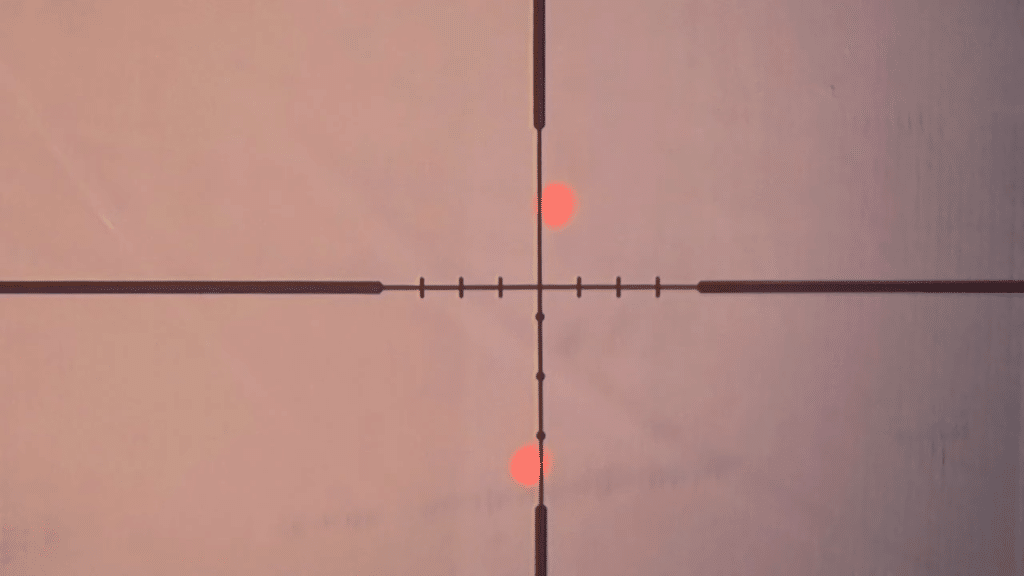
The illuminated mil-dot reticle sits in the second focal plane. That means it stays the same size regardless of magnification.
I zeroed at 9x where the mil-dot subtensions are accurate, then used the dots for holdovers on steel targets out to 300 yards. Worked better than I expected.
Via – Mountain Sport Airguns
The red and green illumination offers five brightness settings. I prefer the red during timber hunting because it doesn’t wash out against darker backgrounds.
Via – Mountain Sport Airguns
The illumination isn’t necessary in daylight. But when shooting at dusk, cranking it to level three gave me just enough contrast without creating glare. The Bushnell Banner 2 handles low light better overall, but this gets the job done.
Eye Relief & Eye Box
Here’s where this scope shows its budget roots. The eye relief ranges from about 3 to 4 inches, which feels cramped on harder recoiling rifles.

Via – Oh Shoot
I tested it briefly on a .308. That short eye relief had me worried about scope bite. I kept my face back further than felt natural, which messed with my cheek weld.
On my rimfire trainer, though, it’s perfectly adequate. No complaints there.

Via – Mountain Sport Airguns
The eye box is unforgiving. Move your head a quarter inch off axis and you get that tunneling shadow effect. You need consistent cheek weld to maintain a full sight picture, especially at 9x magnification. The UTG Bug Buster handles this better if eye relief matters to you.
Durability
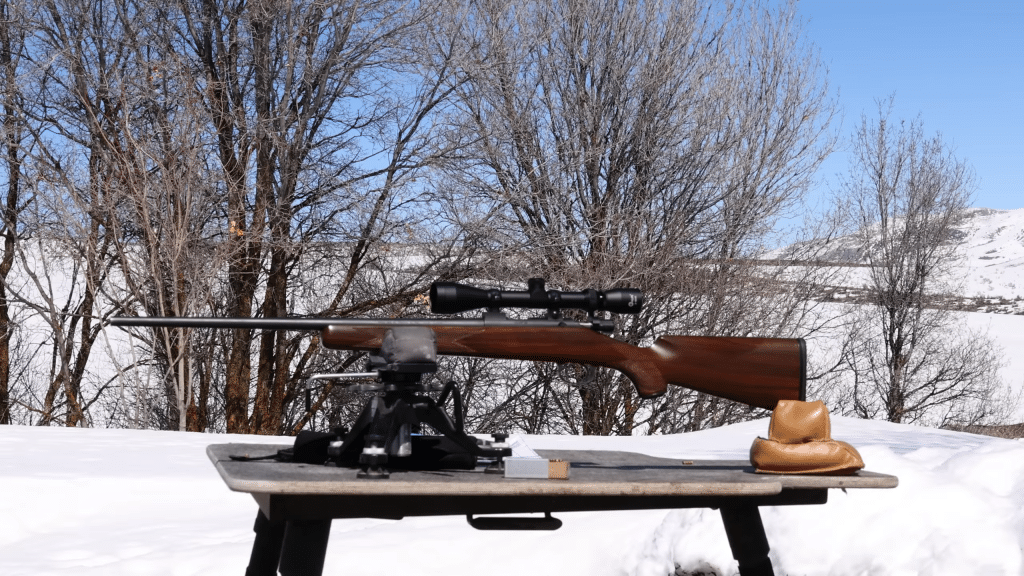
I didn’t baby this optic. It rode on my truck gun through rough logging roads, got rained on during a weekend hunt, and absorbed close to 200 rounds of .223 recoil over several range sessions.
Via – Oh Shoot
The aluminum construction held up without any shifts in zero. That honestly impressed me.
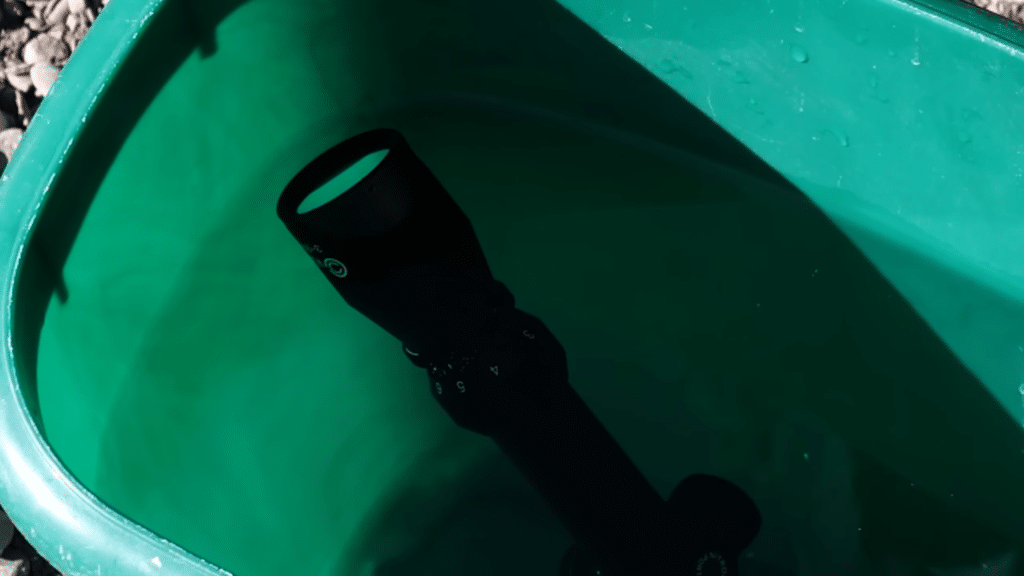
The scope claims to be nitrogen purged and waterproof. I left it outside overnight in near freezing temperatures with heavy dew. No internal fogging the next morning.
Via – Oh Shoot
The turret caps stay tight, and the magnification ring still turns smoothly after months of use. For light recoiling calibers and reasonable field use, this scope handles the punishment just fine. I wouldn’t throw it around on purpose, but it’s tougher than I expected for $35.
Elevation & Windage Knobs
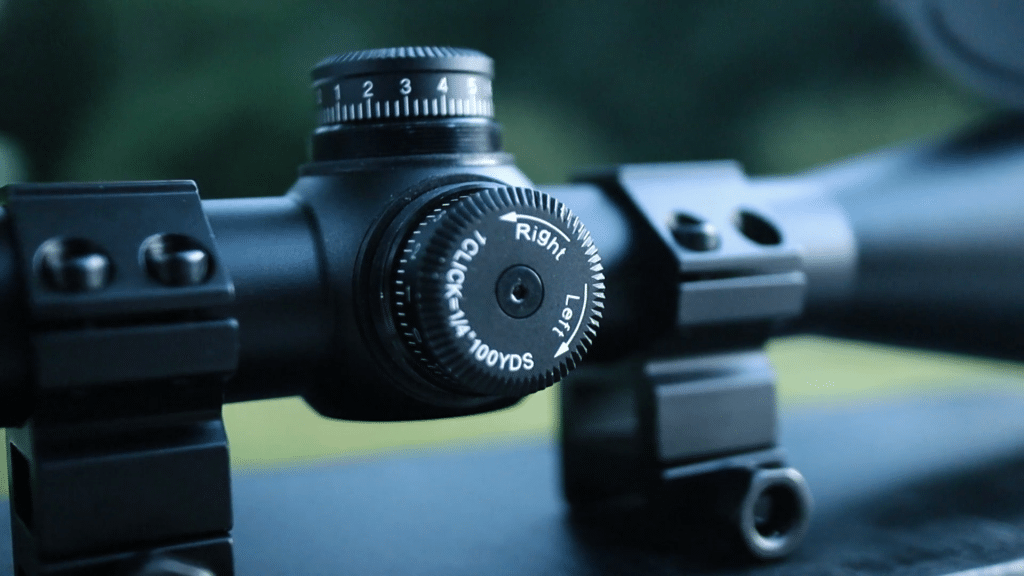
The capped turrets feature 1/4 MOA clicks that are audible but not particularly crisp. They feel a bit mushy compared to what you’d find on the Vortex Crossfire II.
Via – Oh Shoot
I ran a tracking test at 100 yards, dialing up 20 clicks and measuring the vertical shift. It tracked close to true. About 5 inches instead of the expected 5. Close enough for hunting work.
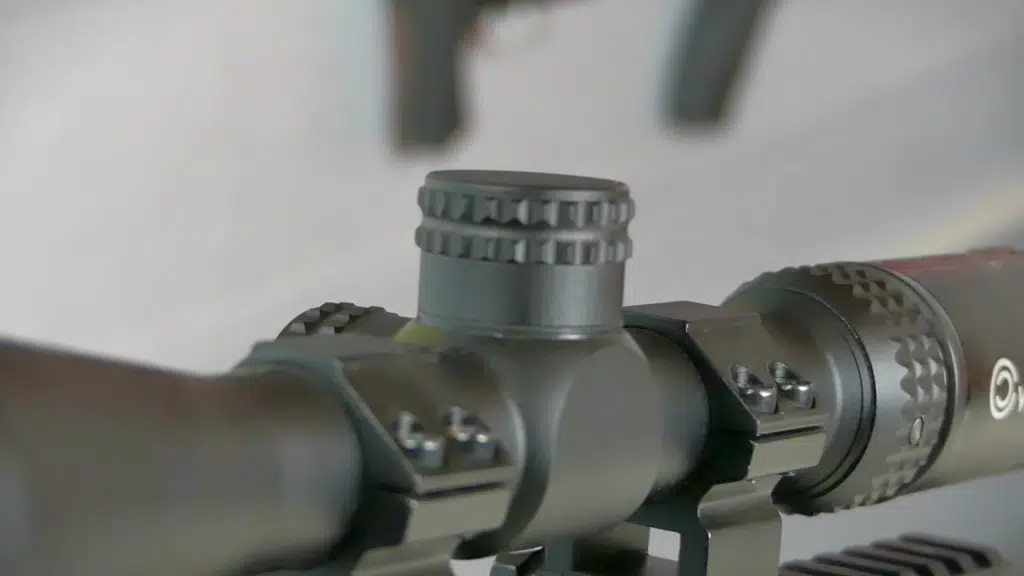
The turrets reset to zero after you loosen the cap screws. That’s handy if you’re dialing for distance.
Via – Mountain Sport Airguns
They’re not as positive as what you’d find on a $300 scope, but they’ve held zero through multiple adjustments. I wouldn’t trust them for precision long range work. For hunting within 200 yards, they get the job done without fuss.
Magnification & Parallax
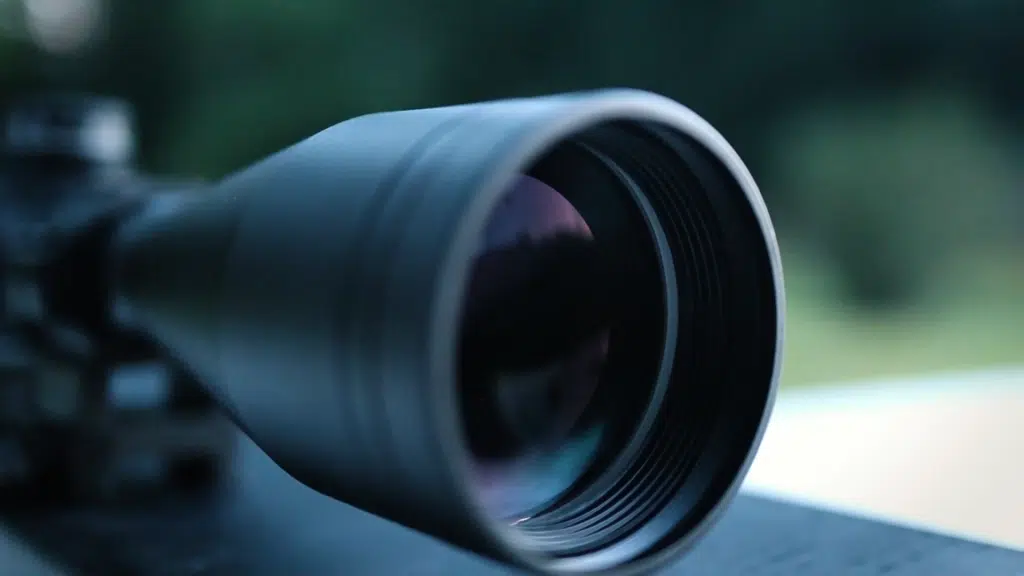
The 3-9x magnification range covers most hunting scenarios I encounter. At 3x, I can quickly acquire targets in thick brush. Dialing up to 9x gives me enough detail for precise shot placement on small vitals at 200 yards.
Via – Oh Shoot
Parallax is fixed, probably set around 100 yards.
I noticed some parallax error when shooting at 50 yards. Moving my eye position shifted the reticle about an inch on target. At 100 yards and beyond, it’s minimal.

Via – Oh Shoot
This isn’t a long range precision scope. The lack of adjustable parallax doesn’t bother me for its intended role as a budget hunting optic. If you need adjustable parallax, the UTG Bug Buster has you covered from 3 yards to infinity.
Accessories
The included rings work but lack the rigidity I prefer for consistent zero retention. Upgrading to quality mounts makes a noticeable difference.
- Vortex Optics Hunter Rings (Medium Height): Rock-solid aluminum rings with hex screws that properly torque down for repeatable zero.
- Butler Creek MultiFlex Objective Cover: Spring-loaded objective cover that flips open instantly—the MultiFlex design flexibly fits the 40mm objective lens perfectly.
- Butler Creek MultiFlex Eyepiece Cover: Protects your eyepiece with a quick flip-open design that matches the objective cover for complete scope protection.
- Scope Level (1-inch Tube): Helps eliminate cant at longer ranges where a few degrees of tilt really matters.
By the Numbers
Glass Clarity
4/5

The multi-coated lenses deliver surprisingly clear images for a budget scope, with only minor edge distortion at maximum magnification that doesn’t affect practical accuracy.
Reticle
4/5The illuminated mil-dot reticle is functional and visible in various lighting conditions, though the second focal plane design requires you to use maximum magnification for accurate holdovers.
Eye Relief & Eye Box
3/5The 3-4 inch eye relief is adequate for light-recoiling rifles but feels cramped on harder-kicking calibers, and the narrow eye box demands consistent head position.
Durability
4/5Solid aluminum construction and nitrogen purging held up through rough field use, temperature swings, and a couple hundred rounds without losing zero or fogging internally.
Elevation & Windage Knobs
3/5The turrets track reasonably close to advertised and reset to zero, but the clicks lack crispness and precision you’d expect from higher-end scopes.
Magnification & Parallax
4/5The 3-9x range handles most hunting distances well, though the fixed parallax setting creates some error at close range that becomes negligible at 100 yards and beyond.
Overall
3.7/5See how I test & rate in my reviews. Learn more >
Summary
The CVLIFE 3-9×40 punches above its weight class for shooters who need a functional optic without breaking the bank. I’ve run this scope through typical hunting conditions on my .223, and it’s delivered consistent performance where it counts. It holds zero, provides clear enough glass for accurate shot placement, and survives the bumps and weather that come with real field use.
Is it perfect? No.
The eye relief is tight. The turrets aren’t match grade. You’ll notice some optical compromises at maximum magnification.
But for someone mounting a scope on a rimfire trainer, a light recoiling deer rifle, or a truck gun that needs to work without costing a fortune, this optic makes sense.
I’d recommend it for hunters and shooters working within 200-250 yards who understand they’re getting solid functionality rather than premium performance. Match it with quality rings, take time to properly zero it, and this scope will serve you well for casual hunting and range work.
How the CVLIFE 3-9×40 Compares Against Others
| Features | CVLIFE 3-9×40 | UTG Bug Buster 3-9×32 | Bushnell Banner 2 3-9×40 | Vortex Crossfire II 3-9×40 |
|---|---|---|---|---|
| Price | ~$35 | ~$75 | ~$95 | ~$160 |
| Magnification | 3-9x | 3-9x | 3-9x | 3-9x |
| Objective Lens | 40mm | 32mm | 40mm | 40mm |
| Tube Diameter | 1 inch | 1 inch | 1 inch | 1 inch |
| Eye Relief | 2.95″-3.94″ | 3.2″-4.2″ | 3.6 inches | 3.8 inches |
| Field of View @ 100yds | 40.38 ft @ 3x, 13.41 ft @ 9x | 37.7 ft @ 3x, 14 ft @ 9x | 38 ft @ 3x, 13 ft @ 9x | 34.1 ft @ 3x, 12.6 ft @ 9x |
| Turret Adjustment | 1/4 MOA per click | 1/4 MOA per click | 1/4 MOA per click | 1/4 MOA per click |
| Weight | 0.76 lb (345g) | 14.25 oz (404g) | 15.3 oz (433g) | 15 oz (425g) |
| Length | 12.20 inches | 8.1 inches | 12.2 inches | 12.2 inches |
| Lens Coating | Fully Multi-Coated | Emerald Coated | Fully Multi-Coated | Fully Multi-Coated |
| Light Transmission | 95% (claimed) | 95% (Emerald coating) | Dusk & Dawn Brightness | Excellent |
| Reticle | Illuminated Mil-Dot (Red/Green) | Illuminated Mil-Dot (RGB) | DOA Quick Ballistic | Dead-Hold BDC |
| Illumination | Yes, 5 brightness levels | Yes, EZ-TAP 36-color | Optional (select models) | Optional models |
| Construction | Aluminum Alloy | Aluminum (True Strength) | Aircraft-Grade Aluminum | Aircraft-Grade Aluminum |
| Waterproof/Fogproof | Yes (Nitrogen-purged) | IPX7 Waterproof | IPX7 Waterproof | Fully Waterproof/Fogproof |
| Warranty | 1 Year | Limited Lifetime | Limited Lifetime | VIP Lifetime Warranty |
| Parallax Adjustment | Fixed | Adjustable (3 yds to infinity) | Fixed, 100 yards | Fixed |
| Zero Reset | Yes | Yes (Zero lockable) | No | Yes |
| Pros | Budget-friendly price – Clear optics – Repeatable adjustments – Dual illumination – Lightweight design | Adjustable parallax – Zero-lockable turrets – Compact design – Better eye relief – RGB illumination | Dusk & Dawn coating – Better eye relief – Ballistic reticle – IPX7 rated – Rings included | Premium glass quality – VIP warranty – Excellent durability – Superior eye relief – Better turrets |
| Cons | Limited eye relief – Basic turrets – Parallax fixed – Edge distortion high-mag | Smaller objective lens – Heavier for size – Costs double – Requires proper rings | Mushy turrets – Heavier weight – Higher price point – No zero reset | Higher price point – Heavier weight – No illumination standard – Overkill for budget rifles |
The CVLIFE 3-9×40 delivers remarkable value at its price point. But the limited eye relief becomes uncomfortable on anything with decent recoil. The illuminated reticle is a nice touch for dawn and dusk shooting, though the turrets lack the precision you’d want for serious dialing. For $35, it’s hard to find fault when you’re mounting glass on a rimfire or plinking rifle.
The UTG Bug Buster 3-9×32 costs more than double but brings real upgrades. Adjustable parallax from 3 yards to infinity, zero lockable turrets, and better eye relief. The compact size makes it perfect for rimfire rifles and airguns.
The 36-color illumination system is honestly overkill. But the emerald coated lenses and True Strength construction justify the price bump for someone wanting more capability without reaching into premium territory.
The Bushnell Banner 2 3-9×40 sits in the middle ground with its proprietary Dusk & Dawn coating. That coating genuinely improves low light performance. At around $95, you get better eye relief than the CVLIFE, IPX7 waterproofing, and a ballistic reticle that’s actually useful for hunting.
The turrets feel mushy compared to the UTG. But the overall build quality and Bushnell’s reputation make it a solid choice for deer hunters who shoot mostly at dawn and dusk.
The Vortex Crossfire II 3-9×40 costs nearly five times what the CVLIFE does. And honestly, it shows.
The glass is noticeably clearer. The eye relief is generous enough for magnum calibers. The VIP warranty means Vortex will fix or replace it no matter what happens. The turrets are leagues ahead in feel and precision. If you’re mounting a scope on a rifle worth more than $400, this is where your money should go.
To Summarize
I’ve run the CVLIFE on light recoiling rifles where its short eye relief doesn’t become a safety concern. It performs admirably for the money. You’re getting functional glass, working turrets, and a reticle that illuminates when you need it. For plinking with a .22 or mounting on an AR-15, it’s honestly hard to beat at $35.
If you hunt mostly during dawn and dusk hours and want better low light performance without spending premium money, the Bushnell Banner 2 3-9×40 is worth the extra $60. The Dusk & Dawn coating makes a real difference when legal shooting light is fading. The improved eye relief works better with most hunting rifles. The ballistic reticle helps with longer shots if you take the time to learn it.
For shooters on a tight budget sticking with rimfire or light centerfire applications within 200 yards, the CVLIFE 3-9×40 makes sense. But anyone serious about hunting deer or hogs in marginal light should get the Bushnell Banner 2 instead. It’s the best value upgrade that addresses the CVLIFE’s weaknesses without breaking the bank.
Frequently asked questions
Is the CVLIFE 3-9×40 good for hunting?
Yes, the CVLIFE 3-9×40 works for hunting small game and varmints with light recoiling rifles at ranges under 200 yards. The illuminated reticle helps during dawn and dusk when legal shooting light is marginal. However, the short eye relief makes it uncomfortable on harder kicking deer rifles. The fixed parallax can also create aiming errors at closer ranges under 50 yards.
What rifles work best with the CVLIFE 3-9×40?
The CVLIFE 3-9×40 pairs best with rimfire rifles like the Ruger 10/22 or Savage Mark II. It also works well on light centerfire platforms like AR-15s in .223 or budget bolt guns in .243. The limited eye relief means you should avoid mounting it on magnum calibers or hard recoiling rifles where scope bite becomes a concern. It’s ideal for plinking rifles and varmint guns where recoil stays manageable.
Does the CVLIFE 3-9×40 hold zero?
Yes, the CVLIFE 3-9×40 holds zero reasonably well for a budget optic. I experienced a quarter MOA shift after 150 rounds, which is acceptable at this price point. The scope maintained zero through normal handling, temperature changes, and light environmental exposure. For precision shooting or competition use, you’d want something better. For casual hunting and range work, it’s reliable enough.
How far can you shoot with a CVLIFE 3-9×40?
You can shoot accurately out to 200-250 yards with the CVLIFE 3-9×40 on light recoiling rifles. The 9x magnification provides enough detail for precision at these distances. The mil-dot reticle helps with holdovers if you learn your trajectory. Beyond 250 yards, the basic turrets and fixed parallax start limiting your practical accuracy. Most shooters will find the sweet spot between 50 and 200 yards.
Is the CVLIFE 3-9×40 waterproof?
The CVLIFE 3-9×40 claims to be nitrogen purged and waterproof. I tested this by leaving it outside in heavy dew and light rain without any internal fogging. It’s not submersible like higher end scopes, so don’t intentionally dunk it. It handles normal weather conditions fine. For serious wet weather hunting, upgrade to something with better waterproof ratings.
What’s better, CVLIFE 3-9×40 or Bushnell Banner 2?
The Bushnell Banner 2 is better for hunting in low light due to its Dusk & Dawn coating and improved eye relief. It costs about $60 more but delivers noticeably better glass quality and build. The CVLIFE wins on price and includes illumination at a lower cost. If you hunt mostly at dawn and dusk, get the Bushnell. For range plinking and budget builds, the CVLIFE works fine.
Why should you trust me
I’m Richard Douglas, a firearms instructor and tactical advisor who’s spent years working as a National Defense Security Consultant. I’ve tested hundreds of scopes and optics across multiple shooting disciplines. My work has been featured in leading firearm publications.
I’ve also contributed product advice to manufacturers like Bushnell, Leupold, Sightmark, and Rainier Arms. That experience taught me what separates functional budget optics from complete junk.
I started Scopes Field after wasting thousands of dollars on scopes that didn’t deliver. Some performed well, but most were garbage that failed when it mattered.
Via – Mountain Sport Airguns
Every scope I review goes through rigorous field testing. I mount them properly, zero them, shoot at various distances, and test zero retention through drops and environmental exposure.
This CVLIFE review comes from months of actual use on multiple rifles. Not a weekend at the range. You’re getting honest feedback based on real performance, not manufacturer talking points.


