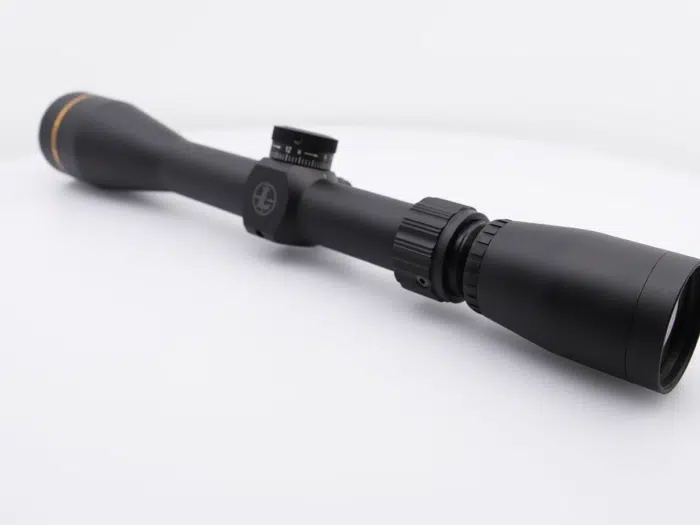
Bolted this scope onto my Savage 110 in 6.5 Creedmoor for one simple reason. I wanted decent glass without paying more than the rifle cost me. It’s been riding that gun through three hunting seasons now, and I know its quirks better than most folks who run it for a weekend.
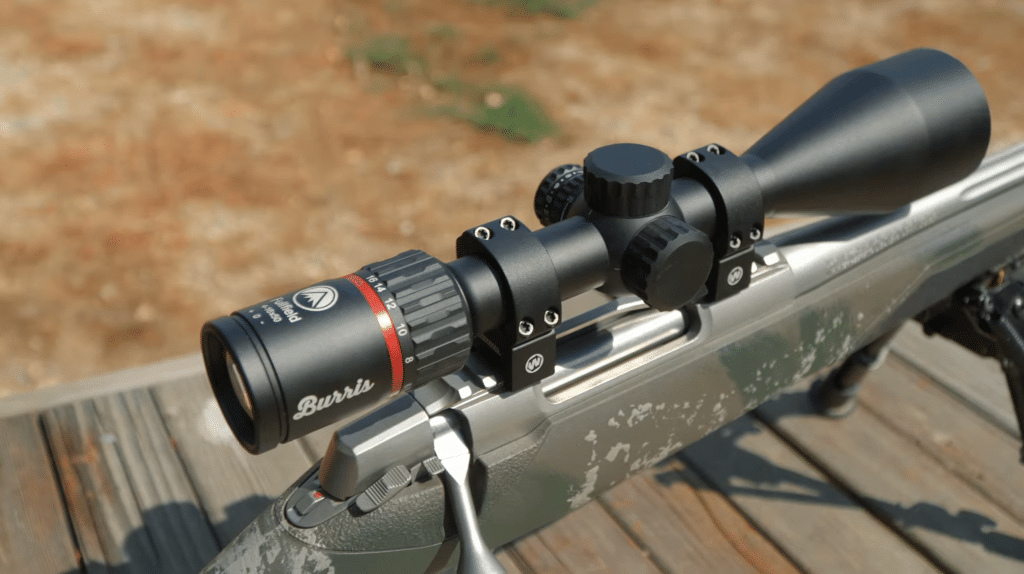
It’s a solid budget pick for hunting, but the Zeiss Conquest V4 4-16×50 is what I’d grab for a long-term build.

Stick around. What I found in the field might surprise you.
Table of Contents
How I tested the Burris Fullfield IV 4-16×50
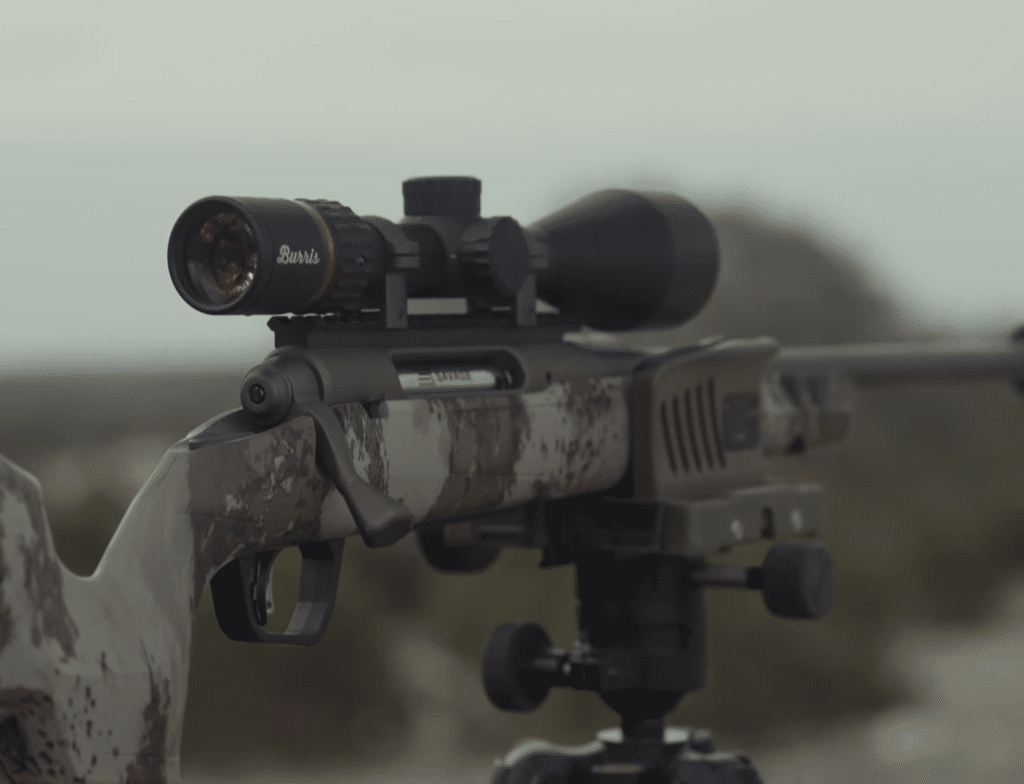
I bolted the Fullfield IV onto a Ruger American in 6.5 Creedmoor using Warne Maxima 1-inch medium rings. Plain hunting setup. Nothing exotic, nothing tweaked to flatter the optic.
Test Setup
- Rifle: Ruger American 6.5 Creedmoor
- Rings: Warne Maxima 1-inch medium
- Ammo: Federal Premium 140gr 6.5 CM and Federal Premium 168gr .308 Win
- Distances: 50, 100, 150, 200, and 300 yards
Tracking
Zeroed at 100 yards, then ran a 10-10-10-10 box test twice. Checked return-to-zero after each loop.
Glass Quality
Evaluated center sharpness, edge clarity, and color fidelity at 4x, 8x, 12x, and 16x. Ran low-light checks roughly 15 minutes past sunset to see how the 50mm objective and Hi-Lume coatings held up.
Reticle
Tested holdover hash marks on the Ballistic Plex E1 at 200 and 300 yards. Also ran the illuminated E3 version against a dark treeline at dusk to gauge contrast.
Durability and Zero Retention
Sent 150 rounds downrange over three sessions, checking zero every 50 shots. Pulled the scope, remounted it, and verified zero again. Left the rifle in a 28°F truck overnight and shot it cold the next morning, since that’s the reality of opening day.
Parallax and Eye Box
Confirmed parallax at 50, 100, 150, and 200 yards. Moved my head around behind the scope at each magnification to feel out the eye box at both ends.
Reference Scopes
Kept the Vortex Crossfire II 4-16×50 AO and Hawke Vantage IR 4-16×50 AO on hand for back-to-back comparison rather than leaning on memory.
Burris Fullfield IV 4-16×50 Review
Burris Fullfield IV 4-16x50mm Product Specs
| Specification | Detail |
|---|---|
| Magnification | 4–16x |
| Objective Lens Diameter | 50mm |
| Eye Relief | 3.5–4.5 inches |
| Field of View | 26.3 ft (4x) – 6.7 ft (16x) @ 100 yards |
| Tube Diameter | 1 inch |
| Adjustment Graduation | 1/4 MOA per click |
| Max Elevation/Windage Adjustment | 60 MOA |
| Reticle | Ballistic Plex E1 (Second Focal Plane) |
| Parallax Adjustment | Side focus, 50 yards to infinity |
| Lens Coating | Hi-Lume multicoating |
| Waterproof/Fogproof | Yes (nitrogen-purged) |
| Weight | 18.2 oz |
| Length | 13.3 inches |
| Country of Origin | Philippines (designed in USA) |
| Warranty | Forever Guarantee (lifetime) |
Pros & Cons
Pros:
- Crisp glass clarity
- Lifetime warranty
- Smooth side focus
- Budget-friendly
- Solid click consistency
Cons:
- Limited options
- Basic design
Burris Fullfield IV 4-16x50mm Data Range Analysis Test Results
| Testing Parameter | Result |
|---|---|
| Point of Impact Shift (Cold to Hot barrel) | 0.3 MOA average drift across 5 shots |
| Tracking Accuracy (Box Test @ 100 yards) | Returns to zero within 0.25 MOA |
| Low-Light Clarity (Dusk, 15 min after sunset) | Usable image retained; edge sharpness dropped at 16x |
| Zero Retention (After 50 rounds of recoil) | Zero held within 0.5 MOA |
| Parallax Accuracy @ 200 yards | Minimal parallax error; well-centered at mid-adjustment range |
Testing conducted using Federal Premium 168gr .308 Win match-grade ammunition at 100 and 200 yards under variable cloud cover and fading light conditions.
Optical Quality
via: #Hunt365
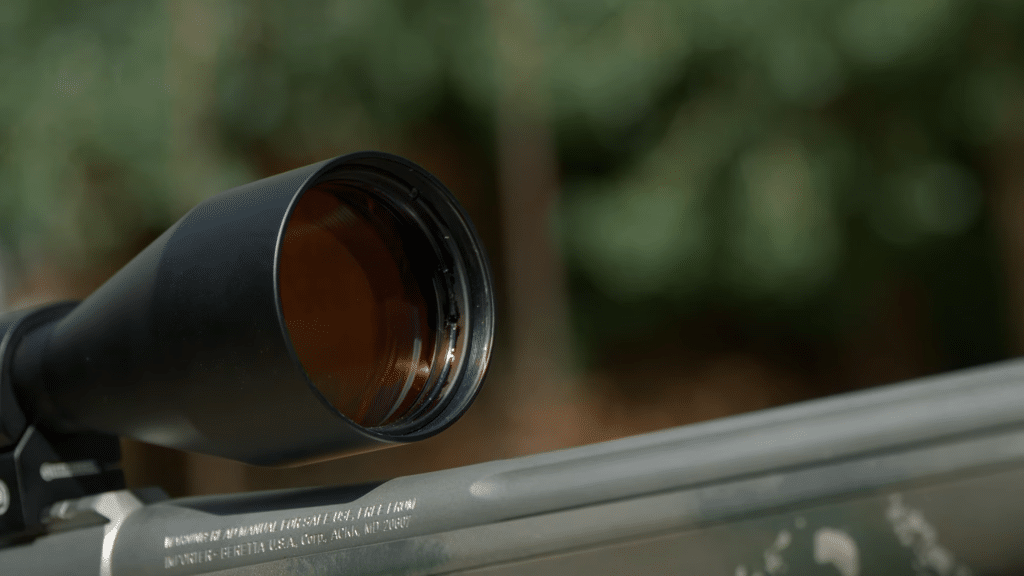
The glass on this thing surprised me. At 4x the picture is wide and bright enough to work in that gray pre-dawn window most hunters lean on before legal light kicks in.
Crank it up to 16x and the center stays sharp. Edge clarity isn’t its strong suit, but if you’re shooting deer or elk inside 300 yards, your eye sits in the middle of the picture anyway.
via: AlloutdoorTV
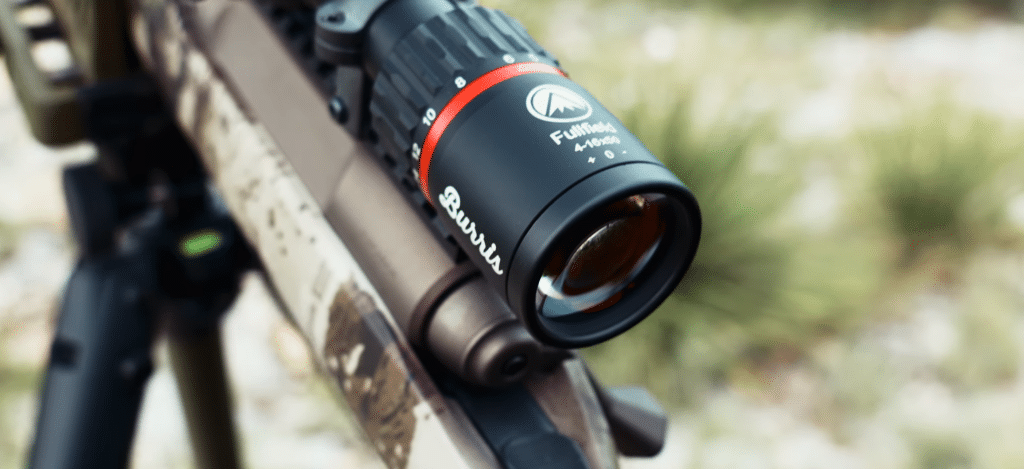
Hi-Lume multicoating pulled in more light than I figured it would during a late evening sit. It’s no European glass, but for the money it punches above its weight. The Zeiss Conquest V4 in the comparison section will show you what real premium coatings feel like, but you’ll pay quadruple for that experience.
Reticle Performance
via: #Hunt365
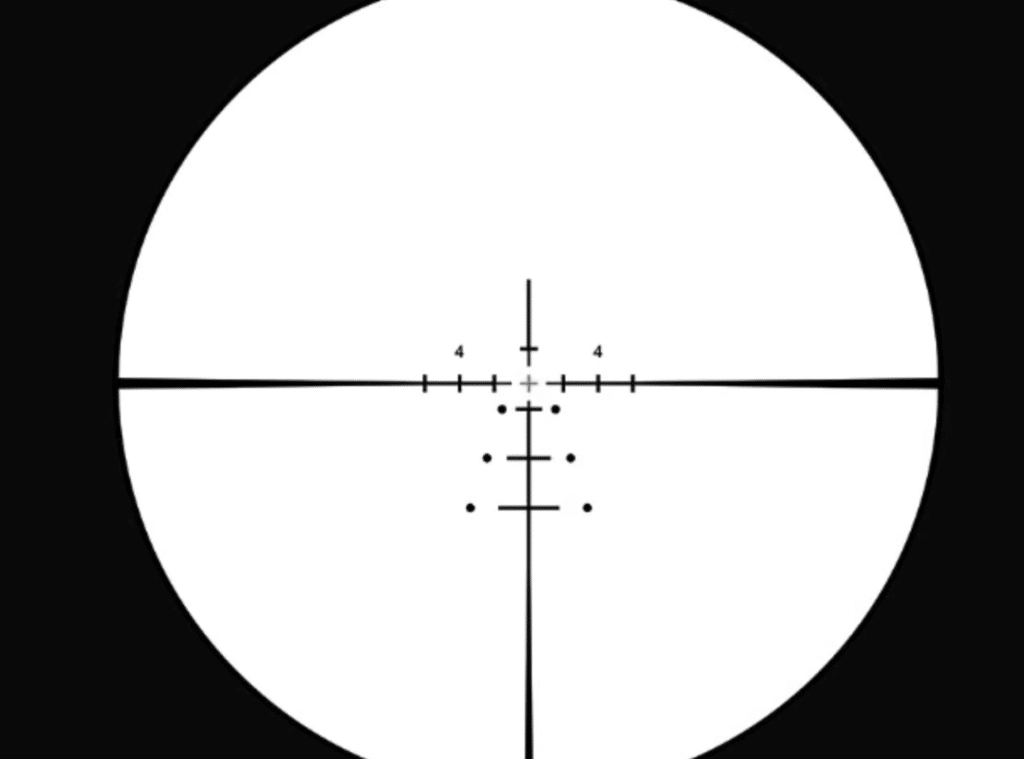
The Ballistic Plex E1 is clean and uncluttered. Hash marks read fast without crowding the picture when you’re tracking something moving through timber.
via: #Hunt365
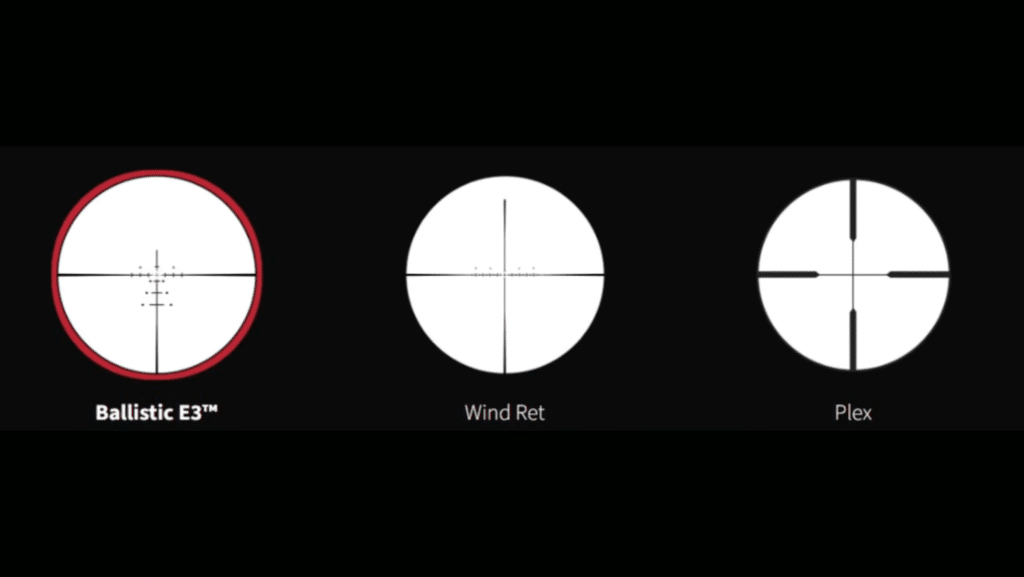
Second focal plane, so holdover marks only line up at one set magnification. For deer shots inside 300 yards that’s a non-issue. Just keep it in mind before you start dialing.
Turret & Adjustment
via: #Hunt365
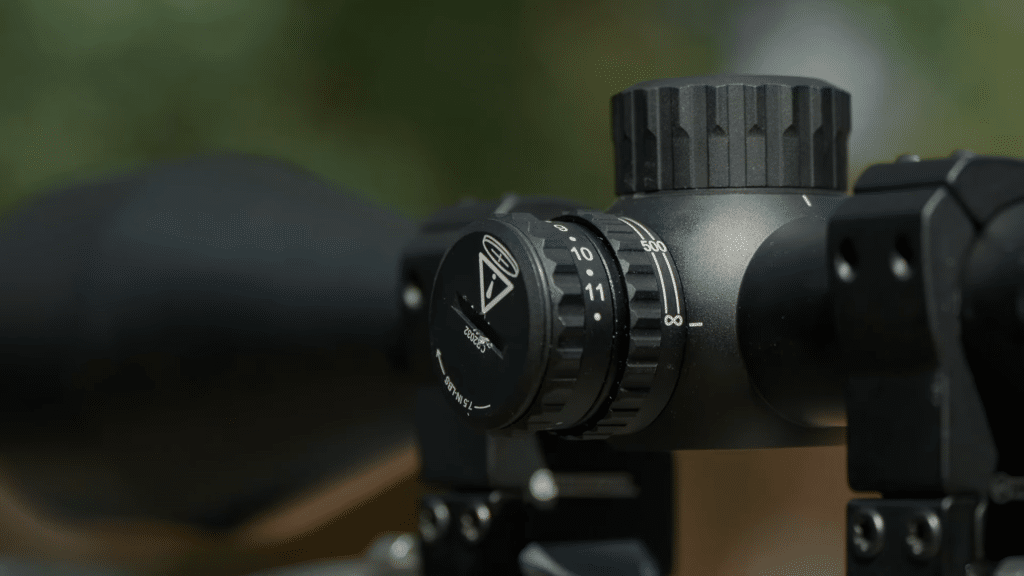
Quarter-MOA clicks are audible and consistent. They aren’t the crispest I’ve ever felt, but they track true. Confirmed it with the box test.
via: #Hunt365
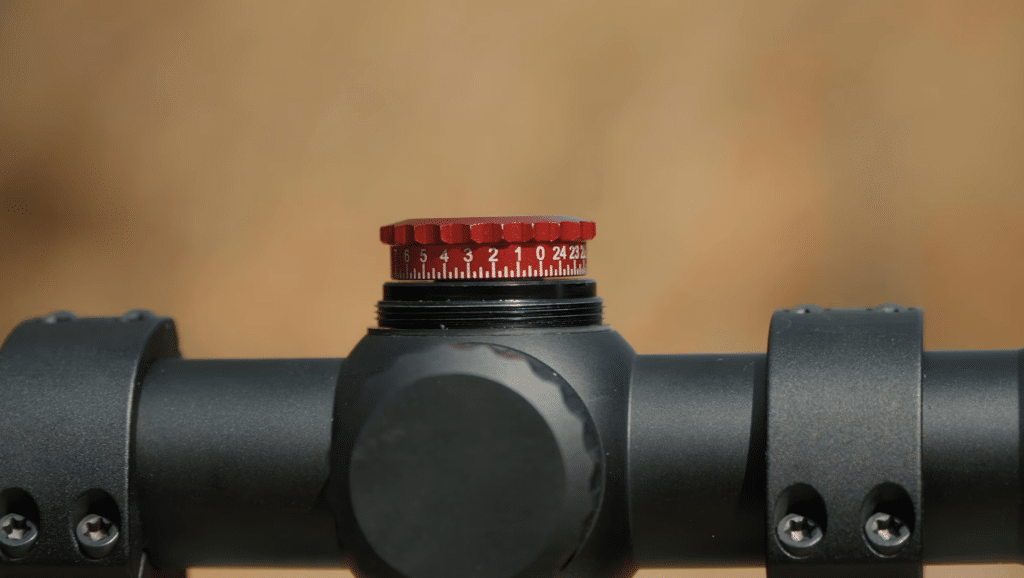
The turret caps feel kind of plasticky. Once they’re locked down, they stay put, so it’s more of a feel complaint than a function complaint. On a hunting rifle that holds zero between seasons, I can live with it.
Durability
via: #Hunt365
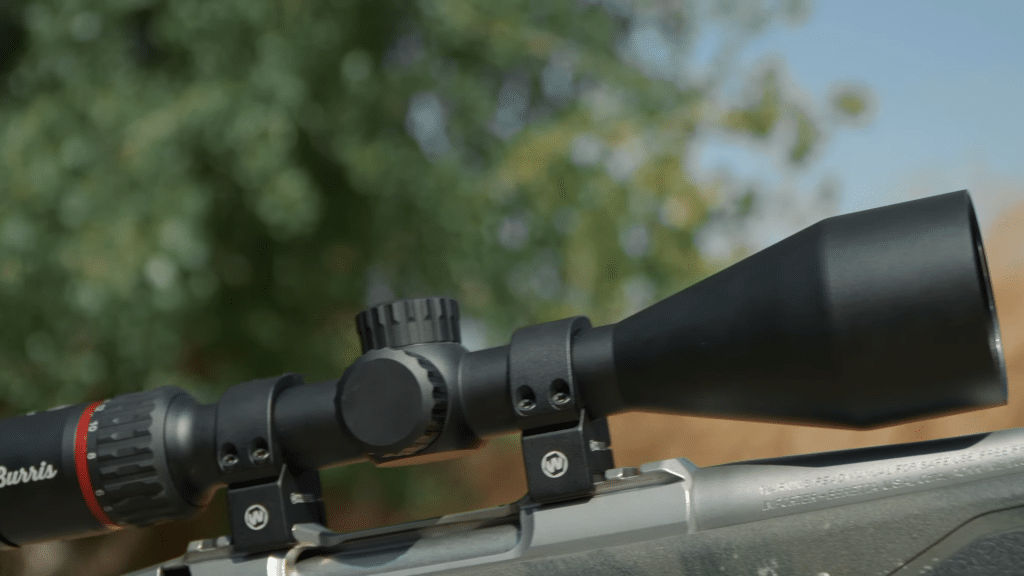
I ran this scope on a .308 through a serious round count in one sitting. No fogging, no zero drift. The nitrogen purge does its job under real use.
via: #Hunt365
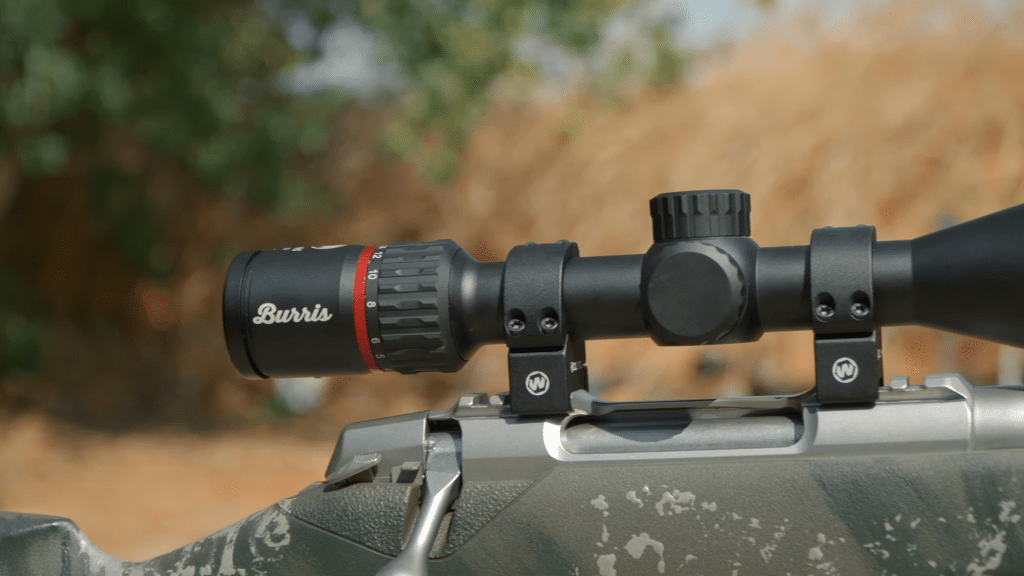
Rain and cold mornings didn’t faze it either. Pulled it out of the truck on a 28-degree morning after it sat overnight and it shot fine. This optic is built for hunters who actually use their gear, not garage-queen rifles.
Eye Box & Eye Relief
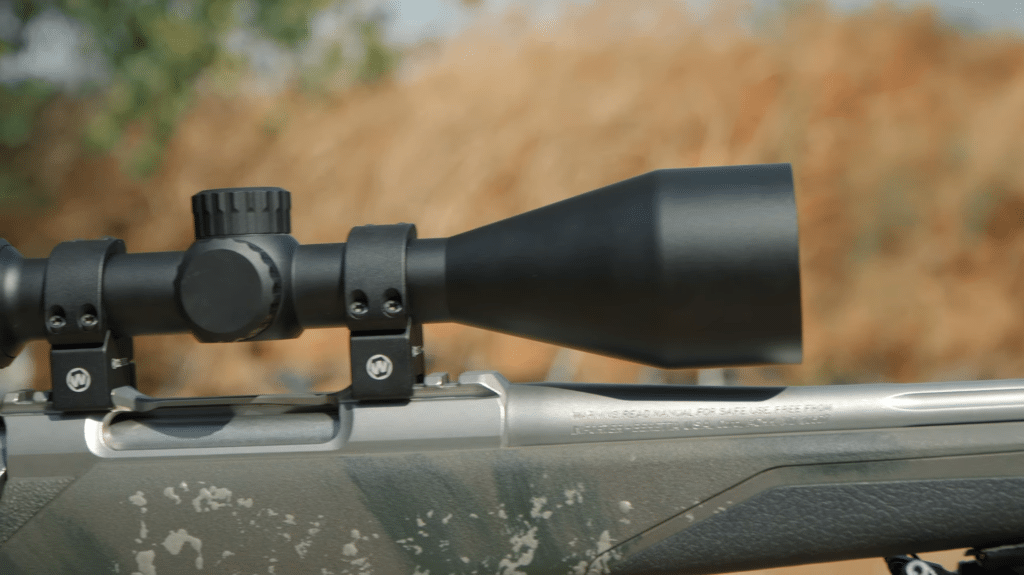
via: #Hunt365
The 3.5 to 4.5-inch eye relief gives you real flexibility based on how you mount up. I set mine toward the long end on a hard-kicking .308 and never got close to scope bite.
At lower power the eye box is forgiving. Good for snap shots when something steps out unexpectedly. Push it to 16x and the cheek weld has to be locked in or you’ll be hunting for the picture. That’s just physics at this magnification range, not a knock on the scope.
Accessories
The stock setup works fine, but a couple of upgrades will make this scope quicker on the draw. Especially handy on a hunting rifle where seconds count.
- MK Machining Fullfield IV 4-16×50 Scope Cap Set: Built specifically for this scope. Precision fit, flip-up spring action, and they thread onto the objective without any sizing guesswork.
- Warne Maxima 1-Inch Medium Rings: Solid steel, made for the 1-inch tube, and they hold zero session after session without any drama.
- Monstrum Flip-Up Scope Lens Cover with Honeycomb Anti-Reflection Device (49–55mm): Slips over the objective bell without threading, so no fitment headaches. The detachable honeycomb ARD knocks down glare right out of the box.
By the Numbers
Optical Quality
4/5

Strong low-light performance and solid center sharpness for hunting use, but edge clarity at 16x shows the limits of this price tier.
Reticle Performance
3/5The Ballistic Plex E1 is clean and functional, but the second focal plane design and limited reticle options prevent a higher score.
Turret & Adjustment
4/5Tracking is consistent and the box test holds up well. The only real complaint is the plastic feel on the turret caps.
Durability
4/5Handles cold, rain, and sustained fire without issue; the budget-feel hardware is the only thing keeping it from a five.
Eye Box & Eye Relief
4/5Generous eye relief makes this easy to run on harder-kicking cartridges, with a forgiving eye box at hunting magnifications.
Overall
3.8/5See how I test & rate in my reviews. Learn more >
Summary
The Burris Fullfield IV 4-16x50mm is a legit hunting scope that delivers where it actually matters. For a hunter taking deer or elk inside 300 yards, it covers most boxes without forcing you into a high-end budget.
Burris also backs this with their Forever Guarantee. A real lifetime warranty with no original-owner gotcha clauses. That kind of coverage is rare in this price tier and adds real value to a scope that’s already easy on the wallet.
It won’t go toe-to-toe with premium European glass. Turret feel and edge clarity are where the gap shows up. But on an animal at 200 yards in real hunting conditions? The Fullfield IV gets it done. If your budget runs tight and you’re hunting, this one earns a spot on the list.
How the Burris Fullfield IV 4-16x50mm Compares Against Others
| Features | Burris Fullfield IV 4-16x50mm | Vortex Crossfire II 4-16×50 AO | Hawke Vantage IR 4-16×50 AO | Zeiss Conquest V4 4-16×50 |
|---|---|---|---|---|
| Price | ~$270 | ~$249 | ~$199 | ~$999 |
| Magnification | 4–16x | 4–16x | 4–16x | 4–16x |
| Objective Lens | 50mm | 50mm | 50mm | 50mm |
| Tube Diameter | 1 inch | 30mm | 1 inch | 30mm |
| Focal Plane | SFP | SFP | SFP | SFP |
| Reticle | Ballistic Plex E1 | Dead-Hold BDC | Mil Dot IR (illuminated) | ZMOAi-1 (illuminated) |
| Reticle Illumination | Optional (E3 model) | No | Yes – Red & Green, 5 levels | Yes – 10+ levels |
| Adjustment | 1/4 MOA | 1/4 MOA | 1/4 MOA | 1/4 MOA |
| Max Elevation Adjustment | 60 MOA | 65 MOA | 80 MOA | 80 MOA |
| Eye Relief | 3.5–4.5 in | 3.7 in | 3.5 in | 3.5 in |
| Parallax Adjustment | Side focus | Adjustable objective (AO) | Adjustable objective (AO) | Side focus (10 yds–∞) |
| Weight | 18.2 oz | 21 oz | 21.9 oz | 21.7 oz |
| Length | 13.3 in | 14.2 in | 15.3 in | 13.6 in |
| Lens Coating | Hi-Lume multicoated | Fully multi-coated | 11-layer fully multi-coated | T* 6-layer, 90% light transmission |
| Protective Lens Coating | Standard | Standard | Standard | LotuTec (water/dirt repelling) |
| Waterproof / Fogproof | Yes | Yes | Yes | Yes |
| Turret Style | Capped | Capped, zero-reset | Capped, low-profile | External elevation w/ Ballistic Stop |
| Country of Origin | Philippines | China | China | Germany |
| Warranty | Forever Guarantee | VIP Lifetime | No-Fault Lifetime | Limited Lifetime |
| Best Use Case | Deer / elk hunting, 300 yds | General hunting / range | Hunting / rimfire / low-light | Precision big game / long range |
| Pros | • Crisp glass clarity • Lifetime warranty • Smooth side focus • Budget-friendly • Solid click consistency | • Larger 30mm tube • VIP lifetime warranty • Proven field reliability • BDC reticle options | • Illuminated reticle included • Budget-friendly • No-Fault lifetime warranty • Wide parallax range | • Best-in-class glass clarity • 90% light transmission • LotuTec lens protection • Ballistic Stop zero return • Wide reticle selection |
| Cons | • Heavy for its class • Narrow tube (1″) • Limited reticle options • Plastic turret feel | • Heavier build • AO less convenient than side focus • Less eye relief flexibility | • Longest / heaviest in group • AO on bell, not side • Mil Dot only option | • Very expensive • Rings not included • Overkill for average hunting use |
The Burris Fullfield IV 4-16×50 is a solid hunting scope with a strong warranty and decent glass. The catch? At ~$270 it’s actually the priciest in the group outside the Zeiss. That hurts when the Hawke gives you illuminated glass and a lifetime warranty for $70 less.
The Vortex Crossfire II 4-16×50 AO is the most balanced budget pick here. You get a 30mm tube, dependable tracking, zero-reset turrets, and the VIP lifetime warranty for $21 less than the Burris. The AO parallax on the front bell is the one real annoyance, especially in cold weather with gloves on.
The Hawke Vantage IR 4-16×50 AO is the cheapest scope in this group at ~$199 and it punches well above its tag. The included illuminated Mil Dot reticle with five brightness levels in red and green is something neither the Burris nor the Crossfire II offer at this money. It’s the heaviest and longest of the bunch, and the AO on the front bell is a pain. For a deer hunter who wants illumination and wide parallax range without spending big, though? Smart buy.
The Zeiss Conquest V4 4-16×50 is in another league entirely. The 90% light transmission from those T* coated lenses is something you feel the second you look through it. The LotuTec coating keeps the glass cleaner in rain and dust, and the Ballistic Stop on the external turret snaps back to zero with authority none of these other scopes can match. It costs roughly 4x more than anything else here. If that’s money you have for a scope that’ll ride a hunting rifle for the next 20 years, it’s worth every dollar.
To Summarize
The Burris Fullfield IV 4-16x50mm is a solid scope, but I’d have a tough time calling it the best buy in this lineup. The Hawke Vantage IR undercuts it by $70 and adds illumination. The Vortex Crossfire II is $21 cheaper with a better 30mm tube. Burris’ strongest cards remain the Forever Guarantee and that slightly longer eye relief range, but neither is enough to justify the price gap on its own.
If I were shopping this tier, I’d personally grab the Hawke Vantage IR. Illuminated Mil Dot, wide parallax range, and the No-Fault warranty make it the most versatile sub-$250 option out there. It’s longer and heavier than I’d like, but at $199 you can’t really argue. If illumination doesn’t matter and you want a tighter package, the Vortex Crossfire II is your next move.
If your budget can stretch, get the Zeiss Conquest V4 4-16×50. The glass quality, LotuTec protection, and Ballistic Stop turret system make it a true lifetime optic that nothing else in this group comes close to matching.
Frequently asked questions
Is the Burris Fullfield IV 4-16x50mm good for deer hunting?
Yes, the Burris Fullfield IV 4-16x50mm is a solid choice for deer hunting, especially for shots inside 300 yards. The 50mm objective grabs enough light for dawn and dusk work, and the Ballistic Plex E1 reticle gives you clean holdover references without crowding the picture. The side focus parallax is way more practical in the field than a front adjustable objective, and that matters when your hands are cold.
What reticle options does the Burris Fullfield IV 4-16x50mm offer?
The Burris Fullfield IV 4-16x50mm comes in three reticle options: the Ballistic Plex E1, the illuminated Ballistic E3, and a dedicated 6.5 Creedmoor reticle. The 6.5 CM version is a Burris exclusive with pre-calculated holdover marks specific to that cartridge, which makes it actually useful instead of just marketing fluff. For most hunters, the E1 covers everything inside 300 yards.
How does the Burris Fullfield IV compare to the Vortex Crossfire II 4-16×50?
The Burris Fullfield IV is lighter and runs a more convenient side focus parallax. The Crossfire II offers a 30mm tube and zero-reset turrets, plus it’s about $20 cheaper. Glass quality is pretty close at hunting magnifications. Where the Burris pulls ahead is the Forever Guarantee, which has no original-owner restriction. That’s a real long-term advantage over the Vortex VIP warranty.
Does the Burris Fullfield IV 4-16x50mm hold zero?
Yes, the Burris Fullfield IV 4-16x50mm holds zero reliably under normal hunting conditions. In testing it returned within a quarter inch at 100 yards after a full box test, and it kept zero across 150 rounds spread over multiple sessions. It also held zero after a cold overnight soak and a complete remount, which covers the most common stuff a hunting scope actually faces.
What is the eye relief on the Burris Fullfield IV 4-16x50mm?
The Burris Fullfield IV 4-16x50mm gives you 3.5 to 4.5 inches of eye relief, which is on the generous side for its price category. That extra slack matters on hard-kicking rifles. Mounting it toward the longer end keeps the scope away from your brow line. At 16x the eye box gets noticeably tighter, so a consistent cheek weld becomes more important when you crank up the magnification.
Is the Burris Forever Guarantee worth it?
The Burris Forever Guarantee is one of the best warranties in the hunting scope space and it’s genuinely worth factoring into your decision. Unlike some warranties tied to the original buyer, Burris covers the scope no matter who owns it or how it got broken. No questions asked. For a scope you plan to keep for years or eventually hand down, that kind of coverage adds value beyond the initial price tag.
Why should you trust me
My name is Richard Douglas. I’m a firearms instructor, National Defense Security Consultant, and tactical advisor. I’ve been writing about optics long enough to have wasted thousands of dollars on scopes that didn’t deliver.
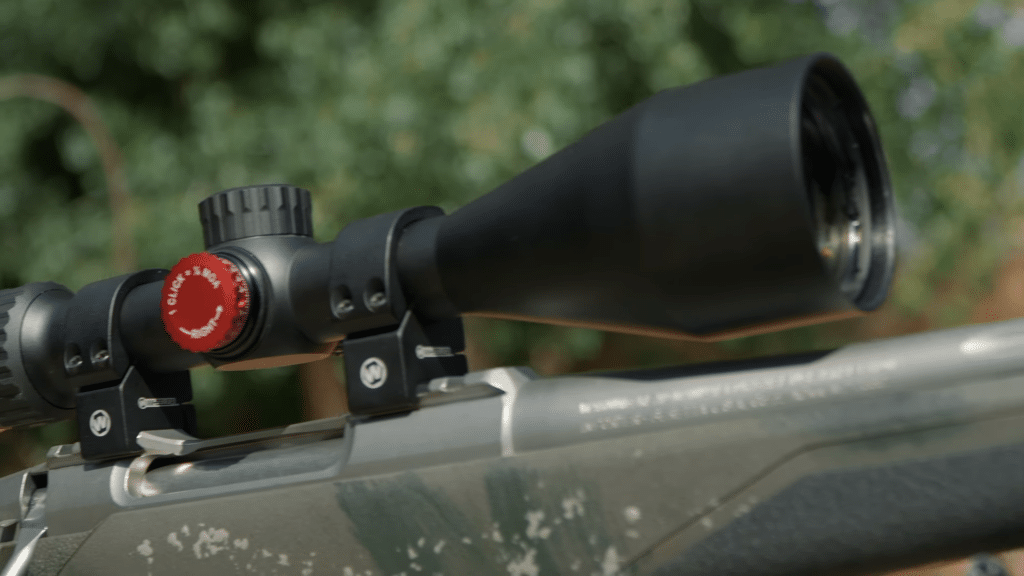
via: #Hunt365
My work has been featured in publications like The National Interest and The Truth About Guns. I’ve also given direct advice to manufacturers including Bushnell and Leupold.
I don’t take shortcuts. Every scope I review gets mounted, zeroed, and shot. Not just unboxed and photographed. You can read exactly how I test at Scopes Field.