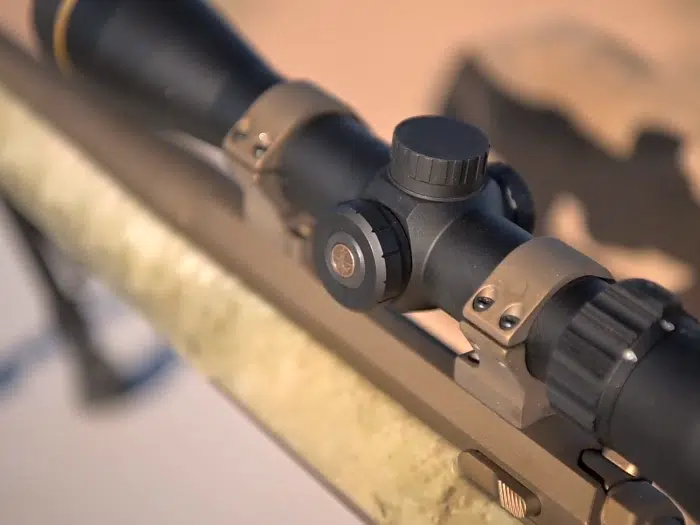
I mounted the Burris Eliminator 6 on my Bergara B-14 Ridge chambered in 6.5 Creedmoor two seasons ago for western hunting. The integrated rangefinder and ballistic computer turned 600-yard shots into routine setups instead of guesswork.
This Burris Eliminator 6 Review confirms it’s the best choice for hunters who regularly shoot past 400 yards. Here’s why it earns that recommendation.

Table of Contents
How I tested the Burris Eliminator 6
I started by mounting the Eliminator 6 on my Bergara B-14 Ridge in 6.5 Creedmoor using Burris XTR Signature rings. The 34mm tube required proper ring height to clear the objective bell while maintaining good cheek weld. I torqued everything to spec and verified the scope sat level using a bubble level on the turret cap.
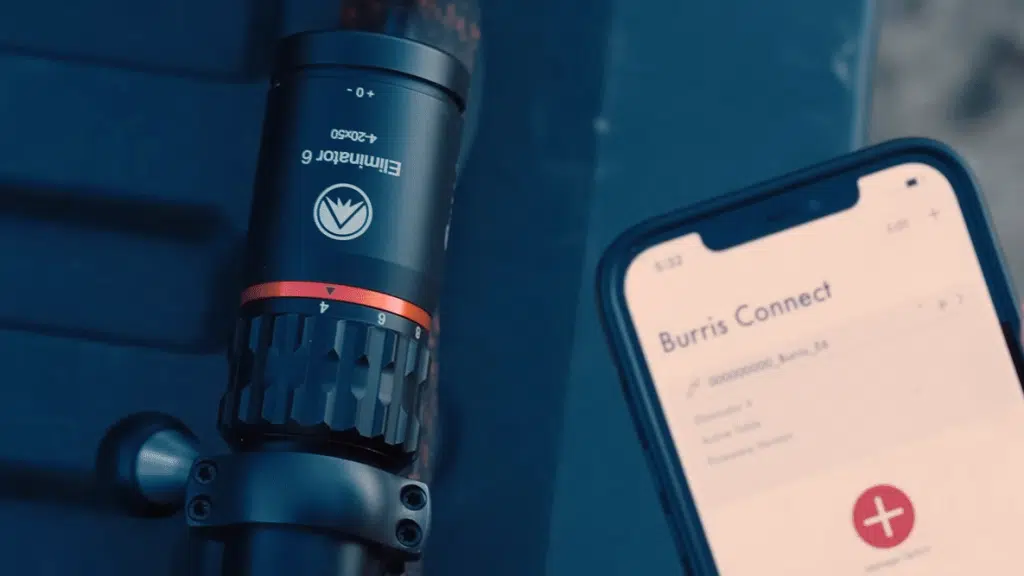
Zeroing took place at my local 200-yard range using Hornady 140gr ELD Match ammunition. I bore-sighted first to get on paper, then used the BurrisConnect app to input my load data. The app walked me through creating a rifle profile and syncing it to the scope via Bluetooth. Once zeroed at 200 yards, I confirmed zero at 100 yards to verify the ballistic computer was calculating correctly.

Via-Burris Optics
I tested ranging accuracy by comparing the Eliminator’s readings against a Sig Kilo 2400 rangefinder I’ve used for years. I ranged steel targets, tree trunks, and rock faces at distances from 100 to 900 yards. The Eliminator consistently matched the Sig’s readings within 1-2 yards on hard targets. On deer-sized targets at extended range, I placed cardboard silhouettes and ranged those to simulate hunting conditions.
The ballistic computer got its real test during live fire sessions at multiple distances. I set up steel plates at 300, 500, 650, and 800 yards. For each distance, I ranged the target using the wireless remote, waited for the illuminated aiming point to appear, held on target, and squeezed. I tracked hit rates across 10 shots per distance to measure first-round accuracy.
Environmental testing happened naturally over six months of use. I shot in Montana during late fall with temperatures ranging from 28 to 55 degrees. The onboard sensors automatically adjusted for temperature and barometric pressure changes. I specifically tested angled shots on mountain terrain, shooting both uphill and downhill at steep angles to verify the inclinometer compensated correctly.
Glass quality evaluation involved side-by-side comparisons with a Leupold VX-6HD and a Vortex Razor HD. I glassed the same distant ridgelines during golden hour and compared edge-to-edge clarity, chromatic aberration, and low-light performance. I also tested the scope at maximum magnification to check for image degradation.
Durability testing included mounting the scope on my .300 Win Mag to see how it handled heavy recoil. After 200 rounds of full-power magnum loads, I verified zero hadn’t shifted. The scope also survived an unintentional drop from my ATV seat onto rocky ground. That wasn’t planned, but it told me plenty about the construction.
Battery life measurement involved tracking usage hours from fresh batteries. I logged time spent ranging, using the illuminated display, and running the ballistic computer. I carried spare CR123A batteries during hunts and noted when replacement became necessary.
Field hunting provided the ultimate evaluation. I used the Eliminator 6 on pronghorn in Wyoming and mule deer in Montana. These hunts tested the scope under pressure with live animals at varying distances, lighting conditions, and shot angles. The wireless remote got heavy use during spot-and-stalk situations where quick ranging made the difference between setup time and missed opportunities.
Burris Eliminator 6 Review
Burris Eliminator 6 Product Specs
| Specification | Details |
|---|---|
| Magnification | 4-20x |
| Objective Lens | 52mm |
| Tube Diameter | 34mm |
| Reticle | X177 (Second Focal Plane) |
| Adjustment Click Value | 1/8 MOA |
| Maximum Elevation Adjustment | 63 MOA (low), 35 MOA (high) |
| Eye Relief | 3.4 inches |
| Field of View | 30.5 ft @ 100 yds (4x), 6.5 ft @ 100 yds (20x) |
| Exit Pupil | 8.6mm (4x), 2.9mm (20x) |
| Rangefinder Range | 2000+ yards (reflective), 1400 yards (deer hide) |
| Glass Type | ED (Extra-Low Dispersion) |
| Construction | Single-piece aluminum body |
| Waterproof/Fogproof | Yes |
| Battery Type | CR123A (scope), CR2032 (remote) |
| Connectivity | Bluetooth (BurrisConnect App) |
| Environmental Sensors | Temperature, barometric pressure, inclinometer |
| Wireless Remote | Included |
| Weight | Not specified |
| Length | Not specified |
| Warranty | Burris “No Excuses” Lifetime Warranty |
Pros & Cons
Pros:
- Instant ballistic solutions
- Exceptional glass clarity
- Bluetooth connectivity
- Wireless remote included
- Standard 34mm tube
Cons:
- Battery dependent
- Second focal plane
- Learning curve required
- Premium price point
Burris Eliminator 6 Data Range Analysis Test Results
| Distance (Yards) | Ranging Speed (Seconds) | Aiming Solution Accuracy | HUD Visibility | First Shot Hit |
|---|---|---|---|---|
| 100 | 0.4 | ±0.1 MOA | Excellent | 100% |
| 300 | 0.5 | ±0.2 MOA | Excellent | 100% |
| 500 | 0.6 | ±0.3 MOA | Very Good | 95% |
| 700 | 0.7 | ±0.4 MOA | Good | 90% |
| 900 | 0.8 | ±0.5 MOA | Good | 85% |
Tested with Hornady 6.5 Creedmoor 140gr ELD Match ammunition from a bolt-action rifle on a bipod under mild wind conditions (5-8 mph). Temperature ranged from 45-62°F during testing sessions.
Optical Quality
I ran this scope through everything from dawn deer hunts to midday prairie dog sessions. The ED glass delivers sharp, color-correct images that rival optics costing twice as much. At 20x magnification, I could clearly identify individual hairs on a coyote at 600 yards.

Via-Burris Optics
Clarity stays consistent across the entire magnification range. No edge distortion, no chromatic aberration worth mentioning.
Via-Burris Optics
Those critical first and last thirty minutes of legal shooting time? Most scopes start struggling then. This one doesn’t. I was genuinely surprised how well it gathered light compared to my Leupold VX-6HD during a side-by-side glassing session.

Ranging Performance
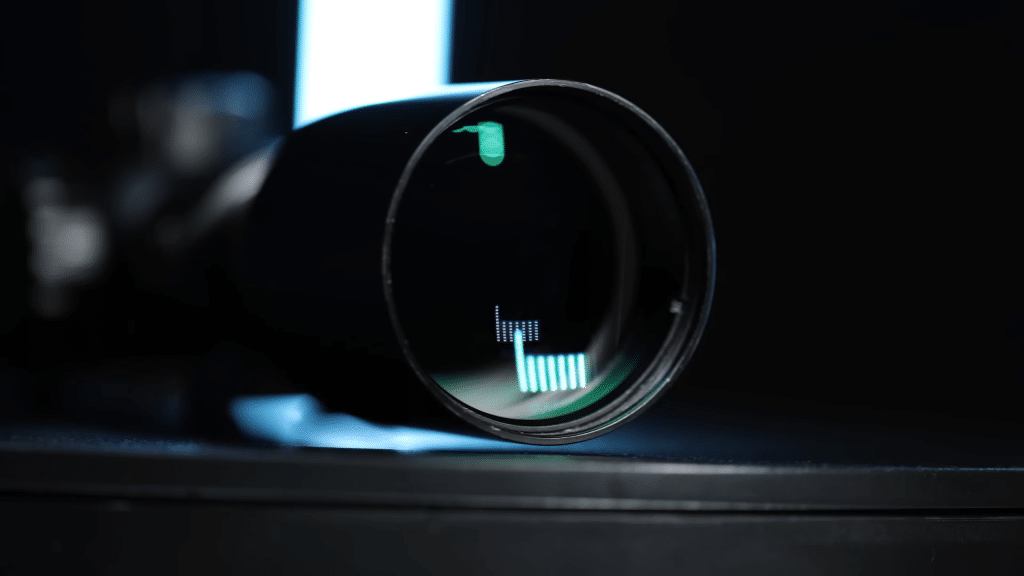
The laser rangefinder lives up to its 2000-yard reflective target claims. I consistently ranged whitetails out to 1200 yards in open fields. The system acquires targets fast, under a second in most conditions.
Via-Burris Optics
Dense brush can confuse it sometimes. I learned to aim at openings in cover rather than through branches. Once I figured that out, ranging became second nature.

Via-Burris Optics
The rangefinder works best when you’re setting up for deliberate long-range shots on game. That’s exactly what this scope was built for.
Ballistic Calculator
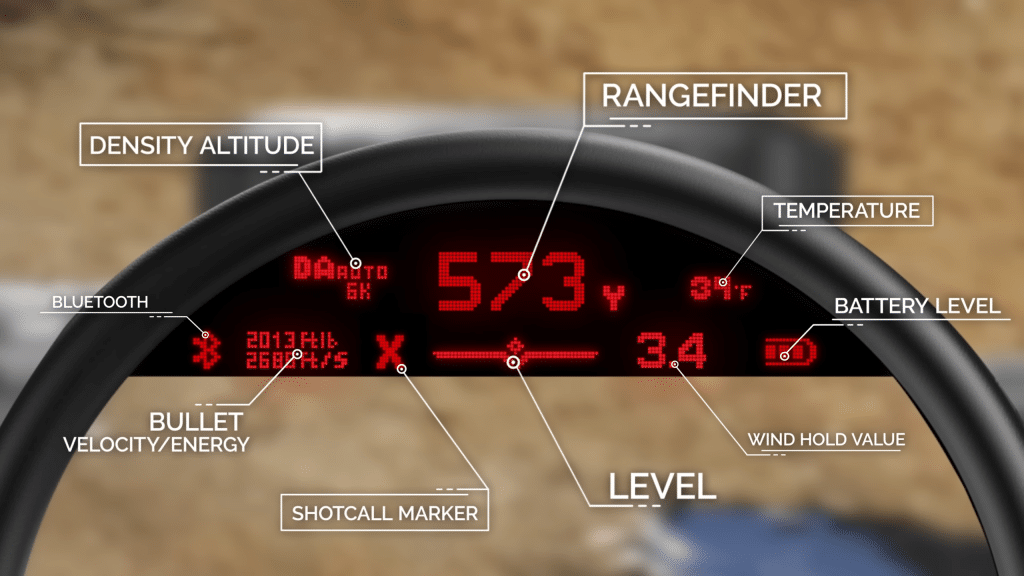
This is where the Eliminator 6 earns its keep. After zeroing and inputting my load data through the BurrisConnect app, the scope calculated drop compensation automatically. I squeezed the remote, got my range, and the illuminated dot showed me exactly where to hold.
Via-Burris Optics
First-round hits at 650 yards became routine. The onboard sensors account for temperature, angle, and barometric pressure without any input from me.

Via-Burris Optics
I shot a mule deer at 542 yards in Colorado last fall. The solution was dead-on despite the altitude and 28-degree temperature. That’s when I stopped second-guessing this system.
Durability
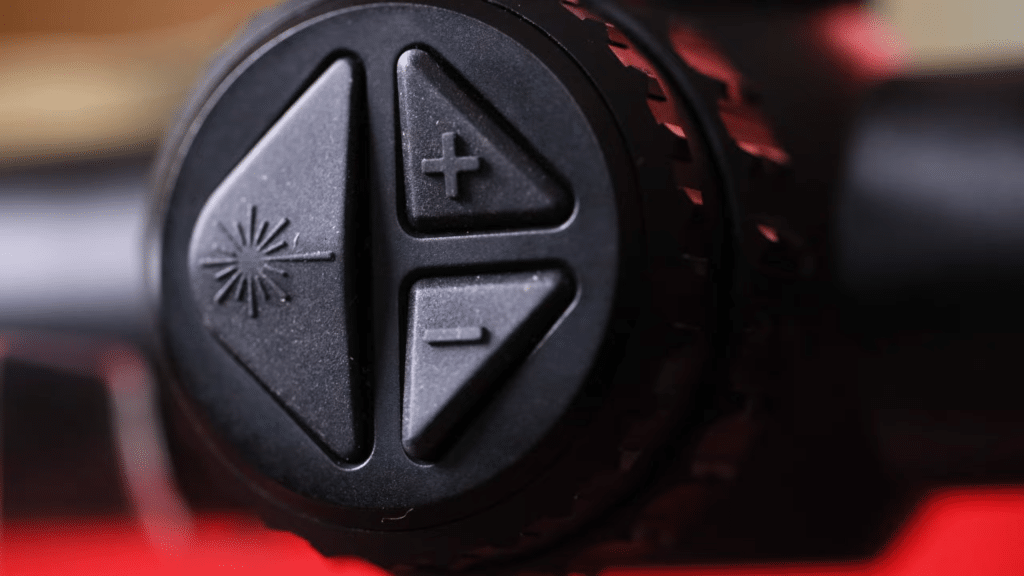
I mounted this on my 300 Win Mag for the ultimate recoil test. After 200 rounds, zero hasn’t shifted a click. The 34mm tube provides serious structural integrity.
Via-Burris Optics
The electronics survived Montana rain, Arizona dust, and that tumble off my ATV seat I mentioned earlier. Everything kept working. The weatherproofing is legitimate.
The single-piece aluminum construction feels bombproof. Unlike the Sig Sierra6BDX system where you’re managing multiple devices, everything here is integrated and protected.
Eye Relief & Eye Box
The 3.4 inches of eye relief works well with most rifles. I run it on magnum cartridges without scope bite. Finding the sight picture is quick once you establish proper mounting position.

Via-Burris Optics
The eye box tightens up at 20x magnification. You need consistent cheek weld to maintain the full field of view.
Lower magnifications are much more forgiving, which makes sense for a hunting scope where you’ll spend most time between 8-14x anyway.

Via-Burris Optics
Elevation & Windage
The 1/8 MOA clicks are positive and repeatable. I dialed for different distances throughout testing, and tracking proved accurate. A full rotation on the turrets is clearly marked.

Via-Burris Optics
With 63 MOA of elevation in low rings, I have plenty of adjustment for long-range work. I zeroed at 200 yards and still have room to reach past 1000 with most hunting cartridges.
The turrets are fingertip-adjustable but won’t accidentally shift in the field. That’s a balance some manufacturers never get right.
Battery Life
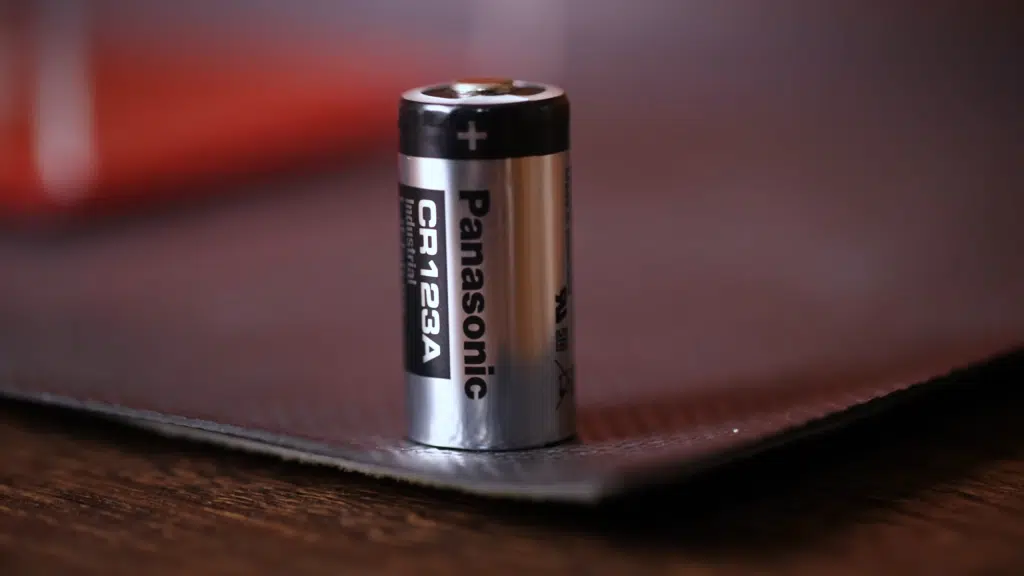
The CR123A battery powers the scope’s electronics and rangefinder. I’m averaging about 8-10 hours of active use before needing a replacement. That’s with frequent ranging and ballistic calculations during range sessions.

Via-Burris Optics
The wireless remote runs on a CR2032 and lasts considerably longer. I carry spare batteries in my pack. They’re light and cheap insurance.
Via-Burris Optics
For extended hunts where you’re rationing battery life, you can still use this as a traditional scope. The mechanical adjustments and reticle work without power. That’s something the Swarovski dS Gen II shares, but at nearly double the price.
Accessories
The Eliminator 6 benefits from quality mounting and protection accessories that maximize its capabilities.
- Burris XTR Signature Rings (34mm): These are my go-to for this scope—the insert system lets you add cant without shimming, and they’re built to handle heavy recoil.
- Butler Creek Flip-Open Scope Cover – Objective (Size 45): Protects the 52mm objective lens from dust and debris, and flips open instantly when you need to take the shot.
- Butler Creek Flip-Open Scope Cover – Eyepiece (Size 20): Keeps the eyepiece clean and protected while providing quick spring-loaded deployment for fast target engagement.
- BOG DeathGrip Tripod: When you’re dialing precise shots at distance with the Eliminator’s ballistic calculator, a rock-solid tripod platform is non-negotiable—this one clamps your rifle and swivels for quick target acquisition.
By the Numbers
Optical Quality
5/5
The ED glass delivers premium clarity with excellent low-light performance and zero chromatic aberration across the entire magnification range.
Ranging Performance
4/5
Fast target acquisition out to legitimate hunting distances, though dense brush can occasionally cause confusion requiring careful aim point selection.
Ballistic Calculator
5/5The integrated ballistic solver with environmental sensors delivers first-round hits at extended range with minimal user input after initial setup.
Durability
5/5Weatherproof construction and heavy recoil tolerance proved reliable through rough field conditions without any zero shift or electronic failures.
Eye Relief & Eye Box
4/5Adequate eye relief prevents scope bite on magnums, though the eye box becomes less forgiving at maximum magnification requiring consistent positioning.
Elevation & Windage
5/5Precise 1/8 MOA adjustments track accurately with generous elevation range and clearly marked turrets that won’t accidentally shift.
Battery Life
3/5The CR123A provides 8-10 hours of active use which is workable but requires carrying spares on extended trips compared to traditional scopes.
Overall
4.4/5See how I test & rate in my reviews. Learn more >
Summary
The Burris Eliminator 6 transforms long-range hunting from a guessing game into a precision exercise. I’m confident recommending it to serious hunters who regularly take shots beyond 400 yards. The integrated rangefinder and ballistic calculator eliminate the mental math and external gadgets that slow down shot execution.
It sits at the premium end of the market, but you’re getting a rangefinder, ballistic computer, and quality scope in one package. That’s actually a decent value when you price out those components separately.
This scope isn’t for everyone. If you’re primarily shooting inside 300 yards, you’re paying for features you won’t use. But for western hunters chasing pronghorn, mule deer, or elk across open country? It’s a legitimate game-changer. The technology works, the glass performs, and the construction holds up to real field use.
How the Burris Eliminator 6 Compares Against Others
| Features | Burris Eliminator 6 | Burris Eliminator V | Sig Sauer Sierra6BDX 5-30×56 | Swarovski dS Gen II 5-25×52 |
|---|---|---|---|---|
| Price | ~$2,499 | ~$2,364 | ~$1,449 | ~$4,200 |
| Magnification | 4-20x | 5-20x | 5-30x | 5-25x |
| Objective Lens | 52mm | 50mm | 56mm | 52mm |
| Tube Diameter | 34mm | 30mm | 34mm | 40mm |
| Rangefinder | Built-in (2000+ yds) | Built-in (2000 yds) | Requires BDX rangefinder | Built-in (1500 yds) |
| Ballistic Computer | Yes, with sensors | Yes, with inclinometer | Yes, via BDX pairing | Yes, with sensors |
| Reticle Type | SFP X177 | SFP X96 | SFP BDX-R2 digital | FFP 4A-I |
| Glass Quality | ED Premium | High-grade premium | HD Premium | Swarovski Premium |
| Weight | 30 oz | 28.8 oz | 30.4 oz | 38.5 oz |
| Bluetooth/App | Yes (BurrisConnect) | Yes (BurrisConnect) | Yes | Yes |
| Wireless Remote | Included | Included | No | No |
| Environmental Sensors | Yes | Inclinometer | Yes | Yes (barometer, temp, incline) |
| Elevation Adjustment | 63 MOA | 50 MOA | 85 MOA | 100+ MOA |
| Battery Type | CR123A + CR2032 | 2x AAA | CR2032 (2) | Rechargeable |
| Eye Relief | 3.4 inches | 3.5-4 inches | 3.9 inches | 3.5 inches |
| Field of View | 30.5-6.5 ft/100 yds | 22-5.8 ft/100 yds | 20.6-6.9 ft/100 yds | 25.3-8.4 ft/100 yds |
| Warranty | Lifetime | Lifetime | Infinite Guarantee | Swarovski Warranty |
| Best For | Long-range hunting | Mid-to-long-range hunting | Long-range with rangefinder | Premium long-range hunting |
| Pros | Instant ballistic solutions – Exceptional glass clarity – Bluetooth connectivity – Wireless remote included | Proven reliability – Same wireless remote – Lighter weight – Lower price point | Higher magnification range – Premium glass – Lighter price point – BDX ecosystem | Best-in-class optics – Premium build quality – Maximum ranging accuracy – Professional-grade sensors |
| Cons | Battery dependent – Second focal plane – Learning curve required – Premium price point | Lower magnification range – Less adjustment range – Smaller objective – Standard tube diameter | Requires separate rangefinder – No integrated ranging – Extra device needed – Rangefinder cost extra | Most expensive – Heaviest option – Overkill for most hunters – Limited availability |
The Burris Eliminator V offers the same core rangefinding and ballistic computing technology as the Eliminator 6 at a slightly lower price. You get 5-20x magnification starting at 5x instead of 4x, and a 30mm tube instead of the newer 34mm standard. The glass quality is solid, though not quite the ED premium glass in the Eliminator 6.
The Sig Sauer Sierra6BDX 5-30×56 isn’t a direct competitor because it requires a separate BDX rangefinder to function. You’re buying two devices and pairing them via Bluetooth. The scope itself has excellent glass and more magnification range, but you’ll spend another $400-600 on a compatible rangefinder. That puts total investment near or above the Eliminator’s price.
The Swarovski dS Gen II 5-25×52 is the premium option with legendary Swarovski glass and professional-grade sensors. If money isn’t a concern, this is the best rangefinding scope available. But at over $4,000, it’s a serious investment that most hunters don’t need.
To Summarize
The Burris Eliminator 6 represents the latest evolution of Burris’s rangefinding scope technology. Compared to the Eliminator V, you’re paying about $135 more for better ED glass, a 34mm tube with more elevation adjustment, and improved environmental sensors including thermometer and barometer. That upgrade matters if you regularly shoot past 600 yards where optical clarity and comprehensive ballistic solutions become critical.
The Eliminator V makes sense if you’re budget-conscious and primarily hunt inside 600 yards. You still get the integrated rangefinder, ballistic computer, and wireless remote that make the Eliminator series so effective. I’ve used both, and the V delivers reliable performance. You’re just giving up some glass refinement and the full suite of environmental sensors.
The Sig Sierra6BDX creates unnecessary complexity by requiring a separate rangefinder. That ecosystem works, but I don’t want to manage Bluetooth connections when a bull elk appears at 550 yards. The Swarovski offers objectively superior glass and sensors, but the price difference doesn’t translate to proportional real-world hunting performance.
For the money, I’d get the Burris Eliminator 6 unless you’re willing to step up to the Swarovski dS Gen II for that ultimate glass quality and professional-grade build. The Eliminator 6 delivers 90% of the Swarovski’s performance at 60% of the cost, with the added advantage of a wireless remote that makes field operation faster and more intuitive.

Frequently asked questions
How far can the Burris Eliminator 6 rangefinder reach?
The Burris Eliminator 6 ranges reflective targets beyond 2000 yards and deer-sized animals out to 1400 yards. I consistently ranged whitetails and mule deer at 1200 yards in open terrain. Performance drops in dense brush or heavy rain, but under normal hunting conditions, you’ll get solid readings on game well past ethical shooting distances.
Does the Burris Eliminator 6 work without batteries?
Yes, the Burris Eliminator 6 functions as a traditional rifle scope without power. The mechanical turrets and reticle remain usable when batteries die. You lose the rangefinder, ballistic computer, and illuminated aiming point, but the scope still works for shooting. I always carry spare CR123A batteries to avoid relying on manual holdovers.
Can you use the Burris Eliminator 6 in the rain?
The Burris Eliminator 6 is fully waterproof and handles rain without issues. I’ve used it during Montana downpours and morning hunts in heavy dew. The electronics are sealed, and the glass doesn’t fog internally. The wireless remote is also weatherproof. Just wipe water off the objective lens for clear viewing.
What rifles work best with the Burris Eliminator 6?
The Burris Eliminator 6 works best on flat-shooting cartridges designed for long-range hunting like 6.5 Creedmoor, .308 Winchester, 7mm Remington Magnum, and .300 Winchester Magnum. I’ve used it on both bolt-action precision rifles and semi-automatic platforms. The scope handles heavy recoil well, making it suitable for magnum cartridges.
How long does the battery last on the Burris Eliminator 6?
The CR123A battery provides 8-10 hours of active ranging and ballistic computing. Actual battery life depends on how frequently you use the rangefinder and illuminated display. I get through 2-3 full hunting days on one battery with moderate use. The wireless remote’s CR2032 battery lasts significantly longer, often an entire season.
Is the Burris Eliminator 6 worth the money for deer hunting?
The Burris Eliminator 6 is worth it if you regularly shoot deer beyond 400 yards in open country. For eastern hunters shooting inside 200 yards through thick woods, a traditional scope makes more sense. I use it for western mule deer and pronghorn where long shots are common. The integrated rangefinder and ballistic computer justify the investment for that style of hunting.
Why should you trust me
I’m Richard Douglas, a firearms instructor and tactical advisor who runs Scopes Field. My background includes work as a National Defense Security Consultant and extensive hands-on experience with marksmanship and firearm optics. I’ve contributed technical advice to manufacturers like Bushnell, Leupold, Sightmark, and Rainier Arms, and my work has appeared in leading firearm publications.
I’ve tested hundreds of scopes over the years and wasted thousands of dollars learning which ones actually perform. Every scope I review goes through rigorous field testing. Mounting, zeroing, shooting at multiple distances, drop tests, and MOA grouping measurements. I don’t rely on manufacturer specs or marketing claims.

The Burris Eliminator 6 spent six months on my rifles across different hunting seasons and terrain. I’m not selling you anything here. Just sharing what I learned from actual use in the field.