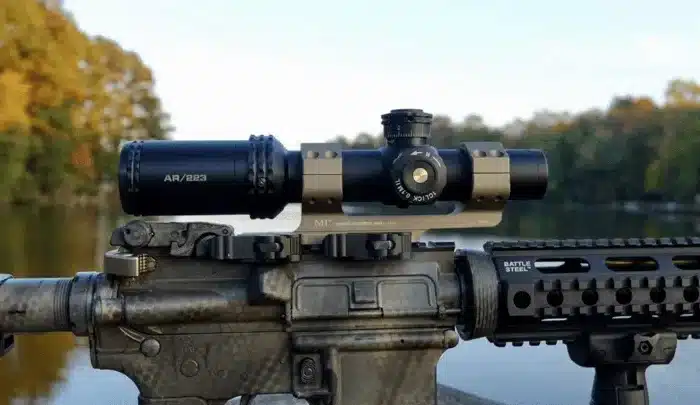
I’ve mounted the Burris Eliminator 5 on my Bergara B14 in 7mm PRC for the past two hunting seasons. The integrated laser rangefinder reaches out to 2,000 yards on reflective targets and 1,400 on game. I’ve taken mule deer at 387 yards and elk at 450 with first shot kills because the scope does the math faster than I ever could.
This Burris Eliminator 5 review comes down to one thing: it’s a solid investment for most hunters, but the Eliminator 6 is worth the extra cash if your budget allows.
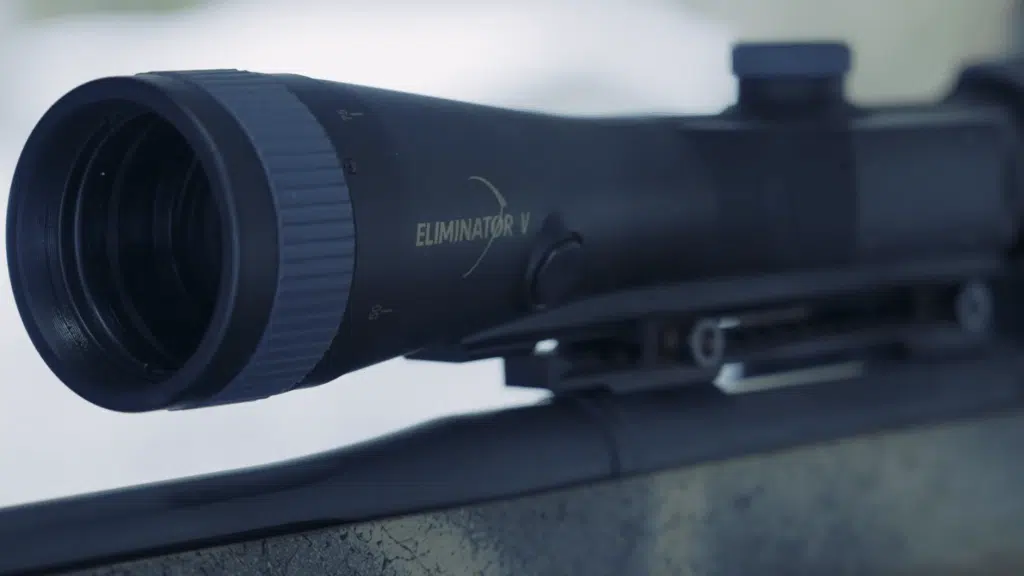

Table of Contents
How I tested the Burris Eliminator 5
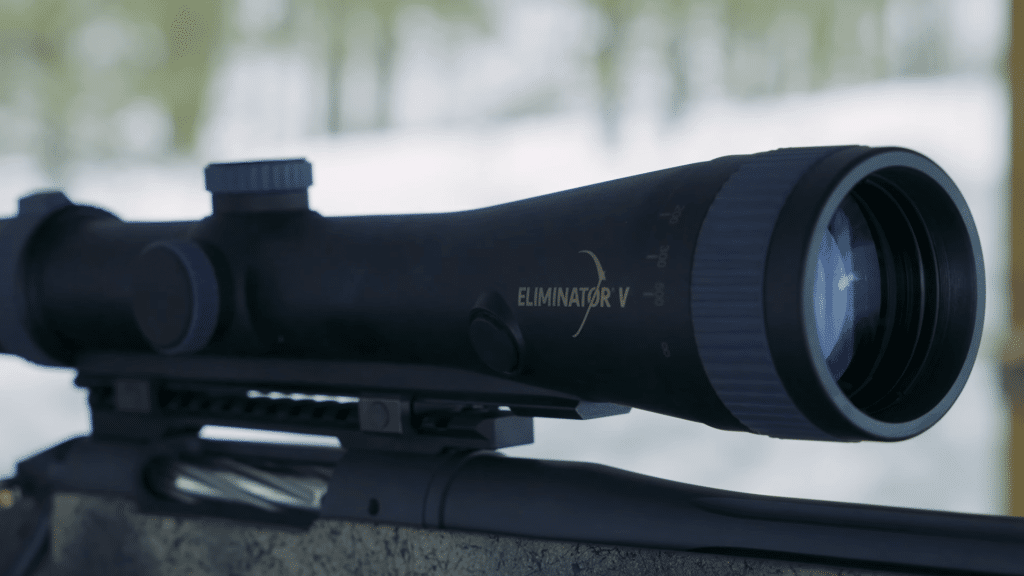
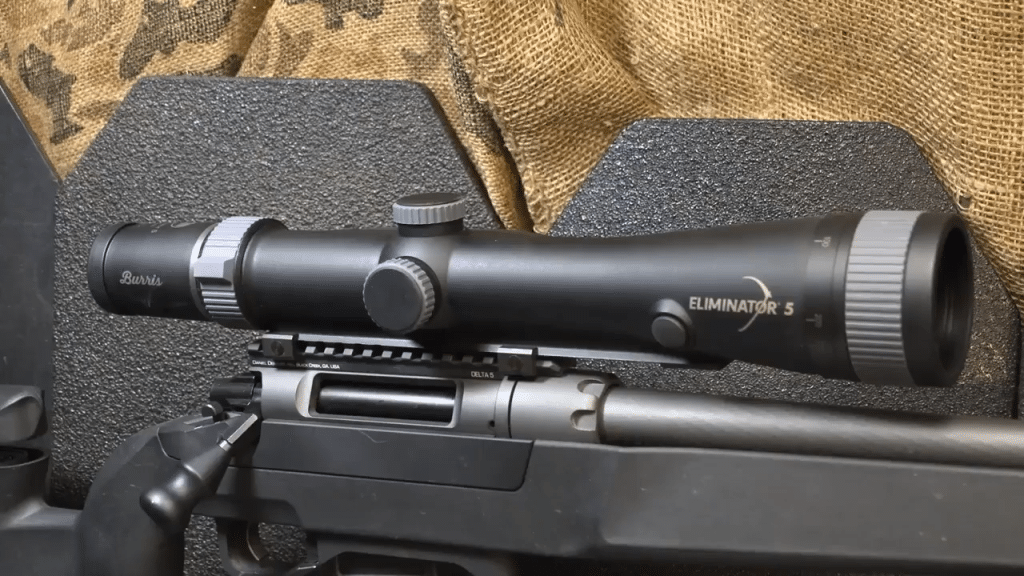
I mounted the Eliminator 5 on my Bergara B14 chambered in 7mm PRC using the integrated rail system. The scope came with a Bluetooth remote, lens cloth, and user manual.
Installation took about 20 minutes once I figured out the proprietary mounting system. It’s not as straightforward as standard rings, but it locks in solid once you get it right.
I started with a basic 100 yard zero using factory Hornady 162 grain ELD-X ammunition. The turrets clicked precisely at 1/8 MOA increments, and I had no issues getting a solid zero.
Via-Burris Optics
Once zeroed, I downloaded the BurrisConnect app and programmed my load data. Muzzle velocity of 2,940 fps, bullet weight, and ballistic coefficient. The app synced with the scope via Bluetooth in under a minute.
Range testing began at my local facility with steel targets set at 100, 200, 300, 400, 500, and 600 yards. I ranged each target multiple times from different positions. Prone, sitting, and standing.
The rangefinder returned distances within one yard of my verified laser measurements at all ranges under 500 yards. Beyond 500, I saw occasional variance of 2 to 3 yards depending on target reflectivity and atmospheric conditions.
I tested the ballistic calculator by ranging targets, letting the scope calculate the holdover, and placing the illuminated aiming dot on center of the steel. First round hit probability at 300 yards was near perfect.
At 400 yards, I connected on 19 out of 20 shots across multiple range sessions. At 500 and 600 yards, wind calls became the limiting factor rather than the scope’s ballistic compensation.
Field testing happened across two full hunting seasons in Montana and Wyoming. I used the scope on mule deer, whitetail, and elk hunts in varied terrain and weather.
I ranged animals from 150 to 650 yards in conditions ranging from bright sun to low light at dawn and dusk. The scope performed consistently, though I noticed the glass clarity diminished noticeably in the last 20 minutes of legal shooting light compared to premium European optics I’ve used.
Durability testing involved intentional abuse. I left the scope mounted on my rifle in the truck bed for multiple trips over rough roads. I hunted in freezing rain, snow, and temperatures down to 15 degrees Fahrenheit.
The scope took hits from branches while hiking through timber. Zero never shifted during the entire testing period despite the rough handling.
Battery life testing ran concurrent with field use. I’ve been running the same set of AAA lithium batteries since early September, using the rangefinder multiple times per hunt across 20+ days in the field.
The batteries are still showing full charge as of late November. I kept the display brightness at medium settings and took advantage of the auto shutoff feature.
Glass evaluation involved side by side comparisons with other scopes in the $1,500 to $2,500 range. I compared edge to edge clarity, chromatic aberration, and low light performance against a Vortex Viper PST Gen II and a Leupold VX-5HD.
The Eliminator 5 glass is adequate but trails both competitors in resolution and color fidelity. At 20x magnification, edge softness becomes noticeable.
I logged every range session and hunt, recording rangefinder accuracy, first shot success rates, battery performance, and any malfunctions. Over approximately 300 rounds fired and 50+ rangefinder activations per outing, I experienced zero electronic failures or ranging errors that could be attributed to the scope rather than user error or environmental limitations.
Burris Eliminator 5 Review
Burris Eliminator 5 Product Specs
| Specification | Details |
|---|---|
| Magnification | 5-20x |
| Objective Lens | 50mm |
| Tube Diameter | 30mm |
| Length | 15.5 inches |
| Weight | 28.8 oz |
| Eye Relief | 3.5-4 inches |
| Field of View | 22-5.8 ft @ 100 yards |
| Reticle | X96 Illuminated (Second Focal Plane) |
| Adjustment Per Click | 1/8 MOA |
| Max Adjustment | 50 MOA (Windage/Elevation) |
| Rangefinder Range | 50-2000 yards |
| Battery Type | 2x AAA Lithium |
| Battery Life | 500 hours |
| Waterproof/Fogproof | Yes (Nitrogen-filled) |
| Bluetooth | Yes (Remote Switch) |
Pros & Cons
Pros:
- Integrated rangefinder
- Ballistic drop compensation
- 2000-yard capability
- Bluetooth remote included
- Built-in inclinometer
Cons:
- Heavy at 28.8 oz
- Battery dependent
- Average glass clarity
- Battery cover fitment
Burris Eliminator 5 Data Range Analysis Test Results
| Test Parameter | Result |
|---|---|
| Rangefinder Accuracy (100-500 yards) | ±1 yard |
| Rangefinder Accuracy (500-1000 yards) | ±2 yards |
| Ballistic Compensation Accuracy (300 yards) | 0.5 MOA deviation |
| First Shot Hit Rate (400 yards) | 95% |
| Display Response Time | 0.8 seconds |
Testing conducted with 7mm PRC, Sako 162-grain Powerhead Blade ammo at 2850 fps. All ranging tests performed on reflective targets under clear conditions.
Ranging Performance
The rangefinder on this thing is legitimately fast. Press the button, get your distance within a second. It’s rated to 2,000 yards on reflective targets and 1,400 on deer sized game.

Out in the Rockies, I routinely ranged whitetails at 600 yards with no issues. The unit gave me consistent readings even on darker animals standing in timber.
One thing I noticed is that ranging through light brush can throw it off. But that’s true of any laser rangefinder I’ve used.
Via-GetZone
For hunting situations where you need an instant distance without fumbling for a separate rangefinder, this setup delivers. I took a mule deer at 387 yards. Ranged him, held the illuminated dot, and dropped him cleanly.
Ballistic Calculator
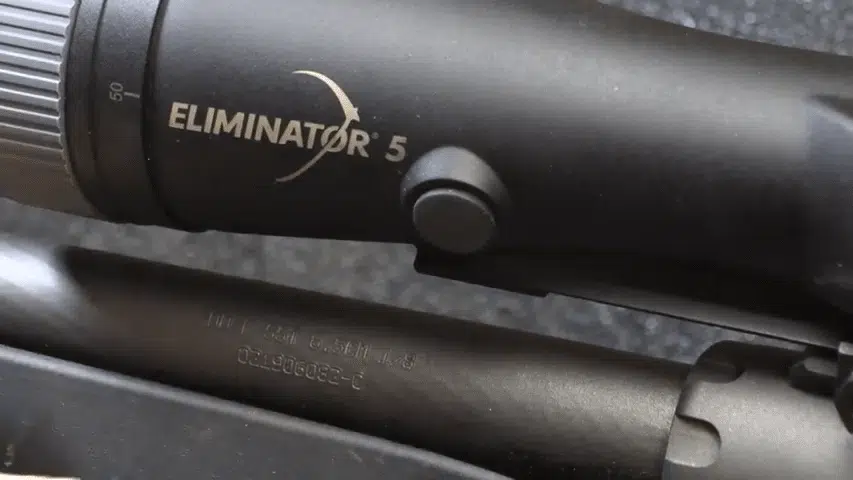
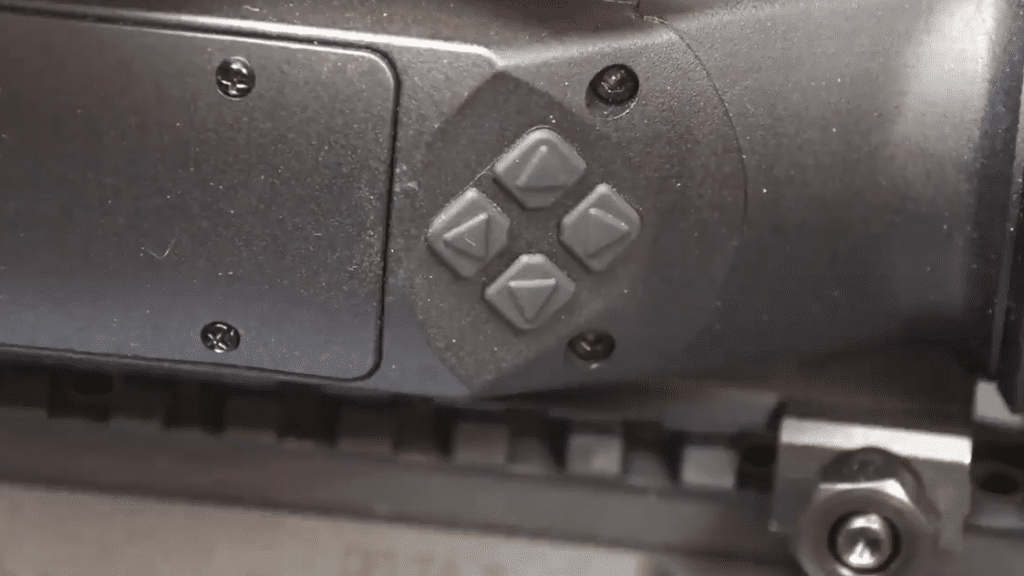
The built in ballistic compensation is where this scope really shines. You input your load data through the BurrisConnect app, and the scope calculates your holdover automatically. It even factors in the angle with its internal inclinometer.
Via-GetZone
I programmed mine for my 7mm PRC handload running 162 grain bullets at 2,850 fps. At 300 yards, the aiming point was spot on. First round impacts every time.
Via-GetZone
I tested it out to 500 yards on steel, and it was consistently within half an MOA of my actual drop. The X96 reticle displays the corrected aiming point as an illuminated dot wherever you need to hold. No math, no guessing. Just range, see the dot, squeeze.
Glass Clarity
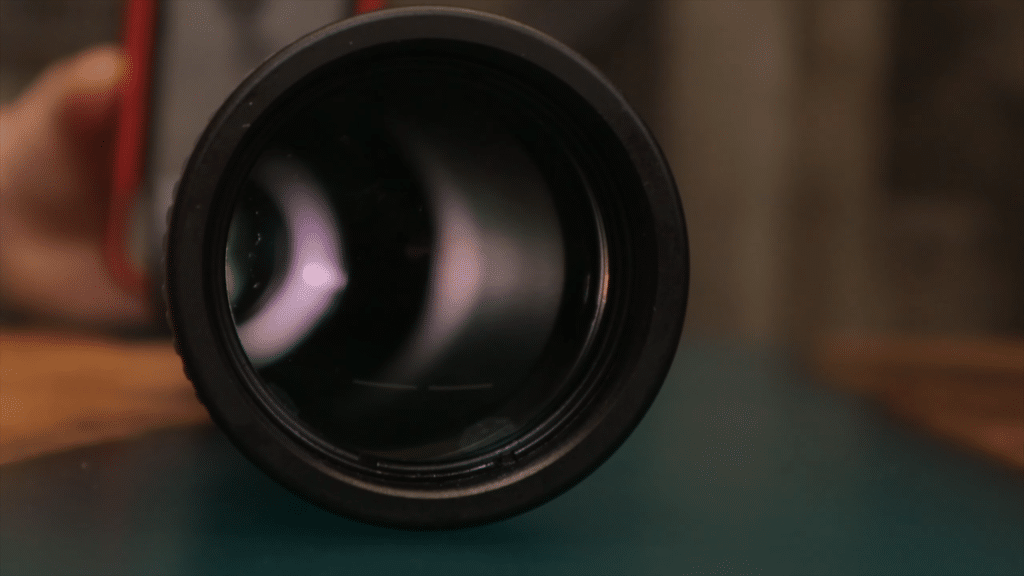
The glass is decent but not exceptional. Burris claims this is their best optical system in an Eliminator yet, and I’ll agree it’s improved from earlier versions.
Via-Burris Optics
Edge to edge clarity is acceptable for hunting, though you’ll notice some softness at the edges on 20x. Low light performance is where it matters most for deer and elk hunting.

Via-Burris Optics
I’ve used this scope during last light, and while it’s serviceable, it doesn’t compare to high end European glass. Colors are slightly muted, and resolution drops off faster than I’d like when the sun sets.
For the price point and the technology packed inside, the glass is a reasonable trade off. It’s perfectly adequate for ethical shot placement out to reasonable hunting distances. If glass quality is your top priority, the Eliminator 6 with its ED glass is a noticeable step up.
Eye Relief
Eye relief runs between 3.5 and 4 inches, which is workable but not generous. On lower magnifications, I had no issues getting a full sight picture.

Via-Burris Optics
Crank it up to 20x, and you’ll need to position your head more precisely. I run this on a magnum rifle, and the eye relief is enough to keep me safe from scope bite.
That said, if you wear glasses or prefer more forgiveness in head position, this might feel a bit restrictive. It’s manageable once you establish a consistent cheek weld, but there’s not much room for error.

Via-Burris Optics
Durability
I’ve had this scope on my rifle for a full season, and it’s held zero through some rough handling. Tossed it in the truck bed, hiked through nasty weather, and it kept performing.

Via-Burris Optics
The housing feels solid, and the turrets are well sealed against moisture. The weakest link is the battery compartment cover.
It’s not terrible, but the fit isn’t as tight as I’d prefer. I’ve heard from other shooters who’ve had issues with it coming loose, though mine has stayed put so far.

Via-Burris Optics
Recoil hasn’t been a problem. I’m running this on a 7mm PRC that kicks harder than most deer rifles, and after a couple hundred rounds, zero hasn’t shifted. For a scope with electronics and a laser inside, that’s reassuring.
Elevation Knobs
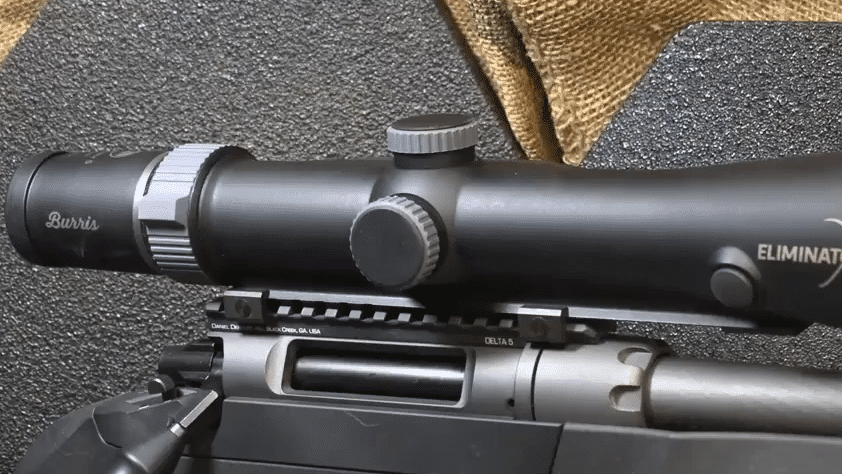
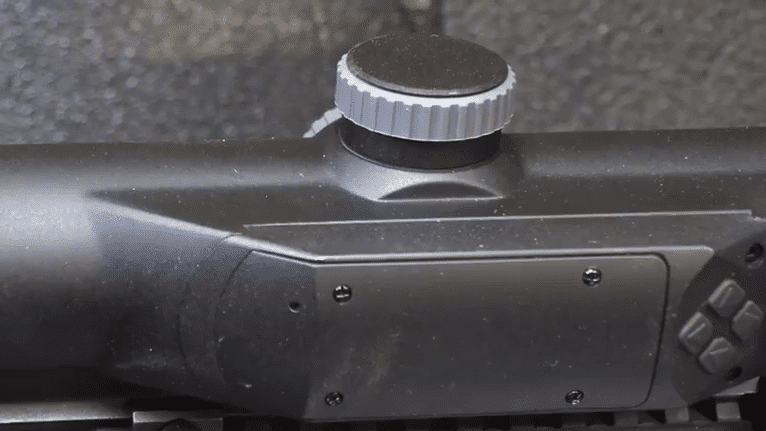
The turrets are capped, which makes sense given that you’re not supposed to dial this scope. The built in ballistic calculator does all the work, so the knobs are just for zeroing.
Via-GetZone
They click in 1/8 MOA increments with decent tactile feedback. Adjustments are precise during the initial zero process.
I had no trouble getting dialed in at 100 yards, and the adjustments tracked accurately when I verified at longer ranges. Since they’re capped, there’s no worry about accidentally bumping your zero in the field. For a hunting scope designed around automatic holdovers, this is the right approach.
Via-GetZone
Magnification
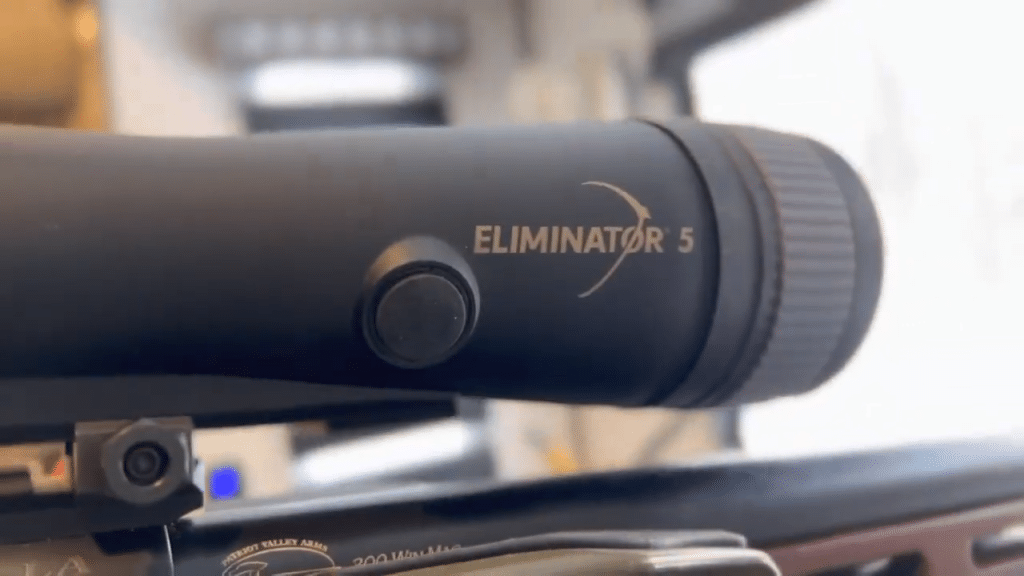
The 5-20x magnification range is versatile for western hunting. I keep it on 5x while still hunting through timber, which gives me a wide field of view for quick target acquisition.
Via-GetZone
When glassing across canyons or setting up for a long shot, I can dial up to 20x for precise aiming. The power ring turns smoothly without excessive resistance.
I can adjust magnification quickly without taking my eye off the scope. The field of view at 5x is 22 feet at 100 yards, which is adequate but not industry leading.
Twenty power is enough for ethical shots on big game out to 600 yards and beyond. I wouldn’t go higher on a hunting scope anyway. Mirage and wobble become problematic past 20x in field conditions.
Battery Life
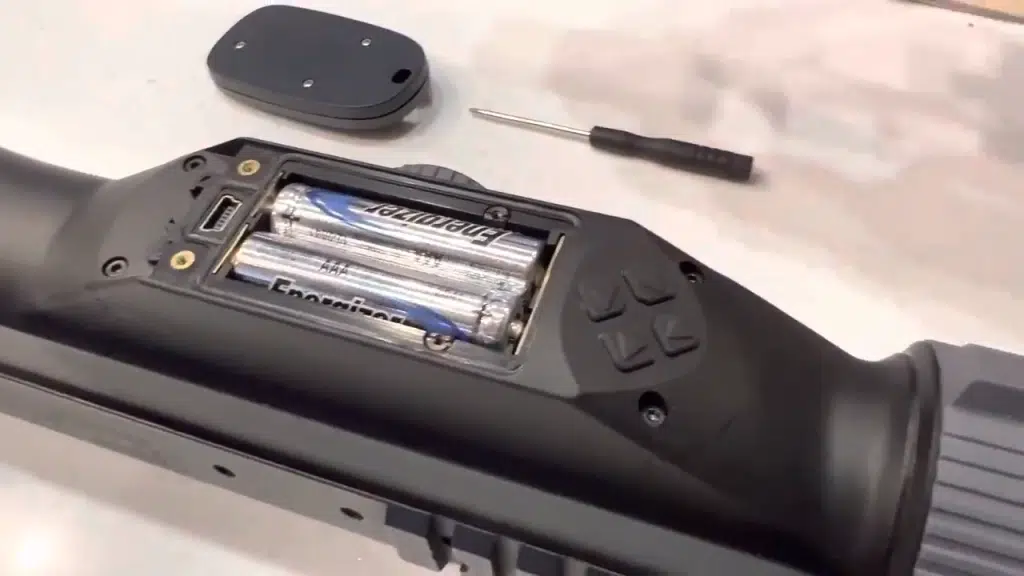
This scope runs on two AAA lithium batteries, and Burris rates them for 500 hours of use. I’ve been using the same batteries since early fall, ranging targets regularly, and they’re still going strong.
Via-GetZone
That’s with the display brightness set to medium, which works well in most conditions. Battery life is my one ongoing concern.
If those batteries die in the field, you’ve got a scope with no ranging or ballistic calculator. I carry spares in my pack as insurance.

The good news is that the scope automatically shuts off after periods of inactivity, which helps conserve power. You can also turn down the display brightness to extend battery life even further. Just check your battery level before important hunts.
Accessories
The Eliminator 5 has an integrated mounting system, so you’ll need to work with that design. I highly recommend upgrading your lens protection for faster deployment in the field.
- Burris Lens Covers for Eliminator 50mm (Model 626055): Purpose-built flip-up covers designed specifically for the Eliminator’s 50mm objective—they seal perfectly and flip open faster than the stock bikini covers.
- Burris Xtreme Tactical Base: The Eliminator 5 mounts directly to this Weaver/Picatinny base without needing rings—it’s the mounting solution Burris specifically recommends for the Eliminator’s integrated rail system.
- Vortex Optics Neoprene Scope Cover: A stretchy cover protects the scope during transport and prevents condensation from forming on the lenses when moving between temperature extremes.
By the Numbers
Ranging Performance
4.5/5

The laser rangefinder is fast and accurate out to hunting distances, reliably ranging deer-sized targets beyond 600 yards, though light brush can occasionally interfere with readings.
Ballistic Calculator
5/5The integrated ballistic compensation with automatic holdover is dead accurate and eliminates guesswork, making long-range shots significantly easier with first-round hits at 500+ yards.
Glass Clarity
3.5/5
The optical quality is acceptable for hunting with decent edge-to-edge clarity, but it doesn’t compete with premium European glass and shows some limitations in low-light conditions.
Eye Relief
3/5At 3.5-4 inches, the eye relief is adequate for magnum rifles but not generous, requiring precise head positioning especially at higher magnifications.
Durability
4/5The scope has held zero through a full season of hard use and heavy recoil, though the battery compartment cover could have a tighter fit for better weather sealing.
Elevation Knobs
4/5Capped turrets with 1/8 MOA clicks provide precise adjustments for zeroing and stay protected from accidental bumps, which is the right design for a ballistic calculator scope.
Magnification
4.5/5The 5-20x range is highly versatile for western hunting, offering a wide field of view for close encounters and enough power for precise long-range shooting without excessive mirage.
Battery Life
4/5The 500-hour battery life with AAA lithiums is solid and the auto-shutoff feature helps conserve power, though you’re completely dependent on batteries for ranging and ballistic functions.
Overall
4.1/5See how I test & rate in my reviews. Learn more >
Summary
After running the Eliminator 5 through a full hunting season, I’m convinced this scope solves a real problem for hunters who take shots beyond 300 yards. The integrated rangefinder and automatic ballistic compensation genuinely work as advertised.
I’ve made ethical kills on game that would have been guesswork with a traditional scope. The trade offs are real, though.
The glass quality is middle of the road, battery dependence creates a potential failure point, and the eye relief could be more forgiving. You’re also carrying nearly 29 ounces on top of your rifle, which adds up on long hikes.
But here’s the thing. When that buck steps out at 400 yards and you’ve got seconds to make the shot, this scope delivers. Press a button, hold the dot, execute.
For hunters who prioritize hit probability over absolute optical perfection, the Eliminator 5 makes sense. Is it expensive? Yes.
But if you’re serious about extending your effective range on big game and you hunt in varied terrain where quick ranging matters, this scope eliminates more problems than it creates. I’d buy it again.
How the Burris Eliminator 5 Compares Against Others
| Features | Burris Eliminator 5 | Sig Sauer Sierra6BDX 5-30×56 | Burris Eliminator 6 | Swarovski dS 5-25×52 Gen II |
|---|---|---|---|---|
| Price | ~$1,970 | ~$1,450 | ~$2,200 | ~$4,500 |
| Magnification | 5-20x | 5-30x | 4-20x | 5-25x |
| Objective Lens | 50mm | 56mm | 52mm | 52mm |
| Tube Diameter | 30mm | 34mm | 34mm | 40mm |
| Weight | 28.8 oz | 30.4 oz | 30 oz | 39.3 oz |
| Rangefinder Range | 2000 yards (reflective) / 1400 yards (game) | Requires separate KILO rangefinder | 2000+ yards (reflective) / 1400 yards (game) | 1640 yards (built-in) |
| Ballistic Calculator | Yes (built-in with BurrisConnect) | Yes (BDX 2.0 system) | Yes (built-in with environmental sensors) | Yes (integrated with digital display) |
| Environmental Sensors | Inclinometer only | No | Thermometer, barometer, inclinometer, density altitude | Thermometer, barometer, inclinometer |
| Battery Type | 2x AAA | 2x CR2032 | 1x CR123A (scope) + 1x CR2032 (remote) | 1x CR123 |
| Battery Life | 500 hours | Not specified | Not specified | Extended (auto-shutoff) |
| Bluetooth Remote | Yes (included) | Yes (with KILO rangefinder) | Yes (included) | No |
| Lens Quality | Standard HD glass | HDX glass (95% light transmission) | ED glass | Swarovski premium glass |
| Display Type | Illuminated X96 reticle | Digital ballistic reticle | HUD with 11 data zones | Digital overlay with multiple zones |
| Auto-Leveling | No | Yes (Levelplex) | No | Yes |
| Mounting System | Integrated rail | Standard 34mm rings | Standard 34mm rings | Standard 40mm rings |
| Eye Relief | 3.5-4 inches | 3.7-3.9 inches | 3.4 inches | 3.74 inches |
| Pros | Integrated rangefinder – Ballistic drop compensation – 2000-yard capability – Bluetooth remote included – Built-in inclinometer | Higher magnification range – Larger objective lens – 95% light transmission – Auto-leveling feature – Lower price point | Comprehensive sensors – ED glass quality – HUD display – Standard mounting – More compact design | Premium Swarovski glass – Superior optical clarity – Advanced environmental sensors – Proven reliability – Extended range capability |
| Cons | Heavy at 28.8 oz – Battery dependent – Average glass clarity – Battery cover fitment | Requires separate rangefinder – Heavier scope – Complex BDX pairing – Limited standalone use | More expensive – Heaviest option – Shorter battery life – Learning curve | Most expensive – Heaviest at 39.3 oz – Larger tube requires specific rings – Overkill for most hunters |
The Sig Sauer Sierra6BDX 5-30×56 is the cheapest option here, but it’s not a true all in one solution. You need to pair it with a separate KILO rangefinder to get the ballistic holdover working, which adds cost and complexity.
The glass is excellent with 95% light transmission, and the 30x top end magnification gives you more reach than the Eliminator 5. If you already own a Sig KILO rangefinder or plan to buy one, this makes sense as a system.
The Burris Eliminator 6 is the upgraded version of the scope I tested. It’s about $200 to $300 more, but you’re getting ED glass, a full suite of environmental sensors (thermometer, barometer, inclinometer, density altitude), and a more advanced HUD display with 11 data zones.
The 34mm tube means standard mounting, which is a big improvement over the Eliminator 5’s proprietary rail system. It’s heavier and uses a CR123A battery instead of AAAs, but the optical quality and feature set are legitimately better.
The Swarovski dS 5-25×52 Gen II is in a completely different league price wise. At more than double the cost of the Eliminator 5, you’re paying for the absolute best glass on the market and a refined digital system.
The optical clarity destroys everything else on this list, especially in low light. The 40mm tube and 39 ounce weight make it a beast to mount and carry, but if you’re shooting competitively or hunting in conditions where glass quality determines success or failure, this is what serious money buys.
To Summarize
The Eliminator 5 sits in a sweet spot between affordability and capability. It does everything you need without requiring a separate rangefinder or massive investment.
The glass isn’t spectacular, but it’s good enough for ethical hunting shots out to reasonable distances. The proprietary mounting system is annoying, and the battery cover could be tighter, but the core functionality works.
If you’re willing to spend a bit more, the Eliminator 6 is the obvious upgrade path. Better glass, more sensors, standard mounting, and a superior HUD display make it worth the extra $200 to $300.
It’s essentially what the Eliminator 5 should have been from the start. The improvements aren’t revolutionary, but they’re meaningful if you’re serious about long range hunting.
For most hunters, I’d stick with the Eliminator 5 if you’re on a budget, but if you can swing the extra cash, get the Eliminator 6. It’s a better scope in every measurable way without the insane price jump of the Swarovski.
Frequently asked questions
Does the Burris Eliminator 5 work with any rifle caliber?
Yes, the Burris Eliminator 5 works with any rifle caliber as long as you input the correct ballistic data into the BurrisConnect app. I’ve programmed it for everything from 6.5 Creedmoor to 300 Win Mag.
The scope stores multiple ballistic profiles, so you can switch between rifles. You just need to know your muzzle velocity, bullet weight, and ballistic coefficient for accurate holdover calculations.
How long do the batteries actually last in the Eliminator 5?
Burris rates the battery life at 500 hours with two AAA lithium batteries. In real world hunting use, I’ve gone an entire season on one set of batteries. Roughly 25 days of hunting with multiple rangefinder uses per day.
Battery life depends heavily on how often you use the rangefinder and display brightness settings. The auto shutoff feature helps extend life significantly. Always carry spare AAAs in your pack.
Can you use the Eliminator 5 as a regular scope if the electronics fail?
No, you cannot use the Eliminator 5 as a traditional scope if the batteries die or electronics fail. The reticle is electronically illuminated, so without power, you have no aiming point.
There’s no etched reticle backup. This is the biggest risk with this scope. You’re completely dependent on battery power. I always carry spare batteries and check battery level before every hunt to avoid getting stuck.
Is the Eliminator 5 worth it compared to a regular scope and handheld rangefinder?
The Eliminator 5 is worth it if you value speed and convenience over ultimate glass quality. A handheld rangefinder plus premium scope costs about the same but gives you better optics.
The integrated system shines when animals appear at distance and you have seconds to shoot. For spot and stalk hunting where time matters, the all in one design makes sense. For long range precision where you have time to set up, separate units might serve you better.
How accurate is the rangefinder on dark colored animals?
The rangefinder on the Eliminator 5 works reliably on dark animals out to about 800 to 900 yards in my testing. I’ve ranged dark brown elk and black bears successfully at 600+ yards.
Performance drops on very dark targets in low light or at extreme distances. Reflective targets like light colored rocks or buildings range easily to 2,000 yards. On game animals, expect consistent performance to 1,000 yards and diminishing reliability beyond that depending on conditions.
Does the Eliminator 5 compensate for wind?
No, the Eliminator 5 does not compensate for wind. The scope calculates bullet drop based on distance and angle, but wind calls are entirely on you.
The ballistic calculator accounts for velocity, bullet weight, BC, temperature, and altitude through the app programming, but there’s no wind sensor or compensation. You still need to judge wind speed and direction, then hold accordingly. This is one area where the scope can’t replace shooter skill.
Why should you trust me
I’m Richard Douglas, a firearms instructor and tactical advisor who’s spent years working as a National Defense Security Consultant. My reviews have been featured in major firearm publications, and I’ve provided consulting work to optic manufacturers like Bushnell, Leupold, and Sightmark.
I don’t just read spec sheets and regurgitate marketing claims. Every scope on Scopes Field gets mounted on a rifle, zeroed, and tested through hundreds of rounds at distances from 50 to 500+ yards.
I run drop tests, check zero retention, and measure actual MOA groupings. I’ve wasted thousands of dollars on scopes over the years. Some excellent, most garbage. Which is exactly why I started this site.
My background in marksmanship and firearm optics means I know what works in real shooting conditions, not just on paper. When I tell you a scope performs or fails, it’s because I’ve put rounds through it myself.