What’s the difference between the Burris 332 and 536?
I wanted to find out, so I bought both red dot sights and hand-tested everything:
- Reticle
- Durability
- Battery life
- Field of view
- And so much more
By the end of this Burris 332 vs. 536 comparison review, you’ll know which red dot is best for you.
Let’s get started!
Comparison Table
| Features | Burris AR 332 | Burris AR 536 |
|---|---|---|
| MOA | 0.5 | 0.33 |
| Magnification | 3x | 5x |
| Eye relief | 2.5 inches | 2.5 – 3.5 inches |
| Reticle type | Ballistic CQ reticle | Ballistic CQ reticle |
| Illuminated? | Yes | Yes |
| Weight | 14.2 ounces | 18.75 ounces |
| Dimensions | 9x5x3 | 9.4×4.3×3.3 |
Burris 332 vs. 536 Review
The Burris AR-332 and Burris AR-536 claim to be fantastic for police, military, and competitive shooters.
The 332 is ideal for swift target acquisition and short distances, all within a compact red dot ready to roll. The 536 excels in competitive shooting that can adjust to any distance.
Both Burris scopes offer tactical features with a durable, rugged surface and illuminated reticles to get the best shot every time. I’ll be covering clarity, efficiency, effectiveness, stamina, and more to determine the superior red dot sight.
Glass Clarity & Reticle
Looking through the glass of the Burris 332 is as sharp and clear as ever, especially considering its Hi-Lume multi-coated lenses. The clarity was perfect during my testing shots at 250 yards and less.

The 332’s illuminated reticle is excellent for short-range distance shooting, considering it has a bullet drop compensation of up to 500 yards.

It’s a Ballistic CQ with a bright LED, so I loved the bright illumination in red or green. It got so bright that I had a slight issue with it obscuring my target.

To add to my target obscurity, the lines of the reticle are pretty thick. So things got a little blurry.

The clarity of the Burris 536 is top-notch, high-quality glass with a beautiful lens coating to cut glare resistance. I found the glass to be clear and impressive in low-light conditions.

Just like the 332, the 536 is also a Ballistic CQ reticle with red and green illumination.

Testing the reticle in the bright sunlight wasn’t bad at all because the sunshade helped to bring in just enough of that amazing natural light that I needed for an accurate shot. Although, I found myself squinting to read the numbers displayed. I also had the same issue with the subtense lines that looked a bit cluttered.

But I took it out after dark to see if it’s compatible with night-vision. So I wasn’t disappointed when I saw clear as day in the middle of the night.
Round 1 (Clarity) Champion: Burris 536
Battery Life
For the 332, I had to make sure the LED light was off after shooting because my battery would drain very quickly. Other than that, the CR2032 battery is pretty good, and I didn’t even need it during the day — just like my Bushnell TRS-25. I could still fully utilize the optic without the battery, but it did last as long as I didn’t use the light for too long.
However, I realized that leaving on the LED illuminated reticle had drained the battery from testing the red and green illumination. So I checked the battery life after a few hours to make sure I was still good to go.

The battery life of the 536 is pretty average, but that’s only because a AA battery powers it. I have nothing against AA batteries, but it’s nothing specially made for this red dot sight.
Round 2 (Battery Life) Champion: Burris 332
Eye Relief & Eye Box
The eye relief of the 332 is excellent for shooting targets at 100 yards. Because the eye relief is 2.5 inches, I found it comfortable most of the time. However, there were a few moments where I thought the eye relief could go further back on the mount to prevent losing any eye relief and getting a cheek welt.
But I was hitting my targets consistently while shooting with both eyes open. Since I could get a full-circle view in one eye, I think this optic (and other similar red dots like the Burris Fastfire 3 and Venom) is fantastic for shooters using one or both eyes open to aim.

Now for the 536, the eye relief is hit and miss. It’s 2.5-3.5 inches, and I found it best mounted back. Because of this, I had an issue aiming, especially with only one eye. So I’d be aware that this is a “both eyes open” kind of optic, which is something not everyone can get behind.

Round 3 (Eye Relief) Champion: Burris 332
Durability & Weight
The 332 can take accidental drops with its long-term durability, which I believe is the most important when finding optics. Any environment is no match for this optic, which is impact-resistant, waterproof, fog proof, rugged, and compact at 14.2 ounces. Take this optic anywhere, and I swear it will survive just about any environment, wet or dry.

In fact, it’s just as durable as my Bushnell AR 1-4×24.
The 536 weighs 18.75 ounces and is hand-fitted with the tightest, shock-resistant features. It’s also waterproof and fog proof, so wet environments don’t have a chance at messing up the view! It also arrived with tethered caps and flip-up lens covers, so I wasn’t mad about that.

The score between these optics is very close, but I’ve got to go with the 332 because it weighs less. When I’m packing for a day of shooting, I highly prefer my optics to be lighter. That’s why I’m a huge fan of the Sig Romeo 5 and Sparc AR.

Round 4 (Durability and Weight) Champion: Burris 332
Windage, Elevation & Brightness Knob
The turret adjustments on the 332 work very well, with a crisp and clean audible sound. When I heard that, I knew they locked into place. Another remarkable feature of the turrets is the slip-free, knurled windage and elevation knobs, including an oversized reticle rheostat knob.

I was able to zero in 5 rounds at 30 and 50 yards. I tried it at 100 yards and it was almost as accurate, but the zeroing held up. I’d highly recommend this optic for tactical shooting, especially at this price.

As for the turrets on the 536, they adjusted smoothly with an audible click. So I could tell they also locked right into place. Just like the 332, it didn’t take me long to zero at the same distances. It holds zero, and it didn’t take me long to zero it in at all.

With fantastic results from both, I had a hard time picking a clear winner for this round. But I was impressed with the more user-friendly features on the 332.
Round 5 (Turret and Zeroing) Champion: Burris 332
Mounting
The 332’s included mount is a Picatinny rail that is similar to the Monstrum Tactical Low Profile Picatinny Riser Mount. The optic was easy to mount, despite one setback.

When I installed it, I had a slight issue with it leveling only when it was loose. When tightened, it was unlevel. So I would recommend the Feyachi TRM10 Mount for a higher, more precise fit.
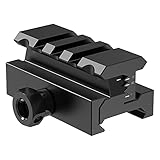
- Offers three height options (.75 inch, .83 inch, and 1 inch), Lower 1/3 co-witness / Absolute co-witness with iron sight when you install it on your red dot sight
- Easy to adjust the height. Can be adjusted incrementally via two locking screws from 0.75 of rise up to 1 inches of rise, measured from rail surface to rail surface
Although there’s no mount included with the 536, Burris does recommend their own mount. But it’s weirdly difficult to find online, so I recommend the Monstrum Tactical Lockdown Series Lightweight Riser Mount because I prefer a higher rise base.

- Hollow body single piece machined aluminum riser mount, designed to shave precious ounces of weight off your build
- Redesigned locking nut fastened by hand, wrench or screwdriver, guaranteed to hold zero against the heaviest of recoil
However, the eye relief with this mount might not be enough for everyone. As I mentioned above, when talking about eye relief, I had to set it back to get a comfortable level.
If you prefer a more adjustable eye relief, then get the Pinty 3.5 inch Adjustable Height Riser Mount with QD Quick Release.

Another close call between these mounts, but I decided that the 536 was easier to mount. After all, I didn’t run into an issue installing it as I did with the 332 mount.
Plus, the 536 will fit any Pictinney mount base, making it more universal among those mounts.
Round 6 (Mounting) Champion: Burris 536
Price
The price for the 332 is $299.99, which is somewhat expensive. But I think the pros vastly outweigh the cons for this optic.

Plus, it’s about $100 cheaper than the 536, which I had more issues with than this one.
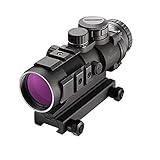
- Red-green Ballistic Armalite Rifle reticle
- 10 LED Illumination settings
The 536 costs between $349.00-$363.37, which is on the pricey side for the number of issues that I experienced.
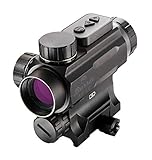
So which one is the best for your budget? I’d buy the 536 for the price if I were as happy with it overall as I am with its other great features, but sadly I can’t give the price my full personal approval.
Round 7 (Price) Champion: Burris 332
Burris 332 or 536: Which Red Dot is Better?
After comparing the Burris 332 and 536 head to head, I believe the Burris AR 332 is the better red dot. Here are the top reasons why:
- Less pricey
- Lighter weight
- Ambidextrous turrets
- Eye relief is excellent for one or both eyes open
With the Burris AR-332, I’m confident in getting the best aiming power, durability, and tactical turrets for the price.
- Red-green Ballistic Armalite Rifle reticle
- 10 LED Illumination settings
Now I’d like to hear from you: which optic do you like better? Let me know in the comments down below. Also, if you’re a Vortex fan, I wrote up an article covering where Vortex rifle scopes are made. Or if you’re a Leupold fan, here are the best Leupold rifle scopes.


I really appreciate the review between them both. I was wondering which one to purchase but now I have a guide to base my decision upon.
Regards,