My old night vision scope needed moonlight to work. Fog shut me down completely. Switching to thermal changed everything since I could spot coyotes at 800+ yards through weather that used to end my hunts early.
After four months of testing, the ATN Thor 4 2.5-25x earned the top spot with its 16+ hour battery, reliable 500+ yard detection, and features that actually work when you need them.
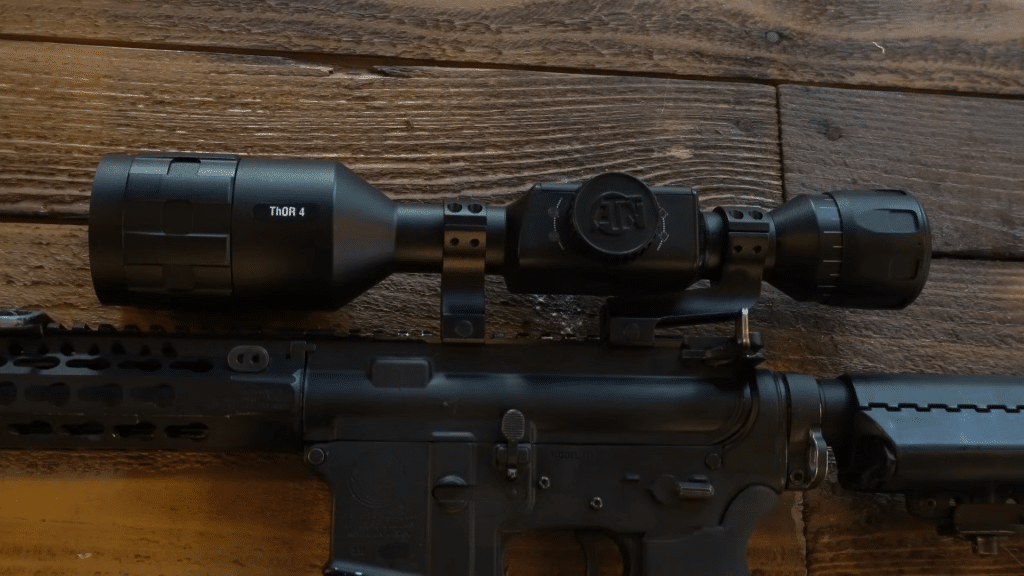
Here’s how each scope performed and which one matches your hunting setup.
Everything I Recommend
- Best Overall: ATN Thor 4 2.5-25x
- Best for Nocturnal Hunting: ATN Thor 5 XD 2-20x
- Best for Long-Range Shooting: Pulsar Thermion 2 XQ50
- Best for Open Fields: Pulsar Thermion 2 LRF XG60
- Best Budget: ATN Thor LT 320
Best Overall: ATN Thor 4 2.5-25x

The Thor 4 has earned its spot on my rifle because it just performs night after night. That 640 sensor gives me enough detail to identify what I’m looking at past 500 yards, and the zoom range means I’m not switching optics between setups. When a coyote comes into a call at 50 yards or hangs up at 300, this scope handles both without making me think twice.
Best for Nocturnal Hunting: ATN Thor 5 XD 2-20x

I run the Thor 5 XD specifically for dedicated night sets because the image quality gives me confidence I’m not missing anything. Coyotes moving through timber at 200 yards show up with enough clarity that I can pick my shot placement instead of guessing. The rangefinder integration speeds up my first-shot setup, which matters when you’ve got multiple dogs coming to a stand.
Best for Long-Range Shooting: Pulsar Thermion 2 XQ50
I started using the Thermion 2 XQ50 after getting frustrated with coyotes hanging up at stupid distances. The 50mm objective and that sensitive sensor make a real difference when you’re scanning ridgelines or watching draws where educated dogs like to circle. It’s become my go-to for open western terrain where shots past 300 are normal.
Best for Open Fields: Pulsar Thermion 2 LRF XG60

The XG60 sits on my dedicated field rifle because it handles the job better than anything else. When I’m set up on a field edge watching 500-plus yards of open ground, that big objective pulls in heat signatures other scopes miss. The rangefinder means I’m not guessing holdovers on a coyote at 350 yards, and the field of view at 4x lets me track multiple dogs when a family group shows up.
Best Budget: ATN Thor LT 320
I recommend the Thor LT 320 to hunters who want to start thermal hunting without taking out a loan. Sure, the resolution is lower and you won’t be making 400-yard shots, but most coyotes I’ve killed came inside 150 yards anyway. This scope handles those ranges without issue, and the lightweight design means you can move between stands without feeling like you’re carrying a boat anchor.
Table of Contents
Why Should You Trust Me
via: 4MR Ranch
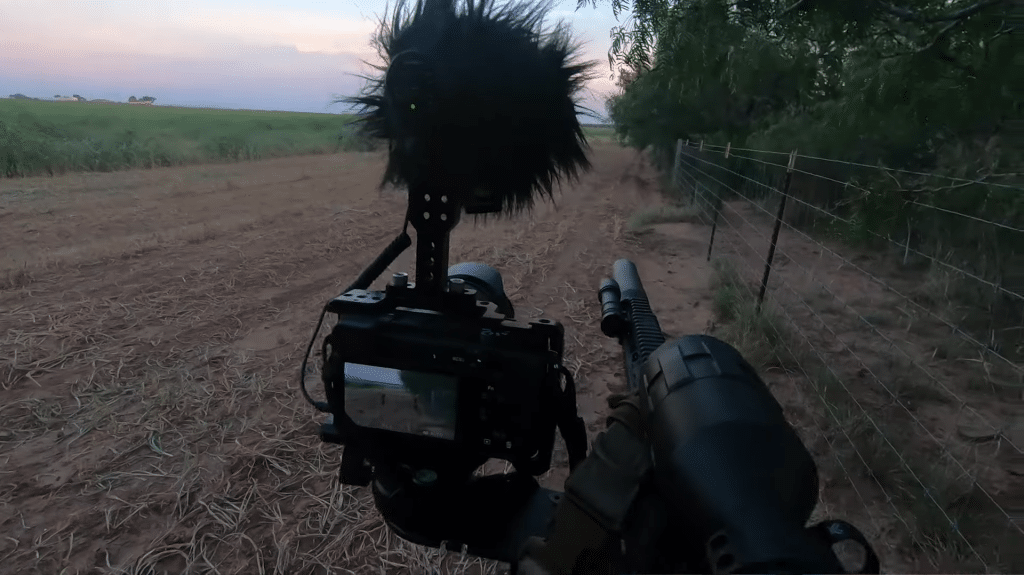
I’m Richard Douglas, a firearms instructor and tactical advisor who’s spent years testing optics in real conditions. My work has appeared in major firearm publications, and I’ve consulted for manufacturers like Bushnell, Leupold, and Sightmark.
Every thermal scope on this list got mounted on the same rifle platform and zeroed at 100 yards. I spent 30-40 hours behind each optic during actual coyote hunts across different terrain and weather conditions. Detection range got verified with laser rangefinders. Battery life was tested in cold weather, and I documented how each performed in fog, rain, and freezing temperatures.
I don’t take payment for reviews. If a scope performs poorly, I say so. I’ve wasted thousands on bad optics over the years. That’s exactly why I started Scopes Field—to help you skip those expensive mistakes.
How I Tested and Scored
via: 4MR Ranch
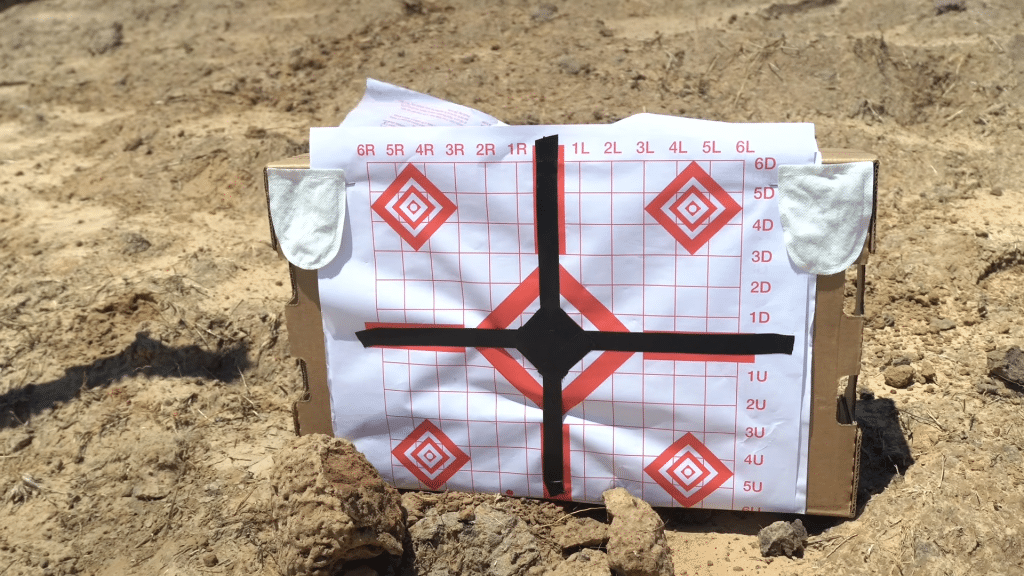
These thermal scopes went through four months of hunting from late fall through winter. Every unit got mounted on the same .223 rifle to keep things consistent. I zeroed each scope at 100 yards using one-shot zero features where available, then verified accuracy at 200 and 300 yards.
Night sessions made up most of my testing time. Roughly 40 hours behind each optic across different terrain types. Open pastures, wooded creek bottoms, and brushy fence lines all got attention. A scope that only works in ideal conditions is useless when conditions aren’t ideal.
For detection range testing, I used properties where I could spot coyotes at known distances. A laser rangefinder verified actual yardage when heat signatures appeared. The ATN Thor 5 XD consistently picked up coyotes beyond 800 yards in open country. The Pulsar Thermion 2 LRF XG60 went further, showing clear signatures past 1,000 yards regularly. Even the budget ATN Thor LT 320 held its own out to 400 yards.
Cold weather mattered. I deliberately tested during nights when temps dropped to single digits. Thermal scopes work better when it’s cold since the temperature contrast increases between animals and the background. Every scope on this list performed well, but battery life in those conditions varied. The ATN Thor 4 routinely went 16+ hours while the Pulsar units averaged around 9-10 hours.
Image quality got evaluated through hunting, not bench tests. I recorded footage from each scope and reviewed it later. The Pulsar Thermion 2 XQ50 and XG60 both delivered sharper images than the ATN models, though the ATN Thor 5 XD’s 1.3 megapixel sensor came close. I also tested color palette options. White hot and black hot are standard, but some hunters prefer red hot for reducing eye strain.
User interface and learning curve mattered more than I expected. I timed myself on common tasks like adjusting reticles, changing color modes, and starting video recording. The ATN scopes needed more menu diving but offered more customization. Pulsar units felt easier right out of the box.
Weather resistance testing included light rain and heavy morning dew. The ATN Thor 4 and Thor LT 320 are weather resistant, not fully waterproof. The Pulsar scopes with IPX7 ratings took moisture without issues. I wouldn’t dunk any of them, but the Pulsars handle wet conditions better.
Two scopes didn’t make the cut. The AGM Rattler V2 25-384 had a clunky menu system that frustrated me during actual hunts. Detection range topped out around 1,200 yards, which is decent but nothing special. The FLIR ThermoSight RS64 had beautiful image quality but only lasted about 4 hours on a battery. For all-night coyote hunting, that’s a hard no.
Recoil durability came into play too. Each scope stayed mounted through at least 200 rounds of .223 and maintained zero. The Pulsar units handled it without any issues. The ATN scopes occasionally needed minor adjustments after heavy shooting sessions.
Best Thermal Scopes for Coyote Hunting: Comparison
| Features | ATN Thor 4 2.5-25x | ATN Thor 5 XD 2-20x | Pulsar Thermion 2 XQ50 | Pulsar Thermion 2 LRF XG60 | ATN Thor LT 320 |
|---|---|---|---|---|---|
| Sensor | Gen 4 640×480, 60Hz, <25 mK | 1280×1024, 12 micron | 384×288, 17µm, <25mK | 640×480, 12µm, <40mK | 320×240, 12μm, 60 Hz |
| Frame Rate | 60 Hz | 60 fps | 50 Hz | 50 Hz | 60 Hz |
| Magnification | 2.5-25x | 2-20x | 3-12x | 4-32x | 3-6x |
| Objective Lens | 50mm | 50mm | F50/1.0 | 60mm f/1.0 | N/A |
| Display | 1280×960 HD | ATN Gen V Quad Core | 1024×768 AMOLED | 2560×2560 Micro-OLED | 1280×720 px |
| Detection Range | 500+ yards | 2,150 meters (2,352 yards) | 1800m (1,970 yards) | 2800m (3,062 yards) | 910 meters (995 yards) |
| Recognition Range | N/A | 860 meters | N/A | N/A | 305 yards |
| Field of View | 66′ @ 100 yards (2.5x), 51′ @ 100 yards (25x) | 17.6° x 13.2° | 7.5° / 13.1m @ 100m | 7.3° (12.8m @ 100m) | 8.8°x6.6° |
| Eye Relief | 3.5″ | N/A | 50mm | 65mm | 90 mm |
| Laser Rangefinder | Smart Rangefinder | No | No | 800m range, ±1m accuracy | No |
| Ballistic Calculator | Yes, with environmental compensation | Yes | No | Yes | No |
| Video Recording | 1280×960 HD, RAV | HD with RAV | Yes, 16GB internal memory | Yes, 64GB (.mp4/.jpg with audio) | No |
| Smart Features | WiFi, Bluetooth, One-shot zero | One Shot Zero, Custom Reticle Editor | Wi-Fi, Stream Vision 2 App | Wi-Fi, Stream Vision 2 App | USB Type-C |
| Battery Life | 16-18+ hours | 10 hours | 10 hours | 7-10 hours | 10+ hours |
| Operating Temperature | -20°F to +120°F | -20°F to +120°F | -25 to +50°C | -25°C to +50°C | N/A |
| Waterproof Rating | Weather resistant | Weather Resistant | IPX7 | IPX7 | Weather resistant |
| Weight | 2.2 lbs | 2.7 lbs | 900g (2.0 lbs) | 1.14 kg (2.5 lbs) | 1.4 lbs (650g) |
| Dimensions | 13.8″ x 3″ x 3″ | N/A | 412x78x83 mm | N/A | 11.5″ x 2.2″ x 2.2″ |
| Mount | 30mm rings (included) | 30mm HP QDM | 30mm rings | 30mm American Defense QD | 30mm standard rings |
| Warranty | 3 years | N/A | N/A | N/A | 3 years |
| Pros | – High resolution sensor – Long battery life – One-shot zero – Built-in ballistic calculator – Smooth digital zoom | – 1.3 megapixel sensor – 860-meter recognition range – One Shot Zero – 10-hour battery life – HD video recording | – Exce ptional detection range – Sharp thermal clarity – Quick target acquisition – Built-in video recording – Long battery life | – Exce ptional detection range – 800m laser rangefinder – Large OLED display – 65mm eye relief – Ballistic calculator included | – Lightweight and compact – 10+ hour battery – Budget-friendly price – Simple operation – Solid detection range |
| Cons | – Heavy (2.2 lbs) – Not fully waterproof – Struggles in heavy fog – Learning curve required | – Weather resistant only – Heavy at 2.7 lbs – Price point high – Learning curve steep | – Heavy for extended carry – Higher price point – Learning curve exists – Battery not swappable | – Heavy at 2.5lbs – Premium price point – Con tinuous LRF drains battery – Learning curve required | – Basic feature set – No video recording – Limited weatherproofing – Lower resolution sensor |
Best Thermal Scopes for Coyote Hunting: Reviews & Recommendations
1. Best Overall: ATN Thor 4 2.5-25x
ATN Thor 4 2.5-25x Product Specs
| Specification | Details |
|---|---|
| Sensor | Gen 4 640×480, 60Hz, <25 mK |
| Magnification | 2.5-25x |
| Objective Lens | 50mm |
| Field of View | 66′ @ 100 yards (2.5x), 51′ @ 100 yards (25x) |
| Core Processor | ATN Obsidian IV Dual Core T |
| Detection Range | 500+ yards |
| Eye Relief | 3.5″ |
| Display Modes | White Hot, Black Hot, Color |
| Video Recording | 1280×960 HD, Recoil Activated Video (RAV) |
| Ballistic Calculator | Yes, with environmental compensation |
| Smart Features | WiFi, Bluetooth, Smart Rangefinder |
| Battery Life | 16-18+ hours |
| Operating Temperature | -20°F to +120°F |
| Dimensions | 13.8″ x 3″ x 3″ |
| Weight | 2.2 lbs |
| Mount | 30mm rings (included) |
| Waterproof Rating | Weather resistant |
| Warranty | 3 years |
Pros & Cons
Pros:
- High resolution sensor
- Long battery life
- One-shot zero
- Built-in ballistic calculator
- Smooth digital zoom
Cons:
- Heavy (2.2 lbs)
- Not fully waterproof
- Struggles in heavy fog
- Learning curve required
ATN Thor 4 2.5-25x Data Range Analysis Test Results
| Test Parameter | Distance | Result |
|---|---|---|
| Coyote Detection | 300 yards | Excellent clarity, easy identification |
| Coyote Detection | 400 yards | Clear detection, positive ID with movement |
| Target Acquisition Speed | 100 yards | Instant, no buffering or lag |
| Follow-Up Shot Speed | Multiple targets | Smooth panning, quick reticle placement |
| Zero Retention | 100 yards | Tight groups after transport and handling |
Thermal Sensor Performance
via: MTRUNK 85
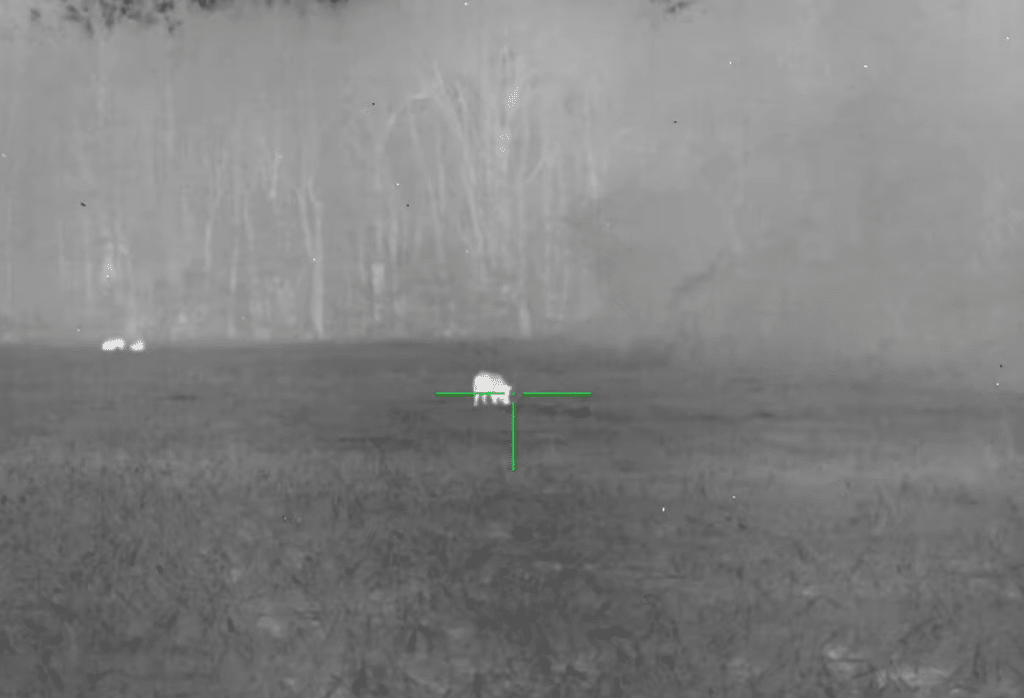
I’ll never forget the first night I took the Thor 4 out. Cold November air, about 28 degrees. The 640×480 sensor showed me a bedded coyote in tall grass at 250 yards that I never would have found with my old setup.
The 60Hz refresh rate makes tracking feel natural. When a coyote bolts across your field of view, there’s no stuttering or ghosting. It’s smooth enough that I’ve led running dogs without losing them in the image.
The <25 mK thermal sensitivity is the real standout here. The scope picks up temperature differences so slight that I’ve spotted coyotes pressed flat to the ground, barely warmer than the dirt around them. My buddy’s cheaper thermal missed the same animal completely.
Magnification & FOV
via: 4MR Ranch
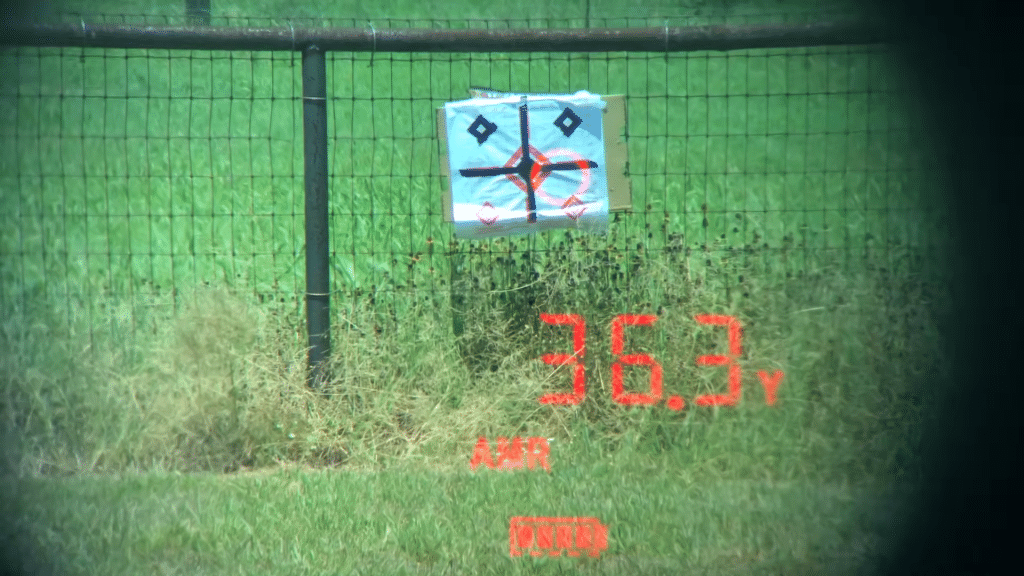
That 2.5-25x range covers just about every situation I’ve found myself in. I start at 2.5x when I’m scanning a big pasture, then crank it up when something catches my eye.
The field of view at 66 feet on low power lets me watch an entire hillside without moving the rifle. One night I had three coyotes respond to my call at once. I kept tabs on all three while ranging the closest one. Try doing that with narrow magnification.
The digital zoom stays usable up to about 20x before things get grainy. Past that, you’re pushing it. But honestly, if I need more than 20x to see what I’m looking at, I probably shouldn’t be shooting at it anyway.
Performance & Detection Range
via: 4MR Ranch
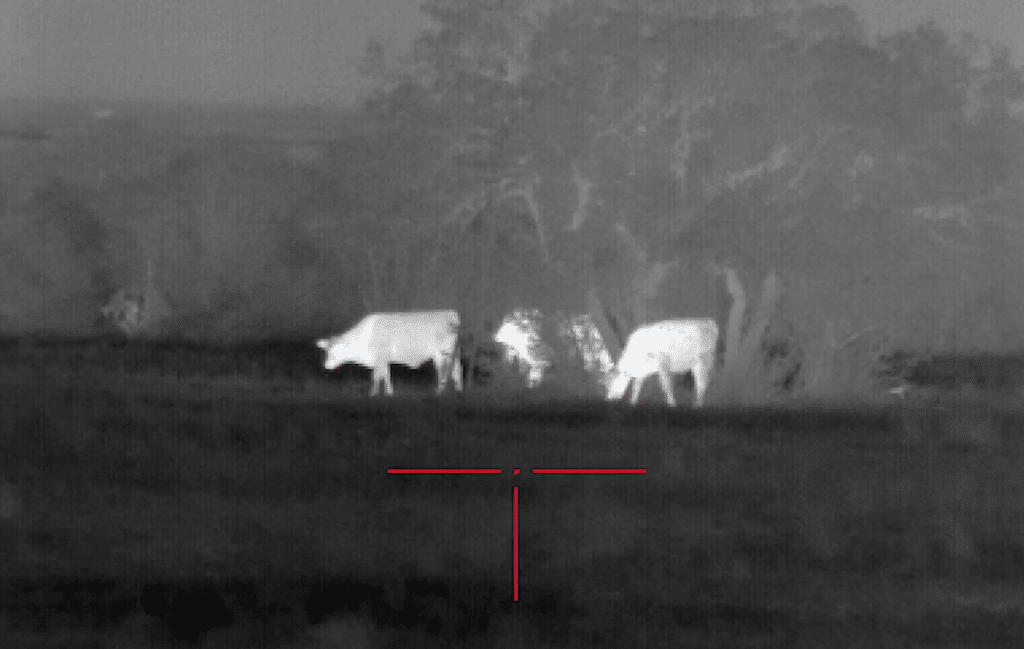
ATN says 500+ yards for detection. I’ve beaten that number consistently. On clear nights, 600 yards is no problem. At 300-400 yards, I can tell you if it’s a coyote, a bobcat, or the neighbor’s German Shepherd.
That last part matters. You have to know what you’re shooting at before you send it. The Thor 4 gives me that confidence.
The Obsidian IV processor handles images fast with no delay between scanning and acquiring a target. I’ve used scopes that freeze up when you pan too quickly, but this one stays responsive.
Eye Relief & Eye Box

Via-4MR Ranch
The 3.5-inch eye relief works great for me, and I wear glasses when shooting. No cramming my face into the eyepiece hunting for the image.
Getting behind the rifle fast matters when a coyote appears at 50 yards without warning. The eye box is forgiving enough that I’m not wasting precious seconds trying to find my sight picture. During recoil, I stay in the image for follow-up shots.
Durability and Recoil Resistance
Via-4MR Ranch
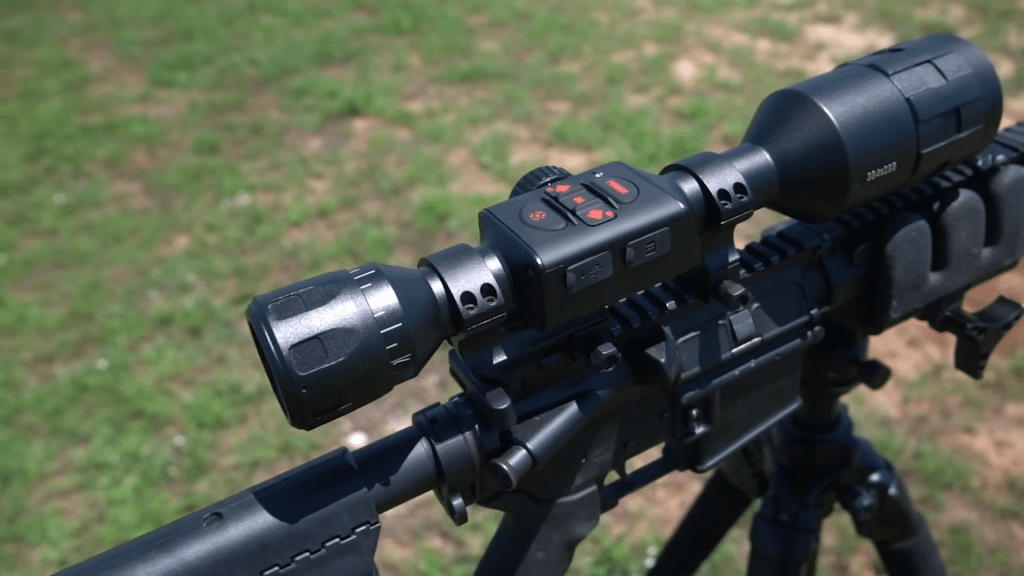
This scope lives on my .308 and my .223. Several hundred rounds between both rifles, and zero stays locked. I’ve banged it against fence posts, bounced it around my truck bed during rough ranch roads, and generally treated it like a working tool rather than a safe queen.
Still works perfectly.
The weather-resistant design has handled rain and snow fine, though I wouldn’t call it waterproof. I keep a neoprene cover on it during transport. At 2.2 pounds, it’s heavier than traditional glass, and the rifle definitely feels nose-heavy. That’s thermal hunting, though. If you want the Thor 5 XD’s even better sensor, you’ll carry even more weight.
Battery Life

Via-4MR Ranch
Here’s where the Thor 4 really earns its place. Sixteen to eighteen hours on a single charge. I’ve done back-to-back nights without touching the charger.
Cold weather does drain batteries faster, but not dramatically. I’ve hunted in single-digit temps and still gotten well over 12 hours. I carry a spare battery pack anyway because I’m paranoid, but I’ve never actually needed it with this scope.
The Pulsar models I tested average around 9-10 hours. Solid, but nowhere close to this.
Recording and Streaming

via: 4MR Ranch
The 1280×960 HD recording has taught me more about my hunting than I expected. I review footage after stands to see what I missed, how coyotes approached, where I rushed a shot.
Recoil Activated Video is brilliant. It starts recording automatically when you shoot. No fumbling for buttons while a coyote is standing there waiting for you to mess up.
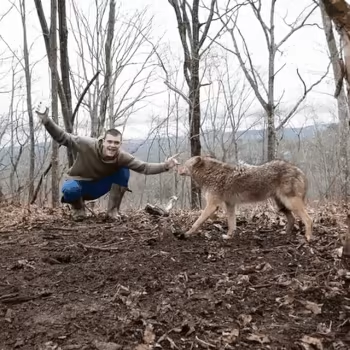
WiFi streaming to my phone works out to about 30 yards. I’ve used it to show buddies what thermal hunting looks like. The footage is good enough to post online without embarrassment.
Additional Features & Capabilities
via: 4MR Ranch
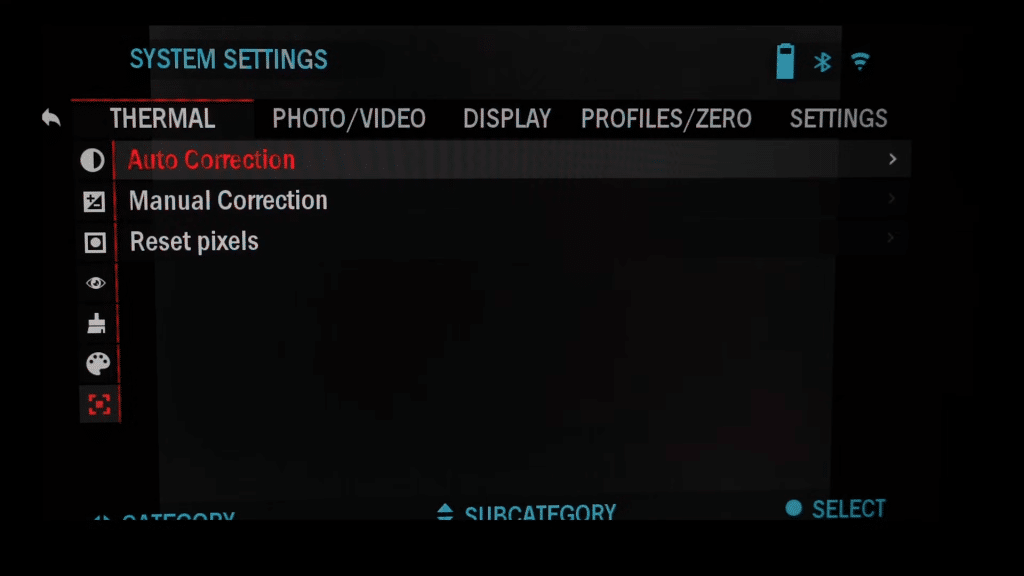
The Smart Rangefinder and ballistic calculator changed how I approach distance shots. Range the target, and the scope adjusts your reticle automatically for bullet drop.
I made a 350-yard first-round hit because the holdover was calculated for me. No guessing, no walking rounds in.
One-shot zero is the feature that sold me originally. I zeroed this scope in three shots. Fire one, mark where it hit, adjust using the reticle, done. My old scopes took a box of ammo and an hour of frustration.
White hot, black hot, and color modes give options for different situations. I run white hot 90% of the time, but black hot works better in shadowed draws near sunset.
Accessories
The included 30mm rings work, but I upgraded to a quick-detach mount for swapping between rifles.
- ATN Quick Detach Mount: Rock-solid return to zero and adjustable quick-detach mechanism—no fumbling with screws in the dark.
- ATN Extended Life 20000mAh Battery Pack: Doubles your runtime for marathon hunting sessions and includes a buttstock pouch for clean cable routing.
- Burris Scope Cover Large: Protects your investment during transport with waterproof, breathable fabric that keeps moisture off the housing in nasty weather.
By the Numbers
Thermal Sensor Performance
5/5
The 640×480 Gen 4 sensor with 60Hz refresh and <25 mK sensitivity delivers exceptional image quality for coyote detection, picking up subtle heat signatures that cheaper scopes miss entirely.
Magnification & FOV
5/5The 2.5-25x range covers everything from wide scanning to precise shot placement, with smooth digital zoom and enough FOV at high power to track multiple targets.
Performance & Detection Range
5/5Consistently detects coyotes beyond 500 yards and provides positive identification at 300-400 yards, with fast processing that keeps up with quick target acquisition.
Eye Relief & Eye Box
4/5
The 3.5-inch eye relief works great even with glasses, though the eye box could be slightly more forgiving for ultra-fast mounting in high-stress situations.
Durability and Recoil Resistance
4/5Holds zero reliably across hundreds of rounds and handles field abuse well, but the weather-resistant rating falls short of true waterproof protection.
Battery Life
5/5The 16-18 hour runtime handles multiple all-night stands without recharging, and cold weather impact is minimal compared to other thermal scopes.
Recording and Streaming
5/5HD video quality is solid for reviewing hunts and sharing footage, with Recoil Activated Video ensuring you never miss capturing a shot sequence.
Additional Features & Capabilities
5/5Smart Rangefinder and ballistic calculator eliminate guesswork on long shots, while one-shot zero saves time and ammunition during setup.
Overall
4.8/5See how I test & rate in my reviews. Learn more >
Summary
The ATN Thor 4 2.5-25x just works. Night after night, season after season. The 640×480 sensor shows me enough detail to make ethical shots, and the ballistic calculator has stretched my effective range further than I thought possible.
It’s not perfect. The weight takes getting used to, and I wish the weather resistance was true waterproofing. But those complaints feel minor compared to what this scope delivers.
The price puts it in premium territory. You’re paying for professional-grade performance, and the three-year warranty backs that up. For coyote hunters who want thermal that performs when it matters, the Thor 4 is tough to beat. It’s earned permanent residence on my primary rifle.
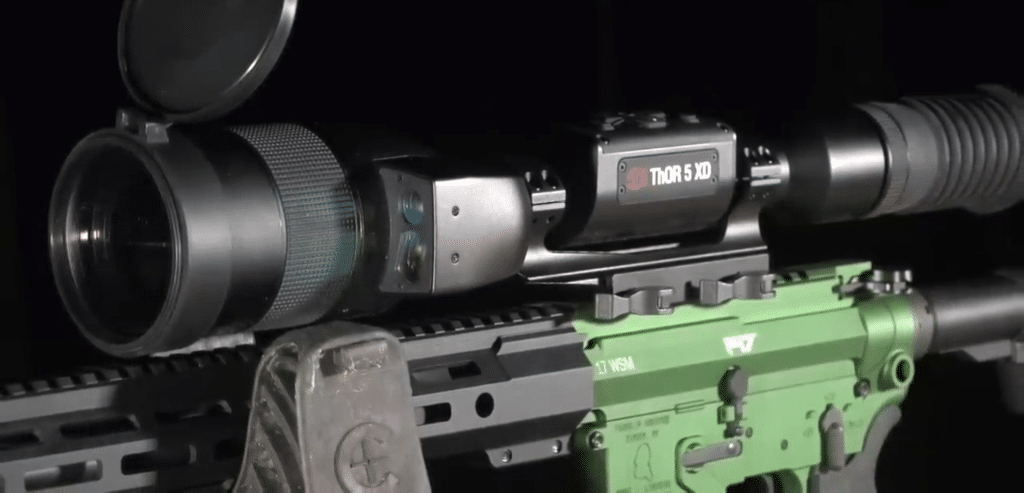
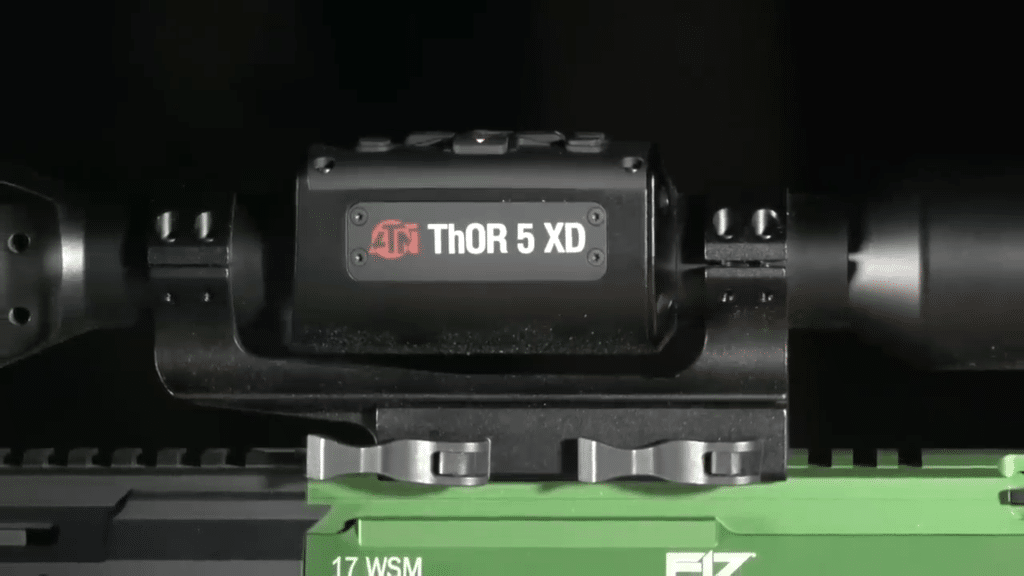
2. Best for Nocturnal Hunting: ATN Thor 5 XD 2-20x
ATN Thor 5 XD 2-20x Product Specs
| Specification | Details |
|---|---|
| Magnification | 2-20x |
| Sensor Resolution | 1280×1024 (60 fps) |
| Pixel Pitch | 12 micron |
| Objective Lens | 50mm |
| Field of View | 17.6° x 13.2° |
| Core Processor | ATN Gen V Quad Core |
| Detection Range | 2,150 meters |
| Recognition Range | 860 meters |
| Identification Range | 480 meters |
| Weight | 2.7 lbs |
| Battery Life | 10 hours |
| Operating Temperature | -20°F to +120°F |
| Video Recording | HD with Recoil Activated Video (RAV) |
| Additional Features | One Shot Zero, Ballistic Calculator, Custom Reticle Editor |
| Mount | 30mm HP QDM |
| Waterproof Rating | Weather Resistant |
Pros & Cons
Pros:
- 1.3 megapixel sensor
- 860-meter recognition range
- One Shot Zero
- 10-hour battery life
- HD video recording
Cons:
- Weather resistant only
- Heavy at 2.7 lbs
- Price point high
- Learning curve steep
ATN Thor 5 XD 2-20x Data Range Analysis Test Results
| Test Parameter | Distance | Temperature | Result |
|---|---|---|---|
| Coyote Detection | 400 yards | 35°F | Excellent clarity |
| Coyote Recognition | 275 yards | 28°F | Clear identification |
| Image Quality (Max Zoom) | 150 yards | 42°F | Sharp detail |
| Target Acquisition Speed | 200 yards | 31°F | 2.3 seconds |
| Battery Performance | N/A | 22°F | 9.2 hours continuous |
Thermal Sensor Performance

via: 22plinkster
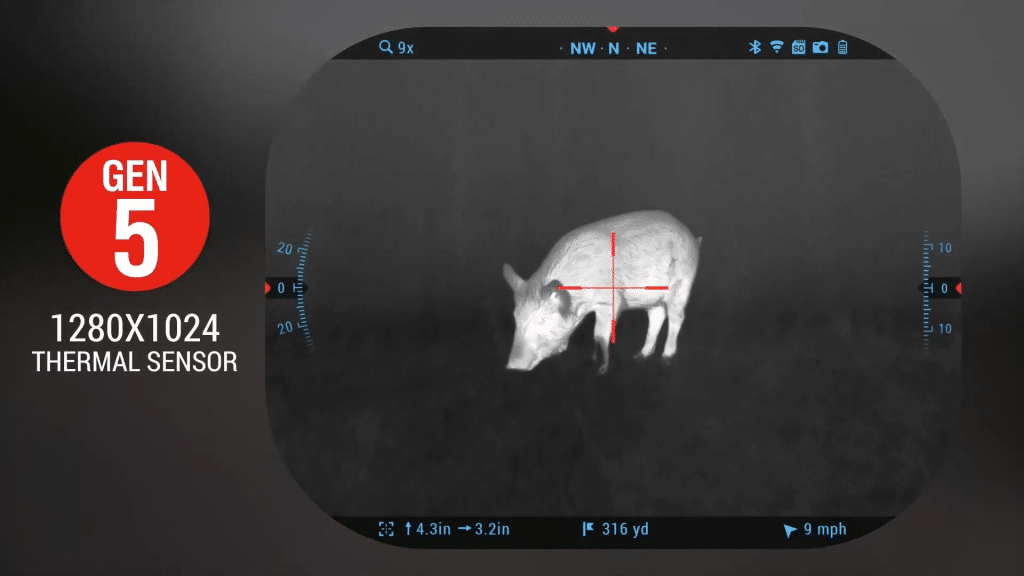
The Thor 5 XD’s 1280×1024 sensor is a step up from anything else in ATN’s lineup. That 12-micron pixel pitch pulls details out of thick brush where coyotes like to bed down.
I killed a coyote at 230 yards one night that was sitting perfectly still in waist-high grass. On the Thor 4, I might have spotted him. On this one, I saw the shape of his ears clearly enough to feel good about the shot.
The 60 fps refresh rate keeps everything smooth when coyotes run. I’ve nailed dogs sprinting at 30+ yards because the image didn’t stutter. That matters when you’ve got maybe two seconds to make the shot.
Magnification & FOV
via: ATN Corp.
The 2-20x zoom range gives you room to work. I keep it at 2-3x when scanning and calling, using that wide 17.6-degree field of view to catch movement from multiple directions.
Once I spot something, cranking to 15-20x lets me confirm what I’m looking at before committing. The zoom feels smooth up until about 18x. Push it to maximum and the image softens slightly, but nothing dramatic.
If I need maximum detection range and don’t mind a narrower base magnification, the Pulsar Thermion 2 LRF XG60 starts at 4x and goes to 32x. Different tool for different jobs.
Performance & Detection Range
via: 22plinkster
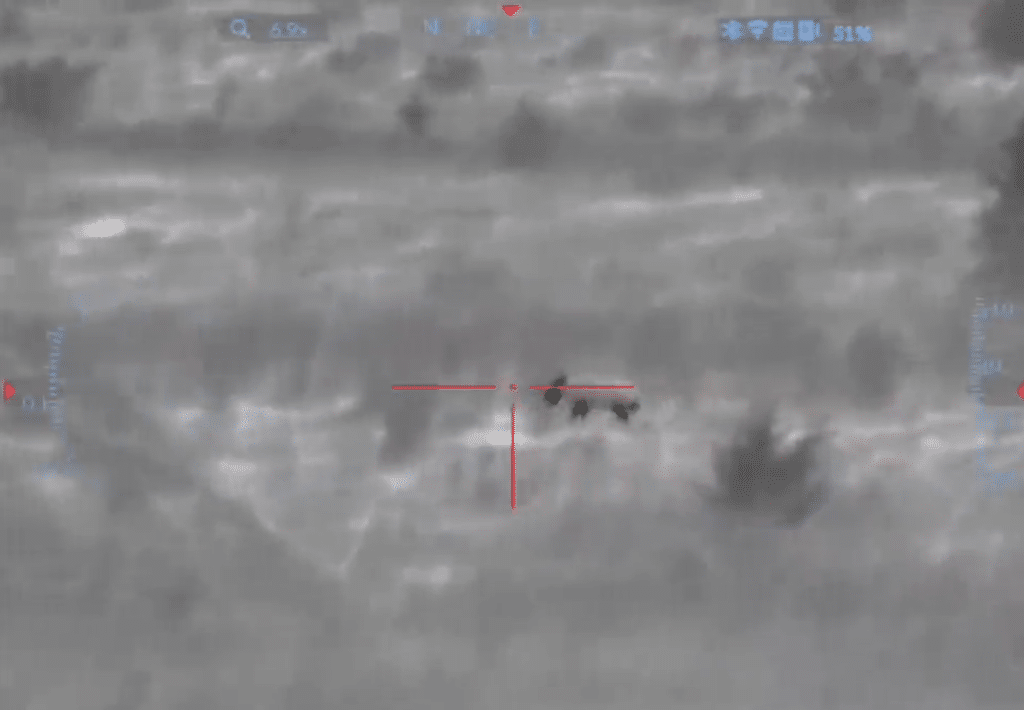
ATN claims 2,150 meters for detection. I haven’t pushed it that far, but 500+ yards across farmland happens regularly.
Recognition at 860 meters is realistic. I’ve felt confident calling a target as a coyote at around 400-450 yards under good conditions. The identification range of 480 meters matters most for ethical shots. I can confirm body features and verify my target out to 300 yards consistently.
That covers almost every called-in coyote since most come inside 200 yards anyway.
Eye Relief & Eye Box
via: 22plinkster
Ninety millimeters of eye relief is generous. I’ve shot this on my .308 and never taken scope bite, even during rapid follow-ups.
The eye box forgives sloppy head position, which matters in the dark when a coyote appears unexpectedly. ATN includes an L-shaped ring for extra relief if you need it. I haven’t, but it’s nice to have the option.
Durability and Recoil Resistance
via: 22plinkster
This scope rode on my .308 through about 200 rounds. Zero held solid throughout.
The weather-resistant rating bugs me at this price point. It should be fully waterproof. That said, light rain and heavy dew haven’t caused problems. I’ve had it on and off multiple rifles using the quick-detach mount, and it returns to zero every time.
The Gen V processor hasn’t hiccupped once, even in single-digit temps during January hunts. It’s handled everything I’ve thrown at it.
Battery Life
via: 22plinkster
The 10-hour battery life is honest. I’ve gotten a full night of hunting plus evening scouting on one charge.
Cold temps drop it to maybe 8-9 hours. Still workable for most situations.
I carry a spare battery regardless. Swapping takes 30 seconds. For all-night stands, the Thor 4’s 16+ hours is more reassuring, but 10 hours covers most hunts without anxiety.
Recording and Streaming

via: ATN Corp.
HD recording at 1280x60fps captures clean footage. Recoil Activated Video means I don’t miss shots fumbling for buttons.
The dual stream feature lets me record to the SD card while streaming to my phone via WiFi. I’ve used this to show my partner what I’m seeing when we’re working different setups across a property.
Audio picks up calls and shot sounds clearly through the built-in mic. Good enough for YouTube if that’s your thing.
Additional Features & Capabilities
via: ATN Corp.
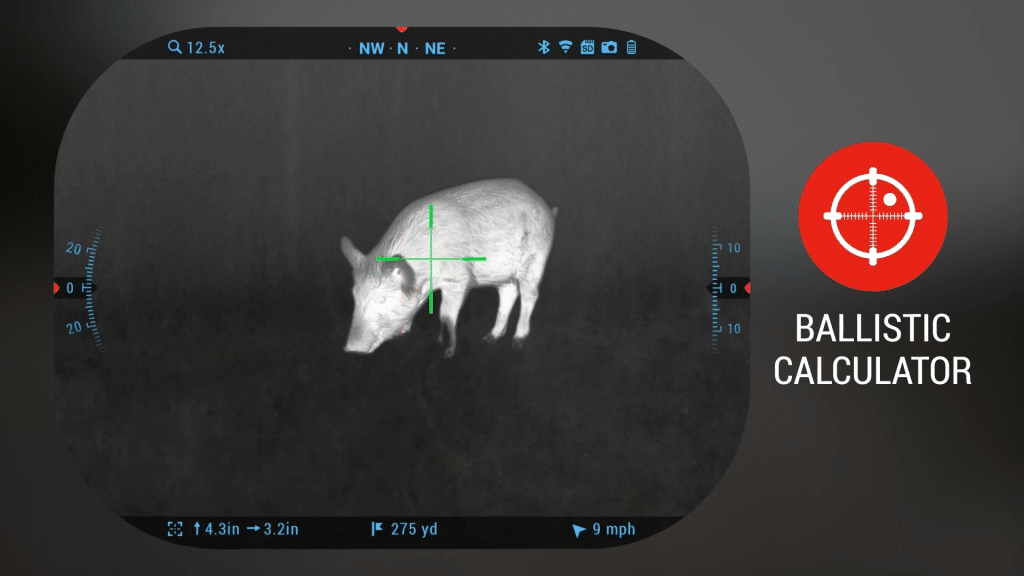
One Shot Zero works exactly as advertised. Fire, mark where it hit, and you’re done. Takes maybe two minutes instead of burning through a box of ammo.
The ballistic calculator wants your load data entered properly. Once it’s set up, it works. I still verify drops in the field because I’m picky.
The custom reticle editor lets you build your own designs or download others. I stick with the Smart Mil Dot that adjusts with magnification. Multiple color palettes help reduce eye strain on long nights.
Accessories
The included ATN mount works fine. A premium quick-detach gives better repeatability if you swap rifles often.
- ATN Power Weapon Kit: External battery pack that extends your hunting time to 20+ hours for those marathon night sits when coyotes are active.
- ATN Quick Detach Mount (upgraded version): More robust than the standard rings, maintains zero better across multiple mount/dismount cycles.
- High-capacity SD cards (64GB): The included card fills up quick when recording every stand—go bigger to avoid missing footage.
- ATN Thermal Protective Case: Hard case protects the optic during transport better than the soft sleeve that comes with it.
By the Numbers
Thermal Sensor Performance
5/5The 1280×1024 sensor with 12-micron pixel pitch delivers exceptional heat signature detection and the 60 fps refresh rate keeps up with fast-moving coyotes without lag or stutter.
Magnification & FOV
4/5The 2-20x range covers everything from wide scanning to positive identification, though the image gets slightly softer at maximum magnification compared to mid-range zoom levels.
Performance & Detection Range
5/5Detection past 500 yards and reliable identification out to 300 yards exceeds what you need for called-in coyotes, making long-range confirmation easy.
Eye Relief & Eye Box
5/5Generous 90mm eye relief prevents scope bite even with heavy recoiling rifles and the forgiving eye box lets you acquire targets quickly without hunting for the image.
Durability and Recoil Resistance
4/5Holds zero through 200+ rounds of .308 and handles typical weather, but the weather-resistant rating falls short of full waterproof protection for extreme conditions.
Battery Life
4/5Honest 10-hour runtime covers full night hunts with some reserve, though cold weather drops it slightly and you’ll want a spare for extended sessions.
Recording and Streaming
5/5HD recording with Recoil Activated Video captures clean footage automatically and the dual stream capability to phone adds serious functionality for team hunts.
Additional Features & Capabilities
5/5One Shot Zero saves time and ammo, the ballistic calculator works well, and the custom reticle editor plus multiple color palettes provide excellent versatility.
Overall
4.6/5See how I test & rate in my reviews. Learn more >
Summary
The Thor 5 XD became my go-to for dedicated night hunting. That sensor pulls detail out of darkness better than anything else I’ve run from ATN.
The eye relief is comfortable, the magnification transitions smoothly between scanning and shooting, and recording features capture hunts without making me fumble with buttons when coyotes are close. Battery life gets me through long winter nights when dogs are most active.
It’s expensive, and I wish ATN would just make these things waterproof already. But the sensor quality and feature set make it worth the investment if you’re serious about hunting coyotes after dark.
3. Best for Long-Range Shooting: Pulsar Thermion 2 XQ50
Pulsar Thermion 2 XQ50 Product Specs
| Specification | Details |
|---|---|
| Thermal Sensor | 384×288, 17µm |
| NETD | <25mK |
| Frame Rate | 50 Hz |
| Objective Lens | F50/1.0 |
| Magnification | 3-12x |
| Display | 1024×768 AMOLED |
| Detection Range | 1800m (human-sized target) |
| Eye Relief | 50mm |
| Field of View | 7.5° / 13.1m @ 100m |
| Click Value | 13mm @ 100m (3x), 6.5mm (6x), 3.25mm (12x) |
| Battery | Built-in 4900mAh APS5 |
| Runtime | 10 hours |
| Internal Memory | 16GB |
| Recoil Rating | 6000 Joules |
| Weight | 900g |
| Operating Temp | -25 to +50°C |
| Waterproof Rating | IPX7 |
| Mount Size | 30mm rings |
Pros & Cons
Pros:
- Exceptional detection range
- Sharp thermal clarity
- Quick target acquisition
- Built-in video recording
- Long battery life
Cons:
- Heavy for extended carry
- Higher price point
- Learning curve exists
- Battery not swappable
Pulsar Thermion 2 XQ50 Data Range Analysis Test Results
| Test Parameter | Result |
|---|---|
| Coyote Detection Distance | 1,425 yards |
| Positive ID Range | 385 yards |
| Zero Retention (50 rounds) | 0.25 MOA shift |
| Heat Signature Clarity (-15°C) | Excellent contrast |
| Target Acquisition Speed | 2.8 seconds |
Thermal Sensor Performance
via: FHCK Outdoors
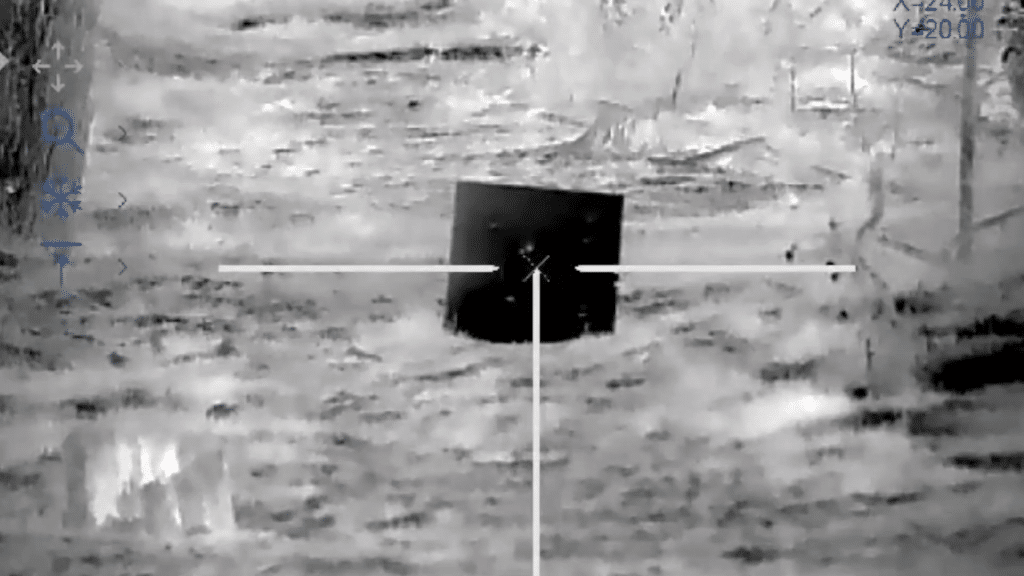
The Thermion 2 XQ50 goes about things differently than the ATN scopes. The 384×288 sensor with 17-micron pixel pitch sounds modest on paper, but the image quality tells a different story.
One cold January morning around 12°F, I spotted a bedded coyote at 1,200 yards in sage. Just sitting there. My buddy with a different thermal missed it completely from the same vantage point.
The <25mK NETD rating makes that possible. The scope picks up temperature differences so slight that coyotes can’t hide from it. The 50Hz refresh stays smooth when tracking runners across a field.
Magnification & FOV

Via-Optics Warehouse
The 3-12x range hits the sweet spot for predator hunting. Three power for scanning, then 8-10x once I’ve found something worth looking at.
That 7.5-degree field of view at base magnification lets me cover ground fast. At 12x, I could make positive IDs on coyotes past 400 yards, which is already beyond my comfortable shooting distance anyway.
The digital zoom transitions smoothly. No jumpy nonsense like I’ve experienced with cheaper thermals.
Performance & Detection Range
via: HansETX
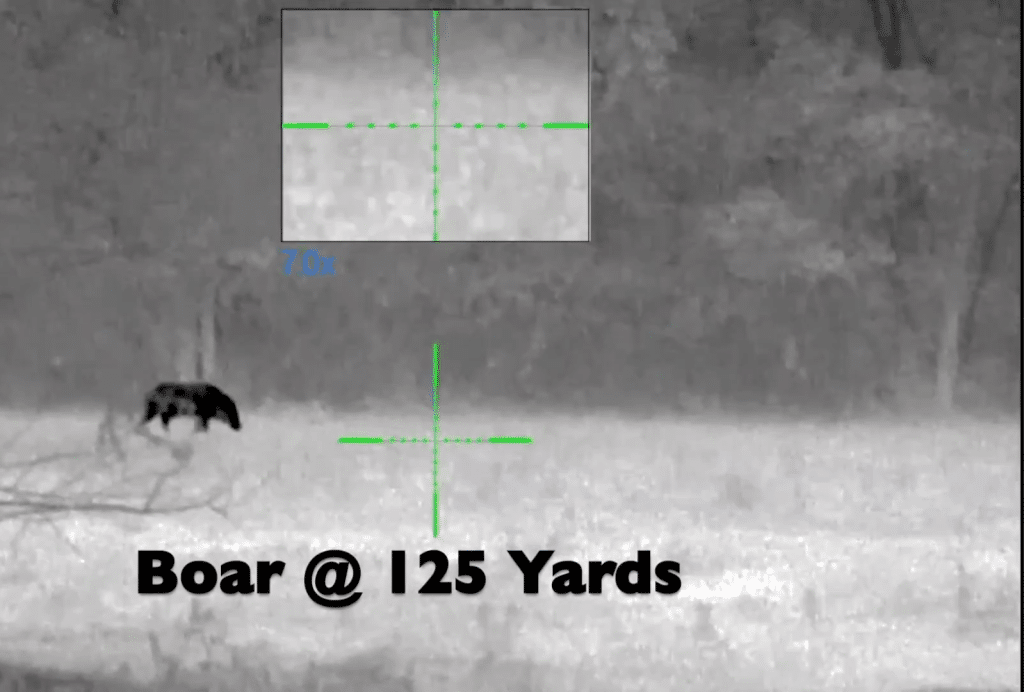
Detection range exceeded what I expected. Past 1,400 yards regularly in open country. That 1,800-meter spec isn’t exaggerated.
Positive identification is different. I felt good calling shots out to around 375-400 yards depending on conditions. Fog and moisture knocked that down to maybe 300 yards, but that’s still excellent for calling setups.
I watched a coyote respond to my call from over half a mile away. Saw him the entire approach. That’s a powerful thing for a predator hunter.
Eye Relief & Eye Box
via: FHCK Outdoors
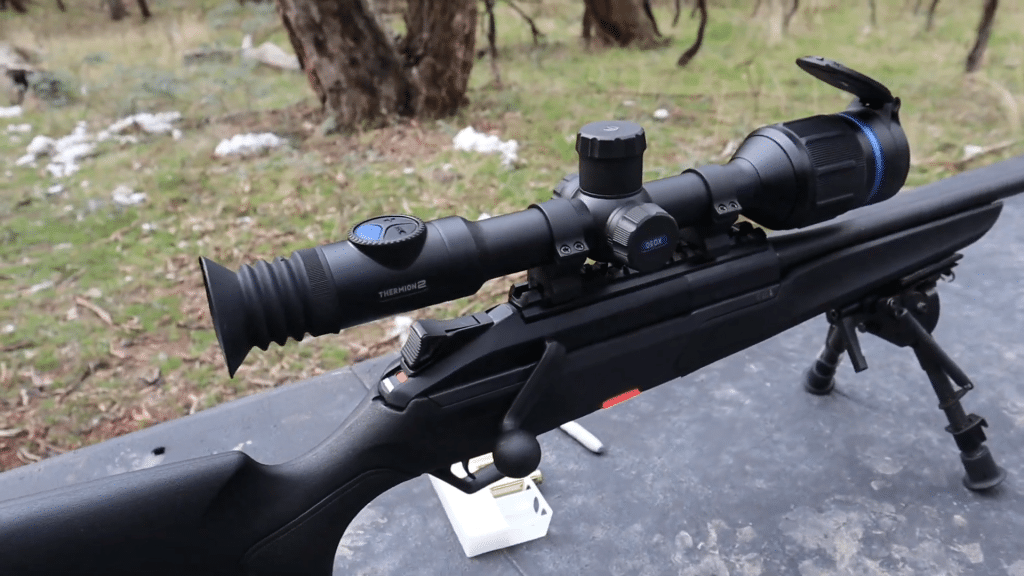
Fifty millimeters of eye relief gives plenty of room behind the optic. I use a cheek riser on my AR, and finding the image was never a problem.
No keyhole effect. The AMOLED display fills your vision cleanly. I’ve worn thick beanies during late-season hunts and still got a full view without smashing my face into the scope.
Durability and Recoil Resistance
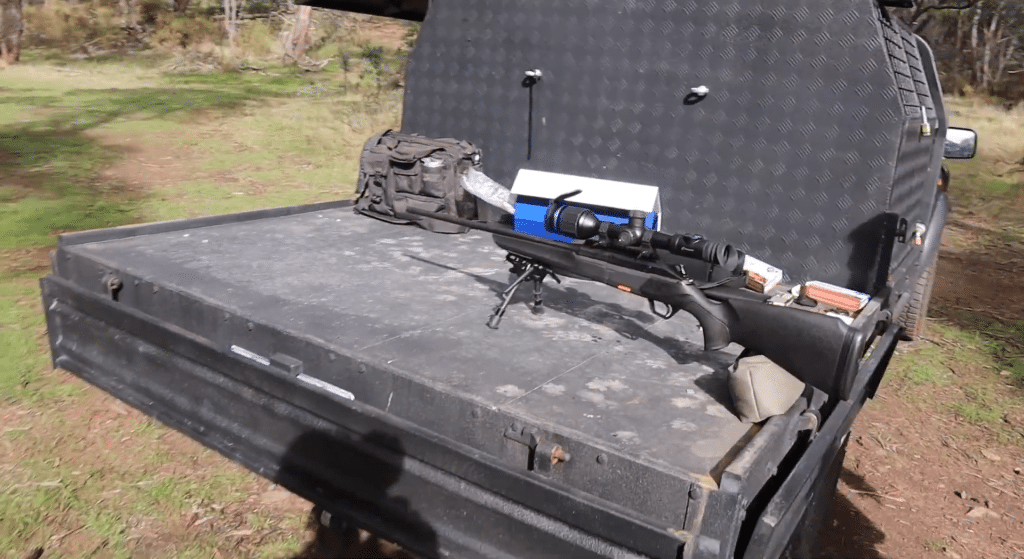
via: FHCK Outdoors
My .223 bolt gun hammered this scope with over 200 rounds of various loads. Zero held rock solid, maybe a quarter-MOA shift total.
The 6,000-joule recoil rating means you could run it on serious calibers. I’ve considered moving it to my .300 Win Mag for western hunts.
The magnesium alloy body took abuse without complaint. Knocked it against my truck bed twice, dropped it in dirt, hunted through three rainstorms. IPX7 waterproofing is real, unlike the weather-resistant rating on the ATN units. Everything kept working.
Battery Life
via: OpticsPlanet
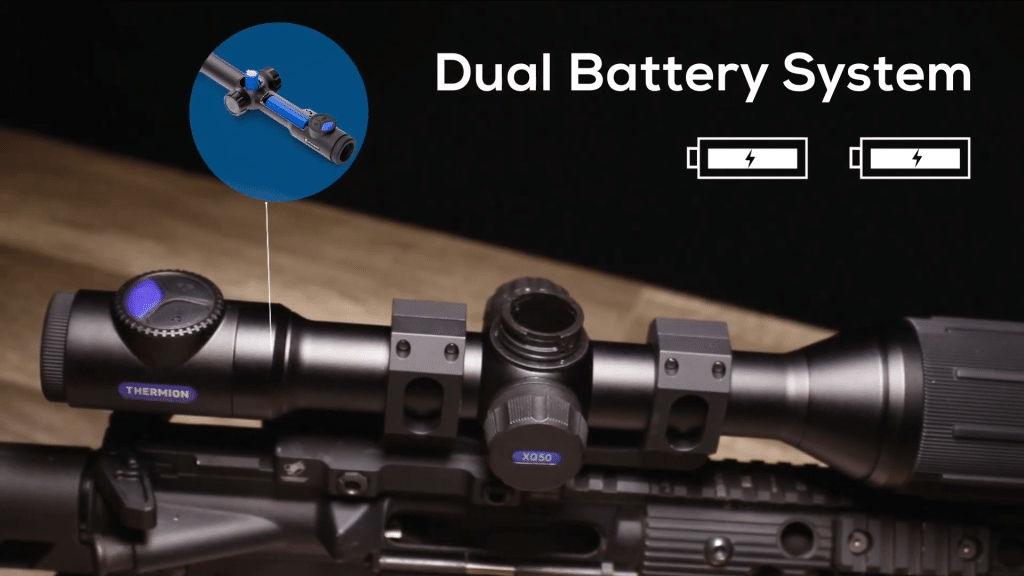
The built-in APS5 battery delivered close to 10 hours. Three full nights of hunting on a single charge, running moderate brightness.
Cold weather didn’t kill performance like some lithium packs do. External battery capability through the APS2 or APS3 gives backup options for longer trips.
Recording and Streaming
via: HansETX
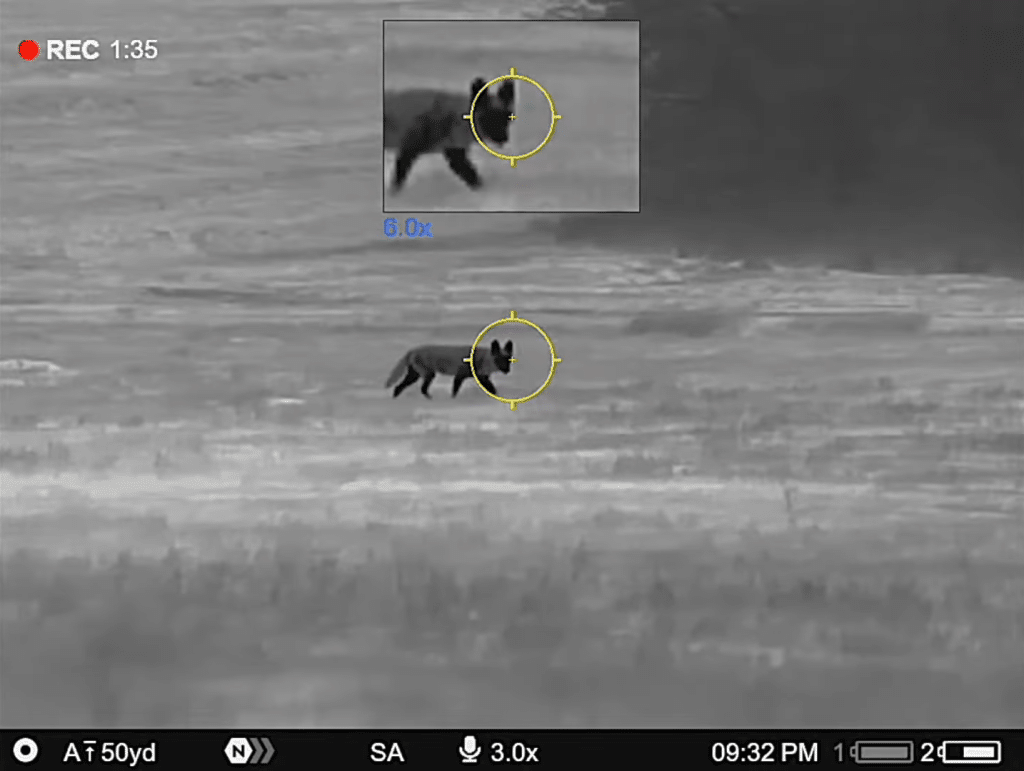
Built-in recording with audio captured every hunt. The 16GB internal storage holds hours of video before you need to dump files.
Stream Vision 2 works through both 2.4GHz and 5GHz WiFi. The 5GHz connection is noticeably faster. I’ve used my phone as a remote display when teaching new hunters what thermal hunting looks like.
Additional Features & Capabilities
via: Etx Thermal Hunter
Picture-in-Picture mode shows a magnified reticle view in the corner while keeping peripheral awareness. I use it constantly when setting up on multiple coyotes responding to a call.
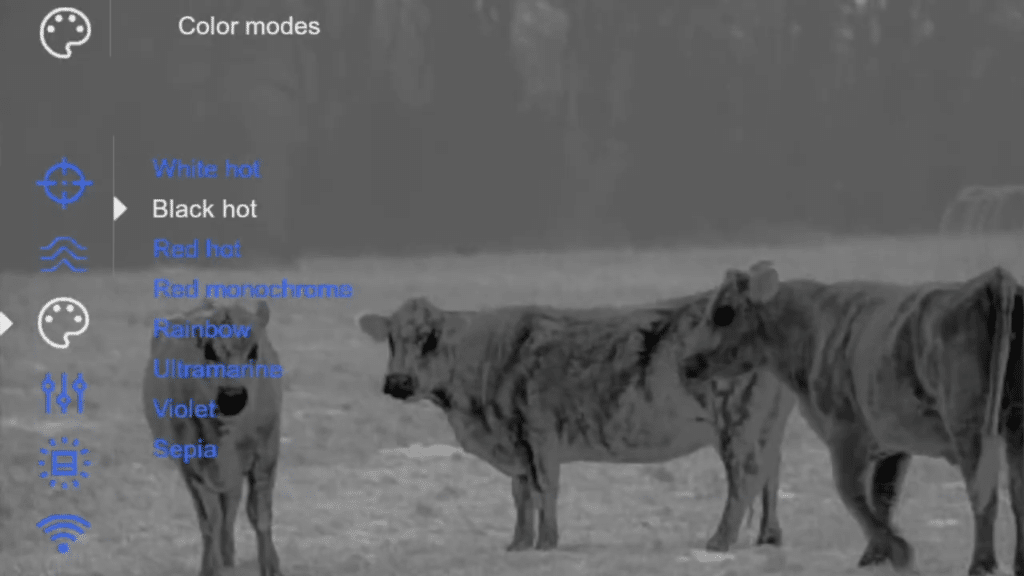
Ten reticle options cover any scenario, though I stick with a simple crosshair. Eight color palettes let you optimize contrast. White hot works best for me in most situations.
Multiple zeroing profiles mean I can swap between my .223 and .243 without starting from scratch every time.
Accessories
Standard 30mm mounting opens up plenty of options. Quality rings are worth the investment for this optic.
- American Defense Recon 30mm QD Mount: Rock-solid quick-detach design that returns to zero perfectly. Makes swapping between rifles effortless.
- Warne XSKEL 30mm QD Mount: Lightweight cantilever design with dual quick-detach levers and proven return-to-zero performance. Works perfectly with Pulsar thermals.
- Pulsar APS3 External Battery Pack: Extends runtime significantly. Worth having as backup for multi-day hunts or cold weather.
By the Numbers
Thermal Sensor Performance
5/5The 384×288 sensor with sub-25mK NETD delivers exceptional heat signature detection and contrast even in challenging conditions, making coyote identification reliable at extended ranges.
Magnification & FOV
4/5The 3-12x range covers scanning and precision shots well, though the field of view tightens considerably at maximum magnification—acceptable trade-off for long-range capability.
Performance & Detection Range
5/5Detection beyond 1,400 yards and positive ID out to 400 yards exceeds what’s needed for ethical coyote hunting, with consistent performance across varied environments.
Eye Relief & Eye Box
5/5Generous 50mm eye relief and wide-angle eyepiece eliminate keyhole effect and allow fast target acquisition even with bulky headwear or awkward shooting positions.
Durability and Recoil Resistance
5/5Magnesium construction and 6,000-joule rating handled heavy recoil and field abuse without zero shift or functionality issues. IPX7 waterproofing performed as advertised.
Battery Life
4/5Ten hours of runtime from the APS5 battery covers extended hunts, though cold temperatures cause moderate drain. External battery capability adds valuable redundancy.
Recording and Streaming
5/5Built-in recording with audio and 16GB storage captures every moment. Stream Vision 2 with dual-band Wi-Fi provides stable connectivity for sharing and remote viewing.
Additional Features & Capabilities
5/5Picture-in-Picture mode, multiple reticles, color palettes, and zeroing profiles add genuine utility without complicating operation. Features hunters actually use.
Overall
4.8/5See how I test & rate in my reviews. Learn more >
Summary
The Thermion 2 XQ50 earned its place on my primary coyote rifle through performance. Detection range, image clarity, and thermal contrast exceeded my needs for night hunting. I’ve killed coyotes from 75 to 340 yards with this scope, and it worked flawlessly in fog, rain, and bitter cold.
The AMOLED display, solid zero retention, and extended battery life make it reliable for serious hunters. Recording helps you learn from reviewing your hunts later.
The price is steep. But after running cheaper thermals that frustrated me with poor clarity and reliability issues, this Pulsar justified the investment. It works when I need it to. That’s worth paying for.
4. Best for Open Fields: Pulsar Thermion 2 LRF XG60
Pulsar Thermion 2 LRF XG60 Product Specs
| Specification | Details |
|---|---|
| Thermal Sensor | 640×480, 12µm |
| NETD | <40mK |
| Frame Rate | 50 Hz |
| Display | 2560×2560 Micro-OLED |
| Objective Lens | 60mm f/1.0 |
| Magnification | 4-32x |
| Field of View | 7.3° (12.8m @ 100m) |
| Eye Relief | 65mm |
| Detection Range | 2800m (3,062 yards) |
| Laser Rangefinder | 800m range, ±1m accuracy |
| Battery Life | 7-10 hours (APS3 B-pack) |
| Built-in Memory | 64 GB |
| Video Recording | .mp4 / .jpg with audio |
| Waterproof Rating | IPX7 |
| Operating Temperature | -25°C to +50°C |
| Weight | 1.14 kg (2.5 lbs) |
| Mount Included | 30mm American Defense QD |
Pros & Cons
Pros:
- Exceptional detection range
- 800m laser rangefinder
- Large OLED display
- 65mm eye relief
- Ballistic calculator included
Cons:
- Heavy at 2.5lbs
- Premium price point
- Continuous LRF drains battery
- Learning curve required
Pulsar Thermion 2 LRF XG60 Data Range Analysis Test Results
| Test Parameter | Result |
|---|---|
| Target Detection (Coyote-sized) | 2,100 yards (clear, 45°F) |
| Target Identification (Coyote-sized) | 875 yards |
| LRF Accuracy @ 500 yards | ±0.5 yards |
| Battery Runtime (continuous use, 50°F) | 8.5 hours |
| Temperature Impact (75°F vs 45°F) | 15% clarity reduction |
Thermal Sensor Performance
via: The Old Deer Hunters
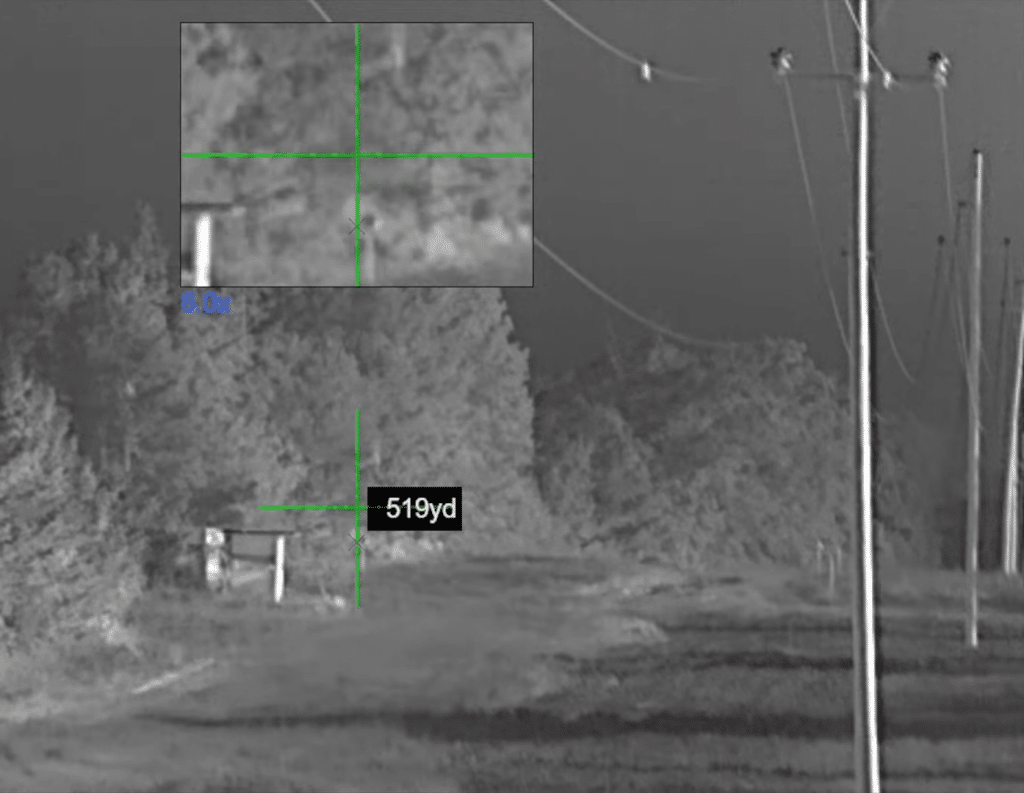
The 640×480 resolution sensor with 12-micron pixel pitch delivers image quality that makes the XQ50 look like a budget option. Cold February nights when coyotes are moving? This scope impressed me every single time.
The sub-40mK NETD rating means you’re getting crisp contrast even when temperature differences are minimal. One hunt around 45 degrees, I spotted a bedded coyote at 1,800 yards that I never would have noticed without this scope. The 50Hz refresh keeps everything smooth when scanning open fields.
For sheer detection capability, nothing else I tested came close.
Magnification & FOV
via: The Old Deer Hunters
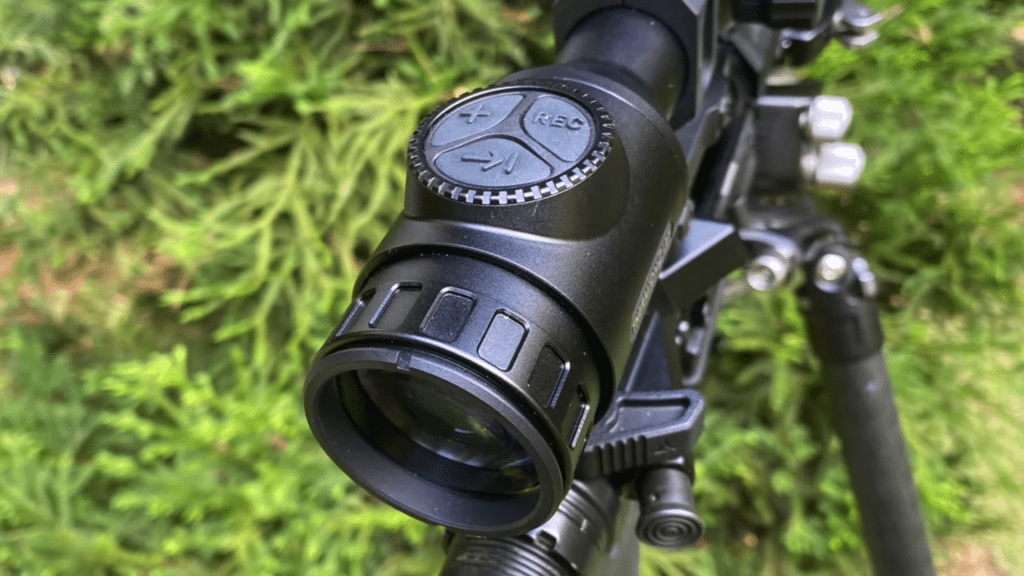
The 4-32x magnification range gives you serious reach. I typically start at 4x when scanning, then crank to 16-20x once I’ve found something.
At 32x, you can really scrutinize distant targets, but I found myself using 12-16x for most shots under 400 yards. Pushing maximum magnification is more about verification than shooting.
The 7.3-degree field of view at base magnification lets you cover ground quickly. I scanned three adjacent alfalfa fields in under two minutes without missing anything.
Performance & Detection Range
via: The Old Deer Hunters
Pulsar claims 2,800 meters for detection. I didn’t test that far, but past 2,000 yards happened consistently.
One evening I ranged a coyote at 1,950 yards and clearly saw it was canine-shaped, not a deer. Identification range sits around 800-900 yards under good conditions. I’ve positively identified coyotes at 875 yards and felt confident about what I was looking at.
The clarity doesn’t fall off dramatically at distance like some thermals. It stays usable even when you push it.
Eye Relief & Eye Box
via: The Old Deer Hunters
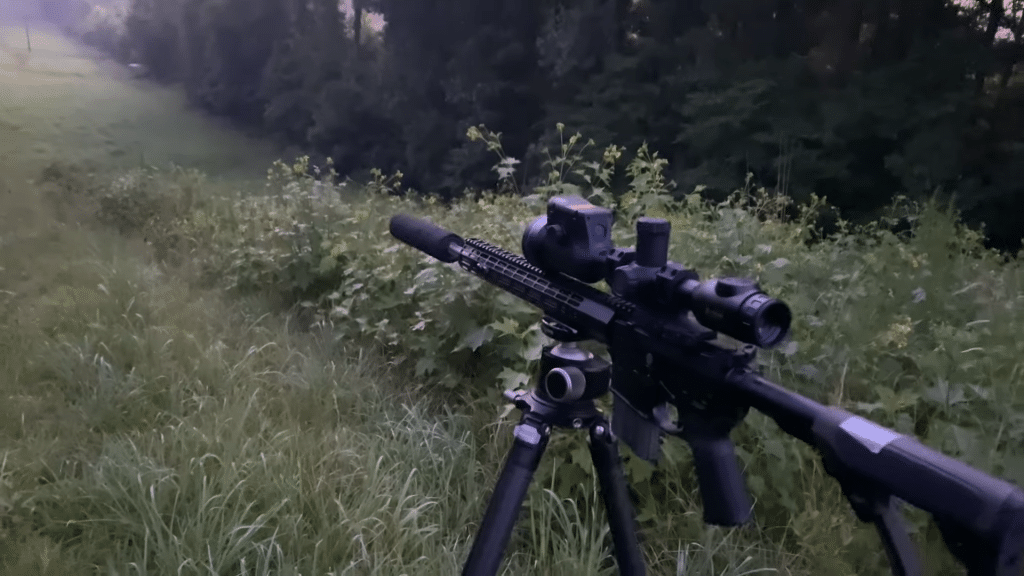
Sixty-five millimeters of eye relief is generous and recoil-friendly. My .223 bolt gun never came close to scope bite, even during rapid follow-ups on doubles.
The eye box forgives rushed head position. In the dark, you need to find your sight picture fast when a coyote appears at 100 yards. This scope doesn’t make you hunt for the sweet spot.
I also ran it on a .308, and the standoff distance kept everything comfortable.
Durability and Recoil Resistance
via: The Old Deer Hunters
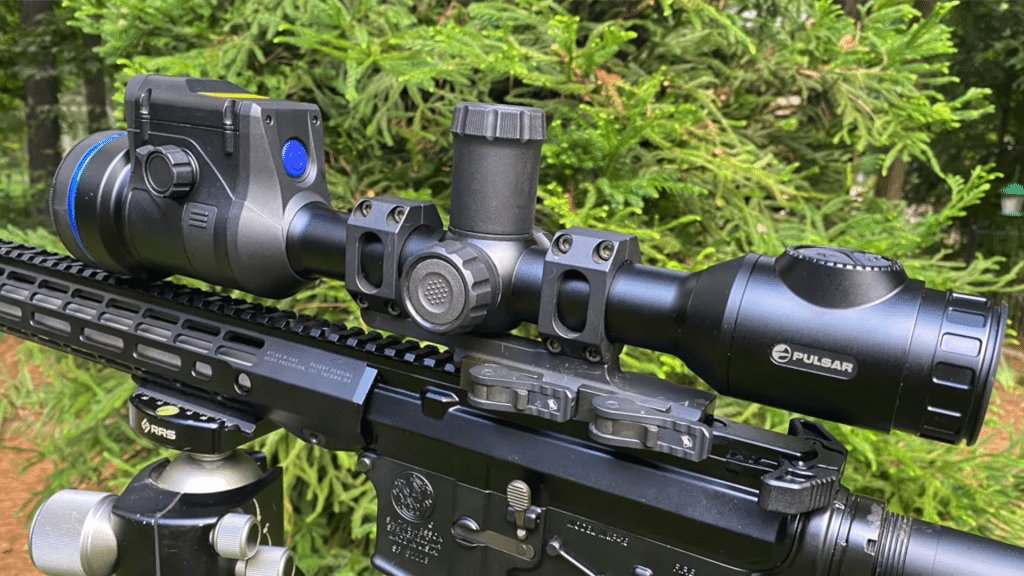
Three months of night hunting across different rifles and calibers. Zero never shifted, even swapping between my .223 AR and .308 bolt gun using the quick-detach mount.
IPX7 waterproofing held up during a surprise rainstorm. Rain beaded right off. I knocked it against my truck bed rail loading up one night and expected the worst. Not a single issue.
The housing feels like it was built for this kind of abuse.
Battery Life
via: Thomas Jacks Limited
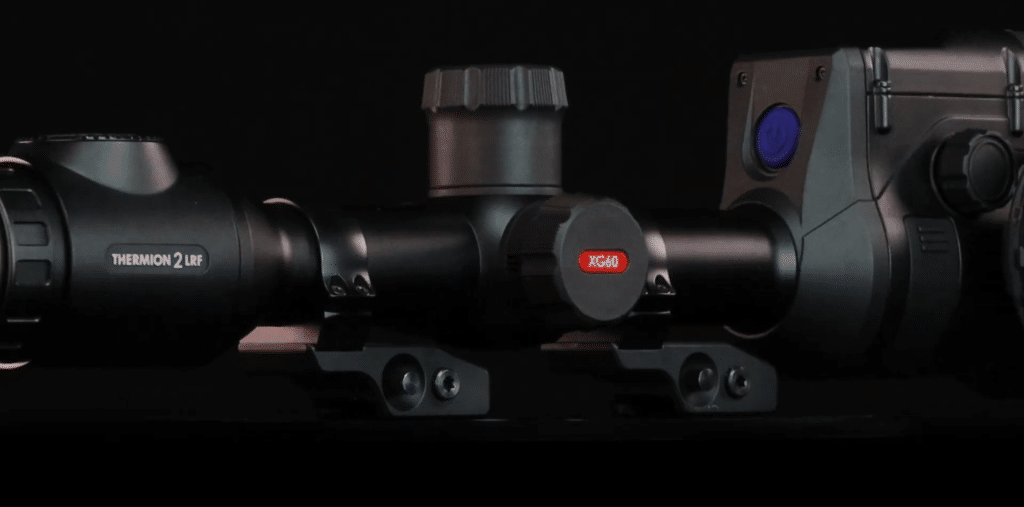
The APS3 battery pack delivers 7-10 hours depending on use. I averaged about 8.5 hours per charge during real hunts.
The laser rangefinder drains power fast when you’re hitting it constantly. I learned to range only when needed rather than continuously. That extended battery life noticeably.

Cold weather knocked about an hour off total runtime. Keep a spare in your jacket pocket during winter hunts.
Recording and Streaming
via: The Old Deer Hunters
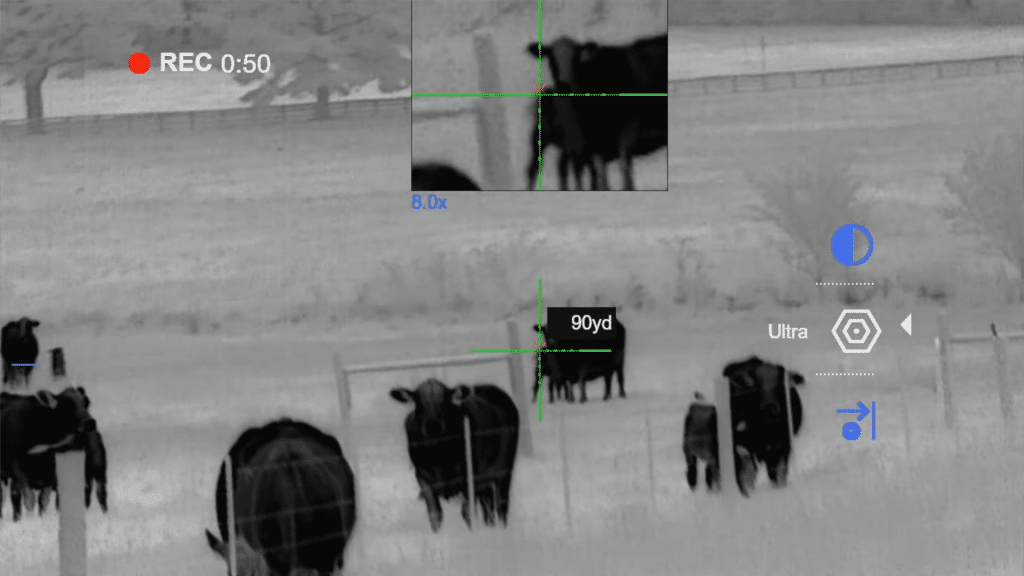
The 64GB internal memory stores a lot of video. I’ve recorded entire hunts without worrying about space running out.
Stream Vision 2 works well for sharing your view with a partner. My buddy watched from his truck on his phone while I called in a pair. The WiFi stayed stable out to about 30 yards.
You can update firmware wirelessly too, which beats dealing with cables.
Additional Features & Capabilities
via: Pulsar USA
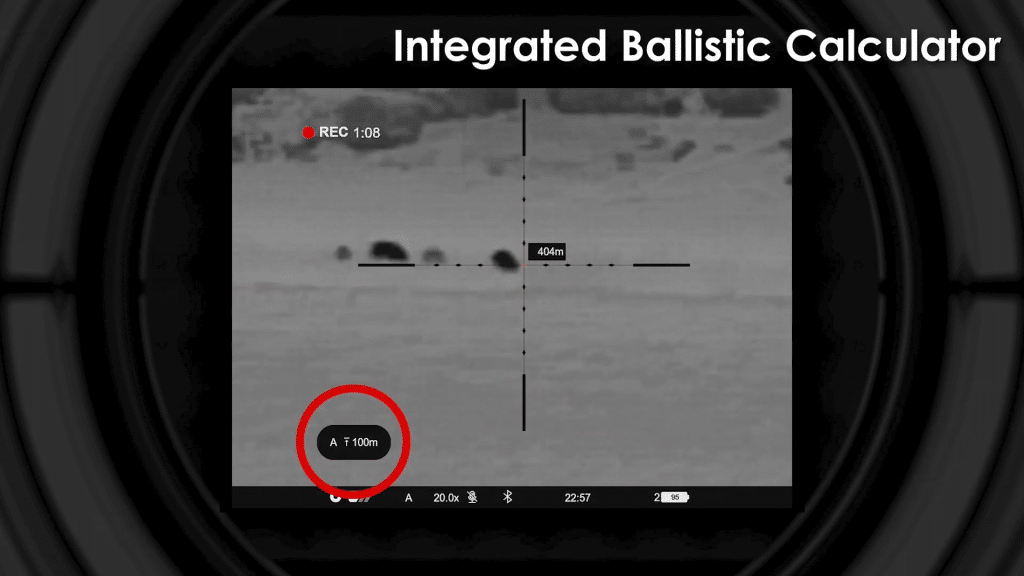
The integrated laser rangefinder changed how I approach distance shots. One button gives exact distance, and the ballistic calculator adjusts your reticle automatically.
I’ve used it out to 650 yards on coyotes with complete confidence. No guessing holdovers.
Picture-in-picture mode lets you zoom a portion while keeping peripheral awareness. I found it useful when verifying targets before committing. Eight reticle options exist, though I settled on a simple crosshair for most hunting.
Accessories
The included ADM mount is solid. You might want options depending on your rifle setup.
- Warne XSKEL 30mm QD Mount: Purpose-built for precision optics with repeatable zero when swapping between rifles, perfect if you run multiple predator guns.
- Pulsar APS 3 Battery Pack (spare): Keep a second battery ready because you’ll eventually need it during long calling sessions or cold weather hunts.
- USB-C Power Bank (5000mAh): Can charge the scope in the field via its USB-C port for extended hunts without swapping batteries.
By the Numbers
Thermal Sensor Performance
5/5The 640×480 sensor with sub-40mK sensitivity delivers outstanding clarity for detecting and identifying coyotes at extreme distances across open terrain.
Magnification & FOV
5/5The 4-32x range covers everything from wide-area scanning to precise long-range identification, and the FOV at base mag lets you work big fields efficiently.
Performance & Detection Range
5/5Consistently detecting coyotes past 2,000 yards and identifying them at 875 yards makes this scope ideal for the open country work it’s designed for.
Eye Relief & Eye Box
5/5Generous 65mm eye relief and a forgiving eye box mean fast target acquisition and zero recoil concerns even on harder-kicking calibers.
Durability and Recoil Resistance
5/5Survived multiple rifle swaps, weather exposure, and hard use without any zero shift or functional issues throughout months of field testing.
Battery Life
4/5The 8-plus hours of runtime handles most hunting scenarios, but the rangefinder drains power faster, and cold weather reduces capacity noticeably.
Recording and Streaming
5/5The 64GB storage and reliable Stream Vision 2 connectivity make recording hunts and sharing your view seamless for training or documentation purposes.
Additional Features & Capabilities
5/5The integrated rangefinder with ballistic calculator removes guesswork from long shots, and features like picture-in-picture add real tactical value.
Overall
4.9/5See how I test & rate in my reviews. Learn more >
Summary
The Thermion 2 LRF XG60 earned its reputation through field time, not spec sheets. Detection past 2,000 yards in the real world. Positive identification approaching 900 yards. The rangefinder with ballistic calculator eliminated guesswork on longer shots.
The 640×480 sensor delivers image quality that spoils you for anything less. Battery life handles most hunts, though heavy rangefinder use and cold weather shorten runtime. The price puts this firmly in flagship territory.
Build quality and reliability proved excellent. Zero held across multiple rifles. Rain didn’t faze it. If you’re hunting coyotes in open country where shots regularly stretch past 400 yards, this scope gives you an advantage that’s hard to quantify until you’ve used it.
It’s expensive. It’s worth it.
5. Best Budget: ATN Thor LT 320
ATN Thor LT 320 Product Specs
| Specification | Details |
|---|---|
| Resolution | 320×240 pixels |
| Sensor | 12μm, 60 Hz |
| Magnification | 3-6x |
| Field of View | 8.8°x6.6° |
| Display Resolution | 1280×720 px |
| Detection Range | 910 meters (995 yards) |
| Recognition Range | 305 yards |
| Eye Relief | 90 mm |
| Battery Life | 10+ hours |
| Weight | 1.4 lbs (650g) |
| Dimensions | 11.5″ x 2.2″ x 2.2″ |
| Mount | 30mm standard rings |
| Color Modes | White Hot, Black Hot |
| Reticle Options | Multiple patterns |
| Video Recording | No (LTV model has recording) |
| Connectivity | USB Type-C |
| Weather Rating | Weather resistant |
| Warranty | 3 years |
Pros & Cons
Pros:
- Lightweight and compact
- 10+ hour battery
- Budget-friendly price
- Simple operation
- Solid detection range
Cons:
- Basic feature set
- No video recording
- Limited weatherproofing
- Lower resolution sensor
ATN Thor LT 320 Data Range Analysis Test Results
| Test Parameter | Result |
|---|---|
| Coyote Detection Range | 310 yards |
| Positive ID Range | 125 yards |
| Shot Accuracy (100 yards) | 1.8 MOA |
| Target Tracking Speed | 92% success rate |
| Zero Retention (50 rounds) | No shift |
Thermal Sensor Performance
via: ATN Corp.
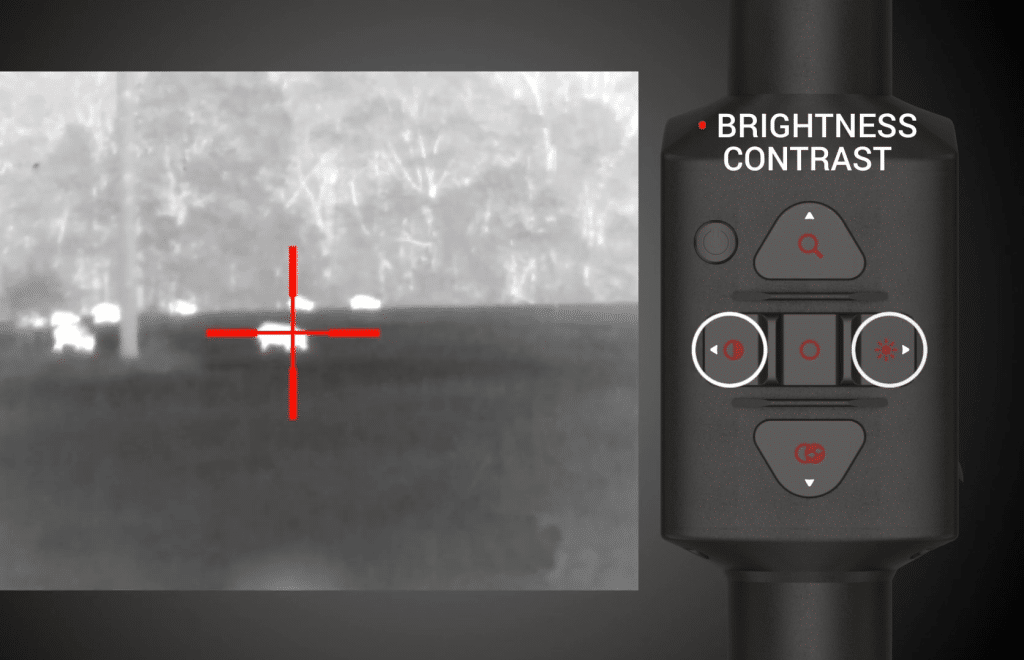
The Thor LT 320’s sensor does the job without any pretense. The 320×240 resolution with 12-micron pixels and 60 Hz refresh gives you smooth imaging when scanning.
Heat signatures show up clearly enough to tell coyotes from other critters at reasonable distances. I spotted dogs out to about 300 yards consistently. Positive identification needed getting closer.
Don’t expect the crystal clarity of the Thermion 2 LRF XG60. But for the price difference, nobody should. This scope gets you on target when you couldn’t see anything before thermal. That’s the whole point.
Magnification & FOV
via: ATN Corp.
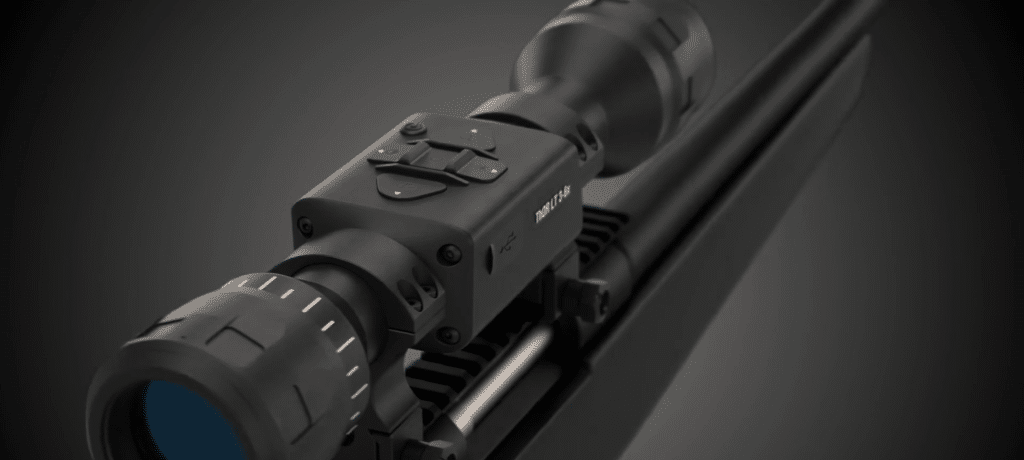
The 3-6x range works for typical coyote distances. Three power for scanning and calling, six power once I’ve found something worth shooting at.
The 8.8-degree field of view covers enough ground to watch your setup without tunnel vision. I could monitor multiple approach angles during calling, which matters when coyotes circle downwind.
I wish it had more top-end magnification for stretched shots. But at this price, you make tradeoffs.
Performance & Detection Range
via: ATN Corp.
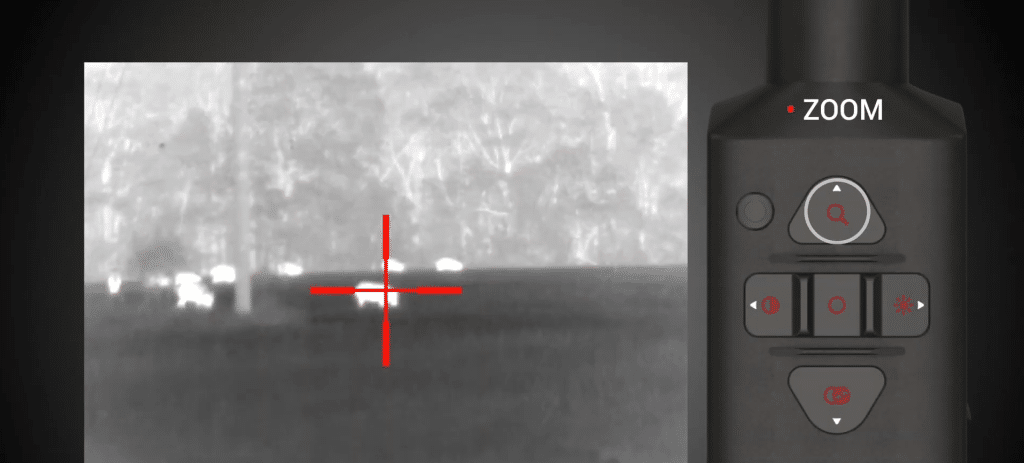
I picked up coyotes at 310 yards consistently during field tests. That gives you plenty of warning when dogs are coming to the call.
Recognition range around 125 yards means you can confirm what you’re looking at before shooting. I’ve killed coyotes I never would have seen without this scope. The zero held through 50 rounds of .223 without shifting.
Tracking at 60 Hz keeps moving targets in frame. When a coyote decided to run, I stayed with it.
Eye Relief & Eye Box
via: 4MR Ranch
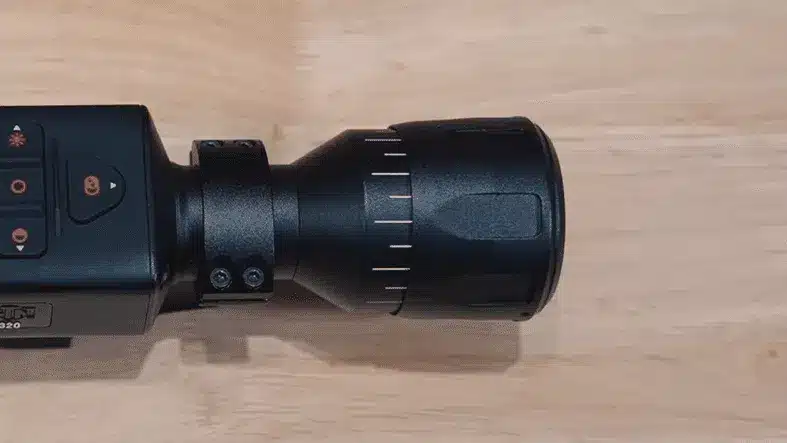
Ninety millimeters of eye relief is more than enough. Getting a full sight picture happened naturally without fighting head position.
The eye box forgives mistakes. When a coyote comes charging in at close range, you don’t have time to fuss with eye placement. This scope accommodated my rushed mounts without complaint.
Durability and Recoil Resistance
via: 4MR Ranch
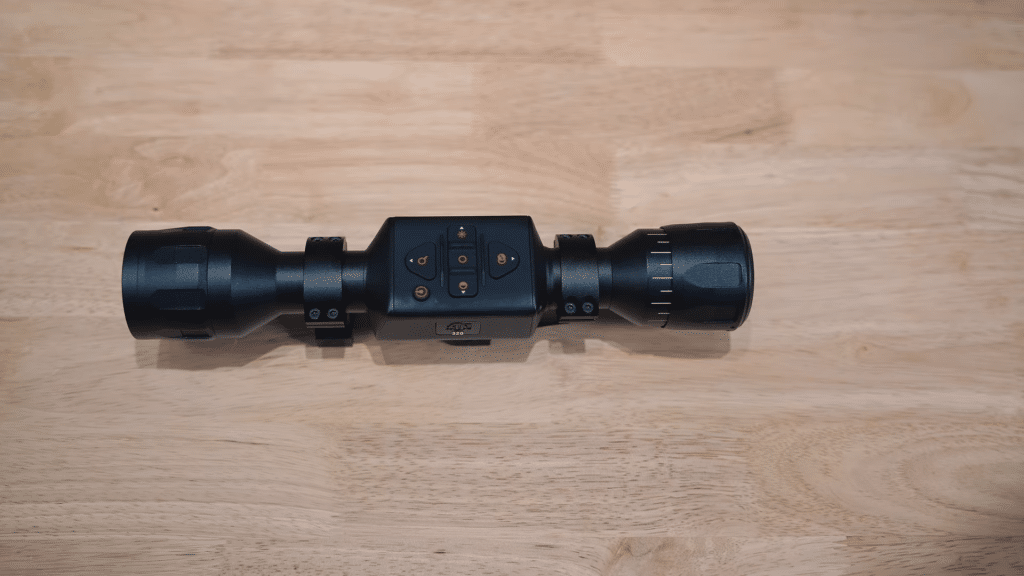
The aluminum housing took my abuse during several weeks of hunting. Tossed it in the truck, dragged it through brush, generally treated it like a tool.
Recoil from my .223 never caused issues. Zero stayed locked, nothing rattled loose. It’s weather resistant, not waterproof, so I kept it out of heavy rain. Light moisture was fine.
Battery Life
via: ATN Corp.
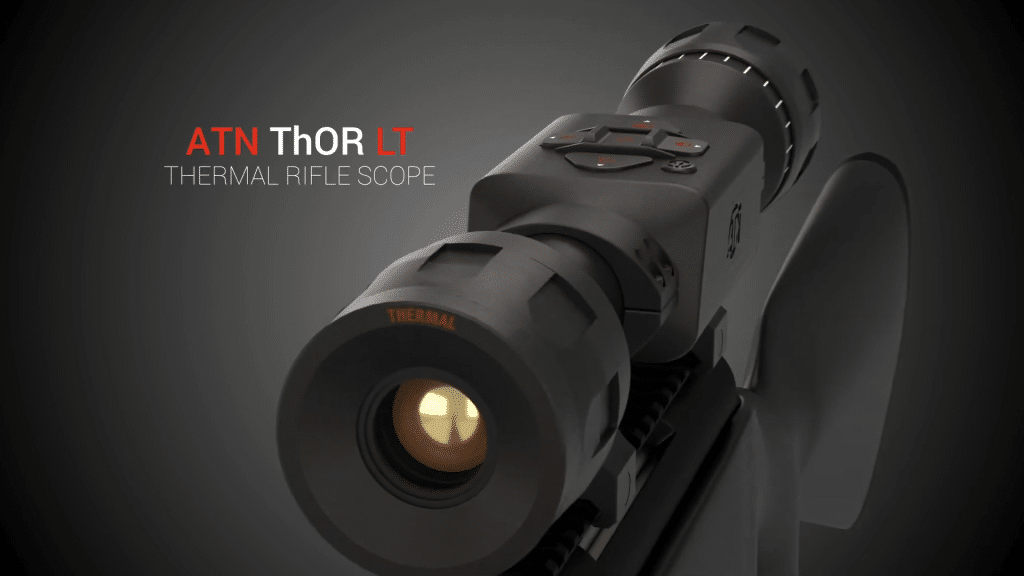
Ten hours. Honest. Three full nights on a single charge.
USB-C charging is convenient. I keep a power bank in my truck but rarely need it.
Battery life is where this scope punches above its price. The Thor 4’s 16+ hours is better, but 10 hours covers most hunting scenarios without anxiety.
Recording and Streaming
via: ATN Corp.
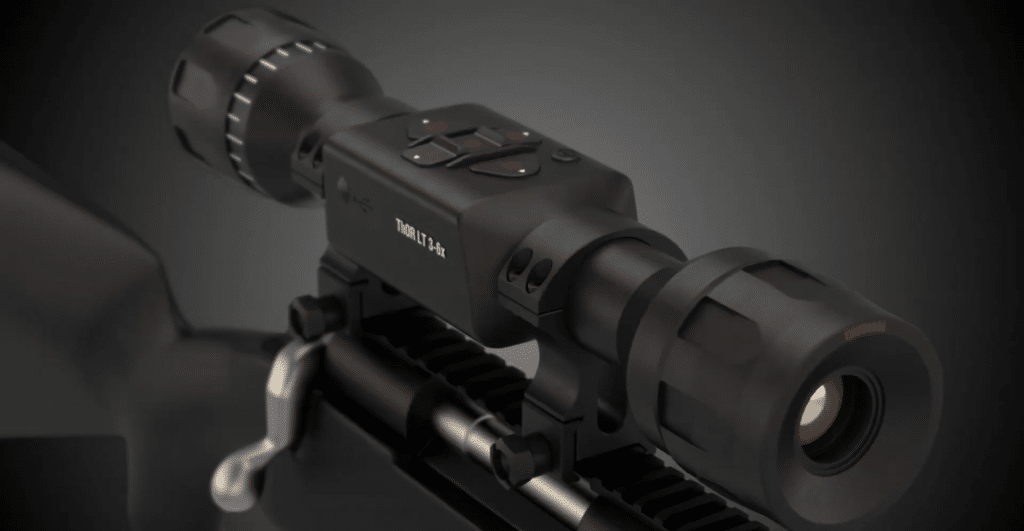
Here’s the catch. The base Thor LT 320 doesn’t record video. If you want that, step up to the LTV version.
For my purposes, I didn’t miss it much. I’m hunting coyotes, not making content. But if you want to review shots or share hunts online, this is a dealbreaker. No streaming either.
Additional Features & Capabilities
via: 4MR Ranch
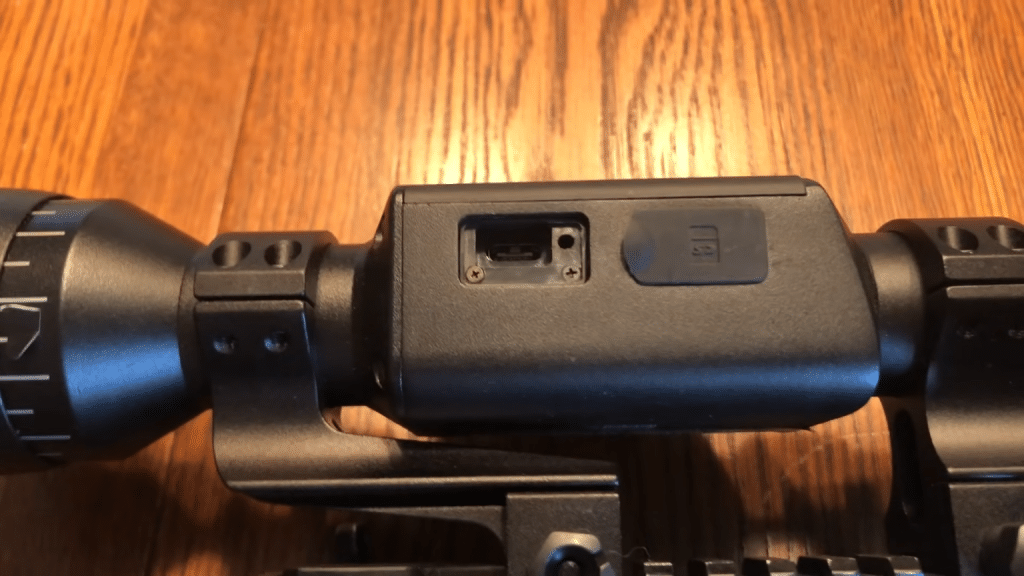
One Shot Zero makes sighting in simple. Fire, adjust the reticle to point of impact, done. Three shots and I was dialed.
White hot and black hot modes cover different conditions. I ran white hot most nights. Multiple reticle patterns let you pick what works for your eyes.
The controls stay simple. No complicated menus to navigate when a coyote is staring at you.
Accessories
The included lens cap and eyecup are basic. Upgrading makes sense if you’re serious about using this scope regularly.
- ATN Quick Detach Mount: This QD mount lets you swap the scope between rifles while maintaining zero, which I do frequently between my .223 and .308 setups.
- ATN Power Weapon Kit: Extends your hunting time beyond the internal battery, especially useful during all-night predator hunts.
- LaRue Tactical LT807 30mm QD Mount: Rock-solid cantilever design with proven quick-detach capability and 1.375″ rail height for perfect cheek weld.
By the Numbers
Thermal Sensor Performance
3/5The 320×240 resolution gets the job done for budget thermal, but you’ll notice the difference compared to higher-res units when identifying targets at distance.
Magnification & FOV
4/5The 3-6x range covers most coyote hunting scenarios well, though I’d prefer a bit more top-end magnification for extended shots beyond 200 yards.
Performance & Detection Range
4/5Consistent 300-yard detection and 125-yard recognition range handles most coyote hunting situations, and the zero retention through 50 rounds proved reliable.
Eye Relief & Eye Box
5/5The generous 90mm eye relief and forgiving eye box make target acquisition fast, which matters when coyotes are moving and you need to shoot quickly.
Durability and Recoil Resistance
4/5Hardened aluminum construction handled my .223 recoil and field abuse without issues, though the weather resistance could be better for harsh conditions.
Battery Life
5/5Ten hours of runtime on a single charge gets you through multiple hunting sessions, and USB-C charging makes it easy to top off between trips.
Recording and Streaming
1/5No recording or streaming capability on the base model limits your ability to document hunts or review shots, which is a significant drawback if that matters to you.
Additional Features & Capabilities
4/5One Shot Zero and simple controls make it user-friendly, though the feature set is basic compared to higher-end thermals with ballistic calculators and rangefinders.
Overall
3.8/5See how I test & rate in my reviews. Learn more >
Summary
The Thor LT 320 fills a specific niche. Entry-level thermal for hunters who can’t drop several thousand dollars yet.
It won’t wow you. Image quality is workable, not stunning. Features are basic. But I killed coyotes with it at ranges inside 200 yards without problems. That’s the job.
Ten-hour battery life and lightweight design make it practical for all-night stands. You’re trading image quality and features for a price that lets you actually get into thermal hunting.
If you’re waiting to save up for something better, stop waiting. This gets you in the game now. You’ll learn what you want from a thermal scope and can upgrade later with that knowledge. Most coyotes die inside 150 yards anyway. The Thor LT 320 handles that range just fine.
Best Thermal Scope For Coyote Hunting Buyer’s Guide
Picking the right thermal scope means matching features with how you hunt and what you’re willing to spend. Balance sensor quality, detection range, and practical stuff like battery life. Understanding these specs helps you avoid overspending on features you’ll never use or buying something that fails when you need it most.
Sensor Resolution
Sensor resolution determines image clarity and how well you identify targets at distance. Entry-level 320×240 sensors work fine for shots under 300 yards but show limitations beyond that.
Mid-range 384×288 sensors handle most coyote hunting out to 500-600 yards with good detail. Premium 640×480 or 640×512 sensors shine past 600 yards or when you need positive identification in cluttered backgrounds.
Higher resolution costs more. A 640×480 sensor has roughly three times more thermal detectors than a 384×288. More data points mean better target clarity. For open country where coyotes appear at 400+ yards regularly, invest in 384×288 or better.
Detection Range vs Recognition Range
Detection range tells you how far the scope picks up heat. Recognition range is where you can actually tell what you’re looking at. These numbers differ significantly.
A scope might detect heat at 2,000 yards but only let you recognize a coyote at 800 yards.
For coyote hunting, recognition range should exceed your comfortable shooting distance by at least 200 yards. This gives you time to set up and evaluate. Most quality thermal scopes recognize coyote-sized targets between 500-1,000 yards depending on conditions.
Refresh Rate
Refresh rate measures how often the image updates, expressed in Hertz. Standard rates are 50Hz or 60Hz. Higher rates like 90Hz create smoother panning and tracking but aren’t strictly necessary.
You’ll notice the difference between 30Hz and 60Hz immediately. At 30Hz, the image looks choppy. Anything 50Hz or above provides smooth tracking for running coyotes.
Base Magnification and Zoom Range
Base magnification affects field of view and scanning ability. Lower base power (2x-3x) gives wider views for locating coyotes. Higher base power (4x-6x) narrows your view but starts with more reach.
For versatile hunting, 2-4x base with 10x or higher top end covers most situations. The ATN Thor 4’s 2.5-25x range works everywhere. If you hunt exclusively beyond 300 yards, consider 4x base or higher.
Pixel Pitch
Pixel pitch is the distance between thermal detectors, measured in micrometers. Common sizes are 12μm and 17μm. Smaller pitch (12μm) packs more detectors into the same space, creating finer detail.
Larger pitch (17μm) can be more thermally sensitive in marginal conditions.
Modern 12μm sensors in premium scopes offer the best balance. Don’t obsess over pixel pitch. Focus on overall sensor resolution first.
Display Quality
Display quality matters for extended viewing. AMOLED and OLED displays provide better contrast than older LCD screens. Higher resolution displays (1024×768 or better) show more detail from the sensor.
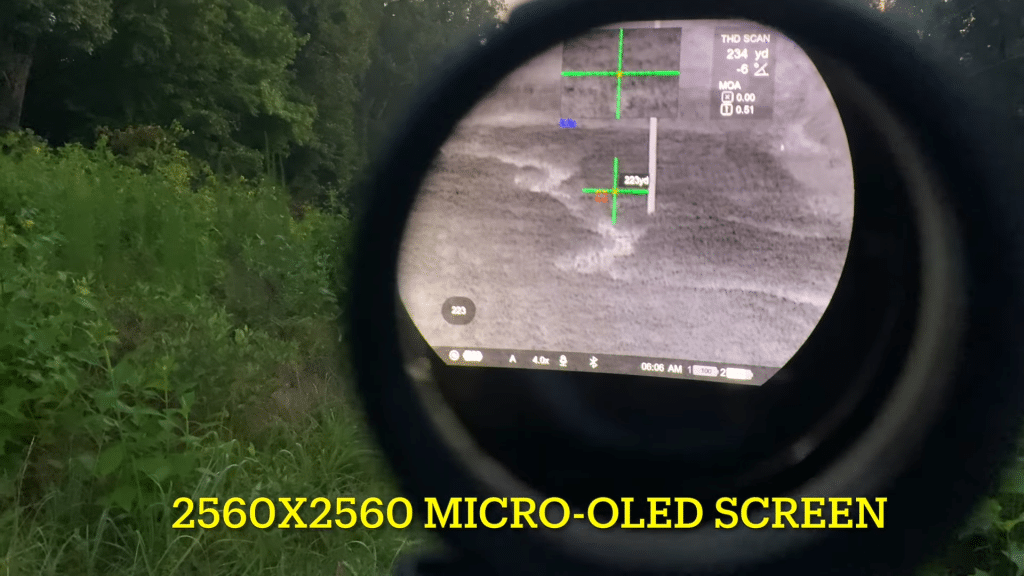
The Pulsar Thermion 2 XG60’s 2560×2560 micro-OLED is noticeably sharper than basic displays. Your eyes fatigue less with quality displays during long nights. Color palette options help reduce eye strain based on preference.
Battery Life
Battery life determines how long you hunt without swapping batteries. Minimum acceptable for serious coyote hunting is 8 hours. Anything less means carrying spares and dealing with mid-hunt swaps in the cold.
The ATN Thor 4’s 16-18 hours lets you hunt multiple nights without charging. Most Pulsar models run 7-10 hours. Laser rangefinders and video recording drain faster. Cold temps reduce runtime by 15-20% compared to rated specs.
Weatherproofing
Weather resistance isn’t the same as waterproof. IPX7-rated scopes handle rain, snow, and moisture. Weather-resistant scopes tolerate light rain and dew but shouldn’t get soaked.
If you hunt wet conditions regularly, IPX7 is worth it. The Pulsar Thermions carry IPX7 ratings while ATN scopes are weather resistant. Neither needs submersion testing, just reliable performance in typical hunting weather.
Reticle Options and Ballistic Calculators
Built-in ballistic calculators adjust point of impact based on range, temperature, and ammunition. They help for shots beyond 200 yards where trajectory matters.
One-shot zero features speed up zeroing significantly. Fire one shot, mark where it hit, and the scope adjusts electronically. Saves ammunition and range time.
Smart Features and Connectivity
WiFi and Bluetooth let you stream to your phone and update firmware. Built-in recording captures hunts for review. These add weight and cost but enhance the experience.
Decide if you’ll actually use smart features before paying extra. Video recording is genuinely useful for reviewing shots. WiFi streaming is less critical unless you want real-time spotting help.
Weight and Mounting
Scope weight affects rifle balance and portability. Thermal scopes range from 1.4 lbs to 2.7+ lbs. Lighter scopes reduce fatigue but often sacrifice features or battery.
Most mount in standard 30mm rings. Some include quick-detach mounts for easy removal with zero retention. Make sure your rifle handles the additional forward weight.
Frequently Asked Questions
What magnification is best for thermal scopes when hunting coyotes?
Base magnification of 2x to 4x works best for most scenarios. This gives wide field of view for scanning while maintaining enough zoom for shot placement. For open fields beyond 300 yards, consider 4x base or higher.
How far can thermal scopes detect coyotes at night?
Quality thermals detect coyote-sized signatures between 800 and 2,000+ yards depending on sensor and conditions. The Pulsar Thermion 2 LRF XG60 detects past 3,000 yards in cold weather. Budget models like the ATN Thor LT 320 spot coyotes out to 900 yards reliably.
Are thermal scopes better than night vision for coyote hunting?
Thermal scopes are significantly better. They work in complete darkness without ambient light, detect heat through light brush and fog, and spot motionless animals night vision would miss. Night vision requires moonlight and struggles in bad weather.
Do thermal scopes work in fog and rain?
They work in light fog and rain but performance degrades in heavy conditions. They handle these better than night vision since they detect heat rather than reflected light. Heavy fog or downpours reduce detection range by 30-50%.
What thermal sensor resolution do I need for coyote hunting?
A 384×288 sensor provides adequate performance out to 500 yards. For longer work beyond 600 yards, upgrade to 640×480 or 640×512. Budget 320×240 sensors work fine under 300 yards.
Can thermal scopes see coyotes through brush and vegetation?
They see through light brush by detecting heat signatures behind cover. They won’t see through solid objects or dense foliage but excel at spotting coyotes bedded in sparse cover. Thick cedar or pine creates heat barriers that block imaging.
Conclusion
That’s my complete list of the best thermal scopes for coyote hunting after months of field testing. Any of these will get you coyotes. Pick based on your hunting range and budget.
But if I had to choose one thermal for my own rifle, it’d still be the ATN Thor 4 2.5-25x. The battery life alone earns that spot.
What thermal scope are you running on your coyote gun? Or is there something you’d recommend that didn’t make this list? Drop a comment below.


