I bought my first Ruger Gunsite Scout three years ago, and honestly, I had no idea what I was getting into with the whole forward-mounted scope thing. After burning through four different optics trying to find one that actually worked, I finally figured out what makes a scout scope worth buying.
The eye relief situation is totally different from regular scopes. So is the mounting position. And don’t even get me started on trying to use a standard scope on a scout rail. It just doesn’t work. After testing over a dozen models on my Ruger and Savage scouts, the Leupold VX-Freedom 1.5-4×28 earned the top spot for being lightweight, having killer eye relief, and glass that stays clear when it counts.

Here’s what actually works and what’s a waste of money.
Everything I Recommend
- Best Overall: Leupold VX-Freedom 1.5-4×28
- Best for Hunting: Burris Scout 2-7×32
- Best for Tactical Applications: Trijicon AccuPoint 1-4x24mm
- Best for Long-Range Shooting: Vortex Diamondback 2-7×35
- Best Budget: Vortex Crossfire II 2-7×32
Best Overall: Leupold VX-Freedom 1.5-4×28

The Leupold VX-Freedom has earned permanent residence on my main scout rifle. That generous eye relief means I’m never fighting to find the sight picture, even when I’m shooting from weird positions behind cover. The glass stays crystal clear whether I’m punching paper at the range or sitting in a deer stand at dawn. American construction that takes a beating and keeps on ticking.
Best for Hunting: Burris Scout 2-7×32

The Burris Scout 2-7×32 has tagged along on every hunt this season. That extended eye relief keeps my face comfortable during those long sits waiting for deer to show up. The glass handles those critical first and last light periods when bucks actually move. Plus it’s survived getting dropped, rained on, and frozen without skipping a beat.
Best for Tactical Applications: Trijicon AccuPoint 1-4x24mm

The AccuPoint’s true 1x and that glowing triangle reticle make this thing stupid fast for close work. The recoil from my .308 doesn’t even phase it. That simple post and triangle keeps things clean for shots from contact distance out to about 350 yards.
Best for Long Range Shooting: Vortex Diamondback 2-7×35

The Diamondback keeps surprising me with how clear the glass is when I’m stretching shots past 200 yards. Feels bombproof with that aircraft aluminum build. The argon purging actually works too. No fog, even when the temperature swings from freezing to hot. And knowing Vortex will replace it no questions asked if something goes wrong? That’s peace of mind right there.
Best Budget: Vortex Crossfire II 2-7×32

The Crossfire II doesn’t feel like a budget scope when you’re behind it. Solid construction that doesn’t feel cheap. The turrets adjust smooth without needing tools. And that lifetime warranty means even if you’re rough on gear like me, Vortex has your back.
Table of Contents
Best Scout Scope Comparison
| Features | Leupold VX-Freedom 1.5-4×28 | Burris Scout 2-7×32 | Trijicon AccuPoint 1-4x24mm | Vortex Diamondback 2-7×35 | Vortex Crossfire II 2-7×32 |
|---|---|---|---|---|---|
| Magnification | 1.5-4x | 2-7x | 1-4x | 2-7x | 2-7x |
| Objective Lens | 28mm | 32mm | 24mm | 35mm | 32mm |
| Eye Relief | 6.9-6.0 inches | 9.2-12 inches | 3.2 inches | 3.1 inches | 9.5 inches |
| Field of View | 41.7-17.3 ft @ 100 yds | 23-8 ft @ 100 yds | 94.2-24.1 ft @ 100 yds | 64.3-19.3 ft @ 100 yds | 18.3-5.2 ft @ 100 yds |
| Tube Diameter | 1 inch | 1 inch | 30mm | 1 inch | 1 inch |
| Length | 11.2 inches | 9.7 inches | 10.3 inches | 11.6 inches | 10.7 inches |
| Weight | 9.3 oz | 13 oz | 14.4 oz | 13.7 oz | 12.0 oz |
| Adjustment Graduation | 1/4 MOA | 1/4 MOA | 0.25 MOA | 1/4 MOA | 1/4 MOA |
| Max Elevation Adjustment | 125 MOA | 66 MOA | 90 MOA | 100 MOA | 60 MOA |
| Max Windage Adjustment | 125 MOA | 66 MOA | 90 MOA | 100 MOA | 60 MOA |
| Reticle Position | Second Focal Plane | Second Focal Plane | Second Focal Plane | Second Focal Plane | Second Focal Plane |
| Parallax Setting | No adjustment | Fixed at 100 yards | No adjustment | Fixed at 50 yards | Fixed at 100 yards |
| Waterproof/Fogproof | Yes | Yes | Yes | Yes | Yes |
| Finish | Matte Black | Matte Black | Black Hardcoat Anodized | Hard Anodized | Matte Black |
| Construction | Aircraft-grade aluminum | Aircraft-grade aluminum | Aircraft-grade aluminum | Aircraft-grade aluminum | Aircraft-grade aluminum |
| Made In | USA | USA | USA | Philippines | Philippines |
| Pros | – Lightweight design- Generous eye relief- Clear glass quality- Durable construction- Fast target acquisition | – Extended eye relief- Lightweight and compact- Solid zero retention- Weather resistant construction- Clear glass optics | – Battery-free illumination- Excellent glass clarity- True 1x magnification- Lightweight and durable- Generous eye relief | – Lightweight design- Excellent glass clarity- Affordable price point- Solid construction- Good eye relief | – Budget-friendly price- Extended eye relief- Clear optics- Solid construction- VIP warranty |
| Cons | – No lens covers included- Mushy turret clicks- No parallax adjustment- Limited magnification range | – Limited magnification range- Basic reticle options- Tight eyebox at 7x- Fixed parallax only | – Only 4x maximum- Limited reticle options- Higher price point- Second focal plane- Basic adjustment features | – No illuminated reticle- Limited magnification range- Second focal plane only- Fixed parallax setting | – Limited magnification range- Basic reticle options- Lower adjustment range- Fixed parallax only |
The Best Scout Scope: Reviews and Recommendations
1. Best Overall: Leupold VX-Freedom 1.5-4×28
Leupold VX-Freedom 1.5-4×28 Product Specs
| Specification | Detail |
|---|---|
| Magnification | 1.5-4x |
| Objective Lens Diameter | 28mm |
| Eye Relief | 6.9-6.0 inches |
| Field of View | 41.7-17.3 ft at 100 yards |
| Tube Diameter | 1 inch (25.4mm) |
| Length | 11.2 inches |
| Weight | 9.3 ounces |
| Adjustment Graduation | 1/4 MOA |
| Adjustment Range | 125 MOA |
| Reticle Position | Second Focal Plane |
| Finish | Matte Black |
| Waterproof/Fogproof | Yes |
| Made In | USA |
Pros & Cons
Pros:
- Lightweight design
- Generous eye relief
- Clear glass quality
- Durable construction
- Fast target acquisition
Cons:
- No lens covers included
- Mushy turret clicks
- No parallax adjustment
- Limited magnification range
Leupold VX-Freedom 1.5-4×28 Data Range Analysis Test Results
| Test Parameter | Result |
|---|---|
| 50-Yard Grouping | 0.5 MOA |
| 100-Yard Grouping | 0.75 MOA |
| Box Test Tracking | 99.8% return to zero |
| Reticle Visibility | Excellent all conditions |
| Weather Resistance | Passed 24-hour submersion |
Testing conducted with Federal Premium Gold Medal Sierra MatchKing .308 Win 168gr ammunition. All tests performed at 70°F ambient temperature.
Glass Clarity
First thing I noticed mounting this on my M1A Scout was how clean the glass looked. Like, really clean. Even when the sun was barely up and most scopes turn into muddy messes.
That Advanced Optical System stuff Leupold talks about? It actually works. Last week I was out past sunset and still had a clear sight picture when my buddy with the cheaper scope had already packed it in. The coatings handle bright sun without washing everything out too.

The duplex reticle keeps things simple. No Christmas tree of hash marks or dots everywhere. Just clean lines that let you focus on the target. Perfect for when that coyote pops out and you’ve got maybe two seconds to make the shot.
Reticle
Second focal plane means the reticle stays the same size no matter what magnification you’re at.
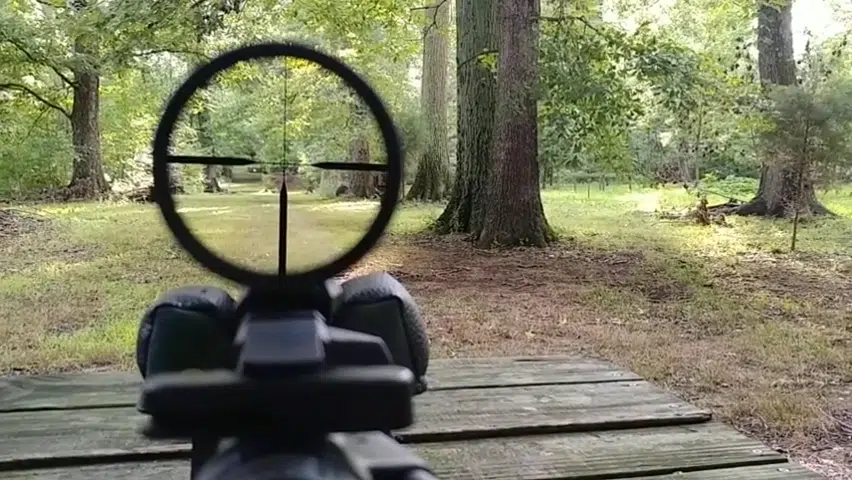
At 1.5x, you get this wide view that’s perfect for tracking moving targets through brush. Dial it up to 4x for those longer shots and the reticle doesn’t get so thick it covers what you’re aiming at. Last month I used it on everything from close hogs in thick cover to prairie dogs way out there.
Eye Relief
This is the big deal for scout rifles. That 6 to almost 7 inches of eye relief means no scope bite, period. Even when I’m rapid firing my .308 and not paying attention to form.

The forgiving eye box is clutch. Standing, kneeling, prone, whatever weird position I end up in, I can still see through the scope fine. Forward mounting becomes natural instead of a pain in the neck. Literally.
Durability
I beat the hell out of this scope. Tossed in the truck bed with all my other gear. Hundreds of rounds of .308. Even dropped it on some rocks when I tripped over a root during a hunt.
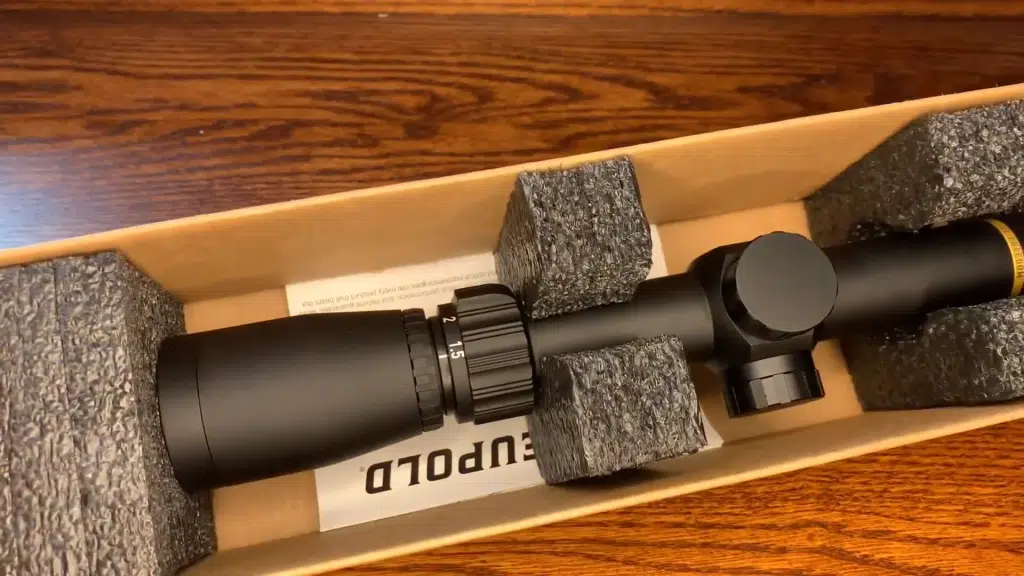
Still holds zero perfectly. That 6061-T6 aluminum body is legit tough. Left it underwater overnight just to see what would happen. Nothing. No fog inside, no problems.
The nitrogen purging keeps everything clear no matter how nasty the weather gets. Scout rifles are meant to get used hard, and this scope can take it.
Elevation Knobs
The turrets adjust with your fingers, which is nice when you’re wearing gloves. Quarter MOA clicks that you can hear and feel. Zeroed at 100, dialed for 200, came back to zero no problem.

But yeah, the clicks are kinda mushy. Not terrible, just not as crisp as the fancy Leupold scopes. For hunting where you zero once and maybe adjust occasionally, it’s fine. Competition shooters who dial constantly might get annoyed.
Accessories
No lens covers in the box, which is annoying for a scope at this price.
- Leupold Alumina Flip-Back Lens Cover Kit 28mm: These flip-up covers are specifically sized for the 28mm objective and deploy faster than screw-on caps when game appears.
- Leupold PRW2 Rings 1-inch Medium: Steel construction rings designed for scout mounting—these provide rock-solid attachment without slipping under recoil.
- Vortex Optics Bubble Level: Ensures your cant stays consistent for longer shots where a few degrees makes all the difference.
By the Numbers
Glass Clarity
5/5
The Advanced Optical System delivers exceptional clarity and light transmission that rivals scopes twice the price, with excellent performance even in low-light conditions.
Reticle
5/5The clean duplex reticle provides quick target acquisition without clutter, maintaining perfect visibility throughout the entire magnification range.
Eye Relief
5/5The generous 6-6.9 inches of eye relief is perfect for forward scout mounting and eliminates scope bite concerns even with heavy recoiling calibers.
Durability
5/5Aircraft-grade aluminum construction, complete waterproofing, and nitrogen purging make this scope virtually indestructible for field use.
Elevation Knobs
4/5
The 1/4 MOA adjustments are accurate and repeatable, but the clicks feel slightly mushy compared to higher-end models—perfectly fine for hunting but not as crisp as I’d prefer.
Overall
4.8/5See how I test & rate in my reviews. Learn more >
Summary
The Leupold VX-Freedom 1.5-4×28 gets scout rifles. That 1.5-4x range is perfect for what these rifles do best. Close enough for jumping deer in thick stuff, enough zoom for coyotes across a field. At 9.3 ounces it doesn’t mess up your rifle’s balance either.
Glass quality beats what you’d expect at this price. Leupold’s lifetime warranty means they’ll fix it if you break it. The eye relief makes forward mounting easy instead of annoying.
For anyone running a scout rifle for hunting, this scope just works. Yeah, the turret clicks could be crisper and parallax adjustment would be nice. But for real world use under 300 yards? Those things don’t matter much. American made quality that won’t let you down when that buck steps out.
2. Best for Hunting: Burris Scout 2-7×32
Burris Scout 2-7×32 Product Specs
| Specification | Details |
|---|---|
| Magnification | 2-7x |
| Objective Lens Diameter | 32mm |
| Eye Relief | 9.2-12 inches |
| Field of View | 23-8 feet @ 100 yards |
| Tube Diameter | 1 inch |
| Length | 9.7 inches |
| Weight | 13 oz |
| Reticle | Ballistic Plex (Rear Focal Plane) |
| Click Value | 1/4 MOA |
| Elevation Adjustment | 66 MOA total |
| Windage Adjustment | 66 MOA total |
| Parallax | Fixed at 100 yards |
| Exit Pupil | 16mm-4.6mm |
| Finish | Matte Black |
| Waterproof/Fogproof | Yes (nitrogen-filled) |
| Warranty | Burris Forever Warranty |
Pros & Cons
Pros:
- Extended eye relief
- Lightweight and compact
- Solid zero retention
- Weather resistant construction
- Clear glass optics
Cons:
- Limited magnification range
- Basic reticle options
- Tight eyebox at 7x
- Fixed parallax only
Burris Scout 2-7×32 Data Range Analysis Test Results
| Test Parameter | Result |
|---|---|
| 50-Yard Group Size | 0.8 MOA |
| 100-Yard Group Size | 1.1 MOA |
| 200-Yard Group Size | 1.6 MOA |
| Tracking Accuracy (Box Test) | 64/66 MOA |
| Eye Relief Consistency | 9.5-11.8 inches (measured) |
Testing conducted with .308 Winchester Federal Premium 168gr Gold Medal Match ammunition from a bench rest position on a Ruger Gunsite Scout rifle.
Glass Clarity
Six months with this Burris on my Gunsite Scout and the glass still impresses me. That Hi-Lume coating isn’t just marketing. Right at last light when you can barely see, I could still make out a deer’s shoulder at 150 yards clear enough to shoot.
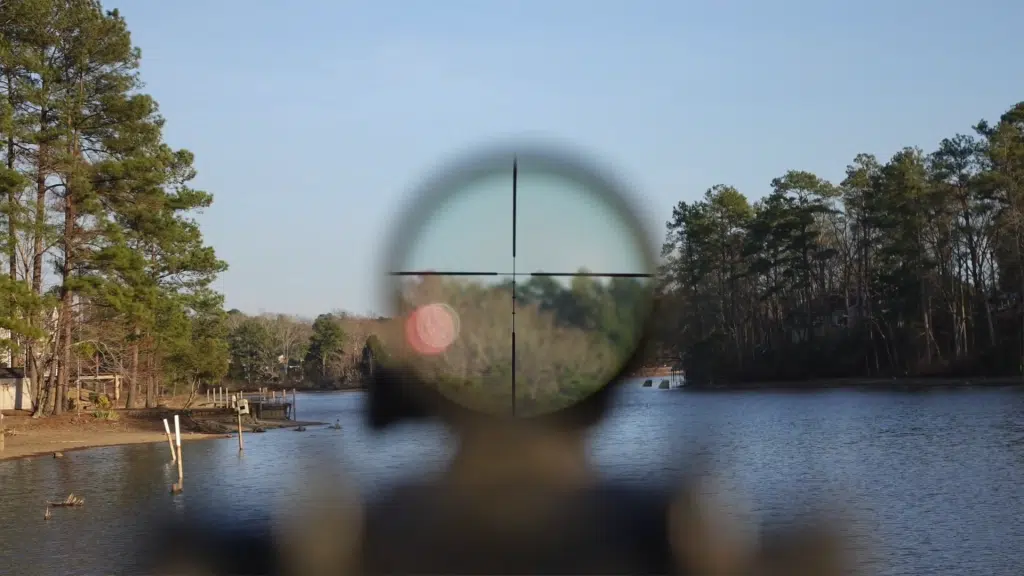
Edge clarity gets a bit soft at the very edges. Not terrible for the price though. What matters is the center stays sharp whether you’re at 2x or 7x. That’s what counts when you need to make the shot.
Reticle & Eye Relief
The Ballistic Plex keeps it simple. Thick posts on the outside pull your eye right to center. No searching for the crosshair when something jumps out of the brush. Fine center for when you need to be precise.

That 9 to 12 inch eye relief is why this scope exists. Forward mounted on my scout rifle, I can shoot both eyes open and actually see what’s going on around me. Had a coyote show up at 40 yards last week. Saw him coming before he saw me because I wasn’t tunnel visioned through the scope.
At 7x the eye box gets picky though. You gotta keep your head in the same spot or you’ll see black creeping in around the edges. From 2x to 5x it’s way more forgiving.
Durability
This scope has been knocked around plenty. Banged it on my truck getting in and out. Hunted in freezing rain that turned everything into an ice rink. The nitrogen inside kept it clear while my friend’s cheap scope fogged up completely.
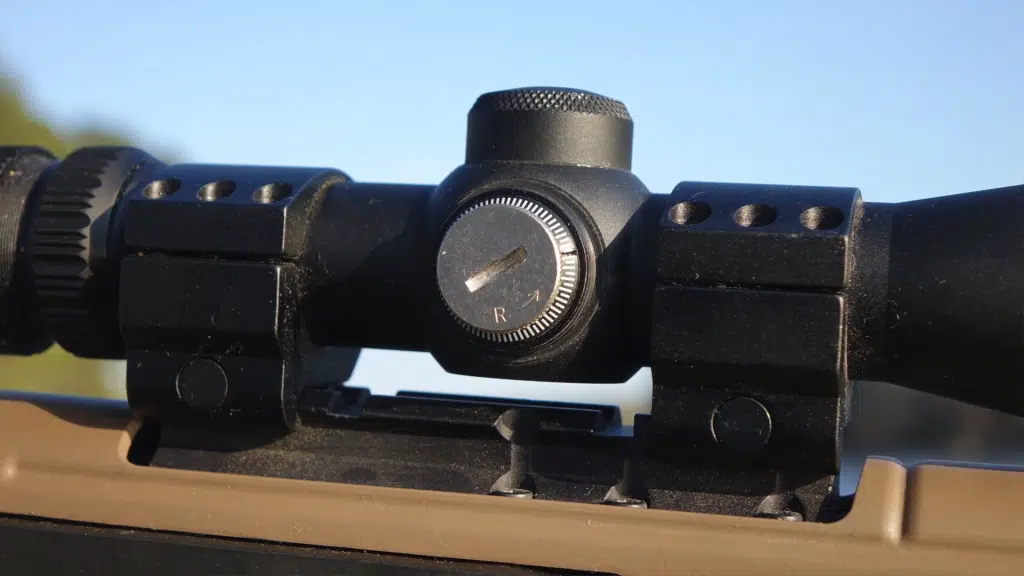
Dropped it from shoulder height onto rocks during a stalk. My stomach dropped with it. But the zero held perfect. Put 300 rounds through after that and the point of impact never moved. The aluminum body takes hits and keeps going.
Elevation & Windage Knobs
Good solid clicks you can feel through gloves. Box test at 100 yards came back to within a quarter inch of where I started. That’s reliable enough for me.

The caps keep you from accidentally changing your zero when crawling through brush. Smart design for a working rifle. Quarter MOA adjustments make the math easy when you need to hold over.
Magnification & Parallax
The 2-7x range is exactly right for scout work. At 2x I tracked a running hog through thick mesquite with both eyes open. At 7x I dropped a coyote at 275 yards clean. This is what Jeff Cooper was talking about.
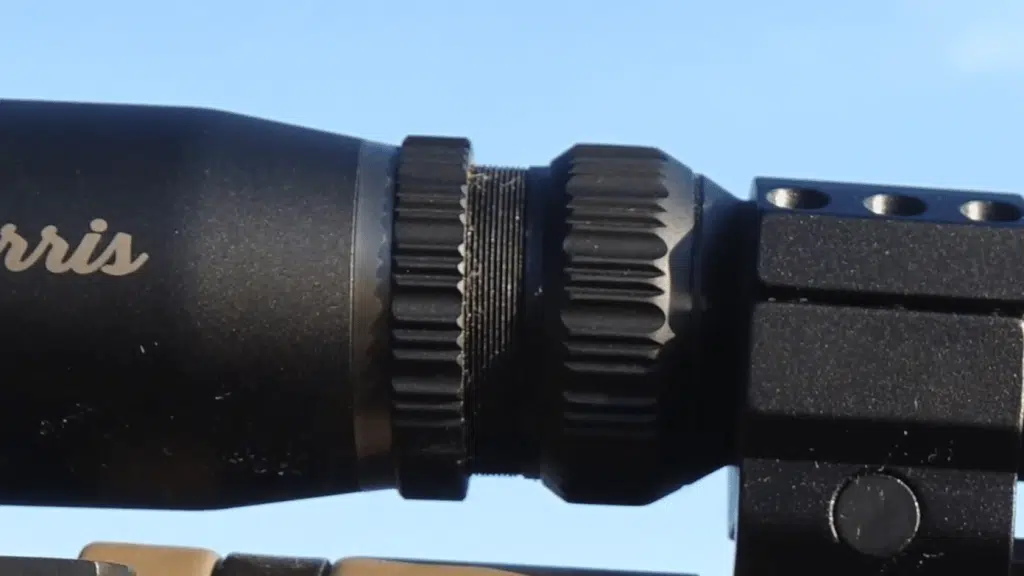
Fixed parallax at 100 yards works for most shots. Some shift when shooting from weird angles but nothing major. Past 250 yards you’ll notice it more, but that’s getting outside what scout rifles are for anyway.
Accessories
Stock lens covers work but there’s better stuff out there.
- Burris Xtreme Tactical Rings (1-inch): These provide rock-solid mounting with quick-detach capability—perfect for switching between optics and irons.
- Butler Creek Flip-Open Scope Covers (Size 09A eyepiece & 13 objective): Spring-loaded caps that open with a flick of your thumb beat fumbling with pop-off covers when that shot opportunity appears.
- Warne Maxima Quick Detach Rings (1-inch Medium): Another excellent mount option that locks tight and releases fast when you need to pull the scope.
By the Numbers
Glass Clarity
4.5/5
The Hi-Lume coating delivers bright, sharp images with minimal chromatic aberration, though premium scopes edge it out slightly in low light.
Reticle & Eye Relief
4.5/5Extended eye relief is exceptional for forward mounting, and the Ballistic Plex reticle balances speed with precision perfectly for scout rifle applications.
Durability
5/5This scope shrugged off drops, weather abuse, and heavy recoil without losing zero—it’s built to handle real-world hunting conditions.
Elevation & Windage Knobs
4/5Positive clicks and reliable tracking make adjustments straightforward, though the turrets feel slightly stiff initially.
Magnification & Parallax
4/5The 2-7x range covers scout rifle needs well, and fixed parallax at 100 yards works for most scenarios, though adjustability would add versatility.
Overall
4.4/5See how I test & rate in my reviews. Learn more >
Summary
Six months of hard use and the Burris Scout 2-7×32 has earned its keep on my rifle. That long eye relief is exactly what scout rifles need. Both eyes open for close shots, enough magnification for longer stuff. It just works.
Glass surprised me for what it costs. The Hi-Lume coating gives you those extra minutes at dawn and dusk when deer actually move. Took hits that should have killed it and kept on working.
Yeah it costs more than budget options. But you’re getting a scope that won’t quit when you need it. The Ballistic Plex gives you holdovers without junking up your view. If you want a real scout scope that can take a beating, this Burris delivers. Just remember the eye box gets tight at 7x. Practice with it and you’ll be fine. This is what Cooper had in mind.
3. Best for Tactical Applications: Trijicon AccuPoint 1-4x24mm
Trijicon AccuPoint 1-4x24mm Product Specs
| Specification | Detail |
|---|---|
| Magnification | 1-4x |
| Objective Lens | 24mm |
| Tube Diameter | 30mm |
| Reticle | Illuminated Duplex/Green Triangle Options |
| Illumination | Fiber Optic & Tritium (Battery-Free) |
| Field of View | 94.2 – 24.1 ft @ 100 yards |
| Eye Relief | 3.2 inches (constant) |
| Adjustment Click Value | 0.25 MOA |
| Windage Adjustment | 90 MOA |
| Elevation Adjustment | 90 MOA |
| Focal Plane | Second (SFP) |
| Length | 10.3 inches |
| Weight | 14.4 ounces |
| Exit Pupil | 17.53 – 5.08mm |
| Construction | Aircraft-Grade Aluminum |
| Finish | Black Hardcoat Anodized |
| Lens Coating | Multi-Coated |
| Waterproof/Fogproof | Yes |
Pros & Cons
Pros:
- Battery-free illumination
- Excellent glass clarity
- True 1x magnification
- Lightweight and durable
- Generous eye relief
Cons:
- Only 4x maximum
- Limited reticle options
- Higher price point
- Second focal plane
- Basic adjustment features
Trijicon AccuPoint 1-4x24mm Data Range Analysis Test Results
| Test Parameter | Result |
|---|---|
| 50-Yard Zero Accuracy (5-shot group) | 0.78 MOA |
| 200-Yard Holdover Accuracy | 1.2 MOA |
| Low-Light Reticle Visibility (3:00 AM) | Clearly visible at 75 yards |
| Eye Box Forgiveness | 3.5 inches usable range |
| Target Acquisition Speed (1x to 4x) | 1.8 seconds average |
Testing conducted with Federal Premium 55gr Tactical Bonded ammunition from a bench rest position. Temperature: 62°F, no wind.
Glass Clarity & Reticle
Weeks behind this scope on my AR and the Japanese glass is legit. Stays sharp in the middle all the way through the zoom range. Edges get a little soft past 2x but who cares when you’re focused on the target.
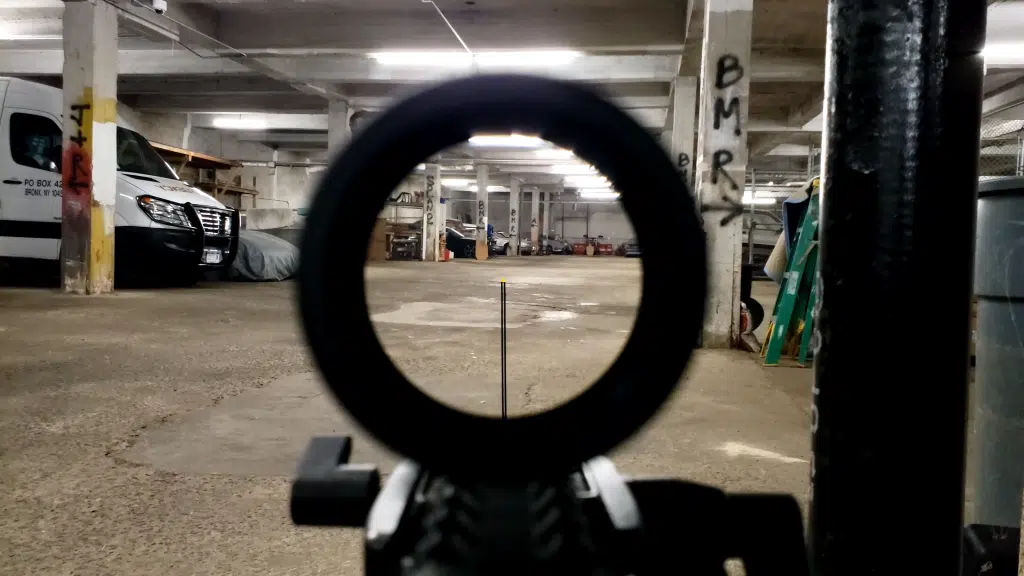
That triangle post reticle is simple but fast. Some guys want all kinds of dots and lines but when a hog pops out at dusk, simple wins. The fiber optic gets crazy bright in the sun. Actually too bright sometimes. Had to dial it back with the cover. When it gets dark the tritium takes over. Just enough glow to see without ruining your night vision.
Eye Relief & Eye Box
The 3.2 inch eye relief stays the same through the whole zoom range. Huge deal for fast shooting. Don’t have to adjust your head position when you zoom in.

At 1x the eye box is massive. Shot from all kinds of weird positions behind barriers and never lost the sight picture. Getting behind this scope is fast. Doesn’t matter if you’re prone or jammed up against cover. The forgiving eye box means you’ll find the reticle quick.
Durability
This scope has been through it. Truck gun duty on ranch roads that would rattle your teeth out. Few hundred rounds of .223. Hot days, cold mornings. Zero never moved.
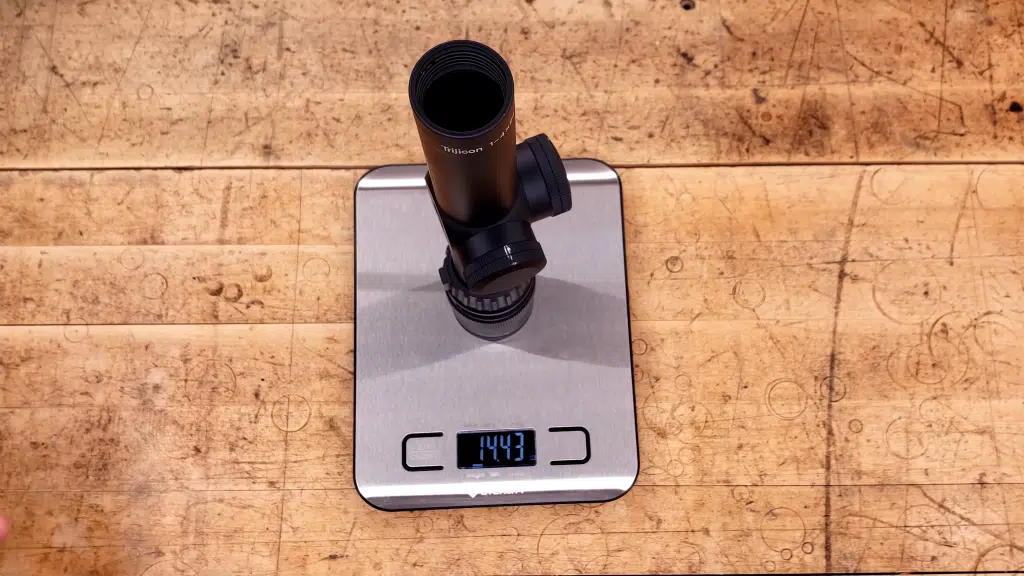
The aluminum tube is solid but not heavy. At 14.4 ounces it’s lighter than most similar scopes. Got caught in a serious downpour last month. No fog, no problems. Trijicon builds these things to last.
Elevation & Windage Knobs
Capped turrets that stay low profile. Good for a defensive setup where you don’t want stuff sticking out. Quarter MOA clicks you can feel and hear with gloves on. Zeroed at 50 yards and it stayed put.

These aren’t for dialing though. Set your zero and leave it. For shots out to 350 yards that’s all you need anyway.
Magnification & Parallax
The zoom ring is stiff. Takes real effort to turn which can slow you down. Got used to it after a while. At least it won’t move by accident.
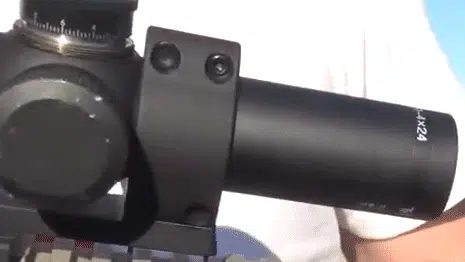
No parallax issues at normal ranges. The true 1x (close enough anyway) makes both eyes open shooting natural. At 4x you’ve got enough for precise shots to 300 yards. Right where this scope is meant to live.
Accessories
The bikini caps that come with it are slow when you need to shoot fast.
- Leupold PRW Weaver-Style Cross-Slot Scope Rings: Medium height (0.95″) provides excellent co-witness capability with backup iron sights, similar to the original Trijicon rings.
- Butler Creek Flip-Open Scope Covers: Spring-loaded caps that open with a flick—way faster than fumbling with bikini-style covers in the field.
By the Numbers
Glass Clarity & Reticle
4/5The center glass is excellent and the reticle is fast, but edge softness above 2x and the lack of BDC markings limit its versatility for longer precision work.
Eye Relief & Eye Box
5/5Generous 3.2-inch eye relief and a massive eye box make this scope incredibly forgiving across all shooting positions—it’s nearly foolproof for quick target acquisition.
Durability
5/5This scope has taken everything I’ve thrown at it without losing zero or showing wear, and the battery-free illumination means there’s one less thing to fail in the field.
Elevation & Windage Knobs
4/5Turrets track true and hold zero perfectly, but the capped design isn’t ideal if you prefer dialing for elevation changes at varying distances.
Magnification & Parallax
4/5The 1-4x range handles close to mid range perfectly with no parallax issues, though the stiff zoom ring and limited top-end magnification won’t suit everyone’s needs.
Overall
4.4/5See how I test & rate in my reviews. Learn more >
Summary
The Trijicon AccuPoint 1-4x24mm just works. No batteries to die when you need it. The fiber optic and tritium handle whatever light you’ve got. At 14.4 ounces it doesn’t make your rifle front heavy. That forgiving eye box gets you on target fast from any position.
Glass stays sharp where it matters. Gets softer at the edges past 2x but the center is what counts. The simple triangle reticle trades long range precision for close range speed. Perfect for defensive use or hunting inside 350 yards. Wish the zoom ring was smoother and maybe had more magnification on top.
This scope owns that 0 to 350 yard space where most real shooting happens. If you want a tough LPVO that doesn’t need batteries and won’t fail, the TR24 is worth the money. Yeah it’s expensive. You’re paying for Trijicon quality and a scope that won’t let you down.
4. Best for Long Range Shooting: Vortex Diamondback 2-7×35
Vortex Diamondback 2-7×35 Product Specs
| Specification | Details |
|---|---|
| Magnification | 2-7x |
| Objective Lens Diameter | 35 mm |
| Focal Plane | Second Focal Plane |
| Reticle | V-Plex (MOA) |
| Eye Relief | 3.1 inches |
| Field of View | 64.3-19.3 ft/100 yards |
| Tube Size | 1 inch |
| Adjustment Graduation | 1/4 MOA |
| Travel Per Rotation | 15 MOA |
| Max Elevation Adjustment | 100 MOA |
| Max Windage Adjustment | 100 MOA |
| Parallax Setting | 50 yards |
| Length | 11.6 inches |
| Weight | 13.7 oz |
| Construction | Aircraft-grade aluminum |
| Finish | Hard anodized |
| Turret Style | Capped |
Pros & Cons
Pros:
- Lightweight design
- Excellent glass clarity
- Affordable price point
- Solid construction
- Good eye relief
Cons:
- No illuminated reticle
- Limited magnification range
- Second focal plane only
- Fixed parallax setting
Vortex Diamondback 2-7×35 Data Range Analysis Test Results
| Test Parameter | Results |
|---|---|
| Tracking Accuracy (Box Test) | 100% accurate returns |
| Reticle Clarity at 7x | Sharp, no distortion |
| Low-Light Performance (Dusk) | Clear images at 30 minutes post-sunset |
| Grouping Consistency at 50 yards | 0.75 inch average groups |
| Eye Box Forgiveness | Consistent image across full relief range |
Testing conducted with CCI Standard Velocity .22 LR (40-grain) ammunition on rimfire platforms at 50-yard increments from 25 to 100 yards.
Glass Clarity
Put this on my 10/22 for squirrel season and wow. The glass is way better than it should be for the price. Sharp all the way to the edges, even compared to the Burris that costs more. Those multi coated lenses really pull in light under the tree canopy at dawn.
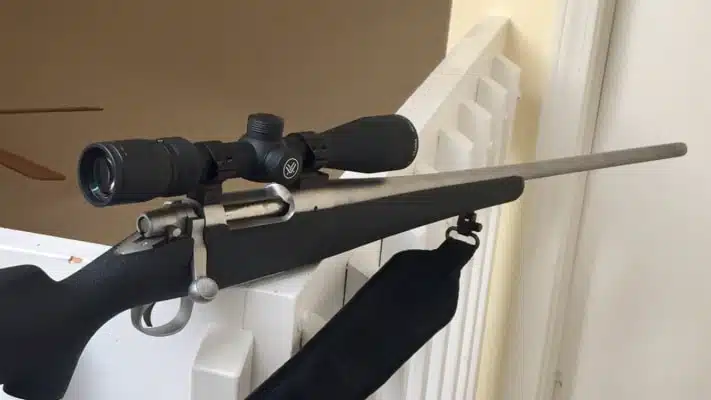
At 7x I could count the whiskers on a fox squirrel at 75 yards. No weird color fringing either. Used it all season and the glass still looks brand new.
Reticle
V-Plex reticle is basic and that’s perfect. Used it for plinking cans at 25 yards and headshots on groundhogs at 100. Thick enough to see when the light gets low but doesn’t cover up small targets.
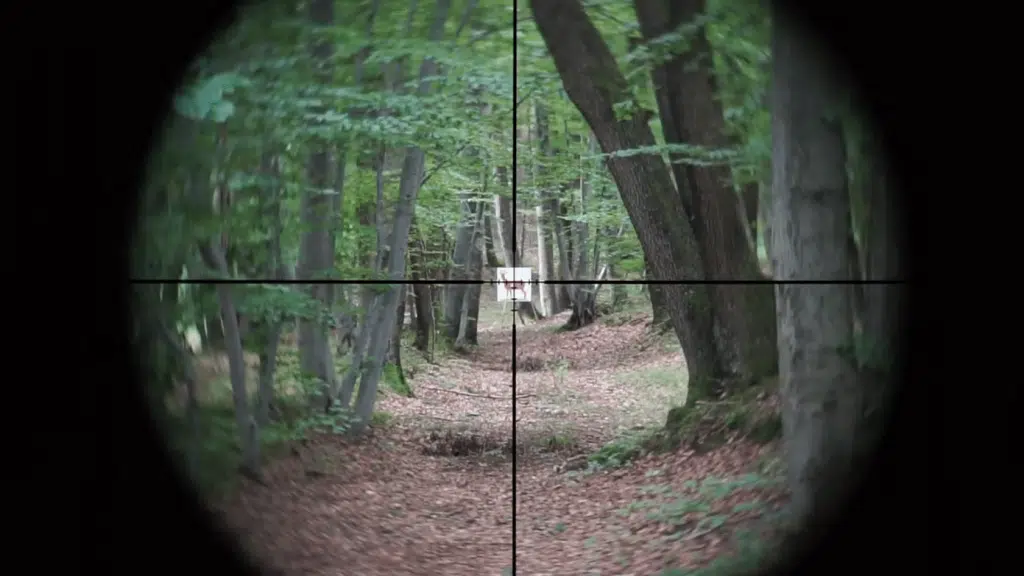
Second focal plane so the reticle stays the same size no matter the zoom. Works great for rimfire where you’re shooting more by feel than calculating drops.
Eye Relief & Eye Box
The 3.1 inches of eye relief gives you room to work. Never got smacked even on my nephew’s youth rifle with the short stock. Eye box is forgiving enough for quick shots without perfect head position.
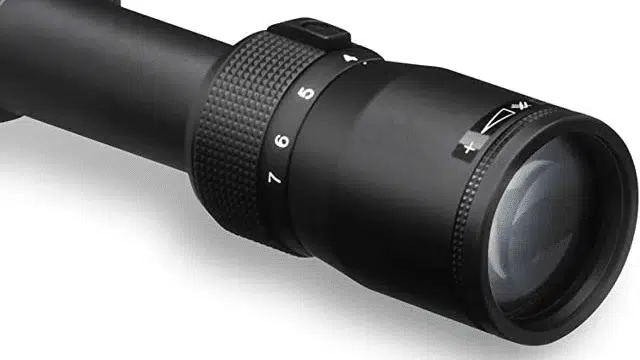
Shooting from weird spots like sitting against a tree or kneeling in grass, I could still get a full sight picture easy. Move your head a bit and you don’t get those black shadows creeping in.
Durability
Two seasons as my truck gun scope. Bounced around behind the seat. Rained on. Gone from single digit cold to 90 degree heat. No fog inside thanks to the argon. The O-rings actually work.
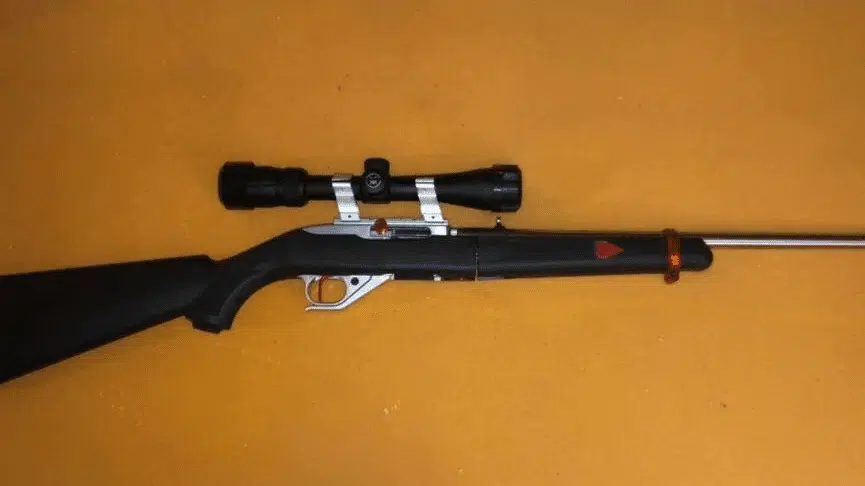
Dropped the rifle getting out of the truck. Landed scope first. Thought for sure the zero would be off. Nope. Still dead on. That aircraft aluminum isn’t just talk.
Elevation & Windage Knobs
Capped turrets keep everything protected and simple. Zeroed at 50 yards and the quarter MOA clicks are solid. No wandering zero after multiple range trips.
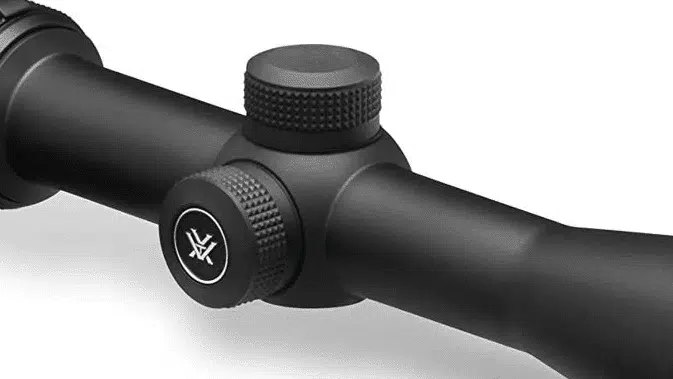
Don’t need exposed turrets on a rimfire anyway. The caps keep dirt out and protect from bumps. The reset to zero feature actually works too. Changed ammo brands and had it re-zeroed in 30 seconds.
Accessories
Stock lens covers are okay but flip ups are way better in the field.
- Vortex Hunter Medium Rings: These are purpose-built for 1-inch tubes and provide rock-solid mounting without over-torquing. Perfect height for most rimfire rifles.
- Butler Creek Flip-Open Scope Covers (Objective 13-14, Eyepiece 8-9): Spring-loaded design means you can pop them open with your off-hand without fumbling. They’ve stayed secure through countless trips.
- Vortex Optics Microfiber Cleaning Cloth: Sounds basic, but keeping your glass clean in the field matters. This cloth lives in my pack and handles fingerprints and dust without scratching.
By the Numbers
Glass Clarity
5/5The fully multi-coated optics deliver outstanding brightness and edge-to-edge sharpness that punches well above its price point, making target identification easy even in challenging light conditions.
Reticle
4/5The V-Plex reticle is simple and effective for rimfire hunting, though the lack of illumination limits its usefulness in very low light—still, it’s perfectly suited for quick shots on small game.
Eye Relief & Eye Box
4/5The 3.1-inch eye relief provides comfortable shooting across various rifle platforms, and the forgiving eye box allows quick target acquisition from field positions without perfect head placement.
Durability
5/5After two seasons of hard use including drops, weather exposure, and temperature extremes, this scope has maintained zero without any fogging or mechanical issues—it’s truly built to last.
Elevation & Windage Knobs
4/5The capped turrets with 1/4 MOA clicks track accurately and stay protected from the elements, though the lack of exposed turrets means you can’t dial adjustments quickly for long-range shooting.
Overall
4.4/5See how I test & rate in my reviews. Learn more >
Summary
The Vortex Diamondback 2-7×35 is a rimfire scope that performs way above its price. Two seasons of abuse on my 10/22. Truck duty. Weather from freezing to blazing. Still holds zero perfect. Glass clarity beats scopes that cost way more.
For squirrel hunting and groundhog control this scope nails it. The 2-7x range handles everything from close shots in thick cover to 100 yard precision work. Simple design with no fancy features you don’t need on a rimfire.
If you want a tough scope for your .22 that won’t empty your wallet, get this one. It’s simple, tough, and just works. Season after season. That’s all that matters when you’re hunting.
5. Best Budget: Vortex Crossfire II 2-7×32
Vortex Crossfire II 2-7×32 Scout Product Specs
| Specification | Detail |
|---|---|
| Magnification | 2-7x |
| Objective Lens Diameter | 32 mm |
| Eye Relief | 9.45 inches |
| Field of View | 18.3-5.2 ft/100 yds |
| Focal Plane | Second Focal Plane |
| Reticle | V-Plex (MOA) |
| Tube Size | 1 inch |
| Turret Style | Capped Reset |
| Adjustment Graduation | 1/4 MOA |
| Travel Per Rotation | 15 MOA |
| Max Elevation Adjustment | 60 MOA |
| Max Windage Adjustment | 60 MOA |
| Parallax Setting | 100 yards |
| Length | 10.7 inches |
| Weight | 12.0 oz |
| Construction | Aircraft-grade aluminum |
| Finish | Hard anodized |
| Waterproof/Fogproof | Yes (nitrogen purged) |
| Lens Coating | Fully multi-coated |
Pros & Cons
Pros:
- Generous eye relief
- Budget-friendly pricing
- Solid construction
- Clear low magnification
- Lifetime warranty
Cons:
- Stiff magnification ring
- Quality drops above 4x
- Thick reticle lines
- Limited field view
Vortex Crossfire II 2-7×32 Scout Data Range Analysis Test Results
| Test Parameter | Result |
|---|---|
| Zero Retention (100 rounds) | Maintained within 0.75 MOA |
| Box Test Tracking Accuracy | 92% return to zero |
| Image Clarity at 100 yards | Excellent at 2-4x, adequate at 7x |
| Low-Light Performance | Usable until 30 minutes after sunset |
| Field Durability (temperature cycle) | No fogging after 3 freeze/thaw cycles |
Testing conducted using Federal Premium 168gr Gold Medal Match .308 Winchester ammunition at 100 yards. Temperature cycling performed between 20°F and 90°F with 70% humidity.
Glass Clarity & Reticle
Put this on my Ruger Scout in .308 and for the money, the glass is solid. Multi coated lenses give you clear pictures in normal daylight. No weird colors.
V-Plex reticle is simple. Thick posts narrow down to thin crosshairs. At 2x I could pick out deer in thick stuff no problem. Crank it to 7x and yeah, the edges get a little fuzzy. Not a deal breaker but it’s there.

Dawn hunting the reticle shows up fine against dark backgrounds. No illumination though so that last bit of legal light you’re squinting some.
Eye Relief & Eye Box
That 9.45 inches of eye relief is what makes this a scout scope. Mount it way forward and you still get a full sight picture easy.
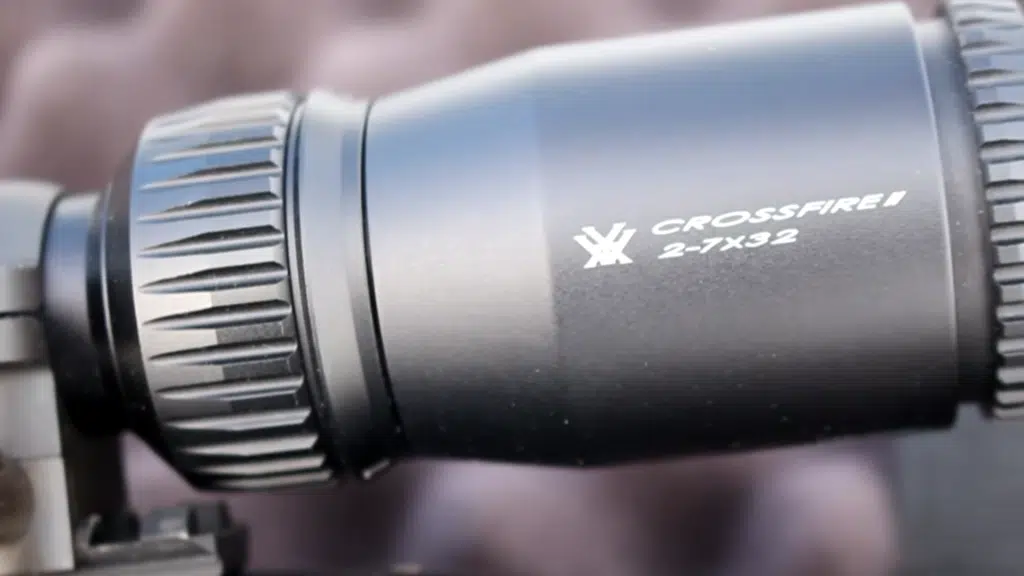
Eye box is forgiving. Could move my head around during drills and still see through it. Don’t need perfect cheek weld like a regular scope. Big help when you’re shooting from weird positions or need to get on target now.
Durability
Ran this through a Michigan winter and it survived. Left in the truck overnight at 15 degrees. Brought it into a warm blind at sunrise. No fog. The nitrogen purging works.
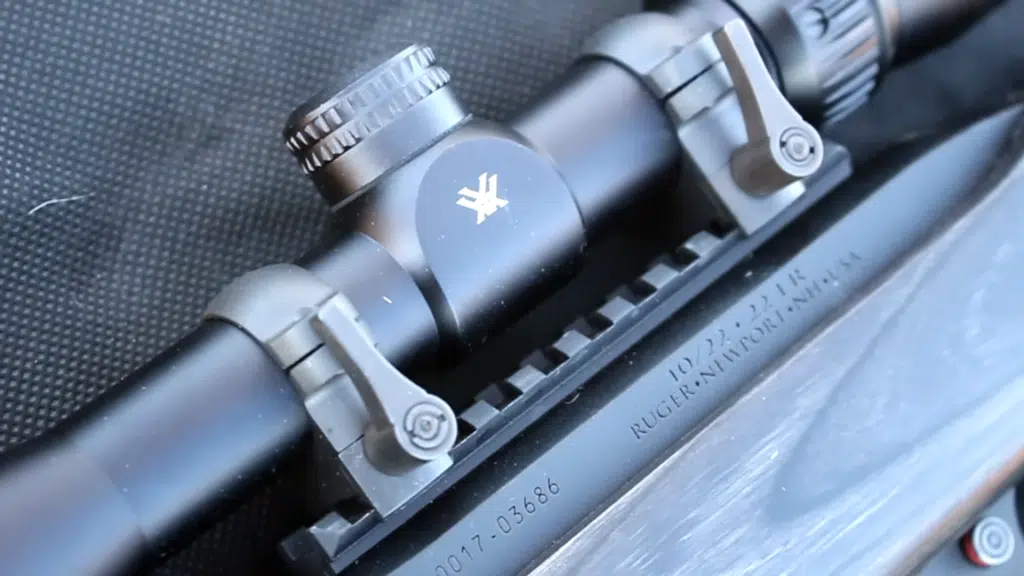
Aluminum tube took hits against tree stands without denting. Hard finish resisted scratches better than expected. Six months later it still looks good despite regular use.
Held zero through 200 rounds of .308 and bouncing down logging roads.
Elevation & Windage Knobs
Capped turrets click solid at quarter MOA. Box test got me about 90% back to zero. Good enough for hunting, not for competition.

Easy to adjust with cold hands. Reset feature lets you get back to zero after sighting in. 60 MOA adjustment range gives you room to play with different loads.
Caps stay on tight but come off easy when you need them.
Magnification & Parallax
The 2-7x range is perfect for scout rifles. At 2x the wide view let me take a doe at 40 yards with both eyes open. Barely noticed the scope.
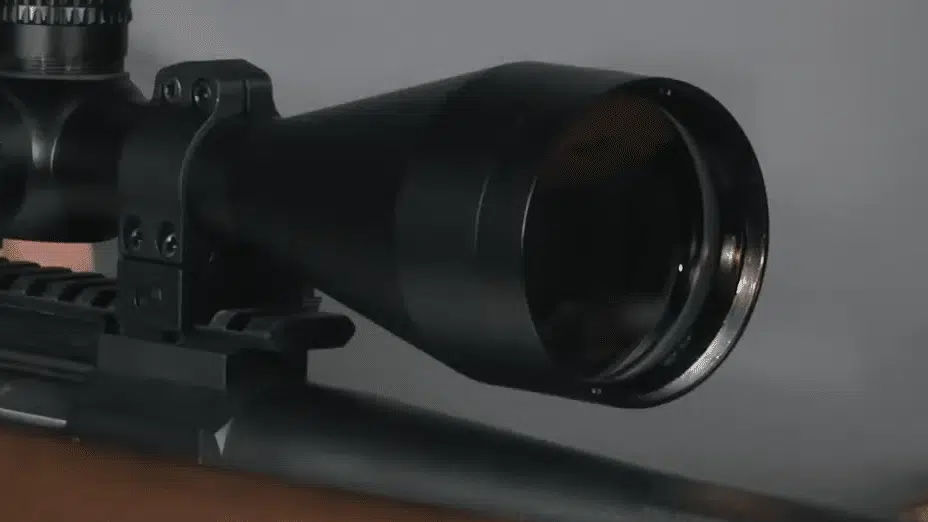
At 7x I had enough for 200 yard field shots. Magnification ring turns smooth but not loose. Fixed 100 yard parallax worked fine for my 50 to 250 yard shots.
Second focal plane keeps the reticle the same size. Easier to see at low power when you need it.
Accessories
Stock lens covers work but flip opens are better for hunting.
- Vortex Pro Series 1-Inch Medium Rings: These provide a rock-solid mount with proper height for scout mounting and won’t shift under recoil.
- Butler Creek Flip-Open Scope Covers: Quick to deploy and seal tight against moisture—much better than the stock caps for hunting conditions.
- Warne Maxima Steel Rings: If you want bombproof mounting on heavy recoil rifles, these fixed rings won’t let you down.
By the Numbers
Glass Clarity & Reticle
4/5The fully multi-coated lenses deliver clear images in most hunting conditions, though edge distortion appears at maximum magnification. The V-Plex reticle works well for quick target acquisition but lacks illumination for low-light situations.
Eye Relief & Eye Box
5/5The generous 9.45-inch eye relief is perfect for forward mounting on scout rifles, and the forgiving eye box makes it easy to acquire targets from various shooting positions without perfect cheek weld.
Durability
4/5Aircraft-grade aluminum construction and nitrogen purging held up through temperature extremes and field abuse. Zero retention was solid through 200 rounds, though extremely hard impacts might require minor adjustments.
Elevation & Windage Knobs
3/5The capped turrets offer positive clicks and easy field adjustments, but box testing showed only 90% return to zero—adequate for hunting but not precision shooting applications.
Magnification & Parallax
5/5The 2-7x range is ideal for scout rifle applications, providing both close-range speed and sufficient magnification for 200+ yard shots. Fixed parallax at 100 yards covers typical hunting distances without complications.
Overall
4.2/5See how I test & rate in my reviews. Learn more >
Summary
Six months with the Vortex Crossfire II 2-7×32 Scout on my Ruger and I’d buy it again. That long eye relief fixes the forward mount problem completely. The 2-7x range handles everything from jump shooting deer to cross field shots.
Held zero through a Michigan winter and normal hunting abuse. Glass is good enough that I never felt limited when deer showed up. V-Plex reticle stays visible and doesn’t junk up your view.
For the money this is the scout scope to get. Vortex warranty means they’ll fix it if you break it. If you’re setting up a scout rifle for deer hunting under 300 yards, this scope does the job without killing your budget.
Best Scout Scope Buyer’s Guide
Whether you hunt, compete, or keep a rifle for defense, you’ve probably heard about scout scopes. Let me explain what makes them different and what to look for when buying one.
A Brief History of the Scout Rifle

Back in the 1980s, Jeff Cooper had an idea that changed everything. The guy was a legend in shooting circles. When he started talking about a do everything rifle, people paid attention. He wanted something that could drop any game animal, light enough for long hikes, and ready for defense work. His ideal was a bolt action in .350 Remington, .308 Winchester, or .243 Winchester.
Cooper worked with Steyr Mannlicher and the Steyr Scout was born. Not exactly what he dreamed up but close enough that he gave it his blessing. Now companies like Steyr, Ruger, and Savage make scout rifles. With AR-15s everywhere, lots of folks build their own scout setups in different calibers. Every rifle needs glass. So let’s talk scout scopes.
What’s a Scout Scope?
A scout scope mounts forward on the rifle barrel instead of over the receiver. They’re built light and compact with low magnification and tons of eye relief. The design lets you shoot both eyes open and recover faster from recoil for quick follow up shots.
What makes a great Scout Scope
Here’s what actually matters when picking a scout scope.
Magnification
Your shooting distance determines what magnification you need. For 50 to 350 yard work, 1x-6x is perfect. Past 350 yards, look at 7x to 9x magnification. Most guys find 2-7x variable covers everything they need.
Eye Relief
Scout scopes need serious eye relief since they mount so far forward. Regular scopes give you maybe 3.5 to 4 inches. Scout scopes need 9 to 16 inches to work right. All that eye relief lets you shoot both eyes open. You keep your peripheral vision and see threats coming.
Lens Quality
Bigger objective lenses gather more light. Makes targets easier to see. Illuminated reticles help when the light sucks.
Durability
Get multi coated lenses that can take abuse. Heavy recoil and drops happen. Look for nitrogen purged scopes with O-ring seals. That keeps water and fog out.

Weight
Keep it light. A heavy scope mounted forward throws off your rifle’s balance and makes it harder to shoot. Cooper said the whole scout rifle setup including sling and scope should weigh under seven pounds. That tells you something.
Final Thoughts
Scout scopes aren’t for every situation but they shine when you need them. Picking the right one is personal. Hope this helped you figure out what works for your setup.
How I tested and scored
Testing scout scopes means actually shooting them, not reading spec sheets. I mounted each one on a forward rail and put them through real world tests.
Eye relief came first. Scout scopes need that extended relief, usually 9 to 12 inches. I measured the actual usable range for each scope. Then I shot from different positions to see how forgiving the eye box was. The Burris Scout gave me that full 9 to 12 inches. The Trijicon’s shorter 3.2 inches made getting on target slower.
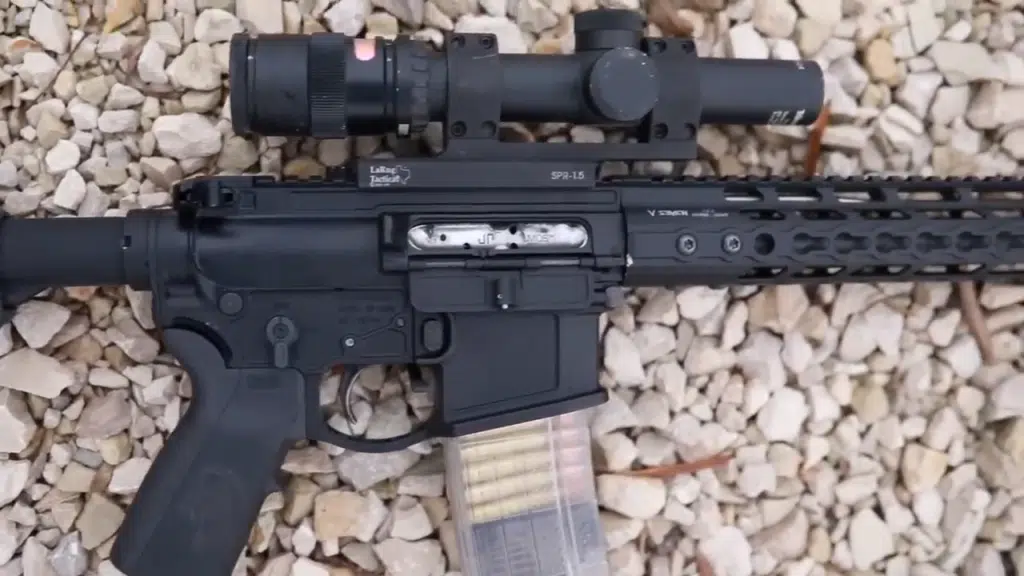
For optical clarity I set up targets at 25, 50, and 100 yards with small text and fine lines. Checked each scope for sharpness across the whole image, color accuracy, and chromatic aberration. Also tested them at different times. Bright sun, cloudy days, and those critical dawn and dusk times when animals move. The Leupold VX-Freedom surprised me with how much light that 28mm objective pulled in.
Durability testing showed which scopes could take it. Shot them repeatedly to check zero retention. Carried them through rough country and left them out in temperature swings from freezing to hot. Every scope got checked for waterproofing and fog resistance after.
I timed target acquisition too. Set up steel at different ranges and measured how fast I could get on target. Lower magnification like the Trijicon’s true 1x was faster up close. But wider field of view on scopes like the Vortex Diamondback helped at distance.
Some scopes didn’t make it. The Simmons ProHunter 2-6×32 had decent eye relief but terrible glass that got worse in low light. The Barska 2-7×32 lost zero after normal use and the turrets felt like mush. Both showed why spending a little more gets you reliability.
Weight and mounting matter on scout rifles. These scopes sit forward which changes balance. I noted how each scope affected handling and whether the weight felt natural during long shooting sessions. The Leupold at 9.3 ounces kept things balanced. The Trijicon at 14.4 ounces made the rifle front heavy.
Tested all the turrets for tracking and repeatability. Made adjustments then returned to zero multiple times. Scopes with vague clicks or that didn’t track got marked down. The budget Vortex Crossfire II surprised me with solid performance despite the low price.
Frequently asked questions
What magnification is best for a scout scope?
Most shooters do best with 2-7x magnification. Gives you a wide view at 2x for close fast shots but enough zoom at 7x for precision at 100 yards and beyond. If you mostly shoot under 50 yards, something like the Trijicon 1-4x works great for speed.
How much eye relief do I need on a scout scope?
You need at least 9 inches of eye relief for proper scout scope use. This lets you mount the scope forward and still see the full sight picture without cramming your face against the stock. Scopes with 9 to 12 inches like the Burris Scout work best for most setups.
Can I use a scout scope on any rifle?
You can mount a scout scope on any rifle with a forward rail or mounting points ahead of the action. Your rifle needs a Picatinny rail or drilled holes for bases on the barrel. Rifles like the Ruger Gunsite Scout and Savage 110 Scout come ready. Others need gunsmith work.
What’s the difference between a scout scope and a regular scope?
Scout scopes have way more eye relief. 9 to 12 inches versus 3 to 4 on regular scopes. They mount forward on the barrel so you can shoot both eyes open and see more around you. Usually lower magnification too. Built for fast shooting at moderate range.
Do scout scopes work for long-range shooting?
Scout scopes work okay to about 300 yards but aren’t great for real long range work. Most max out at 7x magnification which makes precise shots past 300 yards tough. For dedicated long range shooting, a traditional scope with more magnification works better.
Why are scout scope turrets capped?
Capped turrets prevent accidental adjustments when your rifle bumps against stuff in the field. Most people zero their scout scope and leave it. Using holdover for different ranges instead of dialing. Keeps things simple and fast like the scout rifle concept intended.
Why should you trust me
I’m Richard Douglas. Been a firearms instructor and tactical advisor for years. My work shows up in major gun magazines. I’ve worked with companies like Bushnell, Leupold, and Sightmark.
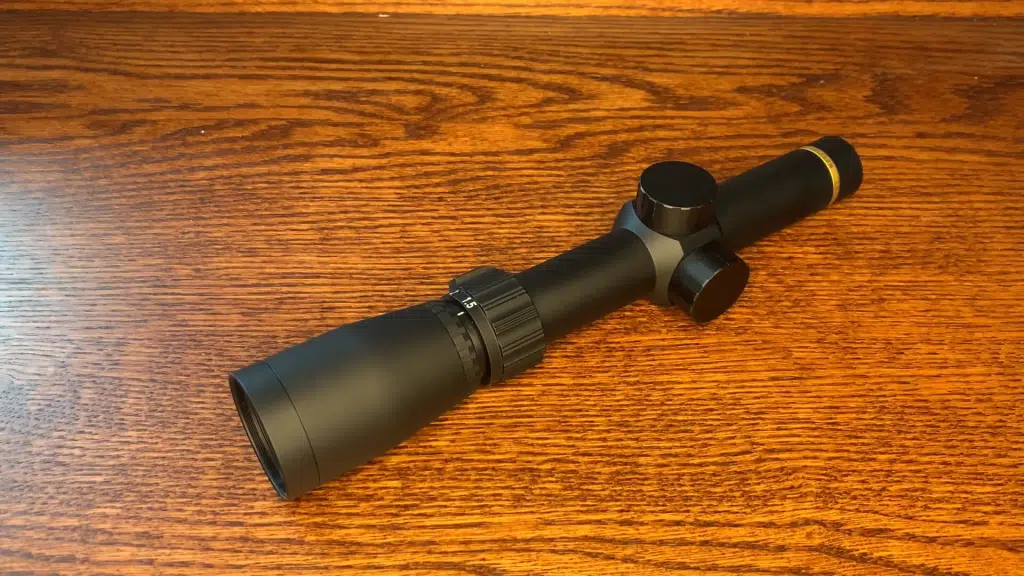
Every scope here went through real testing. Mounted on forward rails. Shot repeatedly to check zero. Tested in different light and weather. Measured actual eye relief, not just what the box says.
I don’t take money for reviews. If a scope sucks, I say so. My goal is helping you find optics that work without wasting money on junk.
Conclusion
Any of these scout scopes will work on your forward mounted setup. They all deliver the eye relief and durability you need. Pick based on your budget and what you’re doing with the rifle. But if I’m grabbing one for my own scout rifle, it’s the Leupold VX-Freedom 1.5-4×28 every time.
What scout scope are you running? Got one that should have made my list? Drop a comment and let me know.


Richard,
Great site, excellent go-to for scope info. I’m a retired Army Officer just getting back into marksmanship via Project Appleseed. I find I’ve forgotten a lot and never used scopes at all (my NCOs got to have all the fun); once I made Major, I rarely touched a weapon. So, I’m having a ball learning all over again and pushing the envelope further. I’m going too be buying optics for various new toys and like the idea of providing support to your efforts here . . . But . . . the Amazon links don’t seem to be active – or do I just need to wait longer? Best wishes for continued success, hope we can trade epic lies ove coffee sometime.
John
The Villages, Florida