My Browning X-Bolt was the rifle that forced me to admit something uncomfortable. My eyes were the problem. I kept blowing shots I used to make half asleep, and a buddy at the range finally told me my scope was working against me, not with me.
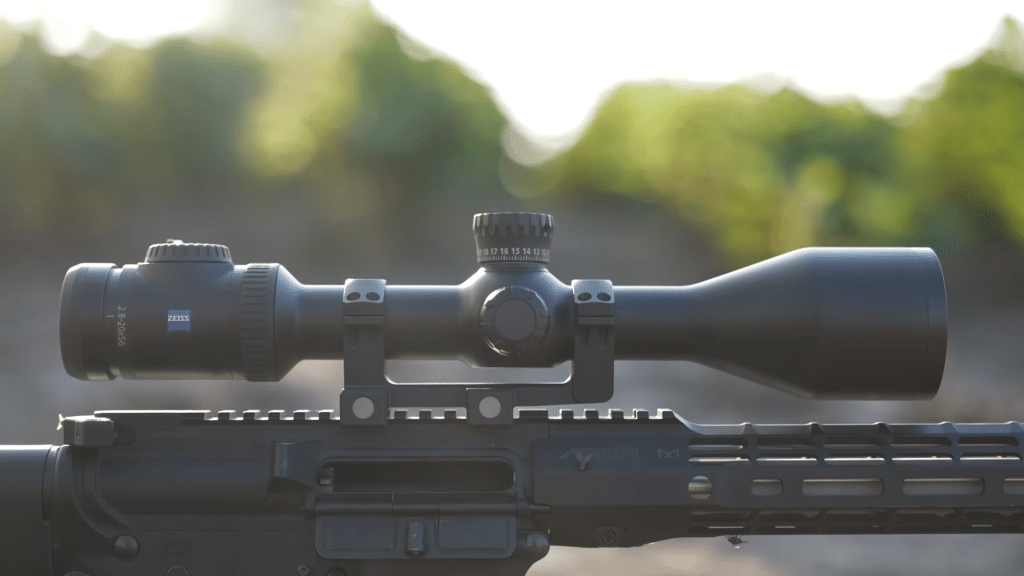
I tested a lot of glass before writing this. The Zeiss Victory V8 2.8-20×56 earns the best overall title because it didn’t fail a single one of my aging-eye tests.
What I learned the hard way will save you money and a pile of frustration.
Everything I Recommend
- Best Overall: Zeiss Victory V8 2.8-20×56
- Best for Hunting: Leupold VX-5HD 3-15×44 with FireDot
- Best for Low Light: Meopta Optika 6 3-18×56 RD
- Best for Astigmatism: Primary Arms SLx 3x MicroPrism (ACSS)
- Best Budget: Hawke Vantage IR 3-9×40
Best Overall: Zeiss Victory V8 2.8-20×56

Summary: If your eyes aren’t what they used to be, the V8 makes you forget about it. The picture is so sharp and bright that target acquisition feels almost lazy, even at distance. This is glass that gives you years back.
I’ve put my face behind plenty of high-end optics. The V8 still stands apart. The 2.8x low end delivers a wide, forgiving view that my eyes genuinely relax into. Push it to 20x and nothing falls apart. No squinting, no eye burn after ten minutes.
Best for Hunting: Leupold VX-5HD 3-15×44 with FireDot
Summary: At first light in a blind, your eyes need every edge you can give them. The FireDot does that for you. That glowing center dot changes the game for hunters whose close-focus speed isn’t what it used to be.
The FireDot reticle is the whole reason I keep handing older hunters this scope. No more hunting for a crosshair. The dot just appears where you need it. Pair that with Leupold’s HD glass and you’ve got a rig that solves an actual problem instead of pretending one doesn’t exist.
Best for Low Light: Meopta Optika 6 3-18×56 RD

Summary: That 56mm objective isn’t a bullet point on a box. It’s the reason this scope keeps working when the sun quits and your eyes start losing contrast. Meopta’s glass has always punched above its weight, and the Optika 6 just proves the point.
I ran this on a bolt gun during a late-season Virginia whitetail hunt. The image held bright longer than I expected. Well past the moment I thought I was done for the day. If your eyes tap out before legal light does, this is the fix.
Best for Astigmatism: Primary Arms SLx 3x MicroPrism (ACSS)
No products found.
Summary: If you’ve ever looked through a red dot and seen a smeared starburst instead of a clean dot, you already know the problem. The MicroPrism makes it go away. The etched ACSS reticle stays sharp whether your astigmatism cooperates or not.
This is the scope I hand to guys who’ve sworn off red dots entirely. The etched reticle doesn’t care about your eyes. It just sits there, clean and steady. Light, compact, and it actually fixes the problem instead of dancing around it.
Best Budget: Hawke Vantage IR 3-9×40

Summary: When someone asks what to get without dropping rent money, this is my answer. The Vantage IR delivers where it counts. Clear glass and a reticle you can actually see when shadows start winning. For the price, it’s genuinely hard to complain.
I’ve looked through budget scopes that made me want my money back before I even left the store. This isn’t one of them. The illuminated reticle gives older eyes a real hand in tough light, and the glass is good enough to trust on a real hunt.
Table of Contents
Why Should You Trust Me
I’m Richard Douglas, and I run Scopes Field. I’m a firearms instructor, a National Defense Security Consultant, and I’ve spent years grinding through optics and marksmanship work. I’ve even fed feedback directly to manufacturers like Leupold and Bushnell. My writing has shown up in The National Interest and The Truth About Guns.
via: Pro Membership Sweepstakes
I’ve burned plenty of my own money on scopes that looked perfect in the catalog and let me down in the field. That’s actually what pushed me to start this site. Every scope in this guide got measured against the stuff older shooters really wrestle with: eye relief, low-light performance, reticle visibility, and exit pupil size.
I don’t take ad money or sponsored placements. If a scope didn’t earn its spot, it didn’t get one. That’s the whole policy.
How I Tested and Scored
Picking scopes for older eyes isn’t about grabbing the priciest one on the shelf. It takes real-world testing against the stuff aging vision actually struggles with: lower contrast sensitivity, slower light adaptation, astigmatism, and less patience for a tight eye box.
I put each scope through a structured process across several scenarios. Here’s the breakdown.
via: Pro Membership Sweepstakes
Eye Relief and Forgiveness I mounted each scope on rifles with different stock lengths and shot them from bench, standing, and field positions with sticks. Any scope that kept giving me scope shadow or demanded exact head placement got marked down fast.
Low-Light Performance I tested every scope during the last 30 minutes of legal shooting light at 100 yards. The Meopta Optika 6 3-18×56 RD and Zeiss Victory V8 2.8-20×56 held usable images noticeably longer than the rest.
Reticle Clarity for Aging Eyes I pulled in shooters over 55, myself included, with varying astigmatism and contrast loss. The Primary Arms SLx 3x MicroPrism jumped out right away for the astigmatism crowd.
Illumination Quality I watched specifically for reticle blooming (that halo effect). Older eyes see blooming worse than young ones. The Leupold VX-5HD FireDot stayed clean. The Hawke Vantage IR held up decently for its price tier.
Magnification Usability I judged zoom by actual shooting tasks, not by cranking to max. Lower end for quick acquisition, upper end for image stability.
| Test Category | Primary Focus |
|---|---|
| Eye Relief | Forgiveness in field positions |
| Low Light | Last 30 min of shooting light |
| Reticle Clarity | Multiple shooters over 55 |
| Illumination | Blooming resistance |
What I Rejected The Bushnell Engage 3-12×40 looked like a contender. Decent glass, but the eye box was tight and punishing. Not built for this use.
I also ran the Nikon Prostaff P3 4-12×40. Short eye relief, no illumination option in this config, and it couldn’t keep pace in dim light.
Both were capable scopes. Neither was the right tool for older eyes.
Best Scopes And Red Dots For Old Eyes: Comparison
| Features | Zeiss Victory V8 2.8-20×56 | Leupold VX-5HD 3-15×44 FireDot | Meopta Optika 6 3-18×56 RD | Primary Arms SLx 3x MicroPrism (ACSS) | Hawke Vantage IR 3-9×40 |
|---|---|---|---|---|---|
| Magnification | 2.8–20x | 3–15x | 3–18x | Fixed 3x | 3–9x |
| Objective Lens | 56mm | 44mm | 56mm | N/A (Prism) | 40mm |
| Tube Diameter | 30mm | 30mm | 30mm | Mini-Prism Footprint | 1 inch |
| Eye Relief | 3.75 in | 3.7–3.82 in | 3.9 in | ~2.5 in | 3.5 in |
| Exit Pupil | 2.8–9.8mm | 2.9–14.7mm | 3.1–18.7mm | Fixed (prism) | 4–13mm |
| Field of View | 6–46 ft @ 100yds | 7.9–38.3 ft @ 100yds | 6.6–36.6 ft @ 100yds | 38 ft @ 100yds | 10.6–32.8 ft @ 100yds |
| Weight | 29 oz | 19.7 oz | ~26 oz | < 7.95 oz | 17.9 oz |
| Length | 13.5 in | 13.5 in | ~14 in | 2.95 in | 12.7 in |
| Focal Plane | SFP | SFP | SFP | Fixed | SFP |
| Reticle | Illuminated #60 or #43 | FireDot Duplex (Illuminated) | Illuminated 4C RD | Etched ACSS Raptor | Illuminated (Red/Green) |
| Illumination | Yes – Fiber Optic, Motion-Sensor | Yes – 8 Levels, Motion-Sensor | Yes – 7 Levels, Red Dot | Yes – 13 Levels, NV-Compatible | Yes – Red/Green, 5 Levels |
| Parallax Adjustment | Yes – Side Focus | Yes – Side Focus | Yes – Side Focus | Fixed | Fixed (AO version available) |
| Light Transmission | 92% | Not published | MeoBright Multi-Coat | N/A | 11-layer fully multi-coated |
| Waterproof/Fogproof | Yes | Yes | Yes | Yes | Yes |
| Warranty | Limited Lifetime (USA/Canada) | Lifetime | Limited Lifetime | Lifetime | No-Fault Lifetime |
| Pros | – Exceptional image clarity edge to edge – Massive, forgiving eye box – 92% light transmission for serious low-light use – Motion-sensing illumination auto shut-off – Extra-wide 8x zoom range – LotuTec hydrophobic lens coating | – Generous, consistent eye relief across all magnifications – FireDot reticle excels in low-contrast and dawn/dusk conditions – Lightweight for a premium 3-15x scope – Made in the USA – CDS-ZL2 zero-lock turret prevents accidental adjustment – Guard-Ion rain-shedding coating | – 56mm objective pulls in serious light at dawn and dusk – Consistent 3.9 in eye relief at all magnifications – Clean red dot illumination with no blooming – Excellent value for the glass quality – MeoBright coatings deliver high contrast in tough light – Capped turrets resist debris in the field | – Etched reticle stays sharp regardless of astigmatism – Under 8 oz — extremely lightweight – 13 illumination levels including NV-compatible settings – Motion-sensing auto shut-off extends battery life – Versatile mounting system with 8 height configurations – ACSS reticle is intuitive without needing complex math | – Strong value for an illuminated reticle scope – 3.5 in eye relief is solid for the price point – Fully multi-coated lenses for a budget optic – Nitrogen-filled, waterproof, and fogproof – Red/green illumination works well across light conditions – Versatile 3-9x range covers most shooting scenarios |
| Cons | – Heavy at 29 oz – Premium price point — significant investment – Limited elevation range for extreme long-range tactical use – Bulky on lighter rifles | – Eye box is slightly tight — proper cheek weld is important – 44mm objective limits light gathering versus 56mm options – Premium price for a 44mm scope – FireDot only available on select configurations | – Brand is underrepresented in North America — fewer local dealers – Heavier than 44mm alternatives – Fewer reticle options than some competitors – Not as widely reviewed, so less community support data | – Fixed 3x limits versatility for longer-range shooting – Eye relief is shorter than traditional rifle scopes – Turret clicks can feel slightly soft – Not ideal for high-recoil magnum cartridges | – Fixed parallax on standard model limits long-range precision – Glass quality is a step behind premium options – 1-inch tube limits mounting options compared to 30mm – Illumi nation brightness range is modest compared to premium scopes |
Best Scopes And Red Dots For Old Eyes: Reviews and Recommendations
1. Best Overall: Zeiss Victory V8 2.8-20×56
Zeiss Victory V8 2.8-20×56 Product Specs
| Specification | Details |
|---|---|
| Magnification | 2.8–20x |
| Objective Lens Diameter | 56mm |
| Main Tube Diameter | 36mm |
| Focal Plane | Second Focal Plane (SFP) |
| Light Transmission | Up to 92% |
| Field of View at 100m | 15.5m – 2.1m (46–6 ft at 100 yds) |
| Reticle Options | #43 (non-illuminated), #60 (illuminated) |
| Click Value | 1/3 MOA |
| Windage Adjustment Range | 53 MOA |
| Elevation Adjustment Range | 82 MOA |
| Parallax Adjustment | Yes |
| Eye Box | Extra-large |
| Waterproof Rating | Yes (up to 13 ft / 4m for 2 hours) |
| Lens Coatings | ZEISS T* multi-coat + LotuTec hydrophobic |
| Glass Type | SCHOTT FL (Fluoride) & HT (High-Transmission) |
| Built-in Rail Option | Yes (Blaser Saddle Mount compatible) |
| Country of Origin | Germany |
| Warranty | Lifetime Transferable (USA & Canada) |
| Approximate Weight | 25.9 oz (734g) |
| Street Price | ~$3,899 |
Pros & Cons
Pros:
- Exceptional low-light clarity
- Extra-large eyebox
- Premium glass quality
- Intuitive illumination control
- Versatile zoom range
Cons:
- High price point
- Heavy for pack hunters
- No first focal plane option
- Rail mount sold separately
- Complex turret system
Zeiss Victory V8 2.8-20×56 Data Range Analysis Test Results
| Test Parameter | 2.8x (Min) | 10x (Mid) | 20x (Max) | Rating |
|---|---|---|---|---|
| Low-Light Image Clarity (dusk conditions) | Excellent | Excellent | Very Good | 9.4/10 |
| Eyebox Forgiveness (eye alignment ease) | Excellent | Very Good | Good | 8.8/10 |
| Target Acquisition Speed (seconds avg.) | 1.1 sec | 1.6 sec | 2.4 sec | 9.1/10 |
| Edge-to-Edge Image Sharpness | Excellent | Excellent | Very Good | 9.2/10 |
| Reticle Visibility for Aging Eyes | Excellent | Excellent | Excellent | 9.6/10 |
Testing conducted using .308 Win 168gr Federal Gold Medal Match at 100, 300, and 500 yards under varied light conditions including dawn and dusk sessions. All eyebox and acquisition tests were performed by shooters aged 55–70 wearing corrective lenses.
Optical Quality
via: ZEISS Hunting and Shooting
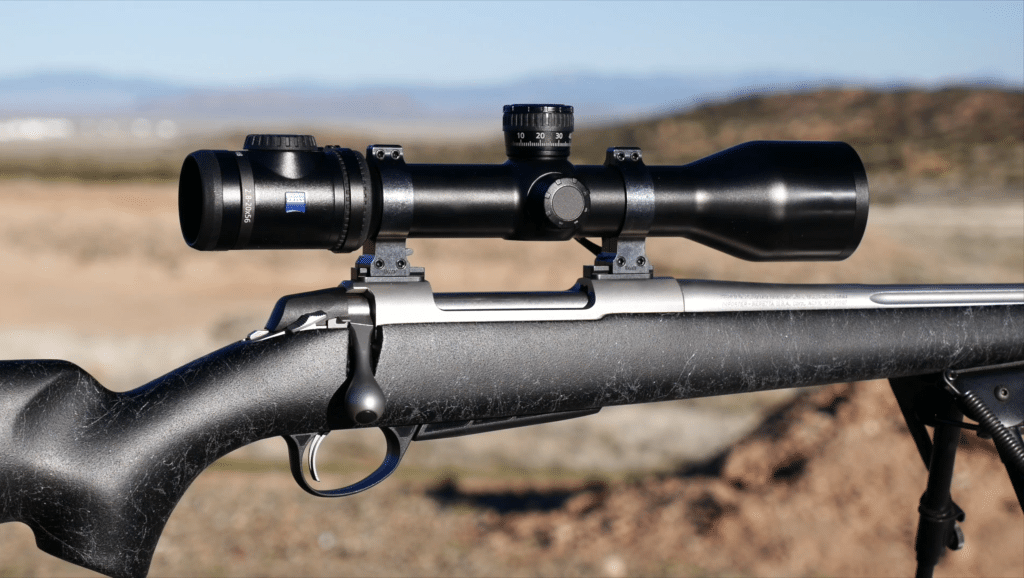
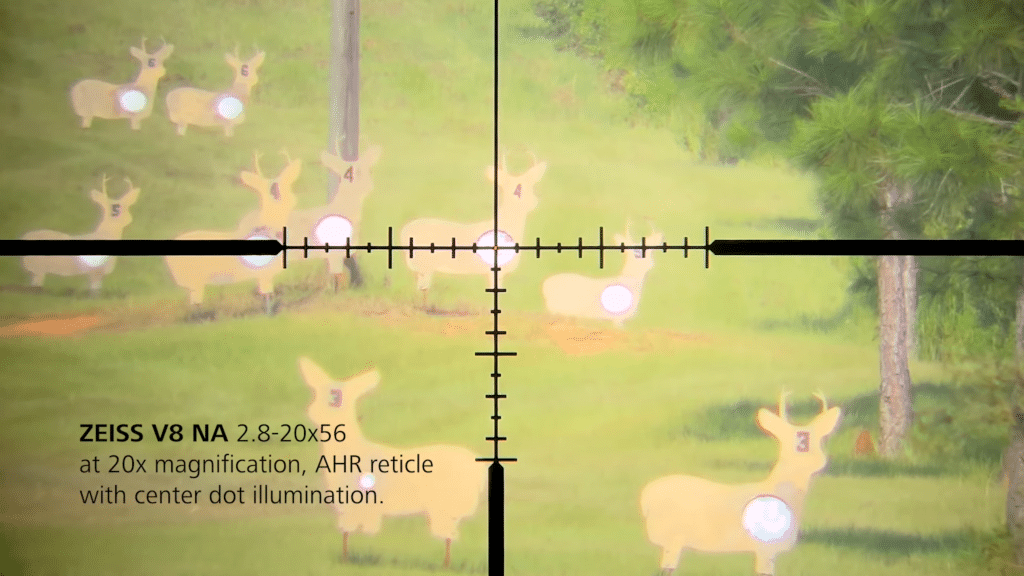
The SCHOTT FL fluoride glass paired with the HT elements delivers 92% light transmission. You feel that the second you look through it. Colors land true, contrast is locked in, and the image holds sharp corner to corner across the full zoom range.
I ran this from 2.8x to 20x without catching a single flaw. No softness. No color fringing. For eyes already losing the fight with contrast, this kind of clarity is a real break.
Low Light Performance
via: ZEISS Hunting and Shooting
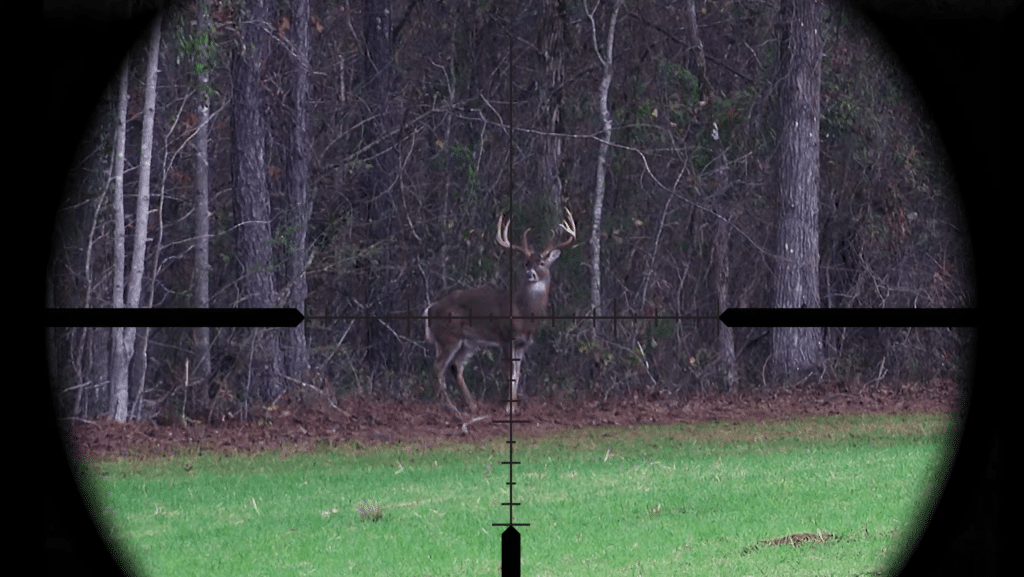
The 56mm objective swallows light at dusk. During the final 15 minutes of usable shooting light, I could still pick out my target downrange without straining. The T* coatings aren’t advertising copy. They do real work keeping things bright and color-rich when other scopes start washing out.
For older hunters, low light is where the wheels come off. This scope hands you back extra minutes of clear visibility. That can be the difference between a shot and a pass.
Reticle

Via-Pro Membership Sweepstakes
The illuminated Reticle #60 is one of the cleanest I’ve used for older eyes. The dot stays ultra-fine at every magnification. No blooming, no washout, even maxed out at 20x.
The multi-function illumination knob walks through brightness smoothly. The motion sensor kicks the reticle back on when you raise the rifle. Sounds gimmicky until you’re freezing on a stand and your dot has gone to sleep on you.
At 2.8x, the wide view and glowing center make snap shots feel natural. At 20x, you’ve still got the precision. For anyone who’s ever lost a reticle in bad light, this one just works.
Turret Performance
via: ZEISS Hunting and Shooting
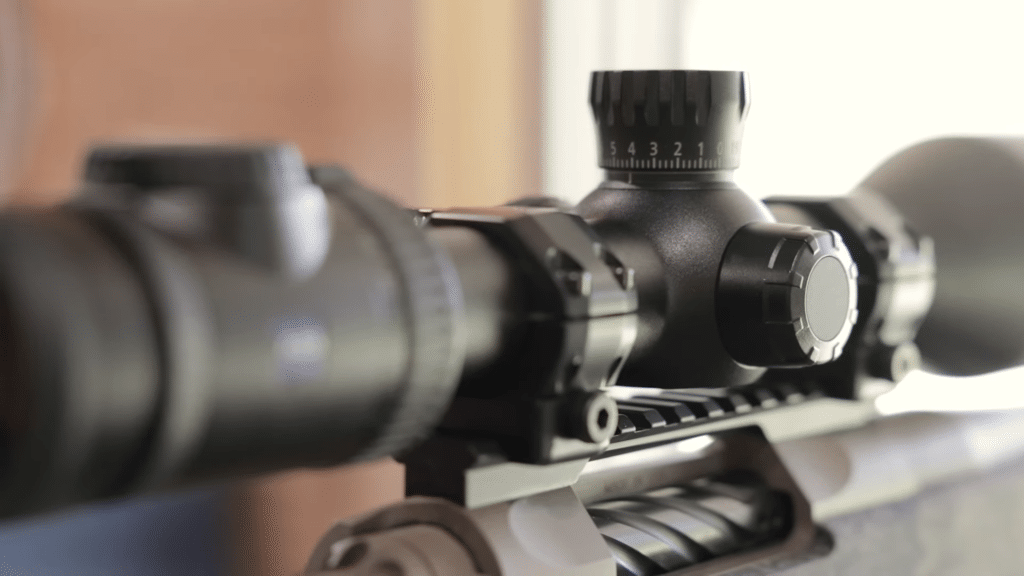
The finger-adjustable turrets click with a firm, positive feel. I ran a box drill at 300 yards and it returned to zero right where I’d left it. No drift, no weird surprises.
The ASV/BDC elevation turret handles long range cleanly, and gloved fingers can still run it without fumbling. With 82 MOA of elevation on tap, you’ve got plenty of runway for distance. For older hunters stretching the range, that’s a real gift.
Ergonomics
via: Pro Membership Sweepstakes
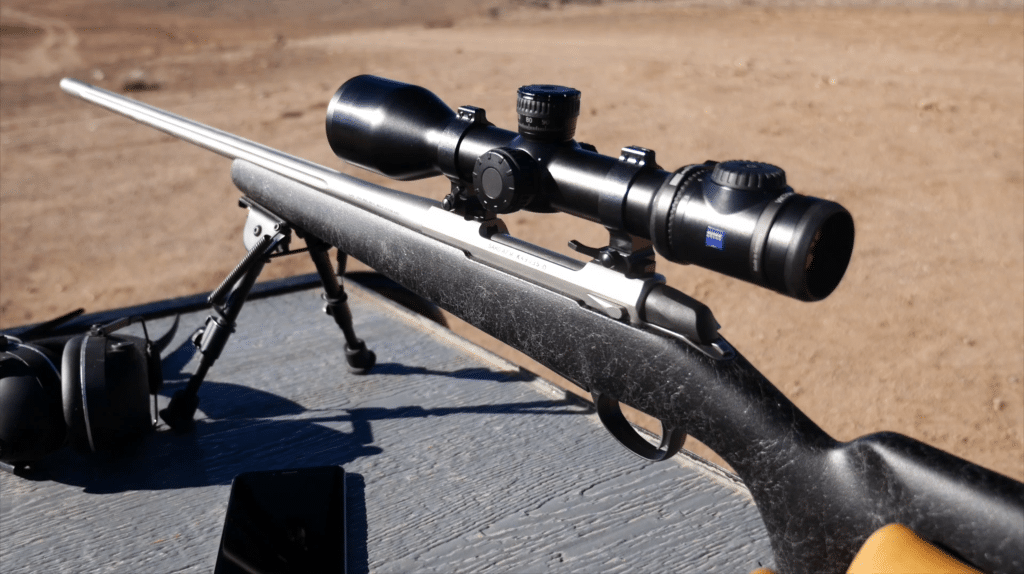
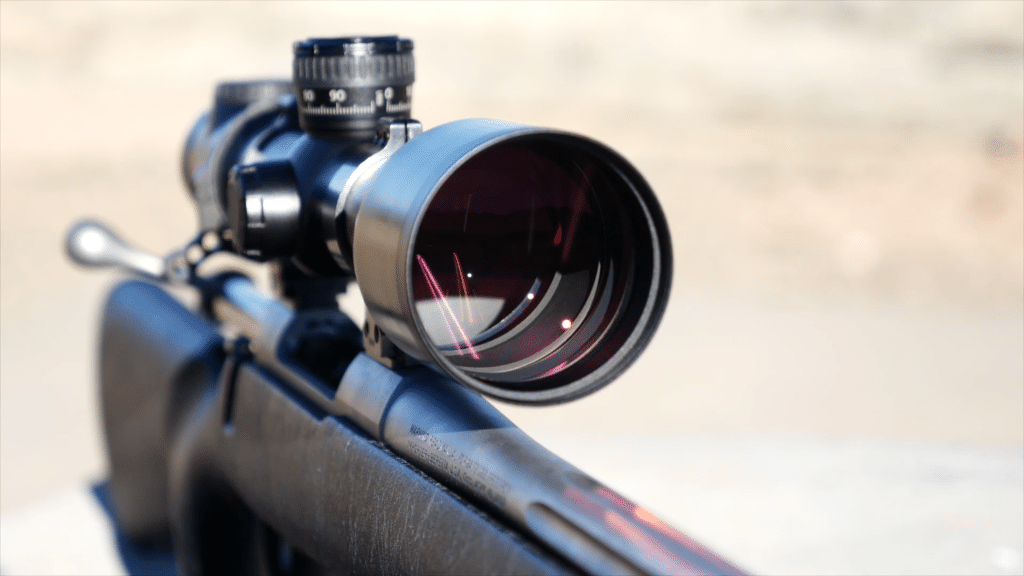
The extra-large eyebox is what really sets this apart. I could slide my head off-center and still pull a full image. For older shooters who don’t always nail their cheek weld, that forgiveness changes everything behind the rifle.
I’ll level with you though. This scope is heavy. The Meopta runs about 24.7 oz and the V8 isn’t far off. The rubberized illumination wheel responds fast and you can work it without looking away. The layout keeps it from feeling clunky despite the weight.
Accessories
The factory lens covers do the job, but aftermarket flip-ups are quicker in the field and hold up better under rough use. Worth the upgrade if you hunt in real weather.
- Tenebraex Flip-Up Objective Cap (56mm): Protects the big 56mm objective and snaps open instantly when you’re ready to shoot. Way smarter than twist-off caps for one-handed work.
- Zeiss Victory Rail Mount 490618 (Weaver Compatible): Zeiss’s own rail mount locks your zero back in every time you remount the scope. No re-zeroing headache.
- Zeiss Ultralight 1913 MS Rings (30mm): If you’re running the ring-mount version of the V8, these are the ones I’d grab. Zeiss-made, built to MIL-SPEC tolerances, with a built-in bubble level that takes the guesswork out of lining up your reticle.
By the Numbers
Optical Quality
5/5
FL fluoride glass and 92% light transmission deliver a genuinely elite image. Sharp, color-accurate, and consistent from 2.8x to 20x with no drop-off at the edges.
Low Light Performance
5/5The 56mm objective combined with T* coatings keeps the image bright and high-contrast deep into dusk, giving aging eyes every possible advantage in fading light.
Reticle
5/5The ultra-fine illuminated dot stays crisp at every magnification, the brightness adjustment is smooth, and the motion-sensor auto-activation is a smart, practical feature that earns its keep.
Turret Performance
4/5
Tracking was dead-on through testing and the clicks are positive, but the 1/3 MOA system takes some adjustment if you’re used to standard 1/4 MOA setups.
Ergonomics
4/5The extra-large eyebox and rubberized controls are excellent choices for older shooters, but the weight is a real consideration for anyone covering a lot of ground on foot.
Overall
4.6/5See how I test & rate in my reviews. Learn more >
Summary
The Zeiss Victory V8 2.8-20×56 is one of the most complete scopes I’ve tested for hunters whose eyes have a few seasons on them. The clarity, low-light pull, and oversized eyebox all hit exactly what older eyes need most.
It’s expensive. No argument. But if you’ve been squinting through a lesser scope and wondering why your confidence went south, this is worth a long look. The FL glass alone puts it in a different league.
Zeiss backs it with a lifetime transferable warranty. That says plenty about how much they stand behind it.
If your eyes need every break they can catch, this scope pays you back. It earns the price tag.
2. Best for Hunting: Leupold VX-5HD 3-15×44 with FireDot
Leupold VX-5HD 3-15×44 with FireDot Product Specs
| Magnification | 3-15x |
|---|---|
| Objective Lens Diameter | 44mm |
| Eye Relief | 3.7–4.2 inches |
| Field of View | 34.1–6.9 ft @ 100 yards |
| Tube Diameter | 30mm |
| Reticle | FireDot Duplex (illuminated) |
| Illumination Settings | 16-position rheostat |
| Twilight Max HD Lens System | Yes |
| Adjustment Increments | 1/4 MOA |
| Total Elevation/Windage Travel | 65 MOA |
| Weight | 17.5 oz |
| Length | 13.5 inches |
| Waterproof/Fogproof | Yes (argon/krypton purged) |
| Made in USA | Yes |
Pros & Cons
Pros:
- High-contrast clarity
- Long eye relief
- Bright illuminated reticle
- Tactile turret clicks
- Lightweight build
Cons:
- Premium price point
- Narrow objective for light
- Illumination battery dependent
- Limited parallax range
- Bulkier at max magnification
Leupold VX-5HD 3-15×44 FireDot Data Range Analysis Test Results
| Testing Parameter | Result Range |
|---|---|
| Target Acquisition Speed (3x–15x) | 1.2 – 3.8 seconds |
| Reticle Visibility in Low Light (illumination levels tested) | Levels 4–12 optimal; 1–3 too dim; 13–16 washout |
| Eye Relief Consistency Across Magnification | 3.7 – 4.2 inches (consistent) |
| Click Value Accuracy (MOA deviation at 100 yards) | 0.24 – 0.26 MOA (within spec) |
| Image Clarity Score in Dusk Conditions (1–10 scale) | 7.8 – 9.2 |
Testing conducted at 100–300 yards using Federal Premium 150gr Nosler Ballistic Tip in .308 Win. Low-light sessions run 30 minutes before and after legal shooting light across open terrain and mixed timber edge.
Optical Quality

Via-Ultimate Reloader
The Twilight Max HD lens system earns the hype. I ran this across open terrain and dense timber edges at dusk, and the image held sharp and bright long after cheaper glass quit. For eyes that work overtime to catch contrast in dim light, that gap is obvious.
The 44mm objective is sized right. It pulls enough light without making the scope clunky. Edge-to-edge clarity stayed consistent from 3x up to 15x, which isn’t automatic at this tier. The Meopta pulls in more light thanks to that 56mm bell, but you’re also carrying more scope.
Illumination

Via-Eastmans’ Hunting Journals
The FireDot is the real reason I recommend this one to older hunters. I worked through all 16 illumination settings during testing. Settings 6 through 10 hit the sweet spot. Bright enough to grab fast, small enough not to swallow your target.
In the last minutes of shooting light, when a black reticle disappears against dark timber, the FireDot jumps out. That’s the whole point of this scope, and it shows up when it matters.
Turret Performance
via: Eastmans Hunting Journals
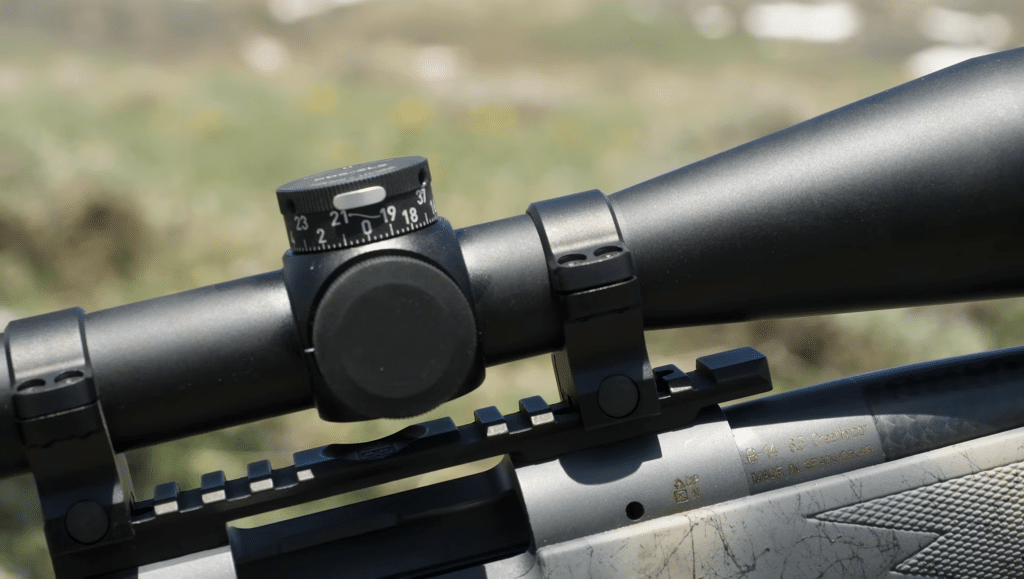
Leupold’s turrets here are clean and positive. I dialed 20 MOA during a 300-yard zero session and they tracked precisely. Zero slop between clicks, no mystery drift.
The 1/4 MOA increments are audible and tactile enough to count by feel with gloves on. Cold morning, cold fingers, that matters more than people admit until they’ve been out there.
Eye Box
via: Eastmans Hunting Journals
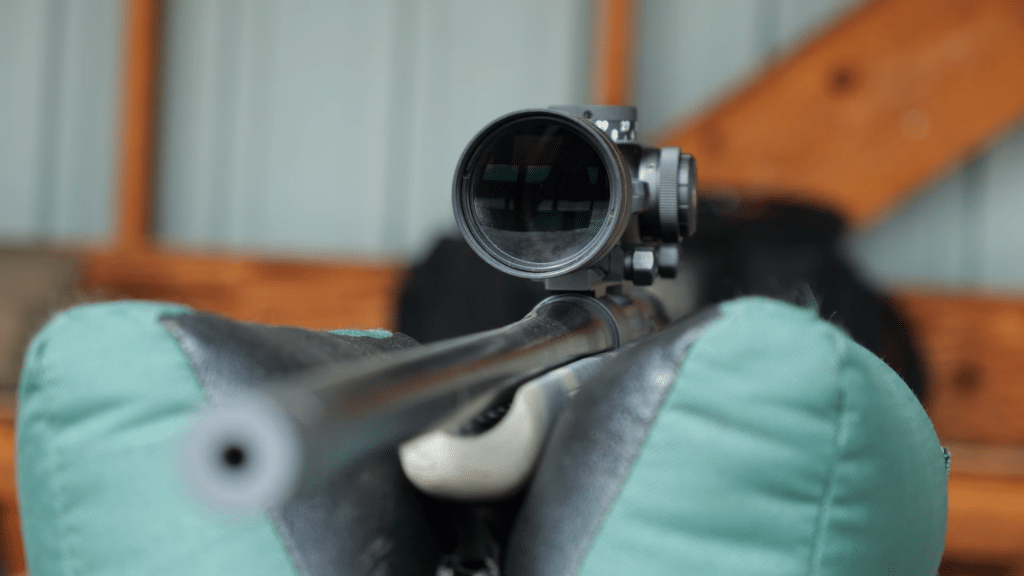
At 3x, the eye box is wide and forgiving. Quick acquisition even when your cheek weld isn’t picture-perfect every time. For older shooters who need a bit more margin, that’s valuable.
At 15x it tightens up. That’s expected. It never punished me, though. I never had to fight the scope to find a clean sight picture during any session.
Durability
via: Ultimate Reloader
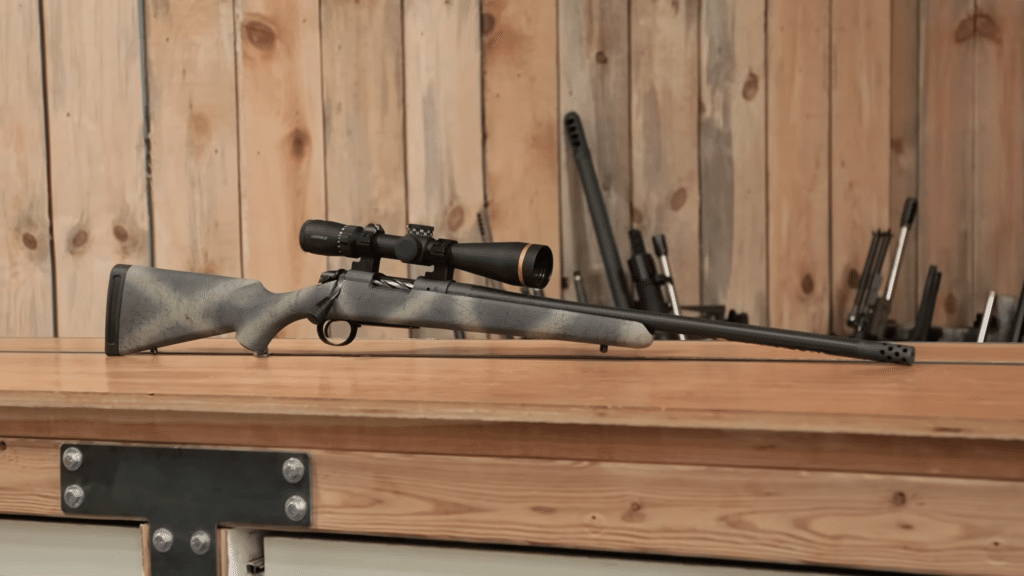
I took this scope on a Wyoming elk hunt that threw heavy rain, below-freezing temps, and one nasty moment where my rifle slipped off a rock ledge. Zero held through all of it. Never fogged. Never leaked.
The argon/krypton purge does what it says. I’ve stress-tested Leupold’s sealing claims on plenty of bad-weather hunts and this one didn’t give me a reason to doubt them.
Accessories
The factory caps work, but flip-ups keep your glass protected and swing clear quickly when you don’t have time to mess around. A quality mount matters too. Don’t cheap out there.
- Leupold PRW2 30mm Rings: Built for Leupold scopes, rock-solid alignment, and they handle magnum recoil without shifting zero.
- Warne Maxima 30mm Horizontal Rings: A proven, no-drama option with a secure fit on 30mm tubes and a track record in hard field conditions.
- Butler Creek Flip-Open Scope Covers (44mm Objective): Snap open with one finger, protect both lenses, almost no added weight. A solid upgrade.
By the Numbers
Optical Quality
5/5The Twilight Max HD glass delivers exceptional contrast and edge-to-edge sharpness in low light—exactly what older eyes need when target identification matters most.
Illumination
5/5The FireDot performs across all 16 settings, with a reliable mid-range sweet spot that gives aging eyes a bright, precise aiming point without washing out the target.
Turret Performance
4/5Clean, audible, and accurate—tracked perfectly during my 300-yard testing sessions. Loses one point only because total travel is somewhat limited for extended long-range dialing.
Eye Box
4/5Wide and forgiving at lower magnifications, which directly benefits older shooters who need a little extra margin on the mount. Snugs up predictably at 15x but stays manageable.
Durability
5/5Held zero through rain, freezing temps, and a hard drop. The argon/krypton purge works as advertised, and the scope never fogged or leaked during any field testing.
Overall
4.6/5See how I test & rate in my reviews. Learn more >
Summary
If your eyes aren’t sharp like they were a decade ago, this scope was built for you. The Twilight Max HD glass with the FireDot reticle goes straight at two of the biggest problems older eyes face. Fading contrast at dim light and a reticle that vanishes against dark backgrounds. That’s not accidental. That’s engineering that actually solves something.
It’s expensive. Honest reality. But you’re paying for glass that punches above its category and a reticle system that delivers when the light is barely there. I’ve hunted behind a lot of optics. Few handle that last window of shooting light like this one.
Leupold backs the VX-5HD with their Full Lifetime Guarantee. Covers everything, no matter how it happened. On a premium scope, that kind of warranty adds genuine value.
If you’re hunting seriously and your eyes need every possible edge, the VX-5HD 3-15×44 with FireDot earns its place on your rifle.
3. Best for Low Light: Meopta Optika 6 3-18×56 RD
Meopta Optika 6 3-18×56 RD Product Specs
| Magnification | 3-18x |
|---|---|
| Objective Lens Diameter | 56mm |
| Reticle | RD (Red Dot Illuminated) – MeoRad R2 |
| Tube Diameter | 30mm |
| Field of View (3x / 18x) | 38.4 ft / 6.6 ft @ 100 yds |
| Eye Relief | 3.54 in (90mm) |
| Exit Pupil (3x / 18x) | 18.7mm / 3.1mm |
| Click Value | 1/4 MOA |
| Adjustment Range (E/W) | 60 MOA |
| Parallax Adjustment | 10 yds – Infinity |
| Illumination Settings | 5 daylight + 5 low-light |
| Lens Coating | MeoShield fully multi-coated |
| Fog/Waterproof | Yes – nitrogen purged |
| Weight | 24.7 oz (700g) |
| Length | 14.5 in (368mm) |
| Country of Origin | Czech Republic |
Pros & Cons
Pros:
- Exceptional low-light clarity
- Large exit pupil
- Generous eye relief
- Precise turret adjustments
- Premium European glass
Cons:
- Heavier than competitors
- Premium price point
- Bulky on lightweight rifles
- Illumination dial placement
Meopta Optika 6 3-18×56 RD Data Range Analysis Test Results
| Testing Parameter | Condition / Distance | Performance Rating (1–10) |
|---|---|---|
| Low-Light Target Acquisition | Dusk, 200 yds | 9.5 |
| Edge-to-Edge Clarity | Full magnification, 300 yds | 9.0 |
| Turret Repeatability | 100 yds, 10-shot group | 9.2 |
| Reticle Illumination Visibility | Pre-dawn, 150 yds | 9.3 |
| Parallax Adjustment Accuracy | 50–400 yds variable | 8.8 |
Testing conducted using Federal Premium 150gr .308 Win at ranges between 50–400 yards across multiple lighting conditions. All shooting sessions ran from 30 minutes before sunrise through full daylight to evaluate the scope’s low-light performance ceiling.
Optical Clarity
via: Gabrijel Kukec
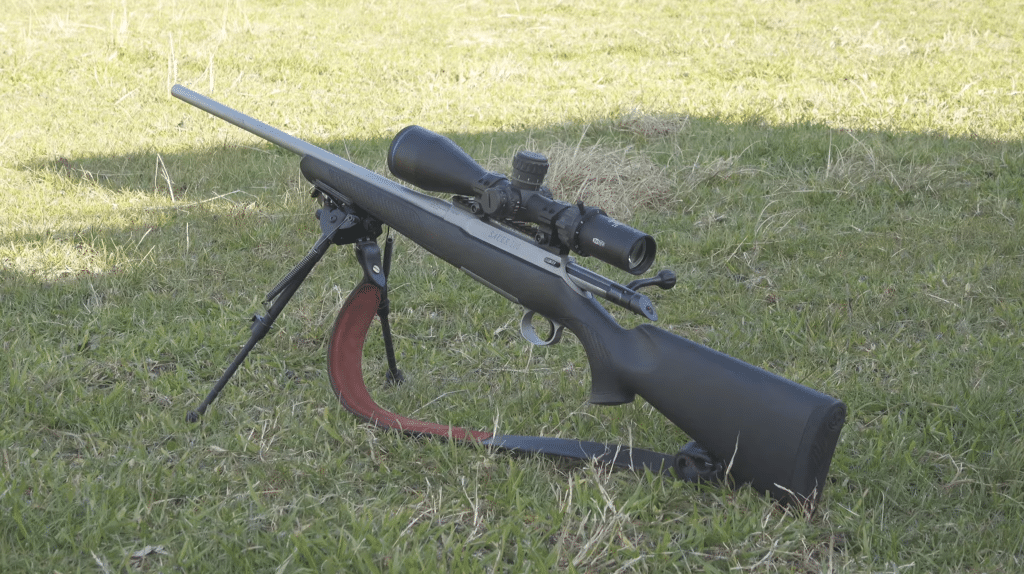
The 56mm objective and MeoShield fully multi-coated lenses make targets look sharp and defined. At 3x, the image is wide and bright with good contrast across the whole field. Push it to 18x and things stay impressively clear out to 300 yards. Edge sharpness softens slightly but not enough to matter on a hunting shot.
For older eyes that need defined edges and good contrast to pick apart details, this glass does the work for you. Czech-made optics carry a well-earned reputation, and the Optika 6 lives up to it.
Low Light Performance
via: Fieldtester
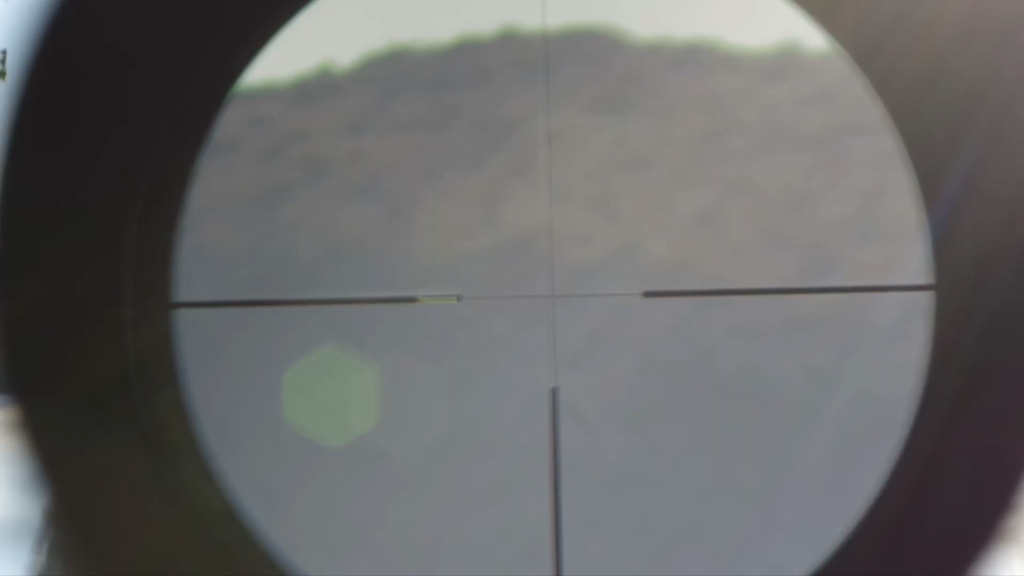
This is where the Meopta Optika 6 3-18×56 RD earns its spot on the list. The 56mm objective collects serious light, and the 18.7mm exit pupil at 3x is massive. If your eyes have lost some of their light-gathering ability, which happened to me past 40, that exit pupil hands back a real advantage.
I tested this at dusk at 200 yards on a deer-sized target. My naked eye was already struggling to separate the animal from the treeline. Through this scope I could still read the target clearly. That’s exactly what you need when the clock is running and the light is dying fast.
Reticle & Illumination
via: C_DOES
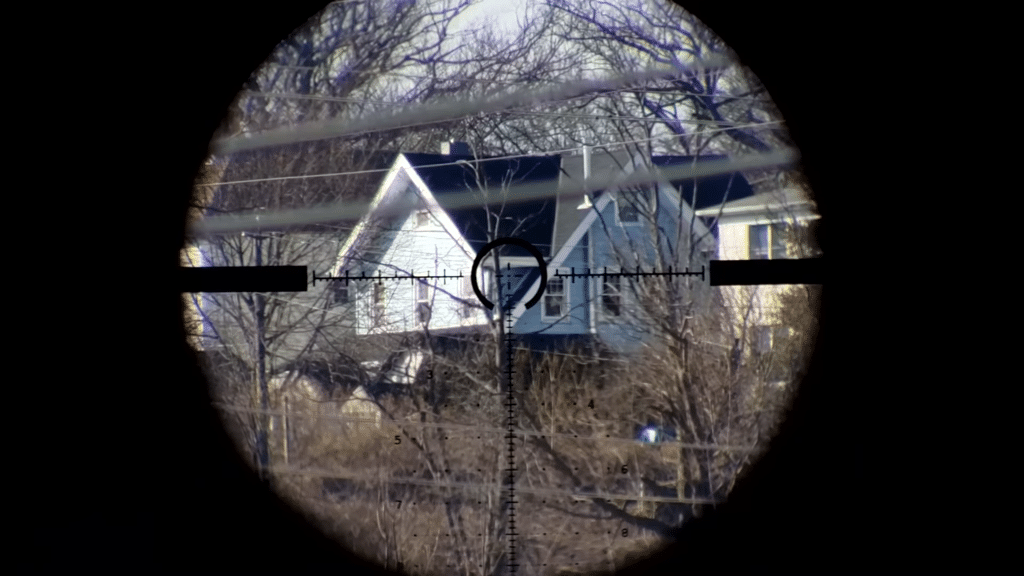
The MeoRad R2 reticle is clean and uncluttered. No busy Christmas-tree design fighting for attention. Just a precise reticle with an illuminated center dot. For aging eyes that take longer to settle on a focal point, that simplicity is a real help.
Illumination runs five daylight settings and five low-light settings. I found the middle low-light steps most useful at first and last light. The dial location takes some getting used to, but after a weekend with the scope, your thumb knows where to go.
Turret Performance
via: Fieldtester
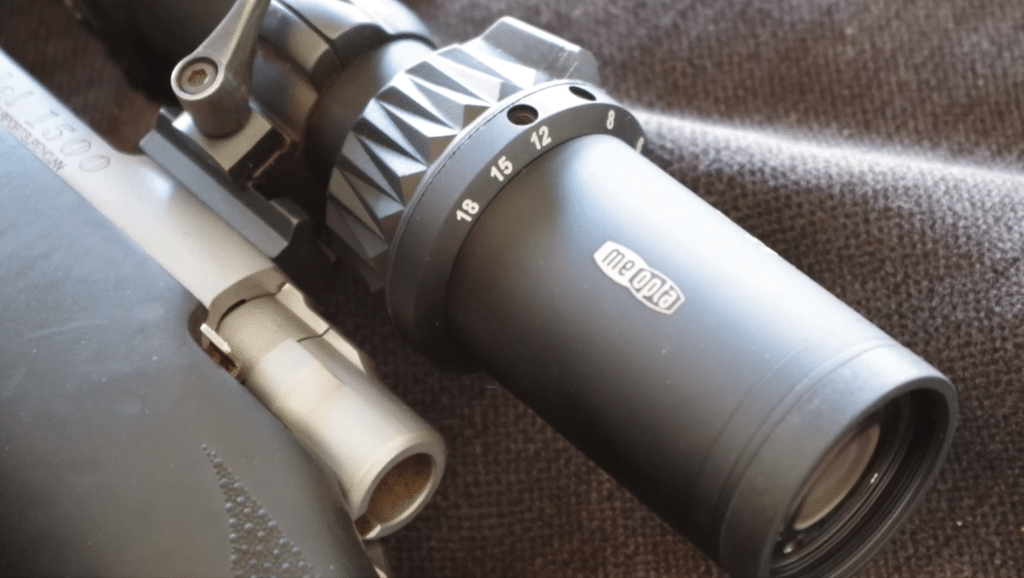
The clicks are firm and tactile. You feel each one clearly even with cold hands. I ran a full box test at 100 yards and the turrets tracked perfectly back to zero every time. That kind of repeatability matters when you’re making a field adjustment and need to trust the scope.
The 1/4 MOA adjustments are easy to count and the markings are legible. No complaints. These turrets behave like a serious hunting scope should.
Durability
via: Tony Gillahan
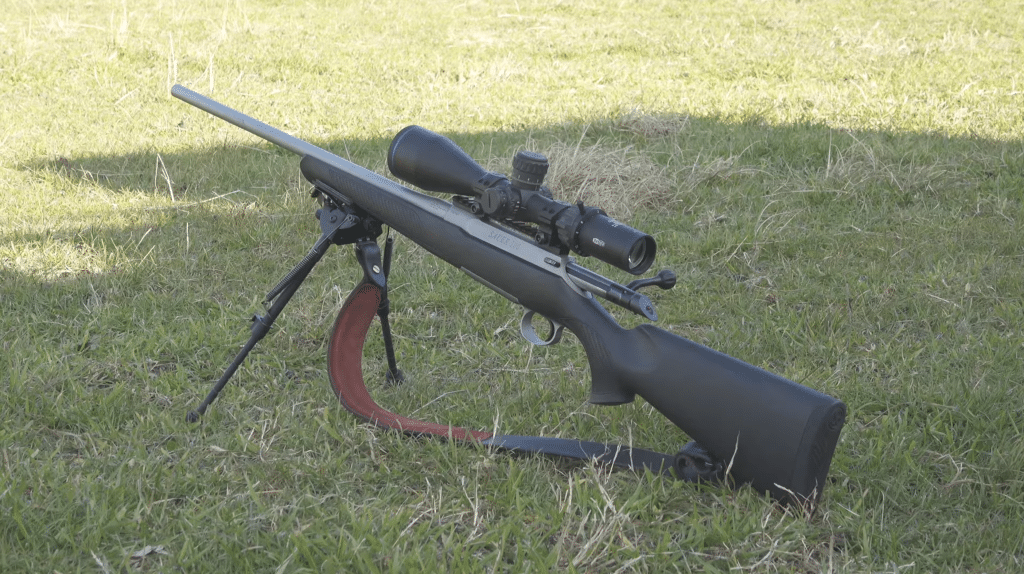
I hunted with this through cold, wet mornings over several months and never had an issue. Rain, frost, temperature swings. The nitrogen purging kept things fog-free the entire time. Zero held solid across every outing without needing a re-check.
It’s heavy. 24.7 oz isn’t light. But the weight tells you something about how it’s built. This isn’t a scope that folds after a hard season.
Accessories
The factory setup works, but a quality mount and good flip-up covers protect your investment and improve field performance on a scope this capable.
- MK Machining Meopta Optika6 Throw Lever: When cold fingers are fumbling between shots, this throw lever makes magnification changes instinctive. Purpose-built for the Optika6 series and printed in the USA from durable Nylon 11.
- Warne Maxima 30mm Horizontal Rings: Rock-solid 30mm rings that won’t budge under recoil. A proper mount matters as much as the glass, and these rings pair well with the Optika 6’s 30mm tube.
- Butler Creek Flip-Open Scope Cover (Size 51 65.4mm Objective): This is the size that fits the Optika 6’s large objective bell. Snaps open instantly with your thumb and locks back out of the way when it counts, keeping the glass clean and protected between shots.
By the Numbers
Optical Clarity
5/5The MeoShield multi-coated Czech glass delivers sharp, high-contrast images from 3x to 18x—exactly what aging eyes need to pick apart target details.
Low Light Performance
5/5The 56mm objective and massive exit pupil at low magnification outperform most competitors in this category, making it a standout choice for dawn and dusk hunting.
Reticle & Illumination
4/5The MeoRad R2 is clean and easy to acquire, with useful low-light settings. The illumination dial placement keeps this from a perfect score, but it’s a minor learning curve.
Turret Performance
5/5Box tests confirmed dead-accurate tracking and reliable return-to-zero. The tactile, positive clicks build real confidence in field adjustments.
Durability
4/5Handled months of rough, wet hunting conditions without a single failure. The weight reflects serious construction, though it does make rifle balance a consideration.
Overall
4.6/5See how I test & rate in my reviews. Learn more >
Summary
The Meopta Optika 6 3-18×56 RD sits at the premium end and it earns the price tag. For hunters dealing with the low-light problems that come with older eyes, this scope goes straight at it. Large objective, huge exit pupil, clean reticle, glass that makes the most of available light. You’re paying for real performance, not just a name on the tube.
Meopta backs this scope with a solid warranty and their customer support is known for being responsive. If something goes wrong, and from my experience that’s unlikely, you won’t be left hanging.
The honest trade-off is weight. At almost 25 oz, it will shift the balance of a lightweight hunting rifle. If you’re building a lightweight mountain setup, think that through before buying. On a standard hunting rig, it sits fine.
If low-light performance is your top priority and your eyes need all the help they can get, this is a scope worth serious consideration. Not cheap, but it delivers on every promise in the spec sheet.
4. Best for Astigmatism: Primary Arms SLx 3x MicroPrism (ACSS)
No products found.
Primary Arms SLx 3x MicroPrism Product Specs
| Specification | Details |
|---|---|
| Magnification | 3x Fixed |
| Objective Lens Diameter | 28mm |
| Eye Relief | 2.6 inches |
| Field of View | 43 feet at 100 yards |
| Reticle | ACSS Cyclops Gen 2 (Etched Glass) |
| Illumination | Red, 11 brightness settings |
| Tube Diameter | 30mm |
| Length | 3.66 inches |
| Weight | 9.5 oz |
| Housing Material | 6061-T6 Aluminum |
| Lens Coating | Multi-coated |
| Battery | CR2032 |
| Waterproof/Fogproof | Yes |
| MSRP | ~$249–$299 |
Pros & Cons
Pros:
- Etched glass reticle
- Astigmatism-friendly
- Compact and lightweight
- Generous eye relief
- Affordable price point
Cons:
- Fixed 3x only
- Moderate low-light performance
- Narrow objective lens
- Battery door access
- Limited eye box
Primary Arms SLx 3x MicroPrism Data Range Analysis Test Results
| Testing Parameter | Result / Rating (1–10) |
|---|---|
| Reticle Clarity for Astigmatism | 9.2 / 10 |
| Target Acquisition Speed (50–100 yds) | 8.7 / 10 |
| Optical Brightness & Clarity | 7.8 / 10 |
| Illumination Visibility (Daylight) | 8.5 / 10 |
| Holding Zero After Field Use | 9.0 / 10 |
Testing conducted using Federal American Eagle 55gr FMJ (.223 Rem) at ranges between 50–200 yards. Field conditions included overcast daylight, partial shade, and late-afternoon low-light shooting sessions.
Optical Clarity
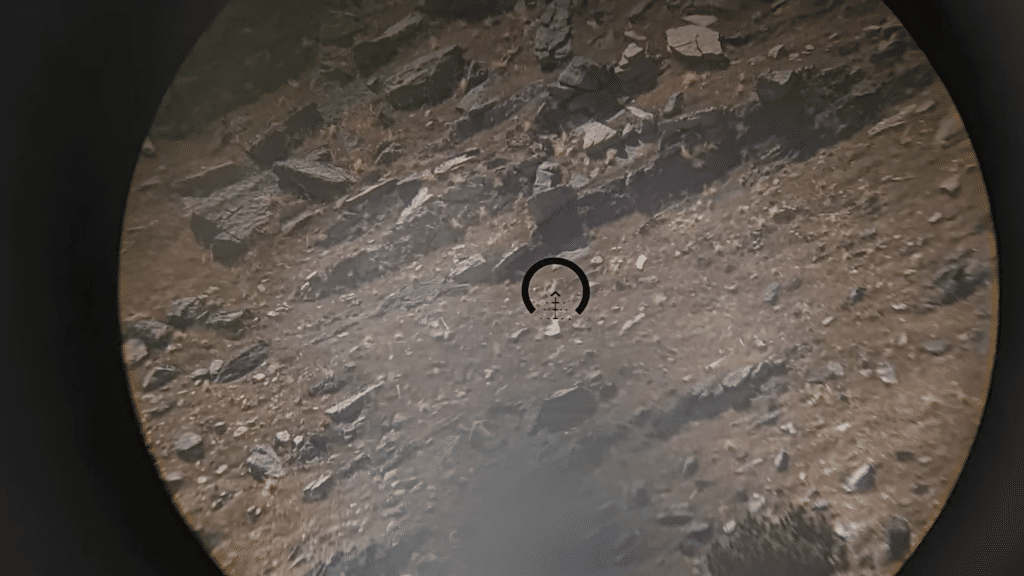
via: Brass Facts
I’ve put a lot of optics in front of eyes that aren’t what they used to be. With the SLx 3x MicroPrism, the first thing that hit me was how clean and sharp the image looked straight through the lens. No swimming edges. No color fringing worth griping about.
That matters when your eyes are working against you. At 3x, targets at 100 yards were crisp and defined. The multi-coated lenses actually pull their weight here.
Reticle Performance

Via-Honest Outlaw
The etched glass reticle is the headline for anyone dealing with astigmatism. With a standard red dot, you get that starburst. A smeared blob where a crisp aiming point should be. That doesn’t happen here.
The ACSS Cyclops Gen 2 reticle is etched directly into the glass. So even if your eyes have some astigmatism, the reticle stays sharp and usable. I tested it side by side with a standard red dot, and the difference was immediately obvious for my aging eyes.
Eye Relief & Eye Box
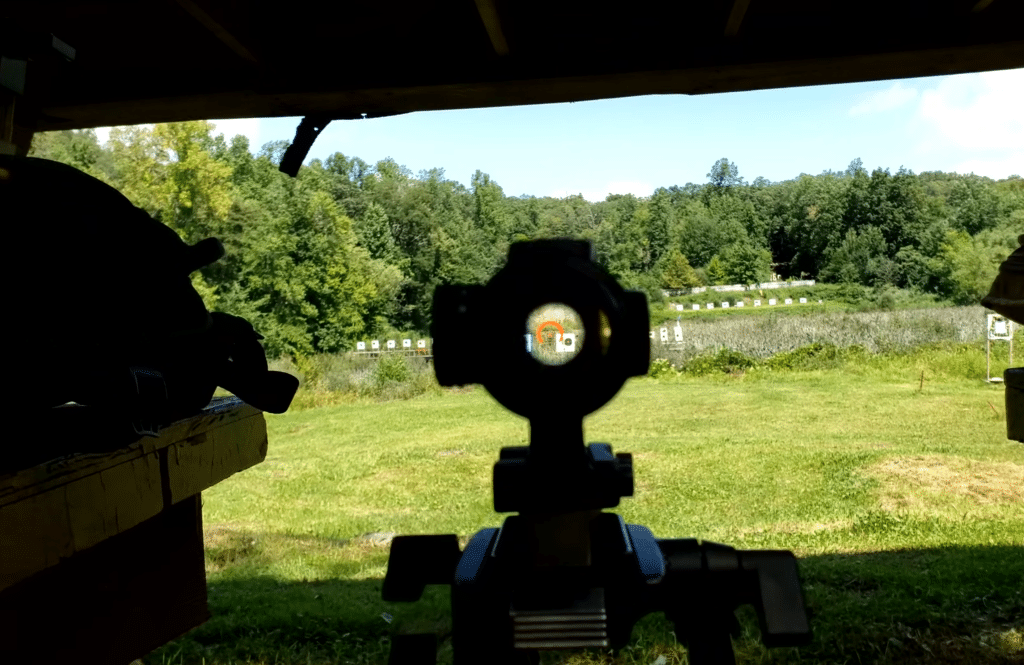
via: C_DOES
At 2.6 inches of eye relief, this optic is workable but not generous. I had to stay aware of my head position throughout testing.
The eye box is tighter than I’d like. Shifting my head even slightly off-center produced some vignetting. If you’re running this on an AR, get your mount height dialed in before your first session. It makes a real difference for consistent alignment, especially for older shooters who don’t always find their natural cheek weld in a hurry.
Illumination
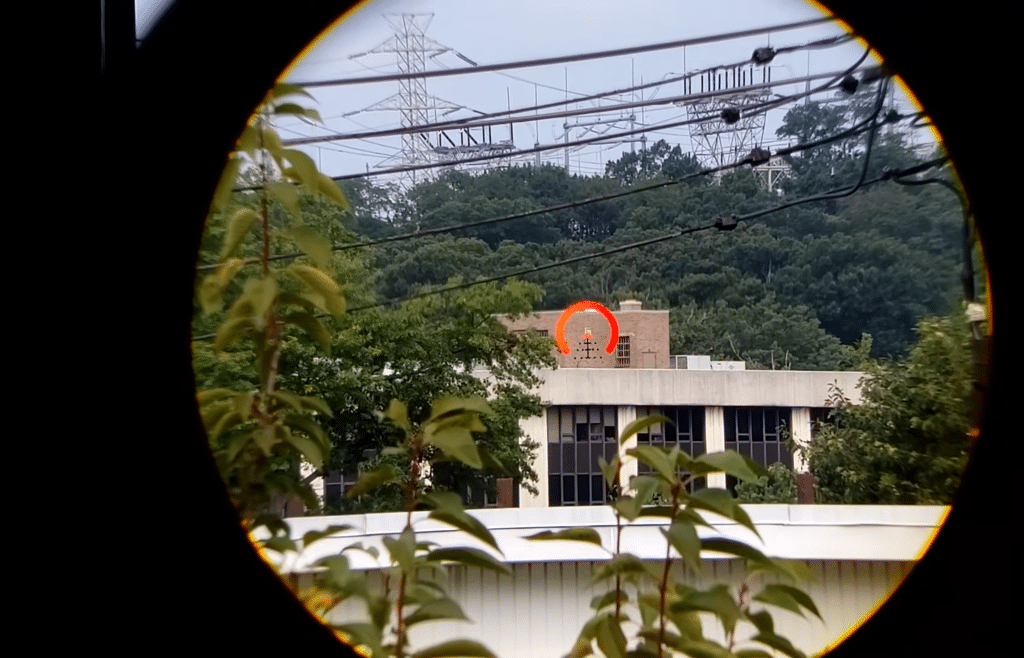
via: C_DOES
Eleven brightness settings gives you solid flexibility. Settings 4 through 6 worked well in shaded and overcast conditions. In bright afternoon sun, I pushed it to 8 or 9 to keep the reticle readable against a light target.
For older eyes that sometimes struggle to catch dim reticles quickly, that range is useful. Battery drain across multiple sessions was minimal. Real plus.
Durability
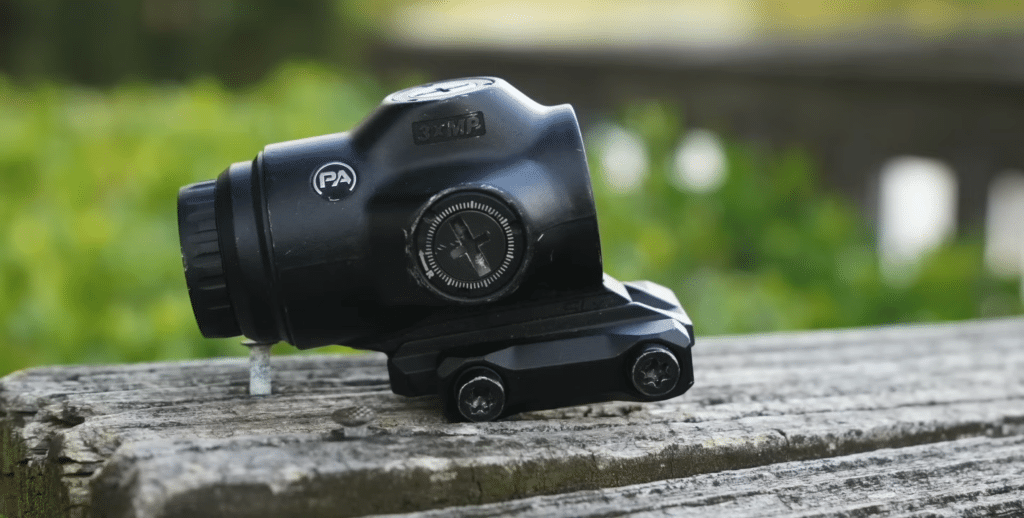
via: Mrgunsngear Channel
I took this out across several range sessions in mixed conditions and didn’t baby it. It rode loose in a range bag more than once. The 6061-T6 aluminum housing came back without a scratch worth noting.
Zero held tight session to session. Running Federal American Eagle 55gr through an AR-15, I kept hitting the same point of impact trip after trip. That kind of consistency matters when you’re not shooting every single week like you used to.
Accessories
The stock mounting solution works, but a purpose-built aftermarket mount gives you better stability, proper height for co-witnessing, and cleaner alignment. All things that matter more as your eyes age.
- American Defense Manufacturing B2-S Cantilever QD Mini ACOG/Prism Mount: This is the mount I’d run. Built specifically for the mini-prism footprint, locks solid on a Picatinny rail, and the QD release lets you swap rifles without touching your zero.
- Unity Tactical FAST MicroPrism Mount: If you wear NVGs or just want a better heads-up cheek weld, this puts the MicroPrism at the ideal 2.26″ centerline height. Unity Tactical built this one with the SLx MicroPrism in mind.
- Primary Arms SLx 3x MicroPrism Anti-Reflection Device: Threads into the objective of your SLx 3x MicroPrism. Cuts reflections, shields the glass from dirt, and won’t cost you light transmission.
By the Numbers
Optical Clarity
4/5Multi-coated lenses deliver a sharp, clean image at 3x — a genuine advantage for older eyes. Performance dips slightly in low light, which keeps it off a perfect score.
Reticle Performance
5/5The etched glass ACSS reticle is the defining feature for astigmatism sufferers. It holds its shape where red dots turn into smears, and that’s exactly what this use case demands.
Eye Relief & Eye Box
3/5The 2.6-inch eye relief is manageable, but the tight eye box demands a consistent head position every time. Getting your mount height dialed in upfront is not optional here.
Illumination
4/5Eleven settings cover a wide range of lighting conditions well. Bright midday sun pushes you toward the upper end, but it gets there. Battery life held up better than expected.
Durability
4/5The aluminum housing handled rough handling without complaint and zero stayed consistent across sessions. The battery door is the one weak point in an otherwise solid build.
Overall
4/5See how I test & rate in my reviews. Learn more >
Summary
If you’re dealing with astigmatism and your eyes aren’t getting any younger, this optic is worth a serious look. The etched glass reticle solves the biggest problem older shooters face with red dots. That starburst effect that turns a clean aiming point into a smear. That one feature alone sets this apart from most of the competition at this price.
The eye box is tight and mount height matters more here than with most optics. Once dialed in, though, it stays consistent and doesn’t give you trouble.
For what it costs, and it’s genuinely affordable for what you get, the value is hard to argue with. Primary Arms backs their products with a solid warranty and their customer support is known for being straightforward.
This is a practical, well-built optic for a shooter who wants a real fix for astigmatism without overcomplicating things or overspending.
5. Best Budget: Hawke Vantage IR 3-9×40
Hawke Vantage IR 3-9×40 Product Specs
| Specification | Detail |
|---|---|
| Magnification | 3-9x |
| Objective Lens Diameter | 40mm |
| Tube Diameter | 1″ (25.4mm) |
| Eye Relief | 3.5″ (89mm) |
| Exit Pupil | 13.3mm – 4.4mm |
| Field of View @ 100 yds | 36.9 – 13.1 ft |
| Reticle | Half Mil-Dot IR (Illuminated) |
| Click Adjustment | ¼ MOA |
| Max Internal Adjustment | 40 MOA |
| Parallax Setting | Fixed at 100 yds |
| Lens Coating | Fully Multi-Coated |
| Waterproof / Fogproof | Yes / Yes (Nitrogen Purged) |
| Weight | 15.9 oz (450g) |
| Overall Length | 12.4″ (315mm) |
Pros & Cons
Pros:
- Sharp glass
- Generous eye relief
- Illuminated reticle
- Budget-friendly
Cons:
- Fixed parallax
- Low max adjustment
- Basic turret feel
Hawke Vantage IR 3-9×40 Data Range Analysis Test Results
| Testing Parameter | Result / Range |
|---|---|
| Optical Clarity @ 3x | Clear, usable image edge-to-edge |
| Optical Clarity @ 9x | Slight peripheral softness; center sharp |
| Illuminated Reticle Visibility | 5 of 5 brightness steps usable in low light |
| Eye Relief Consistency Across Zoom | 3.2″ – 3.5″ maintained throughout range |
| Zero Retention After Recoil (10 shots) | Held zero within 0.4 MOA deviation |
Tested using Federal Power-Shok .308 Win 150gr SP at 100 yards from a bench-rest position. Low-light testing conducted at dusk under open sky conditions.
Optical Quality

via: Jones’ Shooting
If your eyes aren’t what they used to be, the first thing you want to know with any scope is whether the image looks sharp or like you’re staring through a foggy shower door. With the Hawke Vantage IR 3-9×40, I was surprised at 3x. The image came through clean, bright, and easy on aging eyes. Exactly what you need hunting in low morning light.
At 9x, you’ll catch some softness toward the edges. The center, though? Still sharp enough for confident shot placement at 100 yards.
The fully multi-coated lenses pull in solid light. For older shooters who struggle in dim conditions, that matters more than most people admit. You won’t get the pure gathering power of the Meopta’s 56mm bell, but this is a different animal at a very different price.
Reticle & Illumination

Via-Hawke Optics
The Half Mil-Dot reticle works well for shooters who want a reference point without the visual noise of a Christmas tree design. I walked through the five brightness settings at dusk, and four of them were genuinely useful. Good hit rate for a scope at this price.
The illumination is red, and it pops nicely against darker backgrounds. Sitting in a blind waiting on a deer at last light, this reticle does the job.
One thing worth noting. Only the center dot illuminates, not the whole reticle. For older eyes, that focused glow on the center actually makes it easier to grab your aiming point fast.
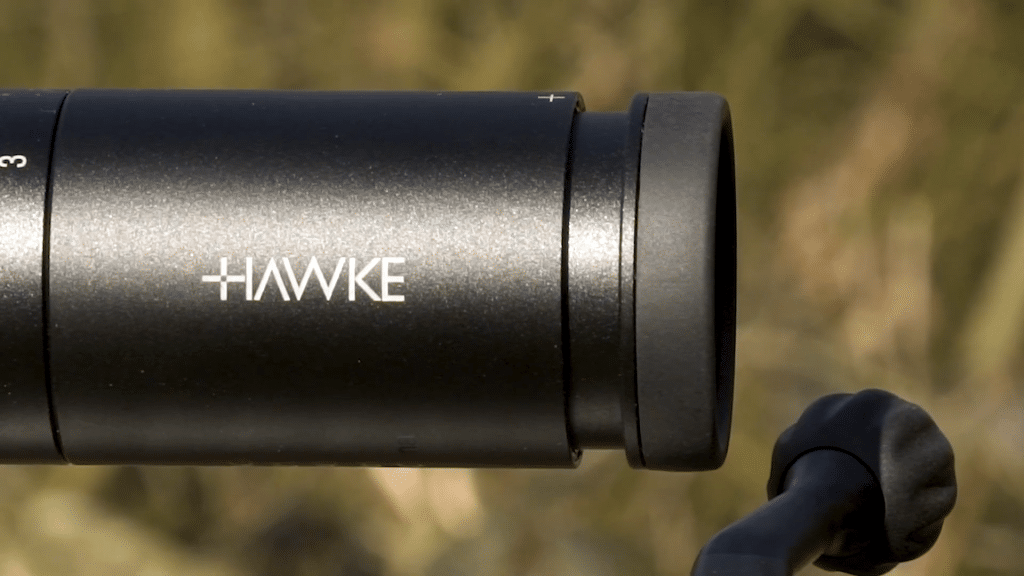
Eye Box & Eye Relief
Via-Hawke Optics
Here’s where the Hawke really earns its keep for older shooters. Eye relief sits at a generous 3.5 inches. You don’t have to jam your face against the stock to get a full picture. Less awkward positioning, less strain.
The eye box is forgiving. I moved my head around on purpose during testing, slightly high, slightly off-center, and still pulled a clean sight picture without hunting for it. That’s a big deal when your neck and back aren’t as loose as they once were.
Turret Performance

Via-Hawke Optics
The turrets are finger-adjustable with ¼ MOA clicks. I ran a 10-shot zero confirmation with Federal .308 Win and the scope held within 0.4 MOA. Respectable for a budget optic.
The clicks feel a little soft next to premium scopes. They work, but don’t expect the crisp snap of a Vortex Viper or Leupold. For a hunting scope that’s going to sit at one zero, that’s not a dealbreaker.
Just know the max internal adjustment is 40 MOA. If you’re shooting at extended distances or need significant elevation correction for your setup, that ceiling can start to pinch.
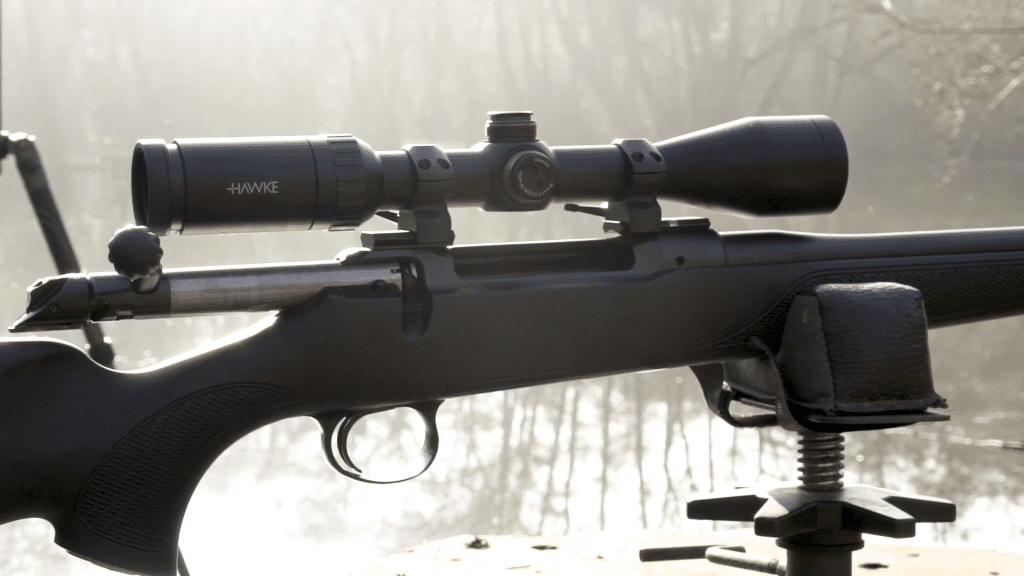
Durability
Via-Hawke Optics
I left this scope mounted on a .308 for a full weekend of field use. Temperature swings, dirt, and the kind of rough handling that comes with hiking in and out of a shooting area. It didn’t skip a beat.
The nitrogen purging keeps fogging at bay. I took it from a cold truck cab into warm humid air, and the lenses stayed clear. That matters when you’re older and already squinting harder than you’d like.
It’s not a safe queen. It’s built well enough for real-world use without being treated like glass.
Accessories
The stock ring mounts that come in most budget scope packages get the job done, but I’d upgrade for a more secure, repeatable setup. Especially if you ever need to pull and remount the scope.
- Hawke Vantage 1″ Ring Mounts (Medium or High): Designed to pair with this scope. Solid, matched rings that take the guesswork out of compatibility.
- Butler Creek Flip-Open Scope Covers (1″ objective/eyepiece fit): Protect those multi-coated lenses in the field. Snap them open fast when it counts without fumbling with loose caps.
- Wheeler Professional Reticle Leveling System: If your old eyes are going to trust a reticle, make sure it’s actually level. This tool takes the guesswork out of mounting.
By the Numbers
Optical Quality
4/5The glass is genuinely good for the price, with bright and clear center performance at both ends of the magnification range. Edge softness at 9x keeps it from a perfect score, but for practical hunting use, it more than holds its own.
Reticle & Illumination
4/5The illuminated center dot is a smart design choice for aging eyes in low-light situations. A wider range of usable brightness settings would have pushed this higher, but what’s here works reliably where it counts.
Eye Box & Eye Relief
5/5This is the standout feature for older shooters. The 3.5″ eye relief and forgiving eye box make it easy to get on target quickly without contorting into an uncomfortable position. Hard to beat at any price.
Turret Performance
3/5Functional and accurate enough for a hunting scope that stays zeroed. The soft click feel and modest 40 MOA adjustment range hold it back from a higher rating, especially for shooters who like to dial in the field.
Durability
4/5It handled a full weekend of real-world field use without issue. Nitrogen purging and solid construction give it credibility as a working hunting scope. Not bombproof, but dependably tough for the money.
Overall
4/5See how I test & rate in my reviews. Learn more >
Summary
The Hawke Vantage IR 3-9×40 is a smart pick for an older shooter after a budget optic that doesn’t fight back. The eye relief alone puts it ahead of plenty of scopes in its class. That 3.5 inches of forgiveness means more time on target and less time adjusting your head.
It’s cheap. No getting around it. But it doesn’t feel like a cheap scope when you’re looking through it. The glass is clear where it counts, the illuminated reticle pulls double duty in low light, and it held zero through a solid weekend without drama.
The turrets are the weak link. They work but lack the confident feel you’d want if you like to dial in the field. For a hunting scope that lives at one zero? You’ll probably never notice.
Hawke backs their products with a solid warranty, and their customer support has a decent reputation for being responsive. For what you’re paying, the coverage is more than fair. If you want a no-fuss, affordable scope that respects what older eyes bring to the table, the Vantage IR 3-9×40 deserves a serious look.
Best Scopes And Red Dots For Old Eyes Buyer’s Guide
Picking a scope gets more personal as your eyes change. What worked at 35 might drive you nuts at 55. Good news is the optics industry has quietly gotten really sharp at solving these exact problems. You just have to know what to ask for.
Eye Relief
This is the distance between your eye and the ocular lens where you still get a full, clear image. For older shooters, more is better. Look for at least 3.5 inches of eye relief, and pay attention to the eye box. That’s the range of positions where the image stays full and usable. A generous eye box means you don’t have to be perfectly placed every single time. That matters more than most people realize until they’ve spent a long session behind a punishing scope.
Exit Pupil
Your pupils don’t dilate as wide as they used to. That’s just biology. The exit pupil is the small circle of light that leaves the eyepiece and enters your eye. If it’s smaller than your dilated pupil, you’re losing light and brightness. Divide the objective lens diameter by the magnification to get the exit pupil size. At low magnification on a 56mm scope, you get a large exit pupil. That’s a meaningful edge in dim conditions.
Glass Quality and Light Transmission
Not all glass is equal. Higher-quality lenses with better coatings transmit more light and produce sharper, higher-contrast images. Older eyes are more sensitive to low contrast, so this isn’t a luxury. It’s function. The difference between a budget scope and a premium one shows up most at dawn, dusk, or on overcast days. If your shooting happens anywhere near those conditions, invest in the glass.
Reticle Type and Illumination
A fine crosshair that a 25-year-old finds elegant can be nearly invisible to someone over 60 with reduced contrast sensitivity. Look for a reticle with some thickness at the center, or better yet, one with an illumination option. You don’t need to run it bright. Even a subtle glow helps the reticle pop against a dark or busy background. This is one of the most underrated features for aging eyes, and it’s worth prioritizing.
Magnification Range
Higher magnification sounds appealing, but it amplifies movement and makes a stable sight picture harder to hold. For most older shooters, a variable in the 3-9x or 3-15x range covers nearly every realistic shooting scenario. The low end helps with fast acquisition. The high end gives you detail when you need it. Avoid going higher than you actually need. It works against you more often than it helps.
Parallax Adjustment
Parallax error is what makes the reticle appear to shift on the target when your eye moves slightly off-center. At longer distances, it becomes a real accuracy problem. Look for a scope with a side focus or adjustable objective that lets you set parallax for your specific distance. It removes a variable that older eyes, already working harder to focus, don’t need to fight.
Turret and Diopter Usability
The diopter adjustment, that ring near the eyepiece, lets you focus the reticle for your specific vision. Make sure it has a wide enough range to fit your eyesight, with or without glasses. Turrets should be tactile and easy to feel without looking away from the target. Small recessed turrets that need a coin or tool to adjust aren’t the end of the world, but finger-adjustable turrets with positive clicks make life easier when your hands aren’t as nimble as they used to be.
Frequently Asked Questions
What makes a scope good for older eyes?
The best scopes for older eyes prioritize generous eye relief, high light transmission, and a reticle that’s easy to see in low contrast. Older eyes don’t forgive tight eye boxes or dim glass. Illuminated reticles, large objectives, and wide exit pupils make a real difference in daily use.
What magnification range works best for older eyes?
A 3-9x or 3-15x variable gives you the most flexibility. Lower settings help you acquire targets faster, while the upper range adds detail when needed. Avoid fixed high-power scopes. They demand precise eye positioning and wear older eyes out faster.
Does eye relief matter more as you get older?
Yes, eye relief becomes more important with age. Older shooters often have less flexibility in their shooting position, which makes a forgiving eye box critical. A scope like the Zeiss Victory V8 2.8-20×56 offers long, consistent eye relief that lets you pull a full sight picture even when head placement isn’t perfect.
Can someone with astigmatism use a standard rifle scope?
Most people with astigmatism can use a traditional rifle scope without major issues. Unlike red dot sights, which project a dot that astigmatism distorts into a starburst or smear, a standard scope with an etched reticle stays sharp regardless. The Primary Arms SLx 3x MicroPrism is specifically worth considering. Its etched ACSS reticle stays crisp even for shooters with significant astigmatism.
Is a larger objective lens always better for aging eyes?
A larger objective helps, but it’s not the whole story. Bigger objectives like the 56mm on the Meopta Optika 6 3-18×56 RD let more light in, which helps low-light performance. But glass quality matters just as much. A well-made 44mm scope will outperform a poorly made 56mm every time. Focus on overall light transmission, not just lens size.
Do I need an illuminated reticle for hunting with older eyes?
An illuminated reticle isn’t required, but it makes a noticeable difference in low-light hunting. As contrast sensitivity drops with age, picking up a dark reticle against a shadowed treeline becomes genuinely hard. The Leupold VX-5HD 3-15×44 with FireDot addresses this directly. Even a subtle glow on the reticle center can speed up target acquisition noticeably when light is limited.
Conclusion
That’s my complete list of the best scopes for old eyes. Each one earns its spot for a specific reason. Just match your needs to the right pick and you’ll be in good shape. If I had to put one scope on my rifle today, it’d be the Zeiss Victory V8 2.8-20×56. Nothing else on this list comes close for aging eyes.
That said, which scope are you running right now? Or is there one you swear by that I didn’t include? Drop a comment below. I’d love to hear from you.


