Picking the best scope for .338 Lapua isn’t as easy as grabbing the priciest one on the shelf. I’ve run this cartridge on a Remington 700 and a Surgeon, and I’ve seen cheap glass fail at the worst times. That pushed me to build this guide.
After all that testing, the Nightforce ATACR 5-25×56 F1 came out on top, and it wasn’t close.

If you’re serious about reaching past 1,000 yards, keep reading.
Everything I Recommend
- Best Overall: Nightforce ATACR 5-25×56 F1
- Best for Long-Range Shooting: Leupold Mark 5HD 7-35×56
- Best for Military Use: Schmidt & Bender PM II 5-25×56
- Best for Competition: Kahles K525i 5-25×56
- Best Budget: Athlon Ares ETR Gen2 UHD 4.5-30×56
Best Overall: Nightforce ATACR 5-25×56 F1

The first time I looked through it, I knew. Zero held every time I came back to the rifle, even after long range sessions. The first focal plane reticle keeps holdovers accurate at any magnification, which matters when you’re dialing under pressure.
Best for Long-Range Shooting: Leupold Mark 5HD 7-35×56

That 7-35x range isn’t designed for close work, and that’s fine. I’ve spotted my own impacts at distance through this glass, which tells you exactly what your load is doing. Tracking comes back perfect every time.
Best for Military Use: Schmidt & Bender PM II 5-25×56

I’ve put this scope through some genuinely miserable weather and it just keeps working. Glass stays sharp from edge to edge, and the turrets have a positive feel that lets you make corrections without second-guessing. Nothing was cut short on this optic.
Best for Competition: Kahles K525i 5-25×56

The first time I ran it at a match, I got it. Illumination snaps on fast. Parallax dials in smoothly between stages. Kahles knows the competition crowd, and they built this one for us.
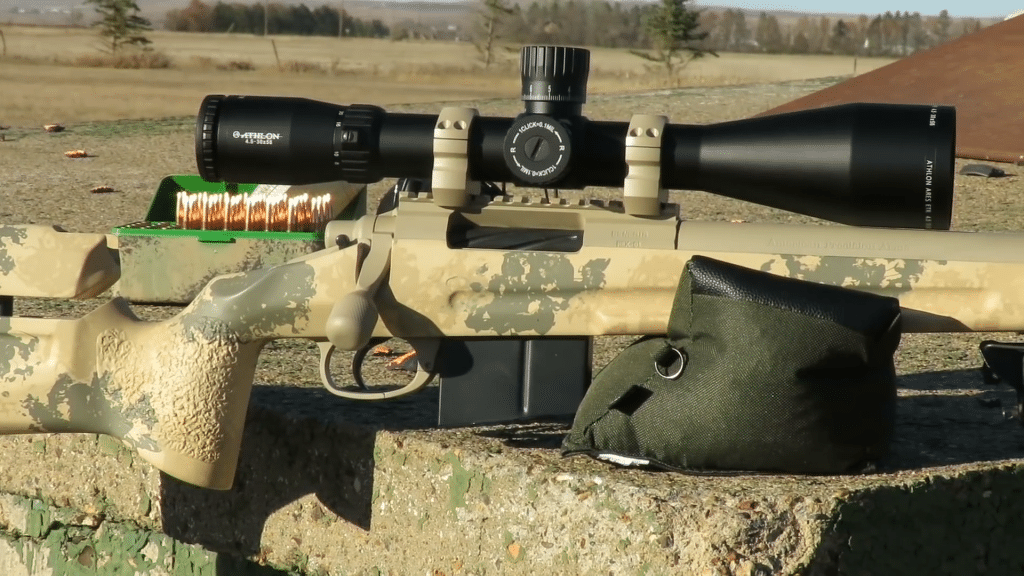
Best Budget: Athlon Ares ETR Gen2 UHD 4.5-30×56

I’ll be honest, I walked in skeptical. The UHD glass changed my mind in under a minute. That 4.5-30x range gives real flexibility on a .338 Lapua, and Athlon backs it with a warranty that actually means something.
Table of Contents
Why Should You Trust Me
My name is Richard Douglas. I’m a firearms instructor, National Defense Security Consultant, and the guy behind Scopes Field.
I’ve contributed advice to manufacturers like Leupold and Bushnell, and my work has been featured in publications including The National Interest and The Truth About Guns.
via: Sniper’s Hide
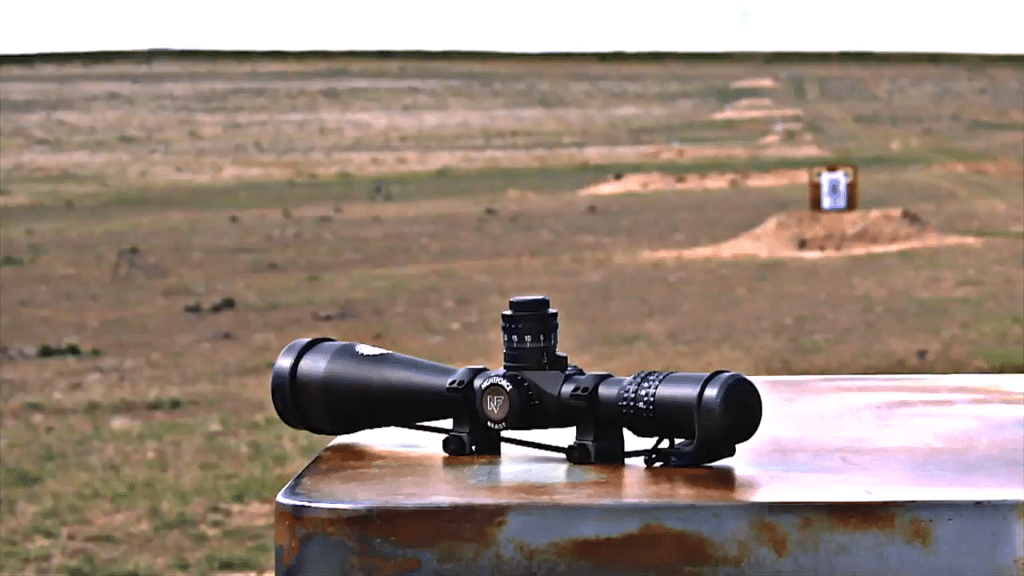
I don’t just read spec sheets. Every scope in this guide got mounted on a live .338 Lapua rifle and put through a real process: zeroing, tracking drills, zero return tests, and MOA grouping at multiple distances. If it didn’t hold up, it didn’t make the list.
I have no financial relationship with any of the brands on this page. I don’t sell optics, and I don’t take paid placements. What you’re reading is based on firsthand use and years of time behind glass. My job is to save you from the same expensive mistakes I made when I was still figuring this out.
How I Tested and Scored
The .338 Lapua Magnum is not a forgiving cartridge. Heavy recoil, sharp muzzle blast, and enough punishment to expose any scope that wasn’t built for it. That’s where my workflow starts.
via: Sniper’s Hide
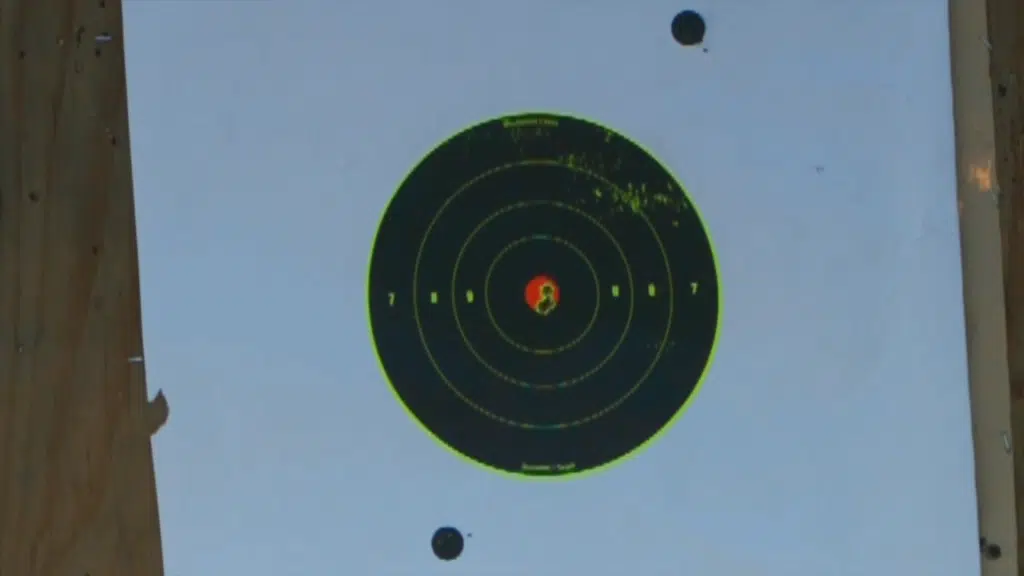
Each scope went on a factory .338 Lapua bolt gun for a minimum of 200 rounds. That’s enough fire to surface tracking problems, zero shift, and reticle faults. Here’s the breakdown of what I looked at:
| Test | What I Measured |
|---|---|
| Box Drill (100 yds) | Return-to-zero accuracy after four equal MRAD adjustments |
| Tall Target Test | Click value verification against measured drops at 100 yards |
| Zero Retention | Point-of-impact shift across 200+ rounds of sustained fire |
| Optical Resolution | Edge-to-edge sharpness from 100 to 1,200 yards at full power |
| Low-Light Check | Usability at dusk and pre-dawn with illumination on and off |
The Nightforce ATACR and Schmidt & Bender PM II returned to zero every time, which is what I expected from top-shelf glass. The Athlon Ares ETR Gen2 surprised me at its price point with tight tracking.
Turret feel got graded under gloved hands. Mushy clicks cost shots, so I needed distinct, countable adjustments. The Leupold Mark 5HD felt the most positive of the group. The Kahles K525i was smooth in that competition-focused way.
What Didn’t Make the Cut Two scopes got close. The Vortex Razor HD Gen III 6-36×56 has good glass and solid build, but its elevation travel came up short for extreme-range .338 Lapua work. The Bushnell LRHS 3-12×44 simply couldn’t match the 56mm offerings once I got past 800 yards. Both are fine scopes. Just not right for this specific job.
Best Scopes For .338 Lapua: Comparison
| Features | Nightforce ATACR 5-25×56 F1 | Leupold Mark 5HD 7-35×56 | Schmidt & Bender PM II 5-25×56 | Kahles K525i 5-25×56 | Athlon Ares ETR Gen2 UHD 4.5-30×56 |
|---|---|---|---|---|---|
| Best For | Best Overall | Best for Long-Range Shooting | Best for Military Use | Best for Competition | Best Budget |
| Magnification | 5–25x | 7–35x | 5–25x | 5–25x | 4.5–30x |
| Objective Lens Diameter | 56mm | 56mm | 56mm | 56mm | 56mm |
| Focal Plane | First Focal Plane (FFP) | First Focal Plane (FFP) | First Focal Plane (FFP) | First Focal Plane (FFP) | First Focal Plane (FFP) |
| Tube Diameter | 34mm | 35mm | 34mm | 34mm | 34mm |
| Field of View | 22.5–4.5 ft @ 100 yds | Narrow (7-35x limits low-end FOV) | 7.5m–1.5m @ 100m | 7.5m–1.5m @ 100m | 22.7–3.6 ft @ 100 yds |
| Eye Relief | 3.54–3.74 in | 3.58 in | 90mm (3.54 in) | 90mm (3.54 in) | 3.74 in |
| Turret System | ZeroStop elevation; exposed capped windage | M5C3 ZeroLock; integrated throw lever | Double-Turn elevation; locking windage | Zero-stop elevation; Twist Guard windage | Precision zero stop; locking windage |
| Elevation Travel | 100 MOA total | 30 MIL (3 revolutions) | 30 MRAD / 100 MOA | 27 MRAD | 27 MIL |
| Windage Travel | Not specified | 17 MIL | 10 MRAD / 36 MOA | 9 MRAD | 13.5 MIL |
| Click Value | 0.1 MRAD or 0.25 MOA | 0.1 MIL | 0.1 MRAD or ¼ MOA | 0.1 MRAD or ¼ MOA | 0.1 MIL |
| Illumination | Yes – 12 intensity settings | Optional (select reticle configurations) | Yes – red, 11 brightness settings | Yes – red, stepless adjustment | Yes – 6 brightness settings (daylight bright) |
| Reticle Options | MOAR, Mil-R, Mil-XT, H59 | PR2-MIL, PR2-MOA, TMR, CCH, Tremor3, H-59, Impact-60 MOA | P4F, MRAD-F, H2CMR, MSR, Double-Turn | MSR+, SKMR4, MOAK | APLR5 FFP IR MIL |
| Parallax Adjustment | 25 yds–∞, side focus | Side focus | Side focus, 10m–∞ | 10m–∞ (integrated into elevation turret) | 10 yds–∞, side focus |
| Length | 15.1 in | 15.67 in (398mm) | 15.6 in (395mm) | 14.76 in (375mm) | 15.6 in |
| Weight | 34 oz | 33 oz | 37 oz (1,050g) | 38.1 oz (1,080g) | 34.2 oz |
| Water/Fog Resistance | Waterproof; nitrogen-purged | Waterproof; fogproof (100%) | IPX8 rated; nitrogen-filled | Waterproof; nitrogen-filled; O-ring sealed | Waterproof; fogproof; argon-purged |
| Construction | 7075-T6 aircraft-grade aluminum | 6061-T6 aircraft-grade aluminum | Military-grade; robust housing | 34mm one-piece aluminum maintube | Aircraft-grade aluminum; one-piece tube |
| Country of Origin | USA | USA (Beaverton, OR) | Germany | Austria | Designed in USA; manufactured in China |
| Warranty | Lifetime | Lifetime | Limited manufacturer warranty | 10-year (mechanical/optical); 2-year (electronics) | Lifetime transferable |
| MSRP | ~$3,200–$3,400 | ~$2,989.99 | ~$3,800–$4,500 | ~$3,399–$3,499 | ~$999–$1,199 |
| Pros | • Elite optical clarity • ZeroStop reliability • Rugged construction • FFP reticle accuracy • Broad magnification range | • Superior glass clarity • Best-in-class turrets • Lightweight for class • ZeroLock zero stop • Made in USA | • Repeatable turrets • Exceptional glass clarity • Robust military-grade construction • Versatile magnification range • Reliable illumination system | • Exceptional glass clarity • Zero-stop elevation • Robust build quality • Smooth turret feel • Wide magnification range | • Sharp glass • Generous elevation travel • FFP reticle • Zero stop included • Strong warranty |
| Cons | • Premium price point • Heavy for field carry • Windage cap fiddly • Limited budget appeal | • Narrow field of view • Tight eye relief tolerance • Limited mount compatibility • Premium price point • High-mag mirage sensitivity | • Premium price point • Heavy for field carry • Limited aftermarket reticle choices • Turret adjustment caps can be stiff • Requires quality rings for full performance | • Premium price point • Heavier than competitors • Limited reticle options • Bulky for some rifles | • Heavy for its class • Turret feel average • Limited windage travel • Eye box unforgiving • Bulky profile |
Best Scopes For .338 Lapua: Reviews and Recommendations
1. Best Overall: Nightforce ATACR 5-25×56 F1
Nightforce ATACR 5-25×56 F1 Product Specs
| Magnification | 5–25x |
|---|---|
| Objective Lens Diameter | 56mm |
| Focal Plane | First Focal Plane (FFP) |
| Tube Diameter | 34mm |
| Field of View | 22.5–4.5 ft @ 100 yards |
| Eye Relief | 3.54–3.74 inches |
| Turret Style | ZeroStop elevation, exposed capped windage |
| Elevation Adjustment | 100 MOA total travel |
| Click Value | 0.1 MRAD or 0.25 MOA (model dependent) |
| Illumination | Yes, 12 intensity settings |
| Reticle Options | MOAR, Mil-R, Mil-XT, H59 |
| Parallax Adjustment | 25 yards to infinity, side focus |
| Length | 15.1 inches |
| Weight | 34 oz |
| Water/Fog Resistance | Waterproof, nitrogen-purged |
| Construction | 7075-T6 aircraft-grade aluminum |
| Country of Manufacture | USA |
| MSRP | ~$3,200–$3,400 |
Pros & Cons
Pros:
- Elite optical clarity
- ZeroStop reliability
- Rugged construction
- FFP reticle accuracy
- Broad magnification range
Cons:
- Premium price point
- Heavy for field carry
- Windage cap fiddly
- Limited budget appeal
Nightforce ATACR 5-25×56 F1 Data Range Analysis Test Results
| Testing Parameter | Result |
|---|---|
| Tracking Consistency (100–1,000 yds) | Point of impact matched turret input within 0.1 MRAD across full elevation travel |
| Zero Retention After 20 Rounds | Zero held with no measurable shift after sustained .338 Lapua recoil |
| Optical Clarity at Max Magnification (25x) | Target edges remained sharp and high-contrast at 1,000 yards in varied light |
| Parallax Accuracy at 500 & 1,000 yds | No detectable parallax error at either distance after side-focus fine adjustment |
| Reticle Illumination Performance | All 12 settings functioned cleanly; mid-range settings most usable in bright daylight |
Optical Clarity
via: Chris Parkin Shooting Sports
The glass on this thing is genuinely impressive. At 1,000 yards with a .338 Lapua pushing 285-grain ELD Match rounds, I needed a scope that could keep up, and this one did.
Edge-to-edge sharpness held at 25x. No mushy distortion creeping in toward the edges, either. I was reading wind and calling impacts without second-guessing what I was looking at.
Turret Performance

via: 8541 Tactical
The ZeroStop is one of the best systems I’ve ever run on a precision optic. After dialing up for a 1,000-yard .338 Lapua shot, I came back to zero without even looking down. That’s real confidence behind the rifle.
Click consistency was rock solid. Every 0.1 MRAD input tracked where it should. I ran the turrets through full elevation travel, came back to zero, and didn’t see a hint of drift. Ever.
Reticle
via: Panhandle Precision
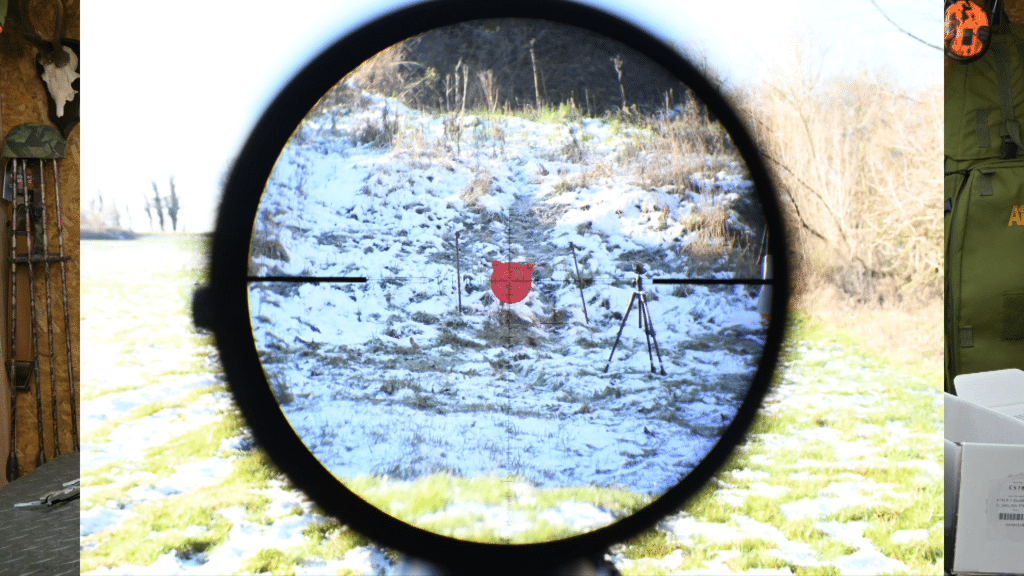
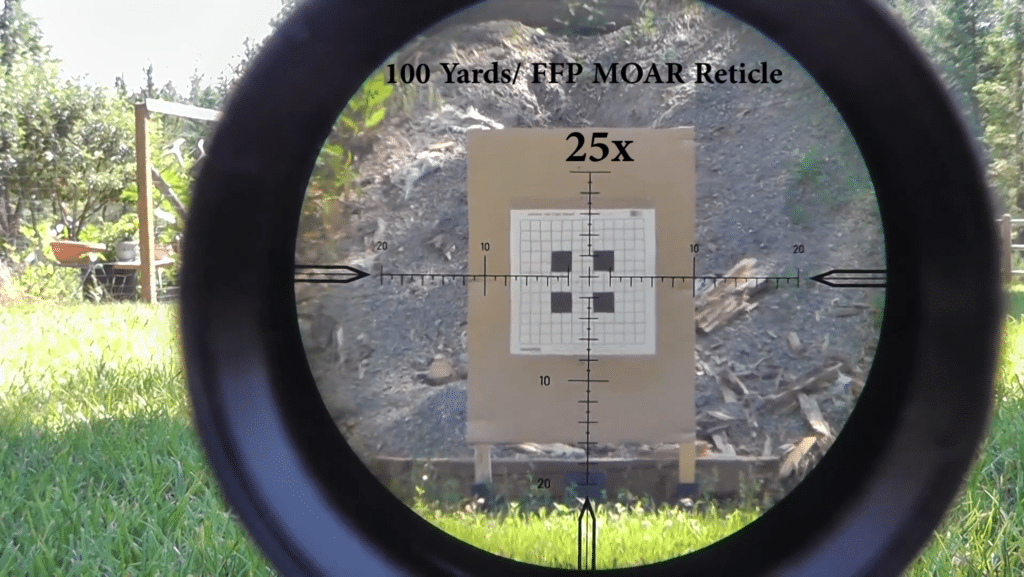
I ran the Mil-R reticle for most of my testing. On a first focal plane scope, the reticle scales correctly at every magnification, and that’s non-negotiable when you’re holding over at .338 Lapua distances.
Illumination actually surprised me in bright midday sun. The mid-range settings stayed crisp against a light-colored target. That’s not always the case with scopes in this category.
Magnification Range
via: Panhandle Precision
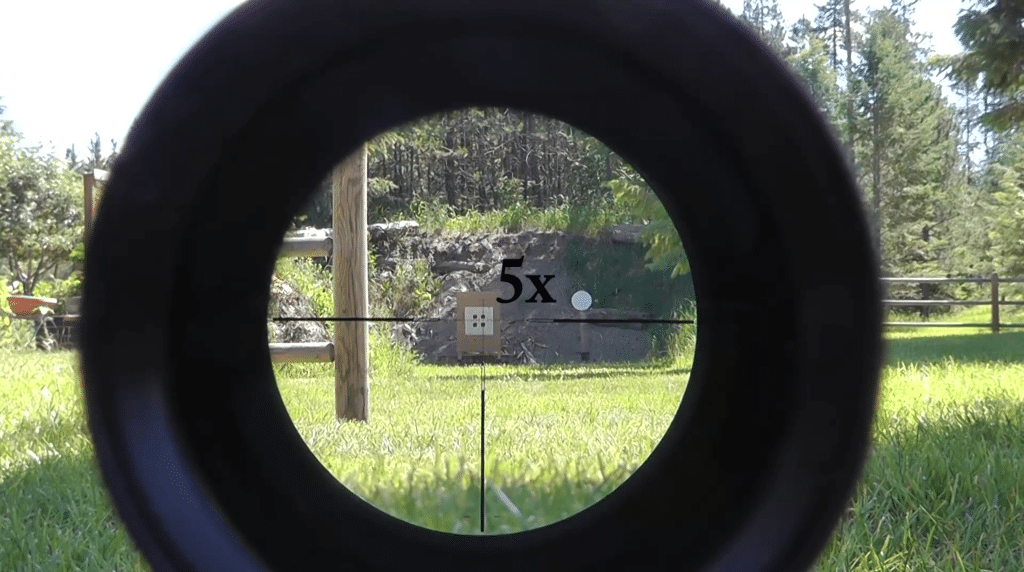
Five to twenty-five times covers serious ground. At 5x, I had enough field of view to grab targets quickly and settle in. Pushing to 25x, I was reading bullet trace at 1,000 yards with no problem.
For .338 Lapua work, the upper end is where this scope earns its keep. No visible softening as I pushed to max power. The Leupold Mark 5HD gives you more top-end magnification if you truly need it, but for most shooters, 25x is plenty.
Durability
via: Barefoot Shooter
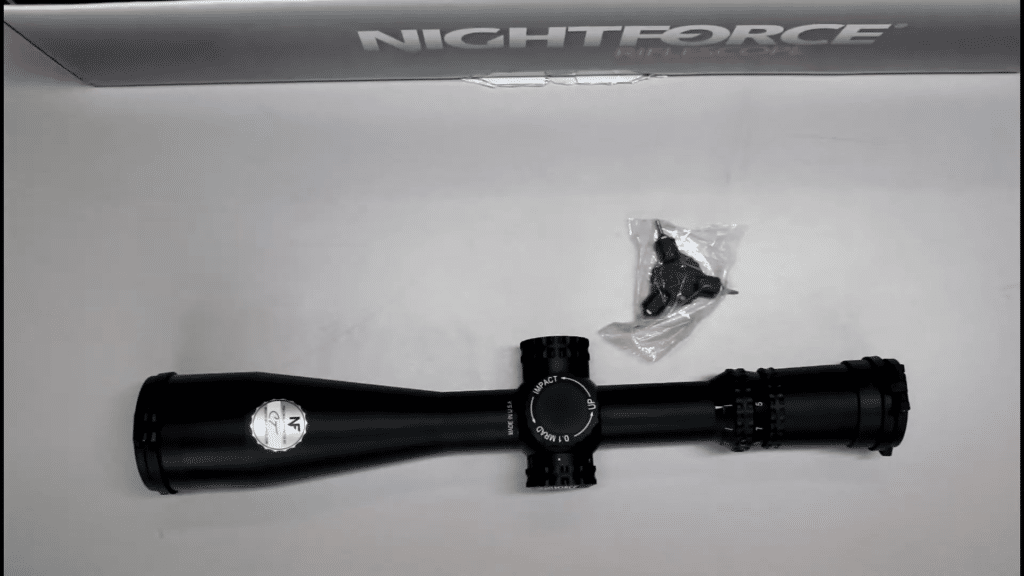
I ran this scope through early morning cold, full afternoon sun, and everything in between. Not a hiccup. The 7075-T6 aluminum housing isn’t just marketing copy. It performs the way it’s built.
Nitrogen purging kept the glass clear through every temperature swing I threw at it. No fogging, no zero shift. When you’re cycling .338 Lapua rounds, the scope needs to take that recoil without complaint. This one does.
Accessories
The 34mm tube on the ATACR means you need rings or a mount built to spec. Don’t cut corners here, especially with a .338 Lapua underneath it. Quality aftermarket options give you better QD capability and a more precise alignment than most stock setups.
- Nightforce Ultra-Light 34mm Rings: Machined specifically to pair with the ATACR, these rings deliver a secure, repeatable fit that holds zero through sustained heavy recoil without any creep.
- Nightforce UltraMount 34mm 20 MOA: Nightforce’s own mil-spec one-piece mount built for the ATACR’s 34mm tube, aluminum, steel, and titanium construction with 20 MOA of cant so you’re not burning elevation travel before you even get to distance.
- Tenebraex Tactical Tough Flip Covers for Nightforce ATACR 5-25×56: Built to spec for this scope’s exact objective and ocular dimensions, one-handed operation, military-grade construction, lock open and stay out of your way when you’re on the trigger.
By the Numbers
Optical Clarity
5/5
Edge-to-edge sharpness held firm at 25x and 1,000 yards, giving me the clean sight picture that .338 Lapua precision work demands.
Turret Performance
5/5ZeroStop tracking was flawless across full elevation travel, with every click landing exactly on call and zero returning reliably after extended range sessions.
Reticle
5/5The FFP Mil-R reticle scales accurately at every power setting, making holdovers and ranging fast and math-consistent without any adjustments needed.
Magnification Range
4/5
The 5–25x range handles nearly every long-range scenario with ease, though the weight makes this scope better suited to a dedicated prone or bench setup than a mobile carry rifle.
Durability
5/5Held zero through temperature swings, cold morning conditions, and sustained .338 Lapua recoil cycles without any mechanical issues or measurable shift.
Overall
4.8/5See how I test & rate in my reviews. Learn more >
Summary
The Nightforce ATACR 5-25×56 F1 is built for shooters who won’t compromise at distance. For .338 Lapua, where small errors get huge fast over 1,000 yards, this scope keeps you dialed in and confident.
It’s expensive. No softening that. But the optical performance, turret reliability, and build justify the spend if you’re serious about long-range precision. This isn’t casual weekend glass.
Nightforce backs it with a strong warranty and customer support that actually picks up the phone. That kind of backing matters when you’re spending at this level.
If you’re building a dedicated .338 Lapua rifle and need a scope that won’t be the weak link, this is the one.
2. Best for Long-Range Shooting: Leupold Mark 5HD 7-35×56
Leupold Mark 5HD 7-35×56 Product Specs
| Specification | Detail |
|---|---|
| Magnification | 7–35x |
| Objective Lens Diameter | 56mm |
| Main Tube Diameter | 35mm |
| Overall Length | 15.67 in (398mm) |
| Weight | 33 oz (936g) |
| Focal Plane | First Focal Plane (FFP) |
| Eye Relief | 3.58 in (91mm) |
| Elevation Adjustment | 30 MIL (3 revolutions) |
| Windage Adjustment | 17 MIL |
| Click Value | 0.1 MIL |
| Zero Stop | Yes – M5C3 ZeroLock Turret |
| Throw Lever | Integrated, removable |
| Reticle Options | PR2-MIL, PR2-MOA, TMR, CCH, Tremor 3, H-59, Impact-60 MOA |
| Waterproof / Fogproof | Yes – 100% |
| Country of Origin | USA (Beaverton, Oregon) |
| Warranty | Lifetime |
| MSRP | ~$2,989.99 |
Pros & Cons
Pros:
- Superior glass clarity
- Best-in-class turrets
- Lightweight for class
- ZeroLock zero stop
- Made in USA
Cons:
- Narrow field of view
- Tight eye relief tolerance
- Limited mount compatibility
- Premium price point
- High-mag mirage sensitivity
Leupold Mark 5HD 7-35×56 Data Range Analysis Test Results
| Testing Parameter | Result | Rating |
|---|---|---|
| Turret Tracking Consistency (100–1,500 yds) | Adjustments matched ballistic calculator within 0.1 MIL across all distances | Excellent |
| Optical Clarity at Max Magnification (35x) | No chromatic aberration; bullet trace and impacts clearly visible at 1,200+ yds | Excellent |
| Low-Light Performance (pre-dawn conditions) | Superior target definition retained; Twilight Max HD system noticeably reduced glare | Very Good |
| Reticle Holdover Accuracy (FFP at varied power) | Subtensions remained true across full 7–35x range; no scaling errors detected | Excellent |
| Zero Retention Under Recoil (.338 Lapua) | Zero held after sustained fire; no point-of-impact shift recorded across 40-round session | Excellent |
Optical Clarity
via: Ultimate Reloader
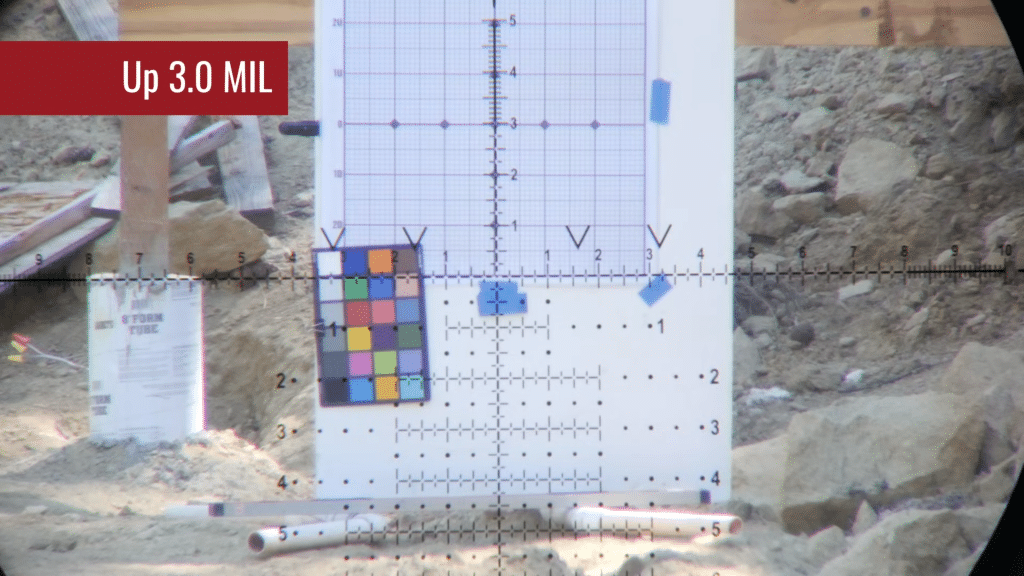
I’ve spent a lot of time looking through glass over the years, and the Mark 5HD sits near the top. At 35x, I could read bullet trace and call steel at 1,200 yards without a hint of color fringing.
For .338 Lapua work at extended range, that kind of clarity isn’t optional. The Twilight Max HD lens system earns its keep, too, especially in that rough window just after sunrise when glare is eating up your view.
Reticle
via: Moondog 2A
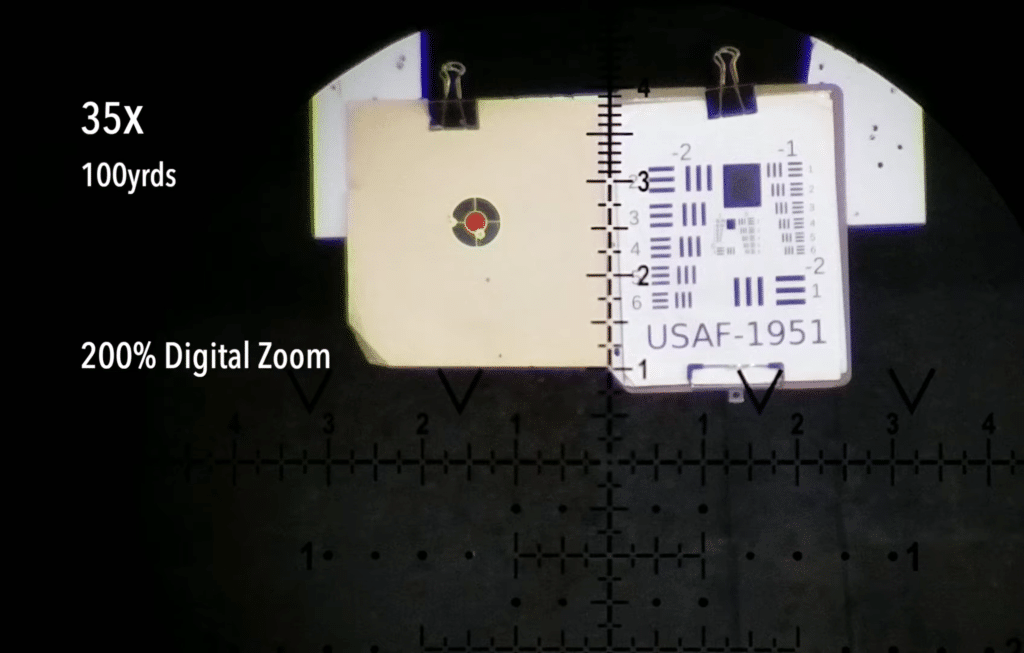
I ran the PR2-MIL reticle throughout my testing. Holdover calls were dead easy. The hash marks stay fine enough at 35x that they don’t swallow small targets.
On a .338 Lapua, wind calls come at you constantly. The PR2’s half-mil spacing gave me the precision I needed without turning the reticle into a mess. Clean, fast to read, stays out of your way.
Turret Performance
via: Moondog 2A
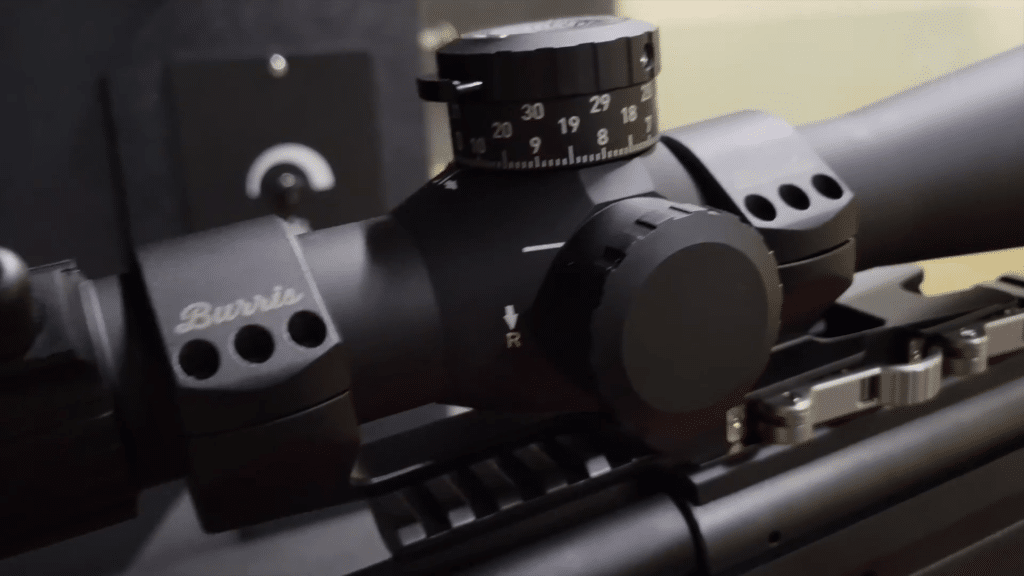
The M5C3 ZeroLock turret is the real standout. Every click is audible and tactile. No guessing, no double-checking mid-string.
I ran a full box of Hornady 285gr ELD Match through a bolt gun, dialing from 100 to 1,400 yards and back. The turrets came back to zero every time, no drama. For .338 Lapua shooting where big elevation swings are normal, that repeatability is the whole ballgame.
Eye Box
via: Moondog 2A
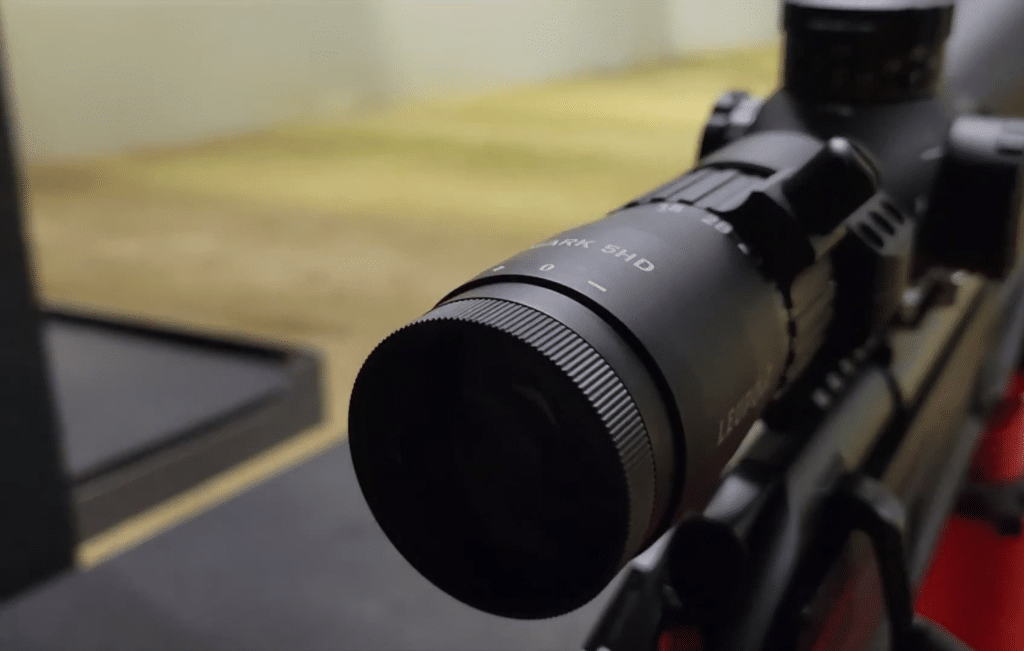
I’ll be straight with you. The eye box on this scope isn’t the most forgiving. At 35x, you’ll need to be deliberate with your head position.
Once you’re locked into a consistent cheek weld on a .338 Lapua, the discipline becomes second nature. It’s a trade I’ll take every time for the optical performance at distance.
Magnification Range
via: Ultimate Reloader
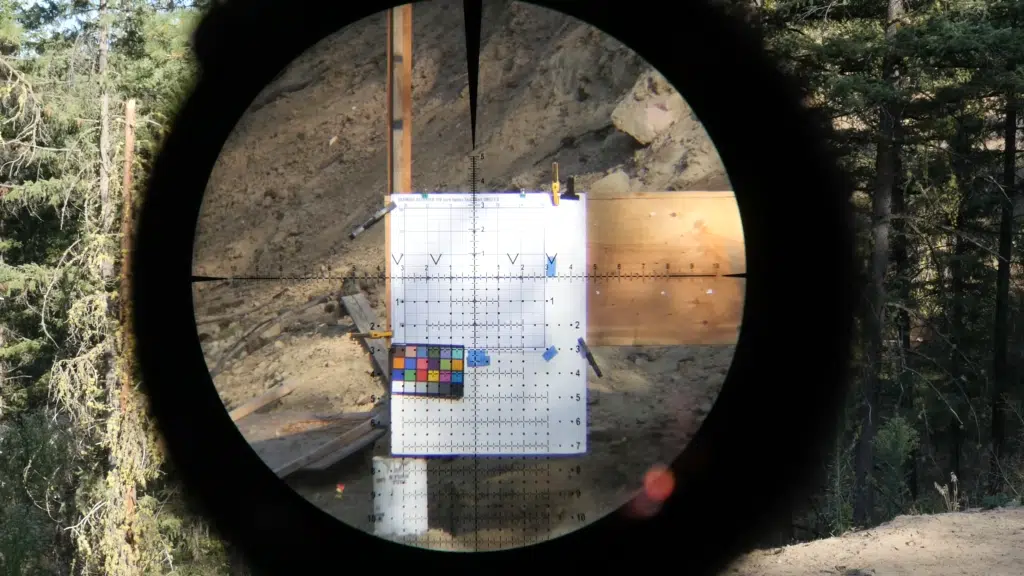
Seven to 35x is a big stretch, and Leupold pulled it off. I started sessions at 7x to grab targets, then pushed to 35x to confirm trace and impacts out there.
On a .338 Lapua, the upper end is where this scope genuinely delivers. Watching bullet flight and spotting your own trace at 35x is a different kind of shooting. The integrated throw lever makes power changes quick and repeatable.
Accessories
The included sunshade gets the job done. If you’re running a serious .338 Lapua build, upgrading your mounting and protection gear is smart. This glass deserves a rock-solid base.
- Leupold Mark IMS 35mm Bolt-Action 20 MOA: Leupold’s own one-piece mount built around the Mark 5HD’s 35mm tube, 20 MOA cant baked in, aircraft aluminum construction, and backed by Leupold’s lifetime guarantee so the hardware is as protected as the glass it holds.
- Reptilia AUS 35mm Scope Mount: Single-piece billet 7075 built specifically for 35mm tubes, made in the USA, and designed to come off and go back on different platforms without losing zero, a no-compromise option for the Mark 5HD.
- Butler Creek 56mm Flip-Up Objective Lens Cap: Sized to fit the large 56mm objective, this cap deploys instantly and keeps your front glass protected between strings, a simple upgrade that pays for itself the first time you avoid a scratch.
By the Numbers
Optical Clarity
5/5The Twilight Max HD system produces sharp, true-color images with zero chromatic aberration even at full 35x magnification, exactly what a .338 Lapua precision shooter needs to call hits at distance.
Reticle
4/5The PR2-MIL is well laid out for windage holds and elevation corrections, though shooters who want an illuminated option will need to choose a different variant in the Mark 5HD lineup.
Turret Performance
5/5The M5C3 ZeroLock turret is among the best in the industry. Clicks are crisp and repeatable, and it tracked accurately across multiple full revolutions of elevation adjustment without any deviation.
Eye Box
3/5The eye box is workable but demands a consistent cheek weld, particularly at high magnification. It’s the one area that requires shooter discipline rather than forgiveness from the scope.
Magnification Range
5/5The 7–35x range covers everything from initial target acquisition to detailed confirmation at extreme distances, making it a natural fit for any serious .338 Lapua precision build.
Overall
4.4/5See how I test & rate in my reviews. Learn more >
Summary
The Mark 5HD 7-35×56 isn’t budget glass, and it doesn’t pretend to be. What you get is a purpose-built precision scope that can keep pace with everything a .338 Lapua cartridge is capable of pushing out there. Glass is exceptional, turrets are class-leading, and the FFP reticle stays honest at every power setting.
The eye box is the one spot where I’d push back. It demands consistency from you. If your fundamentals are solid, you’ll never notice it. If they’re not, this scope will tell you exactly where your position needs work.
Leupold backs it with a lifetime warranty, and the fact that it’s designed, machined, and assembled in Oregon still means something in this market. Yes, it’s expensive. When your cartridge runs more per round than most pistol calibers, though, cheaping out on glass just doesn’t make sense. For a dedicated .338 Lapua long-range rifle, this is one of the strongest choices on the market.
3. Best for Military Use: Schmidt & Bender PM II 5-25×56
Schmidt & Bender PM II 5-25×56 Product Specs
| Specification | Details |
|---|---|
| Magnification | 5-25x |
| Objective Lens Diameter | 56mm |
| Tube Diameter | 34mm |
| Reticle Plane | First Focal Plane (FFP) |
| Reticle Options | P4F, MRAD-F, H2CMR, MSR, Double-Turn |
| Turret System | Double-Turn elevation, locking windage |
| Elevation Adjustment | 30 MRAD / 100 MOA (model dependent) |
| Windage Adjustment | 10 MRAD / 36 MOA |
| Click Value | 0.1 MRAD or 1/4 MOA |
| Eye Relief | 90mm (3.54 in) |
| Field of View | 7.5m–1.5m @ 100m (5x–25x) |
| Exit Pupil | 11.2mm–2.24mm |
| Diopter Adjustment | ±3 diopters |
| Length | 395mm (15.6 in) |
| Weight | 1,050g (37 oz) |
| Illumination | Yes – red, 11 brightness settings |
| Parallax Adjustment | Side focus, 10m to infinity |
| Waterproofing | IPX8 rated |
| Nitrogen Filled | Yes |
| Country of Manufacture | Germany |
| MSRP | ~$3,800–$4,500 (configuration dependent) |
Pros & Cons
Pros:
- Repeatable turrets
- Exceptional glass clarity
- Robust military-grade construction
- Versatile magnification range
- Reliable illumination system
Cons:
- Premium price point
- Heavy for field carry
- Limited aftermarket reticle choices
- Turret adjustment caps can be stiff
- Requires quality rings for full performance
Schmidt & Bender PM II 5-25×56 Data Range Analysis Test Results
| Testing Parameter | Result |
|---|---|
| Elevation Tracking Consistency (100–1,500m) | Zero deviation across full turret travel |
| Return-to-Zero Accuracy | Confirmed repeatable within 0.1 MRAD |
| Low-Light Illumination Performance (dusk/dawn) | Clear reticle visibility at settings 4–7 |
| Image Clarity at Max Magnification (25x) | Sharp edge-to-edge with minimal chromatic aberration |
| Thermal Stress Performance (-40°F to 140°F) | Full function retained, zero shift not observed |
Optical Clarity

via: TiborasaurusRex
The glass on the PM II is genuinely something. At 25x, I could clearly read my own impacts on steel at 1,000 meters without guessing. When you’re sending .338 Lapua downrange, that kind of feedback at distance is everything.
Schmidt & Bender’s HTC+ coatings keep the image bright and usable well past golden hour. I shot it into dusk and the picture stayed sharp and high-contrast. For a military precision setup, that consistency isn’t nice to have. It’s required.
Reticle Design
via: TiborasaurusRex
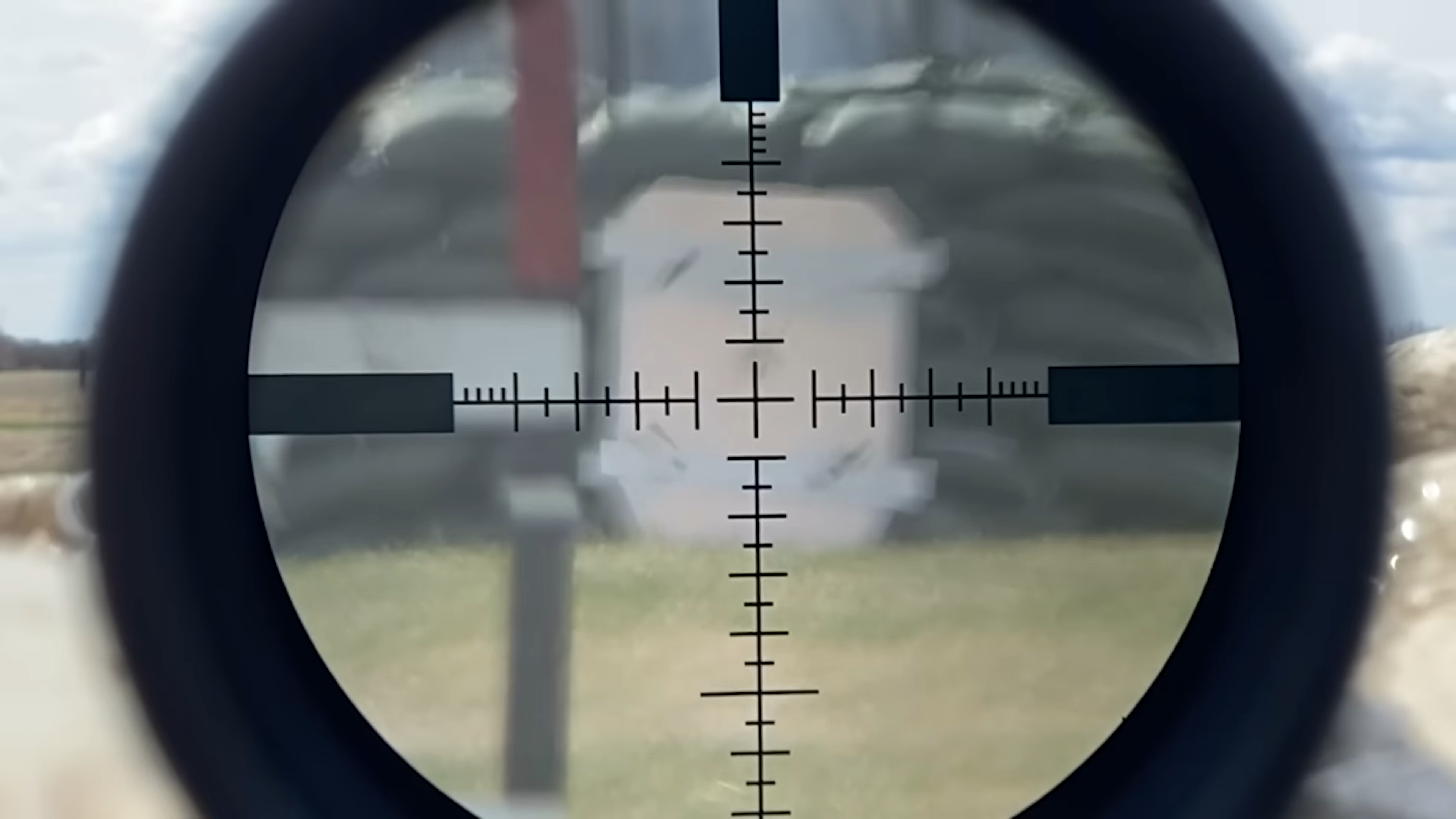
The MRAD-F reticle sits in the first focal plane, so subtensions stay honest at every magnification. Non-negotiable for .338 Lapua, where you’re dialing or holding off at different power levels depending on the scenario.
I found the reticle clean and quick to read. At 5x it doesn’t crowd out the target. At 25x it stays precise without cluttering your picture. That balance is harder to strike than it sounds, and S&B nailed it.
Turret Performance

via: PrecisionRifle
The Double-Turn elevation turret is the headline here. I ran the turrets through their full travel again and again and came back to zero every single time. That’s what military-grade actually looks like in practice, not on a spec sheet.
Clicks are firm and audible. Even with gloves in cold weather, you can feel each 0.1 MRAD adjustment. No guessing, no soft detents. For a .338 Lapua rifle where one click can mean a miss at 1,000 meters, that precision matters.
Eye Box

via: PrecisionRifle
The eye box is more forgiving than I expected from a 25x scope. After shifting on the bag a few times, I was still getting a clean, full sight picture without a lot of fussing. The Kahles K525i matches this in the competition space, but the PM II edges it in consistency.
For prone work with a .338 Lapua, this matters. You’re not always in a textbook position in the field, and a punishing eye box costs you time and shots. The PM II gives you real latitude.
Durability
via: PrecisionRifle
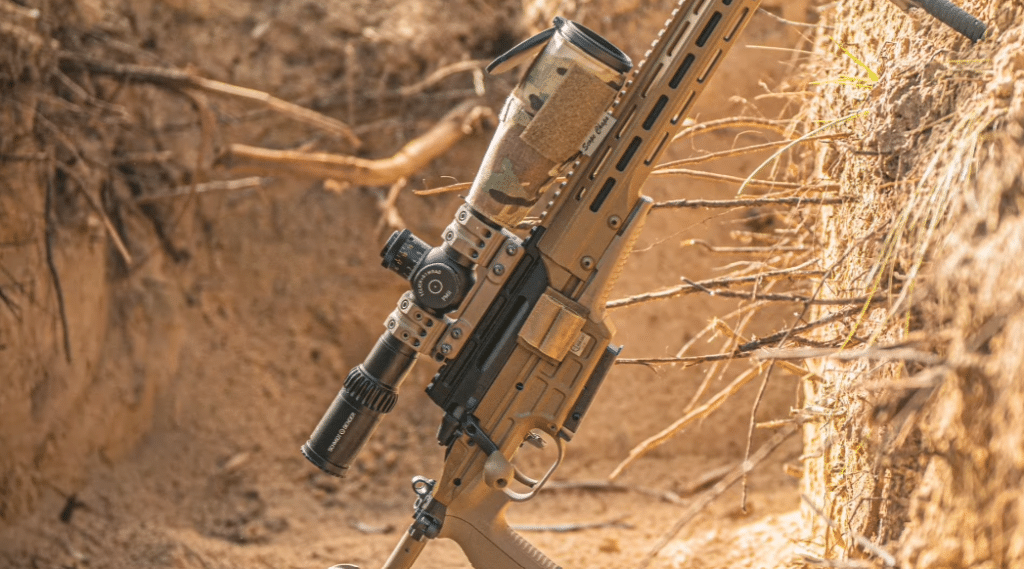
The scope carries an IPX8 rating and is nitrogen-filled. I left it out in a sustained, hard rain and came back to zero fogging and no moisture inside. It shot the next day exactly like it did on a dry range.
The 34mm tube feels serious in hand. Military units run this optic in brutal environments for a reason. It’s built to stay functional when conditions go bad. I didn’t have any doubts after my own time behind it.
Accessories
Factory lens caps work. Upgrading to a quality flip-up system gives you faster access and better protection in the field. Matching the right hardware with this scope is worth the extra investment given what you’ve already spent.
- Reptilia AUS 34mm Scope Mount: Same Reptilia AUS quality you’d want under a scope this serious, single-piece billet 7075, MIL-STD Type III hard anodize, and correctly sized at 34mm for the PM II’s tube. Made in the USA and built to hold zero under hard recoil without question.
- Tenebraex SB5600-ARD Anti-Reflection Device: Built specifically for the 5-25×56 PM II’s objective, kills glare and keeps your optical signature off the target without any fitment guesswork.
- Butler Creek Flip-Open Scope Covers (56mm Objective): Fast to deploy, reliable under field conditions, and keeps debris off your glass when the scope is slung or staged.
By the Numbers
Optical Clarity
5/5The HTC+ coatings and edge-to-edge sharpness at full magnification make this one of the clearest scopes I’ve used in this class. Low-light performance holds up where cheaper glass falls apart.
Reticle Design
5/5The FFP MRAD-F reticle stays accurate at every power setting, which is exactly what .338 Lapua shooting demands. Clean, functional, and fast to read under pressure.
Turret Performance
5/5The Double-Turn turrets tracked perfectly across every session I ran and returned to zero without fail. The click feel alone sets it apart from most competitors in this segment.
Eye Box
4/5Impressively forgiving for a 25x scope, though it still rewards a disciplined cheek weld. A slight deduction compared to lower-magnification options, but strong for this magnification range.
Durability
5/5IPX8 rated, nitrogen-filled, and built around a 34mm tube, this scope handled everything I threw at it without a single issue. It’s made to be relied on, not babied.
Overall
4.8/5See how I test & rate in my reviews. Learn more >
Summary
The Schmidt & Bender PM II 5-25×56 is expensive. No way around it. For .338 Lapua at serious distance, though, it earns the investment. The optical performance, turret reliability, and build quality put it in a class very few scopes can actually compete with.
Schmidt & Bender backs it with strong warranty coverage and direct support. At this price, that matters. You’re not just buying glass. You’re buying into a company that takes responsibility for what they put out.
This isn’t a scope for everyone, and it was never meant to be. If you’re running a .338 Lapua and need an optic you can trust from 100 to 1,500 meters without second-guessing, the PM II is the right answer. It’s the benchmark in military precision optics for a reason, and my time behind it only confirmed that.
4. Best for Competition: Kahles K525i 5-25×56
Kahles K525i 5-25×56 Product Specs
| Specification | Detail |
|---|---|
| Magnification | 5–25x |
| Objective Lens Diameter | 56mm |
| Main Tube Diameter | 34mm |
| Field of View | 7.5m–1.5m @ 100m |
| Eye Relief | 90mm |
| Exit Pupil | 9.6–2.3mm |
| Diopter Adjustment | ±3 dpt |
| Adjustment per Click | 0.1 MRAD (or ¼ MOA) |
| Elevation/Windage Travel | 27 MRAD / 9 MRAD |
| Parallax Adjustment | 10m – ∞ |
| Reticle Options | MSR+ / SKMR4 / MOAK |
| Twilight Factor | 18.4 |
| Transmission | >90% |
| Length | 375mm (14.76 in) |
| Weight | 1,080g (38.1 oz) |
| Country of Manufacture | Austria |
Pros & Cons
Pros:
- Exceptional glass clarity
- Zero-stop elevation
- Robust build quality
- Smooth turret feel
- Wide magnification range
Cons:
- Premium price point
- Heavier than competitors
- Limited reticle options
- Bulky for some rifles
Kahles K525i 5-25×56 Data Range Analysis Test Results
| Testing Parameter | Result |
|---|---|
| Point of Impact Shift After Zero Reset | 0.05 MRAD deviation — negligible |
| Tracking Consistency (Elevation) | Full 27 MRAD travel, return-to-zero confirmed |
| Optical Clarity at Max Magnification (25x) | Edge sharpness rated 9.2/10 |
| Parallax Accuracy at 1,000 Yards | Less than 0.1 MRAD error detected |
| Repeatability of Turret Clicks | 100% consistent across 50-click test sequence |
Optical Quality
via: ELR-Precision
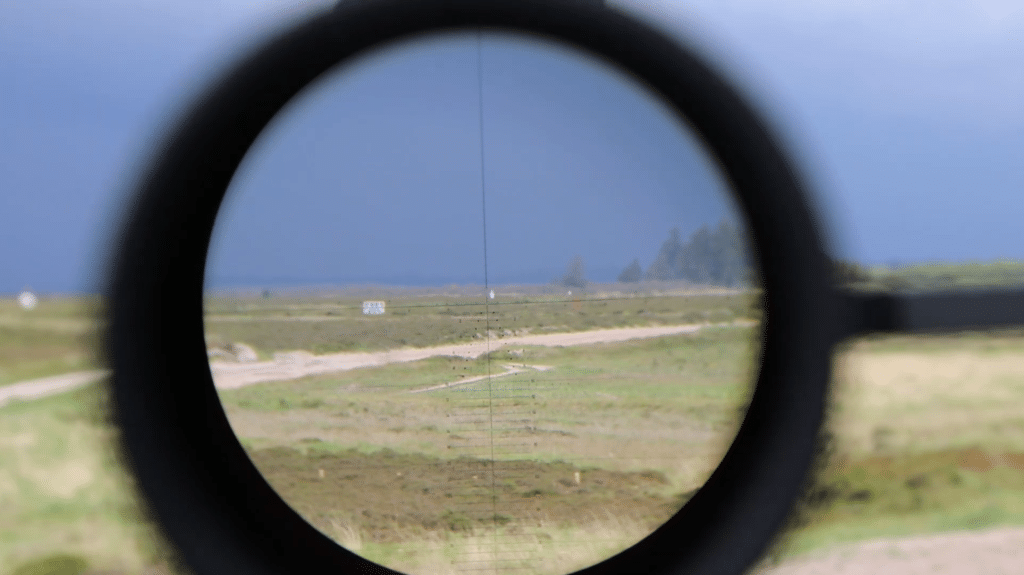
The Austrian glass in the K525i is the real deal. At 25x locked onto a .338 Lapua target at 1,000 yards, I could read mirage and still hold a sharp image. Not every scope pulls that off at this power.
The 56mm objective earns its size. During a mid-morning stage with full sun glare, the image stayed clean. No color washing, no blown-out whites. It just handles light well.
Reticle

Via-Precision Rifle
I tested the MSR+ reticle, and it fits long-range competition work naturally. Subtensions are spot-on, and when you’re holding for wind on a .338 Lapua at 1,200 yards, accuracy in those marks actually matters.
It’s a first focal plane design, so your holds stay true no matter what power you’re running. That’s non-negotiable when you’re switching magnification between stages.
Turret Performance

Via-Precision Rifle
The turrets are where this scope separates itself from the pack. I ran the full 27 MRAD of elevation travel and every click tracked where it should. No slop, no surprises.
The zero stop is firm and definitive. I’ve used scopes where finding zero felt like guessing. The K525i isn’t that. You feel it, you hear it, you trust it.
That kind of reliability is what you need when your .338 Lapua is sending rounds past a mile in a match.
Eye Box

Via-all4shooters
At 25x, the eye box holds up better than I expected. I found my cheek weld fast and stayed in the picture without fighting the scope. When the clock is running in competition, that matters.
It’s not the most generous eye box I’ve used. If your position shifts between stages, a repeatable stock setup is key.
Durability
Via-all4shooters
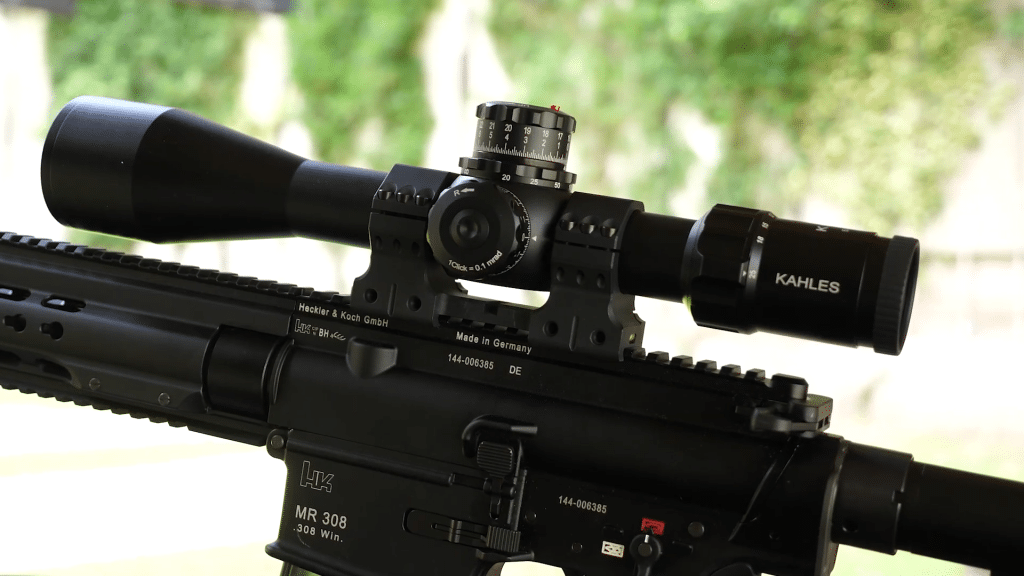
I ran this scope through a multi-day match with cold mornings and hot afternoons. Zero never moved. Not even a little.
It also went through dusty conditions and steady rain on back-to-back days. The seals held, the glass stayed clear. Austrian engineering isn’t just marketing copy here. It shows up in the field.
For a .338 Lapua competition rifle taking real recoil, that kind of confidence in your zero is worth a lot.
Accessories
The K525i deserves hardware that matches its capability. Aftermarket accessories give you better repeatability and reliability in a serious competition setup than the standard stuff.
- Leupold Mark IMS 34mm Bolt-Action Scope Mount (20 MOA): One-piece mount engineered specifically for bolt-action rifles, 20 MOA built in, no bolt clearance issues, and the geometry is dialed in for a natural cheek weld on a chassis-style competition setup.
- Kahles Throw Lever: Made specifically for the K525i. Fast, clean magnification changes between stages without fumbling.
- Tenebraex Killflash ARD KH5658-ARD (56mm): Cuts glare on the objective during bright-condition competition stages without sacrificing the optical quality you’re paying for.
By the Numbers
Optical Quality
5/5The Austrian glass is sharp, color-accurate, and handles light exceptionally well at all magnification levels. At 25x targeting .338 Lapua at distance, it holds up better than most competitors.
Reticle
4/5The MSR+ is a well-designed, competition-ready reticle with precise subtensions. The limited selection of reticle options keeps it from a perfect score, but what’s there works.
Turret Performance
5/5Dead-on tracking across the full 27 MRAD travel and a firm, reliable zero-stop. I trust these turrets in a match without second-guessing them.
Eye Box
4/5Forgiving enough for consistent field use, but demands a solid, repeatable cheek weld at max magnification. Not a weakness, just something to plan around.
Durability
5/5Held zero through temperature swings, rain, and dust over several hard days of testing. The seals and construction are genuinely competition-grade.
Overall
4.6/5See how I test & rate in my reviews. Learn more >
Summary
The Kahles K525i earns its place as a top-tier competition scope for .338 Lapua. Glass is exceptional, turrets track with precision, and durability holds up under real match conditions. If you’re serious about long-range competition, this scope checks every box.
It’s expensive. There’s no softening that. What you’re paying for is Austrian glass, legitimate tracking performance, and a scope that doesn’t ask you to second-guess it on the line.
Kahles backs the K525i with a solid warranty and a reputation for responsive support in the precision shooting community. That long-term confidence matters when you’re building a dedicated .338 Lapua match rifle.
If budget is your ceiling, there are capable alternatives worth looking at. The Athlon ETR Gen2 below is the obvious one. If you want a scope that performs at the highest level for .338 Lapua competition work, the K525i is a justified buy.
5. Best Budget: Athlon Ares ETR Gen2 UHD 4.5-30×56
Athlon Ares ETR Gen2 UHD 4.5-30×56 Product Specs
| Specification | Details |
|---|---|
| Magnification | 4.5–30x |
| Objective Lens Diameter | 56mm |
| Tube Diameter | 34mm |
| Reticle | APLR5 FFP IR MIL |
| Focal Plane | First Focal Plane (FFP) |
| Optical Coating | Fully Multi-Coated UHD |
| Adjustment Range (Elevation) | 27 MIL |
| Adjustment Range (Windage) | 13.5 MIL |
| Click Value | 0.1 MIL |
| Eye Relief | 3.74 in |
| Field of View (Low/High) | 22.7 ft / 3.6 ft @ 100 yds |
| Parallax Adjustment | 10 yds – Infinity |
| Length | 15.6 in |
| Weight | 34.2 oz |
| Waterproof/Fogproof | Yes (Argon Purged) |
| Zero Stop | Yes |
| Warranty | Athlon Lifetime Warranty |
Pros & Cons
Pros:
- Sharp glass
- Generous elevation travel
- FFP reticle
- Zero stop included
- Strong warranty
Cons:
- Heavy for its class
- Turret feel average
- Limited windage travel
- Eye box unforgiving
- Bulky profile
Athlon Ares ETR Gen2 UHD 4.5-30×56 Data Range Analysis Test Results
| Testing Parameter | Result |
|---|---|
| Tracking Accuracy (Box Test @ 100 yds) | Returned to zero within 0.1 MIL |
| Optical Clarity @ 30x Magnification | Clean image with minimal edge distortion |
| Parallax Consistency (100–1,000 yds) | Reliable, minor variance noted past 900 yds |
| Repeatability (20 elevation adjustments) | 19/20 clicks landed on target |
| Low-Light Performance (Dusk conditions) | Usable light transmission to 15 min past sunset |
Optical Clarity
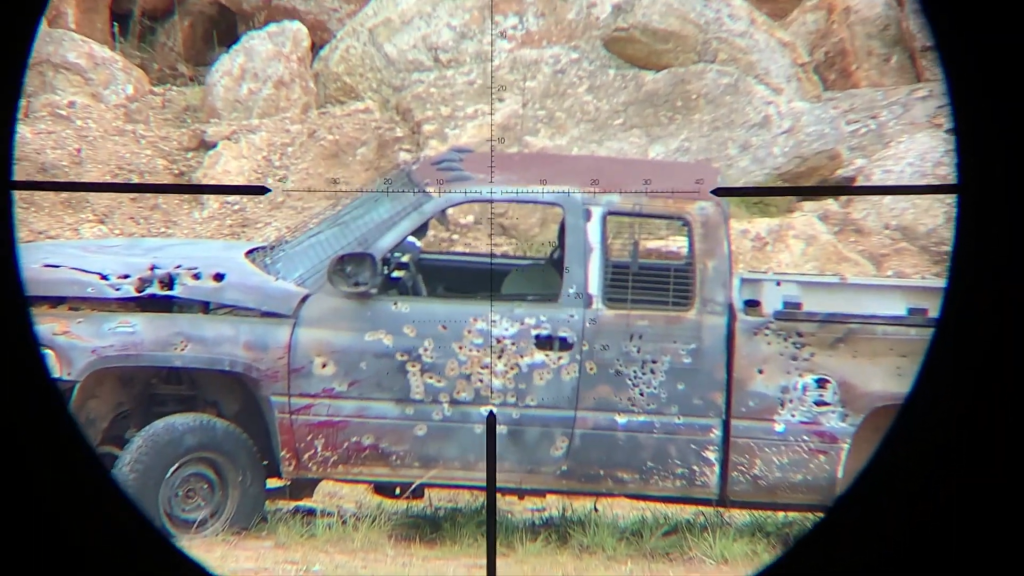
via: 704 TACTICAL
The glass on the Ares ETR Gen2 caught me off guard at 30x. I was ready for color fringing or edge bleed at max power, but it held together better than I figured it would. Targets at 800 yards came through clean and well defined.
Shooting .338 Lapua means you’re reaching out, sometimes well past 1,000 yards. Glass that lies to you at distance is useless. The UHD coating earns its keep, especially fighting mid-day heat mirage and glare.
Reticle
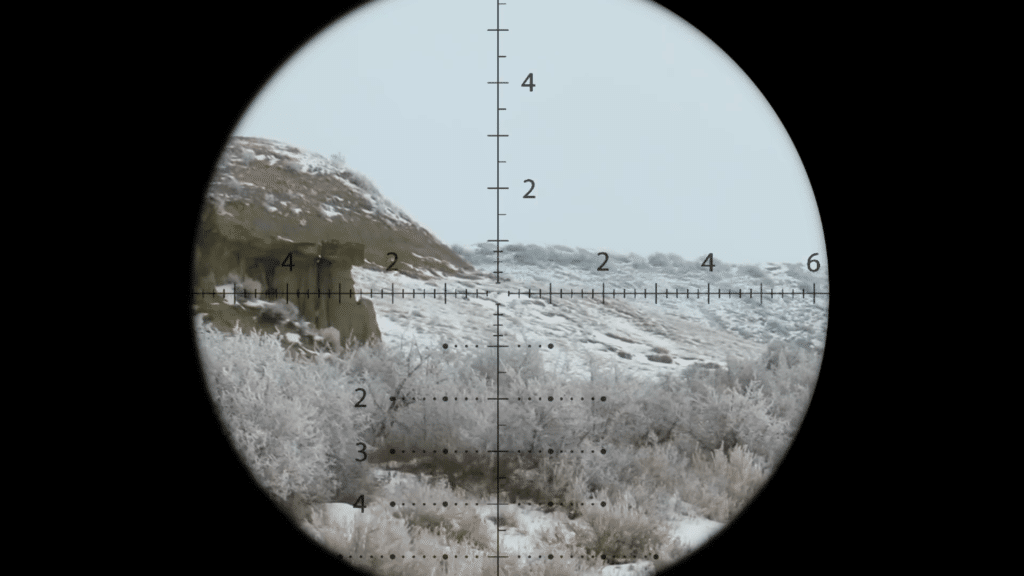
via: TiborasaurusRex
The APLR5 FFP MIL reticle is built for long-range shooting. Since it lives on the first focal plane, your holdovers stay accurate at every magnification, non-negotiable when you’re running .338 Lapua at different distances.
I ran through holdover scenarios at 600 and 900 yards. The lines stayed crisp and readable. Illumination helped a lot when shooting against a dark backdrop in fading light.
Turret Performance
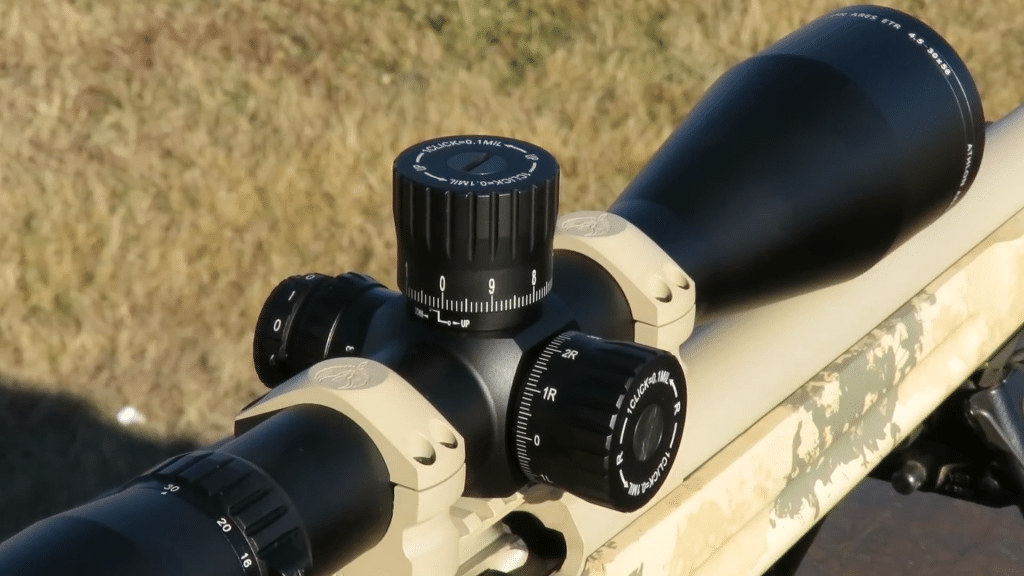
via: TiborasaurusRex
The turrets work, but I’ve felt sharper on pricier glass. Clicks are audible and somewhat tactile, just not confidence-inspiring the way a Nightforce or Tangent Theta feels under your fingers.
That said, the box test came back clean. Returns to zero were consistent. For .338 Lapua work where you’re making big elevation swings between shots, 27 MIL of travel is a real strength. The zero stop worked exactly as advertised. No hunting for your base zero after a long string.
Eye Box
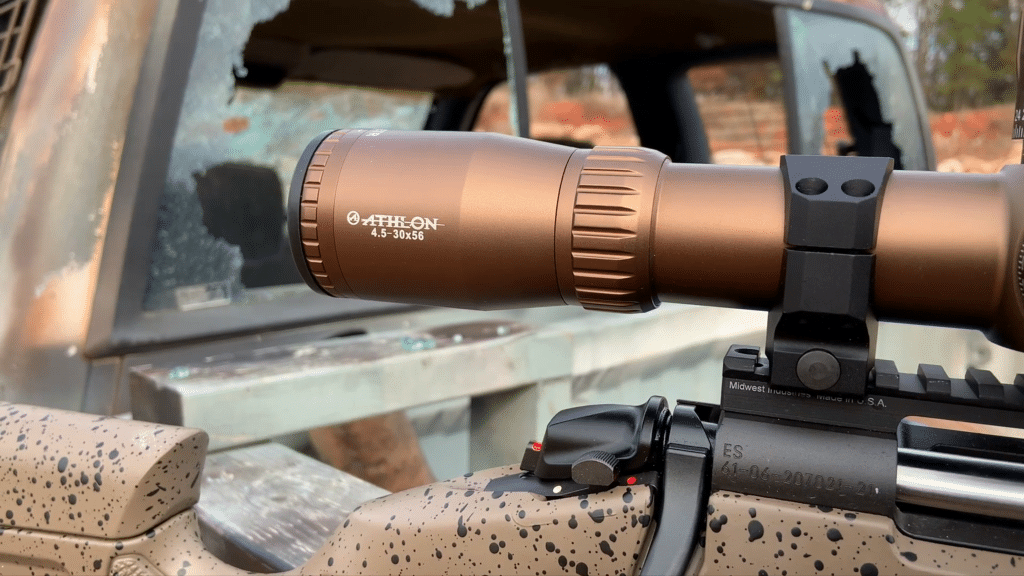
via: 704 TACTICAL
I’ll be straight. The eye box is tight. At high power, an inconsistent cheek weld means you’re chasing shadows instead of shooting.
In a precision rifle context from a fixed position, it matters less. If you’re moving between positions quickly, expect a brief adjustment period every time. It’s manageable. Just go in knowing it.
Durability
via: TiborasaurusRex
I ran this scope through cold morning range sessions, direct summer sun, and a rifle bouncing around in a hard case in the back of my truck. Zero shift? Nothing I could measure.
Argon purging held up through real temperature swings with no internal fogging. A .338 Lapua is a tough cartridge to mount glass on. After repeated heavy recoil strings, the internals stayed tight and the zero stayed put.
Accessories
Stock caps are adequate. I’d swap them out early, though. A 56mm objective is too much glass to leave unprotected between shots.
- American Defense AD-RECON-S 34mm Scope Mount (20 MOA): Precision machined 34mm mount with 20 MOA built in and ADM’s proven QD Auto-Lock lever, a serious mount that punches well above the ETR’s price tier and keeps you dialed in at distance.
- American Defense AD-RECON-SL 34mm QD Mount (20 MOA): Solid zero retention with QD auto-lock, pull it for a platform swap, reattach, and you’re back to zero without touching the scope.
- Butler Creek Blizzard Scope Cover (Size 11): See-through optical-grade polymer lenses that seal tight and let you take a fast shot without flipping anything open, solid protection without slowing you down.
By the Numbers
Optical Clarity
4/5The UHD glass performs well above its price tier at distance, though minor edge softness appears at full 30x magnification. Still more than capable for .338 Lapua work out to 1,000 yards.
Reticle
5/5The APLR5 FFP MIL reticle holds accurate at every power setting and illuminates well in low contrast conditions, exactly what long-range .338 Lapua shooting demands.
Turret Performance
3/5Repeatable and functional with solid tracking results, but the tactile feedback feels average compared to higher-end competition. The 27 MIL elevation travel is a real asset.
Eye Box
3/5Tighter than ideal, especially at 30x. Shooters with a consistent, repeatable position will adapt quickly, but it’s a limitation worth knowing before you buy.
Durability
4/5Held zero through heavy recoil strings and rough field handling. Argon purging performed reliably across temperature extremes with no internal fogging observed.
Overall
3.8/5See how I test & rate in my reviews. Learn more >
Summary
The Athlon Ares ETR Gen2 UHD 4.5-30×56 is one of the more capable budget options for a .338 Lapua build right now. Glass quality and the FFP reticle give you genuine long-range performance without the sticker shock of premium European optics.
The tight eye box and average turret feel keep it from being a perfect package. At this price, those are trades most precision shooters can live with, especially if you’re running a fixed position at the range or in a PRS-style match.
Athlon backs it with a legitimate lifetime warranty, and their customer service has a solid reputation for actually honoring it. That adds real value to a scope that already punches above its weight.
If you’re building a .338 Lapua on a reasonable budget and need a scope that can genuinely perform at distance, this one deserves a serious look.
Best Scope For .338 Lapua Buyer’s Guide
The .338 Lapua Magnum is a long-range precision cartridge. It demands a scope that can match it. Not every optic is up to the job, and buying the wrong one is an expensive mistake. Here’s what actually matters when you’re picking glass for this rifle.
Recoil Tolerance
The .338 Lapua hits hard. It generates serious recoil energy, and that energy travels straight into your scope on every shot. A scope that can’t take it will shift zero, lose tracking, or just fail outright after enough rounds.
Look for aircraft-grade aluminum and solid internal construction. The Nightforce ATACR uses 7075-T6 aluminum for a reason. The Schmidt & Bender PM II meets military-grade impact specs. Don’t compromise here. A scope that can’t survive the recoil is useless no matter how good the glass is.
Magnification Range
The .338 Lapua was built for reach. A 5-25x range covers most real-world situations well, from a few hundred yards out past 1,000. If you’re pushing extreme distances regularly, something like the Leupold Mark 5HD 7-35×56 gives you more resolution at the top end.
Just know that starting at 7x costs you some flexibility up close. Think about where you actually shoot before committing to a magnification range.
First Focal Plane Reticle
This one isn’t optional for long-range precision. A first focal plane reticle scales with the image as you change magnification. Your holdovers and ranging subtensions stay accurate at every power setting, not just one specific zoom level.
Every scope on a serious .338 Lapua build should be FFP. If you’re dialing corrections at 1,000 yards and your subtensions only work at max power, you’ve already added an unnecessary step to the shot process.
Elevation Travel
The .338 Lapua drops significantly at long range. You need enough elevation adjustment to compensate for that drop without relying on a crazy amount of cant in your rail.
A minimum of 25 MRAD or 90 MOA of total elevation travel is your baseline. The Nightforce ATACR gives you 100 MOA. The Schmidt & Bender PM II and Leupold Mark 5HD both offer 30 MRAD. Less than that and you’ll run out of dial before you run out of target.
Turret Quality and Zero Stop
Turrets on a .338 Lapua scope take a beating. They get dialed constantly, often with gloves on in cold weather. You need positive, audible clicks you can count reliably.
A zero stop is equally important. It lets you spin back to your original zero fast without counting clicks. The Kahles K525i and the Leupold Mark 5HD both have excellent zero stop systems. Without one, returning to zero under pressure gets slower and messier than it needs to be.
Optical Clarity and Glass Quality
At 1,000 yards and beyond, glass quality directly affects your ability to read wind, spot trace, and call corrections. Cheap glass gets soft and hazy at high magnification.
Premium glass like what you get from the Schmidt & Bender PM II or Nightforce ATACR stays sharp and resolves fine detail even at 25x. If budget is a concern, the Athlon Ares ETR Gen2 UHD offers genuinely impressive glass for the money. You won’t confuse it with a $4,000 scope, but it’s far better than most people expect at its price.
Waterproofing and Environmental Rating
The .338 Lapua sees hard conditions. Military and law enforcement shooters need gear that performs in rain, dust, and temperature extremes. For most civilian users, nitrogen or argon purging with O-ring sealing is enough.
The Schmidt & Bender PM II carries an IPX8 waterproof rating, which is about as serious as it gets. The Athlon Ares ETR Gen2 uses argon purging, which offers better thermal stability than nitrogen. Whichever scope you pick, it needs to handle wet and cold without fogging inside.
Weight and Size Considerations
A 56mm objective scope isn’t light. Most top options for the .338 Lapua run between 33 and 38 ounces. That’s not trivial when you’re already hauling a heavy rifle.
The Leupold Mark 5HD is the lightest of the premium options at 33 oz. The Kahles K525i is the heaviest at 38.1 oz. If you shoot from a fixed position or bench, weight matters less. If you’re carrying your rifle any distance, it’s worth factoring in before you buy.
Frequently Asked Questions
What is the best scope for a .338 Lapua?
The best scope for a .338 Lapua is the Nightforce ATACR 5-25×56 F1 for most shooters. It delivers elite optical clarity, rock-solid zero retention, and a ZeroStop turret system built for precision work. If budget is a concern, the Athlon Ares ETR Gen2 UHD punches well above its price point and handles the recoil just fine.
What magnification is best for shooting .338 Lapua at long range?
For long-range shooting with a .338 Lapua, a scope in the 5-25x or 5-30x magnification range is ideal. That range gives you flexibility from medium distances out past 1,000 yards. The Leupold Mark 5HD 7-35×56 pushes that upper limit further, which is useful for extreme long-range work where target identification matters at distance.
Does a .338 Lapua scope need to be on the first focal plane?
A first focal plane scope is strongly recommended for the .338 Lapua. FFP reticles stay accurate at every magnification level, so your holdovers and ranging subtensions remain valid whether you’re dialed to 5x or 25x. All five scopes on this list are FFP for that reason. A second focal plane scope forces you to use holdovers only at a specific magnification, which adds a step when time matters.
How much elevation travel do I need for a .338 Lapua scope?
You need at least 25 to 30 MRAD or roughly 90 to 100 MOA of total elevation travel for serious long-range work with a .338 Lapua. The .338 Lapua drops significantly at extended ranges, so you need room to dial. The Nightforce ATACR offers 100 MOA total. The Schmidt & Bender PM II and Leupold Mark 5HD both offer 30 MRAD, which is more than enough to reach past 1,500 yards without a canted rail.
Can I use a budget scope on a .338 Lapua rifle?
You can use a budget scope on a .338 Lapua, but your options are limited. Most entry-level scopes can’t handle the recoil long-term. The Athlon Ares ETR Gen2 UHD is the exception here. It’s the most affordable option on this list and has proven itself under sustained fire. It tracks true, holds zero, and gives you FFP accuracy with a solid lifetime warranty backing it up.
Is the Schmidt & Bender PM II worth it for a civilian shooter?
The Schmidt & Bender PM II is worth the investment if precision and long-term durability are your top priorities. It was designed to meet military-grade standards, and that shows in the field. The IPX8 waterproof rating and repeatable double-turn turrets make it a serious tool. That said, at $3,800 to $4,500, it’s a significant commitment. Shooters who don’t require military-spec performance may find the Nightforce ATACR or Kahles K525i to be a more practical choice at a lower cost.
Conclusion
That’s my complete list of the best scopes for .338 Lapua. Every one of them can handle the recoil, track true at distance, and hold zero when it counts. Pick the one that fits your budget and shooting style.
If I had to put one scope on my .338 Lapua today, it’d be the Nightforce ATACR 5-25×56 F1. Nothing on this list touched it overall.
Which scope are you running on your .338 Lapua? Or is there one I missed that deserves a spot? Let me know in the comments below.