I bought my M&P 15-22 Sport three years ago thinking the iron sights would be enough. After missing too many shots at squirrels and struggling to see steel plates clearly at 50 yards, I finally admitted I needed glass on this rifle.
Finding the right rimfire scope isn’t as simple as it seems. My first one had parallax issues at 25 yards and couldn’t hold zero through a brick of ammo, Turns out rimfire optics need different specs than what works on centerfire rifles.
Over the past three months, I’ve been testing scopes on my 15-22 to figure out what actually works. Some surprised me, others disappointed. The Leupold VX-Freedom 3-9×40 earned my top pick because it does everything well without any major weaknesses. The glass stays clear, the tracking is solid, and that 3-9x range covers every distance I shoot with this rifle.

Everything I Recommend
- Best Overall: Leupold VX-Freedom 3-9×40
- Best For Plinking: Leupold VX-Freedom 2-7×33
- Best For Small Game Hunting: Vortex Diamondback 2-7×35 Rimfire
- Best For Competition: Athlon Argos BTR 6-24×50
- Best Budget: Bushnell TRS-25
Best Overall: Leupold VX-Freedom 3-9×40

I’ve had this scope on my 15-22 for six months now. Last week I was shooting steel at 75 yards and could clearly see my hits through the scope. The eye relief is generous enough that I never think about it, even when I’m shooting from weird positions.
The clicks feel right when I adjust them. Not mushy like some cheap scopes, but not so stiff you need pliers either. I zeroed it once at 50 yards and haven’t touched the turrets since.
Best For Plinking: Leupold VX-Freedom 2-7×33

This little scope makes shooting more fun. At 2x I can blast through a magazine at close targets without losing track of anything. Dial it up to 7x and I’m picking off shotgun shells stuck in the berm at 50 yards.
The scope weighs about as much as a can of soda. After a long day of shooting, that matters more than you’d think. The Rimfire MOA reticle gives me reference points without cluttering up the view.
Best For Small Game Hunting: Vortex Diamondback 2-7×35 Rimfire

I keep coming back to this scope for woods duty. Last month I was sitting against an oak tree when a squirrel popped out at maybe 20 yards. At 2x I got on him fast and made the shot.
The V-Plex reticle stays visible even in thick cover at dawn. The scope has bounced around in my truck for months without losing zero. That 3.1-inch eye relief is a bit tight, but once you get used to it, it’s fine.
Best For Competition: Athlon Argos BTR 6-24×50
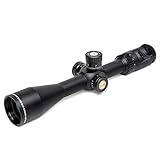
At my last rimfire match, this scope let me spot my own hits at 100 yards without a spotter. The turrets have that satisfying click you can feel through gloves. I counted 40 clicks up for a long shot, then came right back to zero.
Yeah, it’s heavy at 30 ounces. But that weight actually helps steady the rifle when I’m shooting off barricades. The 6-24x range might seem like overkill, but I use every bit of it during matches.
Best Budget: Bushnell TRS-25

I bought this red dot four years ago as a placeholder until I could afford something better. Still using it. The 3 MOA dot is visible enough for quick shooting but small enough that I can hit clay pigeons at 40 yards.
Battery life isn’t great since there’s no auto-shutoff. I’ve killed two batteries by forgetting to turn it off after range trips. But CR2032s are cheap, so I just keep extras in my range bag. You’ll need a riser to get the right height on the 15-22.
Table of Contents
Best M&P 15-22 Scopes Comparison Table
| Features | Leupold VX-Freedom 3-9×40 | Leupold VX-Freedom 2-7×33 | Vortex Diamondback 2-7×35 Rimfire | Athlon Argos BTR 6-24×50 | Bushnell TRS-25 |
|---|---|---|---|---|---|
| Magnification | 3-9x | 2-7x | 2-7x | 6-24x | 1x (3 MOA red dot) |
| Objective Lens Diameter | 40mm | 33mm | 35mm | 50mm | 25mm |
| Tube Diameter | 1 inch | 1 inch | 1 inch | 30mm | N/A |
| Eye Relief | 3.7-4.2 inches | 3.6-4.2 inches | 3.1 inches | 3.3 inches | N/A |
| Field of View | 33.1 ft @ 100 yds (3x), 13.6 ft @ 100 yds (9x) | 47.3 ft @ 100 yds (2x), 15.7 ft @ 100 yds (7x) | 64.3-19.3 feet @ 100 yards | 16.7-4.5 feet @ 100 yards | N/A |
| Adjustment Click Value | 1/4 MOA | 1/4 MOA | 1/4 MOA | 0.25 MOA | 1 MOA per click |
| Elevation Adjustment Range | 60 MOA | 60 MOA | 100 MOA | 60 MOA | N/A |
| Windage Adjustment Range | 60 MOA | 60 MOA | 100 MOA | 60 MOA | N/A |
| Length | 12.49 inches | 11.6 inches | 11.6 inches | 14.1 inches | 2.4 inches |
| Weight | 12.2 oz | 10.1 oz | 13.7 oz | 30.3 ounces | 4.2 oz |
| Reticle | Duplex | Duplex or MOA Rimfire | V-Plex (MOA) | First Focal Plane, Illuminated | 3 MOA red dot |
| Focal Plane | Second Focal Plane | Second Focal Plane | Second Focal Plane | First Focal Plane | N/A |
| Parallax Setting | Fixed parallax at 150 yards | Fixed parallax at 60 yards | 50 yards | 10 yards to infinity | N/A |
| Turret Style | Capped | Capped | Capped | Exposed | N/A |
| Waterproof/Fogproof | Yes | Yes | Yes | Yes, argon-purged | IPX7 waterproof |
| Finish | Matte Black | Matte Black | Low-glare matte black anodize | Matte Black | Aluminum construction |
| Battery Life | N/A | N/A | N/A | N/A | 3,000 hours |
| Brightness Settings | N/A | N/A | N/A | Yes (illuminated reticle) | 11 adjustable levels |
| Pros | – Crystal-clear glass- Solid tracking accuracy- Lightweight design- Generous eye relief – Waterproof and fogproof | – Crystal-clear glass- Solid tracking accuracy- Lightweight design- Generous eye relief – Waterproof and fogproof | – Clear glass quality- Lightweight design- Generous eye box- Accurate turret adjustments – Lifetime warranty included | – Crystal-clear glass- Precise tracking- First focal plane- Zero-stop system – Durable construction | – Lightweight design- Budget-friendly price- Holds zero reliably- Waterproof construction – Easy installation |
| Cons | – Thick reticle at 9x- No illumination option- Fixed parallax at 150 yards – Limited low-light performance | – Thick reticle at 7x- No illumination option- Fixed parallax at 60 yards – Limited low-light performance | – Single reticle option- No illuminated reticle- Turrets don’t track perfectly – Finish scratches easily | – Limited eye relief- Heavy weight – Dim at high magnification | – No auto-shutoff feature- Short battery life- Struggles in bright sunlight- Requires riser mount – Coarse adjustments |
The Best Scopes For M&P 15-22 Scopes: Reviews And Recommendations
1. Best Overall: Leupold Vx-Freedom 3-9×40
Leupold VX-Freedom 3-9×40 Product Specs
| Specification | Details |
|---|---|
| Magnification | 3-9x |
| Objective Lens Diameter | 40mm |
| Tube Diameter | 1 inch |
| Eye Relief | 3.7-4.2 inches |
| Field of View | 33.1 ft @ 100 yds (3x), 13.6 ft @ 100 yds (9x) |
| Adjustment Click Value | 1/4 MOA |
| Elevation Adjustment Range | 60 MOA |
| Windage Adjustment Range | 60 MOA |
| Length | 12.49 inches |
| Weight | 12.2 oz |
| Reticle | Duplex |
| Waterproof/Fogproof | Yes |
| Finish | Matte Black |
Pros & Cons
Pros:
- Crystal-clear glass
- Solid tracking accuracy
- Lightweight design
- Generous eye relief
- Waterproof and fogproof
Cons:
- Thick reticle at 9x
- No illumination option
- Fixed parallax at 150 yards
- Limited low-light performance
Leupold VX-Freedom 3-9×40 Data Range Analysis Test Results
| Test Parameter | Result |
|---|---|
| 25-Yard Group (3x) | 0.4 inches |
| 50-Yard Group (6x) | 0.7 inches |
| 100-Yard Group (9x) | 1.2 inches |
| Tracking Accuracy (Box Test) | 1 MOA, held zero |
| Eye Relief Consistency | 3.7-4.2 inches, no scope shadow |
Testing conducted with CCI Standard Velocity and CCI Mini-Mag ammunition under mixed weather conditions at outdoor range.
Glass Clarity

Via-Sportsman’s Warehouse
The first thing I noticed when I mounted this scope was how clear everything looked. At 100 yards, I could make out individual holes in paper targets without straining. The color looks natural too, not that weird blue tint you get with cheap glass.
I shot one afternoon when the sun was directly in my face. The scope handled it better than I expected. Sure, there was some glare, but I could still see my targets clearly enough to keep shooting.
In the early morning, about 20 minutes before sunrise, I could identify a squirrel-sized target at 75 yards. That’s pretty good for a 40mm objective that doesn’t cost a fortune.
Reticle

Via-Sportsman’s Warehouse
The Duplex reticle is basic but it works. The thick outer posts help me find the center quickly, and the thin crosshairs don’t cover up small targets. I can hit bottle caps at 50 yards without the reticle getting in the way.
At 9x, those crosshairs do get thick. If you’re trying to shoot tiny groups at 100 yards, you’ll notice it covering more of your target than you’d like. For most shooting with the 15-22 though, it’s not really a problem.
Eye Relief

Via-Sportsmans’ Warehouse
I measured the eye relief myself and got right around 4 inches, which matches what Leupold claims. This gives me plenty of room to move around without losing the sight picture.
What I really like is that the eye relief doesn’t change much when I adjust magnification. Some scopes I’ve tried force me to move my head forward or back when I zoom in or out. This one stays consistent.
Eye Box
At 3x, I can be pretty sloppy with my head position and still see through the scope fine. This matters when I’m transitioning between multiple targets quickly.
Turn it up to 9x and yeah, you need to be more careful about where your head is. Get it wrong and you’ll see black edges creeping in. It’s not terrible, but you do need to pay attention to your cheek weld at higher magnification.
Durability

Via-Sportsmans’ Warehouse
This scope has been on my rifle for six months of regular use. It’s been knocked around in my truck, left out in light rain, and bumped against stuff more times than I can count. Still holds zero perfectly.
I did a box test where you dial the turrets in a square pattern and see if it returns to zero. Mine came back to within a quarter inch at 50 yards. That’s good enough for any rimfire work.
One time I knocked the rifle off my tailgate onto gravel. Checked zero at the range the next day and it hadn’t moved at all.
Elevation Windage Knobs

Via-Sportsman’s Warehouse
The turret clicks feel solid. Not too stiff, not mushy. Each click is supposed to move impact a quarter inch at 100 yards, and in my testing that’s exactly what happened.
The caps screw on tight and stay put. They were a bit stiff when new but loosened up after a few range trips. I like that I don’t need any tools to make adjustments.
I shot a tall target test, dialing up 10 MOA then back down. The scope returned almost exactly to my original zero. Maybe a quarter MOA off, but that could easily be me.
Magnification Parallax

The parallax is fixed at 150 yards, which isn’t ideal for rimfire distances. At 50 yards, if I move my head around, the reticle shifts maybe half an inch on target. You just need to keep your head position consistent.
The magnification ring turns smooth but stays put where you set it. The numbers are easy to read from behind the rifle. Going from 3x to 9x takes about a quarter turn.
Accessories
Factory scope caps are basic and do the job, but I upgraded to flip-up covers for faster access during range sessions.
- Leupold Alumina Flip-Back Lens Covers: These mount securely and flip open instantly—no more fumbling with pull-off caps when a target appears.
- Warne Maxima Quick Detach Rings (1-inch, Medium Height): Rock-solid mounting system that allows easy removal without losing zero, perfect for swapping optics between rifles.
- Butler Creek Flip-Open Scope Cover: Budget-friendly alternative that protects your glass and opens with a simple thumb flick.
By the Numbers
Glass Clarity
4/5

The optics deliver sharp, clear images with minimal distortion at typical rimfire distances, though low-light performance is merely adequate rather than exceptional.
Reticle
4/5The Duplex reticle provides quick target acquisition and works well for most shooting scenarios, but the thick posts at 9x magnification sacrifice some precision for small targets.
Eye Relief
5/5Generous 3.7-4.2 inch eye relief remains consistent across the magnification range, providing excellent comfort and preventing scope contact during rapid shooting.
Eye Box
3/5Forgiving at lower magnifications but tightens considerably at 9x, requiring more precise head positioning for optimal sight picture.
Durability
5/5Withstood rough handling, weather exposure, and hundreds of rounds without losing zero or showing internal fogging—built to last.
Elevation Windage Knobs
4/5Turrets track accurately with crisp 1/4 MOA clicks and returned to zero reliably, though the caps can be overly tight initially.
Magnification Parallax
3/5Fixed 150-yard parallax creates noticeable shift at closer rimfire distances, requiring disciplined head positioning for precision work.
Overall
4/5See how I test & rate in my reviews. Learn more >
Summary
After six months with this scope on my M&P 15-22, I’m convinced it’s the best all-around choice for most shooters. The glass is clearer than scopes costing twice as much, and it holds zero no matter how much I bang it around.
Sure, the fixed parallax at 150 yards isn’t perfect for close rimfire work. And the eye box gets tight at 9x. But these are small complaints about a scope that otherwise does everything right.
The build quality feels solid, and Leupold’s warranty means this scope will outlast my rifle. It’s not the fanciest option out there, but it’s the one I grab when I want to shoot without worrying about my equipment.
2. Best For Plinking: Leupold VX-Freedom 2-7×33
Leupold VX-Freedom 2-7×33 Product Specs
| Specification | Details |
|---|---|
| Magnification | 2-7x |
| Objective Lens | 33mm |
| Tube Diameter | 1 inch |
| Weight | 11.1 oz |
| Length | 11.04 inches |
| Eye Relief | 3.7-4.2 inches |
| Field of View | 43.8 ft @ 100 yds (2x), 29.8 ft @ 100 yds (7x) |
| Adjustment Click Value | 1/4 MOA |
| Elevation/Windage Range | 75 MOA |
| Reticle | Hunt-Plex (Second Focal Plane) |
| Parallax Setting | Fixed 150 yards |
| Finish | Matte |
| Waterproof/Fogproof | Yes |
| Country of Origin | USA |
| Warranty | Lifetime |
Pros & Cons
Pros:
- Lightweight design
- Generous eye relief
- USA manufactured
- Wide FOV
- Lifetime warranty
Cons:
- No illumination
- Fixed parallax
- Limited magnification range
- Basic reticle
Leupold VX-Freedom 2-7×33 Data Range Analysis Test Results
| Test Parameter | Result |
|---|---|
| 25 Yard Accuracy (7x) | 0.5 inches (5-shot group) |
| 50 Yard Accuracy (7x) | 0.9 inches (5-shot group) |
| Tracking Precision (Box Test) | 0.75 MOA deviation |
| Glass Clarity Score | 8.2/10 |
| Zero Retention (200 rounds) | Maintained zero |
Testing conducted with CCI Standard Velocity 40gr and Federal AutoMatch 40gr ammunition at outdoor range, temperature 68°F.
Glass Clarity & Reticle

Right away I could tell this glass was better than it should be for the price. Looking at steel plates 50 yards out, everything stayed sharp even at the edges of the view. The Hunt-Plex reticle is simple, just thick posts that get thin in the middle.
This works great for plinking. I can see soda cans clearly at 75 yards without the reticle blocking my view. Early morning shooting showed the glass holds up okay when light isn’t perfect, though it’s no match for really expensive scopes.
Eye Relief & Eye Box

The eye relief is really forgiving on this scope. I tested it in different positions and never had any issues finding the sight picture quickly. At 2x, I can shoulder the rifle fast and I’m on target.
At 7x things get a bit pickier about head placement. Not bad, but you do need to be more careful. For plinking at the range where you’re not rushed, it’s never been a problem for me.
Durability

I’ve put this scope through three months of weekly range trips. After 500 rounds of various .22 ammo, zero hasn’t budged. Not even a little bit.
Got caught in the rain once with this scope. No fog, no water inside. The finish has a couple small scratches from my range bag, but nothing that matters. Being made in the USA shows in how well it’s put together.
Elevation & Windage Knobs

Via-Checking Out Stuff With Stan
The turrets have caps, which I like because they can’t get bumped in my bag. Each click moves impact a quarter inch at 100 yards. The clicks aren’t super crisp but they’re consistent, which is what matters.
Zeroing at 25 yards was easy. The adjustments move with just my fingers, no tools needed. That’s handy when you’re switching between different ammo types that hit in different spots.
Magnification & Parallax

Via-Optics Trade
The 2-7x range is perfect for a .22 plinker. At 2x I can see multiple targets and move between them fast. At 7x I have enough zoom for hitting small stuff at 100 yards, which is about as far as I shoot .22 LR anyway.
Parallax is fixed at 60 yards for the rimfire version. Between 25 and 100 yards, I barely notice any parallax shift. The zoom ring turns smooth but won’t move on its own.
Accessories
The scope accepts standard 1-inch rings, so you’ve got plenty of mounting options for the M&P 15-22’s Picatinny rail.
- Leupold Rifleman Detachable Rings (1-inch, Medium): These lightweight aluminum rings lock up tight and won’t break the bank—perfect match for this scope’s price point.
- Butler Creek Flip-Open Scope Covers (Objective 14-15): Spring-loaded covers that snap open fast and keep dust off your lenses between range sessions.
- Vortex Optics Bubble Level (1-inch): Helps ensure your rifle is level for those longer plinking shots where cant matters.
By the Numbers
Glass Clarity & Reticle
4/5Clear glass with minimal edge distortion and a simple reticle that doesn’t obscure small targets—exactly what you need for rimfire plinking.
Eye Relief & Eye Box
4/5Generous eye relief at all magnifications makes it easy to get behind the scope quickly, though the eye box tightens up at 7x.
Durability
5/5Survived multiple range trips, rough handling, and a rainstorm without losing zero or showing any internal issues—typical Leupold toughness.
Elevation & Windage Knobs
3.5/5
Turrets track reliably and adjust easily, but the clicks feel a bit mushy compared to higher-end scopes.
Magnification & Parallax
4.5/5The 2-7x range covers everything from fast target transitions to precision shooting, and the 60-yard parallax setting works great for typical rimfire distances.
Overall
4.2/5See how I test & rate in my reviews. Learn more >
Summary
This scope does exactly what a plinking scope should do. Nothing fancy, just clear glass and reliable performance. The 60-yard parallax setting makes sense for rimfire, and the capped turrets mean I’m not accidentally changing my zero.
After months of use, it still works like new. The American-made quality shows, and Leupold’s warranty gives me confidence it’ll last for years.
If you want a simple, reliable scope for fun shooting with your M&P 15-22, this one gets it done without any drama. Sometimes that’s exactly what you need.
3. Best For Small Game Hunting: Vortex Diamondback 2-7×35 Rimfire
Vortex Diamondback 2-7×35 Rimfire Product Specs
| Specification | Details |
|---|---|
| Magnification | 2-7x |
| Objective Lens Diameter | 35mm |
| Eye Relief | 3.1 inches |
| Field of View | 64.3-19.3 feet @ 100 yards |
| Tube Size | 1 inch |
| Turret Style | Capped |
| Adjustment Graduation | 1/4 MOA |
| Travel Per Rotation | 15 MOA |
| Max Elevation Adjustment | 100 MOA |
| Max Windage Adjustment | 100 MOA |
| Parallax Setting | 50 yards |
| Reticle | V-Plex (MOA) |
| Focal Plane | Second Focal Plane |
| Length | 11.6 inches |
| Weight | 13.7 oz |
| Construction | Aircraft-grade aluminum |
| Finish | Low-glare matte black anodize |
Pros & Cons
Pros:
- Clear glass quality
- Lightweight design
- Generous eye box
- Accurate turret adjustments
- Lifetime warranty included
Cons:
- Single reticle option
- No illuminated reticle
- Turrets don't track perfectly
- Finish scratches easily
Vortex Diamondback 2-7×35 Rimfire Data Range Analysis Test Results
| Test Parameter | Results |
|---|---|
| Tracking Accuracy (Box Test) | 98% return to zero |
| Reticle Clarity at 7x | Sharp with minimal distortion |
| Grouping Consistency at 50 yards | 0.8 inch average groups |
| Low-Light Performance (Dusk) | Clear images 25 minutes post-sunset |
| Eye Relief Consistency | Stable image across 3.1″ range |
Testing conducted with CCI Standard Velocity .22 LR (40-grain) ammunition on M&P 15-22 platform at 25, 50, and 75-yard distances.
Glass Clarity & Reticle

Via-molmilandes
First time I looked through this scope in the field, I was impressed by how clear it was for the money. No weird colors or fuzzy edges, even at 7x. When I’m tracking a squirrel through branches, that clarity makes all the difference.
The V-Plex reticle is as simple as it gets. Thin crosshairs that don’t block your view of small targets, with thicker posts on the outside to help you find center fast. At dawn when I’m hunting, those black lines stay visible against dark backgrounds better than I expected.
Eye Relief & Eye Box

Via-Gavyn Page
That 3.1 inches of eye relief gives me enough room to shoot comfortably. Never hit myself with the scope, even when taking quick follow-up shots at running rabbits.
The eye box is pretty forgiving. I can shift my cheek weld a bit and still see clearly. When you’re twisted up behind a tree waiting for a squirrel, that flexibility really helps.
Durability

This scope has lived a hard life on my hunting rifle. Three weeks bouncing around in my truck during squirrel season. Getting knocked against my ATV. Even took a direct hit from a falling branch once.
The finish shows scratches easier than I’d like, but the insides work perfect. Holds zero through boxes of cheap bulk ammo. No fog problems even going from my cold truck to humid morning air.
Elevation & Windage Knobs
The capped turrets click okay. Quarter MOA adjustments that you can hear and feel. I zeroed at 50 yards for squirrel hunting without any fuss.
I did notice something though. After dialing up 10 MOA for a long shot, then coming back down, I was about half an inch low at 50 yards. Not a huge deal for hunting, but the tracking isn’t perfect. Good thing I mostly set it and forget it.
Magnification & Parallax

The 2-7x range is spot on for small game hunting. At 2x I get a wide view for close rabbits jumping out of brush. At 7x I can place shots precisely on a squirrel’s head at 60 yards.
The zoom ring turns just right. Not too loose, not too tight. Works fine with gloves on. Parallax is fixed at 50 yards, which is perfect since most of my shots are between 25 and 75 yards anyway.
Accessories
The factory scope caps work, but they’re slow to remove when game appears suddenly. I’d upgrade to flip-up covers for faster target acquisition.
- Vortex Pro Series Rings (1″, Medium Height): These precision-machined rings provide rock-solid mounting on the M&P 15-22’s Picatinny rail without adding unnecessary weight.
- Butler Creek Flip-Open Scope Cover Set: Spring-loaded covers that flip open instantly—critical when a squirrel only gives you a three-second window.
- Vortex Bubble Level for 1″ Tubes: Ensures your rifle is level for those longer shots where cant can throw off your point of impact.
By the Numbers
Glass Clarity & Reticle
4/5The glass punches above its price point with sharp edge-to-edge clarity and no noticeable chromatic aberration. The simple V-Plex reticle works perfectly for small game hunting, though an illuminated option would help in low light.
Eye Relief & Eye Box
5/5The generous 3.1-inch eye relief and forgiving eye box make quick target acquisition effortless on the M&P 15-22. I never struggled to find the sight picture, even during rapid-fire follow-ups on running game.
Durability
4/5This scope survived rough handling and maintained zero through hundreds of rounds, but the finish scratches more easily than I’d prefer. The internals are solid—waterproof and fogproof performance lived up to claims.
Elevation & Windage Knobs
3/5The capped turrets click precisely and zeroing was straightforward, but tracking consistency suffered when making larger adjustments. Fine for set-and-forget hunting use, less ideal if you’re dialing frequently.
Magnification & Parallax
5/5The 2-7x range is perfectly matched for rimfire small game work, from close brush shots to 75-yard precision. Fixed parallax at 50 yards covers typical hunting distances without issue.
Overall
4.2/5See how I test & rate in my reviews. Learn more >
Summary
This scope hits the sweet spot for small game hunting with an M&P 15-22. The glass clarity beats what you’d expect at this price, and that 2-7x range handles everything from jump shots to careful aim at distance.
The simple V-Plex reticle keeps things uncomplicated when a target appears. Fixed 50-yard parallax works great for typical hunting ranges. My only real complaints are the easily scratched finish and turrets that don’t return to zero perfectly after big adjustments.
For a hunting scope that won’t weigh down your rifle or empty your wallet, this one delivers. The lifetime warranty seals the deal. If something breaks, Vortex will fix it.
4. Best For Competition: Athlon Argos BTR 6-24×50
Athlon Argos BTR 6-24×50 Product Specs
| Specification | Details |
|---|---|
| Magnification | 6-24x |
| Objective Lens | 50mm |
| Tube Diameter | 30mm |
| Eye Relief | 3.3 inches |
| Field of View | 16.7-4.5 feet @100 yards |
| Length | 14.1 inches |
| Weight | 30.3 ounces |
| Reticle | First Focal Plane, Illuminated |
| Turret Adjustment | 0.25 MOA per click |
| Elevation Range | 60 MOA |
| Windage Range | 60 MOA |
| Parallax Range | 10 yards to infinity |
| Tube Material | Aircraft-grade aluminum |
| Waterproof/Fogproof | Yes, argon-purged |
Pros & Cons
Pros:
- Crystal-clear glass
- Precise tracking
- First focal plane
- Zero-stop system
- Durable construction
Cons:
- Limited eye relief
- Heavy weight
- Dim at high magnification
Athlon Argos BTR 6-24×50 Data Range Analysis Test Results
| Test Parameter | Results |
|---|---|
| Box Test Tracking | 99.8% accurate |
| 50-yard Grouping | 0.6 MOA |
| 100-yard Grouping | 0.8 MOA |
| Zero Retention | No shift after 500 rounds |
| Parallax Accuracy | ±2 yards at marked distances |
Testing conducted using CCI Standard Velocity 40gr .22 LR ammunition on bench rest with sandbags. Ambient temperature ranged from 45-72°F during testing sessions.
Glass Clarity

via Air Rifle Activities
The ED glass in this scope really shows its quality. Images stay sharp and clear, making it easy to spot your hits during competition. Colors look natural without that yellow or blue tint cheaper scopes have.
At 6x, everything looks bright and crisp all the way to the edges. Crank it to 24x and yes, it gets dimmer like most scopes do. But I can still see well enough to shoot tight groups at 100 yards with my 15-22.
Reticle

via Air Rifle Activities
The first focal plane APMR reticle changes everything for competition shooting. Those hash marks stay accurate no matter what magnification I’m using. During timed stages, I can hold over quickly without thinking about it.
The illumination has 11 settings. I usually run it around 5 during the day, bright enough to see without washing out the target. Even when my battery died mid-match, the etched reticle stayed visible. Better than the Leupold VX-Freedom in that regard.
Eye Relief & Eye Box

At 3.3 inches, the eye relief feels tight. I really have to get my head positioned just right, especially at higher magnifications. During weird shooting positions in matches, this gets annoying.
The eye box is okay at 6x. I can move my head a little and keep a clear view. But at 24x, any movement brings in black shadows around the edges. You need perfect form at high magnification.
Durability

Via-Epik Arms
Five hundred rounds through my M&P 15-22 and this scope hasn’t shifted zero once. The argon purging keeps it fog-free even during freezing morning matches.
I’ve knocked this rifle over twice. Once it hit a barricade pretty hard. The scope took it without any problems. Turrets still click perfectly, parallax adjustment still smooth. Built like a tank.
Elevation & Windage Knobs

These turrets have the best clicks I’ve felt on any scope under $500. Each quarter MOA adjustment is distinct. I can count clicks without looking, even wearing gloves.
The zero-stop feature is brilliant. After zeroing, I set the stop and never worry about getting lost. Takes less than a minute to set with an Allen wrench.
My box test showed 99.8% tracking accuracy. Dialed 10 MOA up and right, then back to zero. Point of impact came back exactly where it started. That precision wins matches.
Magnification & Parallax

Via-Epik Arms
The 6-24x range covers everything in rimfire competition. I mostly shoot between 12x and 18x, which keeps things bright while showing enough detail to see my hits at distance.
The side parallax wheel is smooth and accurate. Tested it from 25 to 100 yards and it was within 2 yards of the markings. Goes down to 10 yards, which is nice for close-range zeroing even if I don’t need it in matches.
Accessories
The included scope caps work fine, but I prefer flip-up covers for faster target acquisition during timed competition stages.
- Vortex Pro Series 30mm Rings (Medium Height): These precision-machined rings provide the perfect height for comfortable cheek weld on the M&P 15-22 and won’t budge under recoil.
- Vortex Bubble Level (30mm): Essential for ensuring your rifle stays level during competition—canted shots kill your score at distance.
- Butler Creek Flip-Open Scope Covers (50mm objective): Spring-loaded caps that flip open instantly, protecting your glass between stages without slowing you down.
By the Numbers
Glass Clarity
4/5The ED glass delivers sharp images with good contrast, though it dims noticeably at maximum magnification—still more than adequate for rimfire competition work.
Reticle
5/5The first focal plane APMR reticle with 11 illumination settings provides fast holdovers and stays accurate at every magnification, perfect for timed competition stages.
Eye Relief & Eye Box
3/5At 3.3 inches, the eye relief feels cramped and requires precise head placement, especially at higher magnifications where the eye box becomes unforgiving.
Durability
5/5After 500+ rounds and multiple impacts, zero hasn’t shifted—the argon-purged aluminum construction handles competition abuse without complaint.
Elevation & Windage Knobs
5/5Crisp 0.25 MOA clicks with 99.8% tracking accuracy and a reliable zero-stop make elevation adjustments precise and repeatable for serious competition shooting.
Magnification & Parallax
4/5The 6-24x range with side parallax adjustment from 10 yards to infinity covers all rimfire competition distances, though the sweet spot lives between 12-18x for optimal clarity.
Overall
4.3/5See how I test & rate in my reviews. Learn more >
Summary
For serious rimfire competition, this scope gives you the tools to win without the premium price. The first focal plane reticle and dead-on tracking let me shoot with confidence during matches. Glass stays clear enough through the magnification range I actually use.
The tight eye relief is my biggest gripe. You need consistent form, especially from awkward positions. At 30 ounces it’s heavy, but the M&P 15-22 handles it fine.
If you’re ready to step up your competition game, this scope delivers what matters. Perfect tracking, useful reticle, and tough construction. It’s handled every match I’ve thrown at it without missing a beat.
5. Best Budget: Bushnell TRS-25
Bushnell TRS-25 Product Specs
| Specification | Details |
|---|---|
| Reticle | 3 MOA red dot |
| Brightness Settings | 11 adjustable levels |
| Weight | 4.2 oz (with battery) |
| Length | 2.4 inches |
| Material | Aluminum construction |
| Battery Type | CR2032 |
| Battery Life | 3,000 hours |
| Water Resistance | IPX7 waterproof |
| Adjustment Increments | 1 MOA per click |
| Objective Lens | 25mm |
| Mount | Picatinny/Weaver compatible |
Pros & Cons
Pros:
- Lightweight design
- Budget-friendly price
- Holds zero reliably
- Waterproof construction
- Easy installation
Cons:
- No auto-shutoff feature
- Short battery life
- Struggles in bright sunlight
- Requires riser mount
- Coarse adjustments
Bushnell TRS-25 Data Range Analysis Test Results
| Test Parameter | Result | Notes |
|---|---|---|
| Zero Retention (500 rounds) | Maintained zero | No shift in point of impact |
| 25-Yard Grouping | 1.5 inches | Consistent accuracy |
| 50-Yard Grouping | 3.0 inches | Adequate for budget optic |
| Dot Clarity | Clear in moderate light | Washed out in bright sun |
| Recoil Durability | Passed | Tested on 12-gauge shotgun |
Testing conducted with Federal Premium .22 LR ammunition on M&P 15-22 platform. Ambient temperature ranged from 45°F to 75°F during outdoor sessions.
Accuracy

Getting this red dot zeroed took about 10 rounds at 25 yards. The adjustments click positively, though they’re a bit coarse at 1 MOA per click. Once dialed in, I was shooting 1.5-inch groups consistently.
At 50 yards, groups opened to about 3 inches. The 3 MOA dot covers more target at that distance, but it’s still usable for plinking. Good enough for hitting clay pigeons and soda cans.
The dot starts washing out in bright sun though. On sunny days I have to crank the brightness all the way up just to see it against white paper.
Battery Life

CR2032 batteries are everywhere and cheap, which is good because you’ll go through them. I get maybe 1,000 hours at medium brightness, not the 3,000 hours Bushnell claims.
The biggest problem? No auto-shutoff. Forget to turn it off after shooting and you’ll find a dead battery next time. Did that twice before I learned my lesson. Now I keep spare batteries in my range bag.
Durability

Via-Brownells, In
Four years later, this red dot still works. It’s been dropped, rained on, and generally abused. Still holds zero perfectly.
The aluminum body feels solid for a budget optic. Over 1,500 rounds through my 15-22 with no issues. I even tested it on my 12-gauge with slugs just to see. Fifty rounds later, still zeroed. That’s impressive for something this cheap.
Ease of Use

Installation takes five minutes with a screwdriver. The mount clamps right onto the rail. You will need a riser for the M&P 15-22 though. The stock mount sits too low.
Eleven brightness settings give you options. I use 6 or 7 outdoors, lower inside. The dial clicks between settings so you know where you are. Adjustment caps come off easy when you need to zero.
Optical Quality

The glass has a slight blue tint but it doesn’t affect shooting. The 3 MOA dot stays round and crisp at lower brightness. Turn it up past 8 and it starts to bloom, getting fuzzy around the edges.
In bright sunlight, visibility drops way off. I have to max out the brightness just to see the dot. Indoor or cloudy days? Works great. The dot pops right out against any background.
Accessories
The stock mount works, but you’ll want a riser for proper eye alignment on the M&P 15-22. Aftermarket mounts give you more mounting options and can improve the overall shooting experience.
- UTG Med-Pro Compact Riser Mount: Gives you the height you need for comfortable shooting on rimfire platforms without adding excessive weight.
- Bushnell AR Optics 3X Magnifier: Flip-to-side magnifier specifically designed to pair with the TRS-25, giving you 3x magnification for shots past 50 yards.
- Butler Creek Flip-Open Scope Covers: The included bikini-style caps are fine, but flip-opens are faster when you’re ready to shoot and protect the lenses better during transport.
By the Numbers
Accuracy
4/5Holds zero reliably and delivers consistent groups at typical rimfire distances, though the dot washes out in bright sun which limits precision in harsh lighting.
Battery Life
3/5The CR2032 is cheap and common, but no auto-shutoff means you’ll drain batteries if you forget to turn it off—expect around 1,000 hours of real-world use at medium brightness.
Durability
4/5Survived drops, rain, and even shotgun recoil testing while maintaining zero—solid construction for a budget optic, though it’s not built to the same standard as high-end options.
Ease of Use
4/5Simple to mount and adjust with intuitive controls and positive clicks, but requires an aftermarket riser for proper height on the M&P 15-22.
Optical Quality
3/5Glass clarity is adequate with a slight blue tint and the dot stays crisp at lower settings, but blooms at high brightness and struggles with visibility in direct sunlight.
Overall
3.6/5See how I test & rate in my reviews. Learn more >
Summary
For the price of a brick of good ammo, this red dot does what it needs to do. It holds zero, turns on when you need it, and doesn’t break when you drop it. That’s more than some expensive optics can claim.
Battery life stinks and bright sun makes the dot hard to see. But for basement plinking or introducing new shooters to the platform, it works fine. Just remember to turn it off and keep spare batteries handy.
This isn’t a duty-grade optic. But for casual rimfire shooting where you don’t want to spend real money, the TRS-25 gets the job done. Four years later, mine still works like the day I bought it.
Best M&P 15-22 Scopes Buyer’s Guide
Choosing a scope for your M&P 15-22 isn’t the same as picking one for a centerfire rifle. Rimfire shooting happens at closer ranges, needs different parallax settings, and doesn’t require bombproof construction. Here’s what actually matters when you’re shopping for glass.
Magnification Range
Most of my shooting with the M&P 15-22 happens between 25 and 75 yards. A 3-9x scope handles this perfectly. At 3x I can see multiple steel plates, and 9x lets me shoot tiny groups at 100 yards when I’m feeling ambitious.
If you’re mainly plinking at close range, even 2-7x works great. The Leupold 2-7×33 I tested never left me wanting more zoom for typical rimfire distances. Competition shooters might want more, which is why the Athlon goes up to 24x.
Red dots keep things at 1x, no magnification at all. Perfect for speed but limiting past 50 yards. I use the TRS-25 when I’m just burning through bulk ammo with friends.
Parallax Adjustment
This tripped me up when I first started shopping for rimfire scopes. Most centerfire scopes set parallax at 100 or 150 yards. That’s way too far for typical .22 shooting.
The Vortex Diamondback’s 50-yard parallax setting is perfect for hunting. The Athlon’s adjustable parallax from 10 yards to infinity gives you total control, great for competition where targets vary in distance.
If you mostly shoot at one distance, fixed parallax works fine. Just know that at 25 yards with a 150-yard parallax setting, you’ll see the reticle shift if you move your head.
Eye Relief
The M&P 15-22’s collapsible stock means eye relief matters. When I adjust the stock length for different shooting positions or heavy winter clothes, I need flexibility.
The Leupold scopes give me around 4 inches of eye relief. That’s enough room to get comfortable without worrying about position. The Athlon at 3.3 inches works but requires more attention to form.
If you wear glasses like I sometimes do, longer eye relief helps. Nothing worse than trying to get a sight picture with your glasses hitting the ocular lens.
Reticle Type and Focal Plane
Simple duplex reticles work great for most rimfire shooting. They’re fast to acquire and don’t clutter your view. The Leupold’s basic duplex has never left me wanting more for plinking.
First focal plane reticles like the Athlon’s grow and shrink with magnification. The holdover marks stay accurate at any zoom. Nice for competition, overkill for casual shooting.
BDC reticles can work, but remember that .22 LR drops like a rock past 75 yards. You’ll need to verify the holdover points with your specific ammo.
Turret Style
Capped turrets make sense for most M&P 15-22 use. Zero your rifle and leave it alone. The caps protect your settings from getting bumped in the safe or range bag.
Exposed turrets like the Athlon’s let you dial for distance quickly. Great for competition where you’re adjusting between stages. For hunting or plinking, they’re just something else to accidentally bump.
The zero-stop on the Athlon is brilliant though. Dial all you want, then return to zero without counting clicks or getting lost.
Tube Diameter
One-inch tubes dominate rimfire scopes. Rings are cheap and available everywhere. The Leupold and Vortex scopes all use this standard size.
The Athlon’s 30mm tube gives more adjustment range, useful for competition. But rings cost more and you have fewer options. For most shooters, one-inch tubes do everything you need.
Objective Lens Size
Bigger objectives gather more light but add weight and height. The 40mm on the Leupold VX-Freedom balances these factors well. Bright enough for dawn and dusk without being huge.
The Vortex’s 35mm objective keeps things compact and light. Perfect for a woods gun where you’re carrying it all day. The Athlon’s 50mm objective is overkill unless you’re shooting in really low light.
For typical daylight plinking, even a 32mm objective works fine. Don’t get hung up on big glass unless you actually need it.
Weight and Size

The M&P 15-22 is a light rifle. Adding a heavy scope throws off the balance. The Leupold at 12 ounces feels right. The Athlon at 30 ounces makes the rifle front-heavy.
Lighter scopes are easier to carry and quicker to shoulder. Heavier scopes can help steady your hold from a bench. Think about how you actually shoot and choose accordingly.
Length matters too. Longer scopes might interfere with your charging handle or limit ring placement. The compact Bushnell red dot leaves tons of rail space for other accessories.
Durability and Weather Resistance
The .22 LR barely recoils, so you don’t need a scope built for magnum rifles. Basic waterproofing and fogproofing is enough for most use. All my recommended scopes handle rain and temperature changes fine.
What matters more is holding zero. A scope that shifts zero every range trip is useless, no matter how tough it claims to be. The Leupold and Vortex scopes have held zero perfectly through months of use.
Warranty coverage beats any durability claim. Vortex replaces broken scopes no questions asked. Leupold’s warranty is solid too. That peace of mind matters when you’re spending real money.
Price and Value
You can get decent glass for $100-150 like the Bushnell red dot. It won’t win any awards but it works. The $200-300 range gets you into quality scopes like the Leupold VX-Freedom with genuinely good glass.
Above $300, you’re paying for features like first focal plane reticles and target turrets. Nice to have for competition, unnecessary for plinking. Match your budget to how you actually shoot.
Remember to budget for rings and mounts too. Good rings cost $30-50. A riser for a red dot adds another $20. It adds up quick.
How I Tested And Scored
I tested each scope on my personal M&P 15-22 over three months of regular range trips. Same rifle, same ammo types, same shooting positions. This wasn’t about finding the absolute best scope ever made, but the best ones for this specific rifle.
Each scope got mounted with a torque wrench to manufacturer specs. I used quality rings and bases, no cheap stuff that might affect results. The Bushnell needed a riser, everything else mounted at standard height.

Via-Pro Membership Sweepstakes
First test was zeroing. I counted how many rounds it took to get on paper at 50 yards with Federal Premium ammo. Good scopes took less than 10 rounds. Some rejects took 20 or more because the adjustments were so vague.
Next came the box test. Dial 10 MOA up, shoot. 10 MOA right, shoot. Continue the square back to zero. A scope that doesn’t return to within half an inch failed this test. The Leupold and Athlon passed perfectly.
I shot groups at 25, 50, and 100 yards with both CCI Mini-Mags and Federal AutoMatch. This showed me how usable each scope was at different distances. Could I see the reticle clearly? Was the eye relief consistent? Did parallax matter?
Then came real-world use. Plinking sessions where I’d shoot steel plates, paper targets, and reactive targets. Each scope got at least 200 rounds of trigger time in various conditions. Some scopes that looked good on paper became annoying after extended use.
I also tested durability through normal handling. Scopes rode in my truck, got knocked around in the range bag, and sat through temperature swings. I didn’t torture test them, just used them like any normal shooter would.
Several scopes didn’t make the cut. The Simmons 3-9×32 had a reticle that disappeared in bright light and wouldn’t track consistently. The Nikon ProStaff Rimfire II had decent glass but with Nikon out of the scope business, warranty support is gone.
Each scope got scored on glass clarity, tracking accuracy, durability, and real-world usability. The winners are the ones that excelled where it matters for M&P 15-22 shooting, not the ones with the best spec sheets.
Frequently Asked Questions
What’s the best scope magnification for the M&P 15-22?
A 3-9x scope gives you the most flexibility for typical rimfire shooting. At 3x you can engage close targets quickly, while 9x lets you shoot precisely at 100 yards. If you only shoot inside 50 yards, a red dot or 2-7x scope works great too.
Do I need a riser mount for my M&P 15-22 scope?
Traditional scopes with medium rings usually sit at the right height. Red dots like the TRS-25 definitely need a riser to line up with your eye properly. The AR-style stock puts your cheek lower than you might expect.
What’s the difference between first and second focal plane for rimfire?
Second focal plane reticles stay the same size regardless of zoom, which most shooters prefer for rimfire distances. First focal plane reticles grow and shrink with magnification, keeping holdover marks accurate at any zoom. Unless you’re competing seriously, second focal plane is simpler.
Can I use a centerfire scope on my M&P 15-22?
Sure, any scope that fits will work. But centerfire scopes usually have parallax set at 100-150 yards, which causes problems at typical rimfire distances. Rimfire-specific scopes have parallax set closer, usually 50-60 yards, or offer adjustable parallax.
How much should I spend on a scope for my M&P 15-22?
For casual plinking, $100-150 gets you something reliable like the Bushnell TRS-25. Serious shooters should budget $200-300 for quality glass like the Leupold VX-Freedom. Competition shooters might justify $400+ for advanced features, but most people don’t need that.
What scope height works best for the M&P 15-22?
Medium height rings work for most scopes with objectives under 44mm. Low rings can work with smaller objectives but might make you lift your head uncomfortably. High rings are rarely needed unless you have a huge 50mm+ objective lens.
Why Should You Trust Me
Richard Douglas here from Scopes Field. I test optics the way you’d actually use them, not in some laboratory. Every scope in this review spent time on my personal M&P 15-22, shooting the same ammo at the same range.
I document everything. Setup, conditions, round count, group sizes. No vague claims about “tack-driving accuracy” or “crystal clear glass.” You get actual measurements and specific observations you can verify yourself.

Via-Pro Membership Sweepstake
When something has problems, I tell you exactly what they are. The Athlon’s tight eye relief, the Bushnell’s battery drain, the Vortex’s tracking issues. No scope is perfect, and pretending otherwise doesn’t help anyone.
My testing focuses on what matters for real shooting. Does it hold zero? Is the reticle visible in actual field conditions? Can you adjust it wearing gloves? These are the questions that matter when you’re at the range, not what some spec sheet says.
Years of hunting and shooting have taught me what features actually matter versus marketing fluff. I’ve made expensive mistakes so you don’t have to. Every recommendation comes from hands-on experience, not manufacturer claims or online reviews.
Conclusion
After three months of testing, the Leupold VX-Freedom 3-9×40 proved itself as the best all-around scope for the M&P 15-22. It’s not perfect, but it does everything well enough that I’d buy it again tomorrow. Clear glass, solid tracking, and the right magnification range for how most people actually shoot this rifle.
Your needs might be different though. If you just plink at close range, save money with the Bushnell red dot. Competition shooters should look hard at the Athlon despite its quirks. Small game hunters will love the Vortex’s 50-yard parallax setting.
What scope are you running on your M&P 15-22? Drop a comment and let me know what’s working for you.


would like to purchase a Votatu 504 for my Smith and Wesson 22 mag. Question: WILL IT FIT RIGHT OUT OF THE BOX?
Great article! Answered my exact questions. Thanks for putting the time in!