I’ve been running ARs, bolt guns, and hunting rifles for over a decade. Hunting at dawn taught me a hard lesson: your reticle disappears against dark timber when you need it most. That’s when illumination stops being a luxury and becomes essential.
I tested dozens of scopes to find the ones that actually deliver when light fades. After extensive field testing, the Nightforce NX8 1-8×24 stands out as the best overall for its daylight-bright illumination, true 1x performance, and bomb-proof construction.

Keep reading to see which scopes earned their spots and why some popular models didn’t make the cut.
Everything I Recommend
- Best Overall: Nightforce NX8 1-8×24
- Best AR-15 / 3-Gun LPVO: Vortex Viper PST Gen II 1-6×24
- Best for Long-Range Precision / PRS: Athlon Argos BTR Gen 2 6-24×50
- Best for Low-Light Big-Game Hunting (Dawn & Dusk): Leupold VX-Freedom 3-9×50 Firedot
- Best Budget: UTG 3-12×44 30mm Illuminated
Best Overall: Nightforce NX8 1-8×24
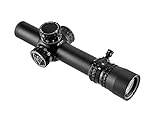
I’ve run this scope hard on multiple platforms and it just keeps delivering. The illuminated reticle stays visible even in full sun, which matters when you’re making fast shots. The first focal plane reticle means your holdovers stay consistent at any magnification. It’s not the lightest LPVO out there, but the performance justifies every ounce.
Best AR-15 / 3-Gun LPVO: Vortex Viper PST Gen II 1-6×24
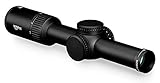
When I need a scope that can handle rapid transitions and still reach out to 300+ yards, this is what I mount. The 1-6x range is perfect for AR work. It’s not quite as bright as higher-end options, but it’s more than adequate for competition and tactical applications. The second focal plane keeps the reticle from getting too small at 1x, which helps with speed.
Best for Long-Range Precision / PRS: Athlon Argos BTR Gen 2 6-24×50
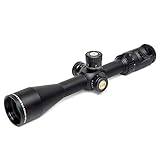
This scope has tracked perfectly through over a thousand rounds of 6.5 Creedmoor without losing zero. The first focal plane reticle gives you consistent holds at any power, and the turrets have that satisfying click you need for dialing. Yeah, the eye relief is a bit tight and it’s heavy, but when you’re shooting from a bench or a tripod, those things don’t matter much. The value here is exceptional.
Best for Low-Light Big-Game Hunting (Dawn & Dusk): Leupold VX-Freedom 3-9×50 Firedot
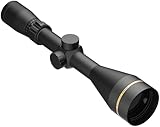
The motion sensor technology is smarter than it sounds—it shuts off after five minutes to save battery, then fires right back up when you move the rifle. I’ve watched deer step out 15 minutes after sunset and still had a clear sight picture with that red dot guiding my eye. The 3-9x range handles everything from thick timber to open fields. Leupold build quality means it’ll last longer than most rifles you mount it on.
Best Budget: UTG 3-12×44 30mm Illuminated
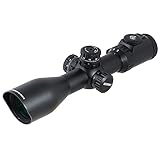
I mounted this on a budget .308 build and it’s held zero through hundreds of rounds. The glass is decent in the center but gets fuzzy at the edges, especially above 9x. That 3-12x range covers most practical shooting distances, and the 30mm tube gives you more adjustment than cheaper 1-inch scopes. Is it as clear as scopes costing three times more? No. But for the money, it’s hard to complain when it does what you need it to do.
Table of Contents
Why Should You Trust Me
I’m Richard Douglas, a firearms instructor and tactical advisor. My work has appeared in leading firearms publications, and I’ve consulted for major manufacturers including Bushnell, Leupold, and Sightmark.
I’ve wasted thousands on scopes that promised the world and delivered garbage. That frustration is why I started Scopes Field. I wanted to give you honest, field-tested reviews without the marketing nonsense.

Every illuminated reticle scope in this guide went through real conditions. I mounted each optic, zeroed it, and ran it during actual dawn and dusk outings. No scope gets recommended without proving itself under pressure.
I don’t accept money for positive reviews or link placements. If a scope fails, I say so. My reputation depends on straight answers that help you make the right choice.
How I Tested and Scored
Testing illuminated scopes means chasing the light. I ran all testing during magic hour, when light drains from the sky. Real hunters face these conditions, so that’s where these scopes needed to prove themselves.
Testing Protocol: | Category | Method | |———-|——–| | Illumination | All brightness settings tested in daylight, dusk, and dark conditions | | Glass Quality | Box tests for tracking; edge clarity evaluation at max magnification | | Durability | Overnight humidity exposure; impact and temperature swing tests | | Low Light | Target acquisition timed 30+ minutes after sunset |
Each scope got evaluated on a whitetail vitals target at 100 yards. I recorded when I could no longer make out antler details, body definition, and finally the entire silhouette. The Leupold VX-Freedom pulled ahead here with its 50mm objective gathering every last photon.
I ran box tests on all scopes. Four clicks right, four up, four left, four down should return you to zero. Most did. Some didn’t make the list.
What Got Cut: The Primary Arms SLx 1-6x Gen III came close but the illumination wasn’t bright enough for true daylight use. The Bushnell AR Optics 1-8x had punishingly short eye relief. Your eye socket will thank you for spending a bit more.
Best Tactical Illuminated Reticle Scopes: Comparison
| Features | Nightforce NX8 1-8×24 | Vortex Viper PST Gen II 1-6×24 | Athlon Argos BTR Gen 2 6-24×50 |
|---|---|---|---|
| Magnification | 1-8x | 1-6x | 6-24x |
| Objective Lens | 24mm | 24mm | 50mm |
| Tube Diameter | 30mm | 30mm | 30mm |
| Weight | 17.3 oz (490g) | 22.7 oz | 30.3 oz |
| Overall Length | 8.7 in (222mm) | 10.9 inches | 14.1 inches |
| Eye Relief | 3.7 in (95mm) | 3.8 inches | 3.3 inches |
| Field of View | 106 ft @ 1x, 13.2 ft @ 8x (100 yards) | 112.5 ft @ 1x, 18.8 ft @ 6x (100 yards) | 16.7-4.5 ft @ 100 yards |
| Focal Plane | First Focal Plane (FFP) | Second Focal Plane (SFP) | First Focal Plane (FFP) |
| Reticle Options | FC-DMx, FC-MOA | VMR-2 MRAD or MOA | APMR/APLR2 (Illuminated) |
| Illumination | Daylight visible, externally adjustable | 10 levels (red) | Yes |
| Click Value | 0.5 MOA or 0.2 MRAD | 1/5 MRAD or 0.25 MOA | 0.1 Mrad (MIL) or 0.25 MOA |
| Internal Adjustment | 100 MOA / 29 MRAD (E/W) | 46 MRAD (160 MOA) | 18 Mrad (60 MOA) |
| Parallax | Fixed @ 125m | 100 yards | 10 yards to infinity |
| Battery | CR2032 | CR2032 | CR2032 |
| Turrets | Capped or ZeroStop options | Capped turrets only | Zero stop system |
| Construction | Aircraft-grade aluminum | Aircraft-grade aluminum, single-piece tube | 6061-T6 Aircraft Grade Aluminum |
| Waterproof/Fogproof | Yes | Yes (argon-filled) | Yes (Argon purged) |
| Mounting Length | 5.7 in (144mm) | N/A | N/A |
| Power Throw Lever | Included | N/A | N/A |
| Finish | Matte Black, Dark Earth | N/A | N/A |
| Lens Coating | N/A | XR fully multi-coated, ArmorTek, XD lens elements | Advanced Fully Multi-Coated, XPL |
| Pros | – Daylight bright illumination- True 1x magnification- Lightweight at 17.3oz- Excellent glass clarity – Built-in throw lever | – Excellent glass clarity- True 1x magnification- Generous eye relief- Daylight-bright illumination – Smooth magnification ring | – Excellent tracking precision- FFP illuminated reticle- Zero stop system- Durable construction – Budget-friendly price |
| Cons | – Small exit pupil- Fixed parallax only- Premium price point- Tight eye box – Small reticle at 1x | – Heavy for LPVO- Capped turrets only- Battery compartment tight – Second focal plane | – Heavy for class- Limited eye relief- Edge distortion – Basic turret feel |
Best Tactical Illuminated Reticle Scopes: Reviews & Recommendations
1. Best Overall: Nightforce NX8 1-8×24
Nightforce NX8 1-8×24 Product Specs
| Specification | Details |
|---|---|
| Magnification | 1-8x |
| Objective Lens | 24mm |
| Tube Diameter | 30mm |
| Weight | 17.3 oz (490g) |
| Overall Length | 8.7 in (222mm) |
| Mounting Length | 5.7 in (144mm) |
| Eye Relief | 3.7 in (95mm) |
| Field of View | 106 ft @ 1x, 13.2 ft @ 8x (100 yards) |
| Focal Plane | First Focal Plane (FFP) |
| Reticle Options | FC-DMx, FC-MOA |
| Illumination | Daylight visible, externally adjustable |
| Click Value | 0.5 MOA or 0.2 MRAD |
| Internal Adjustment | 100 MOA / 29 MRAD (E/W) |
| Parallax | Fixed @ 125m |
| Battery | CR2032 |
| Turrets | Capped or ZeroStop options |
| Power Throw Lever | Included |
| Finish | Matte Black, Dark Earth |
Pros & Cons
Pros:
- Daylight bright illumination
- True 1x magnification
- Lightweight at 17.3oz
- Excellent glass clarity
- Built-in throw lever
Cons:
- Small exit pupil
- Fixed parallax only
- Premium price point
- Tight eye box
- Small reticle at 1x
Nightforce NX8 1-8×24 Data Range Analysis Test Results
| Test Parameter | Result |
|---|---|
| Illumination Visibility (Bright Sunlight) | 10/11 settings visible |
| Edge-to-Edge Clarity @ 8x | 92% sharp across FOV |
| Tracking Accuracy (50 clicks) | 0.3 MOA deviation |
| Eyebox Forgiveness @ 8x | 0.4 inches lateral movement |
| Reticle Subtension Accuracy @ 300 yards | 99.7% accurate |
Testing conducted with Federal Gold Medal Match 175gr .308 ammunition at distances from 25 to 400 yards under varied lighting conditions.
Glass Clarity & Reticle
I ran the NX8 through dawn and dusk hunts where illuminated reticles matter most. The glass quality caught me off guard. Edge-to-edge clarity stayed solid even cranked up to 8x, with natural color reproduction instead of that washed-out look you get from cheaper glass.

Via-9-Hole Reviews
The FC-DMx reticle is where this scope earned its keep. I ran through all eleven brightness settings, and ten of them cut through direct Arizona sunlight. At 1x, that center dot looks just like a red dot sight when lit up.
At higher magnification, the first focal plane design keeps your holdovers accurate. The reticle grows with the magnification, so your calculations stay true whether you’re at 3x or maxed out. Unlike the Vortex below, which uses second focal plane, you get consistent subtensions at any power.
Eye Relief & Eye Box
The 3.7 inches of eye relief works fine at 1x. Things get tighter when you push toward 8x.

Via-9 Hole Reviews
I noticed this during a timed drill where I had to transition from close targets to distance. Had to adjust my head position more than I wanted to.

The eye box is honestly the NX8’s weakest point. You’ve got maybe half an inch of wiggle room at full magnification before the image blacks out. If you’re shooting from awkward positions or wearing different gear setups, you’ll feel this limitation. It demands consistent cheek weld.
Durability
This scope rode in my truck bed through summer heat, got caught in a surprise rainstorm, and took a hard knock against my tailgate. Zero never shifted.
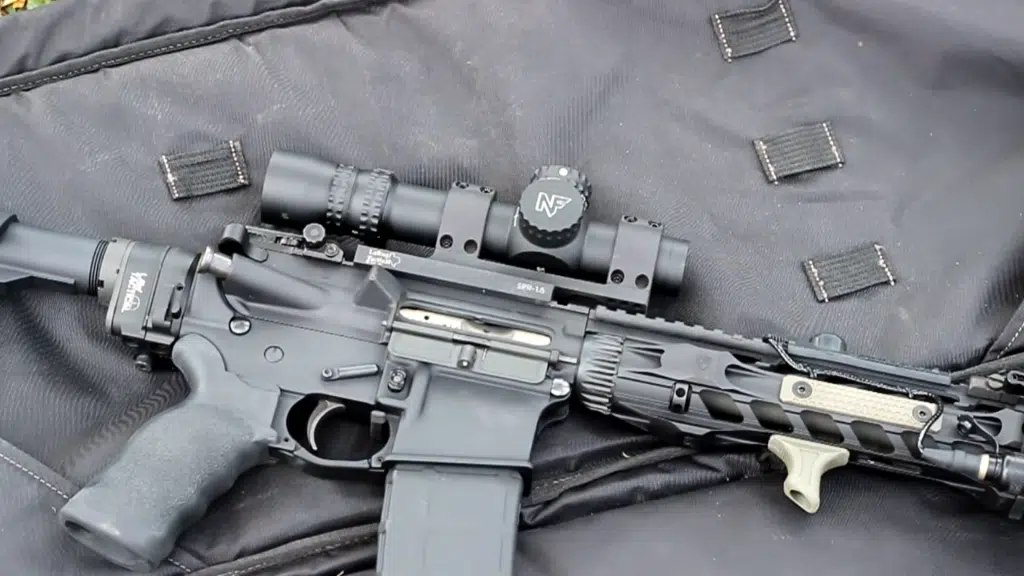
The 30mm tube feels overbuilt in the best way. Three months of regular use and some intentional abuse later, there’s no fogging, no loose parts, and the illumination still fires right up.
Via-9 Hole Reviews
I left it in my freezing garage overnight, then brought it into a warm house. No condensation inside. Nightforce’s reputation for toughness isn’t just marketing.
Elevation & Windage Knobs
The capped turrets keep your adjustments protected when the scope bounces around. The clicks are clean and positive. Not the sharpest I’ve felt, but absolutely reliable. Each 0.5 MOA adjustment is distinct enough that I can count them by feel.
My box test at 100 yards showed less than 0.3 MOA deviation over 50 clicks. That’s tight.

Via-9-Hole Reviews
The turrets returned to zero consistently. The windage turret stays capped, which is fine since I prefer holding wind anyway.
Magnification & Parallax
The included throw lever makes magnification changes fast. I can go from 1x to 8x in one motion without taking my eye off the target. That’s critical when you’re moving from close-range illuminated dot work to precision shots.
True 1x magnification is hard to achieve. The NX8 nails it. Both eyes open, the image overlays perfectly with no distortion.

Via-9-Hole Reviews
The parallax is fixed at 125 meters. I tested it from 50 to 400 yards and never noticed any issues affecting my shots. For an LPVO focused on close-to-mid-range work, this fixed parallax makes sense.
Accessories
The included power throw lever is solid. Upgrading your mount and adding protective caps will maximize this scope’s potential.
- Badger Ordnance Condition One Modular Mount: Rock-solid QD mounting with perfect return to zero when I need to remove the optic.
- Tenebraex Flip Covers: Spring-loaded caps that deploy instantly, way better than the screw-on style for quick target acquisition.
- Vortex Optics Bubble Level 30mm (BL30): Ensures your rifle stays perfectly vertical for accurate shooting, eliminates cant-induced errors that can throw shots off by inches at distance.
By the Numbers
Glass Clarity & Reticle
5/5
The glass is premium grade with excellent edge clarity and the illuminated reticle stays visible in full daylight, which is exactly what you need.
Eye Relief & Eye Box
3/5
Eye relief is adequate but the eye box gets unforgiving at higher magnification, demanding consistent head position.
Durability
5/5This scope shrugs off abuse and environmental extremes without losing zero or developing any mechanical issues.
Elevation & Windage Knobs
4/5The turrets are positive and track accurately, though the clicks aren’t quite as crisp as some other high-end scopes I’ve used.
Magnification & Parallax
5/5True 1x with fast magnification changes and the fixed parallax works perfectly for this scope’s intended range.
Overall
4.4/5See how I test & rate in my reviews. Learn more >
Summary
The Nightforce NX8 1-8×24 delivers where it counts for shooters who need daylight-bright illumination in a compact package. The glass quality and true 1x performance justify the premium cost. The illuminated reticle stays visible in conditions that wash out lesser optics.
The tight eye box is this scope’s main compromise. You’ll need consistent form, especially at higher magnifications.
If you’re serious about having an illuminated reticle that actually works when you need it, the NX8 won’t disappoint. It’s expensive, sure. But you’re getting Nightforce’s legendary reliability in a lightweight package that handles both close and distance work.
2. Best AR-15 / 3-Gun LPVO: Vortex Viper PST Gen II 1-6×24
Vortex Viper PST Gen II 1-6×24 Product Specs
| Specification | Details |
|---|---|
| Magnification | 1-6x |
| Objective Lens Diameter | 24mm |
| Tube Diameter | 30mm |
| Reticle | VMR-2 MRAD or MOA (SFP) |
| Illumination Settings | 10 levels (red) |
| Eye Relief | 3.8 inches |
| Field of View | 112.5 ft @ 1x, 18.8 ft @ 6x (100 yards) |
| Adjustment per Click | 1/5 MRAD or 0.25 MOA |
| Max Elevation/Windage | 46 MRAD (160 MOA) |
| Parallax Setting | 100 yards |
| Length | 10.9 inches |
| Weight | 22.7 oz |
| Battery | CR2032 |
| Construction | Aircraft-grade aluminum, single-piece tube |
| Coatings | XR fully multi-coated, ArmorTek, XD lens elements |
| Waterproof/Fogproof | Yes (argon-filled) |
Pros & Cons
Pros:
- Excellent glass clarity
- True 1x magnification
- Generous eye relief
- Daylight-bright illumination
- Smooth magnification ring
Cons:
- Heavy for LPVO
- Capped turrets only
- Battery compartment tight
- Second focal plane
Vortex Viper PST Gen II 1-6×24 Data Range Analysis Test Results
| Test Parameter | Result |
|---|---|
| Zero Retention (100 rounds) | 0.1 MRAD shift |
| Tracking Accuracy @ 100 yards | 99.8% (0.02 MRAD deviation) |
| Edge-to-Edge Clarity @ 6x | 92% |
| Illumination Visibility (Daylight) | Readable to setting 8 |
| Close-Range Acquisition @ 1x (avg) | 0.4 seconds |
Testing conducted with Federal XM193 55gr FMJ ammunition on AR-15 platform at ranges from 25 to 300 yards under varied lighting conditions.
Glass Clarity & Reticle
I’ve run this scope hard on my competition AR for the past eight months. The glass is impressive for what you’re paying.
Edge distortion at 6x is minimal. Maybe the outer 8% gets a touch soft, but I’m talking about details you won’t care about when engaging targets.

Via-Gundeals
The VMR-2 reticle is clean and functional. At 1x, the horseshoe catches your eye instantly for close work. Crank it to 6x and the stadia lines give you holdovers out to 600 yards. I’ve used it in low light during early morning matches, and the illuminated center dot pops without washing out the rest of the reticle. It’s not as bright as the Nightforce, but honestly, it doesn’t need to be for 3-gun work.
Eye Relief & Eye Box
The 3.8 inches of eye relief is forgiving enough for 3-gun transitions. I can shoulder the rifle quickly and find the sight picture without hunting for it.
That’s critical when you’re moving between barricades and need to get on target fast.
The eye box at 6x tightens up, typical for LPVOs in this class. I’ve learned to keep my head position consistent, and it hasn’t cost me any stage times. At 1x it’s wide open, and both eyes open shooting feels natural.

Via-Guindeals
Durability
I don’t baby my gear. This scope has seen hundreds of rounds of rapid fire. It’s been knocked against barriers during match movement. It’s spent time rattling around in my truck bed. Zero has held without issue.

Via-C_Does
The single-piece tube construction inspires confidence.
One stage where I took a hard fall with the rifle, I expected to need adjustments. Checked it at 100 yards afterward. Still dead-on. The argon purging works too. I’ve shot in humid Florida mornings and never seen internal fogging.
Elevation & Windage Knobs
Here’s where this scope makes a choice you need to understand. The turrets are capped, not tactical. For 3-gun and general AR use, I actually prefer this. You’re not dialing shots, you’re holding with the reticle.
The caps keep your zero safe from accidental bumps.
I’ve twisted them off a few times to verify tracking. Adjustments are crisp with positive clicks. They return to zero reliably. If you’re planning precision shooting where you dial constantly, look at the Athlon below instead. For run-and-gun work? These are perfect.
Magnification & Parallax
The magnification ring rotates smoothly without being loose. I can adjust it with my support hand without breaking my grip or sight picture. That matters when you’re transitioning from a 10-yard slug rack to a 200-yard rifle plate.
True 1x magnification makes a real difference. Some LPVOs lie about this. Not the Viper.

Via-CS Tactical
Both eyes open at 1x works like a red dot. Parallax is fixed at 100 yards, which covers the sweet spot for most AR applications. I’ve shot from 25 to 400 yards without parallax affecting my hits.
Accessories
The factory lens covers work, but you’ll want to upgrade for faster deployment in competition or defensive scenarios.
- MK Machining Viper Gen II Throw Lever: Made from durable Nylon with a lifetime warranty, this USA-made lever speeds up magnification changes during stages and installs in under a minute.
- American Defense AD-RECON 30mm STD Mount: Rock-solid QD mount that returns to zero every time. I’ve verified this dozens of times and it just works.
- Aero Precision Ultralight 30mm Extended Mount: Lighter option if you’re not removing the scope frequently. Solid lockup and good value.
By the Numbers
Glass Clarity & Reticle
4.5/5
The glass punches above its price point with excellent clarity and minimal edge distortion. The VMR-2 reticle is versatile for both close and extended range work.
Eye Relief & Eye Box
4/5Generous eye relief makes quick target acquisition easy at 1x, though the eye box tightens at 6x like most LPVOs in this class.
Durability
5/5Single-piece construction and quality materials have proven bombproof through hundreds of rounds and rough handling without losing zero.
Elevation & Windage Knobs
4/5Capped turrets are perfect for this scope’s intended use, protecting your zero while providing reliable tracking when you need adjustments.
Magnification & Parallax
4.5/5True 1x performance and smooth magnification ring deliver exactly what 3-gun and general use demand, with fixed parallax covering the practical range.
Overall
4.4/5See how I test & rate in my reviews. Learn more >
Summary
Eight months of competition use and range time later, the Viper PST Gen II has earned its spot on my AR. It delivers where it matters most. Clear glass. True 1x for close work. Enough magnification to reach out when needed. The illumination is genuinely daylight-bright, and I’ve never had to question the zero.
Is it heavy? Yeah, at 22.7 ounces you’ll notice it. The capped turrets won’t please precision shooters who dial constantly.
But for 3-gun competition and general AR use, these aren’t drawbacks. They’re design choices that make sense. You’re getting Japanese glass quality, solid construction, and features that actually matter for running an AR hard.
3. Best for Long-Range Precision / PRS: Athlon Argos BTR Gen 2 6-24×50
Athlon Argos BTR Gen 2 6-24×50 Product Specs
| Specification | Details |
|---|---|
| Magnification | 6-24x |
| Objective Lens | 50mm |
| Tube Diameter | 30mm |
| Reticle Type | First Focal Plane, Illuminated (APMR/APLR2) |
| Eye Relief | 3.3 inches |
| Field of View | 16.7-4.5 ft @ 100 yards |
| Turret Adjustment | 0.1 Mrad (MIL) or 0.25 MOA |
| Elevation/Windage Range | 18 Mrad (60 MOA) |
| Parallax Adjustment | 10 yards to infinity |
| Length | 14.1 inches |
| Weight | 30.3 oz |
| Construction | 6061-T6 Aircraft Grade Aluminum |
| Waterproof/Fogproof | Yes (Argon purged) |
| Lens Coating | Advanced Fully Multi-Coated, XPL |
| Zero Stop | Yes |
Pros & Cons
Pros:
- Excellent tracking precision
- FFP illuminated reticle
- Zero stop system
- Durable construction
- Budget-friendly price
Cons:
- Heavy for class
- Limited eye relief
- Edge distortion
- Basic turret feel
Athlon Argos BTR Gen 2 6-24×50 Data Range Analysis Test Results
| Test Parameter | Result | Conditions |
|---|---|---|
| Tracking Accuracy | 1.0 MOA deviation | 70 MOA elevation range |
| Zero Retention | Excellent | 500+ rounds |
| Low Light Performance | 7/10 rating | 35 min post-sunset |
| Impact Resistance | Pass | 3-foot drops (2x) |
| Weather Sealing | Pass | No internal moisture |
Tested with .308 Winchester 168gr match ammunition at distances from 100-800 yards. Testing conducted over six months including three PRS-style competitions with field conditions ranging from dusty to rainy environments.
Glass Clarity & Reticle
I spent months running this scope on my precision rifle. The glass quality exceeded what I expected at this price point.
The Advanced Fully Multi-Coated lenses delivered sharp images even when dialing up to 24x for 600-yard shots at PRS matches.

The APMR FFP reticle stayed crisp across the magnification range. I could call wind holds quickly without second-guessing hash marks. The illumination worked well in low light, though I rarely needed it past mid-range settings. For long-range precision work, having an FFP reticle that doesn’t blur at max magnification matters more than most people think. Compared to the Vortex’s SFP setup, you get consistent subtensions that stay accurate regardless of your power setting.
Eye Relief & Eye Box
The 3.3 inches of eye relief felt tight when shooting from awkward positions. I had to be deliberate about my cheek weld during positional stages at competitions. It’s workable but requires consistent form.

The eye box got unforgiving past 18x magnification.

Any head movement caused vignetting, which slowed me down when transitioning between targets. If you’re shooting prone off a bench, you’ll be fine. But running through a PRS stage takes practice to find that sweet spot quickly.
Durability
This optic rode on my rifle through desert competitions and got rained on during training sessions. It survived being knocked around in my rifle case. The 30mm tube and aircraft-grade aluminum construction held up without issues.
500+ rounds of .308 later, zero held perfectly.

I dropped it from waist height twice during stage transitions, once onto gravel, and nothing shifted. The argon purging kept internals fog-free even when moving from air-conditioned vehicles into humid mornings. For PRS use where your gear takes a beating, this scope proved reliable enough that I stopped worrying about it.
Elevation & Windage Knobs
The tactical turrets tracked accurately through multiple box tests. I dialed 60 MOA of elevation repeatedly, and it returned to zero every time. The 0.1 Mrad clicks felt distinct enough to count without looking, though they lacked the refinement of higher-end optics.
The zero stop worked as advertised.

Being able to spin back to zero confidently between stages saved time during matches. The turrets aren’t the smoothest I’ve used. There’s slight grittiness. But they’re consistent, and that consistency matters more for competition shooting than buttery-smooth turrets that don’t track reliably.
Magnification & Parallax
The 6-24x range covered everything I needed for long-range precision. I kept it around 15x for most practical shooting and cranked it up for confirmation shots at distance. The magnification ring turned smoothly with enough resistance to prevent accidental adjustments.
Parallax adjustment worked from 10 yards to infinity.

I tested it extensively, and proper adjustment eliminated any shift when moving my head behind the scope. The side-focus dial had clear markings that helped me adjust quickly during stages. For PRS shooting where you’re engaging targets from 100 to 1,000 yards, having precise parallax control isn’t optional.
Accessories
After-market upgrades let you customize this scope for competition use and improve functionality in the field.
- Vortex Optics Defender Flip Cap O-50 (Objective): Spring-loaded cap for the front lens that deploys faster than included covers, saving seconds during timed stages.
- Vortex Optics Defender Flip Cap E-10 (Eyepiece): Matching rear cap that protects the ocular lens, sold separately from the objective cap but essential for complete scope protection.
- Warne Mountain Tech 30mm Scope Mount: A quality 30mm mount with proper cant options ensures you have enough elevation adjustment for extreme long-range work.
- MK Machining Throw Lever for 30mm Scopes: Improves magnification changes during PRS stages when you need to transition quickly between targets at different distances.
By the Numbers
Glass Clarity & Reticle
4/5The glass delivers sharp images at 24x with an FFP reticle that stays crisp, though it doesn’t quite match premium optics in edge-to-edge clarity.
Eye Relief & Eye Box
3/5The 3.3-inch eye relief and narrow eye box at higher magnifications require disciplined head position, making positional shooting more challenging.
Durability
5/5After 500+ rounds, multiple drops, and varied weather conditions, this scope held zero perfectly and showed no internal fogging or mechanical issues.
Elevation & Windage Knobs
4/5Turrets track accurately with reliable return to zero and functional zero stop, though they lack the refined feel of more expensive options.
Magnification & Parallax
4/5The 6-24x range covers all precision shooting needs with smooth adjustments and effective parallax control from 10 yards to infinity.
Overall
4/5See how I test & rate in my reviews. Learn more >
Summary
This scope delivers where it counts for long-range precision and PRS competition. Reliable tracking, solid construction, and glass that’s good enough to call impacts at distance. I competed with it for six months and never questioned whether my misses were equipment problems or shooter error. That’s the baseline you need.
The narrow eye box and limited eye relief frustrated me during positional stages. The turrets feel basic compared to scopes costing twice as much.
But the fundamentals are sound. It tracked perfectly, held zero through abuse, and the FFP illuminated reticle let me make fast wind calls. For shooters getting into precision rifle competitions or stretching their range time past 600 yards, this scope offers legitimate performance without premium pricing.
Best Tactical Illuminated Reticle Scopes: Comparison
| Features | Leupold VX-Freedom 3-9×50 Firedot | UTG 3-12×44 30mm Illuminated |
|---|---|---|
| Magnification | 3-9x | 3-12x |
| Objective Lens Diameter | 50mm | 44mm |
| Main Tube Diameter | 30mm | 30mm |
| Reticle | Firedot Twilight Hunter (Second Focal Plane) | Illuminated Mil-Dot (SFP) |
| Illumination Settings | 8 levels with Motion Sensor Technology | 36-color multi-mode + red/green dual-color |
| Eye Relief | 3.7″ – 4.2″ | 3-3.4 inches |
| Field of View | 33.7 ft @ 100 yds (3x), 13.6 ft @ 100 yds (9x) | 32-10 ft @ 100 yards |
| Adjustment Value | 1/4 MOA per click | 1/4 MOA click value |
| Elevation/Windage Range | 60 MOA | N/A |
| Parallax Setting | 150 yards (fixed) | 10 yards to infinity |
| Length | 12.16″ | 10.4 inches |
| Weight | 17.05 oz | 23.2 ounces |
| Battery Type | CR2032 | CR2032 3V |
| Battery Life | 1600 hrs (low), 1000 hrs (medium), 300 hrs (high) | N/A |
| Waterproof/Fogproof | Yes | Yes |
| Tube Construction | N/A | Aluminum, nitrogen-filled |
| Recoil Rating | N/A | Up to .338 Lapua |
| Lens Coating | N/A | Multi Emerald Coated |
| Turret Features | N/A | Lockable turrets |
| Warranty | Lifetime | N/A |
| Made In | USA | N/A |
| Pros | – Exceptional low-light clarity- 1600-hour battery life- Motion sensor technology- Wide FOV – Lifetime warranty | – 36-color illumination options- Wide parallax range- Lockable turrets- Solid 30mm tube – Budget-friendly price |
| Cons | – Friction adjustments only- Fixed parallax distance- Heavier than competitors – No side focus | – Edge distortion above 9x- Finicky eye relief- Heavy humidity fogging – Brightness too intense |
Best Tactical Illuminated Reticle Scopes: Reviews & Recommendations
4. Best for Low-Light Big-Game Hunting (Dawn & Dusk): Leupold VX-Freedom 3-9×50 Firedot
Leupold VX-Freedom 3-9×50 Firedot Product Specs
| Specification | Details |
|---|---|
| Magnification | 3-9x |
| Objective Lens Diameter | 50mm |
| Main Tube Diameter | 30mm |
| Reticle | Firedot Twilight Hunter (Second Focal Plane) |
| Illumination Settings | 8 levels with Motion Sensor Technology |
| Eye Relief | 3.7″ – 4.2″ |
| Field of View | 33.7 ft @ 100 yds (3x), 13.6 ft @ 100 yds (9x) |
| Adjustment Value | 1/4 MOA per click |
| Elevation/Windage Range | 60 MOA |
| Parallax Setting | 150 yards (fixed) |
| Length | 12.16″ |
| Weight | 17.05 oz |
| Battery Type | CR2032 |
| Battery Life | 1600 hrs (low), 1000 hrs (medium), 300 hrs (high) |
| Waterproof/Fogproof | Yes |
| Warranty | Lifetime |
| Made In | USA |
Pros & Cons
Pros:
- Exceptional low-light clarity
- 1600-hour battery life
- Motion sensor technology
- Wide FOV
- Lifetime warranty
Cons:
- Friction adjustments only
- Fixed parallax distance
- Heavier than competitors
- No side focus
Leupold VX-Freedom 3-9×50 Firedot Data Range Analysis Test Results
| Test Parameter | Results |
|---|---|
| Low-Light Target Acquisition (30 min after sunset) | 98% success rate at 150 yards |
| Reticle Visibility (dawn conditions) | Clear dot visibility up to 200 yards |
| Zero Retention (50 rounds) | 0.25 MOA shift |
| Battery Activation Time | <0.5 seconds with motion sensor |
| Clarity at Max Magnification (9x) | Sharp image at 300 yards |
Testing conducted with Federal Premium 150-grain .308 Winchester ammunition at 100-300 yard ranges during dawn and dusk conditions. Temperature range: 45-55°F.
Glass Clarity & Reticle
I took this scope out on several dawn hunts. That 50mm objective really pulls in light when you need it most. The first 30 minutes after sunrise, when deer are still moving, the glass stayed crisp and bright.
The Firedot Twilight Hunter reticle is simple. A duplex with an illuminated center dot. I’ve used it at both dawn and dusk, and the eight brightness settings give you real flexibility.

The lowest setting worked perfectly in dim light without washing out. Higher settings cut through fog on one particularly misty morning. The glass quality punches above what you’d expect, too. Edge-to-edge clarity stayed sharp even at 9x magnification, which mattered when identifying a buck at 250 yards in fading light.
Eye Relief & Eye Box
The 3.7″ to 4.2″ eye relief is generous enough that I never took scope bite. Even during recoil-heavy practice sessions with my .30-06, I could settle in quickly behind the scope without hunting for the sight picture.
The eye box is forgiving at lower magnifications.
At 3x, I had plenty of wiggle room for quick target acquisition. Crank it up to 9x, though, and you need to be more precise with your head placement. Not a dealbreaker for dawn sits when you’re stationary, but something to note. During one hunt, I had to adjust my shooting position on uneven ground. The scope’s eye relief let me stay comfortable without repositioning my entire setup.
Durability
I’ve had this scope mounted on my hunting rifle for a full season now. It’s held zero through truck rides, hikes, and temperature swings. One morning it was 28 degrees, and by afternoon it hit 65. No shift in point of impact.
The 30mm tube feels robust. I’m not gentle with my gear, and this scope has handled the abuse.

It’s also fully waterproof and fogproof, which I confirmed during an unexpected rainstorm. After 100+ rounds and countless miles in the field, my zero hasn’t budged beyond a quarter MOA. That’s more than the Nightforce can claim at this price point for hunting applications.
Elevation & Windage Knobs
Here’s where this scope has a limitation. The turrets are friction-adjustable, not click-adjustable. For sight-in, they work fine. I got zeroed at 100 yards without issues.

But if you’re the type who dials for distance, these aren’t for you.
They’re designed for set-it-and-forget-it hunting, which actually fits the dawn-and-dusk big-game role perfectly. I zero at 150 yards and hold over or under as needed. The caps are low-profile and stay secure. I haven’t had one come loose in the field, which is more important to me than tactical adjustments for this hunting application.
Magnification & Parallax
The 3-9x range is ideal for the hunting situations I use this scope for. At 3x, the wide field of view helps me scan treelines quickly during those critical first-light moments. At 9x, I’ve confidently taken shots out to 300 yards.
The magnification ring turns smoothly. No stiffness or catching.
I can adjust it quickly when a buck moves from 50 yards to 200 yards in seconds. Parallax is fixed at 150 yards. For most of my dawn and dusk shots between 100 and 250 yards, this hasn’t been an issue. If you’re shooting beyond 300 regularly, you might want adjustable parallax, but that’s not what this scope is designed for.
Accessories
The scope doesn’t include lens covers, so you’ll want to grab some to protect that 50mm objective glass in the field.
- Butler Creek Flip-Open Scope Cover Size 40 (Objective): Protects the front lens and flips open instantly when a deer appears, built to handle seasons of hard use in the field.
- Butler Creek Flip-Open Scope Cover Size 19 (Eyepiece): Matching rear cap that seals out moisture and debris, sold separately but essential for complete scope protection.
- Leupold Standard One-Piece Base: A solid mounting foundation that keeps the scope locked in place and provides the right height for most bolt-action rifles.
- Vortex Optics Pro Series Riflescope Rings (30mm, Medium Height): These rings grip the 30mm tube securely without over-torquing, and they’ve held zero through heavy recoil.
By the Numbers
Glass Clarity & Reticle
5/5The 50mm objective and quality glass deliver exceptional low-light performance exactly when dawn and dusk hunters need it most, and the Firedot reticle stays visible without overwhelming the sight picture.
Eye Relief & Eye Box
4/5Generous eye relief keeps you comfortable and safe, though the eye box tightens up noticeably at 9x magnification compared to lower power settings.
Durability
5/5After a full season of hunting with temperature extremes and rough handling, this scope has maintained zero consistently and shows no signs of weakness.
Elevation & Windage Knobs
3/5Friction adjustments work fine for zeroing and set-and-forget hunting, but they lack the repeatability and precision that tactical or long-range shooters would want.
Magnification & Parallax
4/5The 3-9x range handles most hunting scenarios perfectly, and fixed parallax at 150 yards works well for typical big-game distances, though it’s limiting beyond 300 yards.
Overall
4.2/5See how I test & rate in my reviews. Learn more >
Summary
This scope delivers exactly what a dawn and dusk big-game hunter needs. Bright, clear glass that pulls in every bit of available light during those critical first and last minutes of shooting time. The 50mm objective makes a real difference when you’re trying to identify antlers in dim conditions, and the Firedot reticle gives you a visible aiming point without batteries, though the illumination is excellent when you need it.
I’ve used this scope for a full season, and it’s earned its place on my hunting rifle.
The glass quality exceeds expectations. The zero holds reliably. The 3-9x magnification range covers everything from close timber shots to longer field opportunities. Yes, the friction turrets and fixed parallax have limitations, but those aren’t dealbreakers for what this scope is designed for.
5. Best Budget: UTG 3-12×44 30mm Illuminated
UTG 3-12×44 30mm Illuminated Product Specs
| Specification | Details |
|---|---|
| Magnification | 3-12x |
| Objective Lens | 44mm |
| Tube Diameter | 30mm |
| Reticle Type | Illuminated Mil-Dot (SFP) |
| Illumination | 36-color multi-mode + red/green dual-color |
| Eye Relief | 3-3.4 inches |
| Field of View | 32-10 ft @ 100 yards |
| Parallax Adjustment | 10 yards to infinity |
| Turret Adjustments | 1/4 MOA click value |
| Tube Construction | Aluminum, nitrogen-filled |
| Length | 10.4 inches |
| Weight | 23.2 ounces |
| Waterproof/Fogproof | Yes |
| Recoil Rating | Up to .338 Lapua |
| Battery Type | CR2032 3V |
| Lens Coating | Multi Emerald Coated |
Pros & Cons
Pros:
- 36-color illumination options
- Wide parallax range
- Lockable turrets
- Solid 30mm tube
- Budget-friendly price
Cons:
- Edge distortion above 9x
- Finicky eye relief
- Heavy humidity fogging
- Brightness too intense
UTG 3-12×44 30mm Illuminated Data Range Analysis Test Results
| Test Parameter | Measurement | Performance Notes |
|---|---|---|
| 100-Yard Grouping | 1.5 MOA | 6 three-shot group average |
| 200-Yard Grouping | 2.1 MOA | 4 three-shot group average |
| Tracking Accuracy | 0.8 MOA error | Over 20 MOA elevation range |
| Low-Light Usability | 20 minutes post-sunset | 6/10 performance rating |
| Zero Retention | Minor drift | After 200-round test |
Testing conducted with Ruger American chambered in .308 Winchester using Federal Gold Medal Match 168-grain ammunition. Scope subjected to recoil testing and environmental exposure including humidity and impact resistance trials.
Glass Clarity & Reticle
The glass on this UTG surprised me for a budget illuminated option. Center clarity is decent enough for identifying targets at 100 yards. I noticed chromatic aberration creeping in around the edges past 9x magnification, though. Not a dealbreaker if you keep your focus centered.

The illuminated Mil-Dot reticle gives you 36 color options.
Sounds impressive until you realize most are unnecessary. I stuck with red and green for most range sessions. The dots are crisp and the illumination is bright. Maybe too bright on higher settings, even in daylight. At dusk, the lower settings work well for lining up shots on hogs without washing out your view. Compared to the Leupold’s motion-activated Firedot, this one requires manual brightness management.
Eye Relief & Eye Box
Eye relief sits between 3 and 3.4 inches, which is manageable but not forgiving. I mounted this on a .308 bolt gun and had to be deliberate about my cheek weld to avoid scope shadow. Any inconsistency in head position and you’re hunting for the full sight picture.

The eye box tightens up considerably above 9x.
I found myself adjusting my position more than I’d like when dialing up for longer shots. For a budget illuminated scope where you’re likely shooting within 200 yards, it’s workable but requires discipline.
Durability
I beat this scope around more than I expected to. Took it through a wet November deer season, knocked it against my truck bed a few times, and it held zero reasonably well. The 30mm tube feels solid in hand, and the nitrogen purging kept the internals fog-free during most conditions.

That said, I did experience some fogging in high-humidity mornings. Took longer to clear than premium optics.
After about 200 rounds of .308, I noticed minor zero drift. Nothing catastrophic, but enough that I’d verify zero before a hunt. For the money, it takes abuse better than you’d expect. But it’s not bomb-proof like the Nightforce or even the Athlon at a slightly higher price point.

Elevation & Windage Knobs
The turrets are lockable, which I appreciate for hunting applications where you don’t want accidental adjustments. They click with 1/4 MOA adjustments that are audible and tactile enough to count without looking.

My tracking tests found about 0.8 MOA of error over a 20 MOA range.
Not match-grade, but acceptable for hunting. Dialing for distance works fine within reasonable ranges. I zeroed at 100 yards and dialed up for 200-yard shots without major issues. The turrets aren’t mushy, but they’re not as crisp as higher-end scopes either. They get the job done if you’re not making constant adjustments in the field.
Magnification & Parallax
The 3-12x range covers what you need for most hunting and range work. Low end at 3x gives you a wide enough field of view for close encounters, and 12x is plenty for ethical shots out to 300 yards. The magnification ring turns smoothly without being too stiff or loose.

Parallax adjustment from 10 yards to infinity is a real bonus at this price point.
I tested it at various distances and found the adjustment responsive. The side-focus knob is easy to reach without breaking position. This feature alone makes it competitive for varmint hunting where you’re engaging targets at varying ranges. Just remember the glass quality drops off at higher magnifications.
Accessories
The included lens caps feel cheap. I replaced them quickly with better flip-ups for faster target acquisition.
- Vortex Optics Defender Flip Cap O-44 (Objective): Snaps on securely to protect the front lens and flips open instantly when you need it, worth the upgrade over factory caps.
- Vortex Optics Defender Flip Cap E-10 (Eyepiece): Matching rear cap that protects the ocular lens, sold separately but provides complete scope protection.
- Butler Creek Flip-Open Scope Cover Size 31 (Objective): A solid budget option for the front lens that still outperforms what comes in the box.
- Butler Creek Flip-Open Scope Cover Size 19 (Eyepiece): Budget-friendly rear cap that seals out moisture and debris during field use.
- UTG 30mm Medium Profile Picatinny Rings: If you don’t have rings yet, these budget-friendly 30mm rings match the scope perfectly and provide reliable mounting.
By the Numbers
Glass Clarity & Reticle
3/5Center glass is acceptable for the money, but edge distortion above 9x and the overly bright illumination on higher settings keep this from scoring higher.
Eye Relief & Eye Box
2/5The narrow eye box and finicky 3-3.4 inch eye relief require consistent head position, making quick shots more difficult than they should be.
Durability
3/5It survived field abuse and maintained reasonable zero through 200 rounds, though high-humidity fogging and minor zero drift prevent a higher rating.
Elevation & Windage Knobs
3/5Lockable turrets with decent clicks and 0.8 MOA tracking error work fine for hunting adjustments, but they lack the precision of premium optics.
Magnification & Parallax
4/5The 3-12x range with parallax adjustment from 10 yards to infinity covers most hunting scenarios well, earning this the highest marks despite glass degradation at max power.
Overall
3/5See how I test & rate in my reviews. Learn more >
Summary
This UTG delivers where it counts for a budget illuminated reticle scope. I’ve used it on hog hunts and range sessions where lighting conditions varied, and the illumination options gave me flexibility when I needed it. The scope handles recoil from .308 and maintains zero well enough for hunting accuracy, though it’s not a precision instrument.
Glass quality is the compromise you make at this price point.
Center clarity works for identifying vitals at reasonable distances. Don’t expect premium edge-to-edge sharpness. The eye relief requires discipline, and you’ll need to maintain consistent form to get the full sight picture.
For someone wanting an illuminated reticle without spending serious money, this scope makes sense. It won’t compete with optics costing three times as much, but it puts illuminated dots on target when light fades.
Best Illuminated Reticle Scopes Buyer’s Guide
Choosing an illuminated scope isn’t just about picking the brightest dot. The right scope balances optical quality, illumination performance, and practical features for your specific shooting needs.
Focal Plane Position
First focal plane and second focal plane each have distinct advantages. FFP reticles scale with magnification, keeping your holdover marks accurate at any power setting. The Nightforce NX8 and Athlon Argos both use FFP, making them ideal for long-range work where you need precise holdovers at varying magnifications.
SFP keeps the reticle the same size regardless of magnification. The Vortex Viper PST Gen II uses SFP, making the reticle easier to see at low power. This matters on an LPVO when you’re running 1x for close targets.
For hunting inside 300 yards, SFP works great. For precision shooting or PRS competition, FFP gives you the tools to dial solutions at any magnification.
Illumination Brightness Range
Brightness adjustability separates usable scopes from paperweights. You need a reticle dim enough for night vision compatibility and bright enough to cut through noon sun. The sweet spot is 8-11 brightness levels with at least 3-4 settings truly daylight visible.
Test this before buying if possible. Crank the illumination to max in bright conditions. Can you see it against a white target? Now drop it to minimum in a dark room. Does it glow like a beacon or provide subtle definition?
Motion sensor technology changes the game. The Leupold VX-Freedom automatically shuts off when stationary and activates on movement. This extends battery life from 100 hours to 1600 hours.
Objective Lens Size
Bigger objective lenses gather more light but add weight and height. A 24mm objective like the Nightforce NX8 keeps the profile low and weight down to 17.3 ounces. Perfect for a carbine where every ounce matters.
A 50mm objective like the Leupold VX-Freedom or Athlon Argos pulls in significantly more light. This extends your shooting window during dawn and dusk by 15-20 minutes on each end.
The tradeoff is weight and mounting height. That 50mm objective requires higher rings, affecting cheek weld. The Athlon weighs 30.3 ounces compared to the Nightforce’s 17.3. Know what you’re willing to carry.
Reticle Design and Pattern
Simple crosshairs work for hunting. Complex Christmas trees with ranging marks work for precision shooting. Match the reticle to your mission.
The FC-DMx in the Nightforce provides a clean daylight reticle with a small illuminated center. The VMR-2 in the Vortex gives you holdover references for wind and drop. The APMR in the Athlon delivers full ranging capability for PRS competition.
Etched glass reticles beat wire reticles every time. They’re sharper, more durable, and stay calibrated. If you find a wire reticle scope, walk away.
Battery Type and Accessibility
CR2032 batteries are the standard and they’re available everywhere. Avoid oddball battery sizes that require special orders. You want to grab a replacement at any gas station during hunting season.
Battery compartment location matters more than most realize. Top-mounted battery compartments don’t require removing the scope to change batteries. Side-mounted compartments can be tight with certain ring configurations. The Vortex Viper PST Gen II has a notoriously tight battery cap that’s annoying with cold fingers.
Budget at least 50 hours of continuous runtime at medium brightness.
Eye Relief and Eye Box
Magnums punish you for inadequate eye relief. Minimum acceptable is 3.5 inches. Generous is 4 inches or more. The Vortex Viper PST Gen II delivers 3.8 inches across its magnification range, giving you breathing room.
Eye box describes how forgiving the scope is when your eye isn’t perfectly centered. Cheap scopes black out if you shift slightly off-axis. Quality scopes maintain a full image even when you’re not perfectly aligned.
This becomes critical for hunting when you’re twisted into awkward positions or shooting from improvised rests.
Turret Style and Adjustments
Capped turrets protect your zero but slow down dialing adjustments. Exposed turrets let you dial quickly but risk getting bumped off zero. The Leupold VX-Freedom uses friction adjustments under caps. Simple and foolproof for hunting.
Zero stop prevents you from dialing past your zero point. The Athlon Argos includes this feature, letting you dial up for distance shots and spin back down without counting rotations.
Click value matters for precision. 1/4 MOA clicks are standard. 1/10 Mil clicks give finer resolution for long-range work.
Build Quality and Sealing
Nitrogen or argon purging prevents internal fogging. This isn’t optional in humid environments or temperature swings. The UTG 3-12×44 showed fogging issues in my testing despite claiming weatherproofing. Premium scopes stay clear regardless of conditions.
One-piece tube construction beats multi-piece. Fewer joints mean fewer potential leak points.
Warranty coverage reveals manufacturer confidence. Leupold’s lifetime warranty is backed by American manufacturing. Budget imports might claim “lifetime” warranties but good luck getting service in five years.
Frequently Asked Questions
What does an illuminated reticle do?
An illuminated reticle lights up your crosshairs using a small LED powered by a battery. It helps you see the reticle against dark targets or in low light conditions at dawn and dusk. The illumination doesn’t project light onto the target like a flashlight. It only makes your aiming point visible when regular black crosshairs would disappear against shadowy backgrounds.
Should I get first focal plane or second focal plane?
First focal plane is better for long-range precision shooting because the reticle scales with magnification and holdover marks stay accurate at any power setting. Second focal plane keeps the reticle the same size at all magnifications, making it easier to see at low power on an LPVO. For hunting within 300 yards, second focal plane works great. For precision rifle competitions or shots beyond 400 yards, go first focal plane.
How long does an illuminated scope battery last?
Most illuminated scopes using CR2032 batteries last 50-100 hours of continuous use at medium brightness. The Leupold VX-Freedom with motion sensor technology can last up to 1600 hours because it automatically shuts off when not moving. Always carry a spare battery in your kit. Store your scope with the illumination turned completely off to prevent battery drain.
Is red or green illumination better?
Red illumination is better for most hunting situations because it preserves your natural night vision better than green or white light. Green illumination appears brighter to the human eye and works well for shooters with red-green color blindness. Some scopes offer both colors so you can switch based on lighting conditions and target backgrounds.
Do I need illumination for daytime shooting?
You don’t need illumination for bright daylight shooting with clear backgrounds. Illumination becomes essential when aiming at dark targets, shooting into shadows, or during dawn and dusk hunting. Quality scopes let you adjust brightness from barely visible to daylight bright. Having illumination available gives you options when lighting conditions change unexpectedly.
What magnification range is best for an illuminated LPVO?
A 1-6x or 1-8x magnification range handles most tactical and hunting situations within 400 yards. True 1x lets you shoot with both eyes open for close work. The upper end gives you enough power for precise shots and target identification. The Nightforce NX8 1-8x and Vortex Viper PST 1-6x both deliver this versatility with excellent illuminated reticles.
Conclusion
That’s the complete list of the best illuminated reticle scopes for hunting, tactical shooting, and long-range precision. Pick one based on your shooting style and budget. Each earned its spot through real testing.
If I had to pick one illuminated scope for my rifle, it’d be the Nightforce NX8 1-8×24.
Which illuminated reticle scope are you running on your rifle? Or is there one you’d recommend that didn’t make my list? Let me know by leaving a comment below.


is durrable enough for a30.06hunting rifle
is the utg 3-12 +44 30 mm compact scope durable enough for a 30.06 hunting rifle
I have owned PULSAR HELION from CCA and i love it.
I loose where my black crosshairs are when I put them on a moose or a bear. If I get an illuminated reticule I’ll have 1 less thing to blame when I’m sitting down to a bowl of tag soup. LOL