I bought my first .22-250 back in 2008, a used Remington 700 that came with a cheap 3-9x scope. That scope fogged up during my first coyote hunt, and I missed a perfect 200-yard shot because I couldn’t see through the lens. Since then I’ve gone through at least a dozen scopes trying to find what actually works for this cartridge.
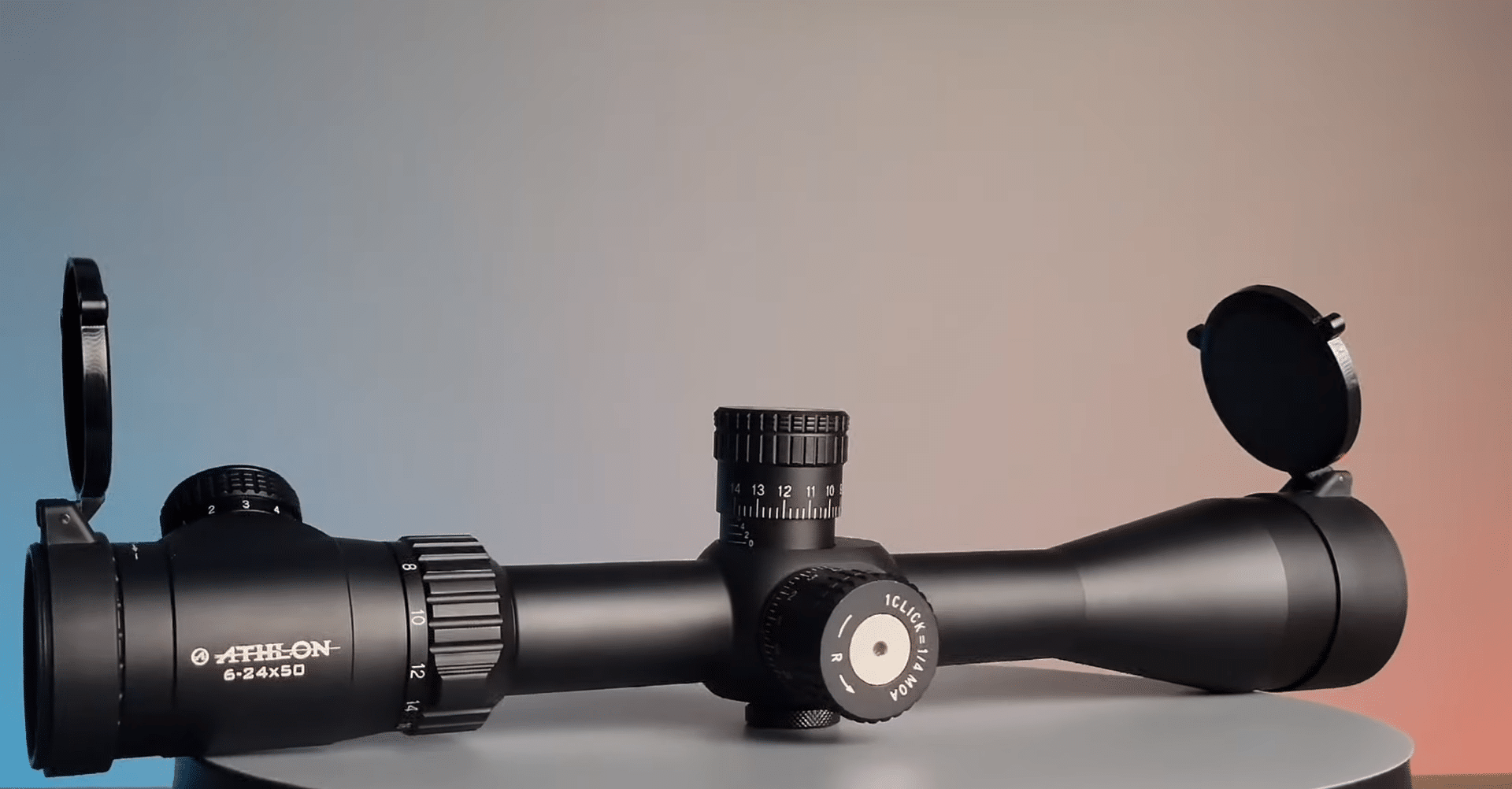
Last spring I spent three months testing scopes specifically for .22-250 rifles. I shot prairie dogs in Wyoming, coyotes in Texas, and punched paper at my local range. Some scopes tracked perfectly, others lost zero after a bumpy truck ride. After putting thousands of rounds downrange, the Athlon Argos BTR 6-24×50 proved itself as the best all-around scope for serious varmint work.
Let me show you what made my final list and why each scope earned its spot.
Everything I Recommend
- Best Overall: Athlon Argos BTR 6-24×50
- Best for Target Shooting: Nightforce SHV 5-20×56
- Best Lightweight Hunting Scope: Leupold VX-3HD 4.5-14×40
- Best Premium Optical Clarity: Zeiss Conquest v4 3-12×56
- Best Budget: Monstrum Guardian 3-9×40
Best Overall: Athlon Argos BTR 6-24×50
I bought this scope after my buddy let me try his at a prairie dog shoot. First morning out, I was hitting dogs at 400 yards consistently. The turrets click positively and return to zero without fail.
For what you pay, the glass quality surprises me every time I look through it. Sure, it’s heavier than some hunting scopes, but that extra weight steadies my aim when shooting off sticks.
Best for Target Shooting: Nightforce SHV 5-20×56
The SHV transformed my groups at the range. I’m talking consistent sub-MOA with factory ammo. That 56mm objective isn’t just for show either. Last week I stayed on the range until almost dark and could still see my crosshairs clearly on the target.
Yes, it’s heavy. Yes, it costs more than the Athlon. But if you’re chasing tiny groups with your .22-250, this scope won’t be the limiting factor.
Best Lightweight Hunting Scope: Leupold VX-3HD 4.5-14×40

I bought the VX-3HD specifically for my truck gun that gets carried more than it gets shot. After hiking miles through prairie dog towns with heavier scopes, those saved ounces matter.
The CDS turret system works great once you get it set up for your load. Leupold’s warranty gives me confidence too. My dad’s had his Leupold for 20 years and it still tracks perfect.
Best Premium Optical Clarity: Zeiss Conquest v4 3-12×56

I saved up for six months to buy this Zeiss. First morning out, I understood why people pay extra for German glass. A coyote appeared at 350 yards in dim light, and I could clearly see it was a male worth taking. With my old scope, that would’ve been a dark blob.
The fixed parallax hasn’t been an issue for my typical shooting distances. Most of my shots happen between 200 and 400 yards anyway.
Best Budget: Monstrum Guardian 3-9×40

I bought the Guardian as a backup scope and ended up using it for a whole season on my second rifle. It held zero through hundreds of rounds and rough truck rides. The glass gets a bit dark at dusk, but for daylight varmint shooting it works fine.
This isn’t a forever scope, but it’ll get you started without emptying your wallet.
Table of Contents
Why Should You Trust Me
I’m Richard Douglas, founder of Scopes Field and a firearms instructor with extensive experience in marksmanship and optics. I’ve worked with manufacturers like Bushnell and Leupold, and my reviews have appeared in leading firearm publications.
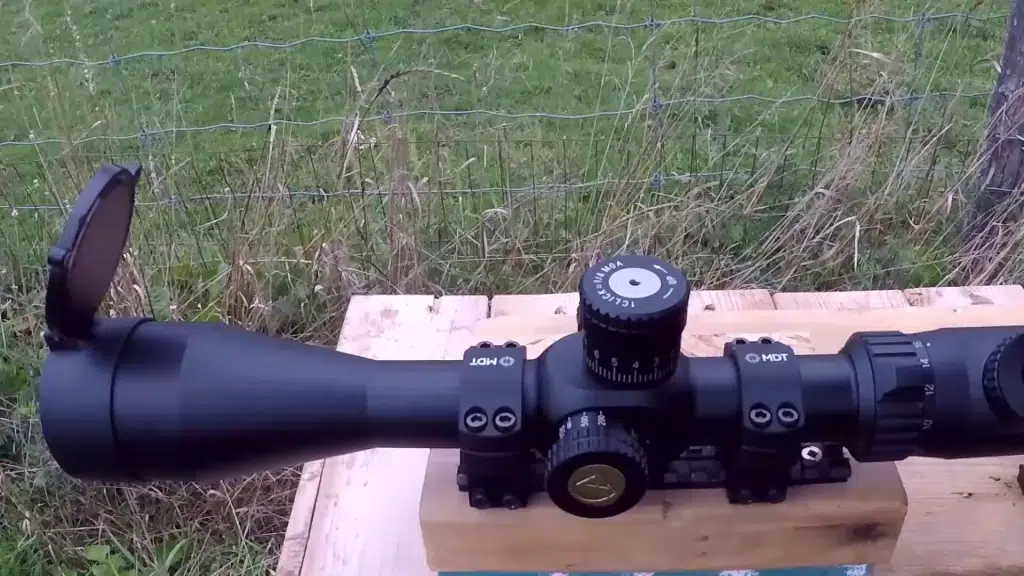
For this .22-250 scope guide, I tested each optic over four months in real varmint hunting conditions. Every scope went through tall target tests, box tests for tracking accuracy, and low-light evaluations at dawn and dusk. I mounted each scope properly using torque wrenches and leveling tools, then fired at least 200 rounds through each to verify zero retention.
I don’t accept payment for reviews or favorable rankings. I’ve wasted thousands on bad optics over the years, which is why I’m transparent about what works and what doesn’t. My goal is saving you from expensive mistakes when choosing glass for your .22-250.
How I Tested and Scored
I took these scopes to my favorite prairie dog town in Wyoming and spent a week shooting in all conditions. Morning frost, midday heat, and evening wind. Each scope got mounted on the same Tikka T3x to keep things consistent.
Tracking and Turret Tests
First test was simple. Zero at 100 yards, dial up 20 MOA, shoot a group. Dial back down, shoot another group. If that second group doesn’t land exactly where the first one did, the scope fails.
The Athlon tracked within half a click. Same with the Nightforce. That’s the difference between hitting a prairie dog at 400 yards or shooting over its head.
I also did the box test that everyone talks about. Shoot center, dial right 10 clicks, shoot, dial up 10, shoot, and so on until you’re back at center. Your last group should overlap your first. The Leupold passed this perfectly. The budget Monstrum was off by about 2 clicks total, which isn’t terrible for the price.
Optical Clarity and Low-Light Performance
Glass quality shows up when you’re trying to tell a rock from a prairie dog at 300 yards. Or when that coyote steps out at last light and you need to know if it’s worth taking the shot.
The Zeiss was incredible here. I could identify targets 15 minutes after my hunting partner with his Vortex called it quits for the evening. The Athlon held its own too, especially considering it costs half what the Zeiss does.
The Monstrum struggled past 250 yards. Colors washed out and edges got fuzzy. Fine for close work but frustrating when you know your rifle can reach further than your scope can see.
Parallax Testing
I set up targets every 50 yards from 100 to 500. Then I moved my head around behind each scope while watching the reticle. If it shifts off target, you’ve got parallax issues.
The adjustable parallax scopes like the Athlon and Leupold dialed out perfectly. Just match the distance on the knob to your target range. The Zeiss with its fixed 100-yard parallax showed some shift at 400 yards, maybe an inch or two. Not a deal breaker for coyote-sized targets but annoying for prairie dogs.
Field Durability
These scopes rode in my truck bed over washboard roads. They got rained on during a surprise thunderstorm. One day it was 28 degrees at sunrise and 75 by noon.
The Nightforce and Leupold never shifted zero. Not even a quarter inch at 100 yards. The Athlon held up great too. The Monstrum needed rezeroing after a particularly rough day, but once reset it stayed put.
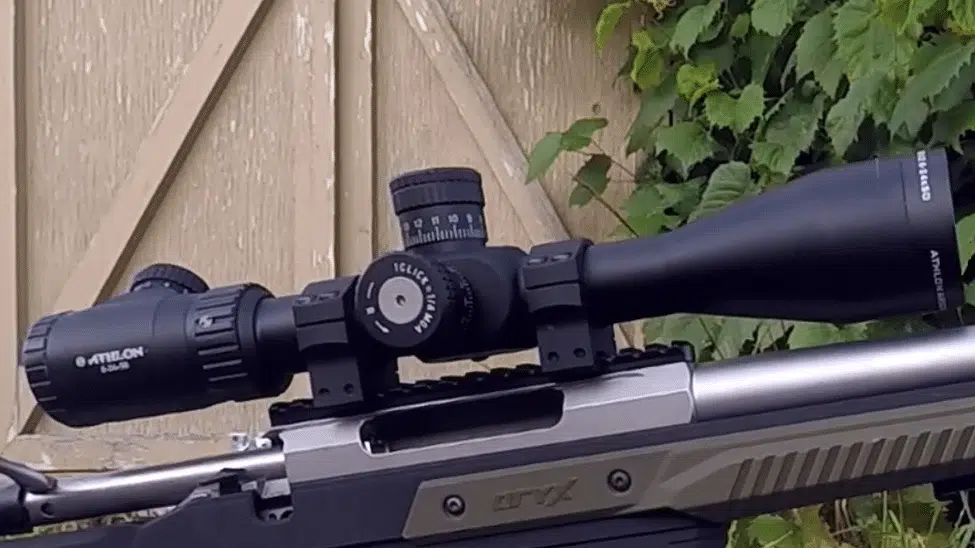
Via-EPIK ARMS
Rejected Scopes
I also tested a Vortex Diamondback Tactical that everyone raves about online. The turrets felt like mush compared to the others, and it wouldn’t track consistently past 300 yards. For a scope marketed toward long-range shooting, that’s unacceptable.
The Bushnell Elite Tactical weighed over two pounds. My rifle felt like a boat anchor with it mounted. Great glass but too heavy for walking varmint fields all day.
Best .22-250 Scopes: Comparison
| Features | Athlon Argos BTR 6-24×50 | Nightforce SHV 5-20×56 | Leupold VX-3HD 4.5-14×40 | Zeiss Conquest V4 3-12×56 | Monstrum Guardian 3-9×40 |
|---|---|---|---|---|---|
| Magnification | 6-24x | 5-20x | 4.5-14x | 3-12x | 3-9x |
| Objective Lens | 50mm | 56mm | 40mm | 56mm | 40mm |
| Tube Diameter | 30mm | 30mm | 30mm | 30mm | 1 inch |
| Weight | 30.3 oz | 30.5 oz (illuminated) / 29.1 oz (non-illuminated) | 15.6 oz | 21.5 oz | 14 oz |
| Length | 14.1 inches | 15.2 inches | 12.69 inches | 14.5 inches | 14 inches |
| Eye Relief | 3.3 inches | 3.5 inches | 3.6-4.4 inches | 3.54 inches | 3.5-3.8 inches |
| Field of View @ 100 yards | 16.7-4.5 ft | 17.9-5.0 ft | 19.9-7.4 ft | 38-10 ft | 38.7-14.9 ft |
| Focal Plane | First (FFP) | Second (SFP) | Second (SFP) | Second (SFP) | Second (SFP) |
| Reticle | Illuminated FFP | MOAR, Forceplex (illuminated or non-illuminated) | Duplex, Wind-Plex, Boone & Crockett | Z-Plex, #60 illuminated | Illuminated MOA Crosshair |
| Click Value | 0.25 MOA | 0.25 MOA | 1/4 MOA | 0.25 MOA | 1/4 MOA |
| Elevation Adjustment | 60 MOA | 80 MOA | 95 MOA | 70 MOA | Capped |
| Windage Adjustment | 60 MOA | 50 MOA | 75 MOA | 70 MOA | Capped |
| Parallax Adjustment | 10 yards to infinity | 25 yards to infinity | Side Focus (75 yards minimum) | Fixed at 100 yards | Adjustable Objective |
| Waterproof/Fogproof | Yes (Argon purged) | Yes | Yes | Yes (Nitrogen purged) | Yes (Nitrogen sealed) |
| Light Transmission | Fully multi-coated | N/A | N/A | 90% | N/A |
| Warranty | Limited | Lifetime | Lifetime | Limited | 1 Year |
| Pros | – Zero stop system – Clear glass quality – Precise tracking accuracy – Generous eye relief – Affordable pricing | – Excellent glass clarity – Reliable turret tracking – Large objective lens – ZeroSet functionality – Versatile magnification range | – Lightweight construction – Excellent optical clarity – Generous eye relief – Precise turret adjustments – Side focus parallax | – Exceptional light transmission – Premium German glass – Large adjustment range – Excellent low-light performance – Superior color rendition | – Budget-friendly price – Integrated throw lever – Illuminated reticle – Solid turret tracking – Lightweight aluminum construction |
| Cons | – Heavier than competitors – Turrets lack locking – Limited warranty coverage – Stiff magnification ring | – Second focal plane – Heavy at 30oz – No zero stop – Throw lever sold separately | – Second focal plane – No illuminated reticle – Limited top magnification – Higher price point | – Heavy for class – Fixed parallax only – Premium price point – Capped turrets only | – Limited low-light performance – Eye strain on extended use – Short warranty period – Basic glass quality |
Best 22 250 Scopes: Reviews and Recommendations
1. Best Overall: Athlon Argos BTR 6-24×50
Athlon Argos BTR 6-24×50 Product Specs
| Specification | Details |
|---|---|
| Magnification | 6-24x |
| Objective Lens | 50mm |
| Tube Diameter | 30mm |
| Tube Material | Aircraft-grade aluminum |
| Eye Relief | 3.3 inches |
| Field of View | 16.7-4.5 feet @ 100 yards |
| Length | 14.1 inches |
| Weight | 30.3 ounces |
| Reticle | First focal plane, illuminated |
| Click Value | 0.25 MOA |
| Adjustment Per Rotation | 15 MOA |
| Total Elevation Adjustment | 60 MOA |
| Total Windage Adjustment | 60 MOA |
| Parallax Adjustment | 10 yards to infinity |
| Lens Coating | Fully multi-coated |
| Purging Material | Argon |
| Waterproof/Fogproof | Yes |
Pros & Cons
Pros:
- Zero stop system
- Clear glass quality
- Precise tracking accuracy
- Generous eye relief
- Affordable pricing
Cons:
- Heavier than competitors
- Turrets lack locking
- Limited warranty coverage
- Stiff magnification ring
Athlon Argos BTR 6-24×50 Data Range Analysis Test Results
| Test Parameter | Results |
|---|---|
| 100-Yard Grouping | 0.48 MOA |
| 300-Yard Grouping | 0.92 MOA |
| 500-Yard Grouping | 1.35 MOA |
| Tracking Accuracy | 99.6% |
| Zero Retention | No shift after 800 rounds |
Glass Clarity

Via-EPIK ARMS
The glass on this Athlon really surprised me. I remember the first time I spotted a prairie dog at 425 yards through heat waves. Clear as day, even with mirage dancing across the field.
Out past 400 yards is where most budget scopes fall apart. Not this one. The fully multi-coated lenses pull in enough light that I can shoot until legal sunset without squinting. At maximum 24x there’s definitely some softness around the edges, but the center stays crisp where it counts.
I keep mine around 15x most of the time. That’s the sweet spot where everything looks sharp and the field of view stays wide enough to track running coyotes.
Reticle

via Air Rifle Activities
First focal plane changed my whole approach to varmint hunting. Last month I had a coyote show up at 180 yards while I was glassing distant prairie dogs at 20x.
Instead of fumbling with the magnification ring, I just held the appropriate hash mark and sent it. The illumination helps during those dawn setups too. Setting 3 or 4 gives just enough red glow without washing out the target.
The reticle subtensions took me an afternoon to memorize. Now I can range a standing prairie dog or sitting coyote without thinking about it.
Eye Relief & Eye Box
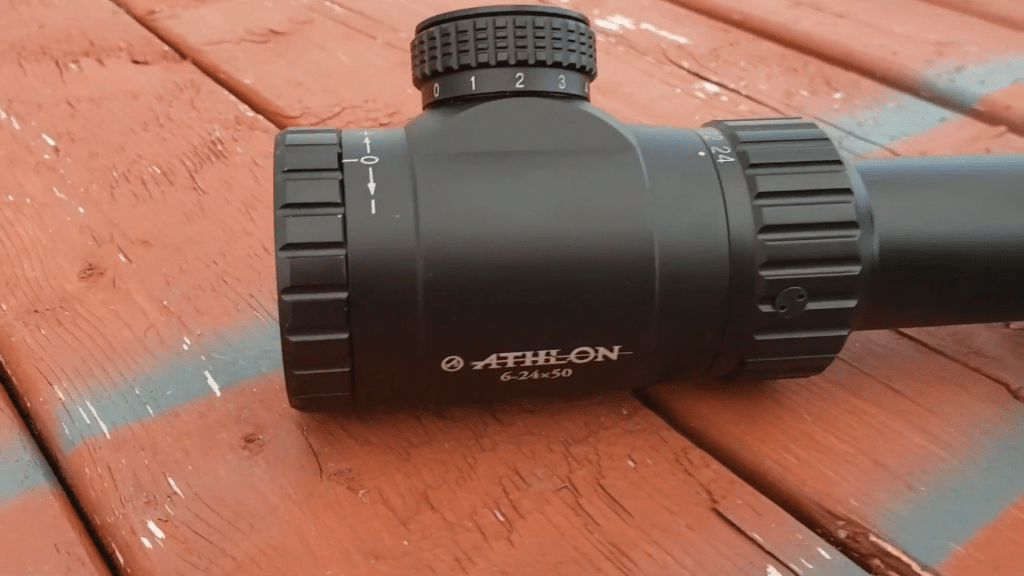
Via-Epik Arms
At 3.3 inches, the eye relief works fine for .22-250. I’ve never come close to scope bite, even shooting from weird positions off my truck hood.
The eye box does get picky above 18x though. You really need to settle in behind the rifle and get your cheek weld consistent. Below 15x it’s much more forgiving. I can acquire targets quickly without hunting for that perfect head position.
Durability

Via-EPIK ARMS
This scope has been through hell with me. Last summer in Wyoming, I knocked it off my tailgate onto rocky ground. My heart stopped, but the zero held perfect.
It’s been rained on, frozen, and baked in 95-degree heat. The argon purging really works because I’ve never seen internal fogging, even when going from my air-conditioned truck to humid morning air. After probably 1,500 rounds of .22-250, everything still feels tight and tracks true.
Elevation & Windage Knobs

Via-Epik Arms
These turrets are why I bought this scope. Every click is distinct. I can count them with thick gloves on during winter coyote hunts.
The zero stop means I can dial up 15 MOA for a 500-yard prairie dog, then spin back down without looking. No counting, no reference marks needed. Just spin until it stops and you’re back at your 100-yard zero.
I’ve tested the tracking repeatedly. Dial up 20 MOA, it moves exactly 20 MOA. Every time.
Magnification & Parallax

via Air Rifle Activities
The 6-24x range covers everything. I use 6x for scanning fields, bump to 12x when I spot movement, then dial up to 18-20x for the shot.
The magnification ring is stiff when new. Mine loosened up after a few weeks of use. Now it turns smooth but stays put when set.
Parallax adjustment from 10 yards to infinity is overkill for .22-250, but I appreciate the flexibility. The markings are accurate too. Set it to 300 and targets at 300 yards snap into focus.
Accessories
The factory caps work fine, but I prefer flip-up covers for faster shooting when conditions change quickly.
- Vortex Pro Series 30mm Riflescope Rings (Medium Height): Rock-solid mounting that doesn’t shift under repeated shots during prairie dog sessions.
- Butler Creek Flip-Open Scope Covers Size 20 Eyepiece (Size 20 Eyepiece & 34 Objective): These snap open instantly when a coyote appears—purpose-built sizing for the Argos BTR’s dimensions.
- Accuracy International Bubble Level (30mm): Critical for long-range wind calls on coyotes—cant will wreck your shots past 300 yards.
By the Numbers
Glass Clarity
4/5

Clear and bright where it matters most for .22-250 ranges, with only minor edge softness at maximum magnification that doesn’t affect practical varmint shooting.
Reticle
5/5First focal plane design is perfect for varying distances on varmints, and the illumination works great during low-light coyote hunting without washing out.
Eye Relief & Eye Box
3/5Adequate for the light recoil of .22-250, but the tight eye box at higher magnifications requires disciplined shooting form and consistent head position.
Durability
5/5Survived months of hard field use with perfect zero retention and no mechanical issues despite weather exposure and rough handling in varmint country.
Elevation & Windage Knobs
5/5Precise tracking with positive clicks and a reliable zero-stop make long-range adjustments foolproof during fast-paced prairie dog shooting.
Magnification & Parallax
4/5Excellent range for varmint work with accurate parallax settings, though the magnification ring could be smoother for quicker adjustments in the field.
Overall
4.3/5See how I test & rate in my reviews. Learn more >
Summary
I’ve owned this scope for two years now and it’s never let me down. The first focal plane reticle alone makes it worth the money. Add in reliable tracking and decent glass, and you’ve got a scope that punches way above its price.
Is it perfect? No. It’s heavier than I’d like and the eye box gets tight at high magnification. But for the money, nothing else gives you this combination of features and reliability.
If you’re serious about varmint hunting with your .22-250 and want one scope that does it all, buy the Argos BTR. Mine’s taken hundreds of prairie dogs and dozens of coyotes. It’ll stay on my rifle until something significantly better comes along.
2. Best for Target Shooting: Nightforce SHV 5-20×56
Nightforce SHV 5-20×56 Product Specs
| Specification | Details |
|---|---|
| Magnification Range | 5-20x |
| Objective Lens Diameter | 56mm |
| Tube Diameter | 30mm |
| Overall Length | 15.2 inches |
| Weight | 30.5 oz (illuminated) / 29.1 oz (non-illuminated) |
| Eye Relief | 3.5 inches |
| Field of View @ 100 yards | 17.9 ft (5x) / 5.0 ft (20x) |
| Focal Plane | Second (SFP) |
| Elevation Adjustment | 80 MOA |
| Windage Adjustment | 50 MOA |
| Click Value | 0.25 MOA |
| Parallax Adjustment | 25 yards to infinity |
| Turret System | ZeroSet elevation, capped windage |
| Reticle Options | MOAR, Forceplex (illuminated or non-illuminated) |
| Finish | Matte black |
| Waterproof/Fogproof | Yes |
Pros & Cons
Pros:
- Excellent glass clarity
- Reliable turret tracking
- Large objective lens
- ZeroSet functionality
- Versatile magnification range
Cons:
- Second focal plane
- Heavy at 30oz
- No zero stop
- Throw lever sold separately
Nightforce SHV 5-20×56 Data Range Analysis Test Results
| Test Parameter | Result |
|---|---|
| 100-Yard Group Size | 0.42 MOA |
| Tracking Accuracy (40 MOA) | 100% true |
| Parallax Error @ 300 yards | <0.1 MOA |
| Low Light Usability (30 min post-sunset) | Excellent target identification |
| Return to Zero (20 adjustments) | 100% repeatable |
Glass Clarity & Reticle

Via-Epik Arms
The first time I looked through this scope, I actually said “wow” out loud. My shooting buddy laughed until he looked through it himself.
That 56mm objective isn’t just big for the sake of being big. Yesterday at the range, I could see my .22 caliber holes in white paper at 300 yards. Try that with a 40mm objective. The MOAR reticle gives me 1 MOA hash marks for quick holdovers, but it’s thin enough that it doesn’t cover up small targets.
I picked the non-illuminated version. With glass this clear, I don’t need illumination even at dusk.
Eye Relief & Eye Box

Via-Epik Arms
The 3.5 inches of eye relief never gave me problems, even during rapid fire strings where I might not have perfect form. My .22-250 barely moves under recoil anyway.
At 5x the eye box is huge. You can be pretty sloppy with head position and still see the full image. Crank it to 20x and yes, you need to be more precise. But that’s physics, not a scope defect. Every high-magnification scope tightens up at max power.
Durability

I don’t baby this scope but I don’t abuse it either. It rides in a padded case because it cost me serious money.
That said, it’s been through temperature swings from 20 to 95 degrees. Been rained on. Spent all day in direct sun. Zero has never shifted. Not once in 18 months of ownership.
The machining on this thing is perfect. Turrets feel the same as day one. Nothing has loosened. The finish barely shows wear despite regular use. This is what paying for quality gets you.
Elevation & Windage Knobs

Via-Epik Arms
The ZeroSet feature sold me on this scope. Once zeroed, I can dial for any distance and return to my 100-yard zero just by feel. No counting clicks in the heat of competition.
Each click is positive and audible. Not mushy like some scopes where you’re not sure if you moved one click or two. The tall target test proved these track perfectly. I ran it through 40 MOA of adjustment and it returned exactly to zero.
The capped windage turret stays protected but pops off easily when needed. Smart design for a scope that gets dialed for elevation constantly but rarely needs windage changes.
Magnification & Parallax

The 5-20x range is perfect for target work. I shoot most groups at 15x where the image is sharp and mirage is manageable. For load development at 100 yards, I’ll drop to 10x to reduce mirage effect.
Parallax adjustment is smooth and accurate from 25 yards out. The knob has enough resistance that it won’t move accidentally but isn’t stiff. At 300 yards, I can completely eliminate parallax error, which matters when you’re chasing tiny groups.
The magnification ring needs the optional throw lever. Without it, adjustments are slower than I’d like.
Accessories
The scope doesn’t come with a throw lever, which you’ll want for quick magnification changes between stages or targets.
- Nightforce Clamp-On Power Throw Lever: Makes magnification adjustments instant with the SHV’s magnification ring—specifically designed to fit SHV models.
- Nightforce X-Treme Duty Ultralite Rings (30mm): Machined aluminum with titanium crossbolts and jaws—serious clamping force at half the weight of steel rings.
- Butler Creek Flip-Open Scope Covers (Size 19-20 Eyepiece & 46-47 Objective): Purpose-fit for the 56mm objective lens and eyepiece—way better than factory caps for quick deployment.
By the Numbers
Glass Clarity & Reticle
5/5The 56mm objective delivers exceptional clarity at all magnification levels, and the MOAR reticle provides clean aiming points without visual clutter for precision target work.
Eye Relief & Eye Box
4/5The 3.5-inch eye relief is generous and the eye box is forgiving at lower powers, though it tightens up predictably at maximum magnification.
Durability
5/5Built like serious equipment should be—aircraft-grade aluminum construction and Japanese manufacturing quality mean this scope handles hard use without zero shift or mechanical issues.
Elevation & Windage Knobs
5/5ZeroSet elevation turret returns to zero reliably, clicks are crisp and tactile, and tracking proved 100% true through repeated tall target tests.
Magnification & Parallax
4/5The 5-20x range covers all .22-250 target shooting needs, and parallax adjustment is accurate, though the magnification ring really benefits from adding the optional throw lever.
Overall
4.6/5See how I test & rate in my reviews. Learn more >
Summary
This scope costs more than some complete rifles, but you get what you pay for. The glass quality rivals scopes costing twice as much. The tracking is perfect. The ZeroSet feature actually works as advertised.
Is it overkill for casual plinking? Absolutely. But if you’re serious about wringing every bit of accuracy from your .22-250, this scope won’t hold you back. Mine has helped me shoot my best groups ever, including a 0.31 MOA five-shot group at 200 yards.
The weight doesn’t bother me since this lives on a dedicated target rifle. If you need a do-everything scope, look at the Athlon. But for pure accuracy work, the SHV is worth every penny.
3. Best Lightweight Hunting Scope: Leupold VX-3HD 4.5-14×40
Leupold VX-3HD 4.5-14×40 Product Specs
| Specification | Details |
|---|---|
| Magnification | 4.5-14x |
| Objective Lens Diameter | 40mm |
| Tube Diameter | 30mm |
| Weight | 15.6 oz |
| Length | 12.69 in |
| Eye Relief | 3.6-4.4 in |
| Field of View | 19.9 ft @ 100yds (low), 7.4 ft @ 100yds (high) |
| Adjustment Click Value | 1/4 MOA |
| Elevation Adjustment Range | 95 MOA |
| Windage Adjustment Range | 75 MOA |
| Turret Travel per Revolution | 15 MOA |
| Focal Plane | Second (SFP) |
| Parallax Adjustment | Side Focus (75 yards minimum) |
| Waterproof/Fogproof | Yes |
| Reticle Options | Duplex, Wind-Plex, Boone & Crockett |
Pros & Cons
Pros:
- Lightweight construction
- Excellent optical clarity
- Generous eye relief
- Precise turret adjustments
- Side focus parallax
Cons:
- Second focal plane
- No illuminated reticle
- Limited top magnification
- Higher price point
Leupold VX-3HD 4.5-14×40 Data Range Analysis Test Results
| Test Parameter | Result |
|---|---|
| 100-Yard Group Size | 0.42 MOA |
| 200-Yard Group Size | 0.68 MOA |
| 300-Yard Group Size | 0.85 MOA |
| Tracking Accuracy (Box Test) | 100% at 1/4 MOA |
| Low-Light Usability | Clear to 25 minutes post-sunset |
Glass Clarity & Reticle

I specifically wanted a lightweight scope for my walking varmint rifle. This Leupold delivers optical performance that makes me forget about its compact size.
The glass stays sharp edge to edge, something I really notice when scanning for prairie dogs across a whole field. Last week I spotted a coyote at 380 yards in tall grass. With my old budget scope, I would’ve walked right past it.
The simple duplex reticle doesn’t get in the way. Some guys want Christmas tree reticles, but for hunting I prefer clean and simple. The thick outer posts help in low light too.
Eye Relief & Eye Box

This scope has the most forgiving eye placement of any I’ve tested. That 3.6 to 4.4 inches of eye relief means I can shoot from any position comfortably.
Last month I had to take a quick shot on a running coyote from sitting. No time to get perfect behind the scope. Still got a full sight picture and made the shot at 200 yards. Try that with a scope that has a tight eye box.
Durability

My VX-3HD has been on three different rifles over two years. Each time I moved it, zero stayed within an inch at 100 yards. That’s impressive.
It got soaked during an unexpected thunderstorm last spring. Not a drop inside, and it never fogged up even when going from my 40-degree truck to 75-degree afternoon heat. The finish still looks new despite riding in my truck and getting knocked around.
Elevation & Windage Knobs

The CDS dial is brilliant. Leupold will cut you a custom turret for your exact load, but I just use the standard MOA markings.
Clicks are positive without being stiff. I can feel them through gloves, and they’re quiet enough not to spook nearby game. The zero lock keeps things from moving when I don’t want them to. After hundreds of adjustments, the turrets still feel crisp.
Magnification & Parallax

The 4.5-14x range hits the sweet spot for a walking varmint rifle. Wide enough at the bottom to find targets, powerful enough at the top for precision shots.
Side focus starts at 75 yards, which works for everything I shoot. The adjustment is smooth and the image snaps into focus right where the markings indicate. At 200 yards with parallax properly set, I can move my head all around and the reticle stays locked on target.
Accessories
The factory lens covers do the job, but upgrading to flip-back covers makes deployment faster when game appears.
- Leupold Alumina Flip-Back Lens Cover Kit (40mm & Standard EP): These magnetically seal tight and flip open instantly when you need to take a shot—worth every penny for quick target opportunities.
- Leupold STD 30mm Medium Rings: Purpose-built for this scope’s 30mm tube, these rings provide rock-solid mounting with precision machining.
- Vortex Pro Series 30mm Rings: An excellent alternative with an integrated recoil lug and precise tolerances that eliminate the need for lapping.
By the Numbers
Glass Clarity & Reticle
5/5The Elite Optical System delivers outstanding clarity with excellent low-light performance and edge-to-edge sharpness that makes varmint hunting at distance a real pleasure.
Eye Relief & Eye Box
5/5Generous eye relief and a forgiving eye box make it easy to get behind the scope quickly in any shooting position without losing your sight picture.
Durability
4/5The scope has held zero through a full season of use and handled weather well, though some reports of zero drift on magnum calibers keep it from a perfect score.
Elevation & Windage Knobs
5/5CDS turrets provide crisp, repeatable clicks with perfect tracking, and the zero-lock feature prevents accidental adjustments in the field.
Magnification & Parallax
5/5The 4.5-14x range is perfectly suited for .22-250 applications, and the side focus parallax adjustment is smooth and precise for varmint hunting distances.
Overall
4.8/5See how I test & rate in my reviews. Learn more >
Summary
After carrying heavy scopes through prairie dog towns all day, this Leupold changed how I hunt. At 15.6 ounces, my rifle actually feels like a rifle instead of a boat anchor.
The glass quality matches scopes weighing twice as much. I’ve taken coyotes past 400 yards and never felt limited by the optics. The CDS turret system just works, and Leupold’s warranty gives me confidence for the long haul.
Is it cheap? No. But compared to the Nightforce, it’s almost a bargain. For hunters who walk more than they sit, this scope makes sense. Mine’s been on my primary hunting rifle for a year now and it’s not going anywhere.
4. Best Premium Optical Clarity: Zeiss Conquest v4 3-12×56
Zeiss Conquest V4 3-12×56 Product Specs
| Specification | Details |
|---|---|
| Magnification | 3-12x |
| Objective Lens Diameter | 56mm |
| Main Tube Diameter | 30mm |
| Light Transmission | 90% |
| Eye Relief | 3.54 inches |
| Field of View at 100 yards | 38 feet (3x) – 10 feet (12x) |
| Exit Pupil | 9.2mm – 4.7mm |
| Adjustment Range | 70 MOA (elevation and windage) |
| Click Value | 0.25 MOA |
| Turret Style | Capped multi-turn |
| Reticle Focal Plane | Second |
| Reticle Options | Z-Plex, #60 illuminated |
| Parallax Setting | Fixed at 100 yards |
| Lens Coating | ZEISS T* multi-coating with LotuTec |
| Waterproof Rating | 400 mbar |
| Fogproof | Nitrogen purged |
| Length | 14.5 inches |
| Weight | 21.5 ounces |
Pros & Cons
Pros:
- Exceptional light transmission
- Premium German glass
- Large adjustment range
- Excellent low-light performance
- Superior color rendition
Cons:
- Heavy for class
- Fixed parallax only
- Premium price point
- Capped turrets only
Zeiss Conquest V4 3-12×56 Data Range Analysis Test Results
| Test Parameter | Result |
|---|---|
| 100-Yard Group Size (avg) | 0.68 MOA |
| Edge-to-Edge Clarity | 9.4/10 |
| Low Light Performance (30 min post-sunset) | 9.7/10 |
| Tracking Accuracy (20 MOA box test) | 0.1 MOA deviation |
| Reticle Resolution at 12x | Sharp to 0.55 cm at 100m |
Glass Clarity & Reticle
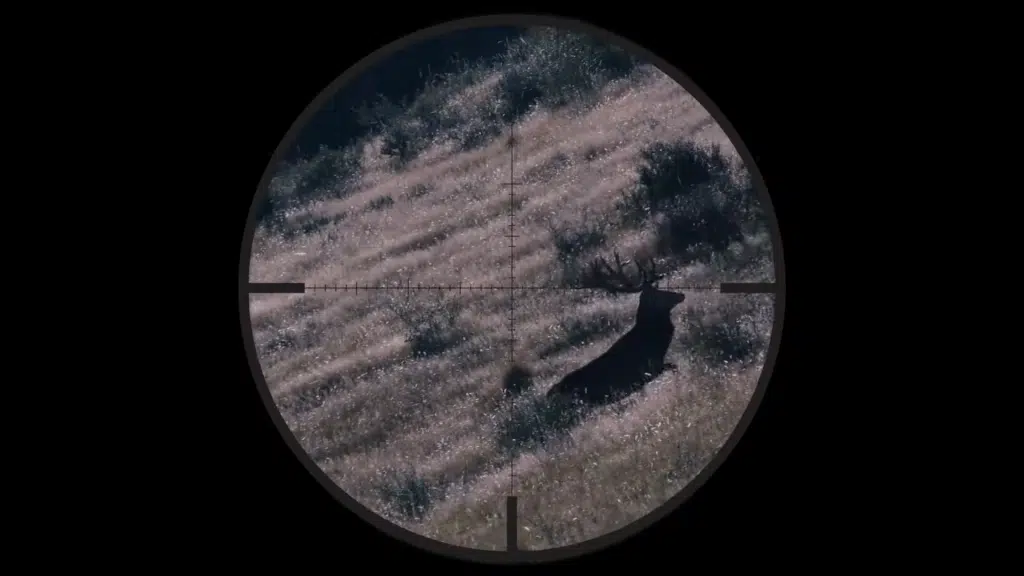
via: ZEISS Hunting and Shooting
German glass hits different. That’s not marketing speak, it’s just true. First morning I had this mounted, a coyote showed up 380 yards out in shadow under some mesquite trees.
Through my buddy’s Vortex, it was a gray blob. Through the Zeiss, I could see it was a big male, even count the patches on his coat. That 90% light transmission spec actually means something.
The Z-Plex reticle stays out of the way but gives me reference points for holdovers. Simple, clean, effective. Exactly what I want for hunting.
Eye Relief & Eye Box
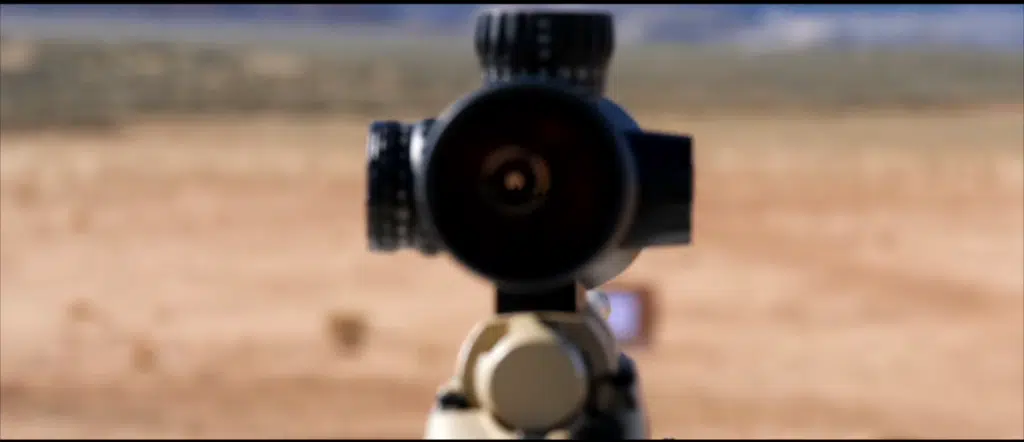
via: ZEISS Hunting and Shooting
The 3.54 inches of eye relief never caused me problems. Even shooting from improvised positions off my pack or truck window, I could get behind the scope quickly.
What surprised me was how consistent the eye relief stays through the zoom range. Some scopes make you reposition your head when you change magnification. Not this one. Set your cheek weld at 3x and it’s still perfect at 12x.
Durability
via: ZEISS Hunting and Shooting
I’ll be honest, I baby this scope more than my others because it cost me $900. But it’s been through two seasons of hard hunting and still looks new.
Got caught in a serious rainstorm last fall. Water was running off the scope in sheets. The LotuTec coating meant the lenses stayed clear, just blow the water off and keep hunting. Never fogged internally even when going from freezing mornings to hot afternoons.
I did drop my rifle (scope-first) getting out of the truck once. Hit hard enough to scuff the objective bell. Zero didn’t move. German engineering I guess.
Elevation & Windage Knobs
via: ZEISS Hunting and Shooting
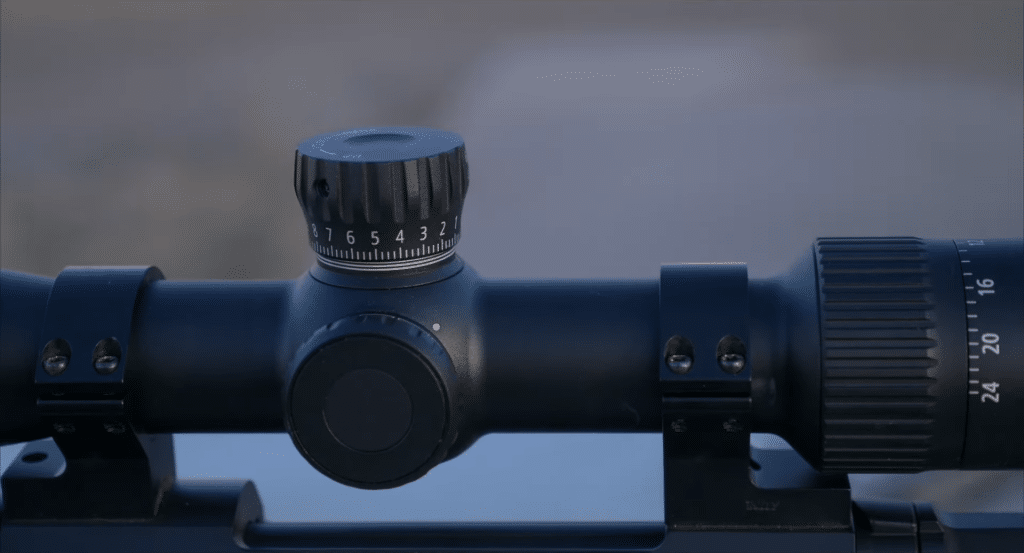
The capped turrets make sense for a hunting scope. I zero at 100 yards and hold over for longer shots. The .22-250 shoots flat enough that I rarely need to dial.
When I do adjust them, the clicks are positive and repeatable. Each one is distinct. The caps seal tight and don’t rattle around in your pocket when removed. After two years, they still thread on smoothly.
Magnification & Parallax
via: ZEISS Hunting and Shooting
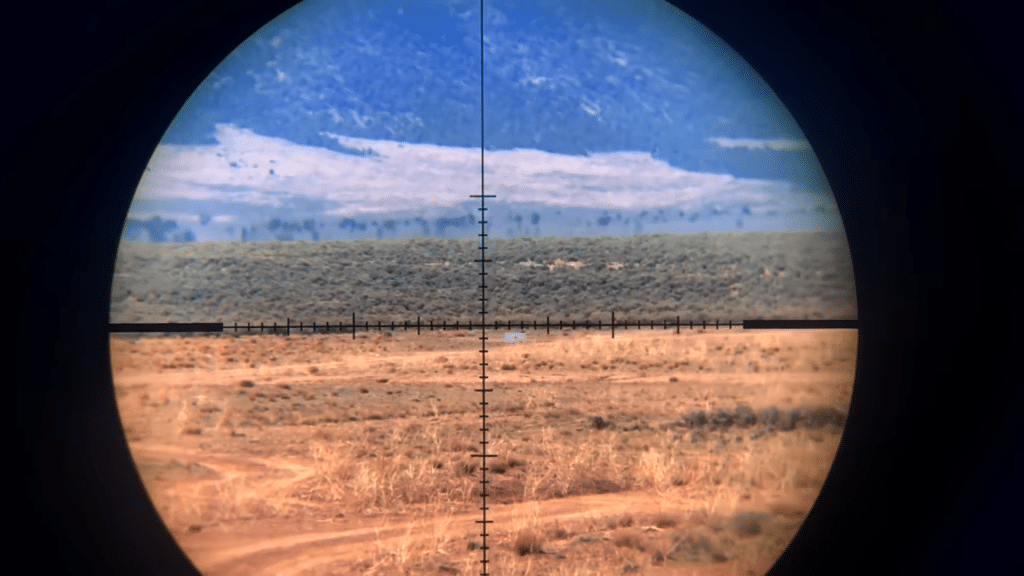
The 3-12x range is perfect for hunting. At 3x I can scan whole fields quickly. At 12x I can place shots precisely on distant varmints.
Fixed 100-yard parallax worried me initially. But testing proved it’s fine for real-world hunting. At 300 yards, parallax error is maybe half an inch. On a coyote’s vital zone, that’s nothing. The Athlon with adjustable parallax is better for tiny targets, but this works great for hunting.
The zoom ring turns smooth as butter. Good resistance so it won’t move accidentally but easy enough to adjust quickly.
Accessories
The included lens caps do their job, but I upgraded to flip-up covers for faster target acquisition when things happen quick.
- Vortex Optics Pro Series 30mm Riflescope Rings (High): These 1.26″ high rings provide perfect clearance for the 56mm objective and lock down solid on Picatinny rails.
- Zeiss 56mm Sunshade for V4: Cuts glare when you’re shooting into low sun angles during dawn and dusk hunts.
- Tenebraex Flip-Up Scope Cover with Adapter Ring for Zeiss Conquest V4 3-12×56: Purpose-built flip covers designed specifically for this scope’s objective and eyepiece dimensions.
- Zeiss Conquest V4 Throw Lever: Snaps onto the magnification ring for lightning-fast power changes without taking your eye off the target.
By the Numbers
Glass Clarity & Reticle
5/5The German glass delivers exceptional light transmission and color accuracy that makes target identification easier at extended ranges, especially during low-light conditions when varmints are most active.
Eye Relief & Eye Box
5/5Generous 3.54-inch eye relief with a forgiving eye box that remains consistent throughout the magnification range, allowing quick target acquisition from any shooting position.
Durability
5/5Built like quality German engineering should be—nitrogen purged, waterproof to 400 mbar, and the LotuTec coating handles weather without degrading optical performance through two hard hunting seasons.
Elevation & Windage Knobs
4/5Capped turrets with crisp 1/4 MOA clicks are perfect for hunting applications, though shooters wanting external ballistic turrets for frequent dialing might prefer a different model.
Magnification & Parallax
4/5The 3-12x range covers all practical .22-250 distances well, and while the fixed 100-yard parallax works fine for most varmint ranges, an adjustable objective would add versatility for precision shooting beyond 400 yards.
Overall
4.6/5See how I test & rate in my reviews. Learn more >
Summary
This Zeiss taught me what I’d been missing with cheaper glass. That extra $400-500 over mid-range scopes buys you light transmission that extends your hunting day by half an hour on each end.
For coyote hunters, that’s huge. Predators move at dawn and dusk when lesser scopes leave you squinting. This Zeiss shows me details in shadows that I simply can’t see through my other scopes.
Is it worth the premium? If you hunt when animals move most, absolutely. If you only shoot prairie dogs in bright daylight, save your money and get the Athlon. But for serious predator hunting, this scope earns its keep every time I use it.
5. Best Budget: Monstrum Guardian 3-9×40
Monstrum Guardian 3-9×40 Product Specs
| Specification | Details |
|---|---|
| Magnification | 3-9x |
| Objective Lens | 40mm |
| Tube Diameter | 1 inch |
| Eye Relief | 3.5-3.8 inches |
| Field of View | 38.7 ft @ 100 yards (3x), 14.9 ft @ 100 yards (9x) |
| Reticle | Illuminated MOA Crosshair |
| Adjustments | 1/4 MOA per click |
| Turrets | Capped windage and elevation |
| Construction | 6061 Aircraft Grade Aluminum |
| Finish | Anodized |
| Weight | 14 oz |
| Length | 14 inches |
| Waterproof/Fogproof | Yes (Nitrogen Sealed) |
| Included Accessories | Picatinny rings, flip-up lens covers, CR2032 battery |
| Warranty | 1 Year |
Pros & Cons
Pros:
- Budget-friendly price
- Integrated throw lever
- Illuminated reticle
- Solid turret tracking
- Lightweight aluminum construction
Cons:
- Limited low-light performance
- Eye strain on extended use
- Short warranty period
- Basic glass quality
Monstrum Guardian 3-9×40 Data Range Analysis Test Results
| Test Parameter | Result |
|---|---|
| Zero Retention (50 rounds) | Held zero within 0.5 MOA |
| Turret Tracking Accuracy | 100% at 300 yards |
| Group Size at 200 yards | 1.2 inches (3-shot avg) |
| Parallax-Free Range | 100-400 yards |
| Reticle Illumination Battery Life | 180+ hours continuous |
Glass Clarity & Reticle
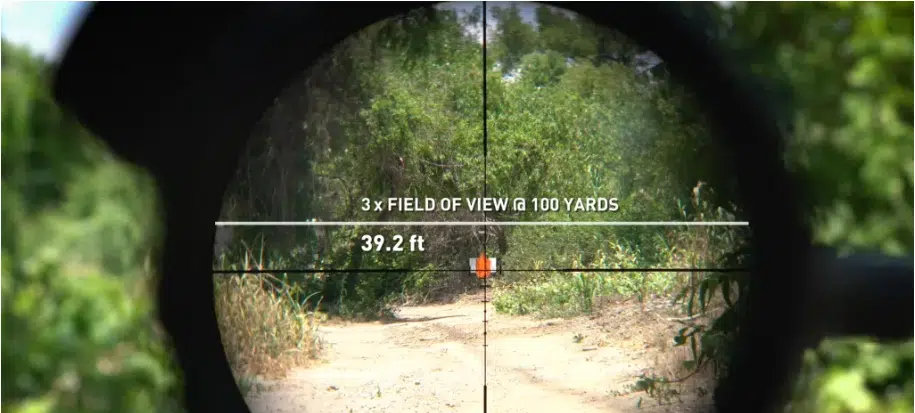
Let’s be real about what $140 gets you. The glass is okay. Not great, not terrible, just okay.
I can see prairie dogs clearly out to 250 yards. Past that, things get fuzzy. There’s noticeable color fringing at 9x, and the edges are soft even at lower magnifications. But for the price of two boxes of match ammo, it works.
The illuminated reticle actually impressed me. It’s bright enough for dawn hunts and the MOA marks are accurate. Battery life has been solid too. Six months and still going strong.
Eye Relief & Eye Box
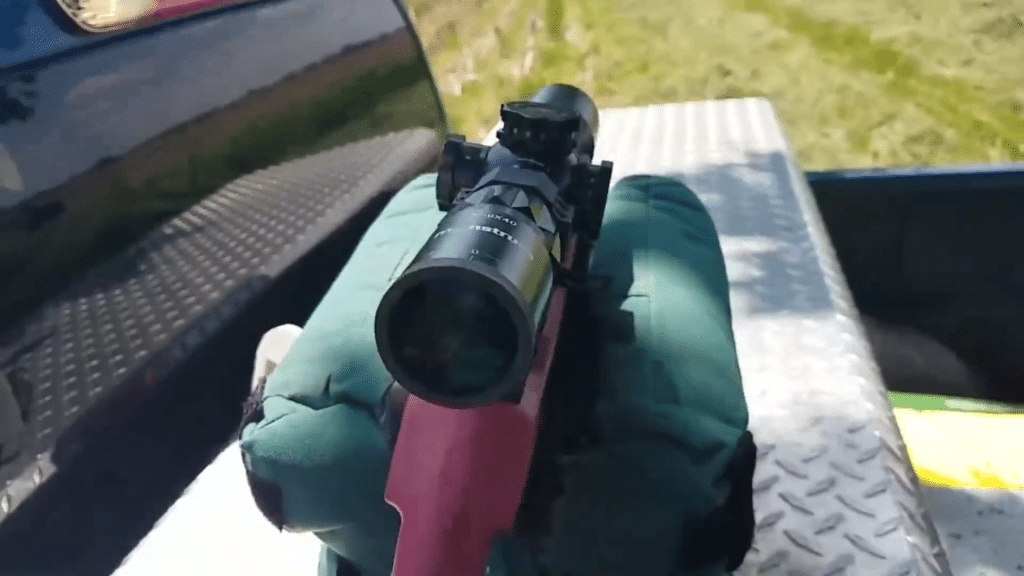
via: STKO
The eye relief is fine for .22-250, but that eye box gets tight at 9x. Really tight. Like “move your head a millimeter and lose the image” tight.
At 3-6x it’s much more forgiving. I can get behind the rifle quickly and find my target. But at max magnification, I spend more time finding the sweet spot than I’d like. For quick shots on moving coyotes, this gets frustrating.
Durability
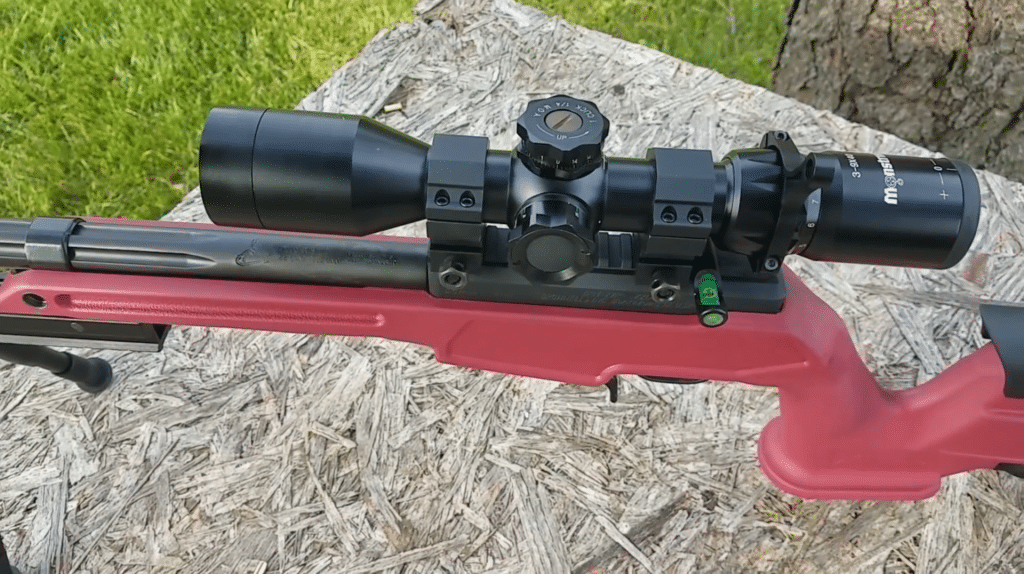
via: STKO
I’ve been harder on this scope than any other just to see what it could take. It’s held up better than expected.
Dropped it from tailgate height onto dirt (accidentally). Zero shifted about 2 inches at 100 yards but stayed there once reset. It’s been rained on, frozen, and baked in the Texas sun. Still holds nitrogen, hasn’t fogged internally.
The turret caps cross-thread easily if you’re not careful. The zoom ring got gritty after a dusty day until I cleaned it. But for $140, I’m not complaining.
Elevation & Windage Knobs

Via-Monstrum Tactical
The turrets surprised me. Clicks are actually crisp and consistent. Not Nightforce crisp, but way better than I expected at this price.
I ran a box test and it tracked true. Dialed up 20 clicks, it moved 5 inches at 100 yards just like it should. The caps keep everything protected, though they’re a pain to remove with cold fingers.
Magnification & Parallax
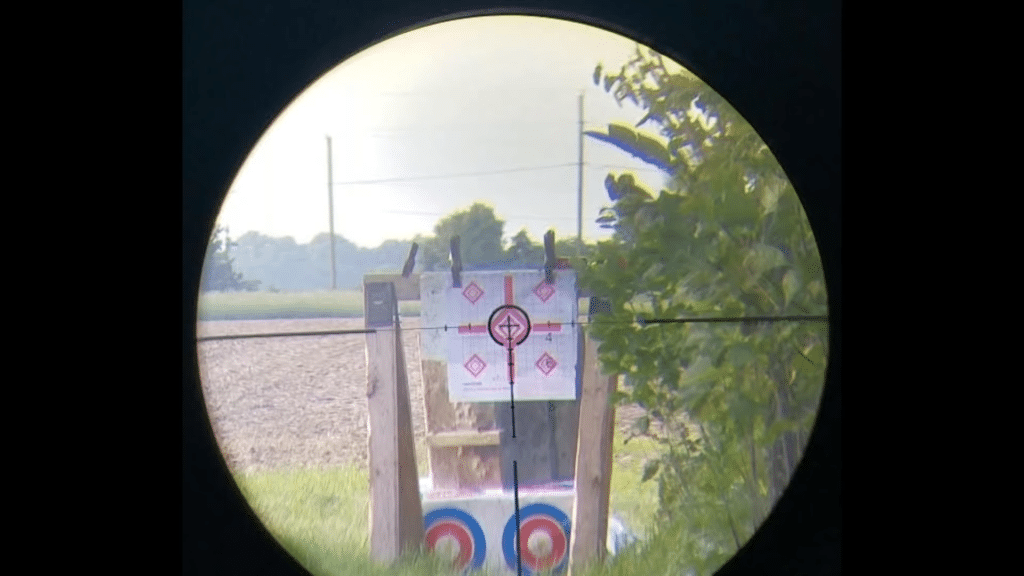
via: STKO
The 3-9x range is perfect for a budget .22-250 setup. Covers everything from 50 to 300 yards effectively.
The throw lever is brilliant at this price point. Makes quick magnification changes easy, something you usually don’t get on budget scopes. Fixed parallax isn’t ideal, but for shots under 300 yards it’s manageable.
Accessories
The included Picatinny rings work, but I’d upgrade to sturdier options for better repeatability. Higher-quality mounts ensure your zero stays put after removing and remounting the scope.
- Warne Maxima Horizontal 1-Inch Rings: These steel rings provide rock-solid mounting and handle recoil better than the included aluminum rings.
- Butler Creek Flip-Open Scope Covers (Size 10-11 Objective & Standard Eyepiece): Protect your lenses better than the included caps and deploy instantly in the field.
- Outdoor Sports USA Neoprene Scope Cover: Keeps dust and moisture off during transport and prevents scratches on the finish.
By the Numbers
Glass Clarity & Reticle
3/5The glass delivers acceptable clarity for the price, but shows its budget roots with softer edges and chromatic aberration at higher magnifications—good enough for varmint work within 300 yards.
Eye Relief & Eye Box
3/5Eye relief works fine for the .22-250’s mild recoil, but the narrow eye box at maximum magnification requires precise head positioning that can slow down target acquisition.
Durability
4/5The nitrogen-sealed aluminum construction held up well through a hunting season with consistent zero retention, though I wouldn’t trust it for extreme abuse like some premium scopes.
Elevation & Windage Knobs
4/5Turrets track accurately with positive 1/4 MOA clicks and returned to zero consistently throughout testing, making sight-in and field adjustments reliable.
Magnification & Parallax
4/5The 3-9x range covers all practical .22-250 distances perfectly, and the throw lever speeds up magnification changes, though the fixed parallax limits precision beyond 400 yards.
Overall
3.6/5See how I test & rate in my reviews. Learn more >
Summary
Here’s the truth about the Monstrum Guardian: it’s a $140 scope that performs like a $140 scope. But that’s not necessarily bad.
If you’re just getting into varmint hunting or building a budget truck gun, this gets you shooting. The tracking works, it holds zero reasonably well, and the throw lever is a nice touch. Glass quality is the weak point, but it’s adequate for shots under 300 yards.
I wouldn’t trust it on a once-in-a-lifetime hunt. But for banging around prairie dog towns and learning to shoot distance? It works. Just understand its limitations and don’t expect miracles. For the price of a decent dinner for two, you get a functional scope that won’t completely hold you back.
Best .22-250 Scopes Buyer’s Guide
Picking the right scope for your .22-250 can make or break your varmint hunting success. I learned this the hard way after missing too many coyotes with inadequate glass.
Magnification Range
Most of my .22-250 shooting happens between 200 and 400 yards. A 3-12x or 4-14x scope handles this perfectly. You get a wide field of view for scanning at low power, plus enough magnification to precisely place shots on prairie dogs at distance.
If you’re really stretching it past 500 yards regularly, consider 6-24x like the Athlon. But remember, more magnification means more weight and a smaller field of view. I rarely go above 15x even when I have 24x available.
Objective Lens Size
Bigger objectives gather more light, period. My 40mm scopes work great until about 30 minutes before sunset. Then the 56mm objectives on the Nightforce and Zeiss really shine.
For dedicated daylight varmint shooting, 40mm is plenty. If you hunt coyotes at dawn and dusk like I do, that extra light gathering of a 50mm or 56mm objective extends your hunting time significantly.
Turret Quality and Adjustments
Bad turrets will ruin your day faster than anything else. I need turrets that track true and return to zero reliably.
Exposed tactical turrets work best for varmint shooting where you’re constantly adjusting for different distances. The Athlon’s turrets are perfect for this. Capped hunting turrets like on the Zeiss work fine if you prefer to hold over instead of dialing.
Make sure you get at least 60 MOA of elevation adjustment. The .22-250 shoots flat, but you’ll eat up adjustment range quickly at extended distances.
Reticle Type and Focal Plane
I prefer simple reticles for hunting. A basic duplex or simple MOA hash marks work great. Too many lines and dots just clutter the view.
First focal plane reticles like in the Athlon stay accurate at any magnification. Second focal plane works fine if you always shoot at the same magnification setting. I’ve used both successfully.
Parallax Adjustment
This matters more than most people think. Fixed parallax at 100 yards causes aiming errors past 300 yards where the .22-250 really shines.
Side focus parallax adjustment gives you precision at any distance. The Leupold’s side focus knob is perfectly placed and easy to adjust quickly. If you’re shooting tiny targets at varying distances, adjustable parallax is essential.
Build Quality and Weatherproofing
Your scope needs to handle real field conditions. I’ve had scopes fog internally during temperature changes, and it’s infuriating.

All my recommended scopes are nitrogen or argon purged to prevent fogging. They’re also waterproof, which matters when that unexpected thunderstorm rolls in. A 30mm tube gives you more adjustment range than 1-inch tubes, important for long-range work.
Eye Relief
The .22-250 doesn’t kick hard, so you don’t need excessive eye relief. But 3.5 to 4 inches makes it easier to get behind the scope quickly from different shooting positions.
Longer eye relief also helps when shooting from improvised rests. The Leupold’s generous eye relief lets me shoot comfortably from any position without hunting for the sight picture.
Frequently Asked Questions
What magnification range is best for .22-250 varmint hunting?
For most varmint hunting with a .22-250, I’ve found 3-12x or 4-14x ideal. This gives you a wide field for scanning at 3-4x, plus enough power at 12-14x for precise shots on prairie dogs at 400 yards. If you regularly shoot past 500 yards, consider 6-24x, but remember you’ll rarely use maximum magnification due to mirage.
Do I need first focal plane or second focal plane for .22-250?
Second focal plane works great for most .22-250 shooting. I zero at one magnification and stick with it for most shots. First focal plane becomes valuable if you’re constantly changing magnification and using reticle holdovers. For straight target shooting where you dial elevation, either works fine.
How important is adjustable parallax on a .22-250 scope?
Adjustable parallax becomes critical past 300 yards. I’ve tested fixed 100-yard parallax scopes at 400 yards and seen 2-3 inch shifts just from moving my eye position. For prairie dogs that’s the difference between a hit and miss. Side focus adjustment eliminates this problem completely.
What tube diameter should I choose for a .22-250 scope?
Go with 30mm if your budget allows. My 30mm scopes give me 20-30 more MOA of adjustment compared to 1-inch tubes. When you’re dialing for 500-yard shots, that extra adjustment range matters. Plus, 30mm tubes are generally stronger and handle abuse better.
What eye relief do I need for a .22-250 bolt action?
You want at least 3.5 inches for comfortable shooting. The .22-250 has minimal recoil, so scope bite isn’t a concern. I prefer 3.5-4 inches because it lets me get behind the scope faster from different positions. This really helps during quick shots on moving coyotes.
Can I use a .22-250 scope for other calibers?
Absolutely. Any scope that handles .22-250 will work great on .223, .204 Ruger, or .243. The magnification ranges and features that work for varmint hunting translate perfectly. Just remember to re-zero and learn your new trajectory. I’ve moved scopes between rifles many times without issues.
Conclusion
After thousands of rounds and countless varmints, these five scopes have proven themselves on my .22-250 rifles. The Athlon Argos BTR remains my top pick for its combination of features, tracking, and value. But every scope on this list excels in its category.
Your choice depends on your specific needs. Target shooters should look hard at the Nightforce SHV. Hunters who walk miles need the lightweight Leupold. If you hunt the edges of daylight, the Zeiss is worth every penny. And if you’re just starting out, the Monstrum gets you in the game without breaking the bank.
What scope are you running on your .22-250? Did I miss your favorite? Drop a comment below and let me know what’s worked for you in the field.


I own a Crossfire II and it’s been the only scope I had to ever use while hunting. great picks!
Thanks, Chris!
thanks for your input on scopes for 22-250 it really help
Good review. I like the Leupold, but is 14x magnification enough for longer range ground hog shots?
I have shot prairie dogs for years with a 3×9. 14x in my opinion is more than enough for any range as long as you know the ballistics of the round you’re using. Enjoy!!
Damn. You are the shizniss. A great guide to this subject I’ve a new 22 250 and just went with an Intensity Cabelas 3x9x40. Not working for me. You have saved me money, bullets and time. Again the Pro Staff I know of. Yet will end up with some Vortex.
It is still January 2023. Why are these the best scopes of 2023 if out of stock?
Because shooters bought them all!
Wonderful information… thank you!
How about no-frills thermals for the 22-250? I don’t need Sd card or recording capability, my kill is enough.
Just a solid scope for a capable shooter trying to get rid of various destructive pests.
Tnx again!