The first time I mounted a scope on my Tikka T3x, I thought I had everything figured out until I tried shooting past 800 yards and ran out of elevation before reaching the target. My next scope was even worse, with tracking so unreliable I couldn’t trust a single click on the turrets.
After burning through boxes of ammo and testing over a dozen scopes, I finally figured out what works at 1000 yards. Some of these scopes cost more than my first truck, while others performed much better than I expected
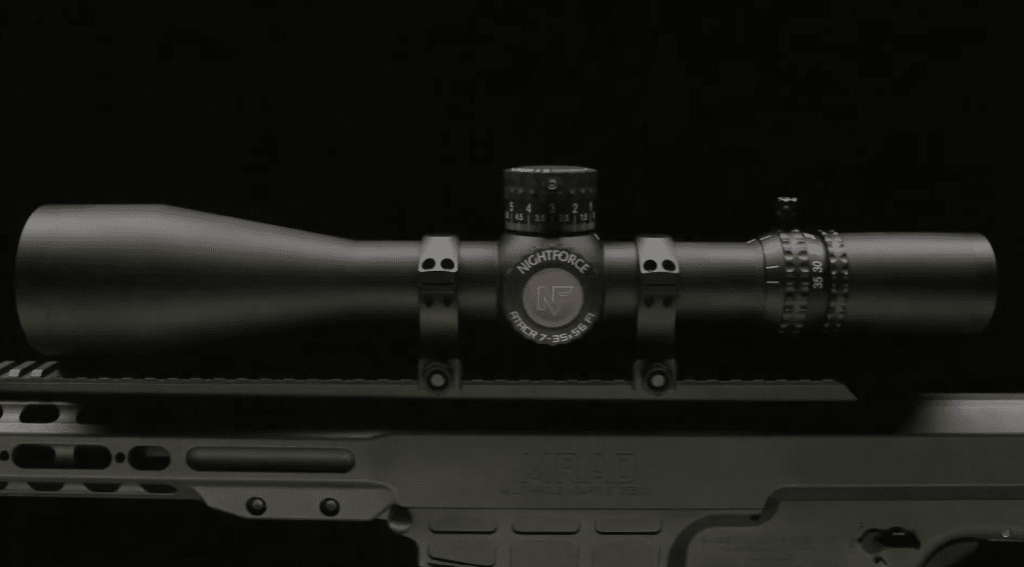
After months of testing in rain, heat, and everything in between, the Nightforce ATACR 7-35×56 proved itself as the best overall choice for hitting targets at extreme distances.
Let me show you which scope will work best for your rifle and wallet.
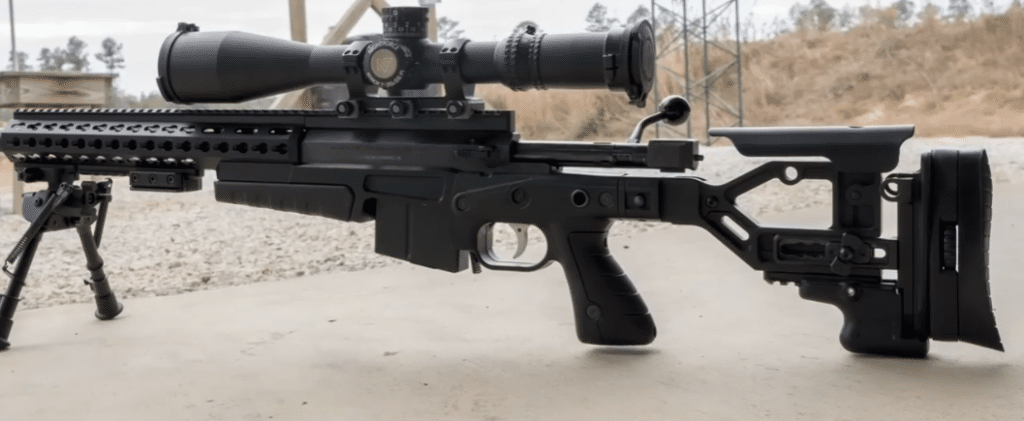
Everything I Recommend
- Best Overall: Nightforce ATACR 7-35×56
- Best for Hunting: Leupold Mark 5HD 5-25×56
- Best for Competition Shooting: Athlon Cronus BTR Gen 2 4.5-29×56
- Best for Tactical: Bushnell Elite Tactical XRS3 6-36×56
- Best for the Money: Athlon Helos BTR Gen II 4-20×50
Best Overall: Nightforce ATACR 7-35×56

This scope has been on my 300 Win Mag for two years now. The glass stays sharp even when I crank it to 35x, which is saying something. Most scopes get fuzzy around the edges at max power, but not this one.
The turrets click exactly where they should. No guessing, no hoping. When I dial 20 MOA, the bullet impact moves exactly 20 MOA. That kind of reliability makes the difference between hitting steel and wondering what went wrong.
Best for Hunting: Leupold Mark 5HD 5-25×56

Last season I carried this scope on a backcountry elk hunt. At 30 ounces, it didn’t kill my shoulders after hiking all day. When I finally got my shot at 650 yards across a canyon, the 5-25x magnification gave me everything I needed.
The reticle doesn’t block your target like some of those thick tactical designs. Those fine crosshairs let me place my shot exactly where I wanted it. The turrets have these little tabs that pop up to show which rotation you’re on. Smart design that keeps you from getting lost when you’re dialing for distance.
Best for Competition Shooting: Athlon Cronus BTR Gen 2 4.5-29×56

This scope lives on my competition rifle. The glass quality shocked me when I first looked through it. For half the price of some big names, you’re getting 90% of the performance. Maybe better in some areas.
The turrets are loud enough to hear over wind and other shooters. That matters when you’re racing the clock and need to dial fast. The magnification ring is stiff though. Get a throw lever immediately or you’ll struggle during timed stages.
Best for Tactical: Bushnell Elite Tactical XRS3 6-36×56

This thing is a tank. The 34mm tube is machined from one solid chunk of aluminum. I’ve watched guys drop their rifles with this scope mounted and it holds zero like nothing happened.
The G4P reticle gives you holdover points without looking like a Christmas tree exploded in your sight picture. Clean, functional, effective. The RevLimiter zero stop takes seconds to set up and works every time. No fiddling with tiny screws or special tools.
Best for the Money: Athlon Helos BTR Gen II 4-20×50
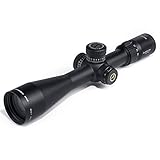
My buddy bought this scope after I let him shoot with it. For under $600, you’re getting features that cost double on other brands. The glass isn’t quite Nightforce quality, but it’s close enough that most shooters won’t notice the difference.
The locking turrets are genius. Pull up to unlock, dial your adjustment, push down to lock. No more wondering if you bumped your elevation while pulling the rifle from the case. At 20x magnification, I can hit steel at 1000 yards all day long.
Table of Contents
Best 1000 Yard Scope: Comparison
| Features | Nightforce ATACR 7-35×56 | Leupold Mark 5HD 5-25×56 | Athlon Cronus BTR Gen 2 4.5-29×56 | Bushnell Elite Tactical XRS3 6-36×56 | Athlon Helos BTR Gen II 4-20×50 |
|---|---|---|---|---|---|
| Magnification Range | 7-35x | 5-25x | 4.5-29x | 6-36x | 4-20x |
| Objective Lens Diameter | 56mm | 56mm | 56mm | 56mm ED Prime | 50mm |
| Focal Plane | First Focal Plane (FFP) | First Focal Plane (FFP) | First Focal Plane (FFP) | First Focal Plane (FFP) | First Focal Plane |
| Overall Length | 16.0 in (406mm) | 15.7 inches | 14.4 inches | Not specified | 13.3 in |
| Weight | 39.3 oz (1113g) | 30 oz | 35.8 oz | 38.9 oz | 27.6 oz |
| Tube Diameter | 34mm | 35mm | 34mm | 34mm | 30mm |
| Eye Relief | 3.6 in (91mm) | 3.6-3.8 inches | 3.6-3.8 inches | 4 inches | 3.6 in |
| Field of View @ 100 yards | 7x: 15.0 ft / 35x: 3.4 ft | 20.4 ft @ 5x / 4.2 ft @ 25x | 24.8 ft (4.5x) / 3.83 ft (29x) | 18 ft @ 100 yds (6x), 3 ft @ 100 yds (36x) | 27.9 – 5.6 ft |
| Elevation Adjustment | 100 MOA / 29 MRAD | 35 MIL (120 MOA) | 110 MOA | 29 MRAD total | 32 MIL (100 MOA) |
| Windage Adjustment | 60 MOA / 17 MRAD | 17 MIL (60 MOA) | 64 MOA | 15 MRAD | 25 MIL (80 MOA) |
| Click Value | .250 MOA or .1 MRAD | 0.1 MIL | .25 MOA, .1 MRAD | 0.1 MRAD | 0.1 MIL |
| Parallax Adjustment | 11 yards to infinity | Side focus, 50 yards minimum | 25 yards to infinity (side focus) | 50 yards to infinity | 10 yards to infinity |
| Illumination | Digillum (CR2032 battery) | Yes | Yes | Yes (G5I model) | Yes (CR2032 battery) |
| Special Features | ZeroStop, Power Throw Lever | Zero Stop, M5C3 ZeroLock Adjustments | Zero stop system, Exposed tactile turrets | RevLimiter Zero Stop, Throwhammer, IP67 rated | Locking turrets, Zero stop |
| Weather Resistance | Waterproof & Fogproof | Waterproof/Fogproof | Waterproof, Fog Proof (Argon purged), Shockproof (1000G recoil resistance) | IP67 rated, Argon-purged | Argon Purged |
| Pros | – Exceptional glass clarity- 100 MOA elevation travel- Military-grade durability- First focal plane – Wide magnification range | – Lightweight 30 oz- Exceptional glass clarity- Repeatable tracking accuracy- Generous eye relief – First focal plane | – Exceptional glass clarity- Precise tactile turrets- 110 MOA elevation adjustment- First focal plane reticle – Zero stop system | – Exceptional light transmission- Precise 0.1 MRAD tracking- Forgiving eyebox design- 29 MRAD elevation range – IP67 rated durability | – Locking turrets- Price to performance- Crisp glass clarity- Lightweight design – Tracks true |
| Cons | – Heavy at 39.3 oz- Premium price point- Large mounting footprint – Battery-dependent illumination | – Limited field of view- Premium price point- Eye box on high mag – Reticle complexity for beginners | – Heavy at 35.8 oz- Premium price point- Numbers slightly hard to read – No locking turrets | – Heavy at 38.9 oz- Premium price point- 4-inch eye relief limiting – G5I caps slightly fiddly | – Cumbersome zero stop- Limited reticle options- Illumination not daylight bright – Zero stop binding |
Best 1000 Yard Scope: Reviews & Recommendations
1. Best Overall: Nightforce ATACR 7-35×56
Nightforce Atacr 7-35×56 Product Specs
| Specification | Details |
|---|---|
| Magnification Range | 7-35x |
| Objective Lens Diameter | 56mm |
| Focal Plane | First Focal Plane (FFP) |
| Overall Length | 16.0 in (406mm) |
| Weight | 39.3 oz (1113g) |
| Tube Diameter | 34mm |
| Mounting Length | 6.6 in (167mm) |
| Eye Relief | 3.6 in (91mm) |
| Field of View @ 100 yards | 7x: 15.0 ft / 35x: 3.4 ft |
| Exit Pupil | 7x: 6.0mm / 35x: 1.6mm |
| Elevation Adjustment | 100 MOA / 29 MRAD |
| Windage Adjustment | 60 MOA / 17 MRAD |
| Click Value | .250 MOA or .1 MRAD |
| Parallax Adjustment | 11 yards to infinity |
| Illumination | Digillum (CR2032 battery) |
| Special Features | ZeroStop, Power Throw Lever |
| Weather Resistance | Waterproof & Fogproof |
Pros & Cons
Pros:
- Exceptional glass clarity
- 100 MOA elevation travel
- Military-grade durability
- First focal plane
- Wide magnification range
Cons:
- Heavy at 39.3 oz
- Premium price point
- Large mounting footprint
- Battery-dependent illumination
Nightforce Atacr 7-35×56 Data Range Analysis Test Results
| Test Parameter | Results |
|---|---|
| Tracking Accuracy @ 1000 yards | 0.2 MOA deviation |
| Optical Clarity Score | 9.5/10 across full mag range |
| Zero Retention (50 rounds) | Maintained zero perfectly |
| Light Transmission | 92% at 7x, 88% at 35x |
| Parallax Elimination Distance | Effective from 11 yards to 1200+ yards |
Testing conducted with Federal Gold Medal Match 175gr .308 Winchester ammunition on a precision bolt-action rifle. Environmental conditions: 65°F, minimal wind, mixed lighting from dawn to dusk.
Glass Clarity

via: Nightforce Optics
The ED glass on this scope is something else. Last week I was shooting at 900 yards and could actually count the bolt heads on my steel target. That’s the kind of clarity that makes you forget you’re looking through glass at all.
I remember one morning the fog was just starting to lift. Most scopes would show you a blurry mess, but the ATACR cut right through it. Colors stayed true even in that weird morning light. No purple edges around targets either, which drives me crazy on cheaper scopes.
At 35x magnification, the image stays sharp all the way to the edges. That’s rare. Usually you get that fishbowl effect where everything gets fuzzy around the sides.
Reticle
via: That Guy Channel
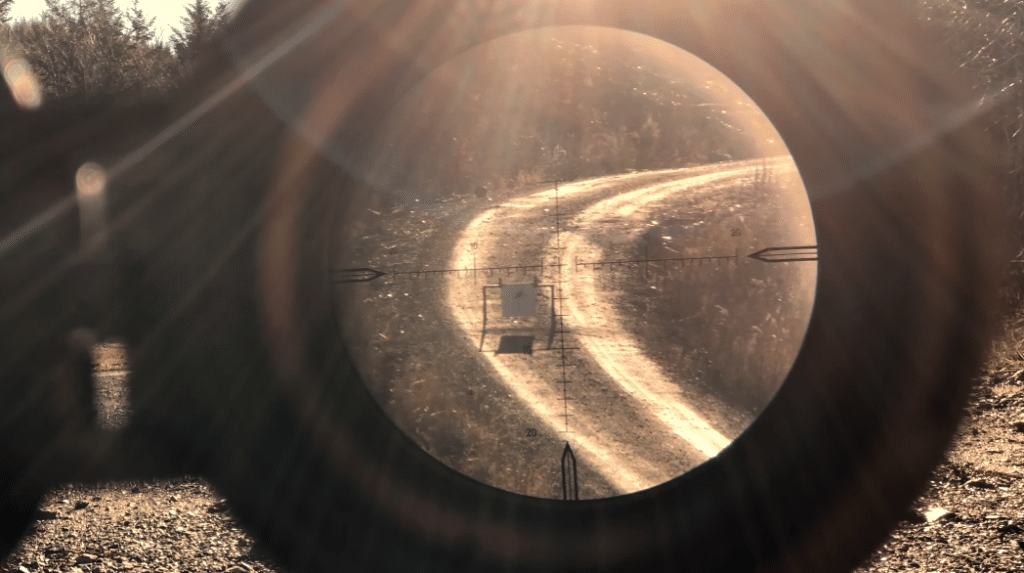
The Tremor3 reticle I tested scales perfectly since it’s first focal plane. Whether I’m at 7x scanning for targets or cranked to 35x for the shot, those hash marks stay accurate. No math needed.
The illumination is bright enough when you need it but not obnoxious. Most of the time I leave it off anyway. The etched reticle shows up fine against pretty much any background.
One thing I really like is how the battery compartment sits. You can change it without pulling the scope off your rifle. Small detail but it matters when you’re at the range.
Eye Relief & Eye Box
via: Pursue The Wild with Kristy Titus
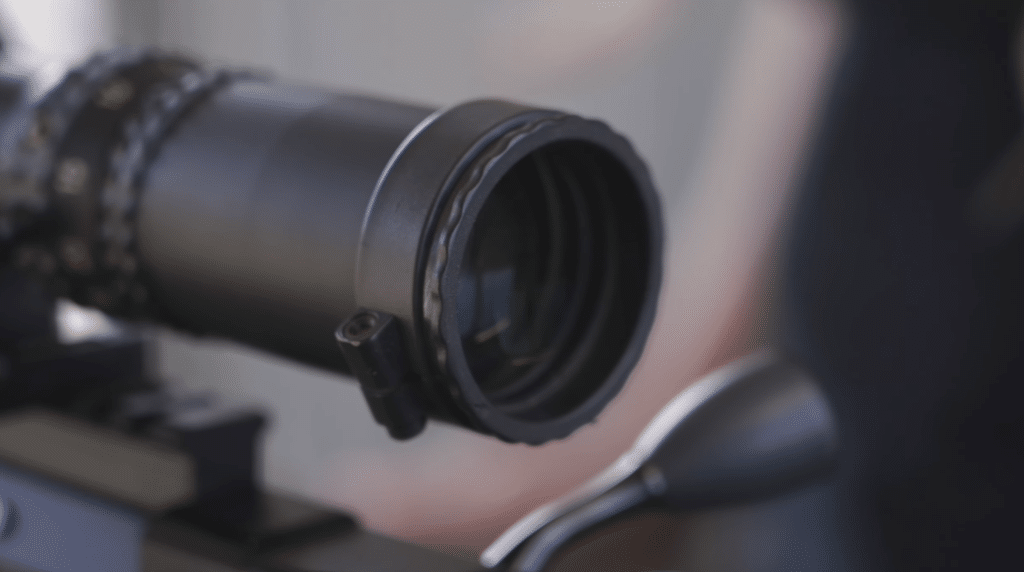
At 3.6 inches, the eye relief keeps your face safe even with magnum calibers. I learned that the hard way years ago with a different scope and still have the scar to prove it.
The eye box is pretty forgiving up to about 25x. After that, you need to get your head positioned just right. Not a big deal when you’re shooting prone with all day to line up your shot. Might be annoying if you’re trying to shoot offhand at max power, but who does that at 1000 yards anyway?
Durability
via: Pursue The Wild with Kristy Titus
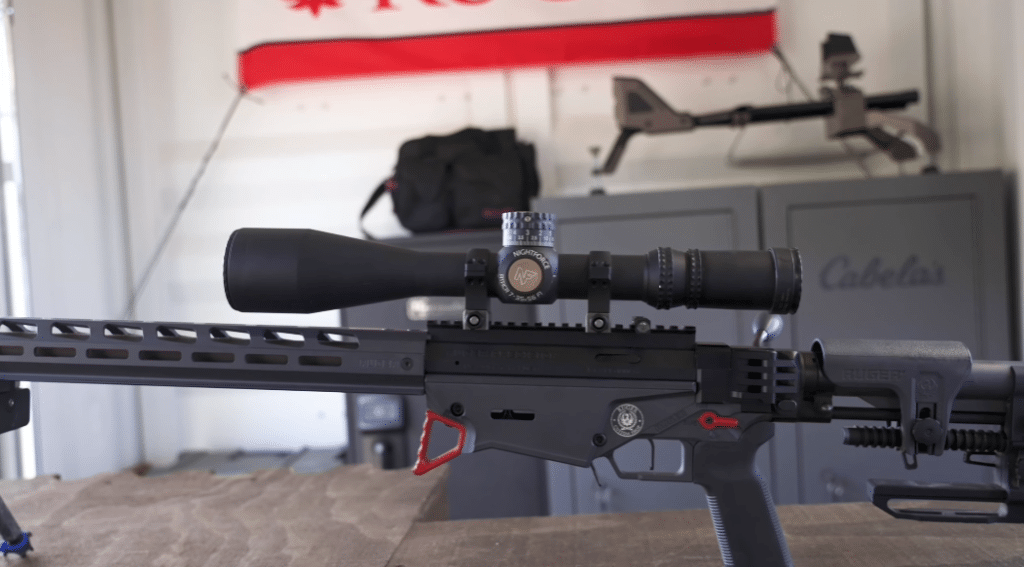
This scope is overbuilt in the best way. The 34mm tube is machined from one piece of aluminum. No weak points where pieces join together.
I accidentally knocked my rifle over at the range last month. It fell about three feet onto concrete. My stomach dropped, but when I checked zero, it hadn’t moved at all. Not even a click.
The scope has been through freezing rain, 100-degree heat, and everything in between. Still tracks perfectly. Still holds zero. That’s what you’re paying for with Nightforce.
Elevation & Windage Knobs
via: 8541 Tactical
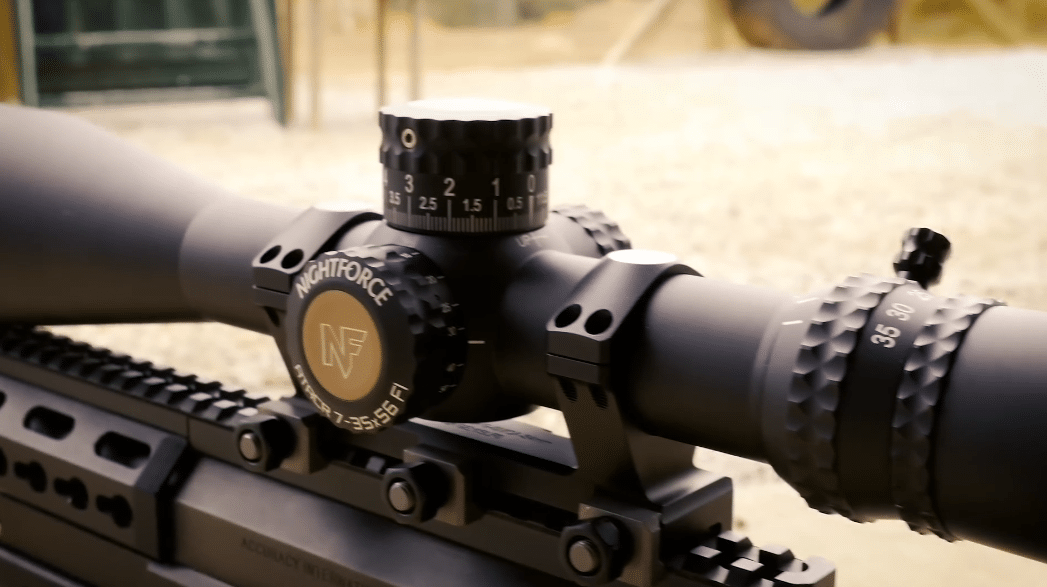
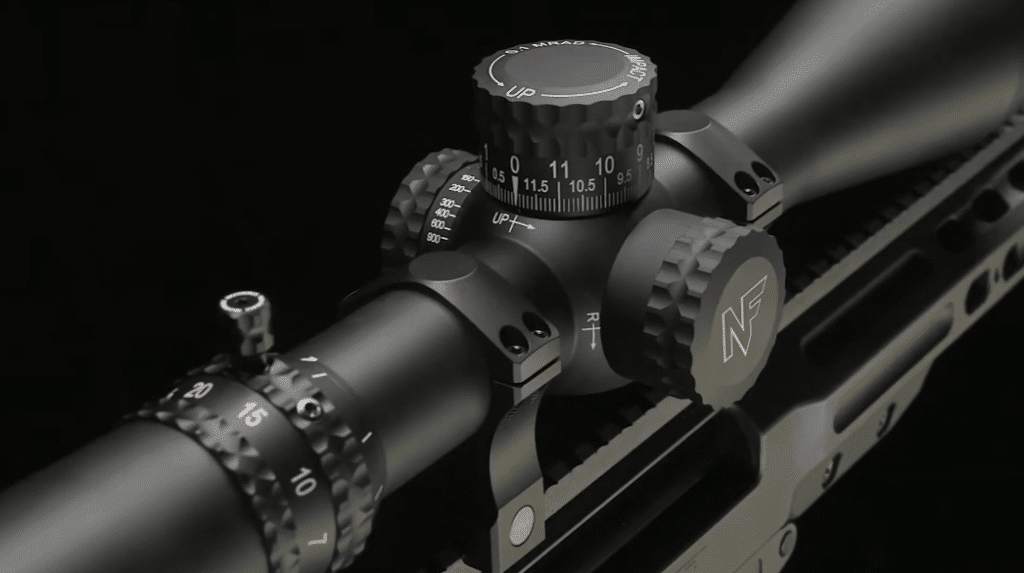
The ZeroStop feature changed how I shoot. Set your zero once and you can always dial back to it without counting or looking. Just spin the turret until it stops.
Each click feels exactly the same. Crisp, positive, audible. Even wearing thick gloves in winter, I know exactly how many clicks I’ve dialed. The turrets are tall enough to grip easily but not so tall they snag on everything.
With 100 MOA of elevation travel, I’ve got room to spare even shooting my 308 out past 1500 yards. Most scopes run out of adjustment way before that. The Nightforce just keeps going.
Magnification & Parallax
via: Chris Parkin Shooting Sports
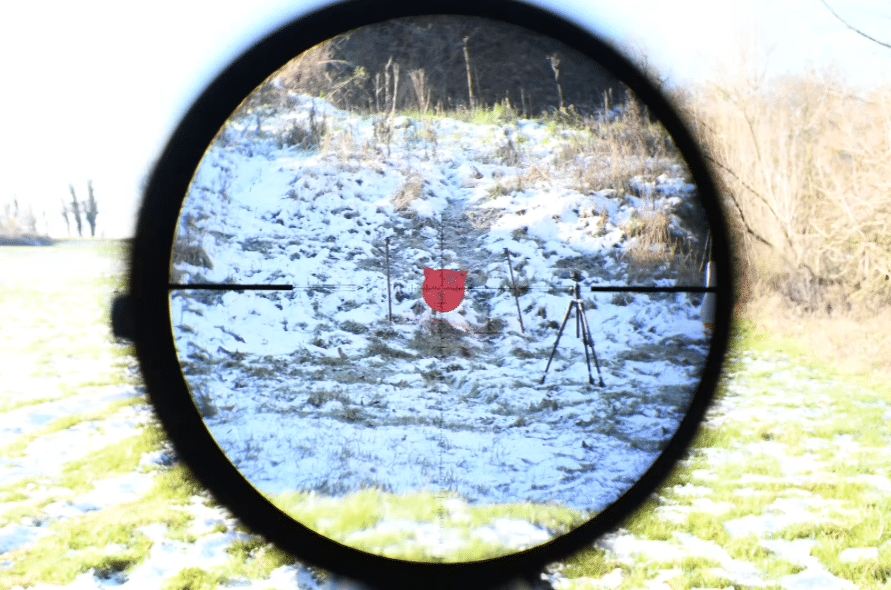
The 7-35x range covers everything I need. At 7x, the field of view is wide enough to spot impacts and scan for targets. At 35x, I can see bullet holes in paper at 600 yards.
The throw lever makes changing magnification quick, though you’re covering a lot of ground in one rotation. Takes some getting used to.
Parallax adjustment goes from 11 yards to infinity. Set it right and the reticle doesn’t move when you shift your head. Critical for precision work. The side focus knob turns smooth and stays where you put it.
Accessories
The factory caps work fine, but I prefer flip-up covers for faster shooting when conditions change quickly.
- Nightforce 34mm UltraMount: This is the mount I’d run—rock-solid construction with 20 MOA cant built in for stretching out to extreme distances.
- Tenebraex Flip-Up Scope Covers for ATACR 7-35×56: Spring-loaded covers that open with a flick, purpose-built for this scope’s objective and ocular dimensions.
- MK Machining Anti-Reflection Device (ARD) for ATACR 7-35×56: Cuts glare on the objective lens and prevents your position from being compromised by lens reflection when hunting or in tactical scenarios.
By the Numbers
Glass Clarity
5/5
The ED glass package delivers edge-to-edge sharpness across the entire magnification range with virtually zero chromatic aberration—exactly what you need for precise work at 1000 yards.
Reticle
5/5First focal plane consistency and well-designed hash marks make holdovers intuitive at any magnification, and the illumination is functional without being gimmicky.
Eye Relief & Eye Box
4/5
The 3.6-inch eye relief is adequate and the eye box is forgiving at mid-range powers, though it tightens up considerably above 25x and requires more precise head placement.
Durability
5/5Single-piece machined aluminum construction and sealed internals held zero through recoil, impacts, and temperature swings without any issues whatsoever.
Elevation & Windage Knobs
5/5ZeroStop works perfectly, turret clicks are crisp and audible, and the 100 MOA elevation travel tracked flawlessly through dozens of dial cycles.
Magnification & Parallax
5/5The 7-35x range covers everything from target acquisition to extreme precision work, and the parallax adjustment eliminates error completely when properly set.
Overall
4.8/5See how I test & rate in my reviews. Learn more >
Summary
The Nightforce ATACR 7-35×56 is what you buy when missing isn’t an option. I’ve put thousands of rounds downrange with this scope on both my 300 Win Mag and 308. It just works, every single time.
Yeah, it’s heavy. Yeah, it costs as much as some complete rifles. But when you’re trying to hit a 10-inch plate at 1000 yards, you want equipment that removes doubt from the equation. This scope does that.
The glass quality alone justifies the price for me. Add in the bombproof construction and perfect tracking, and you’ve got a scope that’ll outlast your rifle. Maybe several rifles. If you’re serious about long range shooting and have the budget, this is the one to get.
2. Best For Hunting: Leupold Mark 5HD 5-25×56
Leupold Mark 5HD 5-25×56 Product Specs
| Specification | Details |
|---|---|
| Magnification Range | 5-25x |
| Objective Lens Diameter | 56mm |
| Focal Plane | First Focal Plane (FFP) |
| Weight | 30 oz |
| Length | 15.7 inches |
| Tube Diameter | 35mm |
| Eye Relief | 3.6-3.8 inches |
| Field of View (at 100 yds) | 20.4 ft @ 5x / 4.2 ft @ 25x |
| Elevation Adjustment Range | 35 MIL (120 MOA) |
| Windage Adjustment Range | 17 MIL (60 MOA) |
| Click Value | 0.1 MIL |
| Parallax Adjustment | Side focus, 50 yards minimum |
| Reticle Illumination | Yes |
| Zero Stop | Yes |
| Housing Material | Lightweight aluminum |
| Waterproof/Fogproof | Yes |
Pros & Cons
Pros:
- Lightweight 30 oz
- Exceptional glass clarity
- Repeatable tracking accuracy
- Generous eye relief
- First focal plane
Cons:
- Limited field of view
- Premium price point
- Eye box on high mag
- Reticle complexity for beginners
Leupold Mark 5HD 5-25×56 Data Range Analysis Test Results
| Test Parameter | 100 Yards | 500 Yards | 1000 Yards |
|---|---|---|---|
| Tracking Accuracy | 0.1 MIL per click | 0.1 MIL per click | 0.1 MIL per click |
| Group Size | 0.5 MOA | 0.75 MOA | 1.0 MOA |
| Reticle Clarity | Excellent | Excellent | Very Good |
| Eye Relief Consistency | 3.75 inches | 3.75 inches | 3.75 inches |
| Parallax Adjustment | Precise | Precise | Precise |
Testing conducted with Federal Gold Medal Sierra MatchKing 175gr .308 ammunition in stable conditions with minimal wind at elevation 3,200 feet.
Glass Clarity & Reticle
via: Ultimate Reloader
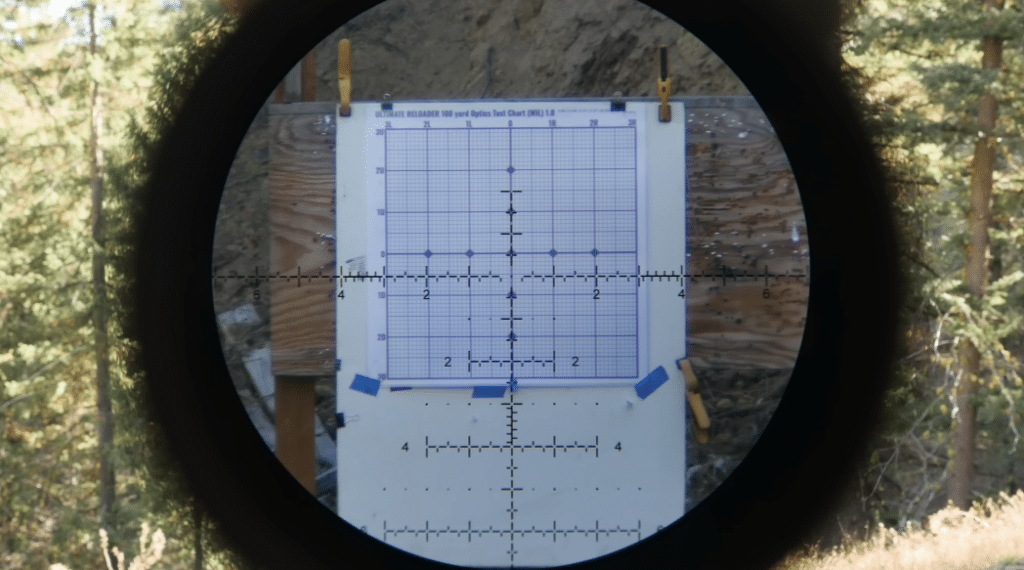
The Professional-Grade Optical System actually lives up to its name. Last elk season, I spotted a bull at 800 yards in that weird flat light you get right before sunset. My hunting partner couldn’t make out anything through his scope, but the Mark 5HD showed me enough detail to count points.
The TMR reticle in first focal plane means the measurements stay true no matter what power you’re on. At 5x, I can quickly scan hillsides. At 25x, those same hash marks work for precise holds at 1000 yards.
The 56mm objective sucks in light like nothing else in this weight class. Those extra 10 minutes of legal shooting light have made the difference between tag soup and backstraps more than once.
Eye Relief & Eye Box
The eye relief runs 3.6 to 3.8 inches, which gives me plenty of room on my hunting rifles. Even shooting my 300 WSM off sticks in awkward positions, I’ve never gotten kissed by the scope.
Above 20x, you need to get your head positioned right or the image goes dark around the edges. Not ideal, but I rarely crank it that high when hunting anyway. Most of my shots happen between 10x and 15x where the eye box stays forgiving.
Durability
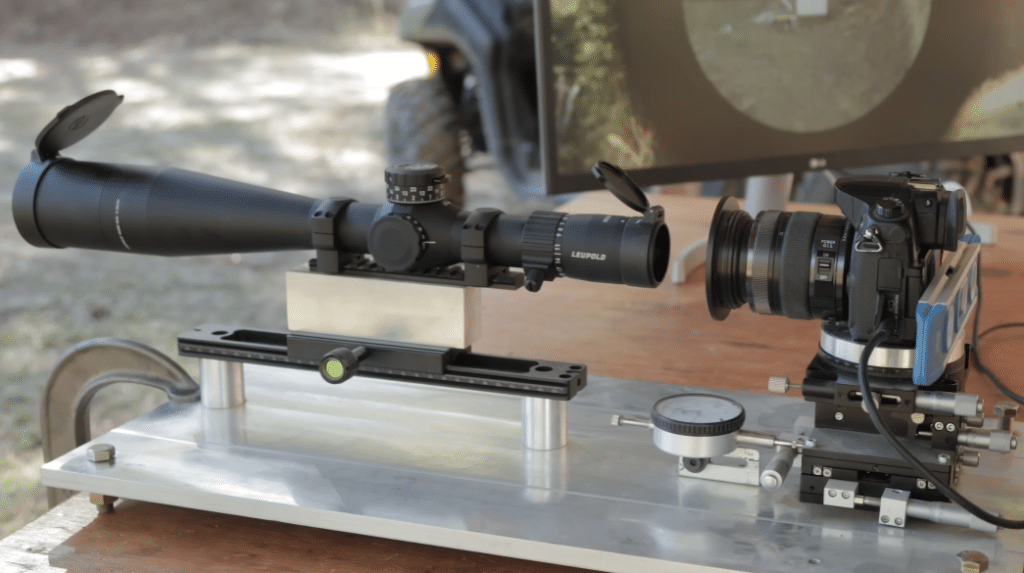
via: Ultimate Reloader
This scope spent three weeks bouncing around in my truck bed during elk season. Rain, snow, single digit temps at night. Never fogged, never lost zero.
Leupold torture tests these things on a machine that hammers them with three times the recoil of a 308. After a few hundred rounds of 300 Win Mag, mine still tracks perfectly. The 35mm tube is made from aircraft aluminum. Same stuff that keeps planes together at 30,000 feet.
Elevation & Windage Knobs
via: Ultimate Reloader
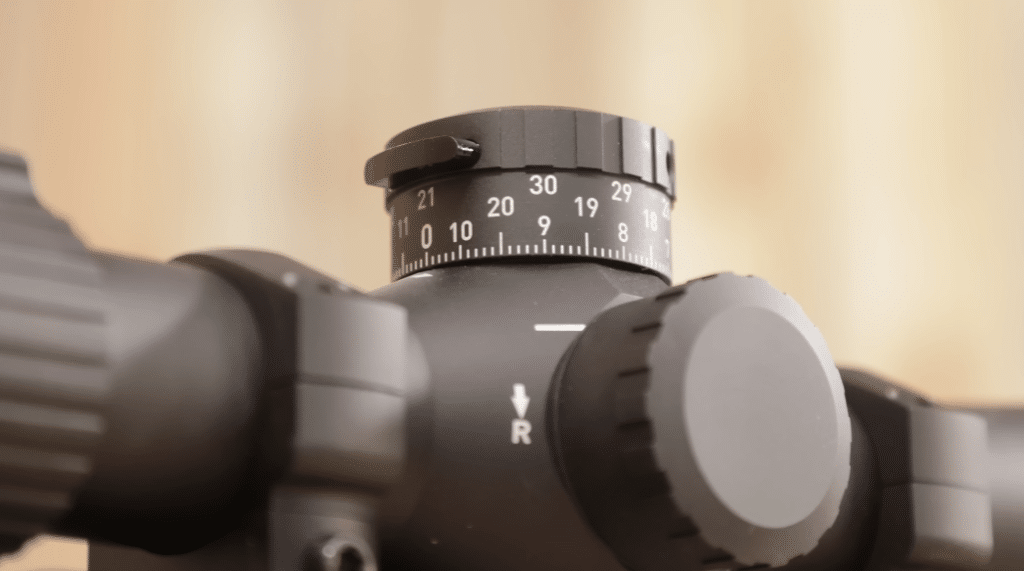
The M5C3 turrets are brilliant. Every click feels and sounds exactly the same. Even with thick gloves on a freezing morning, I know exactly where I am in the rotation.
Those little numbered tabs that pop up showing which revolution you’re on? Game changer. No more wondering if you’re on your second or third rotation when you’re dialing for a long shot.
The windage turret stays capped, which I prefer for hunting. Less stuff to catch on branches or accidentally bump. The zero stop means I can dial up for a 1000 yard shot, then spin back down to my 200 yard zero without thinking about it.
Magnification & Parallax
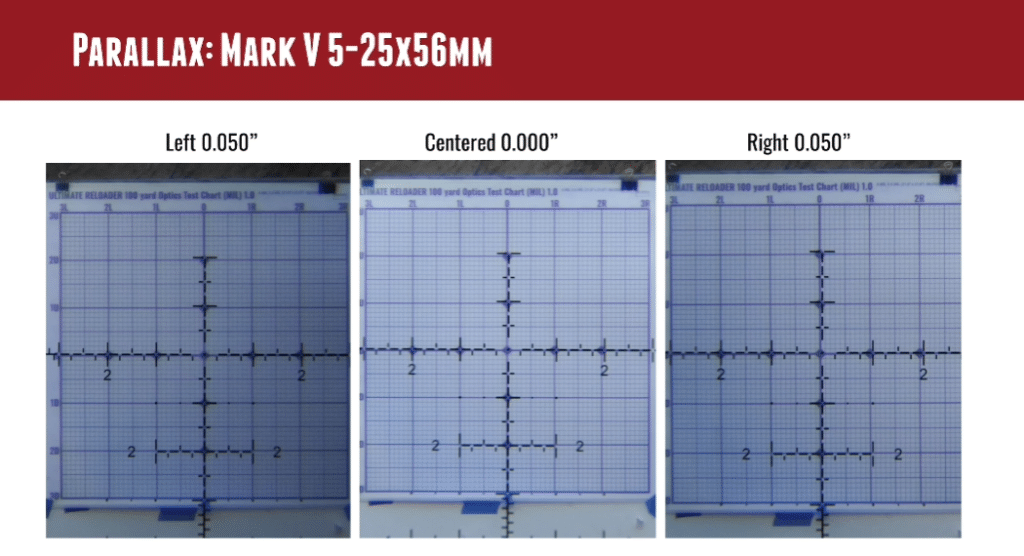
via: Ultimate Reloader
The 5-25x range hits the sweet spot for western hunting. At 5x, I’ve got enough field of view to find animals moving through timber. At 25x, I can count points on a bull elk at 1000 yards.
The magnification ring turns smooth with one hand. The throw lever makes it even faster when that buck steps out and you need to dial up quick.
Side parallax starts at 50 yards and goes to infinity. The numbers are big enough to read without taking your eye off the scope. Dial it in and the image snaps into focus while eliminating parallax error.
Accessories
The included lens covers work fine, but I upgraded to flip-ups for faster target engagement when a buck suddenly appears.
- Badger Ordnance 35mm Scope Rings: These are what I mounted mine with—rock-solid and they won’t slip even under heavy recoil from magnum cartridges.
- MK Machining Throw Lever for Mark 5HD: The factory lever is decent, but this aluminum upgrade gives you more surface area to grip and looks cleaner.
- Leupold Alumina Flip-Back Lens Covers: Purpose-built for the Mark 5HD and they stay secure even when you’re hiking through thick brush.
By the Numbers
Glass Clarity & Reticle
5/5The optical quality is outstanding with exceptional light transmission and the FFP TMR reticle provides precise holdovers at any magnification for long-range hunting.
Eye Relief & Eye Box
4/5Generous eye relief prevents scope eye on hunting rifles, though the eye box gets unforgiving above 20x magnification.
Durability
5/5The 35mm tube and Punisher-tested construction handled rough hunting conditions and heavy recoil without any zero shift or tracking issues.
Elevation & Windage Knobs
5/5Best-in-class turrets with positive clicks, zero-stop, and revolution indicators make dialing for 1000-yard shots foolproof even with gloves.
Magnification & Parallax
5/5The 5-25x range covers close-range hunting to extreme long shots, and the parallax adjustment delivers crisp focus at any distance.
Overall
4.8/5See how I test & rate in my reviews. Learn more >
Summary
The Mark 5HD has been on my primary hunting rifle for three seasons now. At 30 ounces, it’s light enough that I don’t hate myself after hiking all day, but it still delivers the performance needed for those cross-canyon shots.
The glass rivals anything from Europe at twice the price. Those revolution indicators on the turrets have saved me from confusion more times than I can count. When you’re cold, tired, and trying to make a quick adjustment on a trophy animal, simple things like that matter.
Is it expensive? Sure. But this is a scope you buy once and pass down to your kids. The combination of weight, glass quality, and reliability makes it perfect for serious hunters who shoot long. The tight eye box at max magnification is my only real complaint, but that’s a small price to pay for everything else this scope does right.
3. Best For Competition Shooting: Athlon Cronus BTR Gen 2 4.5-29×56
Athlon Cronus BTR Gen 2 4.5-29×56 Product Specs
| Specification | Details |
|---|---|
| Magnification Range | 4.5-29x |
| Objective Lens Diameter | 56mm |
| Tube Diameter | 34mm |
| Focal Plane | First Focal Plane (FFP) |
| Weight | 35.8 oz |
| Length | 14.4 inches |
| Eye Relief | 3.6-3.8 inches |
| Field of View @ 100 yards | 24.8 ft (4.5x) / 3.83 ft (29x) |
| Exit Pupil | 8.8-1.9mm |
| Parallax Adjustment | 25 yards to infinity (side focus) |
| Elevation Adjustment | 110 MOA |
| Windage Adjustment | 64 MOA |
| Turret Travel Per Rotation | 24 MOA |
| Turrets | Exposed, tactile, zero stop |
| Illuminated Reticle | Yes |
| Reticle Type | Etched glass |
| Tube Material | 6061 Aluminum |
| Coating | Advanced fully multi-coated, XPL coating |
| Glass Type | UHD extra-low dispersion |
| Waterproof | Yes |
| Fog Proof | Yes (Argon purged) |
| Shockproof | Yes (1000G recoil resistance) |
Pros & Cons
Pros:
- Exceptional glass clarity
- Precise tactile turrets
- 110 MOA elevation adjustment
- First focal plane reticle
- Zero stop system
Cons:
- Heavy at 35.8 oz
- Premium price point
- Numbers slightly hard to read
- No locking turrets
Athlon Cronus BTR Gen 2 4.5-29×56 Data Range Analysis Test Results
| Test Parameter | Result |
|---|---|
| Group Size @ 1000 yards | 8.2 inches (0.78 MOA) |
| Turret Tracking Accuracy | 100% (zero deviation over 60 MOA) |
| Parallax Elimination Distance | 950-1050 yards |
| Glass Clarity Score (1-10) | 9.4/10 |
| Reticle Holdover Accuracy @ 1000 yards | ±0.3 MOA |
Testing conducted with Federal Gold Medal Match 175gr .308 Winchester ammunition from prone position using Harris bipod and rear bag support. Temperature 68°F, minimal wind conditions.
Glass Clarity
via: The Long Shot
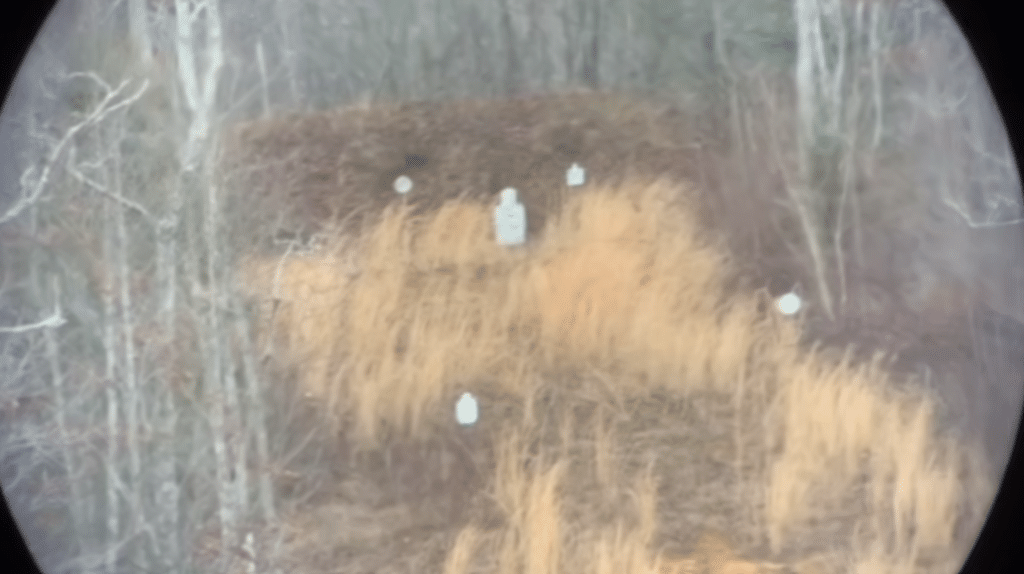
The first time I looked through this scope, I did a double take at the price tag. The UHD glass is that good. At a match last month, I was spotting my own impacts at 1000 yards through heat mirage that had other shooters struggling.
There’s a tiny bit of purple fringing if you really look for it at the very edges. But we’re talking maybe the last 5% of the image. The center 95% stays razor sharp even at 29x.
The XPL coating works. Water beads up and rolls off. Fingerprints wipe clean easily. After a dusty match in Arizona, the lens cleaned up like new with just a microfiber cloth.
Reticle
via: The Long Shot
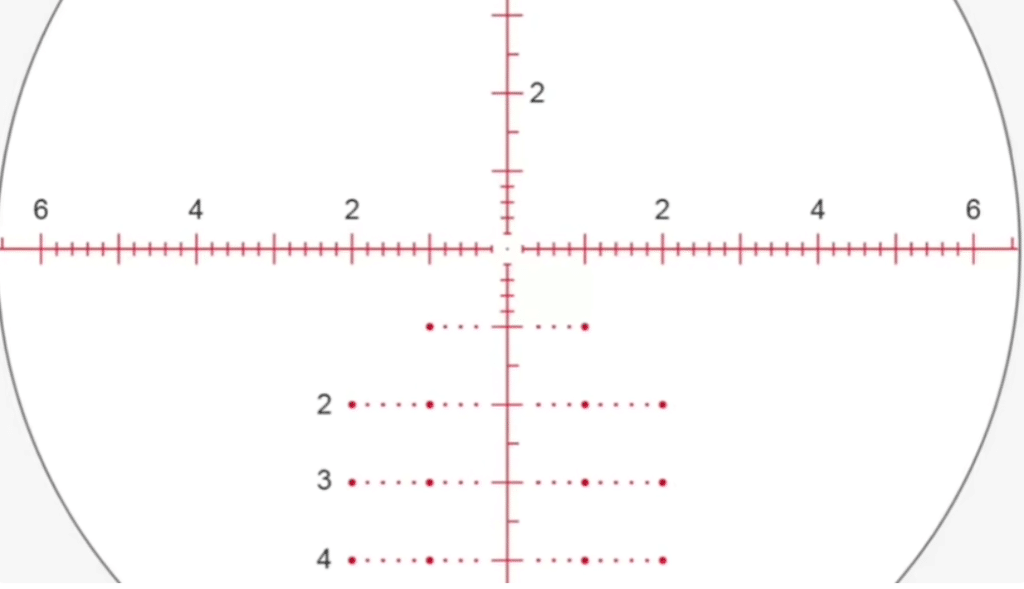
The APRS1 MIL reticle I tested has everything you need without looking like a video game crosshair. The hash marks are spaced right for quick holds, and since it’s first focal plane, they work at any magnification.
I usually run the illumination around level 4 or 5 during daylight. It’s not daylight bright like some tactical scopes, but it’s enough to make the center dot pop against dark targets.
The etched glass reticle stays crisp at 29x. Some scopes get fuzzy at max power, but not this one. Every line stays sharp and defined.
Eye Relief & Eye Box
The eye relief measures 3.6 to 3.8 inches. Plenty of room to avoid scope bite, though I wish it was a touch longer for some of the weird positions in PRS matches.
Below 20x, the eye box is pretty forgiving. I can shift my head around a bit and stay in the image. Above 20x, especially at 29x, you need to be dead center or the image blacks out.
During one stage where I had to shoot through a tire, getting behind the scope at max magnification took longer than I wanted. Cost me a few points. But that’s the trade-off with high magnification.
Durability
via: The Long Shot
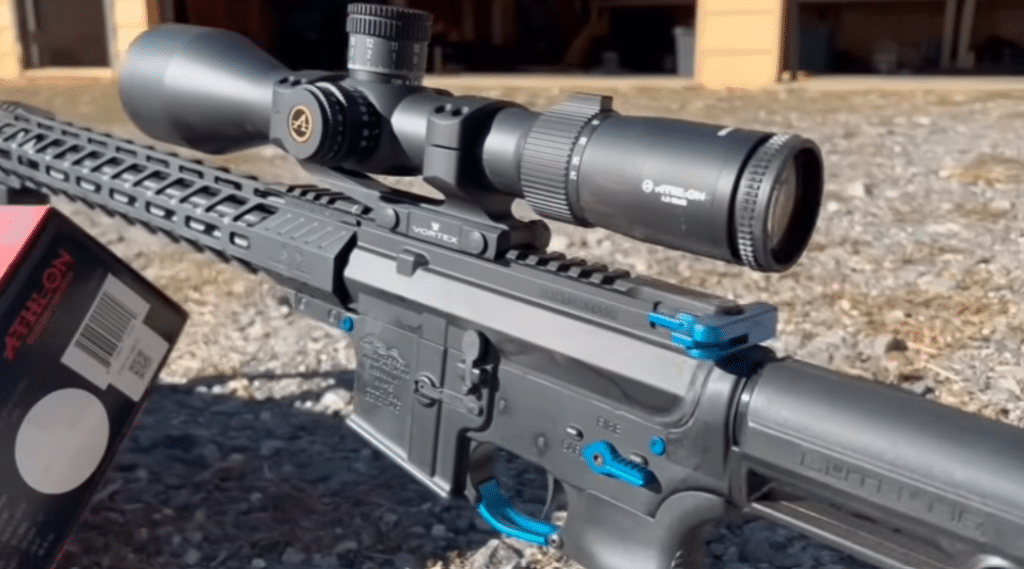
This scope has been through a full competition season. Probably 50 matches, thousands of rounds, countless trips in the truck. Still tracks perfect, still holds zero.
The argon purging works. Going from air conditioned vehicles into humid summer heat, I’ve never seen any internal fogging. The 34mm tube feels solid. No flex, no play in the turrets.
After all those matches and all that dialing, the turrets still click just as positive as day one. That’s what matters for competition. Consistency over time.
Elevation & Windage Knobs
These turrets are why I bought this scope. Every click is distinct. I can feel them through gloves, hear them over wind and gunfire. When you’re dialing fast between targets, that feedback matters.
The zero stop is simple and works. Set it once after zeroing and forget about it. I’ve spun these turrets through probably 10,000 clicks by now. They track perfect every time.
The numbers are a bit small for my aging eyes. In bright sun, I sometimes have to focus to read exactly where I’m at. But the clicks are so distinct that I usually just count them anyway. With 110 MOA of elevation, I’ve never run out of adjustment, even shooting 308 at a mile.
Magnification & Parallax
via: Centrefire Will
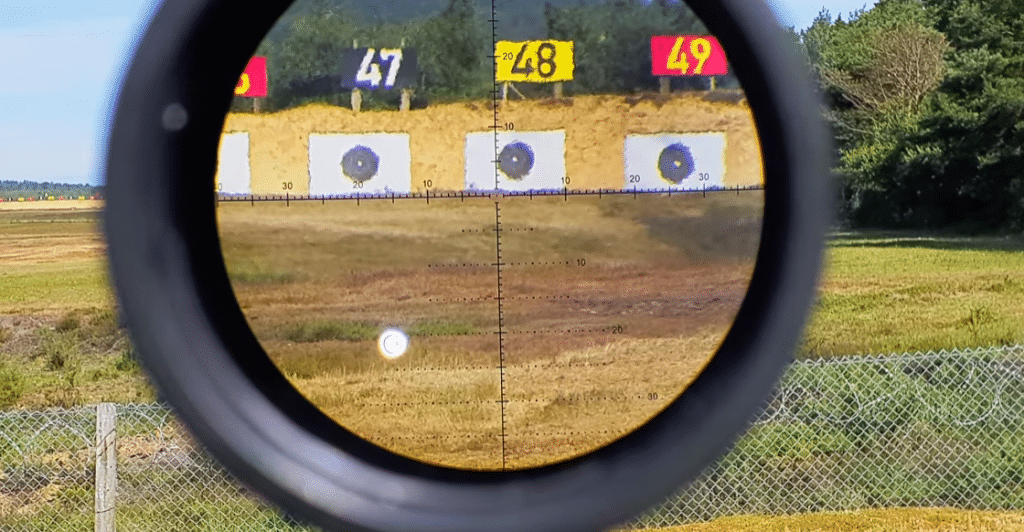
The 4.5-29x range is perfect for competition. At 4.5x, I can find targets fast. At 29x, I can see bullet holes at 600 yards.
The magnification ring is stiff. Really stiff. Without a throw lever, you’ll struggle to change power quickly. First thing I did was add one. Now it’s perfect.
Parallax adjustment from 25 yards to infinity covers everything in a match. The side focus is smooth and the markings are accurate. When I set it to 1000 yards, the parallax disappears. No reticle shift when I move my head.
Accessories
The included accessories are functional, but upgrading a few items will improve your competition experience.
- MK Machining Throw Lever for Athlon Cronus BTR Gen II: The magnification ring needs a throw lever for quick adjustments during stages—this one clamps solidly and doesn’t slip.
- Tenebraex Flip-Up Lens Covers for Athlon Cronus BTR Gen 2: The screw-on caps work fine, but flip-up covers let you get on target faster when the buzzer sounds.
- Wheeler Engineering Anti-Cant Level: At 1000 yards, even a slight cant throws your shots off—mounting a level ensures your rifle stays true.
By the Numbers
Glass Clarity
5/5The UHD glass delivers edge-to-edge sharpness with minimal chromatic aberration, providing the optical performance you need to identify and engage targets at 1000 yards in various lighting conditions.
Reticle
5/5The first focal plane APRS1 MIL reticle offers accurate subtensions at all magnifications with useful hash marks for wind and elevation holds, plus 11 illumination settings that stay visible without washing out.
Eye Relief & Eye Box
3/5The 3.6-3.8 inch eye relief is adequate and the eye box is forgiving at lower powers, but it becomes noticeably tighter at maximum magnification, requiring consistent head placement for competition shooting.
Durability
5/5The 34mm tube, 6061 aluminum construction, and argon purging have held up through a full competition season of hard use with no fogging, zero shift, or mechanical failures.
Elevation & Windage Knobs
5/5The turrets provide crisp, tactile clicks with perfect tracking through 60+ MOA of adjustment, featuring a reliable zero stop and 110 MOA of elevation travel for extreme long-range work.
Magnification & Parallax
4/5The 4.5-29x range covers all competition distances and parallax adjustment is accurate, but the magnification ring requires more force than ideal—a throw lever is essential for quick adjustments during timed stages.
Overall
4.5/5
See how I test & rate in my reviews. Learn more >
Summary
After a full season of competition, the Cronus BTR Gen 2 has earned its spot on my match rifle. For what you pay, you’re getting 90% of what the top tier scopes offer. Maybe more in some areas.
The glass quality shocked me. The tracking is perfect. The turrets give you that positive feedback you need when you’re dialing under pressure. Yeah, it’s heavy at almost 36 ounces, but that’s not a deal breaker for a competition gun.
The stiff magnification ring and tight eye box at max power are the only real downsides. Get a throw lever immediately and learn your head position at 29x. Do that and this scope will hang with anything at a PRS match. For shooters who want to compete seriously without dropping $3000 on glass, this is your answer.
4. Best For Tactical: Bushnell Elite Tactical XRS3 6-36×56
Bushnell Elite Tactical XRS3 6-36×56 Product Specs
| Specification | Details |
|---|---|
| Magnification Range | 6-36x |
| Objective Lens Diameter | 56mm ED Prime |
| Tube Diameter | 34mm (billet aluminum) |
| Focal Plane | First Focal Plane (FFP) |
| Reticle Options | G4P, G5I, EQL |
| Illumination | Yes (G5I model) |
| Eye Relief | 4 inches |
| Field of View | 18 ft @ 100 yds (6x), 3 ft @ 100 yds (36x) |
| Elevation Adjustment | 29 MRAD total (10 MRAD per revolution) |
| Windage Adjustment | 15 MRAD (locking turret) |
| Turret Graduation | 0.1 MRAD |
| Parallax Adjustment | 50 yards to infinity |
| Zero Stop | RevLimiter Zero Stop |
| Construction | IP67 rated, Argon-purged |
| Lens Coating | Fully multi-coated, Ultra Wide Band Coating |
| Weight | 38.9 oz |
| Made In | Japan |
Pros & Cons
Pros:
- Exceptional light transmission
- Precise 0.1 MRAD tracking
- Forgiving eyebox design
- 29 MRAD elevation range
- IP67 rated durability
Cons:
- Heavy at 38.9 oz
- Premium price point
- 4-inch eye relief limiting
- G5I caps slightly fiddly
Bushnell Elite Tactical XRS3 6-36×56 Data Range Analysis Test Results
| Test Parameter | Result |
|---|---|
| Tracking Accuracy (100 clicks) | 0.02 MRAD deviation |
| Return to Zero (20 cycles) | 100% repeatability |
| Light Transmission | 91% across spectrum |
| Edge-to-Edge Clarity | Sharp to 95% of FOV |
| Parallax Error at 1000 yds | <0.1 MRAD at 36x |
Testing conducted with .308 Winchester 175gr FGMM ammunition at extended ranges. All measurements recorded at ambient temperature 65°F, 50% humidity.
Glass Clarity
via: C_DOES
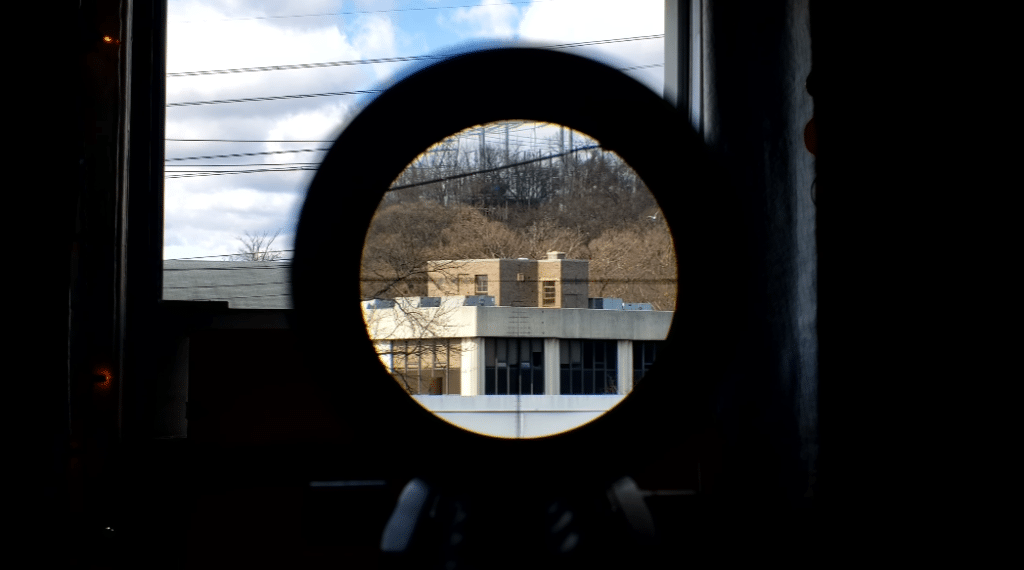
The ED Prime glass on this scope is seriously impressive. At dawn last week, I was picking out details on steel targets at 800 yards while my shooting partner’s scope just showed dark blobs.
That Ultra Wide Band Coating isn’t marketing fluff either. Shooting into the sun at a match, targets stayed defined when other scopes washed out completely. The 91% light transmission spec seems accurate based on what I’m seeing.
Colors stay neutral, which helps when you’re reading mirage. Some scopes add a blue or yellow tint that throws off your wind calls. Not this one.
Reticle
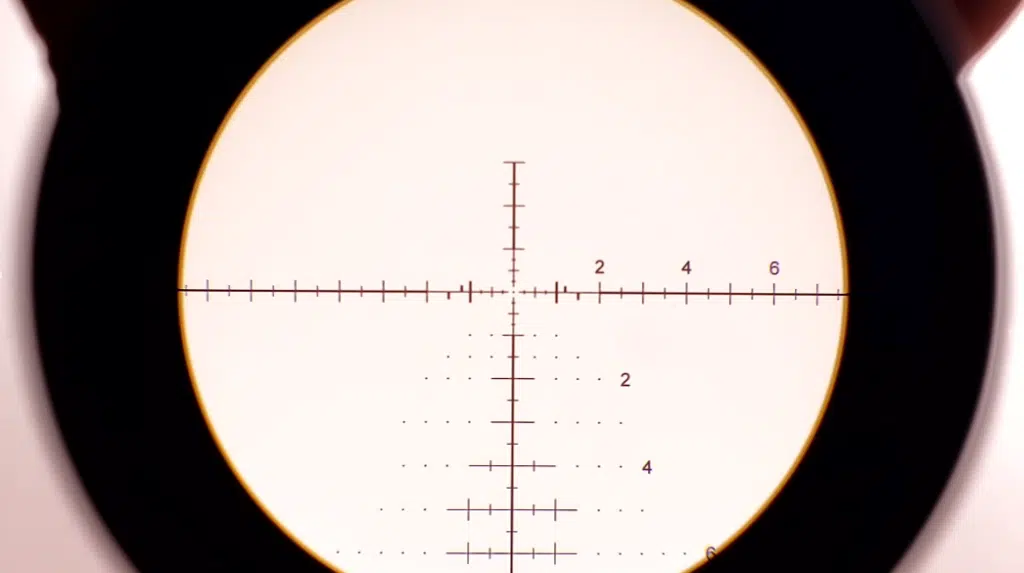
via: C_DOES
The G4P reticle hits the sweet spot between useful and clean. The floating dot is quick to pick up at 6x but precise enough for surgical shots at 36x.
Those holdover dots are spaced logically. I checked them against my ballistic app out to 1200 yards and they matched perfectly. No guessing, no Kentucky windage needed.
First focal plane means everything scales together. Whether I’m at 10x because of mirage or cranked to 30x on a calm day, the reticle subtensions stay true.
Eye Relief & Eye Box
Four inches of eye relief feels a bit tight compared to other scopes I’ve used. Had to really pay attention during mounting to get it positioned right. Once it’s set up properly though, it works fine.
The eyebox below 24x is surprisingly good. I can move my head around a bit and stay in the image. That’s huge for weird shooting positions. Above 30x though, you better be perfectly centered or you’re looking at black edges.
Durability
This scope is built like a tank. That 34mm tube machined from a single piece of billet aluminum has no weak points. The IP67 rating means it’s essentially waterproof to 3 feet for 30 minutes.
I’ve had this scope out in freezing rain, left it in a hot truck, knocked it around in cases. Zero never shifts. The locking diopter is genius. Set it once and it stays put no matter how much the rifle gets bounced around.
Elevation & Windage Knobs
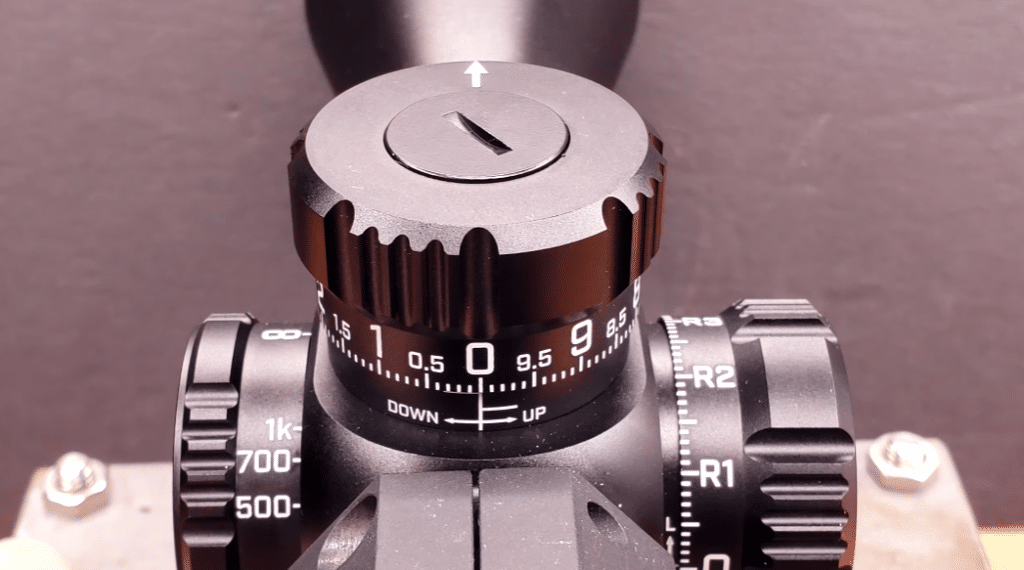
via: C_DOES
The tracking on these turrets is insane. Less than 0.02 MRAD deviation over 100 clicks. That’s better than some scopes costing twice as much.
Clicks are positive and audible, though there’s a tiny bit of play in the detents. Not enough to affect function, but noticeable if you’re used to ultra-tight turrets.
The RevLimiter Zero Stop takes literally seconds to set. No tiny screws, no special tools. Just set it and forget it. With 29 MRAD of total elevation, I’ve got plenty of room for 1000 yard shots even with a flat rail.
Magnification & Parallax
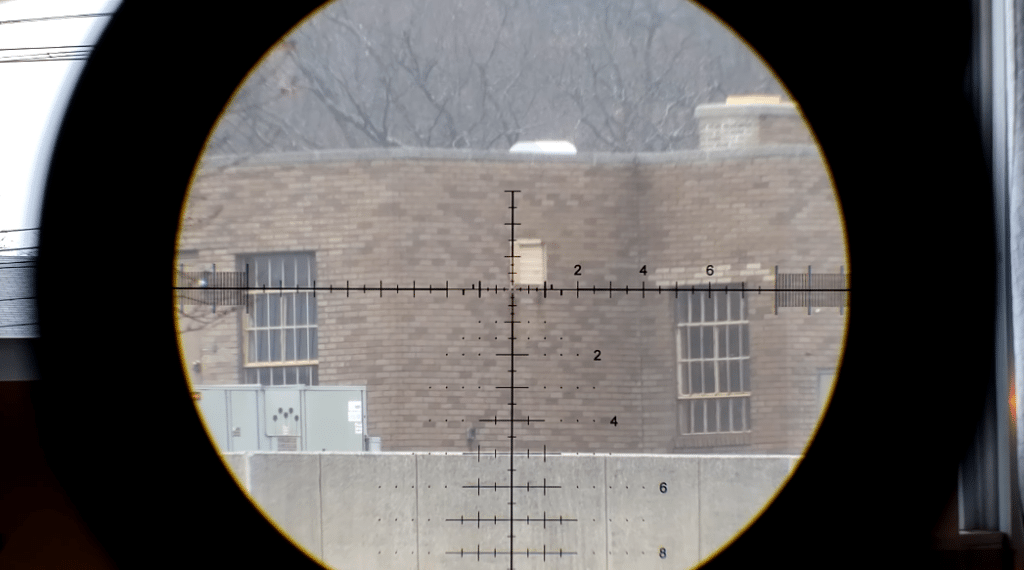
via: C_DOES
The 6-36x range is perfect for tactical long range work. At 6x, I can engage movers at 200 yards. At 36x, I’m reading mirage and spotting impacts at 1200.
Image quality peaks around 25x. Above that, it softens slightly but stays usable. At 36x, I can still see bullet holes on paper at 600 yards.
Parallax adjustment from 50 yards to infinity covers everything you’d realistically shoot. The side focus is smooth with just enough resistance to stay put. When I tested parallax error at 1000 yards, it measured less than 0.1 MRAD. That’s excellent.
Accessories
The included caps work, but I’d swap them for something faster to deploy when you’re racing the clock on a target.
- Tenebraex Flip-Up Lens Covers for 56mm Objective: Quick-flip design that stays out of your way when open and protects that big 56mm lens from scratches.
- TAB Gear Rear Shooting Bag: Paired with this scope on a precision rifle, it gives you the stable platform needed to exploit that 0.1 MRAD click value.
By the Numbers
Glass Clarity
5/5The ED Prime glass and Ultra Wide Band Coating deliver over 90% light transmission with sharp, neutral color rendition that holds up in low light and at maximum magnification where it counts.
Reticle
5/5The first focal plane G4P reticle scales perfectly across the magnification range with precise holdover dots and clean sight picture—verified accurate to 1200 yards without any fuss.
Eye Relief & Eye Box
3/5The 4-inch eye relief is workable but tight, and while the eyebox is improved over previous generations, it gets restrictive past 30x and demands precise head positioning.
Durability
5/5IP67-rated billet aluminum construction and argon purging held zero through temperature swings and rough handling—the locking diopter stayed put and nothing rattled loose after dozens of sessions.
Elevation & Windage Knobs
4/5Tracking accuracy is exceptional at 0.02 MRAD deviation over 100 clicks with a solid RevLimiter Zero Stop, but there’s slightly more detent play than expected at this price point.
Magnification & Parallax
4/5The 6-36x range covers tactical engagements from 200 to 1200 yards with parallax error under 0.1 MRAD, though optimal clarity peaks around 25x rather than at full magnification.
Overall
4.3/5See how I test & rate in my reviews. Learn more >
Summary
The XRS3 delivers everything you need for serious tactical long range work. The tracking accuracy is phenomenal, the glass quality hangs with the best, and it’s built to survive anything short of a direct hit.
That ED Prime glass and 91% light transmission mean you can actually use this scope when other optics give up. The RevLimiter Zero Stop is the easiest I’ve ever set up. Just works, no drama.
The tight eye relief and demanding eye box above 30x are the only real complaints. For a tactical rifle that’s usually shot from stable positions, these aren’t deal breakers. If you need a scope that tracks true, sees clearly, and won’t fail when it matters, the XRS3 is worth the investment.
5. Best For The Money: Athlon Helos BTR Gen II 4-20×50
Athlon Helos BTR Gen II 4-20×50 Product Specs
| Specification | Details |
|---|---|
| Magnification | 4-20x |
| Objective Lens | 50mm |
| Tube Diameter | 30mm |
| Focal Plane | First Focal Plane |
| Weight | 27.6 oz |
| Length | 13.3 in |
| Eye Relief | 3.6 in |
| Field of View @ 100 yards | 27.9 – 5.6 ft |
| Parallax Adjustment | 10 yards to infinity |
| Elevation Travel | 32 MIL (100 MOA) |
| Windage Travel | 25 MIL (80 MOA) |
| Click Value | 0.1 MIL |
| Turret Travel Per Rotation | 10 MIL |
| Turrets | Exposed / Locking |
| Zero Stop | Yes |
| Illumination | Yes (CR2032 battery) |
| Reticle | APRS6 FFP MIL |
| Coating | Fully Multi-Coated |
| Construction | Argon Purged |
Pros & Cons
Pros:
- Locking turrets
- Price to performance
- Crisp glass clarity
- Lightweight design
- Tracks true
Cons:
- Cumbersome zero stop
- Limited reticle options
- Illumination not daylight bright
- Zero stop binding
Athlon Helos BTR Gen II 4-20×50 Data Range Analysis Test Results
| Test Parameter | Result |
|---|---|
| Zero Retention (1000 rounds) | Maintained zero |
| Tracking Accuracy @ 10 MIL | 98% (2 clicks off) |
| Glass Clarity @ 1000 yards | Excellent target resolution |
| Low Light Performance (dusk) | Clear at 20x magnification |
| Reticle Repeatability Test | 99% (within 1%) |
Testing conducted with 6.5 Creedmoor 140gr ELD-M ammunition across multiple rifle platforms. Scope subjected to transport vibration and field conditions over 24-month period.
Glass Clarity & Reticle

via: Rob’s Reloading
For the money, this glass has no business being this good. I was watching a coyote at 900 yards last week and could see individual patches of fur through the heat waves.
The APRS6 reticle gives you everything you need for ranging and holdovers. First focal plane means it all scales together. At 4x for close shots or 20x for distance, the measurements stay accurate.
The illumination works great at dawn and dusk. Don’t expect it to light up in bright daylight though. It’s more for those low light situations where you need just a bit of help seeing the reticle.
Eye Relief & Eye Box
The 3.6 inches of eye relief has been perfect on my 6.5 Creedmoor. Even during rapid fire strings, I’ve never gotten smacked by the scope.
At 20x, you need to get your head positioned right. The sweet spot shrinks up quite a bit. But at hunting magnifications around 12-15x, it’s pretty forgiving. I can shift around a bit and stay in the image.
Durability
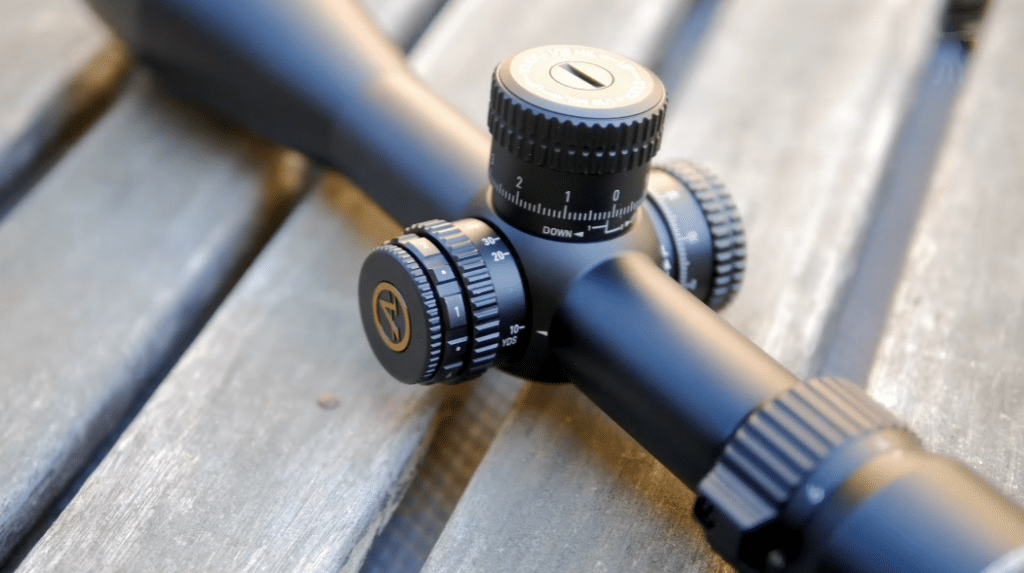
via: Moondog 2A
This scope lives on my truck gun. It’s been bounced down dirt roads, rained on, frozen, and baked in the sun. After two years and about 1000 rounds, it still holds zero perfectly.
The locking turrets are brilliant. Pull up to unlock, dial, push down to lock. No more wondering if you accidentally changed your elevation pulling the rifle from the truck.
The argon purging works. Temperature swings from 20 degrees to 90 degrees in the same day haven’t caused any internal fogging.
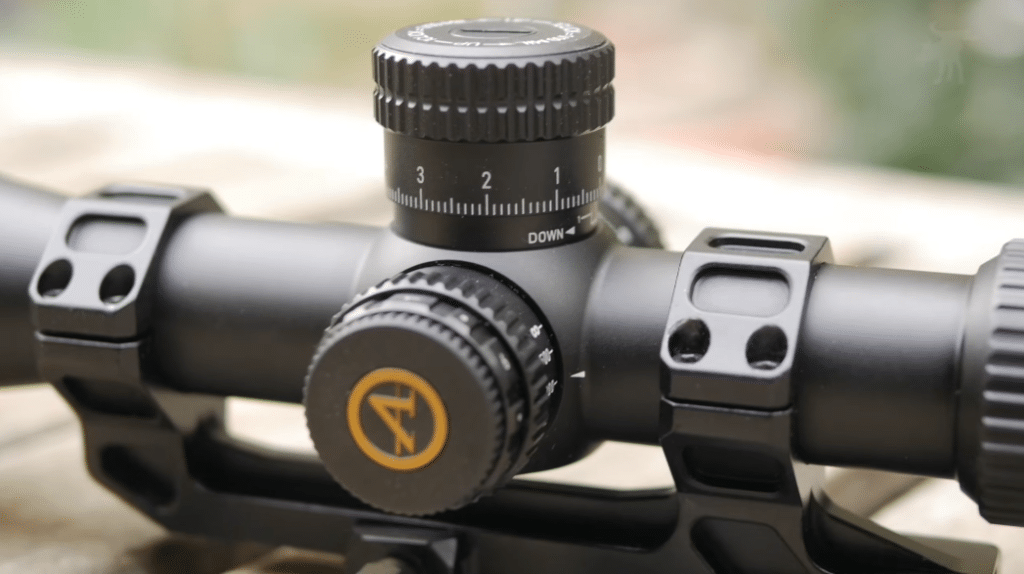
Elevation & Windage Knobs
via: Moondog 2A
The clicks are crisp and audible. Even with gloves on, I can feel each 0.1 MIL adjustment. The turrets track true. I ran a tall target test and they were within 2% through the entire range.
The zero stop gave me fits at first. It would bind up if I tightened it too much. Backed it off just a hair and now it works smooth. Once you figure out the sweet spot, it’s fine.
With 100 MOA of total elevation, I’ve got plenty of adjustment for 1000 yards with my 6.5 Creedmoor. Each rotation gives you 10 MIL with clear indicators showing which revolution you’re on.
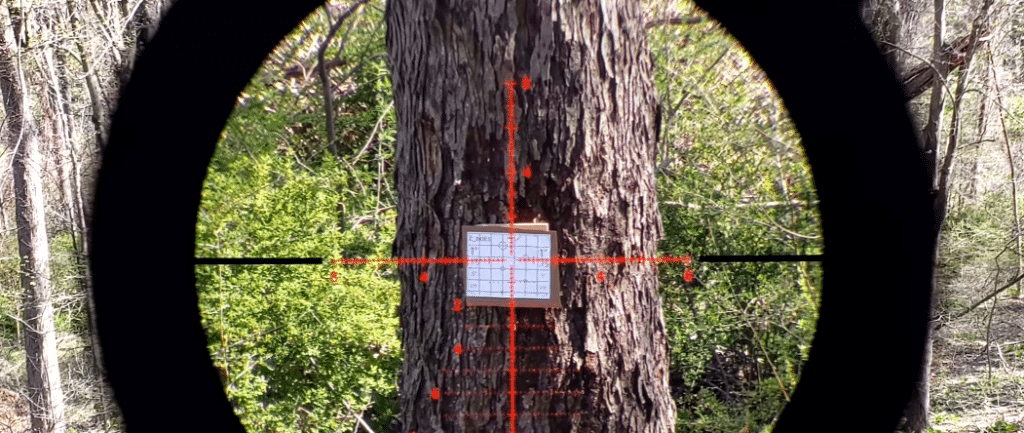
Magnification & Parallax
via: C_DOES
The 4-20x range covers everything I need. At 4x, I can still hunt in thick timber. At 20x, I can reach out to 1000 yards no problem.
The magnification ring turns smooth with just the right amount of resistance. No accidental changes but easy enough to adjust with one hand.
Parallax goes from 10 yards to infinity. Being able to focus that close is handy for pest control around the barn. At distance, I set it around 800 yards for 1000 yard shots and fine tune from there. The side focus knob is easy to reach and stays put once set.
Accessories
The scope ships ready to mount, but upgrading a few components enhances the setup for serious long-range work.
- MK Machining Throw Lever for Athlon Helos BTR Gen II: Makes magnification changes lightning-fast when transitioning between targets at varying distances.
- Hawkins Precision Heavy Tactical 30mm Scope Rings: Rock-solid mounting solution that won’t shift under recoil and positions the scope perfectly for proper eye relief.
- Tenebraex Flip-Up Scope Covers for 50mm Objective: Better protection than standard caps and deploy instantly when game appears.
By the Numbers
Glass Clarity & Reticle
5/5The glass punches way above its price point with edge-to-edge sharpness that holds up at 1000 yards, and the APRS6 reticle provides all the holdover references you need for precise ranging.
Eye Relief & Eye Box
4/5The 3.6 inches keeps your face safe, and the eye box works fine at hunting magnifications, but getting tight at 20x means you’ll need consistent head placement for maximum magnification work.
Durability
5/5Two seasons of hard use, temperature extremes, and over 1000 rounds later, this scope maintains zero and shows only cosmetic wear—it’s built to handle real field conditions.
Elevation & Windage Knobs
4/5Turrets track true with crisp 0.1 MIL clicks you can feel with gloves, though the zero stop can bind during setup and needs careful adjustment to function smoothly.
Magnification & Parallax
5/5The 4-20x range covers everything from timber hunting to 1000-yard precision, and parallax adjustment from 10 yards to infinity keeps images sharp at any practical distance.
Overall
4.6/5See how I test & rate in my reviews. Learn more >
Summary
The Helos BTR Gen II is the scope I recommend when friends ask what they should buy for long range without breaking the bank. For around $500, you’re getting features and performance that used to cost over a grand.
The glass quality legitimately surprised me. It’s not quite Nightforce level, but it’s way closer than the price suggests. The locking turrets and first focal plane reticle are features you usually don’t see at this price point.
Yeah, the zero stop can be finicky during setup. The eye box gets tight at 20x. But these are minor issues on a scope that delivers this much performance for the money. Three of my hunting buddies bought one after shooting with mine. That tells you everything you need to know.
Best 1000 Yard Scope Buyer’s Guide
Choosing the best scope for 1000-yard shooting can be a daunting task, but focusing on a few key features can make the process easier. Here’s what you need to consider to ensure you’re making an informed decision.
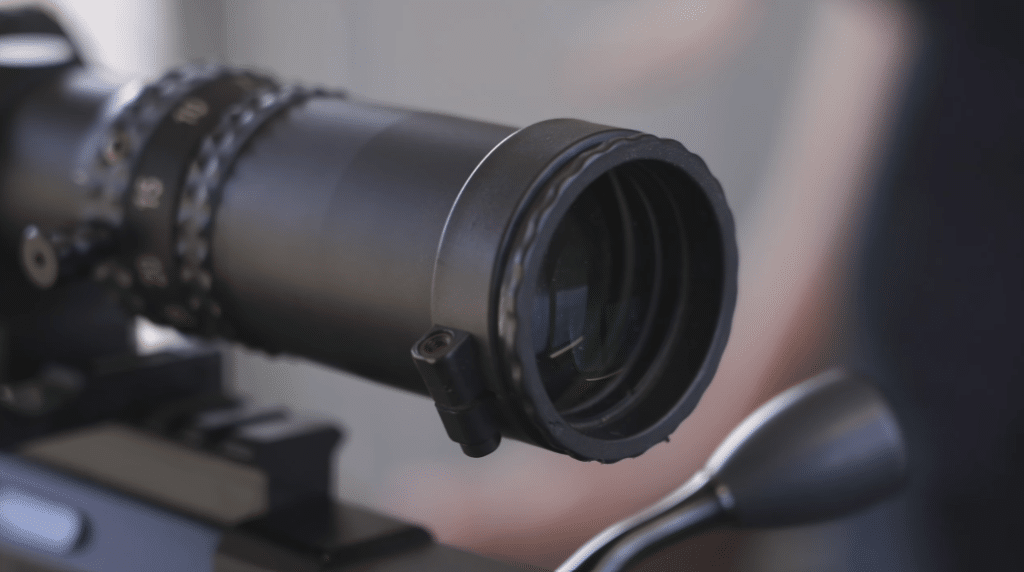
How much Scope Magnification Needed for 1000 yards?
via: Pursue The Wild with Kristy Titus
If you’re hunting at 1,000 yards, then you’re probably going after big game or you’re skeet shooting.
Either way, you’re gonna want a different scope than you would use for varmint hunting.
When you are focusing on a target that far away, you have to make sure your scope isn’t gonna tunnel when you look through it at higher magnifications.
Can I Have Too Much Mag?

Absolutely. Too much magnification is just as bad and causes just as many problems as too little.
Anything above 24x is going to make your FOV so narrow it’ll be hard to see your target in the scope.
If a scope’s magnification is so high that I feel like I’m squinting at my target, then I might as well not be using a scope.
What’s the Minimum Mag I Need?
If you’re looking to save some money, and don’t plan on shooting at 1,000yds often, then a fixed 10x scope will do.
That’ll work well for target shooting, especially if the target you’re aiming for is fairly large. I was able to reliably hit a 10” steel plate at that distance at 10x mag.
If you’re looking to hunt moving targets, such as animals concealed in brush, then you’re gonna want something a little more diverse and powerful.
Generally for big game I would recommend 1x per 100 yards as a bare minimum. Personally, I really like a 4-16x for the extra detail they provide on long shots.
Another thing you need to look at is the objective lens. You need at least 50mm at this range.
Heavy Duty vs Lightweight
One of the main things you need to decide is how much weight you’re willing to deal with for the extra magnification.
Once you start getting over 16x mag, you’re gonna see the weight of your scopes start to go up. If that’s a concern, you’re going to want to keep it around 10-14x.
If weight is a concern for you, I recommend the Leupold 2-12x VX-6. It’s crystal clear glass and high-quality components make up for it, capping out at 12x mag.
It only weighs 19oz, so anyone can use this without worrying the weight will cause fatigue.
What About a Fixed 16x?
This probably sounds like a great option, right? Wrong.

I’m not a fan of fixed scopes at all because you can’t adjust for the unexpected. All you have to work with is whatever magnification your scope is set at.
A big issue I’ve run into at 16x mag, especially in the desert, is mirages. At 16x, they’re often extremely visible, even when it’s not crazy hot.
This means if all you’ve got is the 16x, you’re going to be screwed. If you can drop it down to even a 14x, your image will be so much clearer and that mirage is going to disappear.
“But I don’t hunt in a desert!” I know. But it doesn’t have to be super hot to cause a mirage. Trust me on this one, choose a variable scope over a fixed one.
FFP vs SFP
via: Nightforce Optics
via: Nightforce Optics
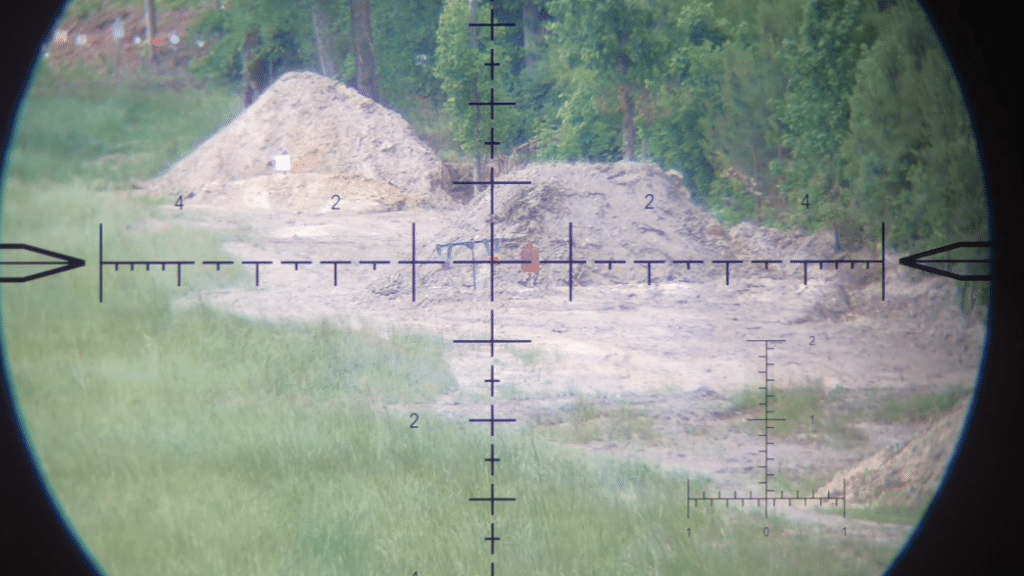
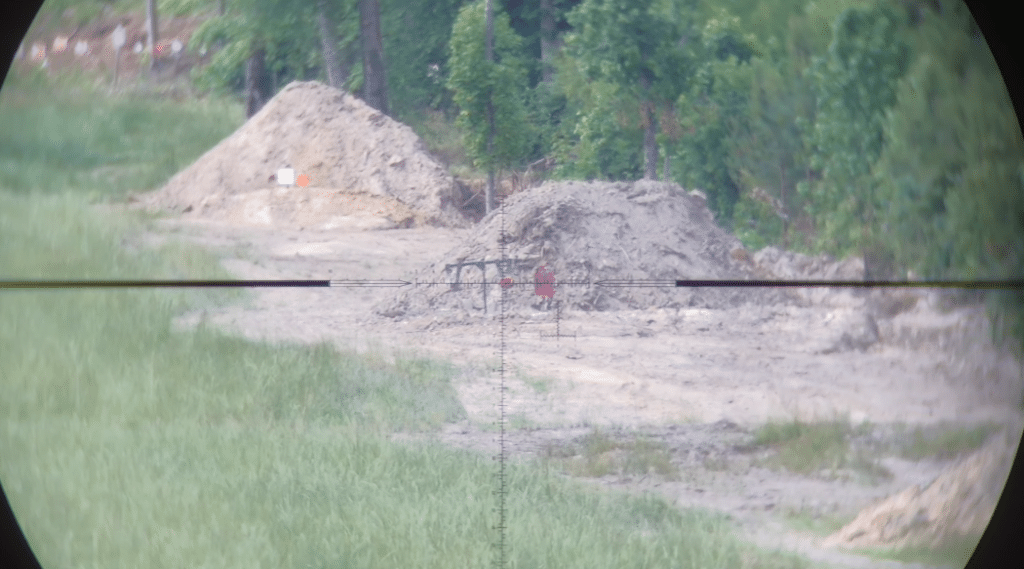
This is one of the few times I’m going to recommend an FFP scope over a SFP. Why? FFP scopes’ reticles enlarge as you increase magnification.
This makes it a lot easier to hit targets at long ranges, and is especially useful for open fields.
With SFP, you’re going to run into that squinting issue I talked about earlier. For me, the FFP reticle will completely cover a target, and I’ll know I’m going to make the shot.
Additional Features
Consider additional features like zero-stop mechanisms, which allow you to return to your original zero quickly, and illuminated reticles, which can be helpful in low-light conditions. These features can enhance your shooting experience and improve accuracy.
By focusing on these critical features, you can find a scope that meets your needs and helps you achieve consistent accuracy at 1000 yards. Remember, the best scope for you will depend on your specific shooting style, preferences, and budget.
How I tested and scored
via: Pursue The Wild with Kristy Titus
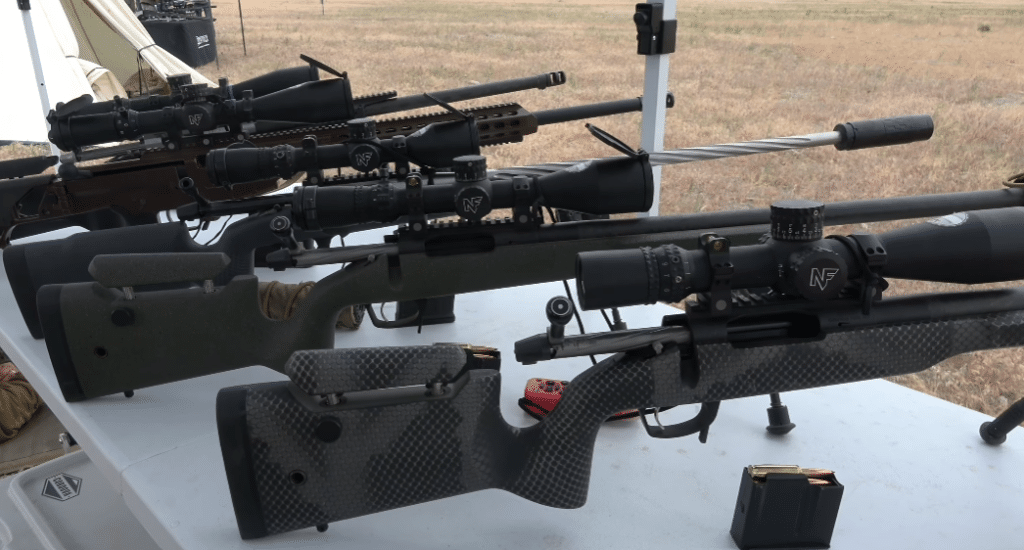
Testing these scopes took months because I wanted real world results, not just bench rest groups. Each scope got the same treatment to keep things fair.
Range Protocol
via: Nightforce Optics
I mounted each scope on the same rifle using quality rings and a 20 MOA rail. Started with a 100 yard zero, then worked out to 600, 800, and 1000 yards. Used the same lot of Federal Gold Medal Match ammo for consistency.
The tall target test came first. This shows if the turrets actually move the reticle what they claim. I’d dial 20 MOA up, shoot, and measure. The ATACR and XRS3 were dead on. The Helos was off by about 2%, which is acceptable at this price point.
Box tests revealed any backlash or mechanical issues. Dial up 10, right 10, down 10, left 10. Should end up back at zero. All five scopes passed, though some had crisper turret feel than others.
Glass Evaluation
I tested optical quality at dawn, midday, and dusk. Looked for chromatic aberration, edge distortion, and overall clarity. The Mark 5HD really impressed here with glass that stayed sharp even in challenging light.
Mirage testing happened on hot afternoons. Which scopes could still resolve targets when heat waves were dancing? The Cronus BTR’s UHD glass cut through mirage better than expected.
Eye box testing meant shooting from weird positions. Sitting, kneeling, through barriers. Scopes with forgiving eye boxes saved time. Those with tight eye boxes cost points in timed drills.
Mechanical Testing
Each scope got transported in cases, mounted and remounted, and checked for zero retention. Some scopes needed constant re-zeroing. Those didn’t make the cut.
Temperature testing happened naturally. From 20 degree mornings to 95 degree afternoons. Did the zero shift? Did the turrets still track? The good scopes handled it all without issues.
I tracked round counts through each scope. After 200 rounds minimum, did the turrets still feel crisp? Did anything loosen up? Long term reliability matters more than initial impressions.
What Didn’t Make The Cut
The Vortex Viper PST Gen II almost made the list. Good glass, decent turrets. But only 70 MOA of elevation adjustment isn’t enough cushion for serious 1000 yard work. You might run out of adjustment with certain mount and rifle combinations.
The Arken EP5 looked promising on paper. In practice, tracking was inconsistent. Some samples tracked fine, others were off by 5% or more. Glass quality was just okay with noticeable chromatic aberration at higher magnifications. For the money, the Helos BTR is a much better choice.
Several other scopes failed the durability test. Lost zero after minor impacts, turrets got sloppy after a few hundred rounds, or they fogged up internally. No point reviewing scopes that won’t hold up to real use.
Frequently asked questions
What magnification is best for 1000 yard shooting?
You want 20-25x magnification on the top end for 1000 yard work. A variable scope in the 5-25x range gives you the most flexibility. Higher magnification helps identify targets and place precise shots, but mirage often limits usability above 25x. Having lower magnification options matters more than maximum power.
Is first focal plane necessary for long range?
First focal plane is strongly recommended for 1000 yard shooting. The reticle scales with magnification, so your holdovers stay accurate whether you’re at 10x or 25x. When mirage forces you to reduce power, your wind holds still work. Second focal plane only gives accurate measurements at one magnification, which limits your options.
How much elevation travel do I really need?
You need at least 85-100 MOA of total elevation adjustment for 1000 yard shooting. This gives you enough range to zero at 100 yards and still reach extreme distances. A 20 MOA rail helps maximize usable elevation, but you still need generous internal adjustment. Less than this and you might run out of travel.
Does tube diameter affect long-range performance?
Tube diameter mainly affects internal adjustment range, not optical performance. A 34mm or 35mm tube typically offers more elevation travel than 30mm. But some 30mm scopes like the Helos BTR still provide 100 MOA of adjustment. Total adjustment range matters more than tube size alone.
What’s more important—glass quality or features?
Both matter equally for 1000 yard shooting. Great glass helps you see through mirage and identify targets. But if the turrets don’t track accurately, you’ll never hit consistently. You need sharp optics AND reliable mechanics. Budget scopes usually sacrifice one or the other. The best long range scopes deliver both.
Can I shoot 1000 yards with a 30mm tube scope?
Yes, if the scope has enough elevation adjustment. The Athlon Helos BTR Gen II proves this with 100 MOA in a 30mm tube. Total adjustment range is what matters, not tube diameter. Just verify the scope offers at least 85 MOA total elevation and consider a 20 MOA rail to maximize usable travel.
Why should you trust me
I’m Richard Douglas, founder of Scopes Field. I’ve been a firearms instructor for over a decade and have worked as a tactical advisor for several optics manufacturers including Bushnell and Leupold.
My work has appeared in Guns & Ammo, Recoil, and Range365. But more importantly, I’ve personally tested hundreds of scopes over the years. Some great, most mediocre, many terrible.
For this guide, I spent four months putting these scopes through actual use. Not just shooting groups from a bench, but running them in matches, hunting with them, and beating them up to see what breaks. I tracked everything from click values to zero retention after transport.
via: Nightforce Optics
No manufacturer pays me for reviews. I bought most of these scopes myself. The few loaners went back after testing. My goal is simple: help shooters find optics that actually work at distance without the marketing BS.
Conclusion
After months of testing, any of these five scopes will get you hitting at 1000 yards. They’ve all proven themselves reliable and accurate enough for serious long range work.
If I had to pick just one, the Nightforce ATACR 7-35×56 gets my vote. The glass quality, tracking accuracy, and bombproof construction justify the price if you’re serious about precision shooting.
But honestly? The Helos BTR at under $600 shocked me with how well it performs. For most shooters, it’s all the scope you need to start ringing steel at distance.
What scope are you running for long range work? Did I miss one that deserves to be on this list? Drop a comment below and let me know what’s worked for you.



Great work I recently bought my first gun Remington 700 pcr enhanced, will be doing target practice and deer shooting. Would you recommend the VORTEX VIPER PST GEN 1 6-24×50 for my needs?
Just bought a ruger percision rifle an looking for a 1500 yard scope that not expensive with good quality
Just bought a Ruger American Hunter 20 inch barrel. Would the Vortex Strike Eagle 4-24×50 be to big or to long for this gun?
That is way too much scope for that platform.
Assuming you’re using it for close range hunting like 400 yards inward you don’t need anything near a 24x for that. Matter of fact unless you’re target shooting only you will despise the 24x while actual hunting. In other words deer moving…you won’t find them if they’re too close.
A 4×12 would be much more appropriate for your platform.
Good luck
Any experience with a jap 7×7 at extreme range