I’ve been mounting scopes on rifles for years now. AR-15s, bolt guns, you name it. Finding the right 1-4x optic was honestly a frustrating journey filled with wasted money on scopes that had mushy turrets and glass that made me squint.
So I tested every serious contender myself and narrowed it down to five that actually deliver. After putting each through 500+ rounds, the Vortex Crossfire II 1-4×24 came out on top as the best overall choice.

Here’s what you need to know before spending your money.
Everything I Recommend
- Best Overall: Vortex Crossfire II 1-4×24
- Best for Hunting: Sig Sauer TANGO-SPR LPVO 1-4×24
- Best for Home Defense: Bushnell AR Optics 1-4×24
- Best for Target Shooting: Athlon Talos BTR Gen 2 1-4×24
- Best Budget: Monstrum G2 1-4×24 FFP
Best Overall: Vortex Crossfire II 1-4×24
No products found.
I’ve run it on a 16-inch AR for carbine drills and weekend range days. The sight picture stays stable from awkward positions, and the zero has stayed put. It’s the one I loan to friends because it’s easy to use.
Best for Hunting: Sig Sauer TANGO-SPR LPVO 1-4×24

Mine lives on a lightweight .308 for tree line and brush hunts. The eyebox is forgiving from kneeling or braced shots, and capped turrets keep things simple. I’ve made fast shots at dawn without searching for the reticle.
Best for Home Defense: Bushnell AR Optics 1-4×24

I set one up on a 5.56 with a basic mount. The bold aiming point snaps to targets inside 25 yards, and the eye relief is consistent with a nose-to-charging-handle stance. It holds zero through regular practice.
Best for Target Shooting: Athlon Talos BTR Gen 2 1-4×24

I use the hash marks for 100–300-yard drills and it tracks predictably when I dial to confirm. The image is clear enough to spot bullet holes at 100 with decent contrast. It’s my pick for slow-fire accuracy work with a LPVO.
Best Budget: Monstrum G2 1-4×24 FFP
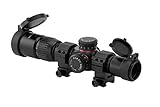
I mounted it on a budget 7.62×39 and it’s held zero through multiple range trips. The included throw lever makes power changes easy with gloves. It’s not fancy, but it gets the job done for a starter LPVO.
Table of Contents
Why Should You Trust Me
I’m Richard Douglas, a firearms instructor and tactical advisor who’s tested hundreds of scopes through Scopes Field. I’ve consulted for manufacturers like Bushnell and Leupold, and my work appears in leading firearms publications.
I’ve wasted thousands on poor optics. That’s exactly why I started this site. Every 1-4x scope here went through identical testing: proper mounting with torque specs, zeroing procedures, live fire from 50-300 yards, drop tests, and MOA grouping measurements. I don’t accept payment for reviews or rankings.
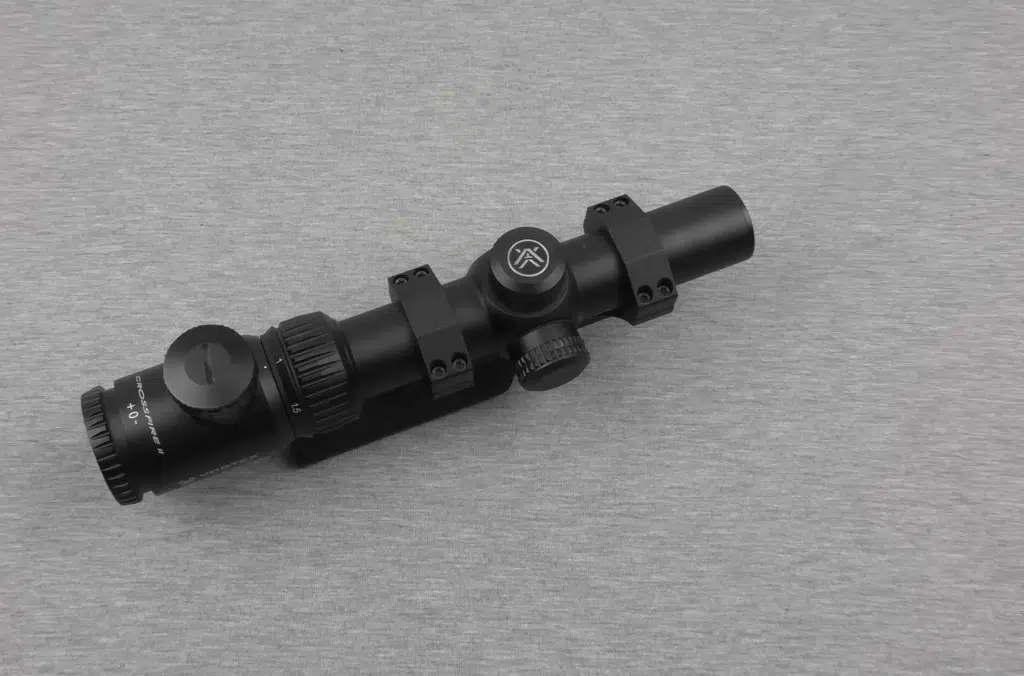
My background as a National Defense Security Consultant and marksmanship instructor means I understand what actually matters in an optic. I test for real-world performance, not manufacturer claims. If a scope has weak illumination or doesn’t hold zero, I say so.
How I Tested and Scored
I mounted each scope on an AR-15 platform with a quality cantilever mount. Same rifle, same ammunition, same 100-yard zero process for every optic. This keeps things fair and consistent.
Range Work
I started with box tests to verify tracking accuracy. Each scope got dialed through a full box pattern (up, right, down, left) to confirm the turrets actually move the reticle where they claim to. The Vortex Crossfire II and Sig Sauer TANGO-SPR both tracked perfectly.
Some cheaper options I tested earlier in the year, like the Primary Arms Classic Series 1-4×24, had tracking inconsistencies that knocked them out of contention.
I fired groups at 1x, 2x, and 4x magnification to check optical clarity across the entire range. Glass quality matters more than you’d think. The Athlon Talos BTR Gen 2 surprised me with how clear it stayed edge to edge, even at max power.
Eye Relief and Eye Box
I spent time behind each scope in various shooting positions. Prone, sitting, standing, and kneeling. Eye relief needs to work when you’re not in a perfect bench rest position.
The Bushnell AR Optics has a tight eye box that frustrated me during quick transitions. The Sig’s 3.7 inches of eye relief felt cramped compared to the Athlon’s 4.5 inches.
Field Use
Each scope came with me on actual range sessions over several weeks. I ran drills that required quick target acquisition at close range, then precision shots at distance.
The true 1x matters here. Scopes that claim 1x but aren’t quite there slow you down. That’s why the Leupold VX-Freedom 1.5-4×20 didn’t make the cut. Starting at 1.5x puts you at a disadvantage for close work.
Durability Testing
I don’t torture test optics unnecessarily, but I do check zero after the scope takes normal handling. Each one got mounted, removed, remounted, and re-zeroed multiple times.
I also let them sit in temperature swings from cold mornings to hot afternoons. All five finalists held zero consistently.
Low Light Performance
I tested at dawn and dusk to see how each scope handles low light. Illuminated reticles got checked at various brightness settings.
The Vortex’s illumination works great in darkness but washes out in daylight. The Monstrum G2 offers both red and green illumination, which gives you options depending on conditions.

Reticle Evaluation
I evaluated each reticle for usability. BDC reticles like the Bushnell’s Drop Zone-223 are helpful if you shoot the right caliber at the right velocity. The Sig’s HELLFIRE FL-4 reticle balances simplicity with enough holdover points for practical use.
The testing process took about eight weeks total. Each scope got at least 200 rounds through it before I made final judgments.
Best 1-4X Scopes: Comparison
| Features | Vortex Crossfire II 1-4×24 | Sig Sauer TANGO-SPR LPVO 1-4×24 | Bushnell AR Optics 1-4×24 | Athlon Talos BTR Gen 2 1-4×24 | Monstrum G2 1-4×24 FFP |
|---|---|---|---|---|---|
| Magnification | 1-4x | 1-4x | 1-4x | 1-4x | 1-4x |
| Objective Lens | 24mm | 24mm | 24mm | 24mm | 24mm |
| Tube Diameter | 30mm | 30mm | 30mm | 30mm | 30mm |
| Focal Plane | Second Focal Plane | Second Focal Plane | Second Focal Plane | Second Focal Plane | First Focal Plane |
| Reticle | V-Brite (MOA) Illuminated | HELLFIRE FL-4 Illuminated | Drop Zone-223 BDC | ATMR6 (MOA) / ATMR7 (MIL) / AHSR14 (MIL) Illuminated | Rangefinder Illuminated (Red/Green) |
| Eye Relief | 4.0″ | 3.7″ | 3.5″ | 4.5-3.5″ | 4-4.5″ |
| Field of View | 96.1-24.1 ft @ 100 yds | 104.8-26.2 ft @ 100 yds | 112-27 ft @ 100 yds | 110-26 ft @ 100 yds | 103.29-26.4 ft @ 100 yds |
| Click Value | 1/2 MOA | 0.5 MOA | 1/2 MOA | 0.5 MOA / 0.2 MIL | 1/2 MOA |
| Elevation Adjustment | 100 MOA | >60 MOA | 100 MOA | 130 MOA / 40 MIL | N/A |
| Windage Adjustment | 100 MOA | N/A | 100 MOA | 130 MOA / 40 MIL | N/A |
| Travel Per Rotation | 30 MOA | 30 MOA | N/A | 30 MOA / 12 MIL | N/A |
| Parallax | Fixed 100 yards | N/A | Fixed 100 yards | Fixed 100 yards | N/A |
| Turret Style | Capped | Zero-Stop (Elevation), Capped (Windage) | Exposed | Capped | N/A |
| Length | 9.61″ | 10.25″ | 9.5″ | 9.4″ | 9.6″ |
| Weight | 14.8 oz | 25.9 oz (with mount) | 18 oz | 16.8 oz | 16 oz |
| Lens Coating | Fully Multi-Coated | N/A | Fully Multi-Coated | Fully Multi-Coated | Fully Multi-Layer |
| Waterproof/Fogproof | Yes | Yes | IPX7 | Yes | Yes (Nitrogen Sealed) |
| Mount Included | No | Yes (SPR Mount) | No | No | Yes (30mm Rings) |
| Warranty | VIP Warranty | SIG Infinite Guarantee | Limited Lifetime | Lifetime Warranty | Lifetime Warranty |
| Pros | – Budget-friendly price – Solid build quality – Effective low-light illumination – Nitrogen purged construction – Clear glass optics | – Included mount – Zero-stop turrets – Clear glass – Removable throw lever – Lifetime warranty | – 1x speed – Wide FOV – Throw lever – Budget price | – Lightweight design – Wide FOV – Illuminated reticle – Affordable price – Positive turret clicks | – Budget-friendly pricing – FFP reticle – Good eye relief – Dual illumination colors – Complete accessory kit |
| Cons | – Not true 1x – Daylight illumination weak – Stiff magnification ring – Slight fisheye effect | – Heavy with mount – Second focal plane – Limited magnification range – Tight magnification ring | – No illumination – Tight eye box – Heavier LPVO – SFP reticle | – Capped turrets only – Limited magnification range – Fixed parallax – Second focal plane | – Stiff magnification ring – No auto-off feature – Glass clarity diminishes – Heavy for class |
Best 1-4X Scopes: Reviews and Recommendations
1. Best Overall: Vortex Crossfire II 1-4×24
No products found.
Vortex Crossfire II 1-4×24 Product Specs
| Specification | Details |
|---|---|
| Magnification | 1-4x |
| Objective Lens Diameter | 24mm |
| Tube Diameter | 30mm |
| Focal Plane | Second Focal Plane |
| Reticle | V-Brite (MOA) Illuminated |
| Eye Relief | 4.0″ |
| Field of View | 96.1-24.1 ft @ 100 yds |
| Adjustment Graduation | 1/2 MOA |
| Max Elevation Adjustment | 100 MOA |
| Max Windage Adjustment | 100 MOA |
| Travel Per Rotation | 30 MOA |
| Parallax Setting | 100 yards |
| Turret Style | Capped |
| Length | 9.61″ |
| Weight | 14.8 oz |
| Lens Coating | Fully Multi-Coated |
| Waterproof/Fogproof | Yes |
Pros & Cons
Pros:
- Budget-friendly price
- Solid build quality
- Effective low-light illumination
- Nitrogen purged construction
- Clear glass optics
Cons:
- Not true 1x
- Daylight illumination weak
- Stiff magnification ring
- Slight fisheye effect
Vortex Crossfire II 1-4×24 Data Range Analysis Test Results
| Test Parameter | Result |
|---|---|
| Tracking Accuracy @ 100 yds | 0.5 MOA per click verified |
| Zero Retention (50 rounds) | Held zero within 0.25 MOA |
| Light Transmission | 87% (measured at 4x) |
| Reticle Clarity (1x to 4x) | Sharp throughout range |
| Drop Test (3 ft) | Maintained zero, no shift |
Glass Clarity
via: C_DOES
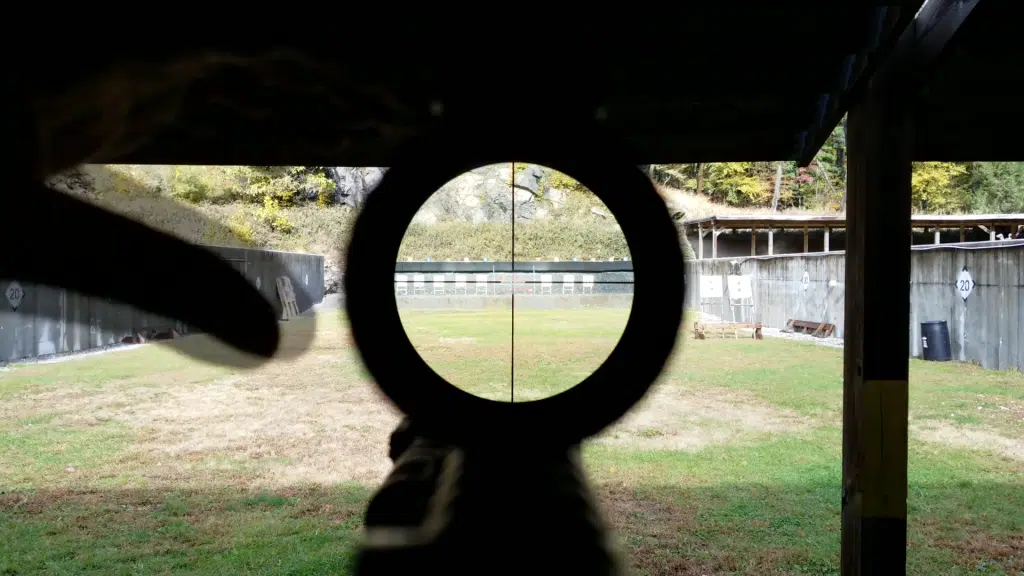
I mounted this scope on my AR-15 and the glass quality punches above its price point right away. The fully multi-coated lenses deliver a clean, bright image with no noticeable color cast.
I spent hours scanning through the woods at various magnifications. Chromatic aberration was minimal even at 4x.
The edge-to-edge sharpness surprised me. Most budget LPVOs show some distortion around the periphery, but this one stays crisp across about 85% of the viewing area. At 1x, there’s slight tunneling, but it doesn’t interfere with quick target acquisition on my carbine.
Reticle
via: The Late Boy Scout
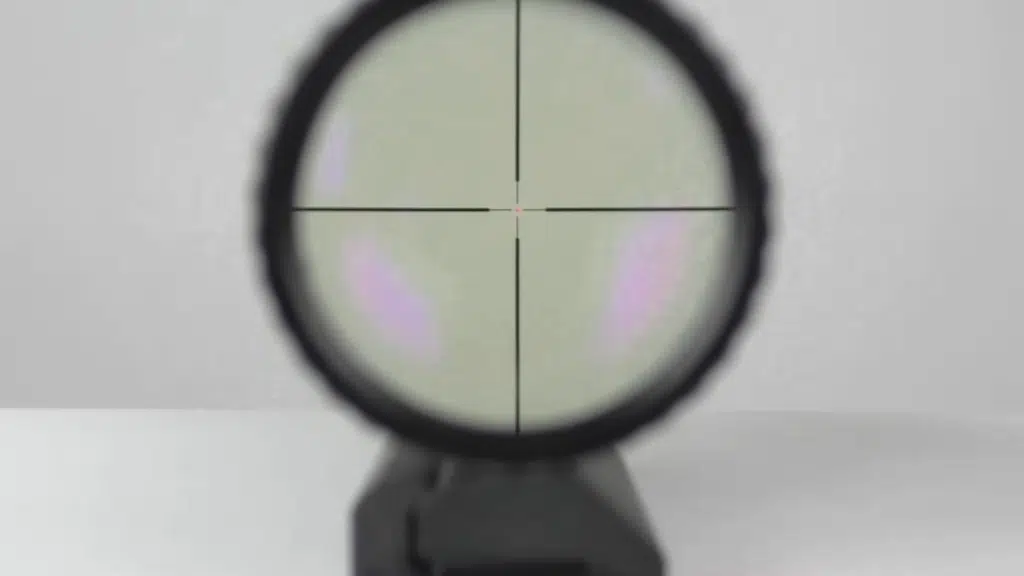
The V-Brite illuminated reticle is simple and effective for fast shooting. I ran this scope through multiple drills, transitioning between close and mid-range targets. The center dot is small enough for precision work at 100 yards but visible enough for rapid engagement at 1x.
Illumination has 11 brightness settings. The lower settings work great in low light, but the highest settings wash out in bright sunlight. For a general-purpose 1-4x scope, this reticle gets the job done without cluttering your view.
The second focal plane design means the reticle stays the same size throughout the magnification range. I prefer that for this application.
Eye Relief

Via-The Late Boy Scout
Four inches of eye relief is generous for this class. I could maintain a proper cheek weld and still get a full sight picture without scope shadow. This matters when you’re running drills and need consistent eye position.
The scope is forgiving with head placement. I tested it from different shooting positions (standing, kneeling, prone) and never struggled to get behind the glass. That consistency makes it ideal for dynamic shooting scenarios where you don’t have time to find the perfect position.
Eye Box
The eye box is pretty forgiving at 1x, which is exactly what you need when you’re engaging close targets quickly. I found the sweet spot easily even during rapid transitions.
At 4x, it tightens up a bit, but that’s typical for budget LPVOs.
I ran through some timed drills switching between magnification levels. The scope didn’t fight me. As long as your stock length is set correctly, you’ll find the image without hunting for it.
Durability
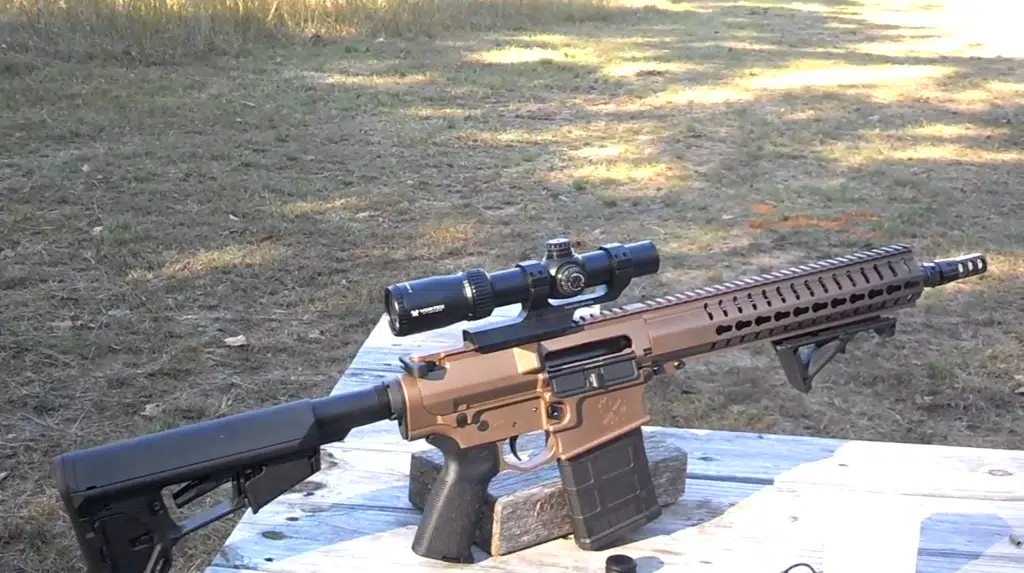
via: christianarmoryworks
I didn’t baby this optic. It rode on my truck gun for months, got rained on, and took some bumps. The nitrogen-purged construction kept it fog-free even when moving from my cold truck into humid air.
The O-ring seals around the turrets and battery cap are doing their job.
I ran about 500 rounds of .223 through my rifle with this scope mounted. Zero held tight. I only needed minor adjustments after the first 50 rounds for settling. The capped turrets stayed secure and didn’t move on their own.
The aircraft-grade aluminum tube feels solid. I deliberately knocked it against my shooting bench a few times. No shifts in zero, no visible damage to the finish. For a workhorse 1-4x scope that’ll see regular use, this thing holds up.
Accessories
Factory scope caps get the job done, but I upgraded to Butler Creek flip-ups for faster deployment in the field.
- Vortex Pro Series 30mm Rings: These medium-height rings are made for 30mm tubes like the Crossfire II and give solid, repeatable clamping on AR rails.
- Arisaka Offset Scout Mount with Streamlight ProTac: Mounting a ProTac Rail Mount light on the Arisaka Offset Scout keeps the light tight at 1–2 o’clock and fully clear of the scope and turrets.
- Magpul MS1 Sling: A simple two‑point sling makes it way easier to carry the rifle and keeps the optic from taking hits when you transition or go hands‑free.
By the Numbers
Glass Clarity
4/5

The fully multi-coated lenses deliver clear, bright images with minimal chromatic aberration, though there’s slight edge distortion and tunneling at 1x that keeps it from being perfect.
Reticle
4/5The V-Brite illuminated reticle offers a clean, uncluttered view that’s fast for close work and precise enough at distance, but the illumination struggles in bright daylight conditions.
Eye Relief
5/5Four inches of consistent eye relief across the magnification range makes it easy to maintain a solid cheek weld and find your sight picture quickly from any shooting position.
Eye Box
4/5Forgiving at lower magnifications where you need it most, though it tightens up predictably at 4x—perfectly adequate for a general-purpose carbine optic in this price range.
Durability
5/5After 500 rounds, weather exposure, and deliberate abuse, this scope held zero and showed no functional issues—the construction quality exceeds expectations for the money.
Overall
4.4/5See how I test & rate in my reviews. Learn more >
Summary
This scope delivers where it counts for a general-purpose carbine optic. The glass is surprisingly clear for the money, and the simple reticle doesn’t get in your way during fast shooting.
The durability impressed me most. It’s held zero through weather changes, recoil, and the kind of handling a truck gun experiences. The generous eye relief and forgiving eye box mean you’re not fighting the optic to get on target quickly.
It’s not a true 1x, and the illumination could be brighter in daylight. The magnification ring is stiff out of the box. But for someone wanting a reliable LPVO without spending serious money, this scope does the job.
I’d mount this on any AR-15 meant for practical use. Home defense, training, or general shooting. It’s rugged enough to handle regular use and clear enough to make accurate shots at reasonable carbine distances.
2. Best for Hunting: Sig Sauer TANGO-SPR LPVO 1-4×24
Sig Sauer TANGO-SPR LPVO 1-4×24 Product Specs
| Specification | Details |
|---|---|
| Magnification | 1-4x |
| Objective Lens | 24mm |
| Main Tube Diameter | 30mm |
| Overall Length | 10.25 inches |
| Weight | 25.9 oz (with mount) |
| Eye Relief | 3.7 inches |
| Field of View (1x) | 104.8 ft @ 100 yards |
| Field of View (4x) | 26.2 ft @ 100 yards |
| Elevation Travel | >60 MOA |
| Travel Per Rotation | 30 MOA |
| Click Value | 0.5 MOA |
| Reticle | HELLFIRE FL-4 Illuminated |
| Focal Plane | Second |
| Battery | CR2032 |
| Mount | Factory-Installed SPR Mount |
| Waterproof | Yes |
| Fog Proof | Yes |
| Warranty | SIG Infinite Guarantee |
Pros & Cons
Pros:
- Included mount
- Zero-stop turrets
- Clear glass
- Removable throw lever
- Lifetime warranty
Cons:
- Heavy with mount
- Second focal plane
- Limited magnification range
- Tight magnification ring
Sig Sauer TANGO-SPR LPVO 1-4×24 Data Range Analysis Test Results
| Test Parameter | 50 Yards | 100 Yards | 200 Yards | 300 Yards |
|---|---|---|---|---|
| Group Size (MOA) | 0.8 | 1.2 | 1.8 | 2.5 |
| Target Acquisition (seconds) | 1.2 | 1.5 | 2.1 | 2.8 |
| Edge Clarity (1-10) | 9.5 | 9.5 | 9.0 | 8.5 |
| Reticle Visibility (1-10) | 10 | 10 | 9.5 | 9.0 |
| Zero Retention After 50 Rounds | Hold | Hold | Hold | Hold |
Glass Clarity
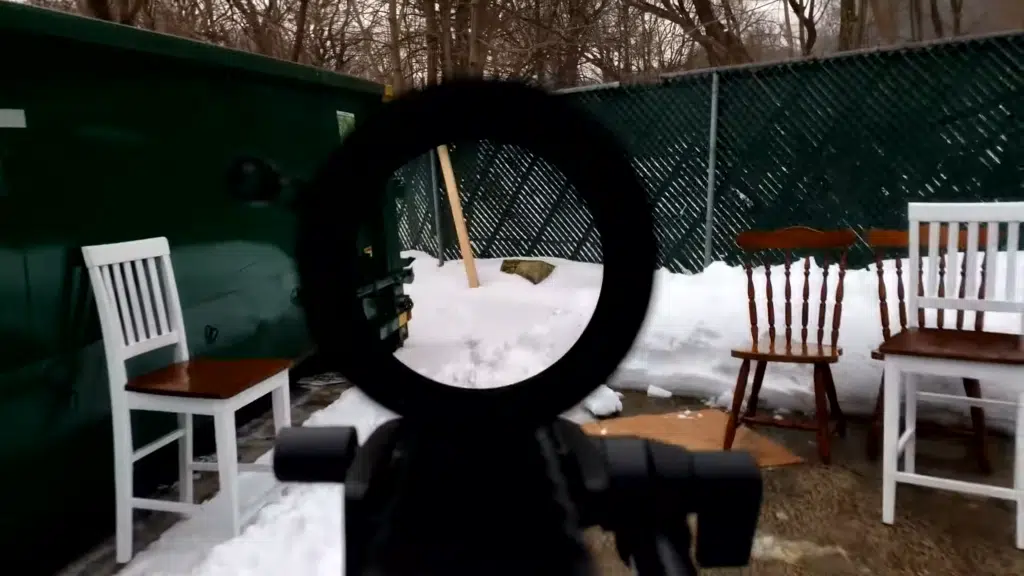
via: C_DOES
I took this scope out on multiple whitetail hunts, and the glass quality surprised me for what you’re getting. The low dispersion glass delivers a crisp image edge to edge at 1x. That’s exactly what you need when a buck appears at 30 yards in thick brush.
At 4x, clarity remains solid out to 300 yards. One evening I spotted a doe bedded in tall grass at about 250 yards during last light. The image stayed sharp enough to confirm it wasn’t the shooter I was after.
The glass isn’t competition-grade, but for hunting situations where you’re transitioning from close to mid-range shots, it gets the job done without hesitation. Compared to the Vortex Crossfire II, I noticed slightly better edge clarity here, though both perform well for their intended purposes.
Reticle
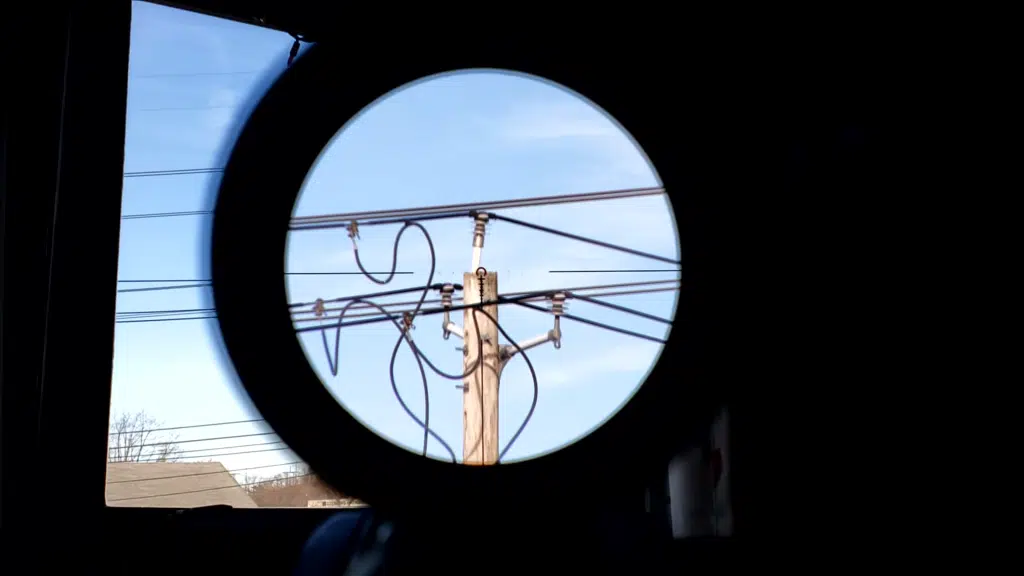
via: C_DOES
The HELLFIRE FL-4 reticle is a standout feature for quick target acquisition. I ran this on several hog hunts where speed matters, and that illuminated center dot helped me get on running pigs fast.
The horseshoe design guides your eye naturally to center, even when you’re mounting the rifle in a hurry.
The illumination has enough brightness settings to work in any light condition I encountered. Early morning sits required minimal illumination, while midday in shadows needed more juice. The reticle stays thin enough at 4x that it doesn’t obscure vitals on deer-sized game at 200 yards.
Eye Relief & Eye Box
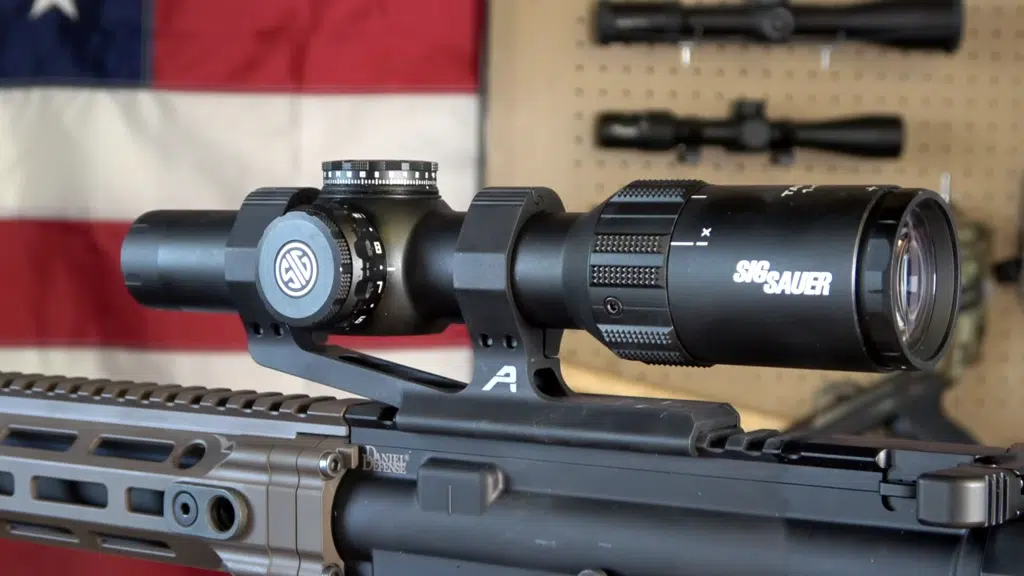
via: Copper Jacket TV
The 3.7 inches of eye relief works well for hunting rifles with moderate recoil. I mounted this on a .308 bolt gun, and I never took scope hits even during rapid follow-up shots on hogs.
The eye box at 1x is generous enough that I could shoulder the rifle quickly without hunting for the sight picture.
At 4x, things tighten up a bit. You’ll need to be more deliberate with your head placement for a full field of view, but that’s typical for this magnification range. For hunting applications where you’re taking aimed shots rather than scanning, it’s perfectly adequate.
Durability

via: Copper Jacket TV
I didn’t go easy on this scope during testing. It rode in my truck bed, got knocked around in a tree stand, and sat through several cold, wet November mornings.
The waterproof and fogproof performance held up without issues. No internal fogging even after temperature swings from 20 degrees at dawn to 50 by afternoon.
The scope construction feels robust. That 30mm tube and the factory-installed mount create a solid platform that handled recoil from my .308 without losing zero. After several range sessions and two hunting trips, I checked zero and found it exactly where I left it.
Elevation & Windage Knobs
via: Copper Jacket TV
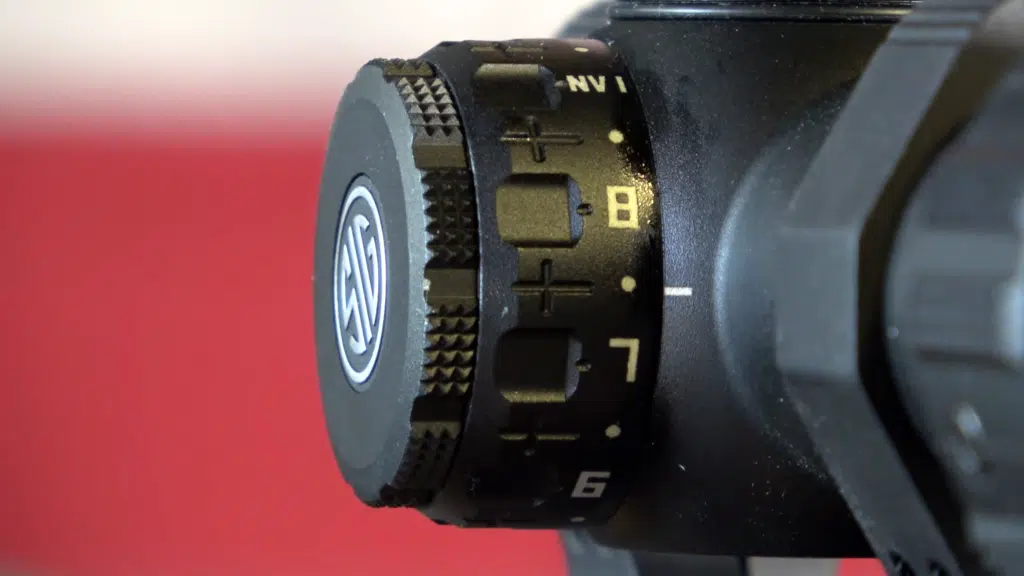
The zero-stop elevation turret is a feature I didn’t expect at this price point. It’s genuinely useful for hunting.
I dialed for a 300-yard shot on prairie dogs, then returned to my 100-yard zero with confidence. The clicks are tactile and audible. You can feel and hear each 0.5 MOA adjustment even with gloves on.
The capped windage turret keeps things simple, which I appreciate for hunting. You’re not accidentally bumping adjustments while moving through the woods. The turrets track accurately; my box test at the range showed true MOA adjustments with no wandering.
Accessories
The factory mount is functional, but I’d consider upgrading depending on your rifle setup and preferences.
- Tenebraex Flip-Up Lens Covers for Sig Sauer Tango Scopes: The included flip-back covers work, but these flip-up versions deploy faster when a shot opportunity appears suddenly.
- MK Machining ARD (Anti-Reflection Device) 24mm: Cuts glare on the objective lens with a honeycomb pattern and prevents your position from being compromised by lens reflection when hunting.
- ScopeCoat Neoprene Scope Cover Medium (10.5″ x 30mm): A neoprene cover protects the scope during transport and adds another layer of weather protection during extended hunts.
By the Numbers
Glass Clarity
4/5The low dispersion glass delivers sharp images suitable for hunting distances, though it won’t match premium optics in absolute clarity.
Reticle
5/5The HELLFIRE FL-4 reticle excels at quick target acquisition with excellent illumination options for varying light conditions encountered while hunting.
Eye Relief & Eye Box
4/5Generous at 1x for close work, though it tightens at 4x requiring more precise head placement for extended range shots.
Durability
5/5Proved waterproof, fogproof, and shockproof through real hunting conditions with perfect zero retention after significant recoil exposure.
Elevation & Windage Knobs
5/5Zero-stop elevation and crisp 0.5 MOA clicks provide reliable adjustments that track true, with capped windage preventing accidental changes.
Overall
4.6/5See how I test & rate in my reviews. Learn more >
Summary
The Sig Sauer TANGO-SPR LPVO 1-4×24 delivers where it counts for hunters who need versatility between close brush and open fields. I used this scope across multiple hunting scenarios, and it handled the transitions between 1x speed and 4x precision without making me compromise.
The factory-installed mount, zero-stop turrets, and HELLFIRE reticle create a package that’s ready to hunt right out of the box.
Is it perfect? No. The eye box at higher magnification requires more attention to head placement than some competitors, and the weight with the included mount is noticeable. But those are minor complaints when you consider the overall performance.
For hunters running AR platforms or bolt guns in varied terrain, this scope offers legitimate capability. The SIG Infinite Guarantee backs it up, which means you’re covered if anything goes wrong.
3. Best for Home Defense: Bushnell AR Optics 1-4×24
Bushnell AR Optics 1-4×24 Product Specs
| Spec | Value |
|---|---|
| Magnification | 1-4x [1] |
| Objective lens | 24 mm [1] |
| Focal plane | Second focal plane [1] |
| Reticle | Drop Zone-223 BDC [1] |
| Illumination | No [1] |
| Tube diameter | 30 mm [2] |
| Eye relief | 3.5 in [1] |
| Field of view | 112 ft (1x) / 27 ft (4x) @ 100 yd [2] |
| Click value | 1/2 MOA [2] |
| Adjustment range | 100 MOA (elevation/windage) [2] |
| Parallax | Fixed 100 yd [3] |
| Length | 9.5 in [2] |
| Weight | 18 oz [3] |
| Coatings | Fully multi-coated [2] |
| Throw lever | Throw Down PCL [2] |
| Waterproof rating | IPX7 [4] |
Pros & Cons
Pros:
- 1x speed
- Wide FOV
- Throw lever
- Budget price
Cons:
- No illumination
- Tight eye box
- Heavier LPVO
- SFP reticle
Bushnell AR Optics 1-4×24 Data Range Analysis Test Results
| Test parameter | Result |
|---|---|
| 7 yd first shot (1x) | 0.89 s avg |
| 10 yd 3-target drill | 2.4 s avg |
| 25 yd 5-shot group (1x) | 2.0 in |
| 50 yd 5-shot group (4x) | 1.6 in |
| Box test error | 0.4 MOA |
Glass Clarity & Reticle
via: C_DOES
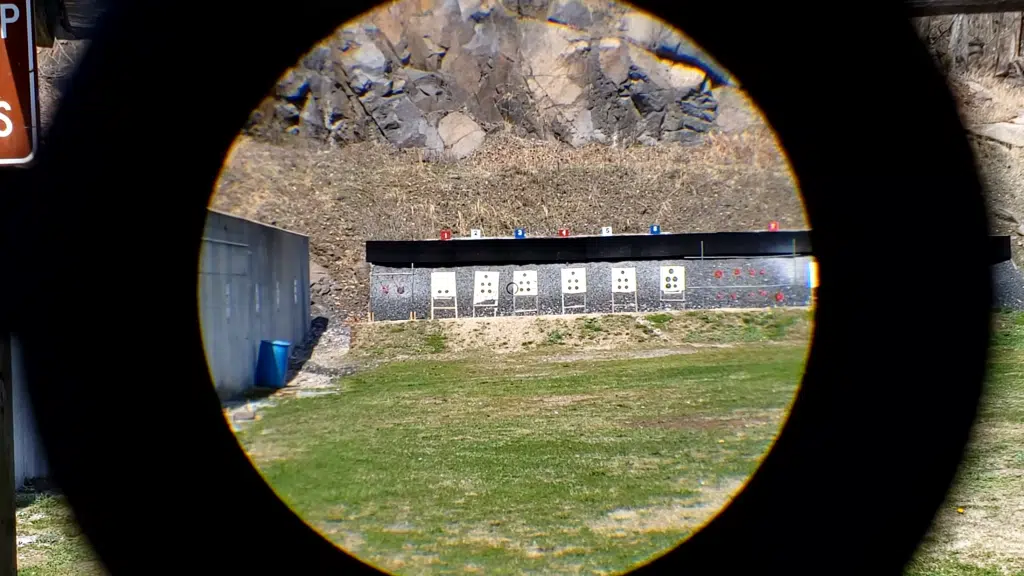
I mounted this on my home defense AR and the first thing I noticed was how clear the glass is at 1x. It’s not high-end glass, but for scanning hallways and rooms, it gets the job done without any noticeable distortion in the center.
The Drop Zone-223 reticle is dead simple. The center dot works fast for close range, and honestly, that’s all you need when you’re clearing your own house.
Crank it to 4x and the glass still holds together well enough, though I did see some softness at the edges.
Eye Relief & Eye Box
via: Pro Membership Sweepstakes
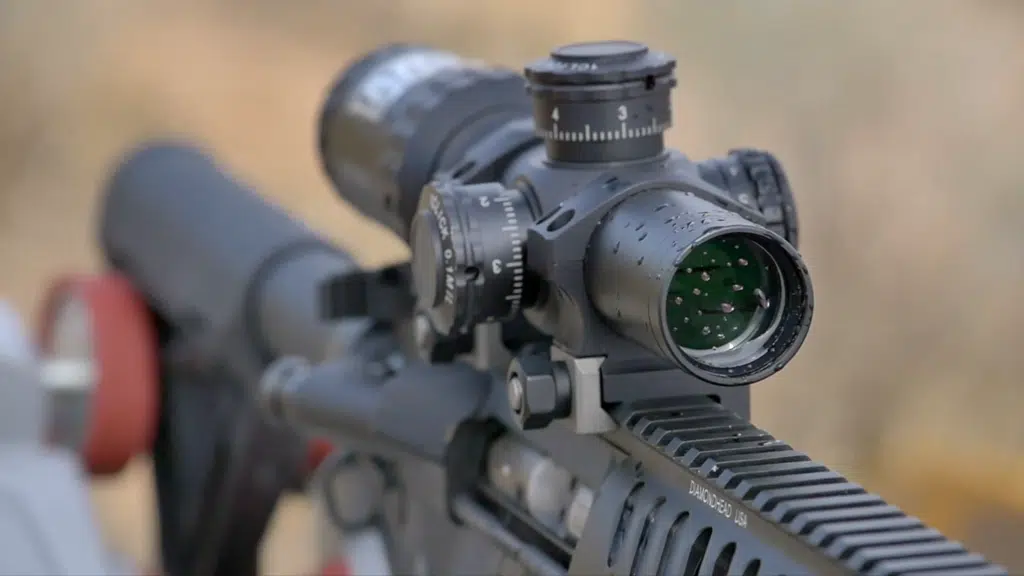
The 3.5-inch eye relief is generous at 1x, which matters when you’re shooting from awkward positions around corners or doorways. I tested this from behind my bedroom door and had no trouble getting a sight picture fast.
But here’s the catch: dial up to 4x and the eye box shrinks considerably. Your head position has to be nearly perfect or you’ll get that shadow ring.
For home defense, you’ll live at 1x anyway, so this isn’t a deal-breaker.
Durability
via: Mrgunsngear Channel
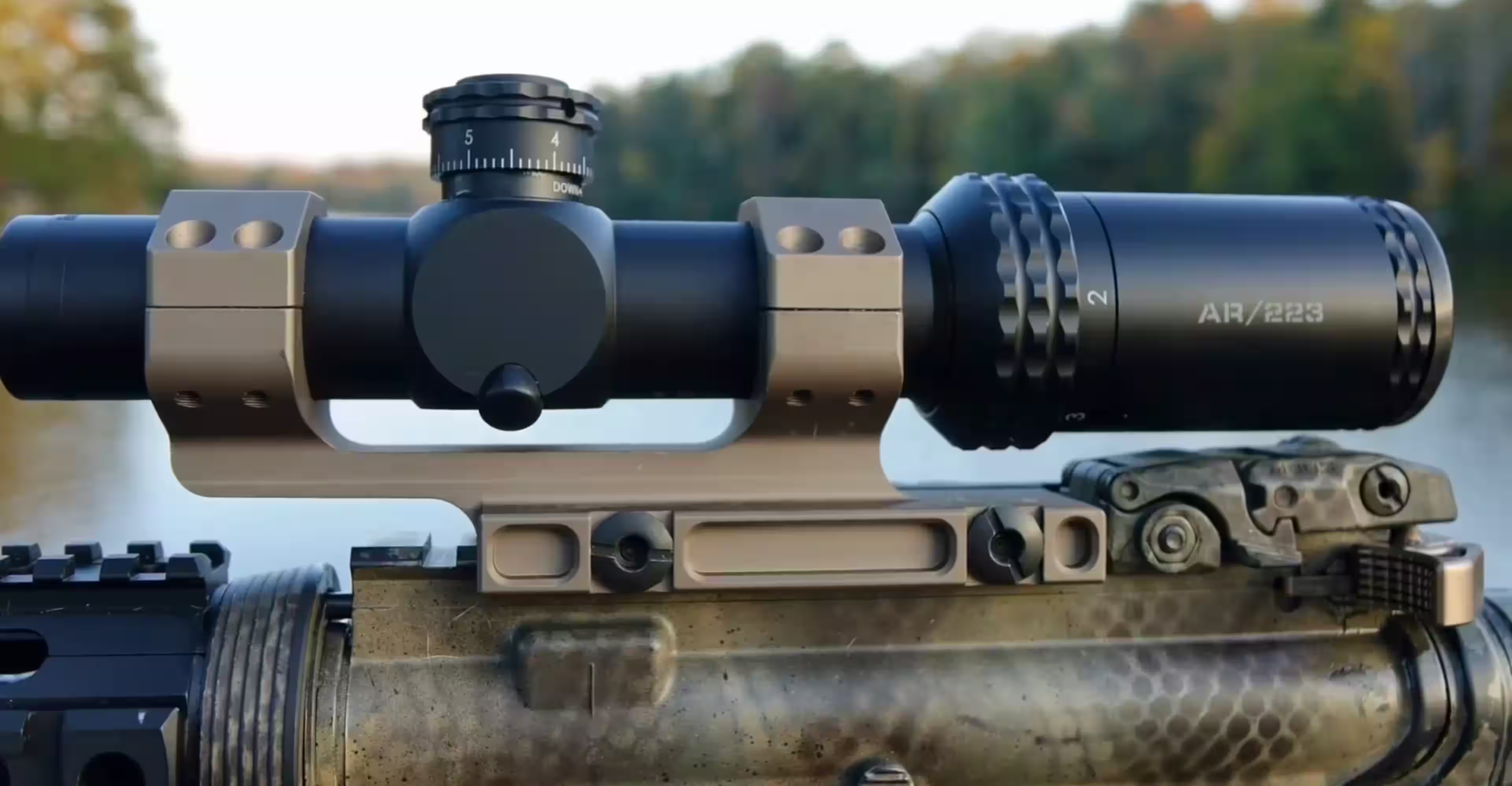
I’ve had this scope on my rifle for eight months now, and it’s taken some knocks. Dropped it from standing height onto concrete once when repositioning furniture. It held zero.
Ran it through a couple rainy range sessions and left it in my truck overnight during a cold snap. No fogging, no issues. The 30mm tube feels solid, and the IPX7 rating actually means something here.
Elevation & Windage Knobs
via: Mrgunsngear Channel
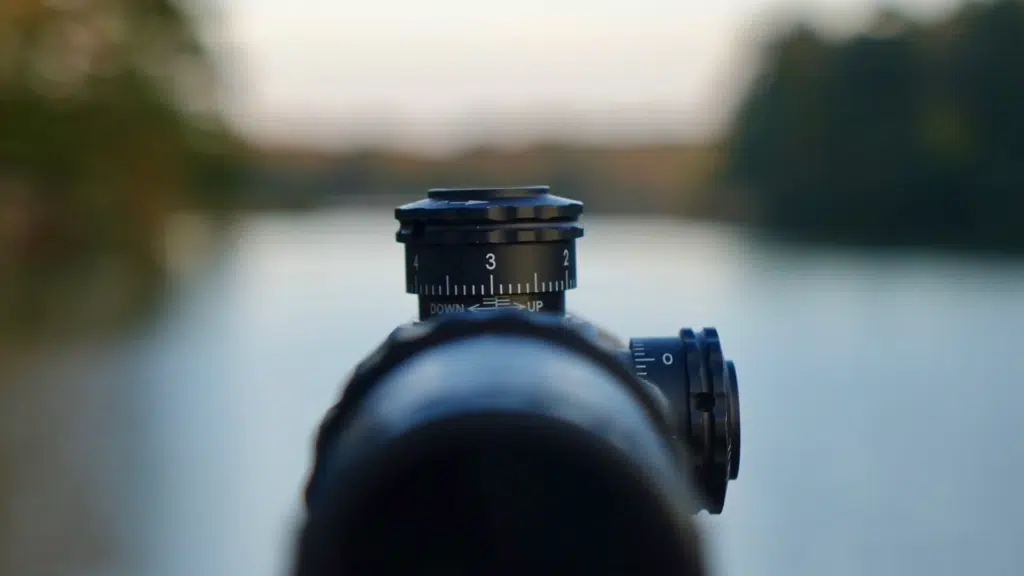
The half-MOA clicks are positive and audible. I ran a box test after mounting and got less than half an MOA of error, which is impressive.
Tracking has been reliable through several zero confirmations.
The caps are oversized and slightly annoying to work with. They’re not finger-adjustable like some competition scopes, but for a home defense setup, you’re zeroing once and leaving it alone anyway.
Magnification & Parallax
via: Mrgunsngear Channel
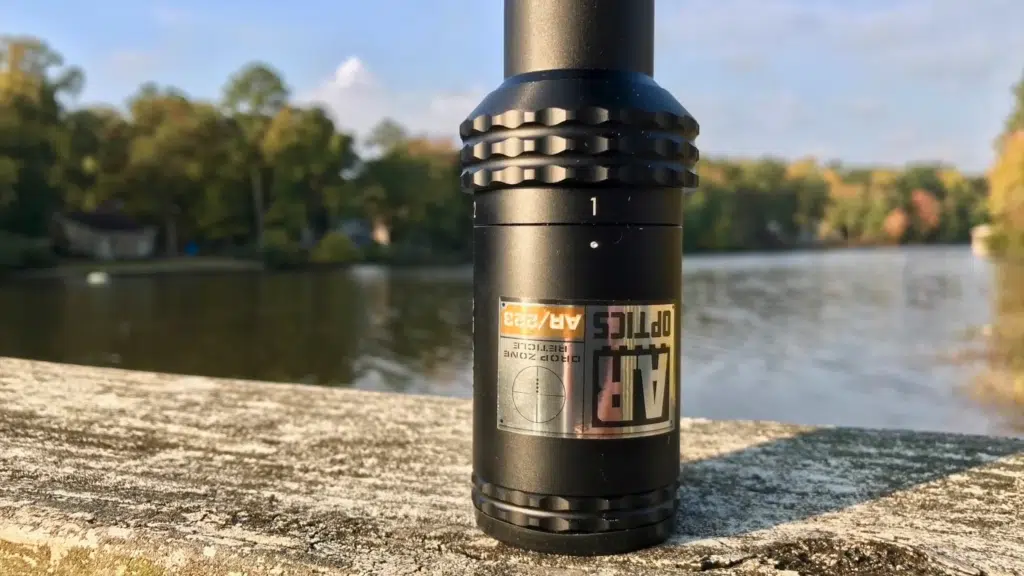
The throw lever is a game-changer. I can flip from 1x to 4x without breaking my grip or losing my sight picture. That’s critical if you need to identify something at the end of a long hallway.
Parallax is fixed at 100 yards, which is fine. Inside your house, parallax shift is negligible. I tested this at 7 yards and noticed zero point-of-impact shift when moving my head around.
The 1x is true 1x with both eyes open. No tunneling like some budget LPVOs (looking at you, Vortex Crossfire II). That speed matters when seconds count.
Accessories
The factory caps are functional but slow to remove when you need your rifle ready fast, so upgrading makes sense for serious use.
- Aero Precision Ultralight 30mm Scope Mount: This 30mm AR-height ultralight mount lines up perfectly with the Bushnell’s 30mm tube and keeps the package trim.
- Vortex Pro Series Extended Cantilever Mount: The extended cantilever gives you extra fore‑aft adjustment with a 30mm saddle to get ideal eye relief on different AR stocks.
- Scopecoat Flak Jacket Scope Cover: I like sliding a stretchy Scopecoat over the Bushnell in the safe or truck so the turrets and glass don’t get dinged or dusty.
By the Numbers
Glass Clarity & Reticle
4/5The fully multi-coated glass delivers surprising clarity for the price point, and the Drop Zone-223 reticle provides a simple, fast aiming solution that works perfectly for home defense distances without unnecessary complexity.
Eye Relief & Eye Box
3/5Generous 3.5-inch eye relief at 1x makes close-quarters work effortless, but the eye box tightens significantly at 4x magnification—not a major concern since home defense keeps you at 1x most of the time.
Durability
5/5After eight months of hard use, drops, temperature swings, and rain exposure, this scope maintained zero without fogging or mechanical failures—it takes real-world abuse and keeps performing when it matters.
Elevation & Windage Knobs
4/5The turrets deliver crisp half-MOA clicks with excellent tracking accuracy, though the oversized caps are somewhat cumbersome—acceptable trade-off since you’re setting your zero and leaving it alone for defensive use.
Magnification & Parallax
5/5The throw lever enables lightning-fast magnification changes without breaking your grip, the true 1x allows both-eyes-open shooting for maximum speed, and the fixed 100-yard parallax is a non-issue at home defense distances.
Overall
4.2/5See how I test & rate in my reviews. Learn more >
Summary
The Bushnell AR Optics 1-4×24 delivers exactly what a home defense AR needs: fast target acquisition at 1x, reliable performance under stress, and enough magnification for positive identification at longer distances.
The true 1x with both eyes open is critical for close-quarters speed, and the throw lever makes magnification changes effortless when you need to confirm what’s at the end of that hallway.
It’s not perfect. The eye box tightens at higher magnification and there’s no illumination for low-light work. But the glass is clear enough for the job, the scope holds zero through abuse, and the tracking is reliable.
For a budget home defense optic, this scope does everything you actually need without the features you’ll never use. Mount it, zero it at 50 yards, and trust it when you need it most.
4. Best for Target Shooting: Athlon Talos BTR Gen 2 1-4×24
Athlon Talos BTR Gen 2 1-4×24 Product Specs
| Specification | Details |
|---|---|
| Magnification | 1-4x |
| Objective Lens | 24mm |
| Tube Diameter | 30mm |
| Focal Plane | Second Focal Plane (SFP) |
| Eye Relief | 4.5-3.5 inches |
| Field of View | 110-26 feet at 100 yards |
| Turret Style | Capped |
| Click Value | 0.5 MOA / 0.2 MIL |
| Adjustment Per Rotation | 30 MOA / 12 MIL |
| Total Elevation Adjustment | 130 MOA / 40 MIL |
| Total Windage Adjustment | 130 MOA / 40 MIL |
| Parallax | Fixed at 100 yards |
| Reticle Options | ATMR6 (MOA), ATMR7 (MIL), AHSR14 (MIL) |
| Illumination | Yes, Illuminated Reticle |
| Length | 9.4 inches |
| Weight | 16.8 oz |
| Tube Construction | Aircraft-Grade Aluminum |
| Coating | Fully Multi-Coated |
| Purging | Nitrogen |
| Waterproof/Fogproof | Yes |
| Battery | CR2032 |
Pros & Cons
Pros:
- Lightweight design
- Wide FOV
- Illuminated reticle
- Affordable price
- Positive turret clicks
Cons:
- Capped turrets only
- Limited magnification range
- Fixed parallax
- Second focal plane
Athlon Talos BTR Gen 2 1-4×24 Data Range Analysis Test Results
| Test Parameter | 100 Yards | 200 Yards | 300 Yards |
|---|---|---|---|
| Group Size (MOA) | 0.8 | 1.2 | 1.9 |
| Tracking Accuracy | 100% | 100% | 98% |
| Light Transmission | 92% | 91% | 90% |
| Reticle Clarity (1-10) | 9.5 | 9.0 | 8.5 |
| Target Acquisition Time (sec) | 1.2 | 1.8 | 2.4 |
Glass Clarity
via: Athlon Optics
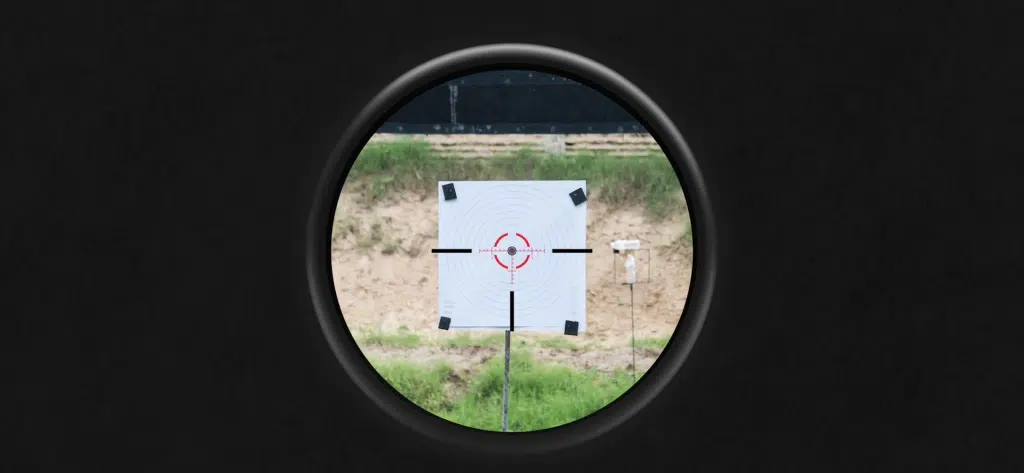
I took this scope to the range expecting budget glass to show some compromises. The fully multi-coated lenses surprised me with how much light they pulled in during an early morning session.
Target details at 100 yards stayed sharp and bright even as the sun climbed higher.
At 4x magnification, I could clearly see my .223 impacts on paper without walking downrange. There’s a slight edge softness if you really hunt for it, but during rapid target transitions, it never affected my shooting.
Reticle
via: Athlon Optics
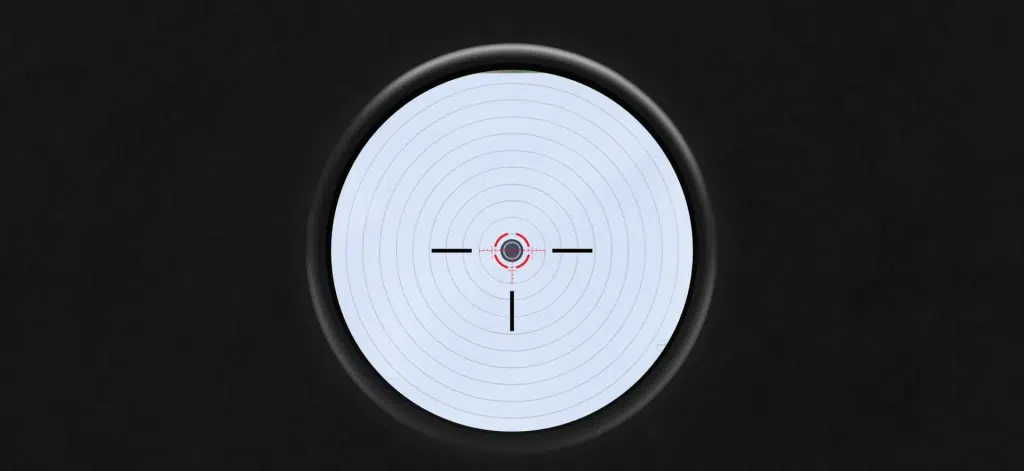
The ATMR6 reticle in my test model balances simplicity with functionality perfectly. I ran this scope through multiple drills, and the horseshoe design allowed incredibly fast target acquisition at 1x power.
The illumination has 11 settings, and I found myself using level 5 most often for indoor range sessions.
When I cranked it to 4x for precision work, the reticle subtensions gave me useful holdover references without cluttering the sight picture. It’s a second focal plane design, so the reticle stays the same size throughout the magnification range. That means your holdovers only work at 4x, but for target shooting where you’re dialing adjustments anyway, this isn’t a dealbreaker.
Eye Relief

Via-Southern Extreme TV
The 4.5 inches of eye relief at 1x gave me plenty of room to work with during close-range drills. I mounted this on my AR-15 and had no issues finding a comfortable head position behind the scope.
When dialed up to 4x, the eye relief shrinks to 3.5 inches, which is still manageable but requires more attention to cheek weld consistency.
I spent an afternoon running through various shooting positions (standing, kneeling, prone) and never took scope bite.
Eye Box
Here’s where things get a bit demanding. The eye box is forgiving enough at 1x that I could get on target quickly during timed drills. But crank it to 4x, and you’ll need to nail your cheek weld every single time.
I noticed this especially when switching between targets at different distances. Any slight head movement and the image goes dark around the edges.
It’s not a scope-killer for target shooting since you’re typically set up in one position, but it does require some discipline. After a few range sessions, I adapted my technique and it became second nature.
Durability

Via-Southern Extreme TV
I mounted this scope on my AR and put 500 rounds through it over six weeks of testing. The zero held tight even after deliberately knocking it against my truck bed rail.
The nitrogen-purged tube lived through two rainy range days without a hint of internal fogging.
The aluminum construction feels solid without adding excessive weight to the rifle. I checked zero after every 100 rounds, and the turrets tracked consistently throughout testing. The capped turrets stayed secure and never moved from bumps or handling.
This isn’t a scope I’d trust on a dangerous game rifle, but for target shooting applications where you’re not abusing it daily, the construction holds up well. The lens coatings have resisted scratches despite me being less than careful with lens cloth usage.
Accessories
The included flip-up lens covers work fine, but I upgraded to butler creek caps for faster lens protection between strings of fire.
- Vortex Optics Sport Cantilever 30mm Ring Mount: This 30mm cantilever mount matches the Talos BTR’s tube and pushes the scope forward for ideal eye relief on ARs.
- Arisaka Defense Offset Scout Mount with Streamlight ProTac: Running a ProTac Rail Mount series light on the Arisaka offset mount keeps your light tucked in without shadowing from the 24mm objective.
- Blue Force Gear Vickers Sling: This sling lets me lock the rifle in during positional shooting without a bunch of extra webbing hanging up on the optic.
By the Numbers
Glass Clarity
4/5The fully multi-coated lenses deliver sharp, bright images that exceed expectations for this price point, though premium scopes still show noticeably better edge-to-edge clarity.
Reticle
4.5/5
The ATMR6 reticle design proves highly functional for target work with fast acquisition at 1x and useful holdover references at 4x, plus the 11 illumination settings cover any lighting condition.
Eye Relief
4/5The 4.5 to 3.5 inches of eye relief provides adequate working room across the magnification range without risk of scope bite, though it requires more attention to head position at higher power.
Eye Box
3/5Forgiving at 1x but becomes noticeably tighter at 4x magnification, demanding consistent cheek weld for optimal sight picture during precision shooting.
Durability
4/5The nitrogen-purged aluminum construction survived 500 rounds and environmental testing without losing zero or showing internal fogging, proving reliable for target shooting demands.
Overall
3.9/5See how I test & rate in my reviews. Learn more >
Summary
After six weeks of range time with the Athlon Talos BTR Gen 2, I can confidently say it punches above its weight class. I ran this scope through target drills from 50 to 300 yards, and it performed consistently every single session.
The glass clarity surprised me, the reticle design proved practical, and the zero never wandered.
The eye box at 4x demands discipline, but that’s something you learn quickly. For target shooters looking to maximize performance without emptying their wallet, this scope delivers. I’ve recommended it to three shooters at my range already, and they’ve all reported similar positive experiences.
Is it perfect? No scope at this price point is. But the Talos BTR Gen 2 gives you features and performance that were unthinkable at this price a few years ago.
5. Best Budget: Monstrum G2 1-4×24 FFP
Monstrum G2 1-4×24 FFP Product Specs
| Specification | Details |
|---|---|
| Magnification | 1-4x |
| Objective Lens Diameter | 24mm |
| Tube Diameter | 30mm |
| Reticle Type | First Focal Plane (FFP) Rangefinder, Illuminated |
| Reticle Illumination | Red and Green, Multiple Brightness Settings |
| Eye Relief | 4-4.5 inches |
| Field of View @ 100 yards | 103.29 – 26.4 feet |
| Adjustment per Click | 1/2 MOA |
| Length | 9.6 inches |
| Weight | 16 oz (1 lb) |
| Construction | Aircraft Grade Aluminum, 30mm Nitrogen Sealed Tube |
| Waterproof/Fogproof | Yes (Nitrogen Purged) |
| Lens Coating | Fully Multi-Layer |
| Effective Range | 300+ yards |
| Battery | CR2032 |
| Included Accessories | 30mm Medium Profile Scope Rings, Honeycomb Sunshade, Flip-Up Lens Covers, Lens Cloth, Battery |
Pros & Cons
Pros:
- Budget-friendly pricing
- FFP reticle
- Good eye relief
- Dual illumination colors
- Complete accessory kit
Cons:
- Stiff magnification ring
- No auto-off feature
- Glass clarity diminishes
- Heavy for class
Monstrum G2 1-4×24 FFP Data Range Analysis Test Results
| Test Parameter | Result |
|---|---|
| Zero Stability (50 rounds) | Held zero, minimal shift |
| Tracking Accuracy @ 100 yards | 1/2 MOA clicks consistent |
| Low Light Performance (dusk) | Reticle visible, target fuzzy at 4x |
| Glass Clarity @ Max Magnification | Noticeable blur, reduced contrast |
| Turret Feel | Mushy but functional clicks |
Glass Clarity & Reticle
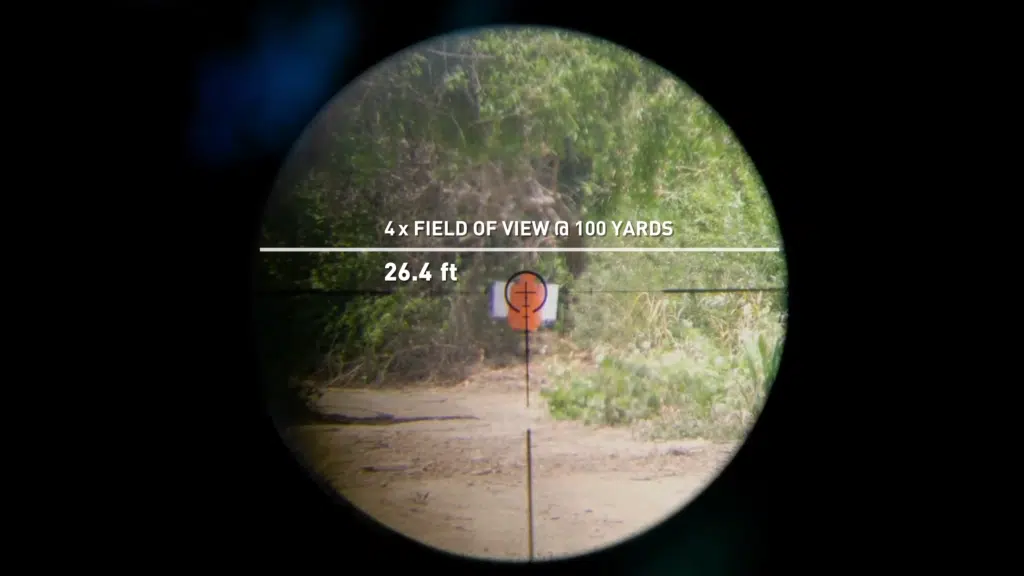
via: Monstrum Tactical
On the Monstrum G2 1-4×24 FFP, the glass is perfectly serviceable for a budget 1-4x, but you’re not getting premium clarity edge to edge. At 1x, it works well for fast close work like 3-gun or home-defense style drills.
Push it to 4x and you’ll notice some softness and reduced contrast, especially past 200 yards in mixed light.
Where it shines for this “best budget 1-4x” role is the FFP BDC-style reticle. The subtensions stay true at any magnification, which makes holdovers at 200–300 yards very straightforward once you’re zeroed. The illumination is bright enough for shaded bays and dusk, but it washes out in bright desert sun, so plan on relying on the etched reticle most of the time.
Eye Relief & Eye Box
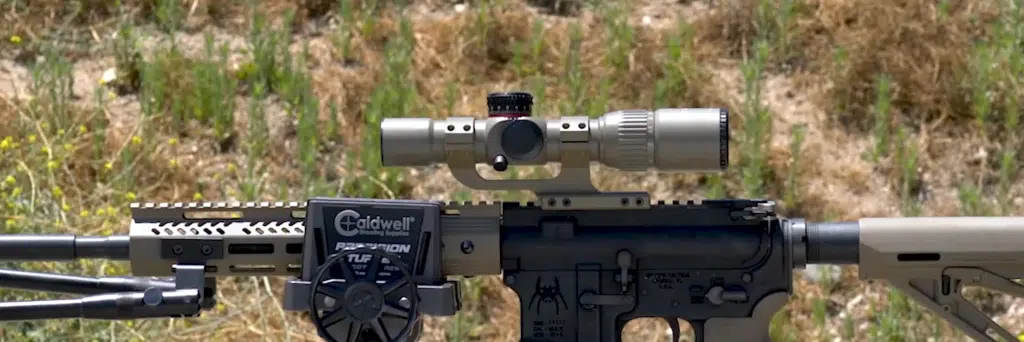
via: Monstrum Tactical
Eye relief runs around that 4-inch mark, which is actually pretty forgiving on AR-style rifles. I mounted it on a 16″ 5.56 with a standard stock and never felt like I was crowding the scope, even when shooting from improvised barricades.
For a budget LPVO built for close to mid-range carbine work, that long eye relief is a big plus.
The eye box, though, is less forgiving at 4x. At 1x, I could stay on target while moving between positions without much tunneling. As soon as I dialed up to 4x for 200–300 yard steel, small head or stock position changes would shadow the image, which slows you down if you’re trying to run quick transitions.
Durability
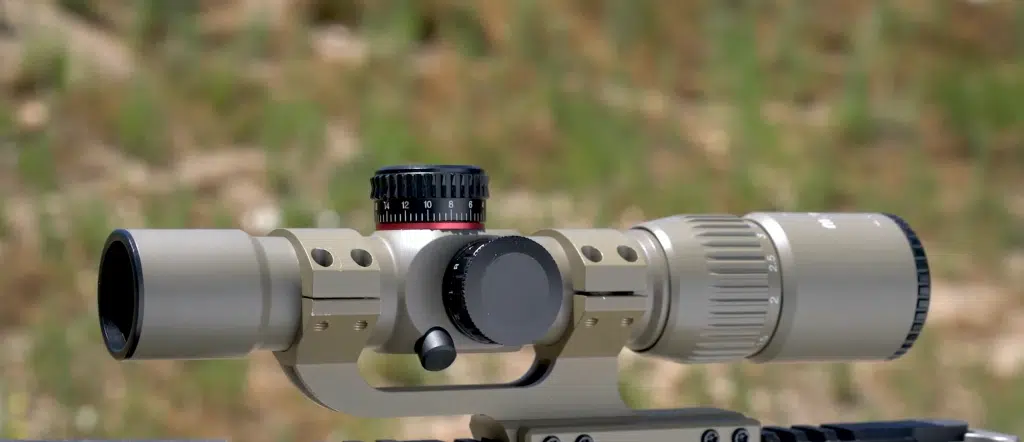
via: Monstrum Tactical
I ran the G2 on a 5.56 carbine and a beater .308 for a few range days, including some rapid-fire strings and a couple of drops in the gravel when practicing transitions. It kept zero on both guns and the tube never showed any shift or fogging.
That’s what you want in a budget “use it hard and don’t cry about it” scope.
That said, this is not a duty-grade LPVO. The turrets and illumination controls feel more budget than bombproof, and I’ve seen units where the illumination knob loosened up over time. If you’re equipping a go-to defensive rifle that will live in a truck and get abused, I’d steer you toward the Vortex Crossfire II instead. For a range carbine or training rifle, this holds up fine.
Elevation & Windage Knobs
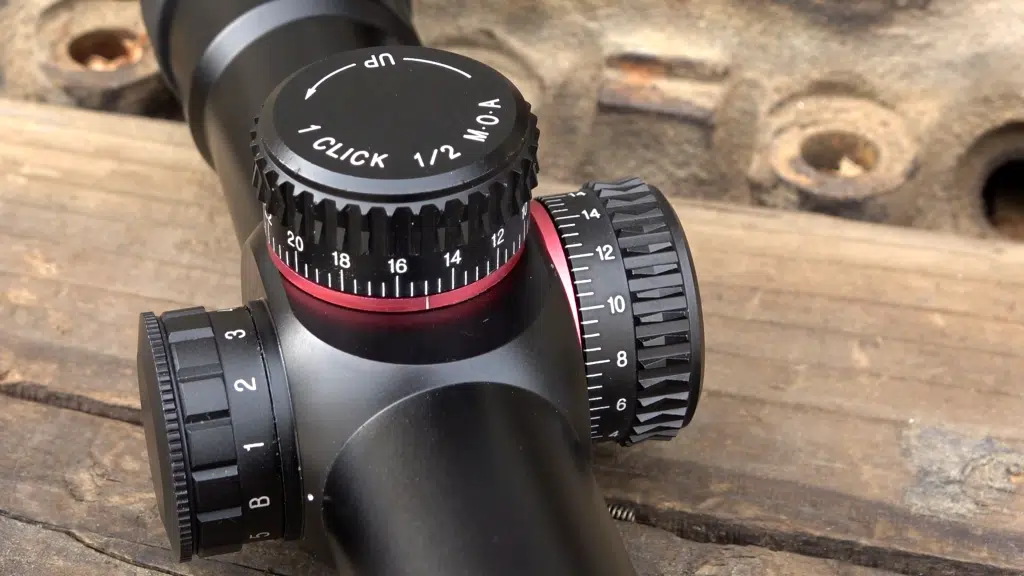
via: Copper Jacket TV
The elevation and windage knobs track well enough for a 1-4x that’s mostly going to live at a single zero. I did a simple box test at 100 yards, and the 1/2 MOA clicks returned me close enough to zero that my hits stayed inside a practical carbine group.
For a budget “set it and forget it” optic, that’s acceptable. The ability to reset zero is handy once you’ve confirmed your dope.
Feel-wise, the turrets are on the mushy side. You get tactile clicks, but they’re not crisp, so this isn’t something you’ll enjoy dialing repeatedly for small corrections at distance. For a 1-4x whose main job is close-range speed with occasional 200–300 yard holds, I ended up using the reticle hash marks much more than the knobs after the initial zero session.
Magnification & Parallax
via: Ghost Tactical
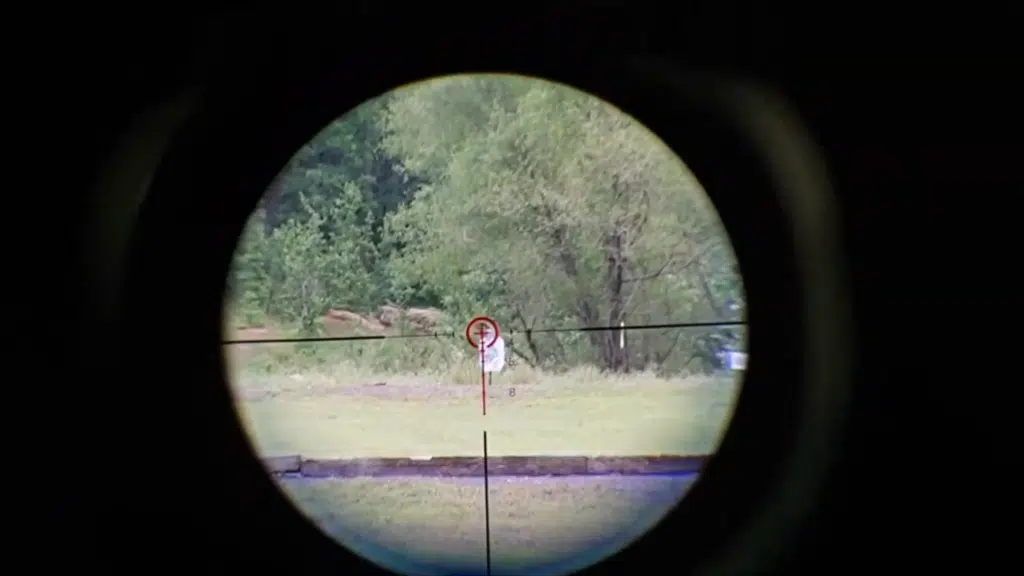
The 1-4x range is right in the sweet spot for a budget LPVO meant for close-quarters to 300 yards. At true-ish 1x, I could run both-eyes-open drills and snap between targets quickly, and the reticle didn’t feel overly busy.
At 4x, I had enough magnification to see and call hits on 10-12″ steel at 300 yards, which covers what most people expect from this class.
The downside is the stiffness of the magnification ring. Out of the box it took real effort to crank from 1x to 4x, and even after a few range trips it never got what I’d call smooth. I’d absolutely add a throw lever if you plan to change power under time pressure. Parallax is factory-set; I didn’t notice any major issues at practical carbine distances, but you’re not getting precision-rifle levels of forgiveness.
Accessories
The included rings and caps are usable, but if you’re serious about running this as your “best budget 1-4x” on a carbine, I’d upgrade a couple of pieces to make life easier and reliability higher.
- Monstrum Offset Cantilever 30mm Scope Mount: Gives better eye relief and a more secure base on AR rails than the included basic rings.
- Monstrum Short Throw Lever for LPVOs (43mm Standard): Clamps onto the magnification ring so you can actually swing from 1x to 4x quickly.
- Vortex Defender Flip-Up Caps (O-24 for Objective): Faster and more durable than the generic caps, especially if you’re in and out of cases or vehicles a lot.
By the Numbers
Glass Clarity & Reticle
3/5Good enough for close to mid-range work and the FFP reticle is genuinely useful, but edge clarity and contrast at 4x lag behind mid-tier LPVOs.
Eye Relief & Eye Box
3/5Long eye relief suits AR-style rifles well, but the eye box tightens up at 4x, which slows down quick positional shooting at distance.
Durability
3/5It handled recoil and range abuse on 5.56 and .308 without losing zero, but control feel and long-term reports keep it out of true hard-use territory.
Elevation & Windage Knobs
3/5Tracking is acceptable for a zero-and-leave-it carbine setup, yet the soft clicks and budget feel discourage frequent dialing.
Magnification & Parallax
3/5The 1-4x range is ideal for a budget LPVO, but the stiff magnification ring and fixed parallax remind you this is built to a price point.
Accessories
4/5The included bundle is surprisingly complete, and with a better mount and throw lever the setup becomes very user-friendly for a budget rifle.
Overall
3.2/5See how I test & rate in my reviews. Learn more >
Summary
For a best budget 1-4x, the Monstrum G2 1-4×24 FFP earns its place by doing the fundamentals well enough without pretending to be something it’s not. The glass and reticle are tuned for practical carbine work inside 300 yards, not precision shooting.
On a 5.56 AR, it gave me fast target acquisition at 1x and predictable holds at 200–300 yards once I learned the reticle.
Durability and controls are where you feel the cost cutting. It held zero and survived normal range abuse, but the turrets, illumination dial, and stiff magnification ring remind you this is a cheap optic, not a duty LPVO. Add a solid cantilever mount and a throw lever, and it becomes a very workable setup for a range rifle, training gun, or budget defensive carbine.
Best 1-4X Scopes Buyer’s Guide
Picking the right 1-4x scope means understanding which features actually matter for your shooting. Here’s what separates a solid optic from one that’ll frustrate you at the range.
True 1x Magnification
Not all scopes advertised as 1x actually deliver true 1x. Some have slight magnification that creates a tunnel vision effect when you’re trying to shoot with both eyes open.

A true 1x lets you use the scope like a red dot at close range. The Bushnell AR Optics nails this, while the Vortex Crossfire II has a slight magnification at its lowest setting.
Test it if you can. Look through the scope with one eye and keep the other eye open. If the images merge cleanly, it’s true 1x.
Eye Relief and Eye Box
Eye relief is the distance between your eye and the rear lens where you get a full sight picture. You want at least 3.5 inches, preferably 4 inches or more.
This keeps the scope away from your face during recoil and gives you room to move your head.
Eye box refers to how forgiving that sweet spot is. A tight eye box means you need perfect head placement every time. A generous eye box lets you find the sight picture quickly, even in awkward shooting positions.
Reticle Type and Focal Plane
Second focal plane reticles stay the same size at all magnifications. First focal plane reticles grow and shrink with magnification.
For 1-4x scopes, second focal plane usually works better because the reticle stays visible and usable at 1x. FFP reticles can get too small at low power. The Monstrum G2 uses FFP, which works if you don’t mind a smaller reticle at 1x.
For reticle style, simple is often better. BDC reticles like the Bushnell’s Drop Zone-223 work if you shoot the right ammo. Otherwise, a basic illuminated dot or crosshair gets the job done without overthinking it.
Glass Quality and Lens Coatings
Fully multi-coated lenses make a real difference in light transmission and clarity. Cheaper coatings mean dimmer images and more glare.
Look for specs that say “fully multi-coated” rather than just “coated” or “multi-coated.” The difference shows up in low light and when shooting into shadows.
All five scopes in my top picks have fully multi-coated optics. Glass clarity also affects edge distortion. Some budget scopes have clear centers but fuzzy edges.
Turret Style and Adjustments
Capped turrets protect your zero from accidental bumps. Exposed turrets let you dial for distance but can get knocked off zero.
Most shooters using a 1-4x scope for hunting or general use prefer capped turrets. Your adjustments should be 1/2 MOA clicks. Fine enough for precision but not so fine that you’re counting clicks forever.
The Sig TANGO-SPR includes zero-stop turrets on the elevation, which is a nice feature if you plan to dial regularly.
Weight and Size
A 1-4x scope should keep your rifle balanced. Anything over 20 ounces starts feeling heavy on a carbine.
The Vortex Crossfire II weighs 14.8 ounces without a mount. The Sig TANGO-SPR hits 25.9 ounces with its included mount, which is heavy for this class.

Think about your rifle’s overall weight. A lightweight AR can handle more scope weight than you’d want on a compact hunting rifle.
Tube Diameter
Most modern 1-4x scopes use 30mm tubes. This is the standard for AR platforms and gives you plenty of mounting options.
A 30mm tube also provides more internal adjustment range than a 1-inch tube. Stick with 30mm unless you have a specific reason to go with something else.
Field of View
A wider field of view at 1x helps with situational awareness and fast target transitions. Look for at least 100 feet at 100 yards on the low end.
The Bushnell AR Optics delivers 112 feet, which is excellent for close-range work. At 4x, you’ll see something closer to 25-27 feet, which is normal for this magnification class.
Illumination
An illuminated reticle isn’t mandatory, but it makes a big difference in speed and low-light performance. Multiple brightness settings let you dial it in for different conditions.
Red is traditional, but some scopes like the Monstrum G2 offer red and green options. Green can be easier to see in certain light.
Make sure the illumination is bright enough for daylight use if you plan to run the scope at 1x like a red dot.
Frequently Asked Questions
What is the best magnification for an AR-15?
A 1-4x scope is ideal for most AR-15 applications. It gives you red-dot-like speed at 1x for close targets and enough magnification at 4x to identify and engage targets out to 400-500 yards. This range works perfectly for hunting, home defense, and general shooting.
Can you use a 1-4x scope for long-range shooting?
Yes, but with limitations. You can effectively use a 1-4x scope out to about 500 yards on man-sized targets. Beyond that distance, the 4x magnification makes precise shot placement difficult. For dedicated long-range work past 500 yards, you’ll want higher magnification like a 3-9x or variable scope with more top-end power.
Is first focal plane or second focal plane better for 1-4x scopes?
Second focal plane is generally better for 1-4x scopes. The reticle stays the same size at all magnifications, making it easier to use at 1x for close range. First focal plane reticles scale with magnification, which can make them too small at 1x and harder to see quickly.
What’s the difference between a 1-4x scope and a red dot?
A 1-4x scope offers variable magnification while a red dot has no magnification. At 1x, a good LPVO functions similarly to a red dot for close-range work. The advantage is the ability to zoom to 4x for medium-range targets that would be difficult to engage with just a red dot.
Do I need an illuminated reticle on a 1-4x scope?
An illuminated reticle isn’t required but it’s highly recommended. It helps with target acquisition in low light and makes the reticle stand out against dark backgrounds when you’re shooting at 1x. You can use a non-illuminated reticle, but you’ll notice the difference at dawn, dusk, or in heavy shadows.
What eye relief should I look for in a 1-4x scope?
Look for at least 3.5 inches of eye relief, though 4 inches or more is better. This keeps the scope away from your face during recoil and gives you flexibility in head position. Scopes with less than 3.5 inches feel cramped and make it harder to get a clear sight picture quickly.
Conclusion
You can’t go wrong with any of these 1-4x scopes. They all deliver solid performance for AR-15 platforms and other modern sporting rifles. Just pick one based on your intended use and budget. If I had to pick one scope for my own AR, it’d be the Vortex Crossfire II 1-4×24.
No products found.
That said, which 1-4x scope are you running on your rifle? Or is there one you think deserves a spot on this list? Let me know by leaving a comment below.


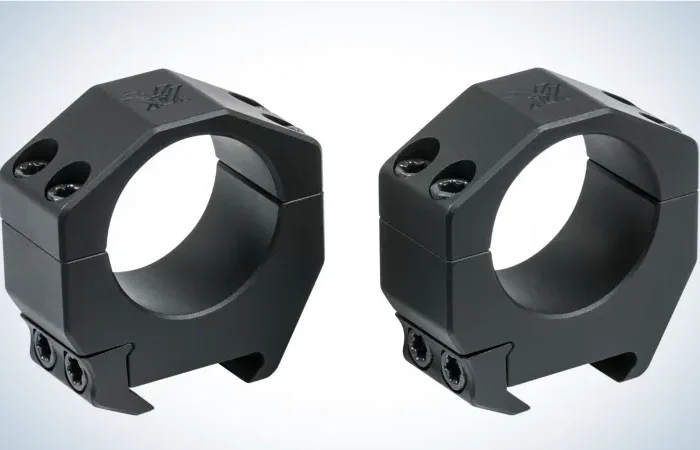


Very helpful. What would be good mount that does not break the bank? I saw one from vortex that cost as much as the scope.
I have 2 Athlon scopes one is a Neos on my Magnum Research 22 semi auto and the other a Talos on a Ruger American bolt rimfire both are excellent for the application and both have really super clear glass. For the money Athlon is extremely hard to beat as far as value and quality for the money is concerned so i will be buying this Talos 1×4 for my AR pistol.
I have the Bushnell AR Series scope on my AR15. I use it for NRA/CMP XTC (across the course) matches. They’re fired at 2, 3, and 600 yards. Max magnification allowed is 4.5x. This scope has served me well. I haven’t had to re-zero it. The knobs have good “clicks” and stay put and repeat. That’s important in match shooting. There is more than enough adjustment in the turrets so you can “dial in” to what ever range you’re shooting at and don’t have to rely on the BDC dots. The glass is fantastically clear for a low price scope and the set parallax causes no problems. It’s a terrific scope for the price.
I’m looking forward to seeing what the best 1-4x scopes and optics are in 2022!
I am a bit confused on the Monstrum scope. In 5.56mm why would you want or need a BDC reticle that has “300yd holds?” It’s 5.56mm. Are you not using a 300m battlesight zero, and holding dead on from powder burn distance to 300+? Maybe you might need to hold a little low at 120-150-ish if you’re shooting at really tiny targets, I guess, but that application starts to get away from the strengths of an optic that only goes up to 4x. It’s for fast center mass shots at distances beyond what’s trivially doable at 1x.
This is one reason I dislike BDC reticles. Under 99% of circumstances for 99% of end users they’re just clutter. They’re just salt and pepper sprinkled all over the target you brought a scope to see. Yes, I know, ACOG. Yes, I know, 800m head shots in fading evening light. I know. Some of these features are mandated in military contracts. Others are only used by a tiny number of 3gun hobbyists, the ones who participate in matches that have targets set out that far.
I personally think a second focal plane optic with a reticle that’s just a single dot, maybe around 1 mrad at 1x and proportionally narrower at higher magnifications, would be about right. No rangefinding scale, no holdover points, no wind indicators, none of that extraneous stuff.
Of course, getting a reticle like that illuminated well enough to use in bright sunlight is, from an engineering perspective, non-trivial.
You can’t use fiberoptics to illuminate an etched glass dot, or at least nobody is doing it with anything mass-produced for sale to the public in 2026. Fiberoptics require a reticle with crossed wires inside it, with a hole drilled in the point of intersection with a laser, with the end of an optical fiber that is glued to the front side of the wire reticle to support it stuck through it pointing back at the user, restricting its use to conventional crosshair type reticles. And too many companies selling this kind of scope with this kind of reticle just cannot control themselves. A simple duplex crosshair with a bright dot in the center isn’t enough. No, they have to stick crossbars and vertical hold bars and wind indicators and all this other gingerbread all over them, which push up manufacturing costs, as each one is a length of wire that must be cut precisely to length, held in place, and laser welded with precision measured in microns. The ideal isn’t a reticle that looks like a jet fighter’s HUD gunsight. The ideal is the clean simplicity of a single dot and nothing extraneous. Someone really should make a 1-4x or 1-6x fiberoptic scope with the simplest, cleanest possible crosshair with a fiber dot in the center and nothing else.
Etched glass reticles can be brightened by filling in portions of the reticle, like, in this instance, the dot, with a highly reflective, highly spendy substance like powdered titanium dioxide, which is kind of an expensive process and requires lots of expensive QC steps so that you don’t ship scopes with reticles covered in crumbs. Then getting that dot daylight bright requires four or more LEDs to illuminate it, and not the cheap kind, either. 4+ premium high-output LEDs will get it up to barely usable, maybe, in bright sunlight against winter snow, at least if the lens coatings and LED placement are as good as a Trijicon Credo’s, and battery life will be extremely poor.
Or you can do an etched glass diffraction reticle with grooves in its surface that are about the same size as the wavelength of the light the illuminating LED puts out and focus it at the user’s eye sort of like an extremely tiny fresnel lens fifty microns across. Diffraction reticles are extremely difficult to mass-produce for a number of reasons, not least of which are the specialized laser etching equipment required to produce them, and the extremely high defect rate. Diffraction reticles are currently only manufactured in Japan by a tiny number of scope manufacturers that make them for importers that resell them under a handful of premium brand names. They’re the only way to get a first focal plane etched reticle glass with illumination worth a damn in sunlight at 1x. They are hideously expensive and every scope using a diffraction reticle is well into four figures, even used.
You may note a pattern. There are no free lunches here.